



1. Search Result
Search Result
Results for "

P.aeruginosa

" in MedChemExpress (MCE) Product Catalog:

156

Inhibitors & Agonists

1

Biochemical Assay Reagents

35

Peptides

1

Inhibitory Antibodies

23

Natural
Products

2

Isotope-Labeled Compounds

2

Oligonucleotides

Cat. No. Product Name Target Research Areas Chemical Structure
  • HY-B1369A
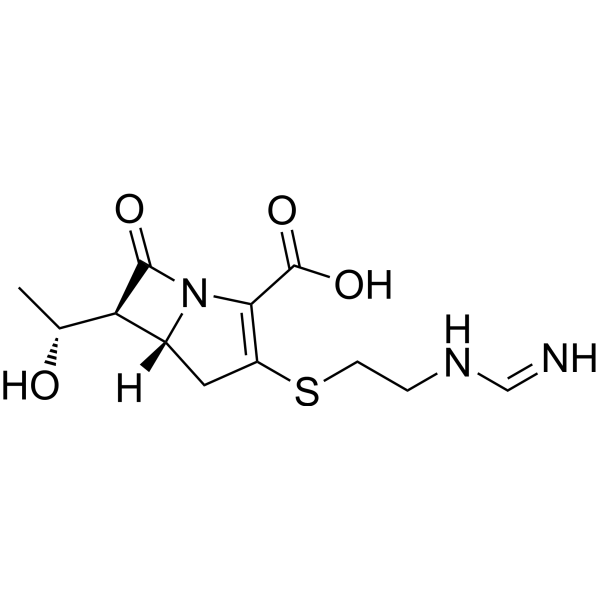
    Imipenem
    Maximum Cited Publications
    35 Publications Verification

    N-Formimidoyl thienamycin; MK0787

    Antibiotic Bacterial Infection
    Imipenem (MK0787), a stable crystalline derivative of thienamycin, is an antibiotic and has the excellent activity against a broad range of gram-positive and gram-negative aerobic and anaerobic bacteria. Imipenem can be used for the research of carbapenem-nonsusceptible and P. aeruginosa biofilm infections .
    Imipenem
  • HY-B1369
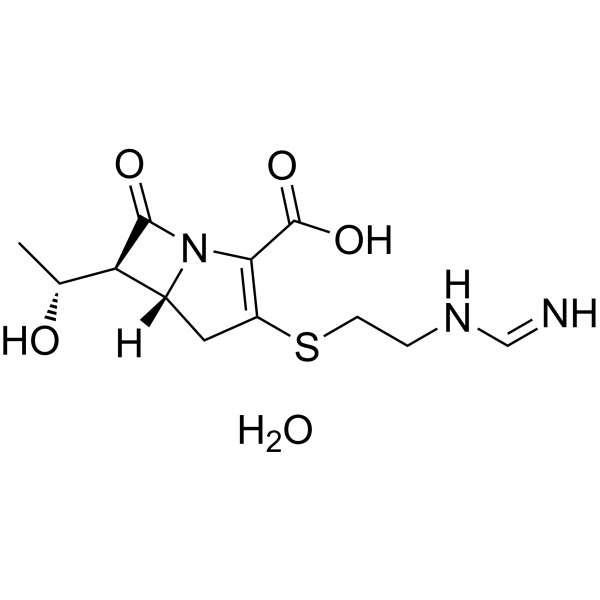
    Imipenem monohydrate
    Maximum Cited Publications
    35 Publications Verification

    N-Formimidoyl thienamycin monohydrate; MK0787 monohydrate

    Antibiotic Bacterial Infection
    Imipenem monohydrate, a stable crystalline derivative of thienamycin, is an antibiotic and has the excellent activity against a broad range of gram-positive and gram-negative aerobic and anaerobic bacteria. Imipenem monohydrate can be used for the research of carbapenem-nonsusceptible and P. aeruginosa biofilm infections .
    Imipenem monohydrate
  • HY-19806A
    Ceftolozane sulfate
    2 Publications Verification

    CXA-101; FR264205

    Bacterial Infection
    Ceftolozane (CXA-101) sulfate is an antipseudomonal cephalosporin. Ceftolozane binds to P. aeruginosa essential PBPs (1b, 1c, 2 and 3) with high affinity. Ceftolozane inhibits cell wall synthesis by binding the PBPs. Ceftolozane sulfate inhibits P. aeruginosa and Enterobacteriaceae .
    Ceftolozane sulfate
  • HY-130055
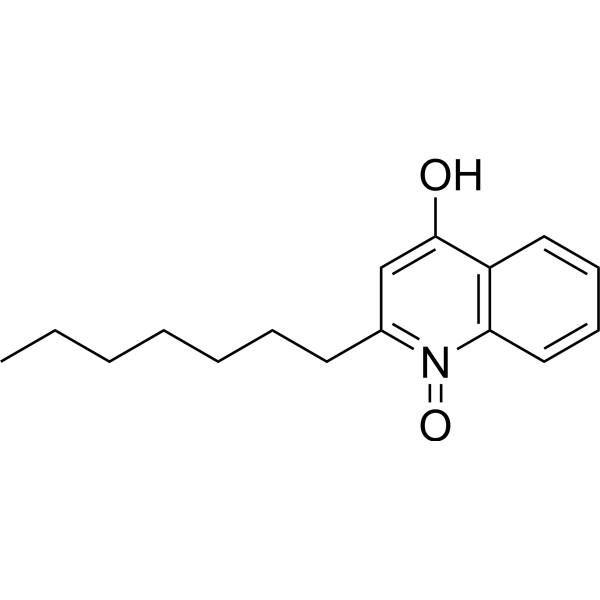
    HQNO
    2 Publications Verification

    Mitochondrial Metabolism Infection
    HQNO, secreted by P. aeruginosa, is a potent electron transport chain inhibitor with a Kd of 64 nM for complex III . HQNO is a potent inhibitor of mitochondrial NDH-2 in many species .
    HQNO
  • HY-A0214
    Colistin methanesulfonate sodium salt
    1 Publications Verification

    Colistimethate sodium

    Bacterial Antibiotic Infection
    Colistin methanesulfonate sodium salt exhibits MIC values ranged from 4 to 16 mg/liter against susceptible strains (P. aeruginosa) .
    Colistin methanesulfonate sodium salt
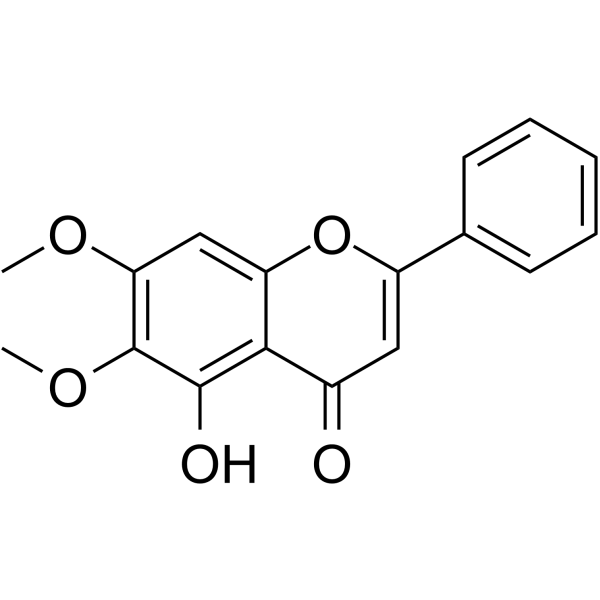
  • HY-N2036
    Mosloflavone
    1 Publications Verification

    TNF Receptor Enterovirus Bacterial Infection
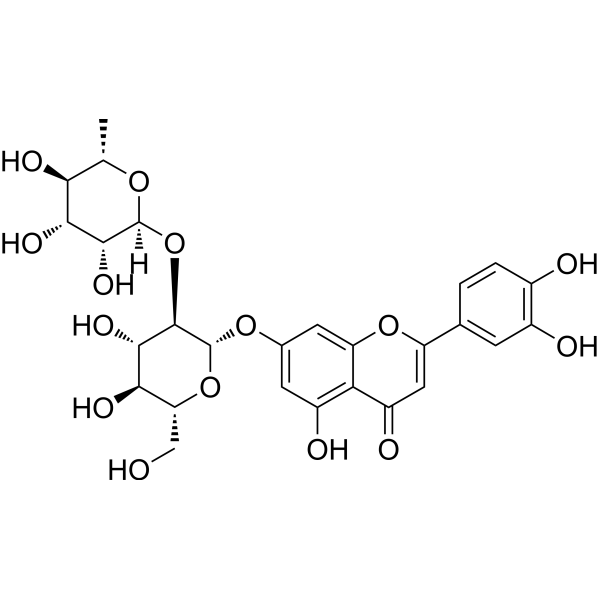
    Mosloflavone is a flavonoid isolated from Scutellaria baicalensis Georgi with ?anti-EV71 activity. Mosloflavone? inhibits VP2 virus replication and protein expression during the initial stage of virus infection and inhibits viral VP2 capsid protein synthesis. Mosloflavone is a promising biocide and inhibits P. aeruginosa virulence and biofilm formation.
    Mosloflavone
  • HY-D1056E

    LPS, from Pseudomonas aeruginosa (10)

    Toll-like Receptor (TLR) Inflammation/Immunology
    Lipopolysaccharides from P. aeruginosa (Pseudomonas aeruginosa) 10 are lipopolysaccharide endotoxins and TLR4 activators derived from Pseudomonas aeruginosa 10, and are classified as S-type LPS. Lipopolysaccharides from P. aeruginosa 10 exhibit a typical three-part structure: O-antigen, core oligosaccharide, and lipid A. The lipopolysaccharides of P. aeruginosa 10 have a fatty acid composition distinct from common enterobacteria, an exceptionally high degree of phosphorylation (triphosphate residues have been detected), and a unique outer region of the core oligosaccharide. Additionally, their O-specific side chains are typically rich in novel aminosugars. Lipopolysaccharides from P. aeruginosa 10 demonstrate susceptibility to viruses, with the level of susceptibility determined by the content of high molecular weight polysaccharides in their composition. The absence of high molecular weight polysaccharides increases their sensitivity to bacteriophages .
    It is recommended to prepare a solution with concentration ≥2 mg/mL. Vortex thoroughly for more than 10 minutes. Due to the adsorption characteristics of LPS, silanized container or low adsorption centrifuge tubes should be used for aliquoting and storage, and mix thoroughly before use.
    Lipopolysaccharides, from P. aeruginosa 10
  • HY-162475

    Dihydrofolate reductase (DHFR) Bacterial Infection
    Fluorofolin is a dihydrofolate reductase (DHFR) inhibitor with an IC50 of 2.5 nM. Fluorofolin exhibits significant activity against P. aeruginosa .
    Fluorofolin
  • HY-N5127

    Bacterial Infection
    Nonacosane, isolated from Baphia massaiensis, exhibits weak activities against E. coli, B. subtilis, P. aeruginosa and S. aureus .
    Nonacosane
  • HY-124819

    Bacterial Infection
    D13-9001 is a potent AcrB (AcrAB-TolC efflux pump subunit) and MexB (MexAB-OprM efflux pump subunit) inhibitor with the KD values of 1.15 μM and 3.57 μM in E. coli and P. aeruginosa, respectively . D13-9001 exhibits antibiotic activities .
    D13-9001
  • HY-W037825

    Bacterial Infection Cancer
    Pterin is a Pteridine with antibacterial activity, which is found in C. croceus. Pterin reduces the proliferation and biofilm production in E. coli, P. aeruginosa, and S. mutans. Pterin is promising for research of cancers and infections .
    Pterin
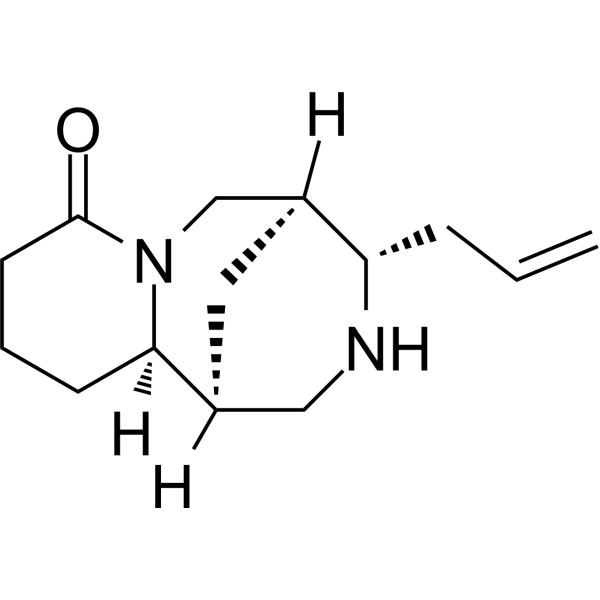
  • HY-N10087

    Bacterial Infection
    Angustifoline, an alkaloid, can be isolated from Lupinus angustifolius L. alkaloid extract. Angustifoline exhibits antimicrobial activity. Angustifoline could have bacteriostatic effects against S. aureus, B. subtilis, E. coli, P. aeruginosa and B. thuringiensis .
    Angustifoline
  • HY-19882

    Bacterial Infection
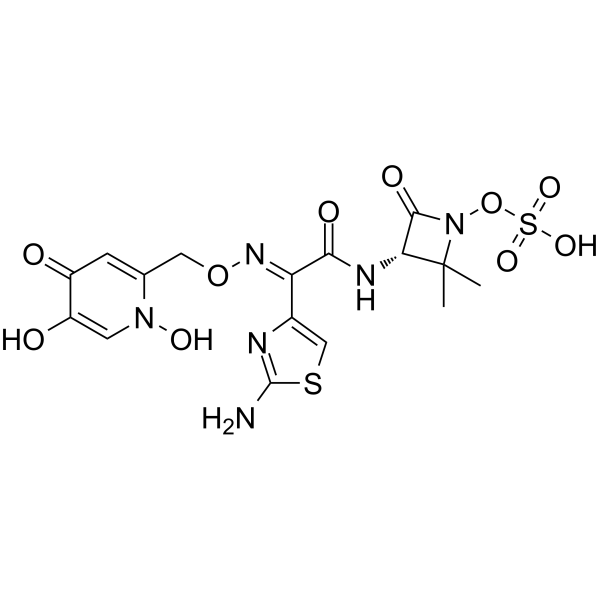
    BAL-30072, a siderophore sulfactam, is a monocyclic beta-lactam antibiotic, with activity against multiresistant gram-negative bacilli. BAL30072 shows MIC90 values of 4 μg/mL for MDR Acinetobacter spp. and 8 μg/mL for MDR P. aeruginosa, respectively .
    BAL-30072
  • HY-P99214

    KBPA101

    Bacterial Infection
    Panobacumab (KBPA101) is a fully human IgM/κ monoclonal antibody generated by immortalizing human B lymphocytes against the LPS O polysaccharide of serotype O11 of P. aeruginosa .
    Panobacumab
  • HY-P5731

    Bacterial Infection
    Bac7(1-35) is a proline-rich antimicrobial peptide. Bac7(1-35) efficiently binds to different regions of prokaryote ribosomes, leading to the inhibition of protein synthesis. Bac7(1-35) demonstrates in vitro activity against P. aeruginosa strains .
    Bac7(1-35)
  • HY-P3328A

    Bacterial Infection
    MDP1 acetate, a Melittin-derived peptide, alters the integrity of both Gram-positive and Gram-negative bacterial membranes and kills the bacteria via membrane damages. MDP1 acetate has a high-antibacterial activity against multidrug resistant (MDR) and reference strains of S. aureus, E. coli, and P. aeruginosa .
    MDP1 acetate
  • HY-114818

    Bacterial Infection
    4-(tert-Butyl)-benzhydroxamic Acid is a PqsR antagonist with IC50s of 12.5 μM and 23.6 μM for E. coli and P. aeruginosa, respectively. 4-(tert-Butyl)-benzhydroxamic Acid reduces the production of the virulence factor pyocyanin in P. aeruginosa with an IC50 of 87.2 μM .
    4-(tert-Butyl)-benzhydroxamic Acid
  • HY-W094847
    Eicosane
    1 Publications Verification

    Environmental Pollutants Biochemical Assay Reagents Infection
    Eicosane is an alkane with anti-microbial effects. Eicosane inhibits the growth of B. subtilis, E. coli and P. aeruginosa. Eicosane is used to form candles .
    Eicosane
  • HY-P5016A

    Antibiotic Fungal Bacterial Infection Cancer
    CRAMP-18 (mouse) acetate is an antibiotic peptide without hemolytic activity. CRAMP-18 (mouse) acetate has good inhibitory activity against Gram-negative bacteria, such as S. typhimurium and P. aeruginosa. CRAMP-18 (mouse) acetate has the potential to study antifungal, antibacterial and antitumor .
    CRAMP-18 (mouse) acetate
  • HY-146133

    Bacterial Antibiotic Infection
    LA-Bac8c is a Lipoic acid modified antimicrobial peptide with enhanced antimicrobial properties. LA-Bac8c inhibits S. aureus, MRSA, S. epidermidis, E. coli, and P. aeruginosa with MICs of 1, 4, 8, 8, and 8 μg/mL .
    LA-Bac8c
  • HY-P10355

    Bacterial Infection
    Succinimide-AFK-AMC acetate is a marker for P. aeruginosa protease activity using cultured reference strains .
    Succinimide-AFK-AMC acetate
  • HY-146328

    Bacterial Antibiotic Infection
    PqsR/LasR-IN-2 (Compound 3) is a potent inhibitor of PqsR and LasR systems in P. aeruginosa. PqsR/LasR-IN-2 also inhibits hERG with the IC50 of 1.408 µM .
    PqsR/LasR-IN-2
  • HY-146329

    Bacterial Antibiotic Infection
    PqsR/LasR-IN-3 (Compound 7a) is a potent inhibitor of PqsR and LasR systems in P. aeruginosa. PqsR/LasR-IN-3 also inhibits hERG with the IC50 of 109.01 µM .
    PqsR/LasR-IN-3
  • HY-P10389

    Bacterial Infection
    Globomycin derivative G2A (Compound G2A) is an inhibitor for lipoprotein signal peptidase II (LspA), with an IC50 of 604 nM. Globomycin derivative G2A inhibits E. coli, P. aeruginosa and A. baumannii, with MIC ranging from 12.5 to 32 μg/mL .
    Globomycin derivative G2A
  • HY-128384

    Bacterial Infection
    Benzyldodecyldimethylammonium chloride dihydrate is a quaternary ammonium compound (QAC) and can be used as a biocide to target antibiotic-resistant bacteria, such as methicillin-resistant Staphylococcus aureus (MRSA), multidrug-resistant (MDR) P. aeruginosa et. al. Benzyldodecyldimethylammonium chloride dihydrate, an antimicrobial agent, bacteriostatic or bactericidal properties depending on the concentration.
    Benzyldodecyldimethylammonium chloride dihydrate
  • HY-P5731A

    Bacterial Infection
    Bac7(1-35) acetate is a proline-rich antimicrobial peptide. Bac7(1-35) acetate efficiently binds to different regions of prokaryote ribosomes, leading to the inhibition of protein synthesis. Bac7(1-35) acetate demonstrates in vitro activity against P. aeruginosa strains .
    Bac7(1-35) acetate
  • HY-136439

    Bacterial Antibiotic Apoptosis Infection
    4-Epianhydrotetracycline hydrochloride is a major intermediate product of Tetracycline (HY-A0107). 4-Epianhydrotetracycline hydrochloride shows lethal effects and induces cell apoptosis of zebrafish embryos. 4-Epianhydrotetracycline hydrochloride inhibits Shewanella, E. coli and P. aeruginosa with MIC values of 2, 1 and 64 mg/L, respectively .
    4-Epianhydrotetracycline hydrochloride
  • HY-P1978

    Bacterial Infection
    CysHHC10 is a synthetic antimicrobial peptide (AMP), and exhibits strong anti-microbial properties against both Gram-positive and Gram-negative bacteria. The MIC values of CysHHC10 against E. coli, P. aeruginosa, S. aureus and S. epidermidis are 10.1 mM, 20.2 mM, 2.5 mM and 1.3 mM, respectively .
    CysHHC10
  • HY-129123

    Antibiotic Infection
    ML318 is a biaryl nitrile inhibitor of PvdQ acylase with an IC50 of 20 nM by binding in the acyl-binding site. ML318 inhibits P. aeruginosa (PAO1) with an IC50 of 19 μM. ML318 prevents pyoverdine production and limits the growth of P. aeruginosa under iron-limiting conditions .
    ML318
  • HY-139982

    Bacterial Infection
    OX11 is a selective inhibitor of S. pneumoniae, P. aeruginosa, and E. coli bacterial strains .
    OX11
  • HY-101444

    Bacterial Infection
    MC-207110 is a broad-spectrum efflux pump inhibitor. MC-207110 is active against all three known Mex efflux pumps from P. aeruginosa and their close Escherichia coli efflux pump homolog (AcrAB-TolC). MC-207110 can decrease the intrinsic resistance of P. aeruginosa to fluoroquinolones. MC-207110 can be used for the research of infection .
    MC-207110
  • HY-131907

    Bacterial Infection
    LpxC-IN-5 is a potent non-hydroxamate LpxC (UDP-3-O-acyl-N-acetylglucosamine deacetylase) inhibitor with an IC50 of 20 nM. LpxC-IN-5 shows antibacterial activity against E. coli ATCC25922, P. aeruginosa ATCC27853, K. pneumoniae ATCC13883 and P. aeruginosa 5567 with MIC of 16, 4, 64, and 4 μg/mL, respectively .
    LpxC-IN-5
  • HY-120659

    Fluorescent Dye Others
    Gly-Gly-AMC is a fluorogenic peptide substrate. Gly-Gly-AMC can be used to assess bacterial protease activity of P. aeruginosa and S. aureus .
    Gly-Gly-AMC
  • HY-P5486A

    Bacterial Infection
    Tet-20 acetate is a broad-spectrum antimicrobial peptide. Tet-20 acetate is promising for research of Gram-negative and Gram-positive bacteria (e.g., P. aeruginosa, S. aureus) .
    Tet-20 acetate
  • HY-139698

    LCB10-0200

    Antibiotic Bacterial Infection
    GT-1 (LCB10-0200), a siderophore-linked cephalosporin, is effective against clinical isolates of P. aeruginosa, Klebsiella oxytoca, Proteus spp., Serratia marcescens, and Enterobacter aerogenes.
    GT-1
  • HY-13588A

    SCE-129

    Bacterial Antibiotic Others
    Cefsulodin (SCE-129) showed potent activity against Pseudomonas aeruginosa and strains susceptible to penicillin and gentamicin, with effectiveness comparable to that of gentamicin and debendazole. However, its effectiveness was diminished against penicillin-resistant strains of P. aeruginosa, particularly strains that were also resistant to gentamicin. For P. aeruginosa maltofila, SCE-129 showed similar minimum inhibitory concentrations to penicillin, gentamicin, and debendazole. Pseudomonas cepacia strains generally showed moderate resistance to SCE-129 and penicillin, and high resistance to gentamicin and debendazole .
    Cefsulodin
  • HY-P5552

    Bacterial Parasite Fungal Infection
    Melimine is a hybrid antimicrobial peptide of Melittin (HY-P0233) and Protamine. Melimine is active against P. aeruginosa and S. aureus. Melimine has broad spectrum activity against bacteria, fungi and protozoa .
    Melimine
  • HY-P5547

    Bacterial Infection
    Lynronne-3 is an antimicrobial peptide. Lynronne-1 is active against Gram-positive bacterials, including MDR strains (MIC: 32-128 μg/mL for methicillin-resistant MRSA strains). Lynronne-3 is also effective against P. aeruginosa infection
    Lynronne-3
  • HY-P10695

    Bacterial Antibiotic Infection
    Bac8c is an antimicrobial peptide with strong antibacterial activity against Gram-negative and Gram-positive bacteria. The MIC of Bac8c against S. aureus, MRSA, S. epidermidis, E. coli, and P. aeruginosa are 2, 8, 4, 4, and 4 μg/mL, respectively .
    Bac8c
  • HY-120366

    Penicillin-binding protein (PBP) Beta-lactamase Bacterial Infection
    WCK-5153 is a Penicillin-Binding Protein 2 (PBP2) inhibitor with an IC50 of 0.14 μg/ml (for P. aeruginosa PBP2) and acts as a β-lactam enhancer against Pseudomonas aeruginosa. WCK-5153 can be used in studies of multidrug-resistant (MDR) pathogens .
    WCK-5153
  • HY-147958

    Bacterial Infection
    Antibacterial agent 113 (compound 3) is a potent antibacterial agent. Antibacterial agent 113 shows antibacterial activity against P.aeruginosa, S.mutans, B.subtilis, E.coli, E.faecalis, S.typhimuriumand, and S.aureus microorganisms, with MIC values all of 156.25 μM .
    Antibacterial agent 113
  • HY-147959

    Bacterial Infection
    Antibacterial agent 114 (compound 1) is a potent antibacterial agent. Antibacterial agent 114 shows antibacterial activity against P.aeruginosa, B.subtilis, E.coli, E.faecalis, S.typhimuriumand, S.mutans, and S.aureus microorganisms, with MIC values of 625, 625, 625, 625, 625, 1250 and 1250 μM, respectively .
    Antibacterial agent 114
  • HY-147957

    Bacterial Infection
    Antibacterial agent 112 (compound 2) is a potent antibacterial agent. Antibacterial agent 112 shows antibacterial activity against P.aeruginosa, S.mutans, B.subtilis, E.coli, E.faecalis, S.typhimuriumand, and S.aureus microorganisms, with MIC values of 625, 625, 1250, 1250, 1250, 1250 and 1250 μM, respectively .
    Antibacterial agent 112
  • HY-P5632

    Bacterial Infection
    Bovine tracheal antimicrobial peptide is a kind of comes from the tracheal mucosa of antimicrobial peptides. Bovine tracheal antimicrobial peptide has activity against E.coli D31, K.pneumoniae 13883, S.aureus 25923, P.aeruginosa 27853 and C.albicans 14053, MIC value 12-25, 12-25, 25-50, 25-50, 6-12 μg/ml, respectively .
    Bovine tracheal antimicrobial peptide
  • HY-P5556

    Bacterial Infection
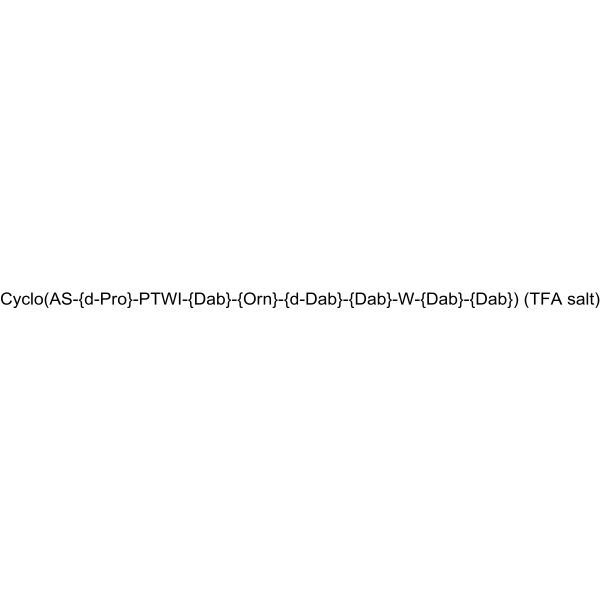
    KAMP-19, a keratin-derived antimicrobial peptide, is an antimicrobial peptide against P. aeruginosa. .
    KAMP-19
  • HY-117736

    Penicillin-binding protein (PBP) Bacterial Infection Inflammation/Immunology
    Ro 09-1428 is a broad-spectrum parenteral cephalosporin. Ro 09-1428 has potent antibacterial activities against Pseudomonas aeruginosa and Acinetobacter caloaceticus, with MIC90s of 0.39 and 6.25 μg/mL, respectively, better than Ceftazidime (HY-B0593). Additionally, Ro 09-1428 shows high activity against Escherichia coli, Kkbsielia pneumoniae, Proteus mirabilis, P. aeruginosa, staphylococci, and more. Ro 09-1428 preferentially attacks PBP 3 for target in E. coli and P. aeruginosa, which is promising for research of septicemias and serious P. aeruginosa infections .
    Ro 09-1428
  • HY-158120

    Bacterial Infection Inflammation/Immunology
    LasR agonist 1 (9) is a LasR agonist, with an EC50 of 0.7 μM. Used for P. aeruginosa research .
    LasR agonist 1
  • HY-P5580

    Bacterial Infection Cancer
    Dermaseptin-B3 inhibits the growth of Gram-positive and Gram-negative bacteria (MIC: 1.3, 2.3, 5.0, 2.6, 2.3 μM for S. aureus, P. aeruginosa, P. aeruginosa, E. (ATCC 25922), E. (54127) respectively). Dermaseptin-B3 also inhibits tumor cell proliferation .
    Dermaseptin-B3
  • HY-168631

    Bacterial Infection
    Antibacterial agent 254 (Compound 2) is a dispersion sensor (DspS) activator that disperses Pseudomonas aeruginosa biofilms. Antibacterial agent 254 can dislodge 7-day P. aeruginosa biofilms at 50 μM. Antibacterial agent 254 also enhances the effects of Ciprofloxacin (HY-B0356) against P. aeruginosa and increases the expression of matrix-degrading enzyme genes pelA, pslG and eddA .
    Antibacterial agent 254
  • HY-N8281

    Bacterial Infection
    Daldinone A (Compound 4) is an antibacterial agent that can be isolated from Nigrospora oryzae. Daldinone A has antimicrobial potential against P. aeruginosa .
    Daldinone A

Inquiry Online

Your information is safe with us. * Required Fields.

Salutation


Country or Region *

Applicant Name *


Organization Name *

Department *


Email Address *


Product Name *

Cat. No.


Requested quantity *

Phone Number *


Remarks

Inquiry Online

Inquiry Information

Product Name:
Cat. No.:
Quantity:
MCE Japan Authorized Agent:

