1. Search Result
Search Result
Results for "

P2 receptors

" in MedChemExpress (MCE) Product Catalog:

292

Inhibitors & Agonists

2

Fluorescent Dyes

7

Biochemical Assay Reagents

3

Peptides

20

Natural
Products

19

Isotope-Labeled Compounds

8

Oligonucleotides

Cat. No. Product Name Target Research Areas Chemical Structure
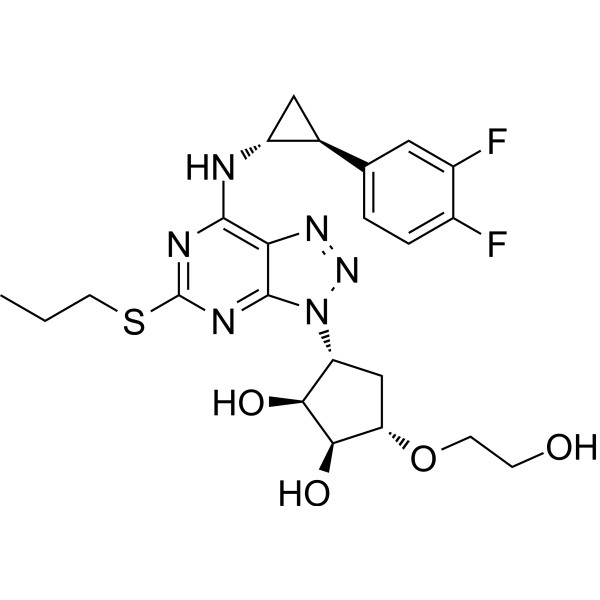
  • HY-10064
    Ticagrelor
    10+ Cited Publications

    AZD6140; AR-C 126532XX

    P2Y Receptor Cardiovascular Disease Cancer
    Ticagrelor (AZD6140) is a reversible oral P2Y12 receptor antagonist for the treatment of platelet aggregation.
    Ticagrelor
  • HY-136254
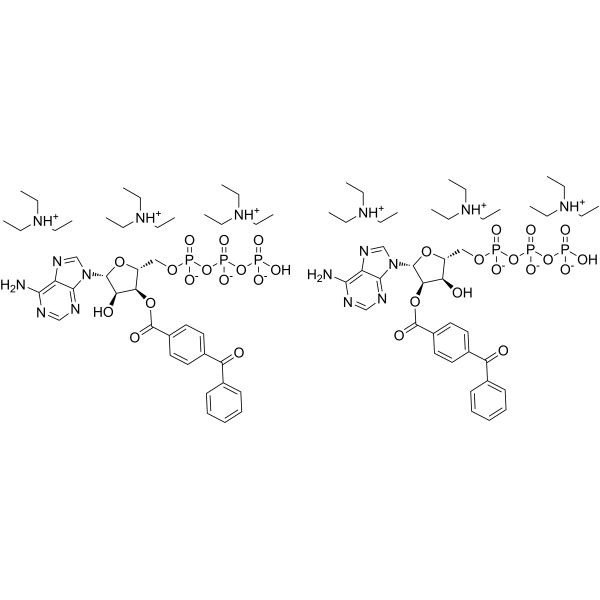
    BzATP triethylammonium salt
    10+ Cited Publications

    P2X Receptor Inflammation/Immunology Cancer
    BzATP triethylammonium salt acts as a P2X receptor agonist with pEC50s of 8.74, 5.26, 7.10, 7.50, 6.19, 6.31, 5.33 for P2X1, P2X2, P2X3, P2X2/3, P2X4 and P2X7, respectively . BzATP triethylammonium salt is potent at P2X7 receptors with EC50s of 3.6 μM and 285 μM for rat P2X7 and mouse P2X7, respectively .
    BzATP triethylammonium salt
  • HY-13104
    MRS 2578
    10+ Cited Publications

    P2Y Receptor Apoptosis Cardiovascular Disease
    MRS 2578 is a selective and potent P2Y6 receptor antagonist with IC50s of 37 nM (human) and 98 nM (rat). MRS 2578 exhibits insignificant activity at P2Y1, P2Y2, P2Y4, and P2Y11 receptors .
    MRS 2578
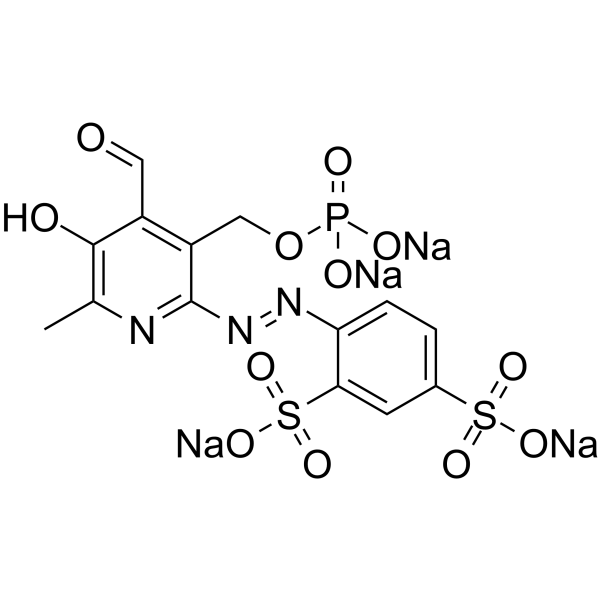
  • HY-101044
    PPADS tetrasodium
    5+ Cited Publications

    P2X Receptor Na+/Ca2+ Exchanger Neurological Disease
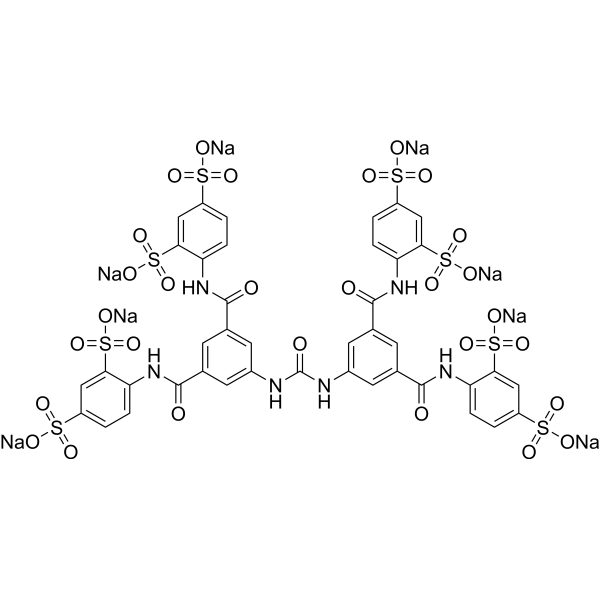
    PPADS tetrasodiuma is a non-selective P2X receptor antagonist. PPADS tetrasodiuma blocks recombinant P2X1, -2, -3, -5 with IC50s ranging from 1 to 2.6 μM. PPADS tetrasodiuma blocks native P2Y2-like (IC50~0.9 mM) and recombinant P2Y4 (IC50~15 mM) receptors. PPADS tetrasodiuma is an inhibitor of the reverse mode of the Na/Ca 2+ exchanger in guinea pig airway smooth muscle .
    PPADS tetrasodium
  • HY-50697
    A-740003
    15+ Cited Publications

    P2X Receptor Neurological Disease
    A-740003 is a potent, selective and competitive P2X7 receptor antagonist with IC50 values are 18 and 40 nM for rat and human P2X7 receptors, respectively.
    A-740003
  • HY-15488
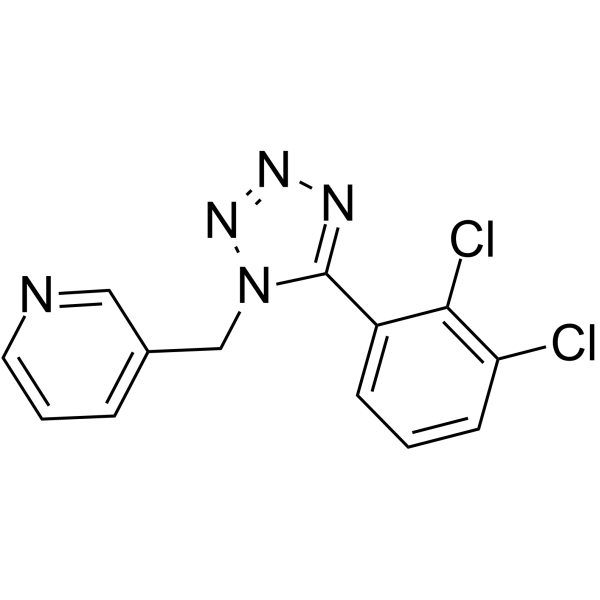
    A 438079
    25+ Cited Publications

    P2X Receptor Neurological Disease
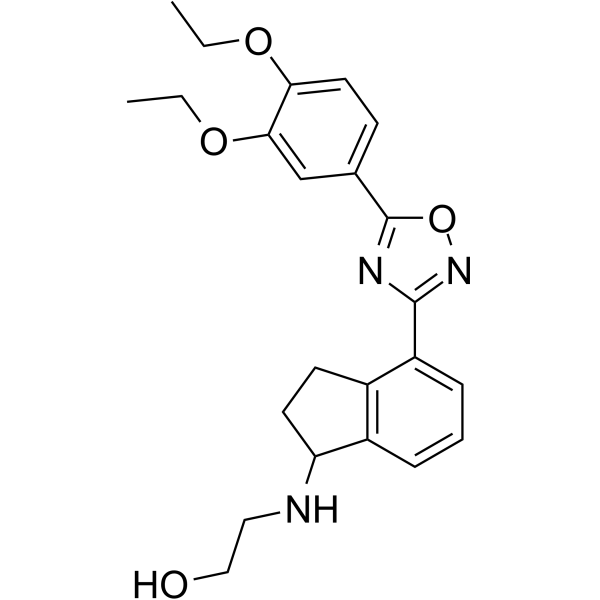
    A 438079 is a potent, and selective P2X7 receptor antagonist with pIC50 of 6.9.
    A 438079
  • HY-15488A
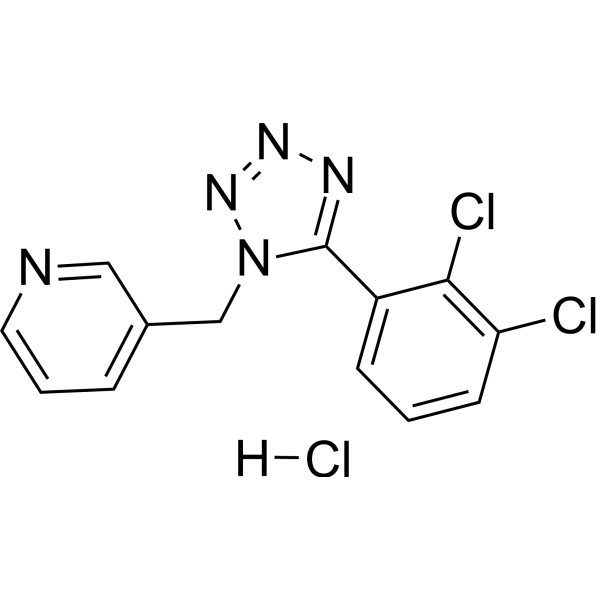
    A 438079 hydrochloride
    25+ Cited Publications

    P2X Receptor Neurological Disease
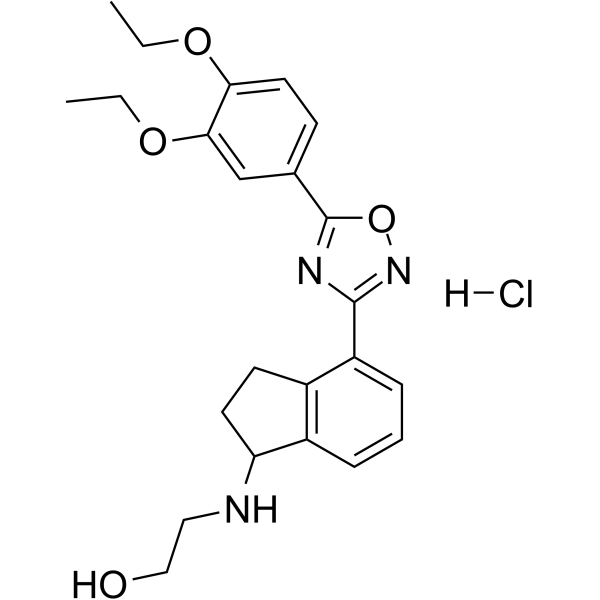
    A 438079 (hydrochloride) is a potent, and selective P2X7 receptor antagonist with pIC50 of 6.9.
    A 438079 hydrochloride
  • HY-110322A
    PPTN
    4 Publications Verification

    P2Y Receptor Inflammation/Immunology
    PPTN, a chemical probe, is a potent, high-affinity, competitive and highly selective P2Y14 receptor antagonist with a KB value of 434 pM. PPTN exhibits no agonist or antagonist effect at the P2Y1, P2Y2, P2Y4, P2Y6, P2Y11, P2Y12, or P2Y13 receptors. Anti-inflammatory and immune activity .
    PPTN
  • HY-110322
    PPTN hydrochloride
    4 Publications Verification

    P2Y Receptor Inflammation/Immunology
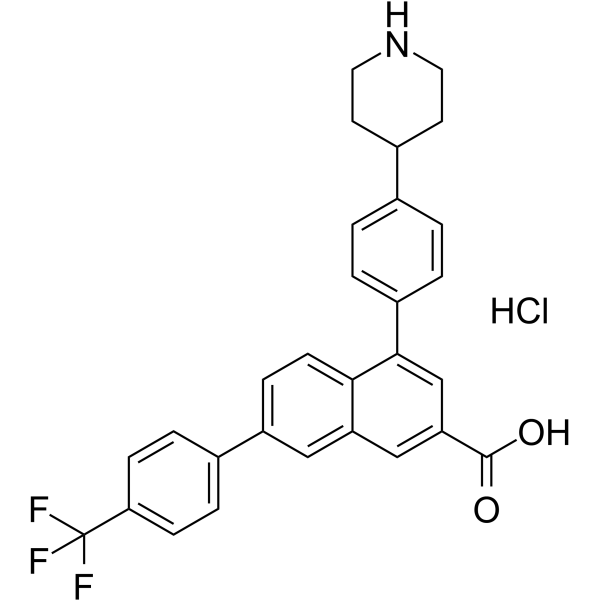
    PPTN hydrochloride is a potent, high-affinity, competitive and highly selective P2Y14 receptor antagonist with a KB value of 434 pM. PPTN hydrochloride exhibits no agonist or antagonist effect at the P2Y1, P2Y2, P2Y4, P2Y6, P2Y11, P2Y12, or P2Y13 receptors. Anti-inflammatory and anti-immune activity .
    PPTN hydrochloride
  • HY-13831
    BPTU
    1 Publications Verification

    BMS-646786

    P2Y Receptor Neurological Disease Cancer
    BPTU (BMS-646786) is a non-nucleotide P2Y1 receptor allosteric antagonist with antithrombotic activity. BPTU is able to block the P2Y1 receptor located at the neuromuscular junction of the gastrointestinal tract .
    BPTU
  • HY-108660
    PSB-0739
    1 Publications Verification

    P2Y Receptor Cardiovascular Disease
    PSB-0739 is a high-affinity potent, competitive, nonselective platelet P2Y12 receptor antagonist with a Ki values of 24.9 nM. The P2Y12 receptor plays a crucial role in platelet aggregation. Antithrombotic effect .
    PSB-0739
  • HY-15568
    A-317491
    5 Publications Verification

    P2X Receptor Neurological Disease Inflammation/Immunology
    A-317491 is a potent, selective and non-nucleotide antagonist of P2X3 and P2X2/3 receptors, with Kis of 22, 22, 9, and 92 nM for hP2X3, rP2X3, hP2X2/3, and rP2X2/3, respectively. A-317491 is highly selective (IC50>10 μM) over other P2 receptors and other neurotransmitter receptors, ion channels, and enzymes. A-317491 reduces inflammatory and neuropathic pain by blocking P2X3 and P2X2/3 receptor-mediated calcium flux .
    A-317491
  • HY-134353B

    Adenosine 5'-β-thiodiphosphate trilithium

    P2Y Receptor NF-κB Interleukin Related Caspase Neurological Disease Inflammation/Immunology Cancer
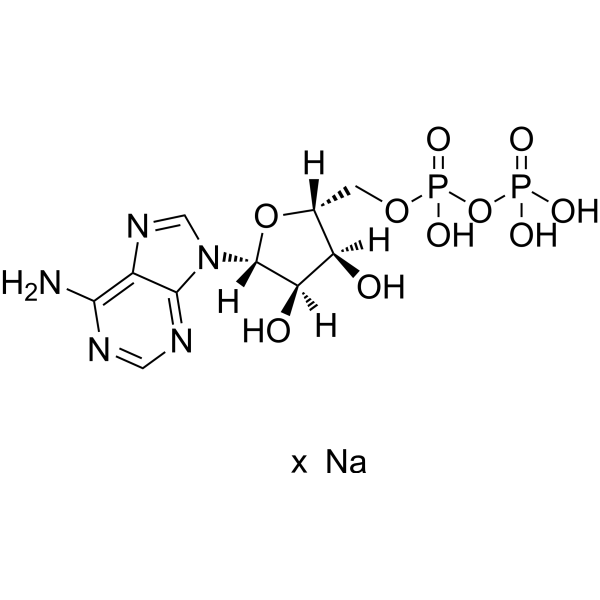
    ADP-β-S (Adenosine 5'-(β-thiodiphosphate)) trilithium is a non-hydrolyzable ADP analog and a P2Y12 receptor agonist. ADP-β-S trilithium activates the P2Y12 receptor in microglia, thereby triggering downstream inflammatory signaling pathways. ADP-β-S trilithium activates P2Y purinergic receptors in rat pancreatic β cells and enhances glucose-induced insulin secretion. ADP-β-S trilithium can be used in the research of diseases such as inflammation and diabetes .
    ADP-β-S trilithium
  • HY-137888A

    oATP trisodium salt

    P2X Receptor NOD-like Receptor (NLR) Inflammation/Immunology
    Oxidized ATP (oATP) trisodium salt is a broad-spectrum P2 receptor inhibitor. Oxidized ATP trisodium salt irreversibly antagonizes P2X7R activation. Oxidized ATP trisodium salt inhibits c-reactive protein (CRP)-induced NLRP3 inflammasome activation. Oxidized ATP trisodium salt can be used for research of atherosclerosis .
    Oxidized ATP trisodium salt
  • HY-100483
    A-804598
    3 Publications Verification

    P2X Receptor Neurological Disease Cancer
    A-804598 is a BBB penetrant, competitive and selective P2X7 receptor antagonist with IC50s of 9 nM, 10 nM and 11 nM for mouse, rat and human P2X7 receptors, respectively .
    A-804598
  • HY-14483
    AF-353
    1 Publications Verification

    Ro-4

    P2X Receptor Cancer
    AF-353 (Ro-4) is a potent, selective and orally bioavailable P2X3/P2X2/3 receptor antagonist, with a pIC50 of 8.0 for both human and rat P2X3, and with a pIC50 of 7.3 for human P2X2/3 .
    AF-353
  • HY-117508

    P2X Receptor Neurological Disease
    JNJ-54175446 is a potent and selective brain penetrant P2X7 receptor antagonist, with pIC50s of 8.46 and 8.81 for hP2X7 receptor and rP2X7 receptor, respectively.
    JNJ-54175446
  • HY-113359

    UDP

    P2Y Receptor Endogenous Metabolite Metabolic Disease Inflammation/Immunology
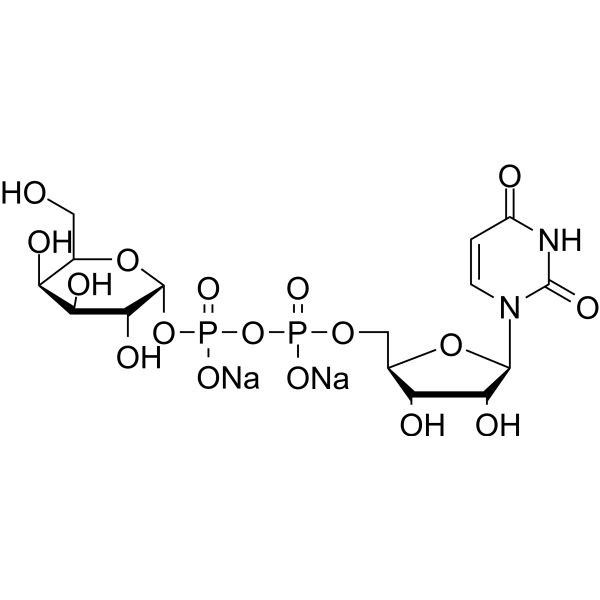
    Uridine 5'-diphosphate (UDP) is a P2Y6 receptor agonist with an EC50 of 0.013 μM for human P2Y6 receptor .
    Uridine 5'-diphosphate
  • HY-108662

    2,2'-Pyridylisatogen tosylate

    P2Y Receptor Inflammation/Immunology Cancer
    PIT (2,2'-Pyridylisatogen tosylate) is a selective and non-competitive antagonist of P2Y1 receptor with an IC50 value of 0.14 μM for human P2Y1 receptor. PIT antagonizes P2Y1 receptor signaling without affecting nucleotide binding. PIT is an irreversible antagonist of responses to ATP at metabotropic purinoceptors (of the P2Y family) in some smooth muscles. PIT can be used for the research of chronic bronchitis and asthma .
    PIT
  • HY-134807

    P2X Receptor 5-HT Receptor Autophagy Cancer
    Indophagolin is a potent, indoline-containing autophagy inhibitor (IC50=140 nM). Indophagolin antagonizes the purinergic receptor P2X4 as well as P2X1 and P2X3 with IC50s of 2.71, 2.40 and 3.49 μM, respectively. Indophagolin also antagonizes the Gq-protein-coupled P2Y4, P2Y6, and P2Y11 receptors (IC50s =3.4~15.4 μM). Indophagolin has a strong antagonistic effect on serotonin receptor 5-HT6 (IC50=1.0 μM) and a moderate effect on receptors 5-HT1B, 5-HT2B, 5-HT4e, and 5-HT7 .
    Indophagolin
  • HY-13954
    A 839977
    1 Publications Verification

    P2X Receptor Neurological Disease Inflammation/Immunology
    A 839977 is a P2X7 selective antagonist; it blocks BzATP-evoked calcium influx at recombinant human, rat and mouse P2X7 receptors (IC50 values are 20 nM, 42 nM and 150 nM respectively) and reduces inflammatory and neuropathic pain in animal models; the antihyperalgesic effects of P2X7 receptor blockade are mediated by blocking the release of IL-1beta .
    A 839977
  • HY-137451
    Sivopixant
    1 Publications Verification

    S-600918

    P2X Receptor Neurological Disease
    Sivopixant (S-600918) is a potent and selective P2X3 receptor antagonist (P2X3 IC50=4.2 nM; P2X2/3 IC50=1100 nM). Sivopixant shows strong analgesic effect .
    Sivopixant
  • HY-108658

    P2Y Receptor Cardiovascular Disease
    MRS2500 tetraammonium is a potent, selective and stable antagonist of the P2Y1 receptor (Ki=0.78 nM for recombinant human P2Y1 receptor). MRS2500 tetraammonium inhibits the ADP-induced aggregation of human platelets with an IC50 value of 0.95 nM. Antithrombotic activity .
    MRS2500 tetraammonium
  • HY-P10896

    Bombesin Receptor Cancer
    NOTA-P2-RM26 is an antagonist of Bombesin (HY-P0195) analogs, and the gastrin-releasing peptide receptor (GRPR/BB2) is a molecular target for prostate cancer visualization. NOTA-P2-RM26 is labeled with 111In and 68Ga for prostate cancer imaging studies using PET and SPECT/CT .
    NOTA-P2-RM26
  • HY-101308A
    MRS2179 tetrasodium hydrate
    2 Publications Verification

    P2Y Receptor Cardiovascular Disease
    MRS2179 tetrasodium hydrate is a competitive P2Y1 receptor antagonist, with a Kb of 102 nM and a pA2 of 6.99 for turkey P2Y1 receptor. MRS2179 tetrasodium hydrate is selective for P2Y1 over P2X1 (IC50=1.15 µM), P2X3 (12.9 µM), P2X2, P2X4, P2Y2, P2Y4, and P2Y6 receptors . MRS2179 tetrasodium hydrate inhibits platelet aggregation .
    MRS2179 tetrasodium hydrate
  • HY-135976

    P2X Receptor Neurological Disease Inflammation/Immunology
    P2X3 antagonist 34 is a potent, selective and orally active P2X3 homotrimeric receptor antagonist with IC50s of 25 nM, 92 nM and 126 nM for human P2X3, rat P2X3 and guinea pig P2X3 receptors, respectively. P2X3 antagonist 34 is less active against human, rat and guinea pig P2X2/3 heterotrimeric receptors. P2X3 antagonist 34 has strong anti-tussive effect .
    P2X3 antagonist 34
  • HY-131502

    P2X Receptor Inflammation/Immunology
    Taspine is a natural product with anti-inflammatory activity. Taspine suppresses P2X4 receptor activity via PI3K inhibition. Taspine inhibits pro-inflammatory signalling via inhibition of P2X4 receptors in macrophage .
    Taspine
  • HY-15487

    PF-04905428

    P2X Receptor Neurological Disease
    CE-224535 is a selective P2X7 receptor antagonist.
    CE-224535
  • HY-108676
    NF023 hexasodium
    1 Publications Verification

    P2X Receptor Neurological Disease
    NF023 hexasodium is a selective and competitive P2X1 receptor antagonist, with IC50 values of 0.21 μM, 28.9 μM, > 50 μM and > 100 μM for human P2X1, P2X3, P2X2, and P2X4-mediated responses respectively .
    NF023 hexasodium
  • HY-129576

    P2Y Receptor Inflammation/Immunology
    PSB-16133 (sodium) is a tool compound specifically designed to block P2Y receptor subtypes .
    PSB-16133 sodium
  • HY-108656

    P2Y Receptor Arrestin Cardiovascular Disease
    MRS2365 is a potent and selective P2Y1 receptor (EC50=0.4 nM) /[ 35S]GTPγS binding/β-arrestin 2 recruitment agonist with an EC50 of 0.4 nM. MRS2365 relieves mechanical allodynia and increases mechanical sensitivity. MRS2365 shows little agonist or antagonist activity at the P2Y12 or P2Y13 receptors .
    MRS2365
  • HY-15568A
    A-317491 sodium salt hydrate
    5 Publications Verification

    P2X Receptor Neurological Disease Inflammation/Immunology
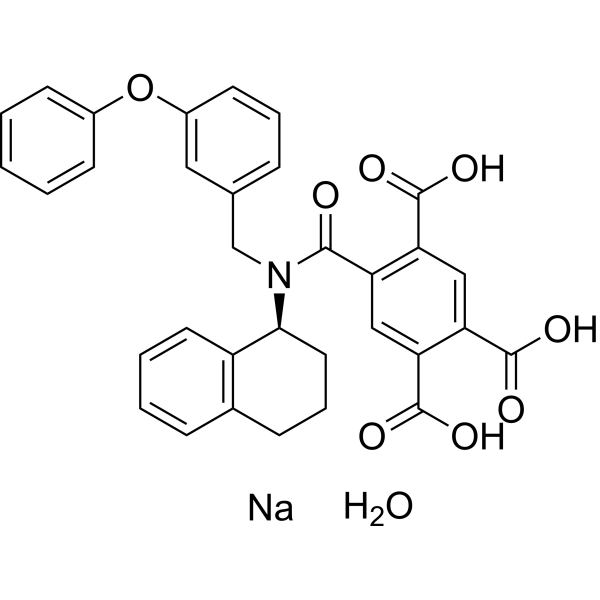
    A-317491 sodium salt hydrate is a potent, selective and non-nucleotide antagonist of P2X3 and P2X2/3 receptors, with Kis of 22, 22, 9, and 92 nM for hP2X3, rP2X3, hP2X2/3, and rP2X2/3, respectively. A-317491 sodium salt hydrate is highly selective (IC50>10 μM) over other P2 receptors and other neurotransmitter receptors, ion channels, and enzymes. A-317491 sodium salt hydrate reduces inflammatory and neuropathic pain by blocking P2X3 and P2X2/3 receptor-mediated calcium flux .
    A-317491 sodium salt hydrate
  • HY-108960

    P2X Receptor Interleukin Related Neurological Disease
    PPADS is a P2X receptor (P2X Receptor) antagonist and a reversible competitive antagonist of NAADP receptors, with IC50 values of 68 nM (P2X1) and 214 nM (P2X3), respectively. PPADS alleviates pain-related behaviors in the central and peripheral nervous systems of mice after peripheral neuropathy, inhibits the overproduction of IL-1β, IL-6, iNOS and nNOS, and suppresses the hydrolytic activity of extracellular ATPase. PPADS blocks ATP-mediated inward currents on recombinant rat P2X1 and P2X3 receptors, and inhibits purinergic nerve stimulation-induced contraction of rabbit bladder detrusor muscle. PPADS is applicable to research related to neuropathic pain .
    PPADS
  • HY-150059

    P2X Receptor Neurological Disease Inflammation/Immunology
    P2X7 receptor antagonist-2 is a potent P2X7 receptor antagonist with a pIC50 value of 6.5-7.5. P2X7 receptor antagonist-2 has efficacy of combating neuroinflammation .
    P2X7 receptor antagonist-2
  • HY-137955

    P2Y Receptor Cardiovascular Disease Others Neurological Disease
    MRS 2211 sodium hydrate is a competitive P2Y13 receptor antagonist (pIC50= 5.97). MRS 2211 sodium hydrate is highly selective to the P2Y13 receptor, showing more than 20-fold selectivity compared to the P2Y1 and P2Y12 receptors. MRS 2211 sodium hydrate can be used to further investigate the role of the P2Y13 receptor in different physiological and pathological processes, such as its function in blood cells, the nervous system and the immune system .
    MRS 2211 sodium hydrate
  • HY-W795960

    Biochemical Assay Reagents Calcium Channel Phospholipase Neurological Disease Metabolic Disease
    D-myo-inositol 1,4,5-trisphosphate sodium salt is a widely distributed intracellular second messenger. D-myo-inositol 1,4,5-trisphosphate sodium salt acts as a potent agonist of the Ins (1,4,5) P3 receptor with an EC50 of 0.12 μM and inhibits bovine PLC-δ1, with an IC50 of 5.4 μM for binding and an IC50 of 12.4 μM for hydrolysis. D-myo-inositol 1,4,5-trisphosphate sodium saltis metabolized into Ins (1,4) P2 and Ins (1,3,4,5) P4. D-myo-inositol 1,4,5-trisphosphate sodium salt mediates various cellular processes, including growth, development, fertilization, secretion, contraction and neuromodulation. D-myo-inositol 1,4,5-trisphosphate sodium salt inhibits PIP2 hydrolysis and Ca 2+-ATPase activity. D-myo-inositol 1,4,5-trisphosphate sodium salt is used for cardiac preconditioning, exerts cardioprotective effects and mimics ischemic preconditioning. D-myo-inositol 1,4,5-trisphosphate sodium salt is applied in studies related to intracellular calcium and phosphoinositol signaling pathways .
    D-myo-Inositol 1,4,5-trisphosphate sodium salt
  • HY-157712

    Biochemical Assay Reagents Others
    08:0 PI(4,5)P2 ammonium is suitable for identifying its binding site at the transient receptor potential vanilloid 4 (TRPV 4 N) terminus .
    08:0 PI(4,5)P2 ammonium
  • HY-18745

    Benzoylbenzoyl-ATP triethylammonium

    P2X Receptor Inflammation/Immunology Cancer
    BzATP triethylammonium acts as a P2X receptor agonist with pEC50s of 8.74, 5.26, 7.10, 7.50, 6.19, 6.31, 5.33 for P2X1, P2X2, P2X3, P2X2/3, P2X4 and P2X7, respectively . BzATP triethylammonium is potent at P2X7 receptors with EC50s of 3.6 μM and 285 μM for rat P2X7 and mouse P2X7, respectively .
    BzATP triethylammonium
  • HY-110089

    P2Y Receptor Inflammation/Immunology
    mrs 4062 (TEA) is a selective P2Y4 receptor agonist with an EC50 of 23 nM. mrs 4062 (TEA) has EC50s of 640 nM and 740 nM for P2Y2 and P2Y6, respectively .
    mrs 4062 TEA
  • HY-113359AS2

    UDP-13C9,15N2 dilithium

    Isotope-Labeled Compounds Endogenous Metabolite P2Y Receptor Others
    Uridine 5'-diphosphate- 13C9, 15N2 dilithium is 13C and 15N-labeled Uridine 5'-diphosphate (HY-113359). Uridine 5'-diphosphate is a P2Y6 receptor agonist with an EC50 of 0.013 μM for human P2Y6 receptor.
    Uridine 5'-diphosphate-13C9,15N2 dilithium
  • HY-160645

    P2X Receptor Neurological Disease Endocrinology Cancer
    P2X4 antagonist-1 is a P2X4 receptor antagonist with an IC50 of 15 nM. P2X4 antagonist-1 inhibits ATP (HY-B2176)-induced calcium influx. P2X4 antagonist-1 can be used for the research of pain syndromes, endometriosis, cancer .
    P2X4 antagonist-1
  • HY-101308

    P2Y Receptor Cardiovascular Disease
    MRS2179 tetrasodium is a competitive P2Y1 receptor antagonist, with a Kb of 102 nM and a pA2 of 6.99 for turkey P2Y1 receptor. MRS2179 tetrasodium is selective for P2Y1 over P2X1 (IC50=1.15 µM), P2X3 (12.9 µM), P2X2, P2X4, P2Y2, P2Y4, and P2Y6 receptors . MRS2179 tetrasodium inhibits platelet aggregation .
    MRS2179 tetrasodium
  • HY-145466

    P2X Receptor Neurological Disease
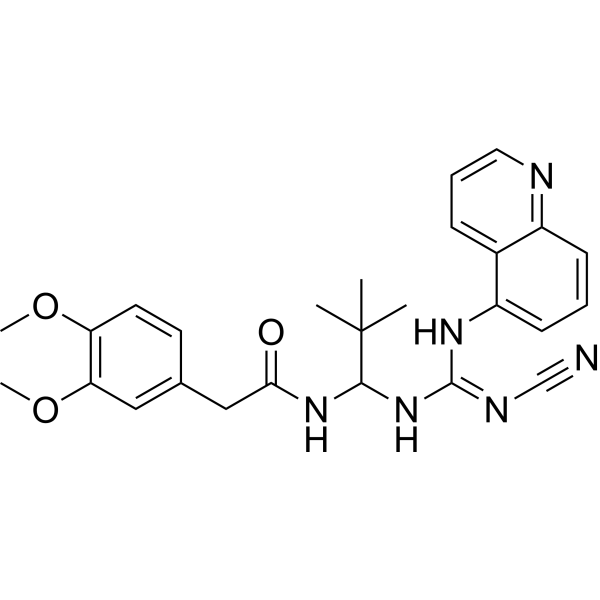
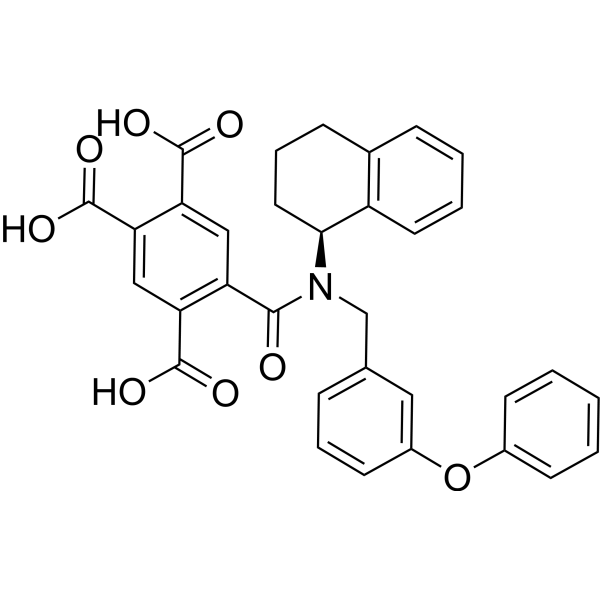
    EVT-401 (P2X7 receptor antagonist-1) is a purinergic P2X7 receptor antagonist. EVT-401 has efficacy of combating neuroinflammation .
    EVT-401
  • HY-19978

    P2X Receptor Neurological Disease
    RO-3 is a potent, and orally active P2X3 and P2X2/3 antagonist with pIC50s of 5.9 and 7.0 for human homomultimeric P2X3 and heteromultimeric P2X2/3 receptors, respectively. RO-3 shows selectivity for P2X3 and P2X2/3 over all other functional homomultimeric P2X receptors (IC50 >10 μM at P2X1,2,4,5,7) .
    RO-3
  • HY-119221

    LPL Receptor Neurological Disease Inflammation/Immunology
    AUY954 is an oral active and selective sphingosine-1-phosphate receptor 1 agonist with the EC50 values of 1.2 nM, 0.9 nM >10,000 nM, 1,210 nM, >1,000 nM, and 340 nM for hS1P2, mS1P2, S1P2, S1P3, S1P4, and S1P5 receptors, respectively. AUY954 can be used for study of experimental autoimmune neuritis .
    AUY954
  • HY-137608

    UDP-β-S

    P2Y Receptor DNA/RNA Synthesis Cardiovascular Disease Inflammation/Immunology
    Uridine 5'-O-thiodiphosphate (UDP-β-S) is a P2Y6 receptor agonist with an EC50 of 25 nM. Uridine 5'-O-thiodiphosphate resists degradation by extracellular nucleotidases and stimulates the accumulation of inositol phosphates. Uridine 5'-O-thiodiphosphate stimulates contractile responses in endothelium-denuded rat mesenteric arteries. As a mitogen, Uridine 5'-O-thiodiphosphate stimulates DNA synthesis, [ 3H] thymidine incorporation, protein synthesis, [ 3H]leucine incorporation, and increases the number of vascular smooth muscle cells. Uridine 5'-O-thiodiphosphate can be used in the research of cardiovascular diseases such as atherosclerosis .
    Uridine 5'-O-thiodiphosphate
  • HY-137608A

    UDP-β-S trisodium

    P2Y Receptor DNA/RNA Synthesis Cardiovascular Disease Inflammation/Immunology
    Uridine 5'-O-thiodiphosphate trisodium (UDP-β-S trisodium) is a P2Y6 receptor agonist with an EC50 of 25 nM. Uridine 5'-O-thiodiphosphate trisodium resists degradation by extracellular nucleotidases and stimulates the accumulation of inositol phosphates. Uridine 5'-O-thiodiphosphate trisodium stimulates contractile responses in endothelium-denuded rat mesenteric arteries. As a mitogen, Uridine 5'-O-thiodiphosphate trisodium stimulates DNA synthesis, [ 3H] thymidine incorporation, protein synthesis, [ 3H]leucine incorporation, and increases the number of vascular smooth muscle cells. Uridine 5'-O-thiodiphosphate trisodium can be used in the research of cardiovascular diseases such as atherosclerosis .
    Uridine 5'-O-thiodiphosphate trisodium
  • HY-137602

    UP2U

    P2Y Receptor Others
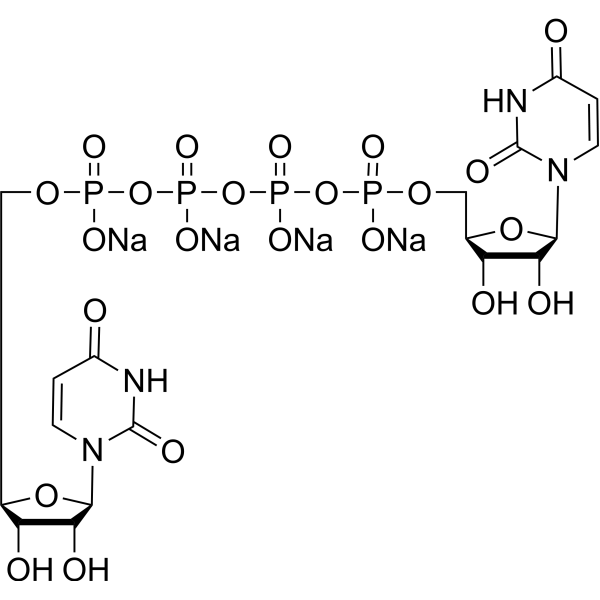
    P1,P2-Diuridine-5’-diphosphate (Up2U) is a symmetrical dinucleoside polyphosphate containing two pyrimidine base moieties. P1,P2-Diuridine-5’-diphosphate is also an activator of purinergic P2Y receptor .
    P1,P2-Diuridine-5’-diphosphate
  • HY-101370

    P2X Receptor Metabolic Disease
    2-Methylthio-ATP tetrasodium is a non-specific P2-receptor agonist. 2-Methylthio-ATP tetrasodium causes noncompetitive inhibition of ADP-induced human platelet aggregation .
    2-Methylthio-ATP tetrasodium
  • HY-134370

    P2X Receptor Cardiovascular Disease
    Ap4G is a dinucleoside polyphosphate compound with vasoconstrictor activity. Ap4G regulates vasoconstriction through P2 receptors, especially P2X receptors, and is an important tool for studying vascular physiology and pathology .
    Ap4G

Inquiry Online

Your information is safe with us. * Required Fields.

Salutation


Country or Region *

Applicant Name *


Organization Name *

Department *


Email Address *


Product Name *

Cat. No.


Requested quantity *

Phone Number *


Remarks

Inquiry Online

Inquiry Information

Product Name:
Cat. No.:
Quantity:
MCE Japan Authorized Agent:

