Search Result
Results for "
PEGylation
" in MedChemExpress (MCE) Product Catalog:
57
Biochemical Assay Reagents
| Cat. No. |
Product Name |
Target |
Research Areas |
Chemical Structure |
-
- HY-166990
-
-
-
- HY-147087
-
|
|
Liposome
|
Cancer
|
|
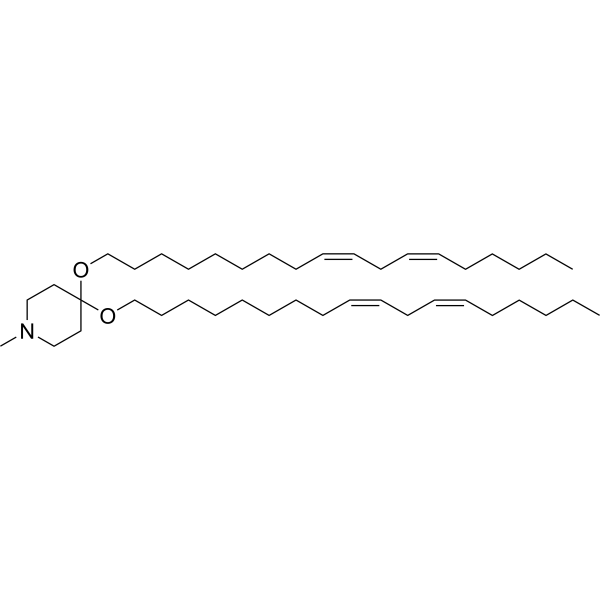
YSK 05 is a pH-sensitive cationic lipid. YSK 05 improves the intracellular trafficking of non-viral vectors. YSK 05-MEND shows significantly good gene silencing activity and hemolytic activity. YSK 05 overcomes the suppression of endosomal escape by PEGylation. YSK 05 effectively enhances siRNA delivery both in vitro and in vivo .
|
-
-
- HY-W451406C
-
|
|
PROTAC Linkers
|
Others
|
|
NH2-PEG2000-NH2 is a polyethylene glycol derivative containing two primary amine groups. The amino group can react quickly with activated carboxylic acid or carboxyl groups such as NHS esters to form stable amide bonds. The PEGylation of NH2-PEG-NH2 can increase solubility and stability, and reduce the immunogenicity of peptides and proteins, so it is mostly used to modify proteins, peptides and other substances.
|
-
-
- HY-166990B
-
-
-
- HY-P11288A
-
|
|
PACAP Receptor
Apoptosis
|
Cancer
|
|
ANT308 TFA is a vasoactive intestinal polypeptide (VIP receptor) antagonist. ANT308 TFA significantly enhances the activation and proliferation of T cells. ANT308 TFA inhibits the migration and metastasis, induces apoptosis of melanoma tumor cells by inhibiting VIP-VPAC2 signaling and reducing the expression of MCAM and N-cadherin. ANT308 TFA can be used for the study of acute myeloid leukemia (AML) and uveal melanoma (UVM) .
|
-
-
- HY-P11288
-
|
|
PACAP Receptor
Apoptosis
|
Cancer
|
|
ANT308 is a vasoactive intestinal polypeptide (VIP receptor) antagonist. ANT308 significantly enhances the activation and proliferation of T cells. ANT308 inhibits the migration and metastasis, induces apoptosis of melanoma tumor cells by inhibiting VIP-VPAC2 signaling and reducing the expression of MCAM and N-cadherin. ANT308 can be used for the studies of acute myeloid leukemia (AML) and uveal melanoma (UVM) .
|
-
-
- HY-W1049092
-
|
|
Biochemical Assay Reagents
|
Others
|
|
mPEG2000-N3 can be used to modify proteins, peptides, and other materials. The azide group can react with alkynes in aqueous solution catalyzed by copper. It can also be easily reduced to an amine group. PEGylation can increase solubility and stability and reduce the immunogenicity of peptides and proteins. mPEG2000-N3 can also inhibit the nonspecific binding of charged molecules to the modified surface .
|
-
-
- HY-140656H
-
|
|
Biochemical Assay Reagents
|
Others
|
|
Biotin-PEG40000-Biotin can be used for crosslinking PEGylation by binding to two streptavidin and avidin. Biotin is conjugated to a linear PEG through a stable amide linker .
|
-
-
- HY-176509A
-
|
|
Liposome
|
Others
|
|
DSPE-PEG2000-CHO is a linear heterobifunctional PEGylation reagent with DSPE phospholipids and aldehyde groups. PEG linkers have good hydrophilicity and water solubility. Aldehyde-polyethylene glycol (DSPE) is one of the most commonly used reactive phospholipids to bind antibodies, peptides or other ligands to the surface of liposomes and other lipid-polyethylene glycol nanoparticles. DSPE-PEG2000-CHO can be used for drug delivery .
|
-
-
- HY-W020780C
-
|
mPEG3400-Maleimide
|
Biochemical Assay Reagents
|
Others
|
|
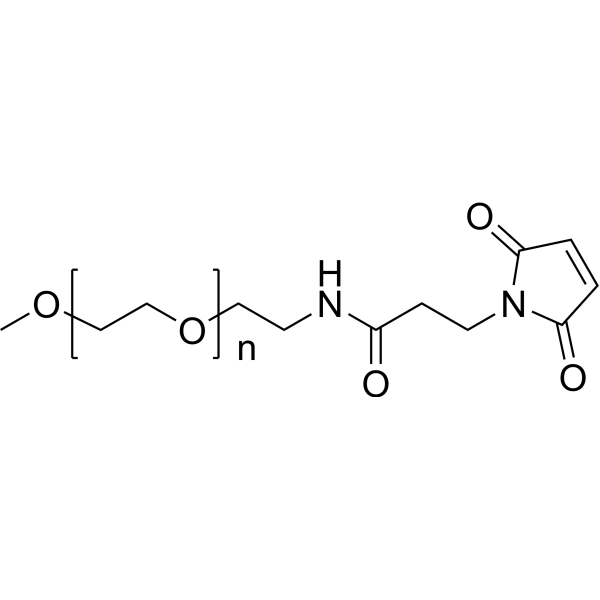
mPEG3400-Mal is a PEG derivative used for thiol pegylation of protein molecules. Its maleimide group (-Mal) degrades in aqueous media and finds application in drug delivery studies.
|
-
-
- HY-108790
-
|
Peginterferon β-1a
|
Apoptosis
|
Neurological Disease
Cancer
|
|
Peginterferon beta-1a (Peginterferon β-1a) is the first pegylated interferon beta-1a molecule. Peginterferon beta-1a induces cancer cells apoptosis and shows anti-tumor activities in nude mice models. Peginterferon beta-1a can be used for the research of cancer and multiple sclerosis (RMS) .
|
-
-
- HY-155901
-
|
Maleimide-NH-PEG2000-amine TFA
|
Biochemical Assay Reagents
|
Others
|
|
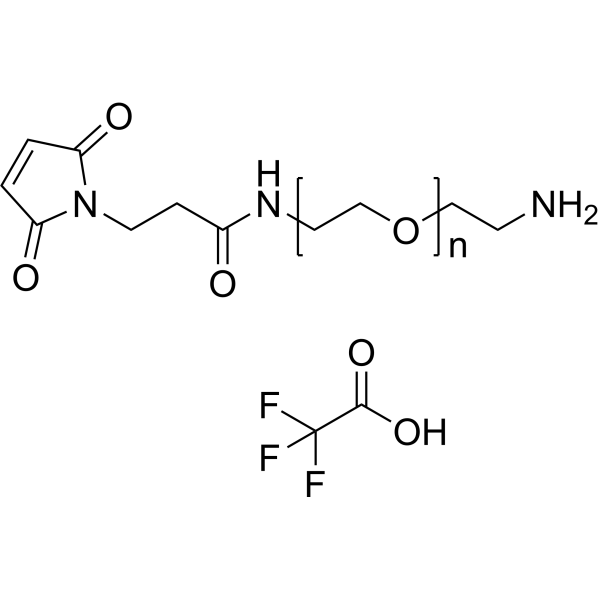
Mal-NH-PEG2000-NH2TFA is a PEG derivative that may be used for thiol PEGylation of protein molecules. Its maleimide group (-Mal) degrades in aqueous media and finds application in drug delivery studies.
|
-
-
- HY-176509C
-
|
|
Liposome
|
Others
|
|
DSPE-PEG5000-CHO is a linear heterobifunctional PEGylation reagent with DSPE phospholipids and aldehyde groups. PEG linkers have good hydrophilicity and water solubility. Aldehyde-polyethylene glycol (DSPE) is one of the most commonly used reactive phospholipids to bind antibodies, peptides or other ligands to the surface of liposomes and other lipid-polyethylene glycol nanoparticles. DSPE-PEG5000-CHO can be used for drug delivery .
|
-
-
- HY-176509
-
|
|
Liposome
|
Others
|
|
DSPE-PEG1000-CHO is a linear heterobifunctional PEGylation reagent with DSPE phospholipids and aldehyde groups. PEG linkers have good hydrophilicity and water solubility. Aldehyde-polyethylene glycol (DSPE) is one of the most commonly used reactive phospholipids to bind antibodies, peptides or other ligands to the surface of liposomes and other lipid-polyethylene glycol nanoparticles. DSPE-PEG1000-CHO can be used for drug delivery .
|
-
-
- HY-174359C
-
|
|
Biochemical Assay Reagents
|
Others
|
|
Alkyne-PEG5000-NH2 is an alkyne-functionalized bifunctional PEG derivative that can be used to modify proteins, peptides, and other materials. The alkyne group reacts with azides in aqueous solution in a copper-catalyzed manner. PEGylation can increase solubility and stability and reduce the immunogenicity of peptides and proteins .
|
-
-
- HY-174358D
-
|
|
Biochemical Assay Reagents
|
Others
|
|
HOOC-PEG10000-COOH has two active carboxyl groups at both ends, which can selectively react with the amino groups in peptide coupling agents. HOOC-PEG10000-COOH is a good cross-linking agent for PEGylation of proteins and peptides, nanoparticles and surface modification .
|
-
-
- HY-148154
-
|
|
Drug Derivative
|
Others
|
|
Poly(oxy-1,2-ethanediyl)-propoxy-amide-C6 (n=450) is an active compound. Poly(oxy-1,2-ethanediyl)-propoxy-amide-C6 is a small molecule moiety for pegylation modification in Avacincaptad pegol (HY-147080) .
|
-
-
- HY-148153
-
|
|
Drug Derivative
|
Inflammation/Immunology
|
|
C6-Amide-(PEG)n-CH3 (n=310) is an active compound. C6-Amide-(PEG)n-CH3 is a small molecule moiety for PEGylation in Egaptivon pegol (HY-147079) that can be used for the research of platelet dysfunction disorders .
|
-
-
- HY-W020780A
-
|
mPEG350-Maleimide
|
Biochemical Assay Reagents
|
Others
|
|
mPEG350-Mal is a PEG derivative used for thiol PEGylation of protein molecules. Its maleimide group (-Mal) degrades in aqueous media and finds application in drug delivery studies.
|
-
-
- HY-W020780B
-
|
mPEG750-Maleimide
|
Biochemical Assay Reagents
|
Others
|
|
mPEG750-Mal is a PEG derivative used for thiol pegylation of protein molecules. Its maleimide group (-Mal) degrades in aqueous media and finds application in drug delivery studies.
|
-
-
- HY-144011
-
|
|
Liposome
|
Others
|
|
DSPE-PEG-Cyanur ammonium is a PEG derivative containing cyanur functional group. DSPE-PEG-Cyanur ammonium can be used for PEGylation of protein under mild basic conditions. DSPE-PEG-Cyanur ammonium can be used for nanostructured lipid carrier .
|
-
-
- HY-174358A
-
|
|
Biochemical Assay Reagents
|
Others
|
|
HOOC-PEG2000-COOH has two active carboxyl groups at both ends, which can selectively react with the amino groups in peptide coupling agents. HOOC-PEG2000-COOH is a good cross-linking agent for PEGylation of proteins and peptides, nanoparticles and surface modification .
|
-
-
- HY-174358E
-
|
|
Biochemical Assay Reagents
|
Others
|
|
HOOC-PEG20000-COOH has two active carboxyl groups at both ends, which can selectively react with the amino groups in peptide coupling agents. HOOC-PEG20000-COOH is a good cross-linking agent for PEGylation of proteins and peptides, nanoparticles and surface modification .
|
-
-
- HY-174359H
-
|
|
Biochemical Assay Reagents
|
Others
|
|
Alkyne-PEG40000-NH2 is an alkyne-functionalized bifunctional PEG derivative that can be used to modify proteins, peptides, and other materials. The alkyne group reacts with azides in aqueous solution in a copper-catalyzed manner. PEGylation can increase solubility and stability and reduce the immunogenicity of peptides and proteins .
|
-
-
- HY-174359A
-
|
|
Biochemical Assay Reagents
|
Others
|
|
Alkyne-PEG2000-NH2 is an alkyne-functionalized bifunctional PEG derivative that can be used to modify proteins, peptides, and other materials. The alkyne group reacts with azides in aqueous solution in a copper-catalyzed manner. PEGylation can increase solubility and stability and reduce the immunogenicity of peptides and proteins .
|
-
-
- HY-164076
-
|
|
Biochemical Assay Reagents
|
Others
|
|
mPEG-Epoxide is an activated polyethylene glycol (mPEG) derivative, which is achieved by converting the hydroxyl groups of mPEG into reactive epoxy groups. mPEG-Epoxide is a mild PEGylation reagent that reacts with amino groups in peptides and proteins to form stable secondary amine bonds. mPEG-Epoxide can be used in protein engineering and biomaterials research .
|
-
-
- HY-W1049075E
-
|
|
Biochemical Assay Reagents
|
Others
|
|
mPEG-pALD (MW 2000) is an important unilaterally active PEG derivative whose reactive groups can react with amines, peptides and the N-termini of proteins to form imines containing C=N double bonds, which can be further reduced. Polyethylene glycol aldehyde or ketone derivatives can be used for reversible PEGylation by reacting with hydrazine or hydrazine to form hydrolyzed acylhydrazone bonds .
|
-
-
- HY-W1049075B
-
|
|
Biochemical Assay Reagents
|
Others
|
|
mPEG10000-Pald is an important unilaterally active PEG derivative whose reactive groups can react with amines, peptides and the N-termini of proteins to form imines containing C=N double bonds, which can be further reduced. Polyethylene glycol aldehyde or ketone derivatives can be used for reversible PEGylation by reacting with hydrazine or hydrazine to form hydrolyzed acylhydrazone bonds .
|
-
-
- HY-W1049075D
-
|
|
Biochemical Assay Reagents
|
Others
|
|
mPEG40000-pALD is an important unilaterally active PEG derivative whose reactive groups can react with amines, peptides and the N-termini of proteins to form imines containing C=N double bonds, which can be further reduced. Polyethylene glycol aldehyde or ketone derivatives can be used for reversible PEGylation by reacting with hydrazine or hydrazine to form hydrolyzed acylhydrazone bonds .
|
-
-
- HY-161750
-
|
|
PROTACs
Anaplastic lymphoma kinase (ALK)
|
Cancer
|
|
PROTAC ALK degrader-2 (B1-PEG) is an ALK degrader based on PROTACs, with the DC50 of 45 nM in H3122 EML4-ALK DC50 (GSH+). PROTAC ALK degrader-2, through PEGylation, is engineered to self-organize into micelles in water and releases its active form in response to the tumor-specific high GSH environment .
|
-
-
- HY-176509D
-
|
|
Liposome
|
Others
|
|
DSPE-PEG10000-CHO is a linear heterobifunctional PEGylation reagent with DSPE phospholipids and aldehyde groups. PEG linkers have good hydrophilicity and water solubility. Aldehyde-polyethylene glycol (DSPE) is one of the most commonly used reactive phospholipids to bind antibodies, peptides or other ligands to the surface of liposomes and other lipid-polyethylene glycol nanoparticles. DSPE-PEG10000-CHO can be used for drug delivery .
|
-
-
- HY-W1049092H
-
|
|
Biochemical Assay Reagents
|
Others
|
|
mPEG3400-N3 can be used to modify proteins, peptides, and other materials. The azide group can react with alkynes in aqueous solution catalyzed by copper. It can also be easily reduced to an amine group. PEGylation can increase solubility and stability and reduce the immunogenicity of peptides and proteins. mPEG3400-N3 can also inhibit the nonspecific binding of charged molecules to the modified surface .
|
-
-
- HY-176509B
-
|
|
Liposome
|
Others
|
|
DSPE-PEG3400-CHO is a linear heterobifunctional PEGylation reagent with DSPE phospholipids and aldehyde groups. PEG linkers have good hydrophilicity and water solubility. Aldehyde-polyethylene glycol (DSPE) is one of the most commonly used reactive phospholipids to bind antibodies, peptides or other ligands to the surface of liposomes and other lipid-polyethylene glycol nanoparticles. DSPE-PEG3400-CHO can be used for drug delivery .
|
-
-
- HY-W1049092E
-
|
|
Biochemical Assay Reagents
|
Others
|
|
mPEG1000-N3 can be used to modify proteins, peptides, and other materials. The azide group can react with alkynes in aqueous solution catalyzed by copper. It can also be easily reduced to an amine group. PEGylation can increase solubility and stability and reduce the immunogenicity of peptides and proteins. mPEG1000-N3 can also inhibit the nonspecific binding of charged molecules to the modified surface .
|
-
-
- HY-176509H
-
|
|
Liposome
|
Others
|
|
DSPE-PEG40000-CHO is a linear heterobifunctional PEGylation reagent with DSPE phospholipids and aldehyde groups. PEG linkers have good hydrophilicity and water solubility. Aldehyde-polyethylene glycol (DSPE) is one of the most commonly used reactive phospholipids to bind antibodies, peptides or other ligands to the surface of liposomes and other lipid-polyethylene glycol nanoparticles. DSPE-PEG40000-CHO can be used for drug delivery .
|
-
-
- HY-W451406D
-
|
|
PROTAC Linkers
|
Others
|
|
NH2-PEG10000-NH2 is a polyethylene glycol derivative containing two primary amine groups. The amino group can react quickly with activated carboxylic acid or carboxyl groups such as NHS esters to form stable amide bonds. The PEGylation of NH2-PEG-NH2 can increase solubility and stability, and reduce the immunogenicity of peptides and proteins, so it is mostly used to modify proteins, peptides and other substances.
|
-
-
- HY-W451406A
-
|
|
PROTAC Linkers
|
Others
|
|
NH2-PEG5000-NH2 is a polyethylene glycol derivative containing two primary amine groups. The amino group can react quickly with activated carboxylic acid or carboxyl groups such as NHS esters to form stable amide bonds. The PEGylation of NH2-PEG-NH2 can increase solubility and stability, and reduce the immunogenicity of peptides and proteins, so it is mostly used to modify proteins, peptides and other substances.
|
-
-
- HY-W800717
-
|
|
Biochemical Assay Reagents
|
Others
|
|
Tetra-(amido-PEG10-azide) is a branched PEG linker with four terminal azide groups. The azide groups enable PEGylation via Click Chemistry.
|
-
-
- HY-W800716
-
|
|
Biochemical Assay Reagents
|
Others
|
|
Tri(Azide-PEG10-NHCO-ethyloxyethyl)amine is a branched PEG linker with three terminal azide groups. The azide groups enable PEGylation via Click Chemistry.
|
-
-
- HY-W1123943A
-
|
|
Biochemical Assay Reagents
|
Others
|
|
8-Arm-PEG600-Biotin is a multiarmed PEG derivative with biotin at each terminal of the eight arms. 8-Arm-PEG600-Biotin is for PEGylation by binding to streptavidin and avidin with high affinity and specificity .
|
-
-
- HY-W1123943
-
|
|
Biochemical Assay Reagents
|
Others
|
|
8-Arm-PEG400-Biotin is a multiarmed PEG derivative with biotin at each terminal of the eight arms. 8-Arm-PEG400-Biotin is for PEGylation by binding to streptavidin and avidin with high affinity and specificity .
|
-
-
- HY-W1123943B
-
|
|
Biochemical Assay Reagents
|
Others
|
|
8-Arm-PEG1000-Biotin is a multiarmed PEG derivative with biotin at each terminal of the eight arms. 8-Arm-PEG1000-Biotin is for PEGylation by binding to streptavidin and avidin with high affinity and specificity .
|
-
-
- HY-W1123943H
-
|
|
Biochemical Assay Reagents
|
Others
|
|
8-Arm-PEG10000-Biotin is a multiarmed PEG derivative with biotin at each terminal of the eight arms. 8-Arm-PEG10000-Biotin is for PEGylation by binding to streptavidin and avidin with high affinity and specificity .
|
-
-
- HY-W1123943E
-
|
|
Biochemical Assay Reagents
|
Others
|
|
8-Arm-PEG5000-Biotin is a multiarmed PEG derivative with biotin at each terminal of the eight arms. 8-Arm-PEG5000-Biotin is for PEGylation by binding to streptavidin and avidin with high affinity and specificity .
|
-
-
- HY-W1123943D
-
|
|
Biochemical Assay Reagents
|
Others
|
|
8-Arm-PEG3400-Biotin is a multiarmed PEG derivative with biotin at each terminal of the eight arms. 8-Arm-PEG3400-Biotin is for PEGylation by binding to streptavidin and avidin with high affinity and specificity .
|
-
-
- HY-W1123943C
-
|
|
Biochemical Assay Reagents
|
Others
|
|
8-Arm-PEG2000-Biotin is a multiarmed PEG derivative with biotin at each terminal of the eight arms. 8-Arm-PEG2000-Biotin is for PEGylation by binding to streptavidin and avidin with high affinity and specificity .
|
-
-
- HY-W800688
-
|
|
Biochemical Assay Reagents
|
Others
|
|
Acid-PEG5-Amide-Tri(3-methoxypropanamide-PEG4-Azide) Methane is a branched PEG linker with a terminal carboxylic acid group and three terminal azides. The azide groups enables PEGylation via Click Chemistry.
|
-
-
- HY-W1048860B
-
|
|
Biochemical Assay Reagents
|
Others
|
|
4-Arm PEG10000-alkyne is a multi-arm PEG derivative with alkynyl groups at each end of four arms attached to a pentaerythritol core. PEG alkyne can be used for PEGylation via copper-catalyzed click chemistry with azides .
|
-
-
- HY-W1048860D
-
|
|
Biochemical Assay Reagents
|
Others
|
|
4-Arm PEG40000-alkyne is a multi-arm PEG derivative with alkynyl groups at each end of four arms attached to a pentaerythritol core. PEG alkyne can be used for PEGylation via copper-catalyzed click chemistry with azides .
|
-
-
- HY-W1048860A
-
|
|
Biochemical Assay Reagents
|
Others
|
|
4-Arm PEG5000-alkyne is a multi-arm PEG derivative with alkynyl groups at each end of four arms attached to a pentaerythritol core. PEG alkyne can be used for PEGylation via copper-catalyzed click chemistry with azides .
|
-
- HY-W1048860C
-
|
|
Biochemical Assay Reagents
|
Others
|
|
4-Arm PEG20000-alkyne is a multi-arm PEG derivative with alkynyl groups at each end of four arms attached to a pentaerythritol core. PEG alkyne can be used for PEGylation via copper-catalyzed click chemistry with azides .
|
-
- HY-174358C
-
|
|
Biochemical Assay Reagents
|
Others
|
|
HOOC-PEG5000-COOH has two active carboxyl groups at both ends, which can selectively react with the amino groups in peptide coupling agents. HOOC-PEG5000-COOH is a good cross-linking agent for PEGylation of proteins and peptides, nanoparticles and surface modification .
|
-
- HY-174358
-
|
|
Biochemical Assay Reagents
|
Others
|
|
HOOC-PEG1000-COOH has two active carboxyl groups at both ends, which can selectively react with the amino groups in peptide coupling agents. HOOC-PEG1000-COOH is a good cross-linking agent for PEGylation of proteins and peptides, nanoparticles and surface modification .
|
-
- HY-174359D
-
|
|
Biochemical Assay Reagents
|
Others
|
|
Alkyne-PEG10000-NH2 is an alkyne-functionalized bifunctional PEG derivative that can be used to modify proteins, peptides, and other materials. The alkyne group reacts with azides in aqueous solution in a copper-catalyzed manner. PEGylation can increase solubility and stability and reduce the immunogenicity of peptides and proteins .
|
-
- HY-174359
-
|
|
Biochemical Assay Reagents
|
Others
|
|
Alkyne-PEG1000-NH2 is an alkyne-functionalized bifunctional PEG derivative that can be used to modify proteins, peptides, and other materials. The alkyne group reacts with azides in aqueous solution in a copper-catalyzed manner. PEGylation can increase solubility and stability and reduce the immunogenicity of peptides and proteins .
|
-
- HY-174359B
-
|
|
Biochemical Assay Reagents
|
Others
|
|
Alkyne-PEG3400-NH2 is an alkyne-functionalized bifunctional PEG derivative that can be used to modify proteins, peptides, and other materials. The alkyne group reacts with azides in aqueous solution in a copper-catalyzed manner. PEGylation can increase solubility and stability and reduce the immunogenicity of peptides and proteins .
|
-
- HY-174358H
-
|
|
Biochemical Assay Reagents
|
Others
|
|
HOOC-PEG40000-COOH has two active carboxyl groups at both ends, which can selectively react with the amino groups in peptide coupling agents. HOOC-PEG40000-COOH is a good cross-linking agent for PEGylation of proteins and peptides, nanoparticles and surface modification .
|
-
- HY-174359E
-
|
|
Biochemical Assay Reagents
|
Others
|
|
Alkyne-PEG20000-NH2 is an alkyne-functionalized bifunctional PEG derivative that can be used to modify proteins, peptides, and other materials. The alkyne group reacts with azides in aqueous solution in a copper-catalyzed manner. PEGylation can increase solubility and stability and reduce the immunogenicity of peptides and proteins .
|
-
- HY-174358B
-
|
|
Biochemical Assay Reagents
|
Others
|
|
HOOC-PEG3400-COOH has two active carboxyl groups at both ends, which can selectively react with the amino groups in peptide coupling agents. HOOC-PEG3400-COOH is a good cross-linking agent for PEGylation of proteins and peptides, nanoparticles and surface modification .
|
-
- HY-W1049075H
-
|
|
Biochemical Assay Reagents
|
Others
|
|
mPEG-pALD (MW 3400) is an important unilaterally active PEG derivative whose reactive groups can react with amines, peptides and the N-termini of proteins to form imines containing C=N double bonds, which can be further reduced. Polyethylene glycol aldehyde or ketone derivatives can be used for reversible PEGylation by reacting with hydrazine or hydrazine to form hydrolyzed acylhydrazone bonds .
|
-
- HY-W1049075C
-
|
|
Biochemical Assay Reagents
|
Others
|
|
mPEG20000-pALD is an important unilaterally active PEG derivative whose reactive groups can react with amines, peptides and the N-termini of proteins to form imines containing C=N double bonds, which can be further reduced. Polyethylene glycol aldehyde or ketone derivatives can be used for reversible PEGylation by reacting with hydrazine or hydrazine to form hydrolyzed acylhydrazone bonds .
|
-
- HY-W1049075A
-
|
|
Biochemical Assay Reagents
|
Others
|
|
mPEG5000-pALD is an important unilaterally active PEG derivative whose reactive groups can react with amines, peptides and the N-termini of proteins to form imines containing C=N double bonds, which can be further reduced. Polyethylene glycol aldehyde or ketone derivatives can be used for reversible PEGylation by reacting with hydrazine or hydrazine to form hydrolyzed acylhydrazone bonds .
|
-
- HY-W1049075
-
|
|
Biochemical Assay Reagents
|
Others
|
|
mPEG1000-pALD is an important unilaterally active PEG derivative whose reactive groups can react with amines, peptides and the N-termini of proteins to form imines containing C=N double bonds, which can be further reduced. Polyethylene glycol aldehyde or ketone derivatives can be used for reversible PEGylation by reacting with hydrazine or hydrazine to form hydrolyzed acylhydrazone bonds .
|
-
- HY-W1049092D
-
|
|
Biochemical Assay Reagents
|
Others
|
|
mPEG40000-N3 can be used to modify proteins, peptides, and other materials. The azide group can react with alkynes in aqueous solution catalyzed by copper. It can also be easily reduced to an amine group. PEGylation can increase solubility and stability and reduce the immunogenicity of peptides and proteins. mPEG40000-N3 can also inhibit the nonspecific binding of charged molecules to the modified surface .
|
-
- HY-W1049092C
-
|
|
Biochemical Assay Reagents
|
Others
|
|
mPEG20000-N3 can be used to modify proteins, peptides, and other materials. The azide group can react with alkynes in aqueous solution catalyzed by copper. It can also be easily reduced to an amine group. PEGylation can increase solubility and stability and reduce the immunogenicity of peptides and proteins. mPEG20000-N3 can also inhibit the nonspecific binding of charged molecules to the modified surface .
|
-
- HY-W1049092A
-
|
|
Biochemical Assay Reagents
|
Others
|
|
mPEG5000-N3 can be used to modify proteins, peptides, and other materials. The azide group can react with alkynes in aqueous solution catalyzed by copper. It can also be easily reduced to an amine group. PEGylation can increase solubility and stability and reduce the immunogenicity of peptides and proteins. mPEG5000-N3 can also inhibit the nonspecific binding of charged molecules to the modified surface .
|
-
- HY-176509E
-
|
|
Liposome
|
Others
|
|
DSPE-PEG20000-CHO is a linear heterobifunctional PEGylation reagent with DSPE phospholipids and aldehyde groups. PEG linkers have good hydrophilicity and water solubility. Aldehyde-polyethylene glycol (DSPE) is one of the most commonly used reactive phospholipids to bind antibodies, peptides or other ligands to the surface of liposomes and other lipid-polyethylene glycol nanoparticles. DSPE-PEG20000-CHO can be used for drug delivery .
|
-
- HY-W1049092B
-
|
|
Biochemical Assay Reagents
|
Others
|
|
mPEG10000-N3 can be used to modify proteins, peptides, and other materials. The azide group can react with alkynes in aqueous solution catalyzed by copper. It can also be easily reduced to an amine group. PEGylation can increase solubility and stability and reduce the immunogenicity of peptides and proteins. mPEG10000-N3 can also inhibit the nonspecific binding of charged molecules to the modified surface .
|
-
- HY-183964
-
|
|
Biochemical Assay Reagents
|
Others
|
|
DSPE-PEG2000-tetrazine is a synthetic phospholipid modified with PEG2000 and tetrazine moieties. DSPE-PEG2000-tetrazine gains improved steric stability via PEGylation. DSPE-PEG2000-tetrazine enables bioorthogonal click chemistry through its tetrazine segment, which selectively reacts with trans-cyclooctene (TCO) under complex biological environments. DSPE-PEG2000-tetrazine can be applied for researches related to click chemistry .
|
-
- HY-W1048549H
-
|
HOOC-PEG1000-Thiol
|
Biochemical Assay Reagents
|
Others
|
|
HOOC-PEG1000-SH (HOOC-PEG1000-Thiol) is a reactive thiol PEG derivative with a terminal carboxyl group. The carboxyl group can react with amine or hydroxyl groups to form a stable amide bond or an unstable ester bond. The reaction of the carboxyl group allows the amine or hydroxyl group to be converted into a free thiol with a linear PEG linkage. The generated thiol group can be used to modify the surface of gold nanoparticles or participate in other PEGylation reactions. The PEG linkage between the thiol and carboxyl groups has good water solubility, flexible linker distance and higher stability .
|
-
- HY-W1048549J
-
|
HOOC-PEG40000-Thiol
|
Biochemical Assay Reagents
|
Others
|
|
HOOC-PEG40000-SH (HOOC-PEG40000-Thiol) is a reactive thiol PEG derivative with a terminal carboxyl group. The carboxyl group can react with amine or hydroxyl groups to form a stable amide bond or an unstable ester bond. The reaction of the carboxyl group allows the amine or hydroxyl group to be converted into a free thiol with a linear PEG linkage. The generated thiol group can be used to modify the surface of gold nanoparticles or participate in other PEGylation reactions. The PEG linkage between the thiol and carboxyl groups has good water solubility, flexible linker distance and higher stability .
|
-
| Cat. No. |
Product Name |
Type |
-
- HY-166990
-
|
MeO-PEG5000-Mal
|
Biochemical Assay Reagents
|
|
Methoxypolyethylene glycol maleimide 5000 (MeO-PEG-Mal) is a protein PEGylation reagent.
|
-
- HY-147087
-
|
|
Biochemical Assay Reagents
|
|
YSK 05 is a pH-sensitive cationic lipid. YSK 05 improves the intracellular trafficking of non-viral vectors. YSK 05-MEND shows significantly good gene silencing activity and hemolytic activity. YSK 05 overcomes the suppression of endosomal escape by PEGylation. YSK 05 effectively enhances siRNA delivery both in vitro and in vivo .
|
-
- HY-166990B
-
|
MeO-PEG2000-Mal
|
Biochemical Assay Reagents
|
|
Methoxypolyethylene glycol maleimide 2000 (MeO-PEG2000-Mal) is a protein PEGylation reagent .
|
-
- HY-W1049092
-
|
|
Biochemical Assay Reagents
|
|
mPEG2000-N3 can be used to modify proteins, peptides, and other materials. The azide group can react with alkynes in aqueous solution catalyzed by copper. It can also be easily reduced to an amine group. PEGylation can increase solubility and stability and reduce the immunogenicity of peptides and proteins. mPEG2000-N3 can also inhibit the nonspecific binding of charged molecules to the modified surface .
|
-
- HY-140656H
-
|
|
Biochemical Assay Reagents
|
|
Biotin-PEG40000-Biotin can be used for crosslinking PEGylation by binding to two streptavidin and avidin. Biotin is conjugated to a linear PEG through a stable amide linker .
|
-
- HY-176509A
-
|
|
Biochemical Assay Reagents
|
|
DSPE-PEG2000-CHO is a linear heterobifunctional PEGylation reagent with DSPE phospholipids and aldehyde groups. PEG linkers have good hydrophilicity and water solubility. Aldehyde-polyethylene glycol (DSPE) is one of the most commonly used reactive phospholipids to bind antibodies, peptides or other ligands to the surface of liposomes and other lipid-polyethylene glycol nanoparticles. DSPE-PEG2000-CHO can be used for drug delivery .
|
-
- HY-W020780C
-
|
mPEG3400-Maleimide
|
Biochemical Assay Reagents
|
|
mPEG3400-Mal is a PEG derivative used for thiol pegylation of protein molecules. Its maleimide group (-Mal) degrades in aqueous media and finds application in drug delivery studies.
|
-
- HY-155901
-
|
Maleimide-NH-PEG2000-amine TFA
|
Biochemical Assay Reagents
|
|
Mal-NH-PEG2000-NH2TFA is a PEG derivative that may be used for thiol PEGylation of protein molecules. Its maleimide group (-Mal) degrades in aqueous media and finds application in drug delivery studies.
|
-
- HY-176509C
-
|
|
Biochemical Assay Reagents
|
|
DSPE-PEG5000-CHO is a linear heterobifunctional PEGylation reagent with DSPE phospholipids and aldehyde groups. PEG linkers have good hydrophilicity and water solubility. Aldehyde-polyethylene glycol (DSPE) is one of the most commonly used reactive phospholipids to bind antibodies, peptides or other ligands to the surface of liposomes and other lipid-polyethylene glycol nanoparticles. DSPE-PEG5000-CHO can be used for drug delivery .
|
-
- HY-176509
-
|
|
Biochemical Assay Reagents
|
|
DSPE-PEG1000-CHO is a linear heterobifunctional PEGylation reagent with DSPE phospholipids and aldehyde groups. PEG linkers have good hydrophilicity and water solubility. Aldehyde-polyethylene glycol (DSPE) is one of the most commonly used reactive phospholipids to bind antibodies, peptides or other ligands to the surface of liposomes and other lipid-polyethylene glycol nanoparticles. DSPE-PEG1000-CHO can be used for drug delivery .
|
-
- HY-174359C
-
|
|
Biochemical Assay Reagents
|
|
Alkyne-PEG5000-NH2 is an alkyne-functionalized bifunctional PEG derivative that can be used to modify proteins, peptides, and other materials. The alkyne group reacts with azides in aqueous solution in a copper-catalyzed manner. PEGylation can increase solubility and stability and reduce the immunogenicity of peptides and proteins .
|
-
- HY-174358D
-
|
|
Biochemical Assay Reagents
|
|
HOOC-PEG10000-COOH has two active carboxyl groups at both ends, which can selectively react with the amino groups in peptide coupling agents. HOOC-PEG10000-COOH is a good cross-linking agent for PEGylation of proteins and peptides, nanoparticles and surface modification .
|
-
- HY-W020780A
-
|
mPEG350-Maleimide
|
Biochemical Assay Reagents
|
|
mPEG350-Mal is a PEG derivative used for thiol PEGylation of protein molecules. Its maleimide group (-Mal) degrades in aqueous media and finds application in drug delivery studies.
|
-
- HY-W020780B
-
|
mPEG750-Maleimide
|
Biochemical Assay Reagents
|
|
mPEG750-Mal is a PEG derivative used for thiol pegylation of protein molecules. Its maleimide group (-Mal) degrades in aqueous media and finds application in drug delivery studies.
|
-
- HY-144011
-
|
|
Biochemical Assay Reagents
|
|
DSPE-PEG-Cyanur ammonium is a PEG derivative containing cyanur functional group. DSPE-PEG-Cyanur ammonium can be used for PEGylation of protein under mild basic conditions. DSPE-PEG-Cyanur ammonium can be used for nanostructured lipid carrier .
|
-
- HY-174358A
-
|
|
Biochemical Assay Reagents
|
|
HOOC-PEG2000-COOH has two active carboxyl groups at both ends, which can selectively react with the amino groups in peptide coupling agents. HOOC-PEG2000-COOH is a good cross-linking agent for PEGylation of proteins and peptides, nanoparticles and surface modification .
|
-
- HY-174358E
-
|
|
Biochemical Assay Reagents
|
|
HOOC-PEG20000-COOH has two active carboxyl groups at both ends, which can selectively react with the amino groups in peptide coupling agents. HOOC-PEG20000-COOH is a good cross-linking agent for PEGylation of proteins and peptides, nanoparticles and surface modification .
|
-
- HY-174359H
-
|
|
Biochemical Assay Reagents
|
|
Alkyne-PEG40000-NH2 is an alkyne-functionalized bifunctional PEG derivative that can be used to modify proteins, peptides, and other materials. The alkyne group reacts with azides in aqueous solution in a copper-catalyzed manner. PEGylation can increase solubility and stability and reduce the immunogenicity of peptides and proteins .
|
-
- HY-174359A
-
|
|
Biochemical Assay Reagents
|
|
Alkyne-PEG2000-NH2 is an alkyne-functionalized bifunctional PEG derivative that can be used to modify proteins, peptides, and other materials. The alkyne group reacts with azides in aqueous solution in a copper-catalyzed manner. PEGylation can increase solubility and stability and reduce the immunogenicity of peptides and proteins .
|
-
- HY-W1049075E
-
|
|
Biochemical Assay Reagents
|
|
mPEG-pALD (MW 2000) is an important unilaterally active PEG derivative whose reactive groups can react with amines, peptides and the N-termini of proteins to form imines containing C=N double bonds, which can be further reduced. Polyethylene glycol aldehyde or ketone derivatives can be used for reversible PEGylation by reacting with hydrazine or hydrazine to form hydrolyzed acylhydrazone bonds .
|
-
- HY-W1049075B
-
|
|
Biochemical Assay Reagents
|
|
mPEG10000-Pald is an important unilaterally active PEG derivative whose reactive groups can react with amines, peptides and the N-termini of proteins to form imines containing C=N double bonds, which can be further reduced. Polyethylene glycol aldehyde or ketone derivatives can be used for reversible PEGylation by reacting with hydrazine or hydrazine to form hydrolyzed acylhydrazone bonds .
|
-
- HY-W1049075D
-
|
|
Biochemical Assay Reagents
|
|
mPEG40000-pALD is an important unilaterally active PEG derivative whose reactive groups can react with amines, peptides and the N-termini of proteins to form imines containing C=N double bonds, which can be further reduced. Polyethylene glycol aldehyde or ketone derivatives can be used for reversible PEGylation by reacting with hydrazine or hydrazine to form hydrolyzed acylhydrazone bonds .
|
-
- HY-176509D
-
|
|
Biochemical Assay Reagents
|
|
DSPE-PEG10000-CHO is a linear heterobifunctional PEGylation reagent with DSPE phospholipids and aldehyde groups. PEG linkers have good hydrophilicity and water solubility. Aldehyde-polyethylene glycol (DSPE) is one of the most commonly used reactive phospholipids to bind antibodies, peptides or other ligands to the surface of liposomes and other lipid-polyethylene glycol nanoparticles. DSPE-PEG10000-CHO can be used for drug delivery .
|
-
- HY-W1049092H
-
|
|
Biochemical Assay Reagents
|
|
mPEG3400-N3 can be used to modify proteins, peptides, and other materials. The azide group can react with alkynes in aqueous solution catalyzed by copper. It can also be easily reduced to an amine group. PEGylation can increase solubility and stability and reduce the immunogenicity of peptides and proteins. mPEG3400-N3 can also inhibit the nonspecific binding of charged molecules to the modified surface .
|
-
- HY-176509B
-
|
|
Biochemical Assay Reagents
|
|
DSPE-PEG3400-CHO is a linear heterobifunctional PEGylation reagent with DSPE phospholipids and aldehyde groups. PEG linkers have good hydrophilicity and water solubility. Aldehyde-polyethylene glycol (DSPE) is one of the most commonly used reactive phospholipids to bind antibodies, peptides or other ligands to the surface of liposomes and other lipid-polyethylene glycol nanoparticles. DSPE-PEG3400-CHO can be used for drug delivery .
|
-
- HY-W1049092E
-
|
|
Biochemical Assay Reagents
|
|
mPEG1000-N3 can be used to modify proteins, peptides, and other materials. The azide group can react with alkynes in aqueous solution catalyzed by copper. It can also be easily reduced to an amine group. PEGylation can increase solubility and stability and reduce the immunogenicity of peptides and proteins. mPEG1000-N3 can also inhibit the nonspecific binding of charged molecules to the modified surface .
|
-
- HY-176509H
-
|
|
Biochemical Assay Reagents
|
|
DSPE-PEG40000-CHO is a linear heterobifunctional PEGylation reagent with DSPE phospholipids and aldehyde groups. PEG linkers have good hydrophilicity and water solubility. Aldehyde-polyethylene glycol (DSPE) is one of the most commonly used reactive phospholipids to bind antibodies, peptides or other ligands to the surface of liposomes and other lipid-polyethylene glycol nanoparticles. DSPE-PEG40000-CHO can be used for drug delivery .
|
-
- HY-W1123943A
-
|
|
Biochemical Assay Reagents
|
|
8-Arm-PEG600-Biotin is a multiarmed PEG derivative with biotin at each terminal of the eight arms. 8-Arm-PEG600-Biotin is for PEGylation by binding to streptavidin and avidin with high affinity and specificity .
|
-
- HY-W1123943
-
|
|
Biochemical Assay Reagents
|
|
8-Arm-PEG400-Biotin is a multiarmed PEG derivative with biotin at each terminal of the eight arms. 8-Arm-PEG400-Biotin is for PEGylation by binding to streptavidin and avidin with high affinity and specificity .
|
-
- HY-W1123943B
-
|
|
Biochemical Assay Reagents
|
|
8-Arm-PEG1000-Biotin is a multiarmed PEG derivative with biotin at each terminal of the eight arms. 8-Arm-PEG1000-Biotin is for PEGylation by binding to streptavidin and avidin with high affinity and specificity .
|
-
- HY-W1123943H
-
|
|
Biochemical Assay Reagents
|
|
8-Arm-PEG10000-Biotin is a multiarmed PEG derivative with biotin at each terminal of the eight arms. 8-Arm-PEG10000-Biotin is for PEGylation by binding to streptavidin and avidin with high affinity and specificity .
|
-
- HY-W1123943E
-
|
|
Biochemical Assay Reagents
|
|
8-Arm-PEG5000-Biotin is a multiarmed PEG derivative with biotin at each terminal of the eight arms. 8-Arm-PEG5000-Biotin is for PEGylation by binding to streptavidin and avidin with high affinity and specificity .
|
-
- HY-W1123943D
-
|
|
Biochemical Assay Reagents
|
|
8-Arm-PEG3400-Biotin is a multiarmed PEG derivative with biotin at each terminal of the eight arms. 8-Arm-PEG3400-Biotin is for PEGylation by binding to streptavidin and avidin with high affinity and specificity .
|
-
- HY-W1123943C
-
|
|
Biochemical Assay Reagents
|
|
8-Arm-PEG2000-Biotin is a multiarmed PEG derivative with biotin at each terminal of the eight arms. 8-Arm-PEG2000-Biotin is for PEGylation by binding to streptavidin and avidin with high affinity and specificity .
|
-
- HY-W1048860B
-
|
|
Biochemical Assay Reagents
|
|
4-Arm PEG10000-alkyne is a multi-arm PEG derivative with alkynyl groups at each end of four arms attached to a pentaerythritol core. PEG alkyne can be used for PEGylation via copper-catalyzed click chemistry with azides .
|
-
- HY-W1048860D
-
|
|
Biochemical Assay Reagents
|
|
4-Arm PEG40000-alkyne is a multi-arm PEG derivative with alkynyl groups at each end of four arms attached to a pentaerythritol core. PEG alkyne can be used for PEGylation via copper-catalyzed click chemistry with azides .
|
-
- HY-W1048860A
-
|
|
Biochemical Assay Reagents
|
|
4-Arm PEG5000-alkyne is a multi-arm PEG derivative with alkynyl groups at each end of four arms attached to a pentaerythritol core. PEG alkyne can be used for PEGylation via copper-catalyzed click chemistry with azides .
|
-
- HY-W1048860C
-
|
|
Biochemical Assay Reagents
|
|
4-Arm PEG20000-alkyne is a multi-arm PEG derivative with alkynyl groups at each end of four arms attached to a pentaerythritol core. PEG alkyne can be used for PEGylation via copper-catalyzed click chemistry with azides .
|
-
- HY-174358C
-
|
|
Biochemical Assay Reagents
|
|
HOOC-PEG5000-COOH has two active carboxyl groups at both ends, which can selectively react with the amino groups in peptide coupling agents. HOOC-PEG5000-COOH is a good cross-linking agent for PEGylation of proteins and peptides, nanoparticles and surface modification .
|
-
- HY-174358
-
|
|
Biochemical Assay Reagents
|
|
HOOC-PEG1000-COOH has two active carboxyl groups at both ends, which can selectively react with the amino groups in peptide coupling agents. HOOC-PEG1000-COOH is a good cross-linking agent for PEGylation of proteins and peptides, nanoparticles and surface modification .
|
-
- HY-174359D
-
|
|
Biochemical Assay Reagents
|
|
Alkyne-PEG10000-NH2 is an alkyne-functionalized bifunctional PEG derivative that can be used to modify proteins, peptides, and other materials. The alkyne group reacts with azides in aqueous solution in a copper-catalyzed manner. PEGylation can increase solubility and stability and reduce the immunogenicity of peptides and proteins .
|
-
- HY-174359
-
|
|
Biochemical Assay Reagents
|
|
Alkyne-PEG1000-NH2 is an alkyne-functionalized bifunctional PEG derivative that can be used to modify proteins, peptides, and other materials. The alkyne group reacts with azides in aqueous solution in a copper-catalyzed manner. PEGylation can increase solubility and stability and reduce the immunogenicity of peptides and proteins .
|
-
- HY-174359B
-
|
|
Biochemical Assay Reagents
|
|
Alkyne-PEG3400-NH2 is an alkyne-functionalized bifunctional PEG derivative that can be used to modify proteins, peptides, and other materials. The alkyne group reacts with azides in aqueous solution in a copper-catalyzed manner. PEGylation can increase solubility and stability and reduce the immunogenicity of peptides and proteins .
|
-
- HY-174358H
-
|
|
Biochemical Assay Reagents
|
|
HOOC-PEG40000-COOH has two active carboxyl groups at both ends, which can selectively react with the amino groups in peptide coupling agents. HOOC-PEG40000-COOH is a good cross-linking agent for PEGylation of proteins and peptides, nanoparticles and surface modification .
|
-
- HY-174359E
-
|
|
Biochemical Assay Reagents
|
|
Alkyne-PEG20000-NH2 is an alkyne-functionalized bifunctional PEG derivative that can be used to modify proteins, peptides, and other materials. The alkyne group reacts with azides in aqueous solution in a copper-catalyzed manner. PEGylation can increase solubility and stability and reduce the immunogenicity of peptides and proteins .
|
-
- HY-174358B
-
|
|
Biochemical Assay Reagents
|
|
HOOC-PEG3400-COOH has two active carboxyl groups at both ends, which can selectively react with the amino groups in peptide coupling agents. HOOC-PEG3400-COOH is a good cross-linking agent for PEGylation of proteins and peptides, nanoparticles and surface modification .
|
-
- HY-W1049075H
-
|
|
Biochemical Assay Reagents
|
|
mPEG-pALD (MW 3400) is an important unilaterally active PEG derivative whose reactive groups can react with amines, peptides and the N-termini of proteins to form imines containing C=N double bonds, which can be further reduced. Polyethylene glycol aldehyde or ketone derivatives can be used for reversible PEGylation by reacting with hydrazine or hydrazine to form hydrolyzed acylhydrazone bonds .
|
-
- HY-W1049075C
-
|
|
Biochemical Assay Reagents
|
|
mPEG20000-pALD is an important unilaterally active PEG derivative whose reactive groups can react with amines, peptides and the N-termini of proteins to form imines containing C=N double bonds, which can be further reduced. Polyethylene glycol aldehyde or ketone derivatives can be used for reversible PEGylation by reacting with hydrazine or hydrazine to form hydrolyzed acylhydrazone bonds .
|
-
- HY-W1049075A
-
|
|
Biochemical Assay Reagents
|
|
mPEG5000-pALD is an important unilaterally active PEG derivative whose reactive groups can react with amines, peptides and the N-termini of proteins to form imines containing C=N double bonds, which can be further reduced. Polyethylene glycol aldehyde or ketone derivatives can be used for reversible PEGylation by reacting with hydrazine or hydrazine to form hydrolyzed acylhydrazone bonds .
|
-
- HY-W1049075
-
|
|
Biochemical Assay Reagents
|
|
mPEG1000-pALD is an important unilaterally active PEG derivative whose reactive groups can react with amines, peptides and the N-termini of proteins to form imines containing C=N double bonds, which can be further reduced. Polyethylene glycol aldehyde or ketone derivatives can be used for reversible PEGylation by reacting with hydrazine or hydrazine to form hydrolyzed acylhydrazone bonds .
|
- HY-W1049092D
-
|
|
Biochemical Assay Reagents
|
|
mPEG40000-N3 can be used to modify proteins, peptides, and other materials. The azide group can react with alkynes in aqueous solution catalyzed by copper. It can also be easily reduced to an amine group. PEGylation can increase solubility and stability and reduce the immunogenicity of peptides and proteins. mPEG40000-N3 can also inhibit the nonspecific binding of charged molecules to the modified surface .
|
- HY-W1049092C
-
|
|
Biochemical Assay Reagents
|
|
mPEG20000-N3 can be used to modify proteins, peptides, and other materials. The azide group can react with alkynes in aqueous solution catalyzed by copper. It can also be easily reduced to an amine group. PEGylation can increase solubility and stability and reduce the immunogenicity of peptides and proteins. mPEG20000-N3 can also inhibit the nonspecific binding of charged molecules to the modified surface .
|
- HY-W1049092A
-
|
|
Biochemical Assay Reagents
|
|
mPEG5000-N3 can be used to modify proteins, peptides, and other materials. The azide group can react with alkynes in aqueous solution catalyzed by copper. It can also be easily reduced to an amine group. PEGylation can increase solubility and stability and reduce the immunogenicity of peptides and proteins. mPEG5000-N3 can also inhibit the nonspecific binding of charged molecules to the modified surface .
|
- HY-176509E
-
|
|
Biochemical Assay Reagents
|
|
DSPE-PEG20000-CHO is a linear heterobifunctional PEGylation reagent with DSPE phospholipids and aldehyde groups. PEG linkers have good hydrophilicity and water solubility. Aldehyde-polyethylene glycol (DSPE) is one of the most commonly used reactive phospholipids to bind antibodies, peptides or other ligands to the surface of liposomes and other lipid-polyethylene glycol nanoparticles. DSPE-PEG20000-CHO can be used for drug delivery .
|
- HY-W1049092B
-
|
|
Biochemical Assay Reagents
|
|
mPEG10000-N3 can be used to modify proteins, peptides, and other materials. The azide group can react with alkynes in aqueous solution catalyzed by copper. It can also be easily reduced to an amine group. PEGylation can increase solubility and stability and reduce the immunogenicity of peptides and proteins. mPEG10000-N3 can also inhibit the nonspecific binding of charged molecules to the modified surface .
|
- HY-W1048549H
-
|
HOOC-PEG1000-Thiol
|
Biochemical Assay Reagents
|
|
HOOC-PEG1000-SH (HOOC-PEG1000-Thiol) is a reactive thiol PEG derivative with a terminal carboxyl group. The carboxyl group can react with amine or hydroxyl groups to form a stable amide bond or an unstable ester bond. The reaction of the carboxyl group allows the amine or hydroxyl group to be converted into a free thiol with a linear PEG linkage. The generated thiol group can be used to modify the surface of gold nanoparticles or participate in other PEGylation reactions. The PEG linkage between the thiol and carboxyl groups has good water solubility, flexible linker distance and higher stability .
|
- HY-W1048549J
-
|
HOOC-PEG40000-Thiol
|
Biochemical Assay Reagents
|
|
HOOC-PEG40000-SH (HOOC-PEG40000-Thiol) is a reactive thiol PEG derivative with a terminal carboxyl group. The carboxyl group can react with amine or hydroxyl groups to form a stable amide bond or an unstable ester bond. The reaction of the carboxyl group allows the amine or hydroxyl group to be converted into a free thiol with a linear PEG linkage. The generated thiol group can be used to modify the surface of gold nanoparticles or participate in other PEGylation reactions. The PEG linkage between the thiol and carboxyl groups has good water solubility, flexible linker distance and higher stability .
|
| Cat. No. |
Product Name |
Target |
Research Area |
-
- HY-P11288A
-
|
|
PACAP Receptor
Apoptosis
|
Cancer
|
|
ANT308 TFA is a vasoactive intestinal polypeptide (VIP receptor) antagonist. ANT308 TFA significantly enhances the activation and proliferation of T cells. ANT308 TFA inhibits the migration and metastasis, induces apoptosis of melanoma tumor cells by inhibiting VIP-VPAC2 signaling and reducing the expression of MCAM and N-cadherin. ANT308 TFA can be used for the study of acute myeloid leukemia (AML) and uveal melanoma (UVM) .
|
-
- HY-P11288
-
|
|
PACAP Receptor
Apoptosis
|
Cancer
|
|
ANT308 is a vasoactive intestinal polypeptide (VIP receptor) antagonist. ANT308 significantly enhances the activation and proliferation of T cells. ANT308 inhibits the migration and metastasis, induces apoptosis of melanoma tumor cells by inhibiting VIP-VPAC2 signaling and reducing the expression of MCAM and N-cadherin. ANT308 can be used for the studies of acute myeloid leukemia (AML) and uveal melanoma (UVM) .
|
| Cat. No. |
Product Name |
|
Classification |
-
- HY-W1049092
-
|
|
|
Azide
|
|
mPEG2000-N3 can be used to modify proteins, peptides, and other materials. The azide group can react with alkynes in aqueous solution catalyzed by copper. It can also be easily reduced to an amine group. PEGylation can increase solubility and stability and reduce the immunogenicity of peptides and proteins. mPEG2000-N3 can also inhibit the nonspecific binding of charged molecules to the modified surface .
|
-
- HY-W1049092H
-
|
|
|
Azide
|
|
mPEG3400-N3 can be used to modify proteins, peptides, and other materials. The azide group can react with alkynes in aqueous solution catalyzed by copper. It can also be easily reduced to an amine group. PEGylation can increase solubility and stability and reduce the immunogenicity of peptides and proteins. mPEG3400-N3 can also inhibit the nonspecific binding of charged molecules to the modified surface .
|
-
- HY-W1049092E
-
|
|
|
Azide
|
|
mPEG1000-N3 can be used to modify proteins, peptides, and other materials. The azide group can react with alkynes in aqueous solution catalyzed by copper. It can also be easily reduced to an amine group. PEGylation can increase solubility and stability and reduce the immunogenicity of peptides and proteins. mPEG1000-N3 can also inhibit the nonspecific binding of charged molecules to the modified surface .
|
-
- HY-W800717
-
|
|
|
Azide
|
|
Tetra-(amido-PEG10-azide) is a branched PEG linker with four terminal azide groups. The azide groups enable PEGylation via Click Chemistry.
|
-
- HY-W800716
-
|
|
|
Azide
|
|
Tri(Azide-PEG10-NHCO-ethyloxyethyl)amine is a branched PEG linker with three terminal azide groups. The azide groups enable PEGylation via Click Chemistry.
|
-
- HY-W1049092D
-
|
|
|
Azide
|
|
mPEG40000-N3 can be used to modify proteins, peptides, and other materials. The azide group can react with alkynes in aqueous solution catalyzed by copper. It can also be easily reduced to an amine group. PEGylation can increase solubility and stability and reduce the immunogenicity of peptides and proteins. mPEG40000-N3 can also inhibit the nonspecific binding of charged molecules to the modified surface .
|
-
- HY-W1049092C
-
|
|
|
Azide
|
|
mPEG20000-N3 can be used to modify proteins, peptides, and other materials. The azide group can react with alkynes in aqueous solution catalyzed by copper. It can also be easily reduced to an amine group. PEGylation can increase solubility and stability and reduce the immunogenicity of peptides and proteins. mPEG20000-N3 can also inhibit the nonspecific binding of charged molecules to the modified surface .
|
-
- HY-W1049092A
-
|
|
|
Azide
|
|
mPEG5000-N3 can be used to modify proteins, peptides, and other materials. The azide group can react with alkynes in aqueous solution catalyzed by copper. It can also be easily reduced to an amine group. PEGylation can increase solubility and stability and reduce the immunogenicity of peptides and proteins. mPEG5000-N3 can also inhibit the nonspecific binding of charged molecules to the modified surface .
|
-
- HY-W1049092B
-
|
|
|
Azide
|
|
mPEG10000-N3 can be used to modify proteins, peptides, and other materials. The azide group can react with alkynes in aqueous solution catalyzed by copper. It can also be easily reduced to an amine group. PEGylation can increase solubility and stability and reduce the immunogenicity of peptides and proteins. mPEG10000-N3 can also inhibit the nonspecific binding of charged molecules to the modified surface .
|
| Cat. No. |
Product Name |
|
Classification |
-
- HY-147087
-
|
|
|
Cationic Lipids
|
|
YSK 05 is a pH-sensitive cationic lipid. YSK 05 improves the intracellular trafficking of non-viral vectors. YSK 05-MEND shows significantly good gene silencing activity and hemolytic activity. YSK 05 overcomes the suppression of endosomal escape by PEGylation. YSK 05 effectively enhances siRNA delivery both in vitro and in vivo .
|
-
- HY-176509A
-
|
|
|
Pegylated Lipids
|
|
DSPE-PEG2000-CHO is a linear heterobifunctional PEGylation reagent with DSPE phospholipids and aldehyde groups. PEG linkers have good hydrophilicity and water solubility. Aldehyde-polyethylene glycol (DSPE) is one of the most commonly used reactive phospholipids to bind antibodies, peptides or other ligands to the surface of liposomes and other lipid-polyethylene glycol nanoparticles. DSPE-PEG2000-CHO can be used for drug delivery .
|
-
- HY-W020780C
-
|
mPEG3400-Maleimide
|
|
Polymers
|
|
mPEG3400-Mal is a PEG derivative used for thiol pegylation of protein molecules. Its maleimide group (-Mal) degrades in aqueous media and finds application in drug delivery studies.
|
-
- HY-155901
-
|
Maleimide-NH-PEG2000-amine TFA
|
|
Polymers
|
|
Mal-NH-PEG2000-NH2TFA is a PEG derivative that may be used for thiol PEGylation of protein molecules. Its maleimide group (-Mal) degrades in aqueous media and finds application in drug delivery studies.
|
-
- HY-176509C
-
|
|
|
Pegylated Lipids
|
|
DSPE-PEG5000-CHO is a linear heterobifunctional PEGylation reagent with DSPE phospholipids and aldehyde groups. PEG linkers have good hydrophilicity and water solubility. Aldehyde-polyethylene glycol (DSPE) is one of the most commonly used reactive phospholipids to bind antibodies, peptides or other ligands to the surface of liposomes and other lipid-polyethylene glycol nanoparticles. DSPE-PEG5000-CHO can be used for drug delivery .
|
-
- HY-176509
-
|
|
|
Pegylated Lipids
|
|
DSPE-PEG1000-CHO is a linear heterobifunctional PEGylation reagent with DSPE phospholipids and aldehyde groups. PEG linkers have good hydrophilicity and water solubility. Aldehyde-polyethylene glycol (DSPE) is one of the most commonly used reactive phospholipids to bind antibodies, peptides or other ligands to the surface of liposomes and other lipid-polyethylene glycol nanoparticles. DSPE-PEG1000-CHO can be used for drug delivery .
|
-
- HY-W020780A
-
|
mPEG350-Maleimide
|
|
Polymers
|
|
mPEG350-Mal is a PEG derivative used for thiol PEGylation of protein molecules. Its maleimide group (-Mal) degrades in aqueous media and finds application in drug delivery studies.
|
-
- HY-W020780B
-
|
mPEG750-Maleimide
|
|
Polymers
|
|
mPEG750-Mal is a PEG derivative used for thiol pegylation of protein molecules. Its maleimide group (-Mal) degrades in aqueous media and finds application in drug delivery studies.
|
-
- HY-144011
-
|
|
|
Pegylated Lipids
|
|
DSPE-PEG-Cyanur ammonium is a PEG derivative containing cyanur functional group. DSPE-PEG-Cyanur ammonium can be used for PEGylation of protein under mild basic conditions. DSPE-PEG-Cyanur ammonium can be used for nanostructured lipid carrier .
|
-
- HY-176509D
-
|
|
|
Pegylated Lipids
|
|
DSPE-PEG10000-CHO is a linear heterobifunctional PEGylation reagent with DSPE phospholipids and aldehyde groups. PEG linkers have good hydrophilicity and water solubility. Aldehyde-polyethylene glycol (DSPE) is one of the most commonly used reactive phospholipids to bind antibodies, peptides or other ligands to the surface of liposomes and other lipid-polyethylene glycol nanoparticles. DSPE-PEG10000-CHO can be used for drug delivery .
|
-
- HY-176509B
-
|
|
|
Pegylated Lipids
|
|
DSPE-PEG3400-CHO is a linear heterobifunctional PEGylation reagent with DSPE phospholipids and aldehyde groups. PEG linkers have good hydrophilicity and water solubility. Aldehyde-polyethylene glycol (DSPE) is one of the most commonly used reactive phospholipids to bind antibodies, peptides or other ligands to the surface of liposomes and other lipid-polyethylene glycol nanoparticles. DSPE-PEG3400-CHO can be used for drug delivery .
|
-
- HY-176509H
-
|
|
|
Pegylated Lipids
|
|
DSPE-PEG40000-CHO is a linear heterobifunctional PEGylation reagent with DSPE phospholipids and aldehyde groups. PEG linkers have good hydrophilicity and water solubility. Aldehyde-polyethylene glycol (DSPE) is one of the most commonly used reactive phospholipids to bind antibodies, peptides or other ligands to the surface of liposomes and other lipid-polyethylene glycol nanoparticles. DSPE-PEG40000-CHO can be used for drug delivery .
|
-
- HY-176509E
-
|
|
|
Pegylated Lipids
|
|
DSPE-PEG20000-CHO is a linear heterobifunctional PEGylation reagent with DSPE phospholipids and aldehyde groups. PEG linkers have good hydrophilicity and water solubility. Aldehyde-polyethylene glycol (DSPE) is one of the most commonly used reactive phospholipids to bind antibodies, peptides or other ligands to the surface of liposomes and other lipid-polyethylene glycol nanoparticles. DSPE-PEG20000-CHO can be used for drug delivery .
|
Your information is safe with us. * Required Fields.
Inquiry Information
- Product Name:
- Cat. No.:
- Quantity:
- MCE Japan Authorized Agent:

