Search Result
Results for "
PPARα/γ
" in MedChemExpress (MCE) Product Catalog:
10
Isotope-Labeled Compounds
| Cat. No. |
상품명 |
Target |
연구분야 |
Chemical Structure |
-
- HY-16578
-
GW9662
Maximum Cited Publications
208 Publications Verification
|
PPAR
|
Cancer
|
|
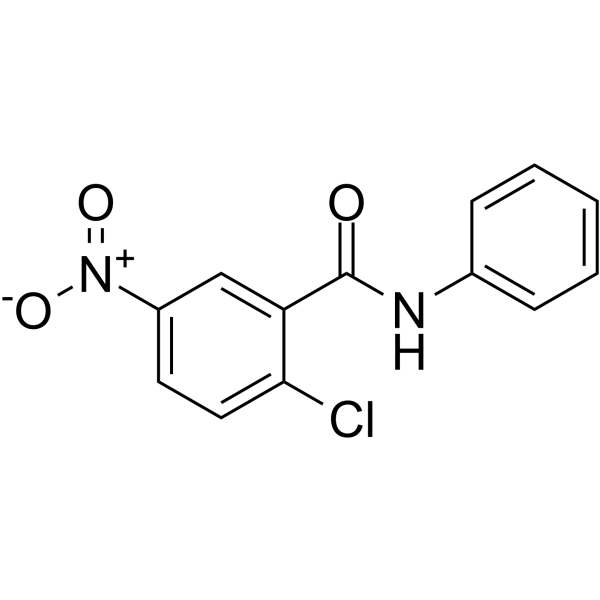
GW9662 is a potent and selective PPARγ antagonist with an IC50 of 3.3 nM, showing 10 and 1000-fold selectivity over PPARα and PPARδ, respectively.
|
-
-
- HY-16995
-
|
Wy-14643
|
PPAR
|
Metabolic Disease
Inflammation/Immunology
|
|
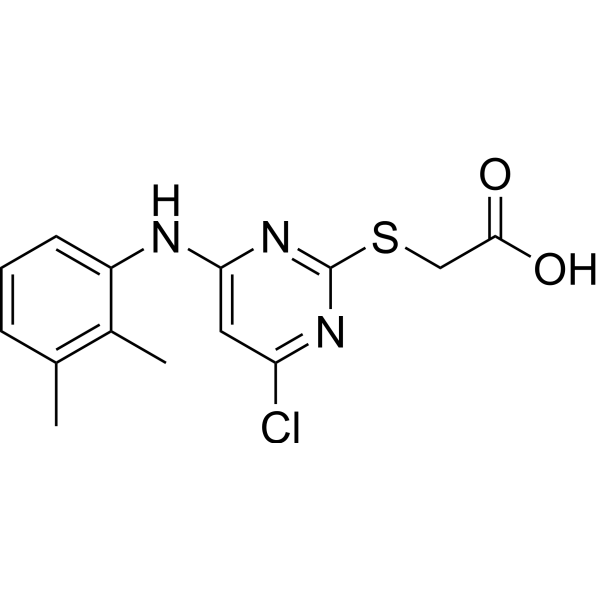
Pirinixic acid (Wy-14643) is a potent agonist of PPARα, with EC50s of 0.63 μM, 32 μM for murine PPARα and PPARγ, and 5.0 μM, 60 μM, 35 μM for human PPARα, PPARγ and PPARδ, respectively.
|
-
-
- HY-13861
-
|
|
PPAR
|
Cardiovascular Disease
|
|
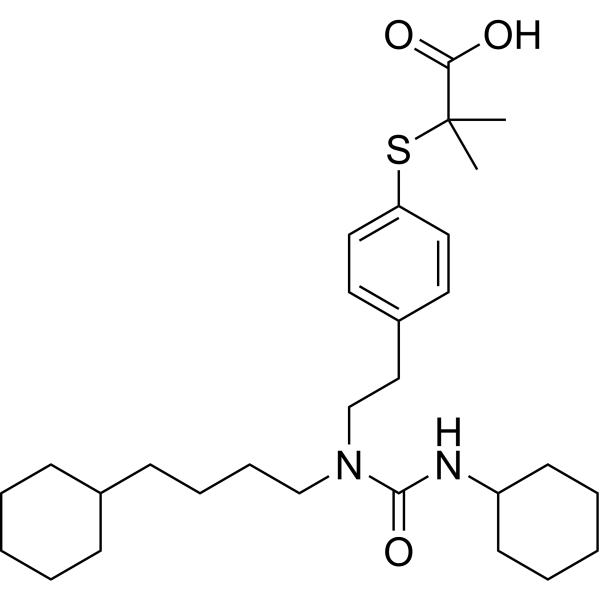
GW7647 is a potent PPARα agonist, with EC50s of 6 nM, 1.1 μM, and 6.2 μM for human PPARα, PPARγ and PPARδ, respectively.
|
-
-
- HY-B0637
-
|
BM15075
|
PPAR
|
Cardiovascular Disease
Metabolic Disease
|
|
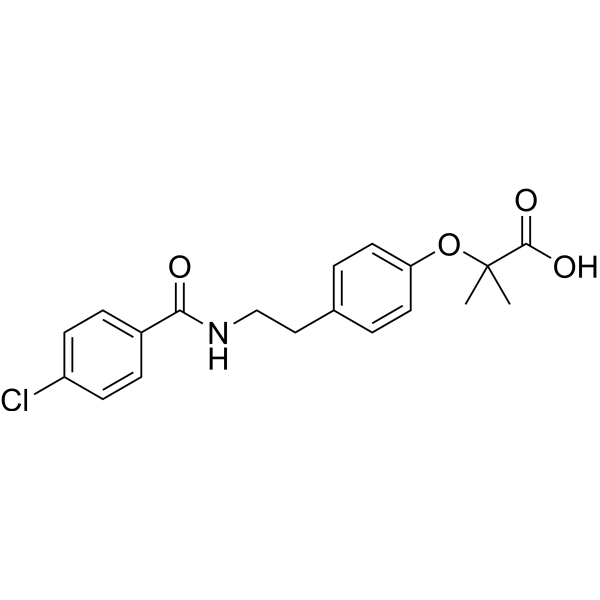
Bezafibrate is an agonist of PPAR, with EC50s of 50 μM, 60 μM, 20 μM for human PPARα, PPARγ and PPARδ, and 90 μM, 55 μM, 110 μM for murine PPARα, PPARγ and PPARδ, respectively; Bezafibrate is used as an hypolipidemic agent.
|
-
-
- HY-19522
-
|
MBX-8025; RWJ-800025
|
PPAR
|
Metabolic Disease
|
|
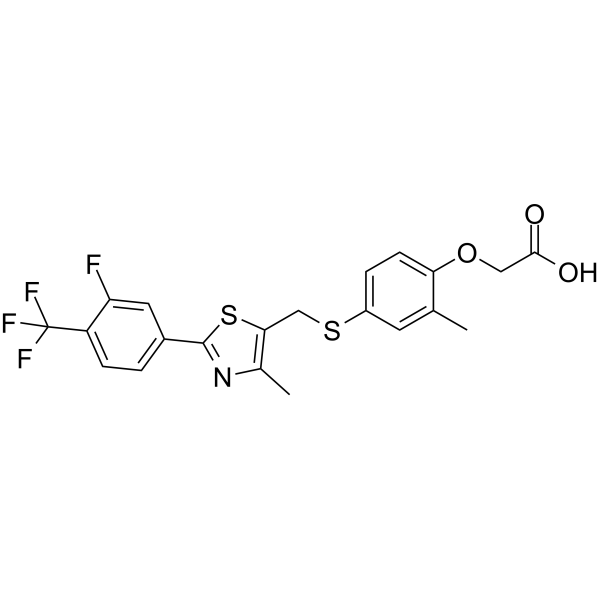
Seladelpar (MBX-8025) is an orally active, potent and specific PPARδ agonist with an EC50 of 2 nM. Seladelpar shows more than 750-fold and 2500-fold selectivity over the PPARα and PPARγ receptors, respectively. Seladelpar can be used for the study of primary biliary cholangitis .
|
-
-
- HY-19937
-
|
|
PPAR
|
Metabolic Disease
|
|
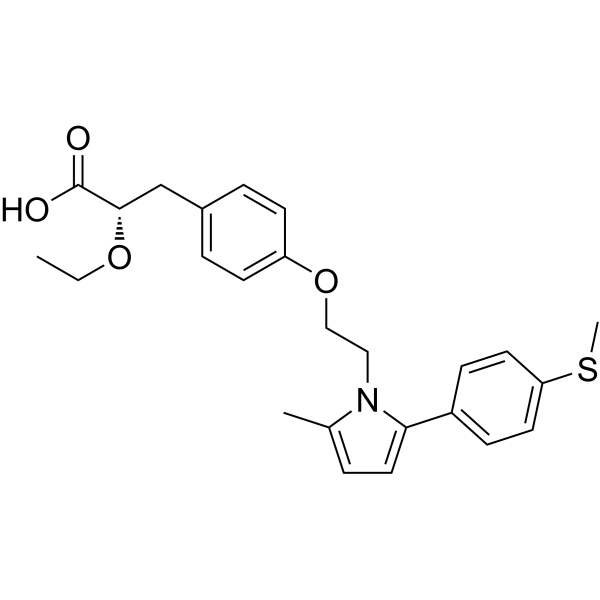
Saroglitazar is a novel peroxisome proliferator-activated receptor (PPAR) agonist with predominant PPARα and moderate PPARγ activity with EC50 values of 0.65 pM and 3 nM in HepG2 cells, respectively.
|
-
-
- HY-13928
-
-
-
- HY-17444
-
|
|
PPAR
|
Metabolic Disease
Cancer
|
|
Tesaglitazar is a dual-target PPARα/γ agonist with an EC50 of 13.4 μM for rat PPARα and 3.6 μM for human PPARα. Tesaglitazar affects lipid and glucose metabolism by activating PPARα and PPARγ receptors, and has the potential to improve blood sugar and relieve pain. Tesaglitazar can be used to induce in vivo tumor models and can be used in the study of type 2 diabetes, dyslipidemia, and neuropathic pain .
|
-
-
- HY-106266
-
|
Carfloglitazar
|
PPAR
|
Metabolic Disease
|
|
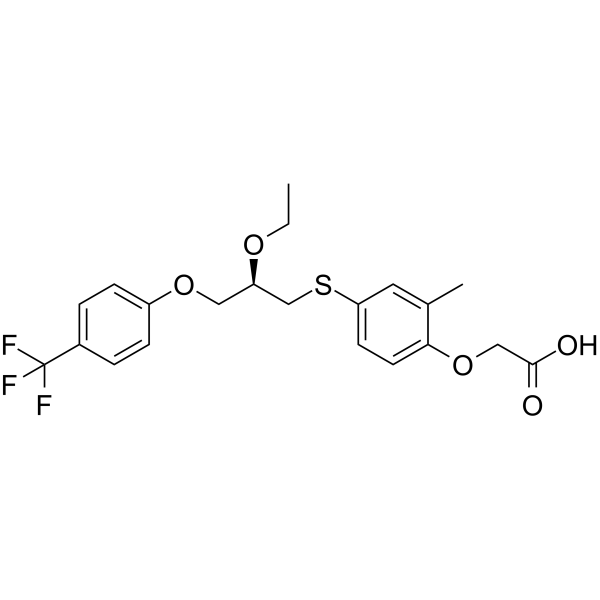
Chiglitazar (Carfloglitazar) is a PPARα/γ dual agonist, with EC50s of 1.2, 0.08, 1.7 μM for PPARα, PPARγ and PPARδ, respectively.
|
-
-
- HY-N0234
-
Bavachinin
Maximum Cited Publications
8 Publications Verification
7-O-Methylbavachin; Bavachinin A
|
Amyloid-β
PPAR
HIF/HIF Prolyl-Hydroxylase
|
Inflammation/Immunology
Cancer
|
|
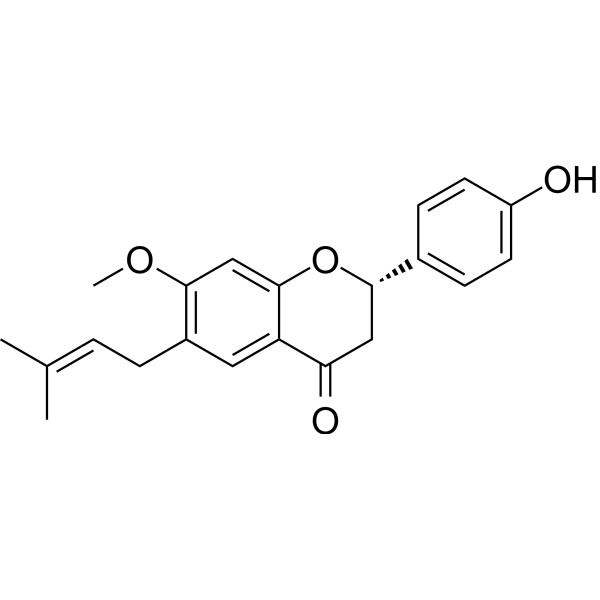
Bavachinin is agonist of pan-peroxisome proliferator-activated receptor (PPAR), with the IC50 value of 21.043 μM, 12.819 μM, and 0.622 μM to PPAR-α, RRAR-β/δ, and PPAR-γ, respectively. Bavachinin is an inhibitor of HIF-1α. Bavachinin exhibits antitumor activity against non-small cell lung cancer by targeting RRAR-γ. Bavachinin is a natural compound with anti-inflammatory and anti-angiogenic activities. Bavachinin has orally bioactivity. .
|
-
-
- HY-15725
-
|
RTA-403; TP-235; CDDO-Imidazolide
|
Keap1-Nrf2
PPAR
Ferroptosis
|
Cancer
|
|
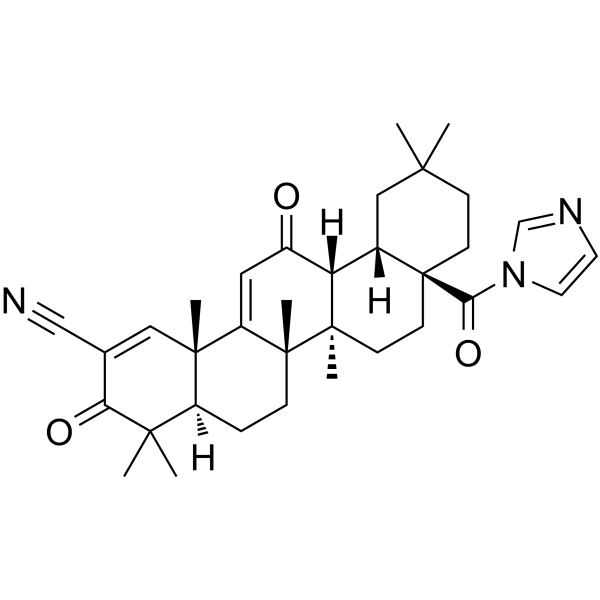
CDDO-Im (RTA-403) is an activator of Nrf2 and PPAR, with Kis of 232 and 344 nM for PPARα and PPARγ .
|
-
-
- HY-19937A
-
|
|
PPAR
|
Metabolic Disease
|
|
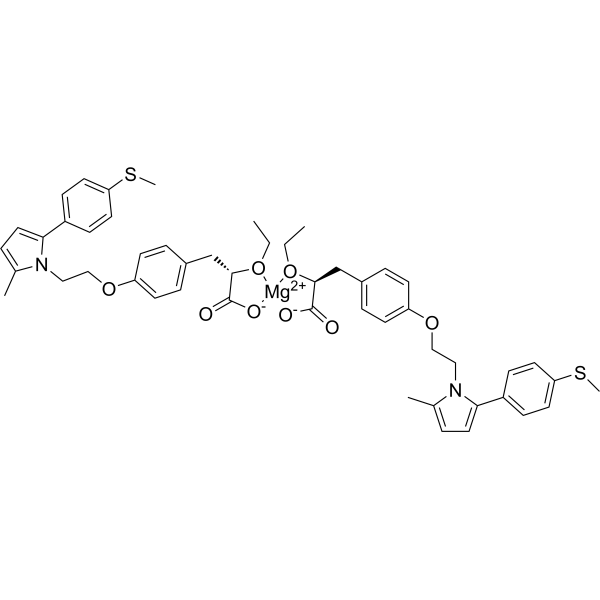
Saroglitazar magnesium is a novel peroxisome proliferator-activated receptor (PPAR) agonist with predominant PPARα and moderate PPARγ activity with EC50 values of 0.65 pM and 3 nM in HepG2 cells, respectively.
|
-
-
- HY-B0760
-
|
FNF acid
|
PPAR
COX
|
Metabolic Disease
|
|
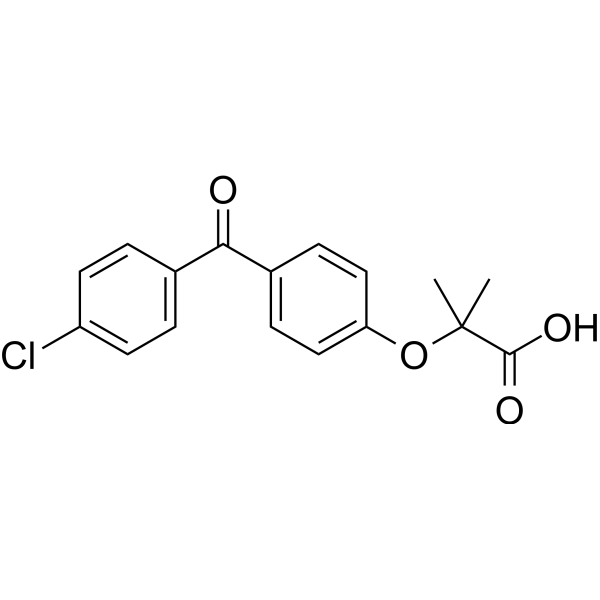
Fenofibric acid, an active metabolite of fenofibrate, is a PPAR activitor, with EC50s of 22.4 μM, 1.47 μM, and 1.06 μM for PPARα, PPARγ and PPARδ, respectively; Fenofibric acid also inhibits COX-2 enzyme activity, with an IC50 of 48 nM.
|
-
-
- HY-14928
-
-
-
- HY-B0287
-
|
|
PPAR
|
Metabolic Disease
|
|
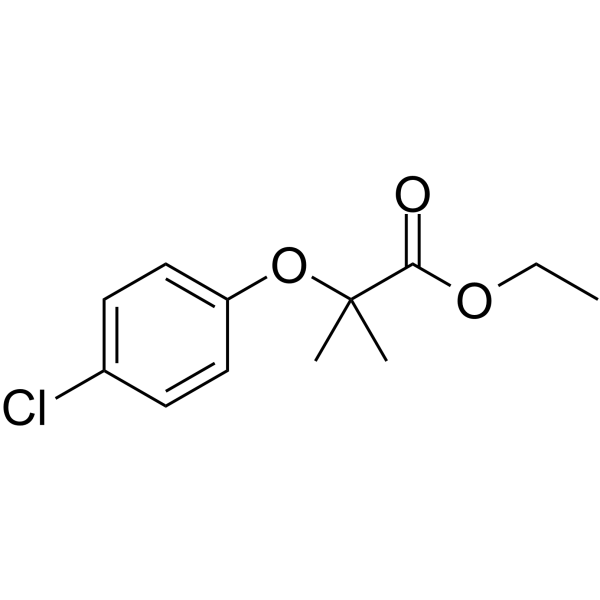
Clofibrate is an agonist of PPAR, with EC50s of 50 μM, ~500 μM for murine PPARα and PPARγ, and 55 μM, ~500 μM for human PPARα and PPARγ, respectively.
|
-
-
- HY-N6869
-
|
|
Antibiotic
PPAR
Bacterial
Fungal
|
Infection
Metabolic Disease
Inflammation/Immunology
Cancer
|
|
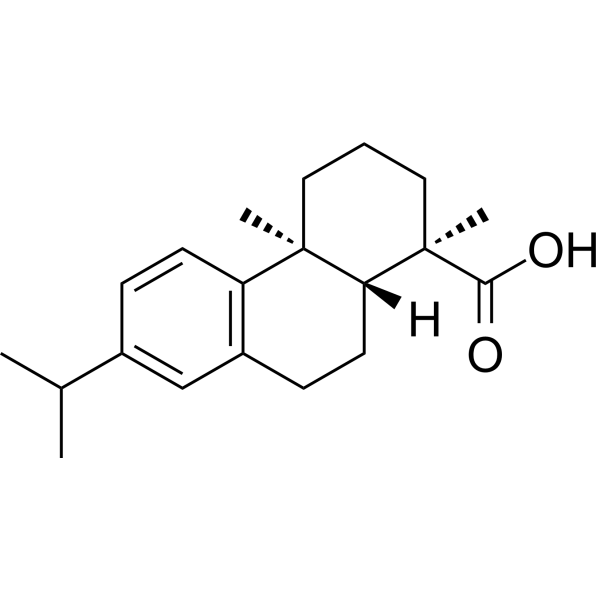
Dehydroabietic acid is a diterpene resin acid that can be isolated from Pinus and Picea. Dehydroabietic acid has anti-bacterial, anti-fungal, anti-inflammatory, and anticancer activities. Dehydroabietic acid is a dual PPAR-α/γ agonist and PPAR-γ partial agonist, which can attenuate insulin resistance (IR) and hepatic steatosis induced by HFD-consumption in mice .
|
-
-
- HY-112813
-
-
-
- HY-N1029
-
|
Mangiferitin
|
Glycosidase
PPAR
|
Infection
Inflammation/Immunology
Cancer
|
|
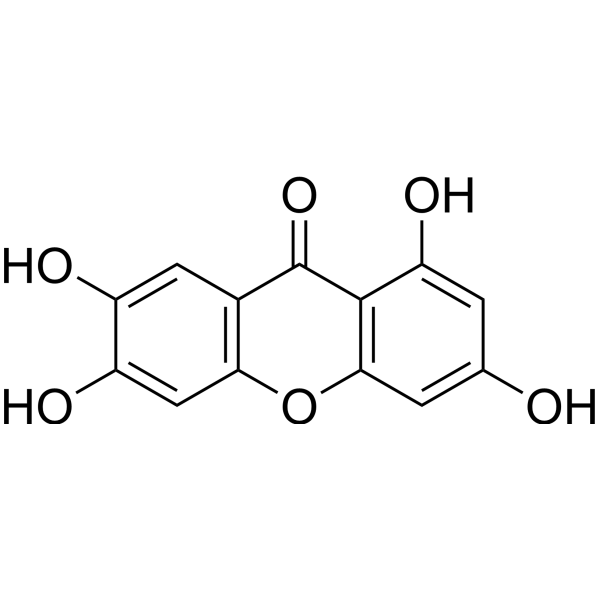
Norathyriol (Mangiferitin) is a natural metabolite of Mangifera. Norathyriol inhibits α-glucosidase in a noncompetitive manner with an IC50 of 3.12 μM . Norathyriol inhibits PPARα, PPARβ, and PPARγ with IC50s of 92.8 µM, 102.4 µM, and 153.5 µM, respectively . Antioxidant, anticancer, antimicrobial, anti-inflammatory, anti-bacterial activities.
|
-
-
- HY-14817
-
|
PPM 204
|
PPAR
|
Metabolic Disease
|
|
Indeglitazar (PPM 204) is an orally available PPAR pan-agonist for all three PPARα, PPARδ and PPARγ .
|
-
-
- HY-114263
-
NXT629
4 Publications Verification
|
PPAR
|
Cancer
|
|
NXT629 is a potent, selective, and competitive PPAR-α antagonist, with an IC50 of 77 nM for human PPARα, shows high selectivity over other nuclear hormone receptor, such as PPARδ, PPARγ, ERβ, GR and TRβ, IC50s are 6.0, 15, 15.2, 32.5 and >100 μM, respectively . NXT629 has potent anti-tumor activity and inhibits experimental metastasis of cancer cell in animal models .
|
-
-
- HY-U00425
-
|
|
Ligands for Target Protein for PROTAC
Estrogen Receptor/ERR
|
Metabolic Disease
Cancer
|
|
PROTAC ERRα ligand 1 is a PROTAC target protein ligand. PROTAC ERRα ligand 1 is an orally active ERRα inverse agonist with IC50 values of 0.6 μM for ERRα. PROTAC ERRα ligand 1 shows no significant activity against a panel of other nuclear receptors, including ERα c, ERRγ, ERβ, PPARα, PPARγ, PPARδ, and RXRα. PROTAC ERRα ligand 1 can provide enhanced insulin sensitivity in vivo. PROTAC ERRα ligand 1 can be used for metabolic diseases research, such as type 2 diabetes and obesity .
|
-
-
- HY-10678
-
|
|
PPAR
|
Cardiovascular Disease
|
|
BMS-687453 is a potent and selective PPARα agonist, with an EC50 and IC50 of 10 nM and 260 nM for human PPARα and 4100 nM and >15000 nM for PPARγ in PPAR-GAL4 transactivation assays.
|
-
-
- HY-17445
-
|
BMS-298585
|
PPAR
|
Metabolic Disease
|
|
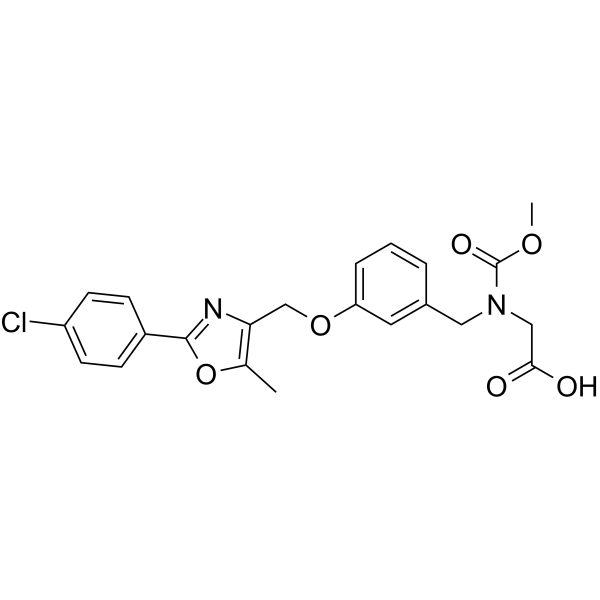
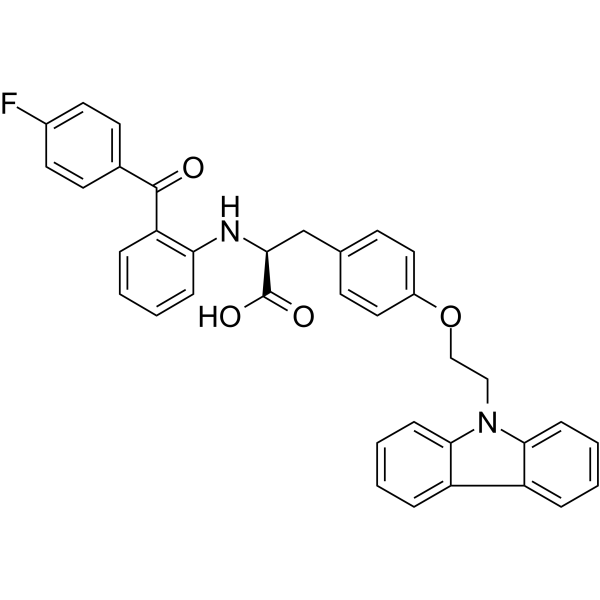
Muraglitazar is a PPAR α/γ dual agonist for the research of type 2 diabetes and associated dyslipidemia. Muraglitazar shows potent activity in vitro at human PPARα (EC50 = 320 nM) and PPARγ(EC50 = 110 nM) .
|
-
-
- HY-100277
-
|
SR-202
|
PPAR
|
Metabolic Disease
|
|
Mifobate (SR-202) is a potent and specific PPARγ antagonist. Mifobate (SR-202) selectively inhibits Thiazolidinedione (TZD)-induced PPARγ transcriptional activity (IC50=140 μM). Mifobate (SR-202) does not affect basal or ligand-stimulated transcriptional activity of PPARα, PPARβ, or the farnesoid X receptor (FXR). Mifobate (SR-202) shows antiobesity and antidiabetic effects .
|
-
-
- HY-106278
-
|
|
PPAR
|
Metabolic Disease
|
|
GW 590735 is a potent and selective PPARα agonist. GW 590735 showsEC50=4 nM on PPARα and at least 500-fold selectivity versus PPARδ and PPARγ. GW 590735 can be used for the research of dyslipidemia .
|
-
-
- HY-16421
-
|
(-)-DRF 2725; NNC 61-0029
|
PPAR
|
Metabolic Disease
|
|
Ragaglitazar is a PPARα and PPARγ agonist with potent lipid-lowering and insulin-sensitizing efficacy in animal models. Ragaglitazar improves glycemic control and lipid profile in type 2 diabetic.
|
-
-
- HY-108523
-
|
UVI 2112
|
RAR/RXR
|
Metabolic Disease
|
|
LG100754 (UVI 2112) is a RXR dimers modulater. LG100754 acts as a RXR:RXR homodimer antagonist, but functions as a agonist towards RXR:PPARα and RXR:PPARγ heterodimers. LG100754 is an insulin sensitizer that functions through RXR .
|
-
-
- HY-19522A
-
|
MBX-8025 sodium; RWJ-800025 sodium
|
PPAR
|
Metabolic Disease
Inflammation/Immunology
|
|
Seladelpar (MBX-8025) sodium salt is an orally active, potent and specific PPARδ agonist with an EC50 of 2 nM. Seladelpar sodium salt shows more than 750-fold and 2500-fold selectivity over the PPARα and PPARγ receptors, respectively. Seladelpar sodium salt hydrochloride can be used for the study of primary biliary cholangitis .
|
-
-
- HY-143239
-
|
|
PPAR
|
Metabolic Disease
|
|
PPARα/γ agonist 1 (compound 5b) is a potent and dual PPARα/γ partial agonist with EC50 values of 28 nM and 69 nM for PPARα and PPARγ, respectively. PPARα/γ agonist 1 is a promising prototype for dyslipidemia and diabetes research .
|
-
-
- HY-14928A
-
-
-
- HY-B0760S
-
|
|
PPAR
COX
|
Metabolic Disease
|
|
Fenofibric acid-d6 (FNF acid-d6) is the deuterium labeled Fenofibric acid. Fenofibric acid, an active metabolite of fenofibrate, is a PPAR activitor, with EC50s of 22.4 µM, 1.47 µM, and 1.06 µM for PPARα, PPARγ and PPARδ, respectively; Fenofibric acid also inhibits COX-2 enzyme activity, with an IC50 of 48 nM.
|
-
-
- HY-W109613
-
|
|
Bacterial
PPAR
Fungal
|
Infection
Metabolic Disease
|
|
Methyl dehydroabietate is an orally active resin acid. Methyl dehydroabietate disrupts microbial cell walls and exhibits significant antibacterial activity. Methyl dehydroabietate induces the expression of PPARα in the liver and PPARγ in adipose tissue, and promotes adipocyte differentiation. Methyl dehydroabietate improves insulin resistance, reduces TNFα levels, and alleviates adipocyte hypertrophy and hepatic steatosis in obese mice. Methyl dehydroabietate can be used in research related to obesity, insulin resistance and hepatic steatosis .
|
-
-
- HY-N9333
-
-
-
- HY-110118
-
|
|
PPAR
|
Metabolic Disease
|
|
Edaglitazone is a potent, selective and orally active PPARγ agonist, with EC50s of 35.6 nM and 1053 nM for PPARα and PPARγ, respectively. Edaglitazone displays antiplatelet, antidiabetic and anti-hyperglycemic activity .
|
-
-
- HY-108571
-
|
|
PPAR
|
Cardiovascular Disease
Metabolic Disease
|
|
CP-775146 is a selective PPARα agonist (Ki of 24.5 nM) that binds strongly to the PPARα ligand. CP-775146 has no observable affinity for PPARβ and PPARγ.CP-775146 shows hypolipidemic activity. CP-775146 efficiently alleviates obesity-induced liver damage, prevents lipid accumulation by activating the liver fatty acid β-oxidation pathway .
|
-
-
- HY-B0760R
-
|
FNF acid (Standard)
|
Reference Standards
PPAR
COX
|
Metabolic Disease
|
|
Fenofibric acid (Standard) is the analytical standard of Fenofibric acid. This product is intended for research and analytical applications. Fenofibric acid, an active metabolite of fenofibrate, is a PPAR activitor, with EC50s of 22.4 μM, 1.47 μM, and 1.06 μM for PPARα, PPARγ and PPARδ, respectively; Fenofibric acid also inhibits COX-2 enzyme activity, with an IC50 of 48 nM.
|
-
-
- HY-168376
-
|
9(10)-Nitrated oleic acid
|
PPAR
ERK
Akt
NO Synthase
|
Metabolic Disease
Inflammation/Immunology
|
|
9 (10)-Nitrooleate (9(10)-Nitrated oleic acid) is an endogenous lipid signaling mediator with vasoprotective effects. 9 (10)-Nitrooleate enhances enzymatic activity and improves nitric oxide bioavailability by inducing phosphorylation of Akt and ERK1/2, regulating the multi-site phosphorylation status of eNOS and optimizing its interaction with Hsp90. 9 (10)-Nitrooleate also activates PPARα, PPARδ and PPARγ receptors, thereby regulating adipogenesis, glucose uptake and inflammation-related gene expression, and exhibits immunosuppressive effects by inhibiting neutrophil migration and cytokine secretion. 9 (10)-Nitrooleate is widely used in studies of sepsis and related inflammatory diseases .
|
-
-
- HY-B0637S
-
|
|
PPAR
|
Cardiovascular Disease
Metabolic Disease
|
|
Bezafibrate-d6 is the deuterium labeled Bezafibrate. Bezafibrate is an agonist of PPAR, with EC50s of 50 μM, 60 μM, 20 μM for human PPARα, PPARγ and PPARδ, and 90 μM, 55 μM, 110 μM for murine PPARα, PPARγ and PPARδ, respectively; Bezafibrate is used as an hypolipidemic agent.
|
-
-
- HY-163547
-
|
|
PPAR
|
Inflammation/Immunology
|
|
PPAR agonist 5 (compound 4b) is a potent PPAR agonist with EC50 values of 3.20, 1.51, 1.92 µM for PPARα, PPARβ/δ, PPARγ, respectively. PPAR agonist 5 shows anti-inflammatory effect .
|
-
-
- HY-144111
-
|
|
PPAR
|
Inflammation/Immunology
|
|
PPARα/δ agonist 1 is a potent PPARα/PPARδ dual agonist (PPARα EC50=7.0 nM; PPARδ EC50=8.4 nM). PPARα/δ agonist 1 is a high selectivity over PPARγ (PPARγ EC50=1316.1 nM). PPARα/δ agonist 1 has the potential for the research of nonalcoholic steatohepatitis .
|
-
-
- HY-111140
-
|
|
PGE synthase
Lipoxygenase
PPAR
|
Inflammation/Immunology
|
|
YS121 is a dual inhibitor of microsomal prostaglandin E2 synthase-1 (mPGES-1; IC50 = 3.4 μM) and 5-lipoxygenase (5-LOX; IC50 = 6.5 μM). YS121 exhibits direct, reversible, and specific binding to mPGES-1 (KD = 10-14 μM) . YS121 dose-dependently reduces PGE2 production with an EC50 of 12 μM in IL-1β-stimulated A549 cells . YS121 (compound 9) activates PPAR-α and -γ (EC50 = 1 and 3.6 μM, respectively) . YS121 exhibits anti-inflammatory efficiency in human whole blood as well as in vivo. YS121 can be used for pleurisy research .
|
-
-
- HY-B0287R
-
|
|
Reference Standards
PPAR
|
Metabolic Disease
|
|
Clofibrate (Standard) is the analytical standard of Clofibrate. This product is intended for research and analytical applications. Clofibrate is an agonist of PPAR, with EC50s of 50 μM, ~500 μM for murine PPARα and PPARγ, and 55 μM, ~500 μM for human PPARα and PPARγ, respectively.
|
-
-
- HY-19848
-
|
LBM-642
|
PPAR
|
Metabolic Disease
|
|
Cevoglitazar (LBM-642) is an orally active and highly potent PPARα and PPARγ dual agonist. Cevoglitazar can reduce food intake, body weight, and fasting plasma insulin in obese mice and cynomolgus monkeys. Cevoglitazar has the potential for diabetes and obesity-related disorders research .
|
-
-
- HY-Y1624
-
|
ADDP; SR 4077
|
Free Fatty Acid Receptor
PPAR
|
Metabolic Disease
|
|
1,1'-(Azodicarbonyl)-dipiperidine (ADDP) can be used in the condensation reaction of alcohols with acidic compounds. 1,1'-(Azodicarbonyl)-dipiperidine can also be used in the synthesis of GPR120 agonists with antidiabetic activity, as well as the synthesis of triple agonists for PPARα, PPARγ, and PPARδ. 1,1'-(Azodicarbonyl)-dipiperidine can be used in metabolic disease research .
|
-
-
- HY-121448
-
|
|
PPAR
|
Cardiovascular Disease
Metabolic Disease
|
|
GW409544 is a potent PPARα and PPARγ activator, with EC50 values of 2.3 nM and 0.28 nM for PPARα and PPARγ, respectively. GW409544 can be used for the research of metabolic and cardiovascular diseases .
|
-
-
- HY-17618A
-
|
Rac-K13675
|
PPAR
|
Inflammation/Immunology
|
|
Pemafibrate racemate (K13675 racemate) is the racemate of pemafibrate, and activates PPARα activity, with EC50s of 1 nM, >10 μM and 1.7 μM for h-PPARα, h-PPARγ and h-PPARδ, respectively.
|
-
-
- HY-14728S
-
|
Aleglitazar-d2; R1439-d2; RO0728804-d2
|
PPAR
|
Others
|
|
Deutaleglitazar (Aleglitazar-d2) is a agonist of dual peroxisome proliferatory activating receptor (PPARα and PPARγ) .
|
-
-
- HY-101649
-
|
TAK-559
|
PPAR
|
Cardiovascular Disease
|
|
Imiglitazar (TAK559) is a potent and dual human PPARα and PPARγ1 agonist with EC50 values of 67 and 31 nM.
|
-
-
- HY-106266B
-
|
Carfloglitazar sodium
|
PPAR
|
Metabolic Disease
|
|
Chiglitazar (Carfloglitazar) is a PPARα/γ dual agonist, with EC50s of 1.2, 0.08, 1.7 μM for PPARα, PPARγ and PPARδ, respectively.
|
-
-
- HY-U00340
-
|
|
PPAR
|
Metabolic Disease
|
|
PPAR agonist 1 is an agonist of PPAR α and PPAR γ, used for reducing blood glucose, lipid levels, lowering cholesterol and reducing body weight.
|
-
- HY-120255A
-
|
|
PPAR
|
Metabolic Disease
|
|
17(S)-HDHA is a pro-resolving mediator (SPM). 17(S)-HDHA slightly activats PPARγ, PPARα and PPARδ .
|
-
- HY-117761
-
|
|
PPAR
|
Metabolic Disease
Cancer
|
|
MHY908 is a potent dual agonist of PPARα and PPARγ . MHY908 also inhibits melanogenesis through inhibition of mushroom tyrosinase activity .
|
-
- HY-19425
-
|
|
PPAR
|
Metabolic Disease
|
|
NS-220 is an orally active PPARα agonist with high subtype selectivity, with EC50 values of 1.9×10 -8 M, 9.6×10 -6 M and >10 -4 M for PPARα, PPAR γ and PPARδ, respectively. NS-220 is used in the research for hyperlipidemia or metabolic disorders in type-2 diabetes .
|
-
- HY-148922
-
|
|
PPAR
|
Metabolic Disease
|
|
PPARα/γ agonist 2 is an orally active PPARα full agonist and PPARγ partial agonist. PPARα/γ agonist 2 activates PPARα and PPARγ with EC50 values of 0.95 μM and 0.91 μM respectively. PPARα/γ agonist 2 is also a PTP1B inhibitor. PPARα/γ agonist 2 is an anti-diabetic agent .
|
-
- HY-119248
-
|
MK-0767
|
PPAR
|
Metabolic Disease
|
|
KRP-297 is a PPARα and PPARγ agonist potentially for the research of type 2 diabetes and dyslipidemia. KRP-297 restores reduced lipid oxidation, and inhibits of enhanced lipogenesis and triglyceride accumulation in the liver.
|
-
- HY-16578R
-
|
|
PPAR
|
Cancer
|
|
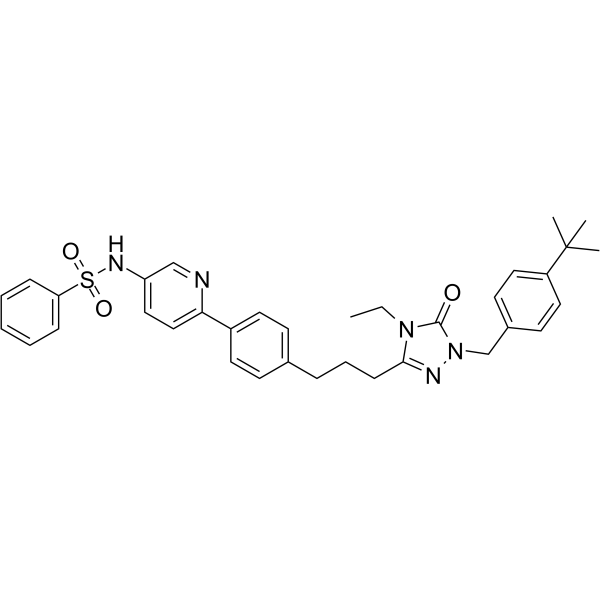
GW9662 (Standard) is the analytical standard of GW9662. This product is intended for research and analytical applications. GW9662 is a potent and selective PPARγ antagonist with an IC50 of 3.3 nM, showing 10 and 1000-fold selectivity over PPARα and PPARδ, respectively.
|
-
- HY-16578S
-
|
|
Isotope-Labeled Compounds
PPAR
|
Cancer
|
|
GW9662-d5 is the deuterium labeled GW9662. GW9662 is a potent and selective PPARγ antagonist with an IC50 of 3.3 nM, showing 10 and 1000-fold selectivity over PPARα and PPARδ, respectively .
|
-
- HY-19522B
-
|
MBX-8025 (lysine); RWJ-800025 (lysine)
|
PPAR
|
Metabolic Disease
|
|
Seladelpar (MBX-8025) lysine is an orally active, potent and specific PPARδ agonist with an EC50 of 2 nM. Seladelpar lysine shows more than 750-fold and 2500-fold selectivity over the PPARα and PPARγ receptors, respectively. Seladelpar lysine can be used for the study of primary biliary cholangitis .
|
-
- HY-13928R
-
-
- HY-19522R
-
|
MBX-8025 (Standard); RWJ-800025 (Standard)
|
PPAR
Reference Standards
|
Metabolic Disease
|
|
Seladelpar (Standard) is the analytical standard of Seladelpar. This product is intended for research and analytical applications. Seladelpar (MBX-8025) is an orally active, potent and specific PPARδ agonist with an EC50 of 2 nM. Seladelpar shows more than 750-fold and 2500-fold selectivity over the PPARα and PPARγ receptors, respectively. Seladelpar can be used for the study of primary biliary cholangitis .
|
-
- HY-162578
-
|
|
PPAR
|
Metabolic Disease
|
|
PPARα/γ agonist 4 (Compound (S)-7) is an orally active dual potent agonist of PPARα and PPARγ, with EC50 values of 0.061 μM and 1.42 μM respectively. PPARα/γ agonist 4 acts through an insulin-independent mechanism and exhibits mitochondrial pyruvate carrier inhibition and anti-diabetic properties. PPARα/γ agonist 4 is expected to be used in research for dyslipidemic type 2 diabetes .
|
-
- HY-178958
-
|
|
PPAR
Adenosine Receptor
Fatty Acid Synthase (FASN)
Endogenous Metabolite
|
Metabolic Disease
Inflammation/Immunology
Endocrinology
|
|
PPAR agonist 7 is an orally active pan-PPAR agonist, demonstrating potent activation of all three subtypes, PPARα (EC50 = 1.51 μM), PPARδ (EC50 = 1.11 μM), and PPARγ (EC50 = 3.14 μM). PPAR agonist 7 significantly enhances glucose uptake in adipocytes while exhibiting minimal adipogenic activity. PPAR agonist 7 can suppress PPARγ Ser273 phosphorylation in white adipose tissue and upregulate insulin-sensitizing genes. PPAR agonist 7 does not cause weight gain or fluid retention in high-fat diet (HFD)/
Streptozotocin (HY-13753) (STZ)-induced type 2 diabetes mellitus (T2DM) models. PPAR agonist 7 has selective modulation of PPAR signaling pathways without activation of adipogenic gene programs. PPAR agonist 7 can be used for the study of diabetes .
|
-
- HY-111141
-
|
|
Free Fatty Acid Receptor
|
Metabolic Disease
|
|
AM-3189 is an orally active and selective GPR40 agonist with EC50 values in buffer solution and in 100% human serum of 33 nM and 10 μM respectively. AM-3189 shows no significant activity on GPR41 and GPR43, and no agonistic activity on PPAR-α, -δ, and -γ. AM-3189 enhances glucose-stimulated insulin secretion by activating GPR40 on pancreatic β cells. AM-3189 has extremely low penetration into the central nervous system and significantly reduces blood glucose levels in two humanized GPR40 mouse models. AM-3189 can be used for the study of type 2 diabetes .
|
-
- HY-B0287S
-
|
|
PPAR
|
Metabolic Disease
|
|
Clofibrate-d4 is the deuterium labeled Clofibrate. Clofibrate is an agonist of PPAR, with EC50s of 50 μM, ∼500 μM for murine PPARα and PPARγ, and 55 μM, ∼500 μM for human PPARα and PPARγ, respectively.
|
-
- HY-16995R
-
|
Wy-14643 (Standard)
|
PPAR
Reference Standards
|
Metabolic Disease
Inflammation/Immunology
|
|
Pirinixic acid (Standard) is the analytical standard of Pirinixic acid. This product is intended for research and analytical applications. Pirinixic acid (Wy-14643) is a potent agonist of PPARα, with EC50s of 0.63 μM, 32 μM for murine PPARα and PPARγ, and 5.0 μM, 60 μM, 35 μM for human PPARα, PPARγ and PPARδ, respectively.
|
-
- HY-123125
-
|
|
PPAR
|
Cardiovascular Disease
|
|
GW9820 is PPARα and PPARγ activator (EC50s: 0.37 μM for PPARα; 0.288 μM for PPARγ). GW9820 increases CLA-1. GW9820 can be used in the research of atherosclerosis .
|
-
- HY-162122
-
|
|
PPAR
|
Inflammation/Immunology
|
|
PPARα/γ agonist 3 (Compound 4) is a dual agonist of PPARα/γ. PPARα/γ agonist 3 has anti-inflammatory activity, significantly reducing inflammatory markers such as IL-6 and MCP-1 on THP-1 macrophages through NF-κB activation. PPARα/γ agonist 3 can be used in the study of metabolic syndrome and metabolic dysfunction-related fatty liver disease (MAFLD) .
|
-
- HY-167950
-
|
|
PPAR
|
Metabolic Disease
|
|
PPARα/γ agonist 5 is a dual PPARα/γ agonist with significant biological activity exhibited at low concentrations. The EC50 of PPARα/γ agonist 5 are 0.358μM and 1.21μM respectively, showing its potential in inhibiting type 2 diabetes and lipid metabolism disorders. PPARα/γ agonist 5 was selected for clinical development due to its high efficacy .
|
-
- HY-B0637S1
-
|
BM15075-d4
|
Isotope-Labeled Compounds
PPAR
|
Cardiovascular Disease
Metabolic Disease
|
|
Bezafibrate-d4 is deuterium labeled Bezafibrate. Bezafibrate is an agonist of PPAR, with EC50s of 50 μM, 60 μM, 20 μM for human PPARα, PPARγ and PPARδ, and 90 μM, 55 μM, 110 μM for murine PPARα, PPARγ and PPARδ, respectively; Bezafibrate is used as an hypolipidemic agent.
|
-
- HY-121798
-
|
|
PPAR
|
Metabolic Disease
|
|
TZD18 is a potent and orally active PPARα and PPARγ dual agonist with IC50 values of 0.028, 0.057, >10 µM for PPARα, PPARγ, PPARδ, respectively. TZD18 reduces plasma levels of both glucose and triglycerides in diabetic mice. TZD18 has the potential for the research of type 2 diabetes .
|
-
- HY-173217
-
|
|
PPAR
Phosphatase
|
Cardiovascular Disease
Metabolic Disease
|
|
PPARα agonist 5 is an orally available, selective partial agonist of PPARα (EC50: 3 nM). PPARα agonist 5 reduces lipid accumulation and upregulates key PPARα target genes, exerting anti-fatty liver effects. PPARα agonist 5 also exhibits significant hypolipidemic and hypoglycemic effects through partial PPARγ agonist activity and mild inhibition of protein tyrosine phosphatase 1B (PTP1B) (IC50: 79.1 μM). PPARα agonist 5 has a good safety profile and can be used in the study of type 2 diabetes with dyslipidemia .
|
-
- HY-B0637R
-
|
BM15075 (Standard)
|
Reference Standards
PPAR
|
Cardiovascular Disease
Metabolic Disease
|
|
Bezafibrate (Standard) is the analytical standard of Bezafibrate. This product is intended for research and analytical applications. Bezafibrate is an agonist of PPAR, with EC50s of 50 μM, 60 μM, 20 μM for human PPARα, PPARγ and PPARδ, and 90 μM, 55 μM, 110 μM for murine PPARα, PPARγ and PPARδ, respectively; Bezafibrate is used as an hypolipidemic agent.
|
-
- HY-119197
-
|
|
PPAR
|
Metabolic Disease
|
|
PPARα/γ/δ agonist 1 (Compound 2) is a potent PPARα/γ/δ agonist, with an IC50 of 70 nM for PPARγ. PPARα/γ/δ agonist 1 can be used for the research of type 2 diabetes .
|
-
- HY-13861R
-
|
|
PPAR
|
Cardiovascular Disease
|
|
GW7647 (Standard) is the analytical standard of GW7647. This product is intended for research and analytical applications. GW7647 is a potent PPARα agonist, with EC50s of 6 nM, 1.1 μM, and 6.2 μM for human PPARα, PPARγ and PPARδ, respectively.
|
-
- HY-B0637S2
-
|
BM15075-13C6
|
Isotope-Labeled Compounds
PPAR
|
Cardiovascular Disease
Metabolic Disease
|
|
Bezafibrate- 13C6 (BM15075- 13C6) is 13C labeled Bezafibrate. Bezafibrate is an agonist of PPAR, with EC50s of 50 μM, 60 μM, 20 μM for human PPARα, PPARγ and PPARδ, and 90 μM, 55 μM, 110 μM for murine PPARα, PPARγ and PPARδ, respectively; Bezafibrate is used as an hypolipidemic agent.
|
-
- HY-139172
-
|
|
PPAR
|
Metabolic Disease
|
|
MD001 is a PPARα/γ dual agonist and can increase the transcriptional activity of PPARα and PPARγ. MD001 enhances the expression of genes related to β-oxidation and fatty acid and glucose uptake .
|
-
- HY-115357
-
|
|
PPAR
|
Metabolic Disease
|
|
BMS711939 is a selective agonist for peroxisome proliferator-activated receptor α (PPAR α), with EC50 of 4 nM and 4.5 μM, for human PPARα and human PPARγ. BMS711939 exhibits good pharmacokinetic characters in rats models. BMS711939 increases HDL cholesterol, reduces LDL cholesterol and triglycerides .
|
-
- HY-125716
-
|
|
PPAR
|
Metabolic Disease
|
|
DRF-2519 (free base) is a dual activator of PPAR α and PPAR γ. DRF-2519 (free base) has antidiabetic and hypolipidemic activity .
|
-
- HY-118514
-
|
|
PPAR
|
Metabolic Disease
|
|
CAY10514 is an aromatic of 8(S)-HETE. CAY10514 acts as a dual agonist of peroxisome proliferator-activated receptor α (PPARα) and PPARγ with IC50 of 0.173 and 0.642 μM, respectively .
|
-
- HY-N6869R
-
|
|
Antibiotic
Reference Standards
PPAR
Bacterial
Fungal
|
Infection
Metabolic Disease
Inflammation/Immunology
Cancer
|
|
Dehydroabietic acid (Standard) is the analytical standard of Dehydroabietic acid. This product is intended for research and analytical applications. Dehydroabietic acid is a diterpene resin acid that can be isolated from Pinus and Picea. Dehydroabietic acid has anti-bacterial, anti-fungal, anti-inflammatory, and anticancer activities. Dehydroabietic acid is a dual PPAR-α/γ agonist and PPAR-γ partial agonist, which can attenuate insulin resistance (IR) and hepatic steatosis induced by HFD-consumption in mice .
|
-
- HY-19937S1
-
|
|
Isotope-Labeled Compounds
|
Others
|
|
Saroglitazar-d4 is the deuterium-labeled Saroglitazar (HY-19937). Saroglitazar-d4 is a novel peroxisome proliferator-activated receptor (PPAR) agonist with predominant PPARα and moderate PPARγ activity with EC50 values of 0.65 pM and 3 nM in HepG2 cells, respectively.
|
-
- HY-116699
-
|
|
PPAR
|
Neurological Disease
Metabolic Disease
Inflammation/Immunology
|
|
CP-868388 free base is a potent, selective and orally active PPARα agonist with a Ki value of 10.8 nM. CP-868388 free base has little or no affinity for PPARβ (Ki of 3.47 μM) and PPARγ. CP-868388 free base has hypolipidemic and anti-inflammatory actions .
|
-
- HY-163443
-
|
|
PPAR
|
Others
|
|
PPAR agonist 4 (Compound 12) is an orally active agonist for peroxisome proliferator-activated receptor (PPAR), which activates PPARα, PPARδ and PPARγ with EC50s of 0.7, 0.7 and 1.8 μM, respectively. PPAR agonist 4 exhibits anti-liver fibrosis efficacy .
|
-
- HY-172792
-
|
|
PPAR
|
Metabolic Disease
|
|
PPAR agonist 6 (compound 5a) is an agonist of PPAR with EC50 values of 3.6 μM, 2.6 μM, and 2.7 μM for PPARα, PPARβ/δ, and PPARγ, respectively. PPAR agonist 6 represses the transactivation of the TNFα-dependent NF-κB-driven reporter in L929 cells .
|
-
- HY-B0760S1
-
|
FNF acid-13C8
|
Isotope-Labeled Compounds
COX
PPAR
|
Metabolic Disease
|
|
Fenofibric acid- 13C8 (FNF acid- 13C8) is 13C labeled Fenofibric acid. Fenofibric acid, an active metabolite of fenofibrate, is a PPAR activitor, with EC50s of 22.4 μM, 1.47 μM, and 1.06 μM for PPARα, PPARγ and PPARδ, respectively; Fenofibric acid also inhibits COX-2 enzyme activity, with an IC50 of 48 nM.
|
-
- HY-100277R
-
|
SR-202 (Standard)
|
Reference Standards
PPAR
|
Metabolic Disease
|
|
Mifobate (Standard) is the analytical standard of Mifobate. This product is intended for research and analytical applications. Mifobate (SR-202) is a potent and specific PPARγ antagonist. Mifobate (SR-202) selectively inhibits Thiazolidinedione (TZD)-induced PPARγ transcriptional activity (IC50=140 μM). Mifobate (SR-202) does not affect basal or ligand-stimulated transcriptional activity of PPARα, PPARβ, or the farnesoid X receptor (FXR). Mifobate (SR-202) shows antiobesity and antidiabetic effects .
|
-
- HY-B0760S2
-
|
FNF acid-d4
|
Isotope-Labeled Compounds
|
Metabolic Disease
|
|
Fenofibric acid-d4 (FNF acid-d4) is deuterium labeled Fenofibric acid. Fenofibric acid, an active metabolite of fenofibrate, is a PPAR activitor, with EC50s of 22.4 μM, 1.47 μM, and 1.06 μM for PPARα, PPARγ and PPARδ, respectively; Fenofibric acid also inhibits COX-2 enzyme activity, with an IC50 of 48 nM.
|
-
- HY-168485
-
|
|
PPAR
|
Metabolic Disease
|
|
PPARα/δ agonist 3 (Compound 8) is the orally active agonist for PPAR, that activates PPARα, PPARδ and PPARγ with EC50s of 5.6, 3.4 and 1278 nM, respectively. PPARα/δ agonist 3 exhibits anticholestatic activity in mouse ANIT- or CDCA (HY-76847)-induced cholestatic liver disease models .
|
-
- HY-N0234R
-
|
7-O-Methylbavachin (Standard); Bavachinin A (Standard)
|
Amyloid-β
Reference Standards
PPAR
HIF/HIF Prolyl-Hydroxylase
|
Inflammation/Immunology
|
|
Bavachinin (Standard) is the analytical standard of Bavachinin. This product is intended for research and analytical applications. Bavachinin is agonist of pan-peroxisome proliferator-activated receptor (PPAR), with the IC50 value of 21.043 μM, 12.819 μM, and 0.622 μM to PPAR-α, RRAR-β/δ, and PPAR-γ, respectively. Bavachinin is an inhibitor of HIF-1α. Bavachinin exhibits antitumor activity against non-small cell lung cancer by targeting RRAR-γ. Bavachinin is a natural compound with anti-inflammatory and anti-angiogenic activities. Bavachinin has orally bioactivity. .
|
-
- HY-172883
-
|
|
FABP
PPAR
|
Metabolic Disease
Inflammation/Immunology
|
|
ABP/PPAR modulator 1 is an orally active FABP and PPAR multiple modulator (IC50s of 0.65 μM and 1.08 μM for FABP1 and FABP4, EC50 s of 9.19 μM, 2.20 μM and 1.58 μM for PPARα, PPARγ and PPARδ). ABP/PPAR modulator 1 has potent anti-metabolic dysfunction-associated steatohepatitis (MASH) activity. ABP/PPAR modulator 1 dose-dependently ameliorates multiple pathological characteristics of fatty liver in WD + Carbon tetrachloride-induced MASH mice model .
|
-
- HY-172883A
-
|
|
FABP
PPAR
|
Metabolic Disease
Inflammation/Immunology
|
|
(E/Z)-ABP/PPAR modulator 1 is a mixture of the E and Z isomers of ABP/PPAR modulator 1 (HY-172883). ABP/PPAR modulator 1 is an orally active FABP and PPAR multiple modulator (IC50s of 0.65 μM and 1.08 μM for FABP1 and FABP4, EC50 s of 9.19 μM, 2.20 μM and 1.58 μM for PPARα, PPARγ and PPARδ). ABP/PPAR modulator 1 has potent anti-metabolic dysfunction-associated steatohepatitis (MASH) activity. ABP/PPAR modulator 1 dose-dependently ameliorates multiple pathological characteristics of fatty liver in WD + Carbon tetrachloride-induced MASH mice model .
|
-
- HY-179015
-
|
|
17β-HSD
PPAR
|
Metabolic Disease
Inflammation/Immunology
|
|
HSD17B13/PPAR modulator-1 (Compound 17) is a HSD17B13/PPAR multitarget modulator. HSD17B13/PPAR modulator-1 is an inhibitor of HSD17B13, with its IC50 value being 0.91 μM. HSD17B13/PPAR modulator-1 is a PPAR agonist, with the EC50 values for PPARα, PPARδ, and PPARγ being 1.55, 0.12, and 0.01 μM respectively. HSD17B13/PPAR modulator-1 can significantly improve liver function, regulate lipid metabolism, alleviate fibrosis, and exert antioxidant and anti-inflammatory effects in the model of metabolic dysfunction-related steatohepatitis (MASH). HSD17B13/PPAR modulator-1 can be used for the study of MASH .
|
-
- HY-10678R
-
|
|
Reference Standards
PPAR
|
Cardiovascular Disease
|
|
BMS-687453 (Standard) is the analytical standard of BMS-687453 (HY-10678). This product is intended for research and analytical applications. BMS-687453 is a potent and selective PPARα agonist, with an EC50 and IC50 of 10 nM and 260 nM for human PPARα and 4100 nM and >15000 nM for PPARγ in PPAR-GAL4 transactivation assays.
|
-
- HY-106278R
-
|
|
Reference Standards
PPAR
|
Metabolic Disease
|
|
GW 590735 (Standard) is the analytical standard of GW 590735 (HY-106278). This product is intended for research and analytical applications. GW 590735 is a potent and selective PPARα agonist. GW 590735 showsEC50=4 nM on PPARα and at least 500-fold selectivity versus PPARδ and PPARγ. GW 590735 can be used for the research of dyslipidemia .
|
-
- HY-106266R
-
|
Carfloglitazar (Standard)
|
Reference Standards
PPAR
|
Metabolic Disease
|
|
Chiglitazar (Standard) is the analytical standard of Chiglitazar (HY-106266). This product is intended for research and analytical applications. Chiglitazar (Carfloglitazar) is a PPARα/γ dual agonist, with EC50s of 1.2, 0.08, 1.7 μM for PPARα, PPARγ and PPARδ, respectively.
|
-
- HY-108523R
-
|
UVI 2112 (Standard)
|
Reference Standards
RAR/RXR
|
Metabolic Disease
|
|
LG100754 (Standard) is the analytical standard of LG100754 (HY-108523). This product is intended for research and analytical applications. LG100754 (UVI 2112) is a RXR dimers modulater. LG100754 acts as a RXR:RXR homodimer antagonist, but functions as a agonist towards RXR:PPARα and RXR:PPARγ heterodimers. LG100754 is an insulin sensitizer that functions through RXR .
|
-
- HY-N17773
-
|
|
PPAR
GLUT
TNF Receptor
|
Metabolic Disease
|
|
Hydrangeic acid is an orally effective stilbene-type glycolipid metabolism regulator that lowers blood glucose and lipids. It can be isolated from processed leaves of Hydrangea macrophylla var. thunbergii. Hydrangeic acid is associated with glycolipid metabolism and insulin sensitivity regulation. Hydrangeic acid does not directly activate PPARγ or PPARα, but instead upregulates the mRNA expression of adiponectin, PPARγ2, GLUT4, and fatty acid-binding protein aP2, and downregulates TNF-α mRNA expression, promoting adipogenesis, glucose uptake, and GLUT4 translocation in 3T3-L1 cells. Simultaneously, Hydrangeic acid inhibits inflammatory factor-induced NO production, exerting activity in improving insulin resistance. Hydrangeic acid can be used in research related to type 2 diabetes and does not cause liver weight gain as a side effect.
|
-
| Cat. No. |
상품명 |
Category |
Target |
Chemical Structure |
-
- HY-N0234
-
-
-
- HY-N6869
-
-
-
- HY-N1029
-
-
-
- HY-W109613
-
|
|
Structural Classification
Pinaceae
Picea abies (L.) H. Karsten
Terpenoids
Diterpenoids
Plants
Source Classification
|
Bacterial
PPAR
Fungal
|
|
Methyl dehydroabietate is an orally active resin acid. Methyl dehydroabietate disrupts microbial cell walls and exhibits significant antibacterial activity. Methyl dehydroabietate induces the expression of PPARα in the liver and PPARγ in adipose tissue, and promotes adipocyte differentiation. Methyl dehydroabietate improves insulin resistance, reduces TNFα levels, and alleviates adipocyte hypertrophy and hepatic steatosis in obese mice. Methyl dehydroabietate can be used in research related to obesity, insulin resistance and hepatic steatosis .
|
-
-
- HY-N9333
-
-
-
- HY-N6869R
-
-
-
- HY-N0234R
-
-
-
- HY-N17773
-
|
|
Structural Classification
Monophenols
Hydrangeaceae
Phenols
Plants
Source Classification
|
PPAR
GLUT
TNF Receptor
|
|
Hydrangeic acid is an orally effective stilbene-type glycolipid metabolism regulator that lowers blood glucose and lipids. It can be isolated from processed leaves of Hydrangea macrophylla var. thunbergii. Hydrangeic acid is associated with glycolipid metabolism and insulin sensitivity regulation. Hydrangeic acid does not directly activate PPARγ or PPARα, but instead upregulates the mRNA expression of adiponectin, PPARγ2, GLUT4, and fatty acid-binding protein aP2, and downregulates TNF-α mRNA expression, promoting adipogenesis, glucose uptake, and GLUT4 translocation in 3T3-L1 cells. Simultaneously, Hydrangeic acid inhibits inflammatory factor-induced NO production, exerting activity in improving insulin resistance. Hydrangeic acid can be used in research related to type 2 diabetes and does not cause liver weight gain as a side effect.
|
-
| Cat. No. |
상품명 |
Chemical Structure |
-
- HY-B0760S
-
|
|
|
Fenofibric acid-d6 (FNF acid-d6) is the deuterium labeled Fenofibric acid. Fenofibric acid, an active metabolite of fenofibrate, is a PPAR activitor, with EC50s of 22.4 µM, 1.47 µM, and 1.06 µM for PPARα, PPARγ and PPARδ, respectively; Fenofibric acid also inhibits COX-2 enzyme activity, with an IC50 of 48 nM.
|
-
-
- HY-B0637S
-
|
|
|
Bezafibrate-d6 is the deuterium labeled Bezafibrate. Bezafibrate is an agonist of PPAR, with EC50s of 50 μM, 60 μM, 20 μM for human PPARα, PPARγ and PPARδ, and 90 μM, 55 μM, 110 μM for murine PPARα, PPARγ and PPARδ, respectively; Bezafibrate is used as an hypolipidemic agent.
|
-
-
- HY-14728S
-
|
|
|
Deutaleglitazar (Aleglitazar-d2) is a agonist of dual peroxisome proliferatory activating receptor (PPARα and PPARγ) .
|
-
-
- HY-16578S
-
|
|
|
GW9662-d5 is the deuterium labeled GW9662. GW9662 is a potent and selective PPARγ antagonist with an IC50 of 3.3 nM, showing 10 and 1000-fold selectivity over PPARα and PPARδ, respectively .
|
-
-
- HY-B0287S
-
|
|
|
Clofibrate-d4 is the deuterium labeled Clofibrate. Clofibrate is an agonist of PPAR, with EC50s of 50 μM, ∼500 μM for murine PPARα and PPARγ, and 55 μM, ∼500 μM for human PPARα and PPARγ, respectively.
|
-
-
- HY-B0637S1
-
|
|
|
Bezafibrate-d4 is deuterium labeled Bezafibrate. Bezafibrate is an agonist of PPAR, with EC50s of 50 μM, 60 μM, 20 μM for human PPARα, PPARγ and PPARδ, and 90 μM, 55 μM, 110 μM for murine PPARα, PPARγ and PPARδ, respectively; Bezafibrate is used as an hypolipidemic agent.
|
-
-
- HY-B0637S2
-
|
|
|
Bezafibrate- 13C6 (BM15075- 13C6) is 13C labeled Bezafibrate. Bezafibrate is an agonist of PPAR, with EC50s of 50 μM, 60 μM, 20 μM for human PPARα, PPARγ and PPARδ, and 90 μM, 55 μM, 110 μM for murine PPARα, PPARγ and PPARδ, respectively; Bezafibrate is used as an hypolipidemic agent.
|
-
-
- HY-19937S1
-
|
|
|
Saroglitazar-d4 is the deuterium-labeled Saroglitazar (HY-19937). Saroglitazar-d4 is a novel peroxisome proliferator-activated receptor (PPAR) agonist with predominant PPARα and moderate PPARγ activity with EC50 values of 0.65 pM and 3 nM in HepG2 cells, respectively.
|
-
-
- HY-B0760S1
-
|
|
|
Fenofibric acid- 13C8 (FNF acid- 13C8) is 13C labeled Fenofibric acid. Fenofibric acid, an active metabolite of fenofibrate, is a PPAR activitor, with EC50s of 22.4 μM, 1.47 μM, and 1.06 μM for PPARα, PPARγ and PPARδ, respectively; Fenofibric acid also inhibits COX-2 enzyme activity, with an IC50 of 48 nM.
|
-
-
- HY-B0760S2
-
|
|
|
Fenofibric acid-d4 (FNF acid-d4) is deuterium labeled Fenofibric acid. Fenofibric acid, an active metabolite of fenofibrate, is a PPAR activitor, with EC50s of 22.4 μM, 1.47 μM, and 1.06 μM for PPARα, PPARγ and PPARδ, respectively; Fenofibric acid also inhibits COX-2 enzyme activity, with an IC50 of 48 nM.
|
-
Your information is safe with us. * Required Fields.
Inquiry Information
- 상품명:
- Cat. No.:
- 수량:
- MCE Japan Authorized Agent:

