9 Results for "

RAF dimerization

" in MedChemExpress (MCE) Product Catalog:
Products (9)

9 Results for "RAF dimerization" in MCE Product Catalog:

  • Targets Recommended:
10
10 Cited Publications
Cat. No.: HY-D0844
CAS No.: 27025-41-8
Synonyms: L-Glutathione oxidized; GSSG; Oxiglutatione
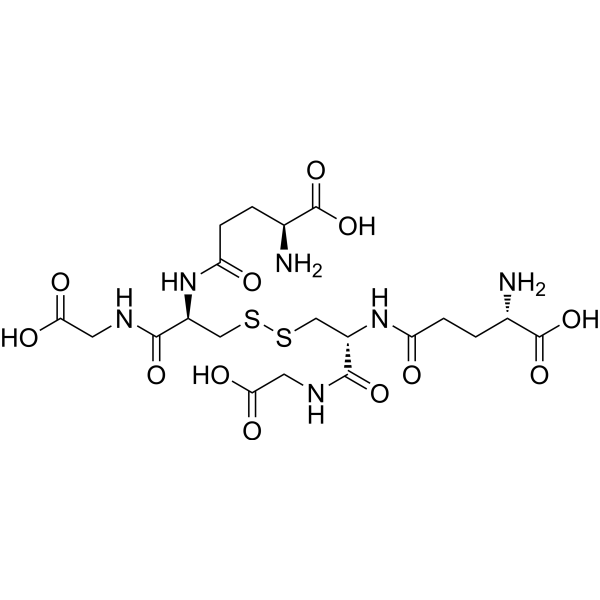
Glutathione oxidized (L-Glutathione oxidized) is produced by the oxidation of glutathione. Detoxification of reactive oxygen species is accompanied by production of glutathione oxidized. Glutathione oxidized can be used for the research of sickle cells and erythrocytes .
loading...
    loading...
Cat. No.: HY-P10438
Target:  

Raf

Research Areas:  

Cancer

TAT-Braftide is a peptide inhibitor designed to block the dimerization of BRAF, thereby inhibiting its kinase activity. The destruction of BRAF dimer by TAT-Braftide makes BRAF protein more susceptible to proteasome degradation, directly inhibits the activity of BRAF kinase, and reduces the activation of MAPK signaling pathway. Tat-braftide can be used for the role of RAF kinase in MAPK signaling pathway and for the study of BRAF mutant cancers .
loading...
    loading...
Cat. No.: HY-175435
CAS No.: 3094183-98-6
Target:  

PROTACs Raf ERK

Research Areas:  

Neurological Disease Cancer

CST905 is a potent BRAF-V600E PROTAC degrader with a DC50 of 18 nM. CST905 recruits the VHL E3 ligase to form a ternary complex, mediating the degradation of BRAF-V600E via the ubiquitin-proteasome pathway. The ligand of CST905 disrupts the RAF dimerization interface, thereby preventing the aberrant activation of the harmful MAPK/ERK pathway in RAS-mutated cells while degrading the target protein. CST905 can be used in studies related to malignant melanoma and neuroblastoma .
loading...
    loading...
Cat. No.: HY-P3223A
Target:  

Opioid Receptor

Research Areas:  

Neurological Disease

Biphalin acetate, a BBB-penetrable opioid peptide analog, contains two active enkephalin pharmacophores.Biphalin acetate has high affinity for opioid receptors. Biphalin acetate shows analgesic effect in acute, neuropathic, and chronic animal pain models. Biphalin acetate is also an antiviral, antiproliferative, anti-inflammatory, and neuroprotective agent .
loading...
    loading...
Cat. No.: HY-P3223
CAS No.: 126872-95-5
Target:  

Opioid Receptor

Research Areas:  

Neurological Disease

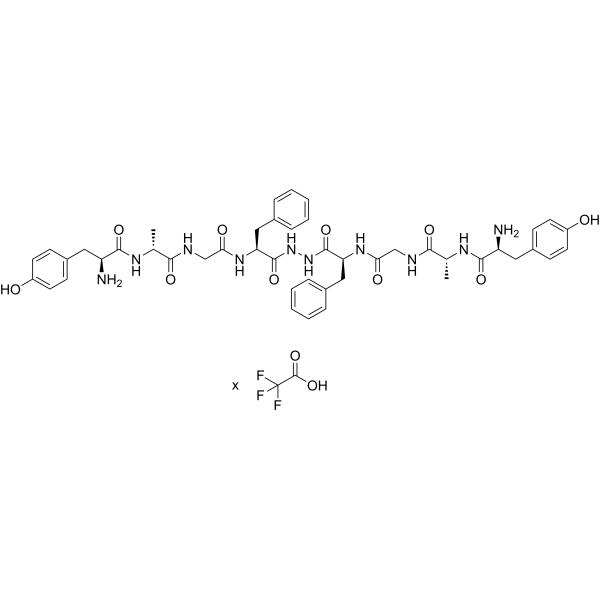
Biphalin TFA, a BBB-penetrable opioid peptide analog, contains two active enkephalin pharmacophores. Biphalin TFA has high affinity for opioid receptors. Biphalin TFA shows analgesic effect in acute, neuropathic, and chronic animal pain models. Biphalin TFA is also an antiviral, antiproliferative, anti-inflammatory, and neuroprotective agent .
loading...
    loading...
Cat. No.: HY-P12110
Research Areas:  

Others

Oxytocin N-terminal tetrapeptide dimer is a dimer derivative of Oxytocin (HY-17571).
loading...
    loading...
Cat. No.: HY-P12338
HNSS peptide is a chimeric hybrid peptide composed of the neuroprotective peptide S14G-Humanin and the mitochondria-targeted antioxidant peptide SS31. HNSS peptide is readily cleared in vivo and can be combined with nanocarriers to improve its stability. HNSS can be delivered via the FGFR1-targeting nanocarrier FGL-NP (Cit), ameliorating mitochondrial dysfunction, Aβ deposition, tau hyperphosphorylation, and cholinergic neuronal damage, and alleviating memory deficits in Alzheimer's disease mice. HNSS peptide is applicable for Alzheimer's disease-related research .
loading...
    loading...
Cat. No.: HY-P12219
Synonyms: OP449
COG449 is a cell-penetrating peptide that binds to SET, prevents the formation of the SET-PP2A complex, and restores PP2A phosphatase activity. COG449 decreases the phosphorylation levels of AKT 308, ERK1/2, NFkB p65, and c-MYC S62, and reduces c-MYC stability and target gene expression. COG449 induces apoptosis, autophagy, and histone H3 hyperacetylation, and decreases the levels of SET, CIP2A, SETBP1, and Mcl-1. COG449 reduces cancer cell viability and decreases tumor mass in xenograft models. COG449 can be used for research on various cancers such as oral squamous cell carcinoma, T-cell acute lymphoblastic leukemia, B-CLL, non-Hodgkin lymphoma, and breast cancer .
loading...
    loading...
Cat. No.: HY-P11882
CAS No.: 947545-69-9
Target:  

Fc Receptor (FcR)

Research Areas:  

Inflammation/Immunology

SYN1436 is a selective human neonatal Fc receptor (hFcRn) antagonist with an IC50 of 2.4 nM. SYN1436 binds to hFcRn and inhibits hFcRn-hIgG interaction. SYN1436 can be used for the research of autoimmune diseases .
loading...
    loading...

