1. Search Result
Search Result
Pathways Recommended: Stem Cell/Wnt Cell Cycle/DNA Damage
Results for "

Raw 264.7 mouse macrophage cells

" in MedChemExpress (MCE) Product Catalog:

15

Inhibitors & Agonists

1

Fluorescent Dyes

1

Peptides

7

Natural
Products

Cat. No. Product Name Target Research Areas Chemical Structure
  • HY-N10424
    Brazilein
    2 Publications Verification

    Na+/K+ ATPase Apoptosis Interleukin Related NO Synthase Bacterial Parasite Cardiovascular Disease Infection Neurological Disease Inflammation/Immunology
    Brazilein is a compound with anti-inflammatory and neuroprotective activities, with an IC50 of 500 μM against guinea pig Na +,K +-ATPase. Brazilein reduces iNOS mRNA expression, thereby inhibiting nitric oxide production in immune cells. Brazilein suppresses inflammatory responses by reducing the mRNA expression of TNF-α and IL-6, but has no effect on IL-1β expression. Brazilein reduces the cerebral infarction volume and improves the neurological function scores of rats with cerebral ischemia-reperfusion injury. Brazilein induces apoptosis of splenic lymphocytes in mice. Brazilein inhibits humoral immune responses in mice, and causes thymus and spleen atrophy as well as body weight loss in mice. Brazilein also possesses antimalarial and antibacterial activities. Brazilein is also a red dye. Brazilein can be used in studies related to the infection, nervous system, cardiovascular system and inflammatory diseases .
    Brazilein
  • HY-P2460

    Bacterial Fungal Interleukin Related TNF Receptor Infection Inflammation/Immunology
    SMAP‑29 is a cathelicidin antimicrobial peptide with LPS‑binding and anti‑inflammatory properties. SMAP‑29 exerts broad‑spectrum antimicrobial activity against bacteria, fungi and multidrug‑resistant isolates. SMAP‑29 kills pathogens by permeabilizing bacterial membranes, inducing depolarization and cell lysis, and also inhibits inflammatory cytokines while reducing lethality in septic shock and pneumonia models. SMAP-29 can be used for research on bacterial infections, drug-resistant infections, septic shock .
    SMAP-29
  • HY-N0853A
    Alisol A 24-acetate
    1 Publications Verification

    Alisol A 24-monoacetate; Alisol A monoacetate

    AMPK Carnitine Palmitoyltransferase (CPT) Acyltransferase Fatty Acid Synthase (FASN) Acetyl-CoA Carboxylase Bcl-2 Family PPAR Nuclear Factor of activated T Cells (NFAT) PI3K Akt PKA ERK Apoptosis Autophagy Cardiovascular Disease Infection Neurological Disease Metabolic Disease Endocrinology
    Alisol A 24-acetate (Alisol A monoacetate) is an orally active derivative of protostane-type tetracyclic triterpenoid. Alisol A 24-acetate upregulates the expression of adiponectin, AMPKα, CPT1, and ACOX1; downregulates the expression of SREBP-1c, ACC, FAS, Bcl-2, Bcl-xl, PPAR-γ, perilipin A, and NFATc1; inhibits the activity of PI3K/Akt/mTOR and HMGR; and activates the PKA and ERK signaling pathways. Alisol A 24-acetate regulates cell apoptosis (apoptosis), autophagy (Autophagy, hepatic lipid accumulation, inflammatory response, neuroprotection, MRSA membrane integrity, and osteoclast differentiation. Alisol A 24-acetate can be used in research related to non-alcoholic fatty liver disease, nephrotoxicity, obesity, global cerebral ischemia-reperfusion injury, bacterial infection, and osteoporosis .
    Alisol A 24-acetate
  • HY-W341547

    Adrenergic Receptor Inflammation/Immunology
    3,4-Dihydro-6,7-isoquinolinediol (compound 7) is a β2-AR agonist with an EC50 of 106.9 μM in CH-K1/GA1S cells. 3,4-Dihydro-6,7-isoquinolinediol can also inhibit the production of NO in mouse macrophage RAW 264.7 cells induced by lipopolysaccharide, showing anti-inflammatory activity .
    3,4-Dihydro-6,7-isoquinolinediol
  • HY-N2939

    Others Others
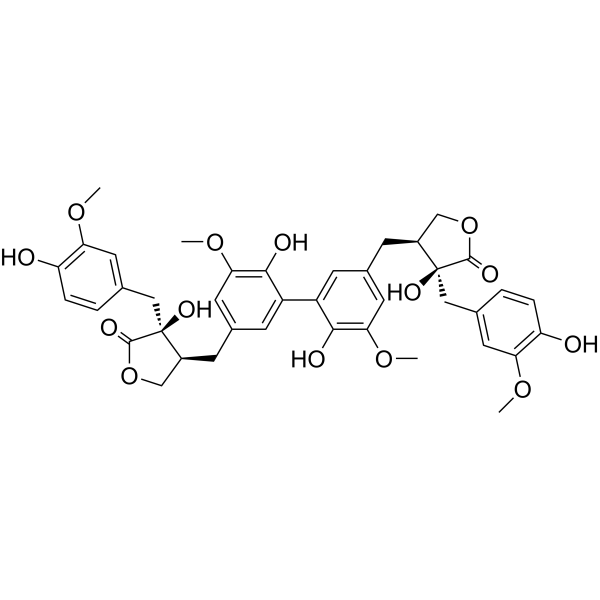
    Bis-5,5-Nortrachelogenin is isolated from active extract of root of Wikstroemia indica. Bis-5,5-Nortrachelogenin inhibits nitric oxide (NO) production in a lipopolysaccharide (LPS) and recombinant mouse interferon-γ(IFN-γ) activated murine macrophage-like cell line, RAW 264.7 with an IC50 value of 48.6 mM .
    Bis-5,5-Nortrachelogenin
  • HY-105825

    SH-G 318AB

    Endogenous Metabolite Inflammation/Immunology
    Sermetacin (SH-G 318AB) is an anti-inflammatory agent with biocompatibility and anti-inflammatory activity. Sermetacin is stable in saline and suitable for compound delivery. Sermetacin exhibits good biocompatibility in the RAW 264.7 mouse macrophage cell line. The anti-inflammatory response of sermetacin is comparable to that of its parent compound, indomethacin. Sermetacin may show potential in future applications of self-delivery of compound delivery .
    Sermetacin
  • HY-N19645

    Others Inflammation/Immunology
    (-)-3--2-hydroxy-8-methoxy-1,4-naphthoquinone (Compound 1) is a naphthoquinone compound. (-)-3--2-hydroxy-8-methoxy-1,4-naphthoquinone is isolated from the bulbs of Eleutherine americana. (-)-3--2-hydroxy-8-methoxy-1,4-naphthoquinone shows no activity against lipopolysaccharide-induced nitric oxide production .
    (-)-3-[2-(Acetyloxy)propyl]-2-hydroxy-8-methoxy-1,4-naphthoquinone
  • HY-W750903

    NO Synthase Inflammation/Immunology
    Dihydroxanthohumol is a chalcone found in Humulus lupulus L. Dihydroxanthohumol is a nitric oxide (NO) production inhibitor. Dihydroxanthohumol slightly suppresses LPS (HY-D1056)/IFN-γ-induced iNOS protein expression and NO production. Dihydroxanthohumol exhibits cytotoxicity at high concentrations .
    Dihydroxanthohumol
  • HY-182308

    Interleukin Related TNF Receptor Inflammation/Immunology
    LC-PDA-01 is a selective peroxiredoxin 1 (PRDX1) activator with an EC50 of 111.8 nM and a human KD of 123.2 nM. LC-PDA-01 inhibits the expression of pro-inflammatory cytokines IL-1β, IL-6 and TNF-α. LC-PDA-01 can be used in antioxidant/anti-inflammatory research .
    LC-PDA-01
  • HY-153149

    Adenosine Receptor Apoptosis PGC-1α Metabolic Disease Inflammation/Immunology
    LJ-2698 is an orally active adenosine A3 receptor antagonist. LJ-2698 induces increased levels of anti-inflammatory cytokines in macrophages and significantly elevates the number of anti-inflammatory M2 macrophages in the lung. LJ-2698 prevents alveolar cavity enlargement, restores pulmonary function, inhibits matrix metalloproteinase activity and pulmonary cell apoptosis in the lung tissues of mice. LJ-2698 prevents renal injury, inhibits renal lipid accumulation, and increases PGC1α levels in renal tissues of mice with diabetic nephropathy. LJ-2698 is applicable to the research of emphysema and diabetic nephropathy .
    LJ-2698
  • HY-W420454

    Others Inflammation/Immunology Cancer
    Danshenspiroketallactone is a lactone found in the roots of Salvia miltiorrhiza. Danshenspiroketallactone shows no anti-inflammatory and anticancer activity .
    Danshenspiroketallactone
  • HY-182644

    Toll-like Receptor (TLR) NF-κB TNF Receptor Interleukin Related Cancer
    SMU-Z1 is a TLR1/2 heterodimer agonist with an EC50 of 4.88 nM. SMU-Z1 activates the NF-κB pathway, triggers pro-inflammatory cytokine production, and induces the generation of TNF-α, IL-1β, IL-6 and NO. SMU-Z1 promotes splenocyte proliferation and upregulates the expression of CD8 +T cells, NK cells and dendritic cells. SMU-Z1 exhibits significant anti-tumor effects in mouse leukemia models. SMU-Z1 can be used for leukemia-related research .
    SMU-Z1
  • HY-D3225

    Fluorescent Dye Neurological Disease
    MD-B is a •OH Fluorescent probe with blood-brain barrier permeability. MD-B undergoes single-electron oxidation by hydroxyl radicals (•OH), which triggers fluorescence enhancement and enables in-situ imaging of •OH. MD-B allows imaging analysis of hydroxyl radicals (•OH) in the mouse brain, revealing a positive correlation between elevated •OH levels and the severity of depressive phenotypes. MD-B can be used in depression-related research .
    MD-B
  • HY-N18117

    EBV Infection Cancer
    21-Hydroxyisoohchininolide is a salannin-type limonoid. 21-Hydroxyisoohchininolide inhibits lipopolysaccharide (LPS, HY-D1056)-induced nitric oxide production in mouse macrophages. 21-Hydroxyisoohchininolide exhibits cytotoxic activity against leukemia cells and breast cancer cells. 21-Hydroxyisoohchininolide suppresses phorbol 12-myristate 13-acetate (PMA) (HY-18739)-induced activation of Epstein-Barr virus early antigen in lymphocytes. 21-Hydroxyisoohchininolide can be used for the research of leukemia, breast cancer and inflammatory diseases .
    21-Hydroxyisoohchininolide
  • HY-116783

    Bacterial DNA/RNA Synthesis Infection
    GyrB-IN-1 is a DNA gyrase (GyrB) inhibitor. GyrB-IN-1 shows an IC50 of 19.1 μM against Mycobacterium smegmatis GyrB ATPase activity and 21.9 μM against Mycobacterium tuberculosis GyrB DNA supercoiling activity. GyrB-IN-1 exerts antimycobacterial activity and has cytotoxicity. GyrB-IN-1 can be used for the research of tuberculosis .
    GyrB-IN-1

Inquiry Online

Your information is safe with us. * Required Fields.

Salutation


Country or Region *

Applicant Name *


Organization Name *

Department *


Email Address *


Product Name *

Cat. No.


Requested quantity *

Phone Number *


Remarks

Inquiry Online

Inquiry Information

Product Name:
Cat. No.:
Quantity:
MCE Japan Authorized Agent:

