

5 Results for "

Secreted polypeptides

" in MedChemExpress (MCE) Product Catalog:
Products (5)

5 Results for "Secreted polypeptides" in MCE Product Catalog:

Cat. No.: HY-P2542
CAS No.: 1802086-25-4
Target:  

Insulin Receptor

Research Areas:  

Metabolic Disease

GIP (3-42), human acts as a glucose-dependent insulinotropic polypeptide (GIP) receptor antagonist, moderating the insulin secreting and metabolic actions of GIP in vivo .
loading...
    loading...
Cat. No.: HY-P10735
CAS No.: 181591-59-3
Synonyms: Gastric inhibitory polypeptide(mouse); GIP(1-42) (mouse)
Target:  

Lipase Apoptosis

Research Areas:  

Metabolic Disease

GIP (Gastric inhibitory polypeptide) (mouse) is a gastrointestinal hormone that is secreted by the intestinal K cells, and also expressed in and secreted from pancreatic islets. GIP (mouse) promotes insulin secretion from pancreatic β cells via the G-protein-coupled GIP receptor (GIPR). GIP (mouse) promotes pancreatic β cell proliferation and inhibits apoptosis. GIP (mouse) also exerts direct lipogenic effects on adipose tissue .
loading...
    loading...
Cat. No.: HY-P4060
CAS No.: 59763-91-6
Research Areas:  

Metabolic Disease Endocrinology

Pancreatic polypeptide is a peptide secreted by the endocrine PP cells of the pancreas that regulates pancreatic secretory activity and also affects hepatic glycogen stores and gastrointestinal secretion .
loading...
    loading...
Cat. No.: HY-P1519B
Synonyms: BNP (1-32), rat acetate
Target:  

Angiotensin Receptor

Research Areas:  

Cardiovascular Disease

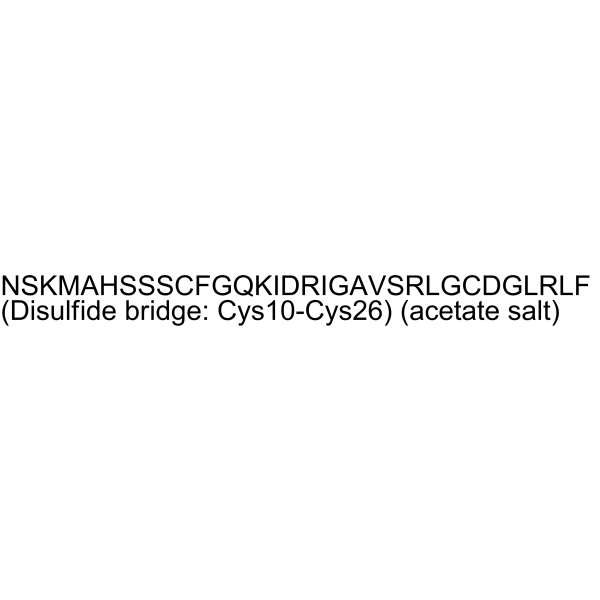
Brain Natriuretic Peptide (1-32), rat acetate (BNP (1-32), rat acetate) is a 32 amino acid polypeptide secreted by the ventricles of the heart in response to excessive stretching of heart muscle cells (cardiomyocytes) .
loading...
    loading...
Cat. No.: HY-P1519
CAS No.: 133448-20-1
Synonyms: BNP (1-32), rat
Target:  

Angiotensin Receptor

Research Areas:  

Cardiovascular Disease

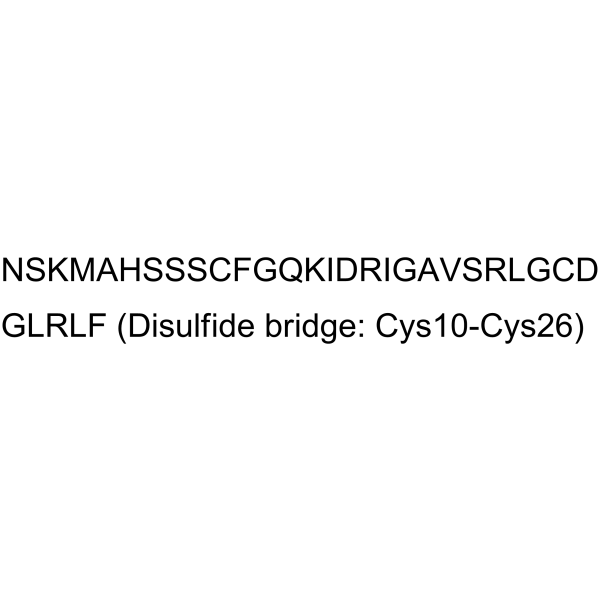
Brain Natriuretic Peptide (1-32), rat (BNP (1-32), rat) is a 32 amino acid polypeptide secreted by the ventricles of the heart in response to excessive stretching of heart muscle cells (cardiomyocytes) .
loading...
    loading...

