13 Results for "

Slo3

" in MedChemExpress (MCE) Product Catalog:
Products (13)

13 Results for "Slo3" in MCE Product Catalog:

7
7 Publications Verification
Cat. No.: HY-D0143
CAS No.: 130-95-0
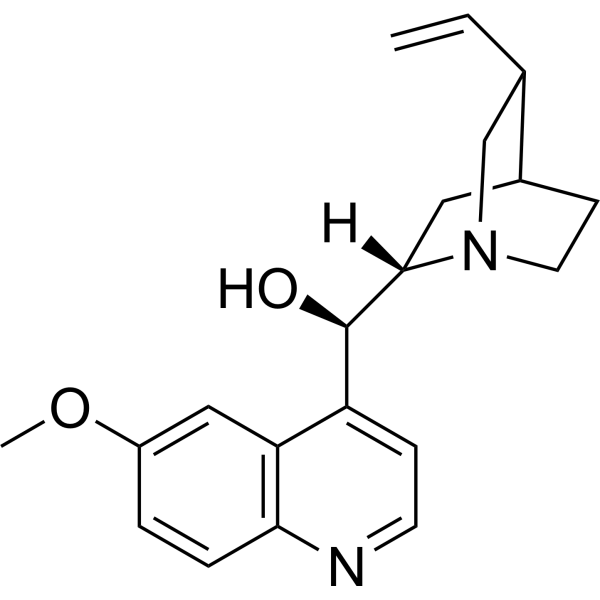
Quinine is an orally active alkaloid extracted from cinchona bark, possessing various biological activities including antimalarial, antidengue virus (DENV), and anticancer properties. Quinine is a potassium channel inhibitor that inhibits WT mouse Slo3 (KCa5.1) channel currents evoked by voltage pulses to +100 mV with an IC50 of 169 μM .
loading...
    loading...
7
7 Publications Verification
Cat. No.: HY-B0433A
CAS No.: 6119-47-7
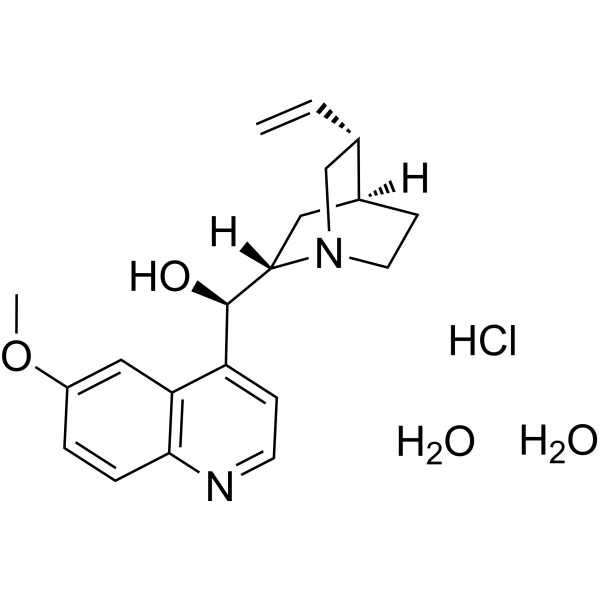
Quinine hydrochloride dihydrate (Qualaquin) is an orally active and can be used in anti-malarial studies. Quinine hydrochloride dihydrate is a potassium channel inhibitor that inhibits WT mouse Slo3 (KCa5.1) channel currents evoked by voltage pulses to +100 mV with an IC50 of 169 μM .
loading...
    loading...
7
7 Publications Verification
Cat. No.: HY-W010668
CAS No.: 6119-70-6
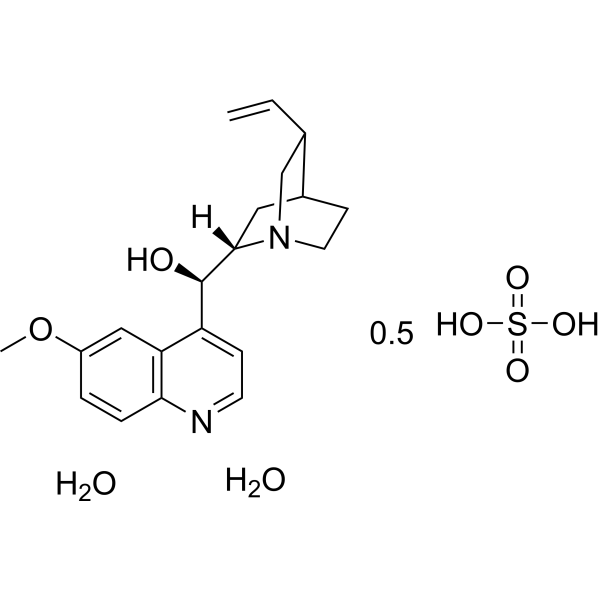
Quinine sulfate hydrate (2:1:4) is an orally active alkaloid extracted from cinchona bark and can be used in anti-malarial studies. Quinine sulfate hydrate (2:1:4) is a potassium channel inhibitor that inhibits WT mouse Slo3 (KCa5.1) channel currents evoked by voltage pulses to +100 mV with an IC50 of 169 μM .
loading...
    loading...
7
7 Publications Verification
Cat. No.: HY-D0143A
CAS No.: 60-93-5
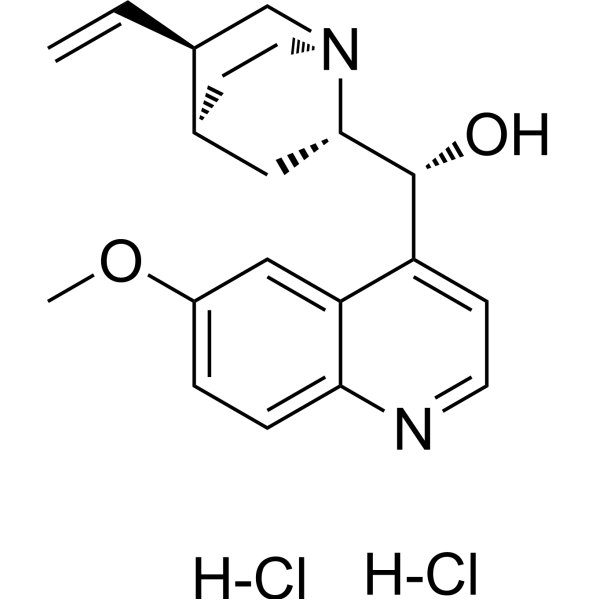
Quinine dihydrochloride is an orally active alkaloid extracted from cinchona bark, possessing various biological activities including antimalarial, antidengue virus (DENV), and anticancer properties. Quinine dihydrochloride is a potassium channel inhibitor that inhibits WT mouse Slo3 (KCa5.1) channel currents evoked by voltage pulses to +100 mV with an IC50 of 169 μM [3].
loading...
    loading...
Cat. No.: HY-175728
VU6032735 is a potent and subtype-selective sperm-specific potassium channel 3 (SLO3) inhibitor with IC50 values of 165 nM (hSLO3) and 730 nM (mSLO3). VU6032735 also inhibits sodium channel and L-type calcium channel VU6032735 can sustain high tissue exposure in the fertilized oviduct. VU6032735 can be used for the research of contraception .
loading...
    loading...
Cat. No.: HY-164911
CAS No.: 1421523-00-3
Target:  

Potassium Channel

Research Areas:  

Endocrinology

VU0546110 is a selective inhibitor of the sperm-specific potassium channel SLO3, with IC50s of 1.287 μM (SLO3) and 59.80 μM (SLO1) in HEK293 cells, respectively. VU0546110 blocks heterologous SLO3 currents and endogenous K + currents in human sperm. VU0546110 halts sperm hyperpolarization, induced acrosome reaction, and hyper-activated motility. VU0546110 has contraceptive potential .
loading...
    loading...
Cat. No.: HY-B0433B
CAS No.: 804-63-7
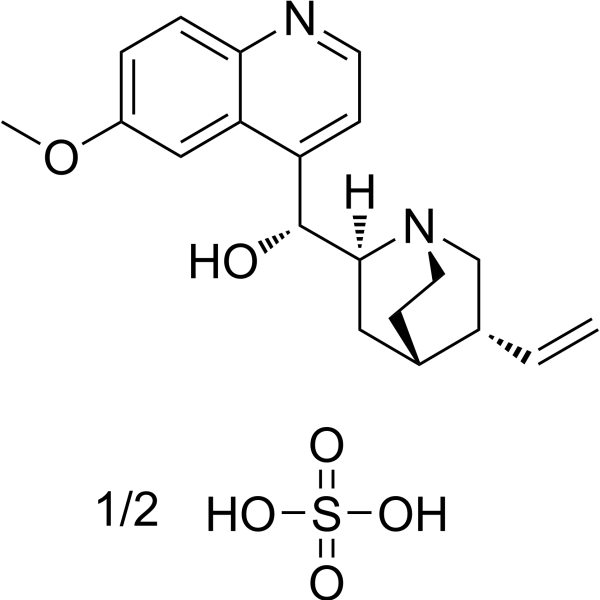
Quinine hemisulfate is an orally active alkaloid extracted from cinchona bark and can be used in anti-malarial studies. Quinine hemisulfate is a potassium channel inhibitor that inhibits WT mouse Slo3 (KCa5.1) channel currents evoked by voltage pulses to +100 mV with an IC50 of 169 μM .
loading...
    loading...
Cat. No.: HY-D0143R
CAS No.: 130-95-0
Quinine (Standard) is the analytical standard of Quinine (HY-D0143). This product is intended for research and analytical applications. Quinineis an orally active alkaloid extracted from cinchona bark, possessing various biological activities including antimalarial, antidengue virus (DENV), and anticancer properties. Quinine is a potassium channel inhibitor that inhibits WT mouse Slo3 (KCa5.1) channel currents evoked by voltage pulses to +100 mV with an IC50 of 169 μM .
loading...
    loading...
Cat. No.: HY-W010668R
CAS No.: 6119-70-6
Quinine (sulfate hydrate) (Standard) is the analytical standard of Quinine (sulfate hydrate). This product is intended for research and analytical applications. Quinine sulfate hydrate (2:1:4) is an orally active alkaloid extracted from cinchona bark and can be used in anti-malarial studies. Quinine sulfate hydrate (2:1:4) is a potassium channel inhibitor that inhibits WT mouse Slo3 (KCa5.1) channel currents evoked by voltage pulses to +100?mV with an IC50 of 169 μM .
loading...
    loading...
Cat. No.: HY-W740048
CAS No.: 2734920-95-5
Quinine-d3 is the deuterium labeled Quinine (HY-D0143). Quinine is an alkaloid derived from the bark of the cinchona tree, acts as an anti-malaria agent. Quinine is a potassium channel inhibitor that inhibits WT mouse Slo3 (KCa5.1) channel currents evoked by voltage pulses to +100?mV with an IC50 of 169 μM .
loading...
    loading...
Cat. No.: HY-B0433AR
CAS No.: 6119-47-7
Quinine (hydrochloride dihydrate) (Standard) is the analytical standard of Quinine (hydrochloride dihydrate). This product is intended for research and analytical applications. Quinine hydrochloride dihydrate (Qualaquin) is an orally active and can be used in anti-malarial studies. Quinine hydrochloride dihydrate is a potassium channel inhibitor that inhibits WT mouse Slo3 (KCa5.1) channel currents evoked by voltage pulses to +100?mV with an IC50 of 169 μM .
loading...
    loading...
Cat. No.: HY-117651R
CAS No.: 16518-94-8
Research Areas:  

Cancer

Quinine (sulfate hydrate) (Standard) is the analytical standard of Quinine (sulfate hydrate). This product is intended for research and analytical applications. Quinine sulfate hydrate (2:1:4) is an orally active alkaloid extracted from cinchona bark and can be used in anti-malarial studies. Quinine sulfate hydrate (2:1:4) is a potassium channel inhibitor that inhibits WT mouse Slo3 (KCa5.1) channel currents evoked by voltage pulses to +100?mV with an IC50 of 169 μM .
loading...
    loading...
Cat. No.: HY-D0143AR
CAS No.: 60-93-5
Quinine dihydrochloride (Standard) is the analytical standard of Quinine dihydrochloride (HY-D0143A). This product is intended for research and analytical applications. Quinine dihydrochloride is an orally active alkaloid extracted from cinchona bark, possessing various biological activities including antimalarial, antidengue virus (DENV), and anticancer properties. Quinine dihydrochloride is a potassium channel inhibitor that inhibits WT mouse Slo3 (KCa5.1) channel currents evoked by voltage pulses to +100 mV with an IC50 of 169 μM [3].
loading...
    loading...
  • 1

