1. Search Result
Search Result
Results for "

Stearate

" in MedChemExpress (MCE) Product Catalog:

69

Inhibitors & Agonists

22

Biochemical Assay Reagents

5

Natural
Products

12

Isotope-Labeled Compounds

8

Oligonucleotides

Cat. No. Product Name Target Research Areas Chemical Structure
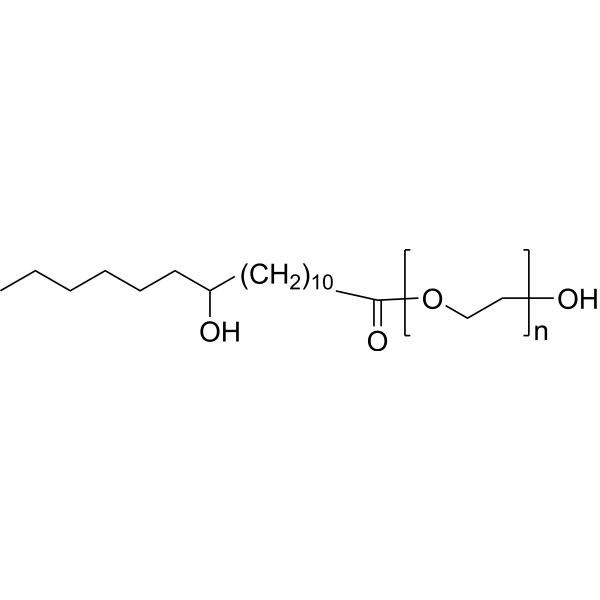
  • HY-Y1893
    Solutol HS-15
    20+ Cited Publications

    Polyethylene glycol 12-hydroxyStearate

    Biochemical Assay Reagents Others
    Solutol HS-15, a Macrogol 15 hydroxy stearate, is a permeability enhancer .
    Solutol HS-15
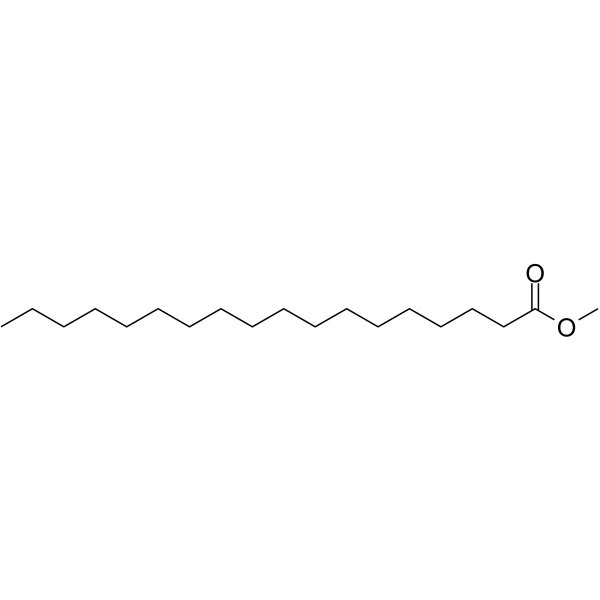
  • HY-B1934

    Stearic acid methyl ester

    Environmental Pollutants Parasite Others
    Methyl stearate, isolated from Rheum palmatum L. is a compopent of of soybean and rapeseed biodiesels .
    Methyl stearate
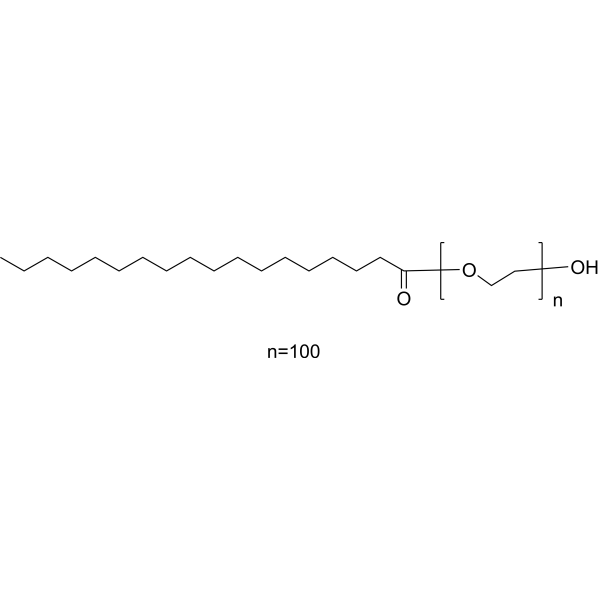
  • HY-101530C

    PEG 100 Stearate

    Environmental Pollutants Biochemical Assay Reagents Others
    Polyoxyl 100 stearate (PEG-100 stearate) is a non-ionic surfactant formed by polyethylene glycol (PEG) and stearic acid, and it is commonly used in pharmaceutical preparations, nanocarriers, emulsification systems and cosmetic formulations .
    Polyoxyl 100 stearate
  • HY-Y1054

    Stearic Acid Magnesium(II) Salt

    Environmental Pollutants Biochemical Assay Reagents Others
    Magnesium stearate is a commonly used pharmaceutical lubricant. But Magnesium stearate leads to an adverse effect on bonding between particles. Magnesium stearate can be used as an excipient, such as lubricant. Pharmaceutical excipients, or pharmaceutical auxiliaries, refer to other chemical substances used in the pharmaceutical process other than pharmaceutical ingredients. Pharmaceutical excipients generally refer to inactive ingredients in pharmaceutical preparations, which can improve the stability, solubility and processability of pharmaceutical preparations. Pharmaceutical excipients also affect the absorption, distribution, metabolism, and elimination (ADME) processes of co-administered drugs .
    Magnesium stearate
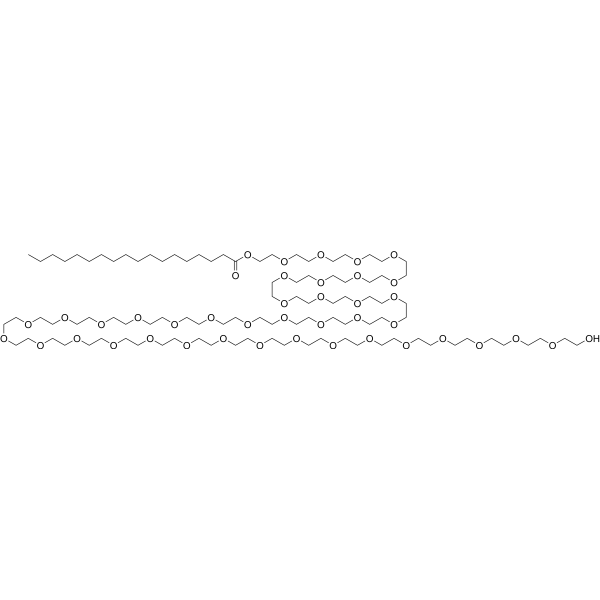
  • HY-101530

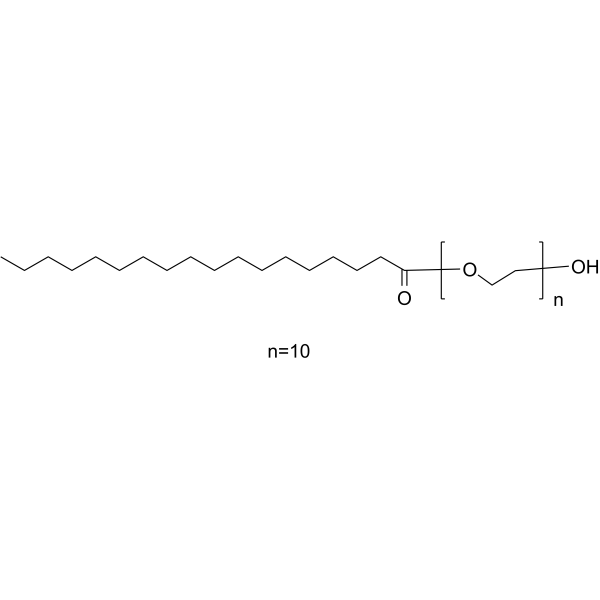
    POES

    Environmental Pollutants P-glycoprotein Bacterial Cancer
    Polyoxyethylene stearate (POES) is a non-ionic emulsifying agent.
    Polyoxyethylene stearate
  • HY-101530B

    PEG 40 Stearate

    Biochemical Assay Reagents Others
    Polyoxyl 40 stearate (PEG 40 stearate) is a nonionic surfactant formed by the esterification of stearic acid with polyethylene glycol (PEG) containing approximately 40 ethoxy units, it is widely used in pharmaceutical preparations, nanodrug carriers, emulsification systems and biomedical materials. Polyoxyl 40 stearate can serve as a matrix component of solid lipid nanoparticles to achieve controlled release of encapsulated antifungal drugs; it can also act as a base material for solid lipid nanoparticles for vaginal administration, and polymerizable groups can be introduced via modification with acryloyl chloride .
    Polyoxyl 40 stearate
  • HY-W013809

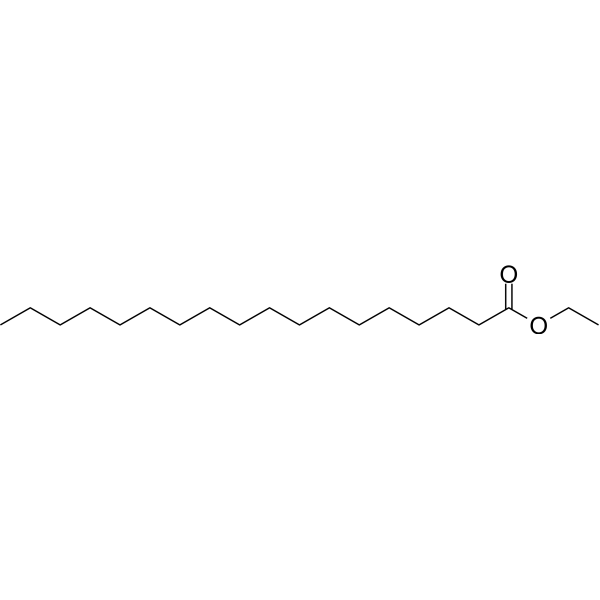
    Stearic acid ethyl ester

    Biochemical Assay Reagents Others
    Ethyl stearate is an ester compound produced by the reaction of ethanol and stearic acid. It is commonly used as a flavoring agent in various foods such as baked goods, beverages and desserts. Ethyl stearate is also used as a fragrance ingredient in the manufacture of perfume, cologne and personal care products. Additionally, it has applications in industrial settings such as the production of lubricants and plasticizers.
    Ethyl stearate
  • HY-B2219A
    Calcium stearate
    20+ Cited Publications

    Environmental Pollutants Endogenous Metabolite Cardiovascular Disease Metabolic Disease
    Calcium stearate is an orally active long-chain dietary saturated fatty acid that can significantly reduce visceral fat by inducing apoptosis of preadipocytes. Calcium stearate can be used in the study of cardiovascular and metabolic diseases .
    Calcium stearate
  • HY-W010695

    Biochemical Assay Reagents Others
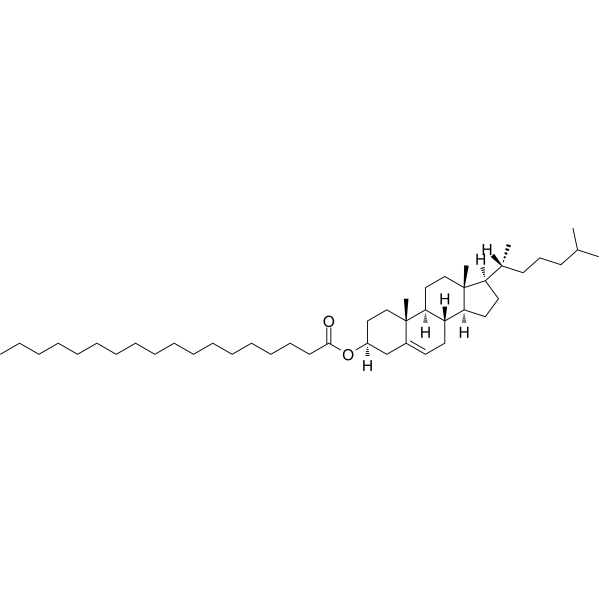
    Cholesteryl stearate is a compound belonging to the class of esters. It is a cholesterol ester commonly found in animal and plant sources. Cholesteryl stearate consists of two naturally occurring substances, cholesteryl alcohol and stearic acid. The combination of the two creates a stable compound that is commonly used in a variety of industrial and biomedical applications. Cholesteryl stearate is commonly used as a lubricant, thickener and emollient in cosmetic formulations such as lotions and creams. It is also used to produce certain types of polymers and plastics.
    Cholesteryl stearate
  • HY-W250721C

    CBM 941

    Biochemical Assay Reagents
    Carbomer 941 (CBM 941) is an acrylic acid polymer, which can be used as a thickening agent. Carbomer 941 provides a stable gel matrix, exhibits good heat, light and microbial contamination resistance. Carbomer 941 facilitates the drug release and local application, which can be used in the pharmaceutical industry .
    Carbomer 941
  • HY-W011187

    Stearic acid butyl ester

    Biochemical Assay Reagents Others
    Butyl stearate (Stearic acid butyl ester) is a biochemical assay reagent.
    Butyl stearate
  • HY-W099570

    Environmental Pollutants Biochemical Assay Reagents Others
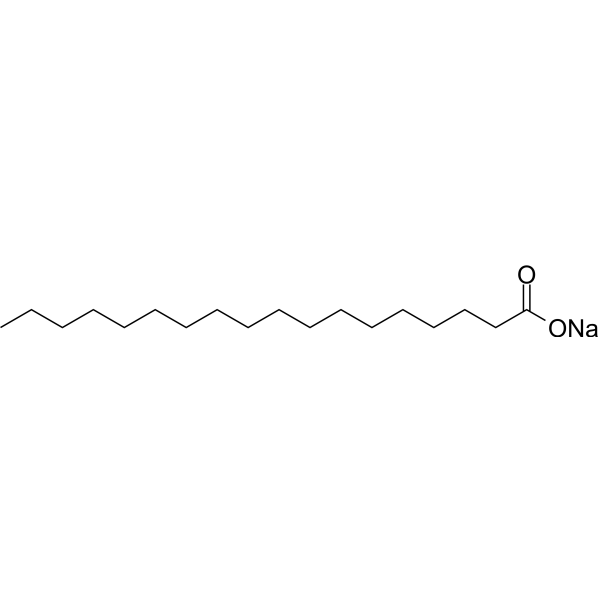
    Stearate sodiumIt is an organic compound belonging to fatty acids. It is the sodium salt of stearic acid, a saturated fatty acid commonly found in various animal and vegetable fats. Stearate sodiumCommonly used as surfactants, emulsifiers and detergents, it is widely used in the cosmetics, personal care and detergent industries. It's found in a variety of products, including soaps, shampoos, toothpaste, and laundry detergent. Also, it has applications in the food industry where it is used as a food additive to improve texture and shelf life.
    Stearate sodium
  • HY-Y1039

    1-Monostearin; 2,3-Dihydroxypropyl Stearate

    Environmental Pollutants Biochemical Assay Reagents Others
    Stearic acid 1-monoglyceride is an ester composed of stearic acid and glycerin, commonly known as glyceryl monostearate. 1-Monoglyceride stearate has unique chemical properties that make it an important ingredient in a variety of industrial processes, including food production, cosmetics, and pharmaceuticals. It acts as an emulsifier, stabilizer and thickener in these products, enhancing their texture and shelf life.
    1-Stearoyl-rac-glycerol
  • HY-W250316

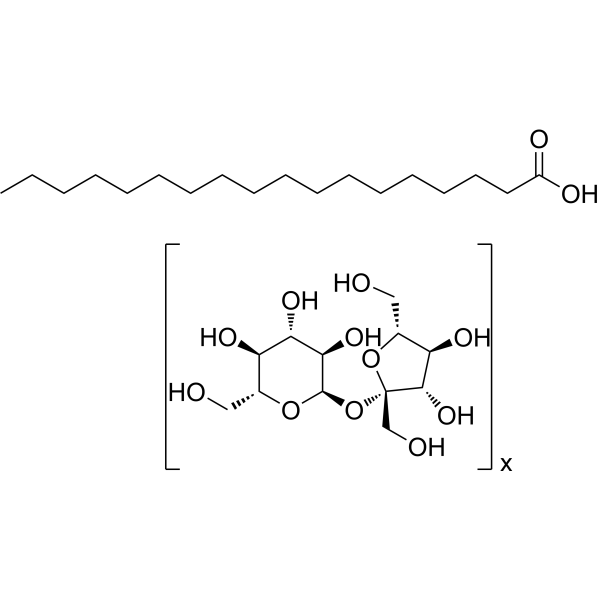
    Sucrose Stearate, Type II, USP

    Biochemical Assay Reagents Others
    Alpha-d-Glucopyranoside, beta-d-fructofuranosyl, octadecanoate (Sucrose Stearate, Type II, USP) is a non-ionic surfactant. Alpha-d-Glucopyranoside, beta-d-fructofuranosyl, octadecanoate enhances the skin permeability of formulations .
    Alpha-d-Glucopyranoside, beta-d-fructofuranosyl, octadecanoate
  • HY-113873

    Biochemical Assay Reagents Metabolic Disease
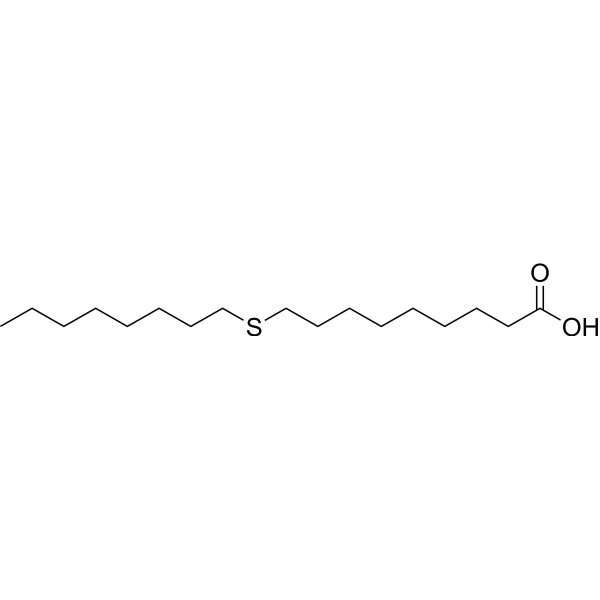
    10-Thiastearic acid inhibits desaturation of stearate to oleate. 10-Thiastearic acid has hypolipidemic effect .
    10-Thiastearic acid
  • HY-W099571
    Lithium stearate
    20+ Cited Publications

    Stearic acid lithium; Lithium octadecanoate

    Environmental Pollutants Biochemical Assay Reagents Others
    Lithium stearate (Stearic acid (lithium)) is a compound that forms vesicles in reaction with silver nitrate, thereby changing the reaction kinetics of the nucleation and self-assembly process of silver stearate. It has the activity that even in the presence of excess silver nitrate, only about 80% can be converted into silver stearate and the residual lithium stearate will inhibit the growth process of silver stearate crystals, thereby producing silver stearate crystals that are much smaller than those obtained from sodium stearate, providing an opportunity to further control the self-assembly and crystal growth of silver stearate.
    Lithium stearate
  • HY-W099569

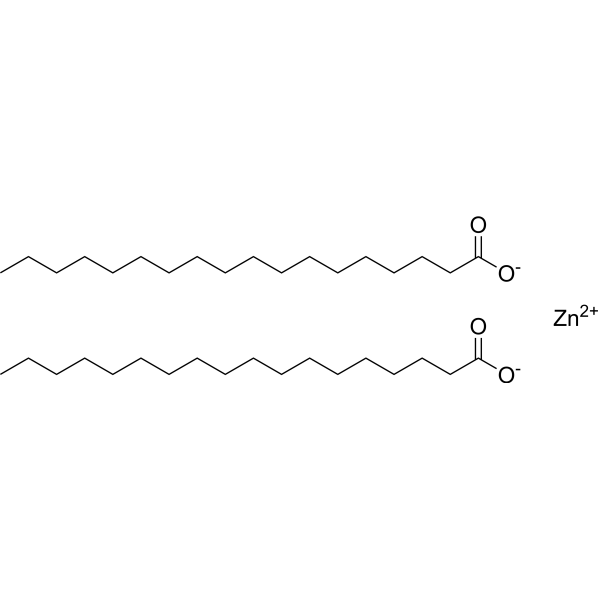
    Zinc octadecanoate

    Biochemical Assay Reagents Fungal Bacterial Parasite Infection
    Zinc stearate is a metal stearate that acts as a preservative, bactericide, fungicide, and larvicide. Zinc stearate inhibits larval reproduction in animal feces. Zinc stearate exhibits extremely low systemic toxicity. Zinc stearate is a common component of pharmaceutical excipients, lubricants, mold release agents, polymer stabilizers, and coating matting agents .
    Zinc stearate
  • HY-Y1039S1

    1-Monostearin-d35; 2,3-dihydroxypropyl Stearate-d35

    Isotope-Labeled Compounds Others
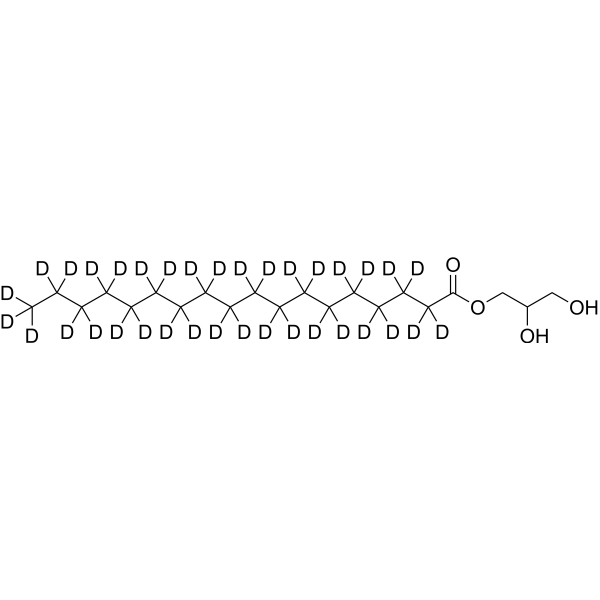
    1-Stearoyl-rac-glycerol-d35 is the deuterium labeled 1-Stearoyl-rac-glycerol.
    1-Stearoyl-rac-glycerol-d35
  • HY-W010695S

    Isotope-Labeled Compounds Others
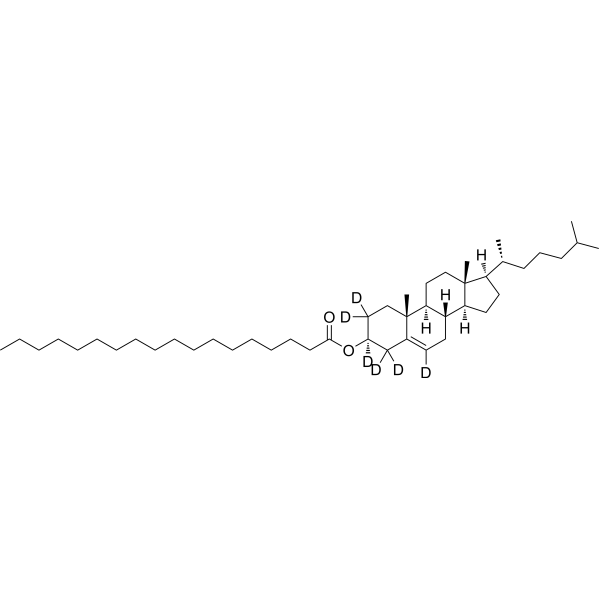
    Cholesterol stearate-d6 is the deuterium labeled Cholesterol stearate .
    Cholesterol stearate-d6
  • HY-W133986

    Environmental Pollutants Biochemical Assay Reagents Others
    Potassium stearate, 98% is a biochemical assay reagent.
    Potassium stearate, 98%
  • HY-W017657

    Biochemical Assay Reagents Others
    4-Methylumbelliferyl stearate is a biochemical reagent.
    4-Methylumbelliferyl stearate
  • HY-W013809R

    Stearic acid ethyl ester (Standard)

    Biochemical Assay Reagents Reference Standards Others
    Ethyl stearate (Standard) is the analytical standard of Ethyl stearate. This product is intended for research and analytical applications. Ethyl stearate is an ester compound produced by the reaction of ethanol and stearic acid. It is commonly used as a flavoring agent in various foods such as baked goods, beverages and desserts. Ethyl stearate is also used as a fragrance ingredient in the manufacture of perfume, cologne and personal care products. Additionally, it has applications in industrial settings such as the production of lubricants and plasticizers.
    Ethyl stearate (Standard)
  • HY-W127545

    Biochemical Assay Reagents Others
    Phenyl Stearate is a biochemical reagent that can be used as a biological material or organic compound for life science related research.
    Phenyl stearate
  • HY-W415007

    Stearic acid,isopropyl ester

    Environmental Pollutants Metabolic Disease
    Isopropyl stearate (Stearic acid,isopropyl ester) is an ester product.
    Isopropyl stearate
  • HY-Y1054R

    Stearic Acid Magnesium(II) Salt (Standard)

    Biochemical Assay Reagents Reference Standards Others
    Magnesium stearate (Standard) is the analytical standard of Magnesium stearate. This product is intended for research and analytical applications. Magnesium stearate is a commonly used pharmaceutical lubricant. But Magnesium stearate leads to an adverse effect on bonding between particles. Magnesium stearate can be used as an excipient, such as lubricant. Pharmaceutical excipients, or pharmaceutical auxiliaries, refer to other chemical substances used in the pharmaceutical process other than pharmaceutical ingredients. Pharmaceutical excipients generally refer to inactive ingredients in pharmaceutical preparations, which can improve the stability, solubility and processability of pharmaceutical preparations. Pharmaceutical excipients also affect the absorption, distribution, metabolism, and elimination (ADME) processes of co-administered drugs .
    Magnesium stearate (Standard)
  • HY-W127326

    Biochemical Assay Reagents Others
    2-Nitrophenyl stearate is a biochemical reagent that can be used as a biological material or organic compound for life science related research.
    2-Nitrophenyl stearate
  • HY-W127503

    Stearic Acid Lauryl Ester

    Biochemical Assay Reagents Others
    Dodecyl Stearate is a biochemical reagent that can be used as a biological material or organic compound for life science related research.
    Dodecyl Stearate
  • HY-W127417

    Stearic acid behenyl ester

    Biochemical Assay Reagents Others
    Behenyl stearate is a biochemical reagent that can be used as a biological material or organic compound for life science related research.
    Behenyl stearate
  • HY-101530A

    PEG 8 Stearate

    Biochemical Assay Reagents Others
    Polyoxyl 8 stearate can be used as an excipient. Pharmaceutical excipients, or pharmaceutical auxiliaries, refer to other chemical substances used in the pharmaceutical process other than pharmaceutical ingredients. Pharmaceutical excipients generally refer to inactive ingredients in pharmaceutical preparations, which can improve the stability, solubility and processability of pharmaceutical preparations. Pharmaceutical excipients also affect the absorption, distribution, metabolism, and elimination (ADME) processes of co-administered drugs .
    Polyoxyl 8 stearate
  • HY-154637

    Biochemical Assay Reagents Others
    Sucrose Stearate can be used as an excipient, such as Surfactants, emulsifiers, solubilizers, etc. Pharmaceutical excipients, or pharmaceutical auxiliaries, refer to other chemical substances used in the pharmaceutical process other than pharmaceutical ingredients. Pharmaceutical excipients generally refer to inactive ingredients in pharmaceutical preparations, which can improve the stability, solubility and processability of pharmaceutical preparations. Pharmaceutical excipients also affect the absorption, distribution, metabolism, and elimination (ADME) processes of co-administered drugs .
    Sucrose Stearate
  • HY-108875

    Antibiotic Bacterial DNA/RNA Synthesis Infection Cancer
    Erythromycin stearate is a macrolide antibiotic produced by actinomycete Streptomyces erythreus with a broad spectrum of antimicrobial activity. Erythromycin stearate binds to bacterial 50S ribosomal subunits and inhibits RNA-dependent protein synthesis by blockage of transpeptidation and/or translocation reactions, without affecting synthesis of nucleic acid [1][2]. Erythromycin stearate also exhibits antitumor and neuroprotective effect in different fields of research [3][4].
    Erythromycin stearate
  • HY-B1934R

    Stearic acid methyl ester (Standard)

    Reference Standards Parasite Others
    Methyl stearate (Standard) is the analytical standard of Methyl stearate. This product is intended for research and analytical applications. Methyl stearate, isolated from Rheum palmatum L. is a compopent of of soybean and rapeseed biodiesels .
    Methyl stearate (Standard)
  • HY-W011188

    Biochemical Assay Reagents Others
    Oxiran-2-ylmethyl stearate is a biochemical reagent that can be used as a biological material or organic compound for life science related research.
    Glycidyl stearate
  • HY-W329372

    Ethylene glycol monoStearate

    Biochemical Assay Reagents Metabolic Disease
    2-Hydroxyethyl stearate (Ethylene glycol monostearate) is an ester product.
    2-Hydroxyethyl stearate
  • HY-W099563

    Biochemical Assay Reagents Others
    4-Nitrophenyl stearate, which is an ester formed by the condensation of stearic acid and 4-nitrophenol, is commonly used as a substrate for enzymatic assays, where the hydrolysis of ester bonds by esterase and lipase can be measured by absorbance or ratio In addition, 4-Nitrophenyl stearate has been used as a model compound to study the enzymatic activity and selectivity of lipases and esterases from various sources. The long hydrophobic tail of the molecule makes it suitable for use in lipophilic Good solubility in the environment makes it a useful probe for studying lipid metabolism.
    4-Nitrophenyl stearate
  • HY-19288

    ABT 606; MIV 606; A 174606.0

    HSV VZV Infection
    Valomaciclovir stearate (ABT 606), a nucleoside analog, is the Omaciclovir (HY-116174) prodrug. Valomaciclovir stearate has antiviral activity against HSV-1 and varicella zoster virus (VZV) .
    Valomaciclovir stearate
  • HY-W127437

    Octadecanoic acid, octadecyl ester

    Biochemical Assay Reagents Others
    Stearyl StearateIt is an organic compound belonging to esters. It is formed from the reaction between stearyl alcohol and stearic acid and has a mild fatty odor. Stearyl stearate has several applications in the cosmetic and personal care industries, especially as an emollient and conditioning agent in skin and hair care products. Additionally, it is used as a lubricant and surfactant in industrial settings.
    Stearyl Stearate
  • HY-W127738

    Vitamin C Stearate; Ascorbic acid 6-Stearate; Ascorbyl Stearate

    Biochemical Assay Reagents Others
    6-O-Staroyl-L-ascorbic acid is an organic compound commonly used in cosmetics and skin care products. It can be used as an antioxidant and whitening agent, and is widely used in anti-aging, moisturizing and skin repairing. In addition, this compound is used as a catalyst or buffer in certain chemical reactions.
    6-O-Stearoyl-L-ascorbic acid
  • HY-W710399

    DG(16:0/0:0/18:0); 1-Palmitin-3-Stearin

    Endogenous Metabolite Metabolic Disease
    1-Palmitoyl-3-stearoyl-rac-glycerol is a diacylglycerol that contains palmitic acid (HY-N0830) at the sn-1 position and stearic acid (HY-B2219) at the sn-3 position. It has been found in palm-based diacylglycerols produced from palm stearin, palm mid fraction, palm oil, and palm olein, as well as in wheat bran and brewer’s spent grain extracts.
    2-Hydroxy-3-(palmitoyloxy)propyl stearate
  • HY-W704677

    Cetyl Stearate

    Biochemical Assay Reagents Metabolic Disease
    Palmityl stearate (Cetyl stearate) is an ester product.
    Palmityl stearate
  • HY-W013809S

    Isotope-Labeled Compounds Others
    Ethyl stearate-d35 is the deuterium labeled Ethyl stearate.
    Ethyl stearate-d35
  • HY-B1934S1

    Isotope-Labeled Compounds Parasite Others
    Methyl stearate-d35 is the deuterium labeled Methyl stearate (HY-B1934) . Methyl stearate, isolated from Rheum palmatum L. is a compopent of of soybean and rapeseed biodiesels .
    Methyl stearate-d35
  • HY-W668407

    Biochemical Assay Reagents Metabolic Disease
    Oleyl stearate is an ester product.
    Oleyl stearate
  • HY-166038

    Biochemical Assay Reagents Metabolic Disease
    Myristoleyl stearate is an ester product.
    Myristoleyl stearate
  • HY-166390

    Biochemical Assay Reagents Metabolic Disease
    Palmitoleyl stearate is an ester product.
    Palmitoleyl stearate
  • HY-W665660

    Biochemical Assay Reagents Metabolic Disease
    Myristyl stearate is an ester product.
    Myristyl stearate
  • HY-166058

    Stearic acid, heptadecyl ester; 1-Heptadecanol, Stearate

    Drug Derivative Metabolic Disease
    Heptadecanyl stearate (Stearic acid, heptadecyl ester) is an ester product.
    Heptadecanyl stearate
  • HY-W011188S

    Isotope-Labeled Compounds Biochemical Assay Reagents Others
    Glycidyl stearate-d5 is a deuterium labeled Glycidyl stearate (HY-W011188). Oxiran-2-ylmethyl stearate is a compound belonging to the class of esters. It contains reactive oxirane or epoxy groups that give the molecule its unique properties. Oxiran-2-ylmethyl stearate is derived from stearic acid and epichlorohydrin, which are naturally occurring substances. Glycidyl stearate is commonly used in various industrial applications such as the production of coatings, adhesives and surfactants. It can also be used as a crosslinking agent in the manufacture of polymers and resins.
    Glycidyl stearate-d5
  • HY-N15885

    Fluorescent Dye FABP Phosphatase Metabolic Disease
    12-NBD Stearate is a fluorescent fatty acid analogue. 12-NBD Stearate binds to fatty acid binding protein (FABP) and sterol carrier protein-2 (SCP-2). Overexpressing sterol carrier protein-2 (SCP-2) 15-kDa isoform enhances 12-NBD Stearate transport. 12-NBD Stearate is a tool for microscopic long chain fatty acids (LCFA) uptake and internalization studies .
    12-NBD Stearate
  • HY-W653424

    Propyl octadecanoate

    Biochemical Assay Reagents Metabolic Disease
    Propyl stearate is an ester product.
    Propyl stearate

Inquiry Online

Your information is safe with us. * Required Fields.

Salutation


Country or Region *

Applicant Name *


Organization Name *

Department *


Email Address *


Product Name *

Cat. No.


Requested quantity *

Phone Number *


Remarks

Inquiry Online

Inquiry Information

Product Name:
Cat. No.:
Quantity:
MCE Japan Authorized Agent:

