From 11:00 pm to 12:00 pm EST ( 8:00 pm to 9:00 pm PST ) on January 6th, the website will be under maintenance. We are sorry for the inconvenience. Please arrange your schedule properly.
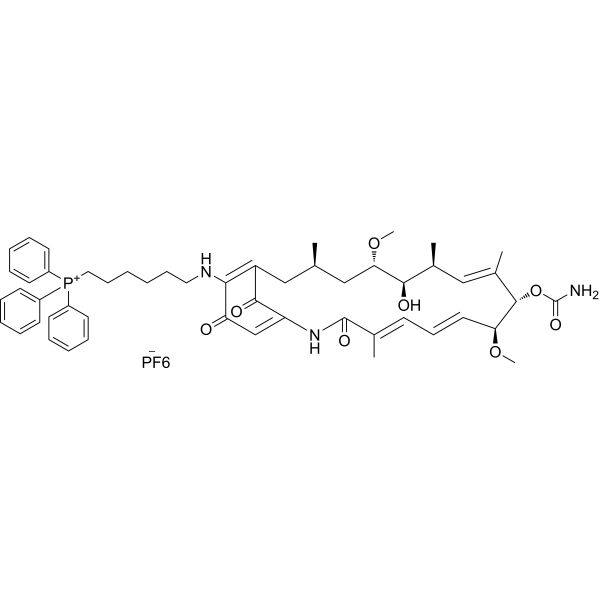
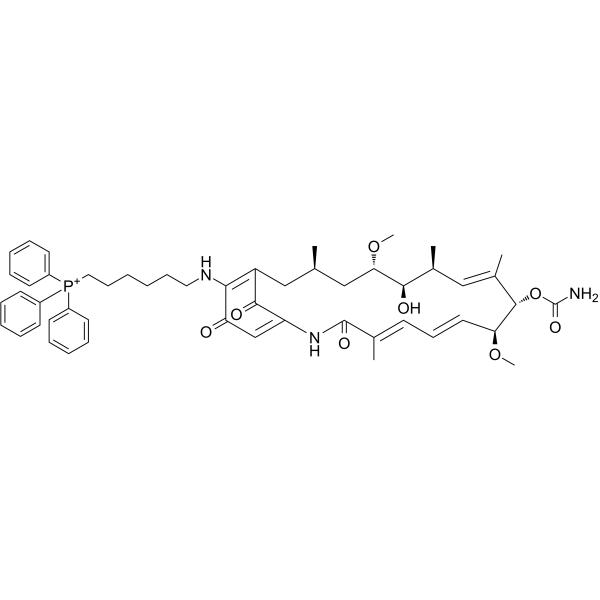
Gamitrinib TPP hexafluorophosphate is a Gamitrinib (GA) mitochondrial matrix inhibitor. Gamitrinib TPP hexafluorophosphate is a mitochondrial targeted HSP90 inhibitor with anti-cancer activity.
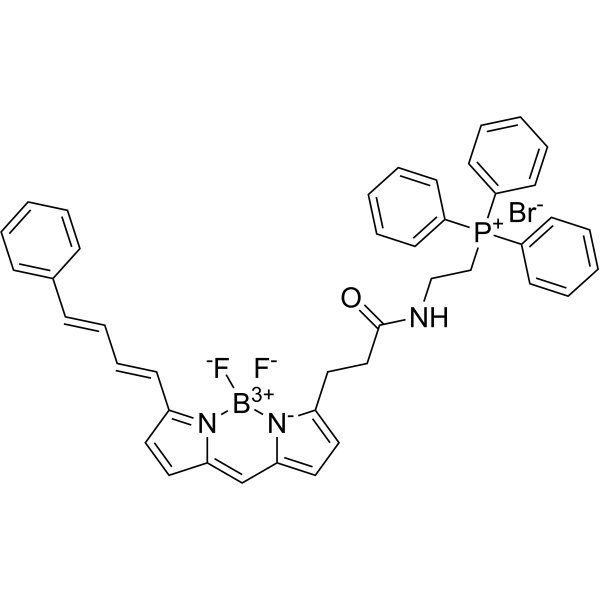
MitoPerOx is a mitochondrial-targeted, lipid peroxidation-indicating fluorescent probe with BODIPY581/591 fluorophores. The triphenylphosphine cation (TPP+) of MitoPerOx can be selectively enriched in mitochondria (depending on membrane potential) and can be used to detect lipid peroxidation in the inner mitochondrial membrane. Under the action of lipid peroxides, the BODIPY581/591 fluorophores of MitoPerOx shift their emission wavelength from 590 nm (reduced state) to 520 nm (oxidized state), and ratiometric detection can be performed at an excitation wavelength of 488 nm. MitoPerOx can specifically monitor the peroxidation of mitochondrial phospholipids (especially cardiolipin) and is used in the study of oxidative stress-related diseases (such as aging, neurodegenerative diseases, and mitochondrial dysfunction)[1][2].
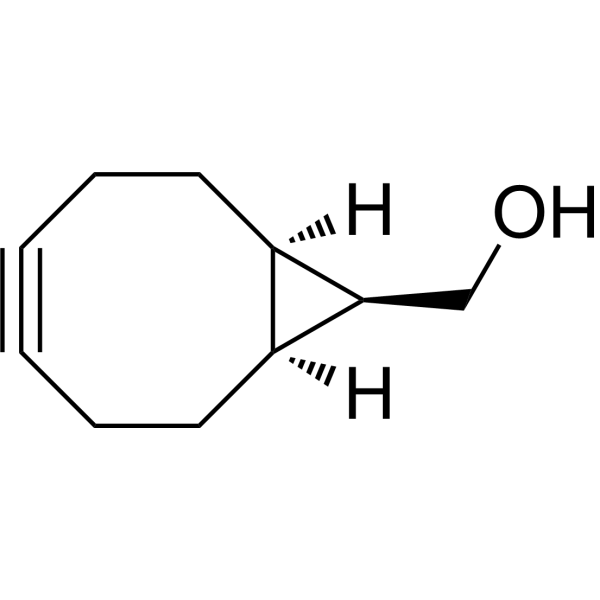
BCN-OH (endo-9-Hydroxymethylbicyclo[6.1.0]non-4-yne) is an alcohol functionalized cyclooctyne derivative. BCN-OH can act as a raw material for synthesizing other probes (such as BCN-TPP). BCN-OH is used to construct targeted probes by coupling with carboxyl-containing compounds (such as TPP-COOH). BCN-OH can be used as control reagent for BCN-TPP .
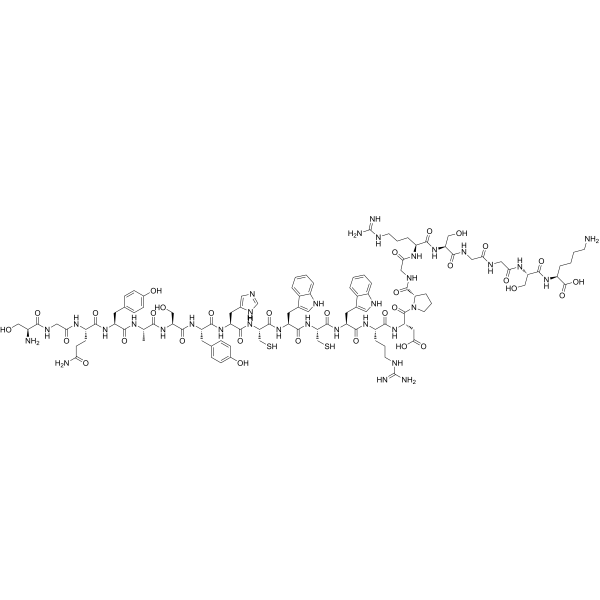
TPP-1 is a potent inhibitor of the PD-1/PD-L1 interaction. TPP-1 binds specifically to PD-L1 with a high affinity (KD=95 nM). TPP-1 inhibits human tumor growth in vivo via reactivating T-cell function .
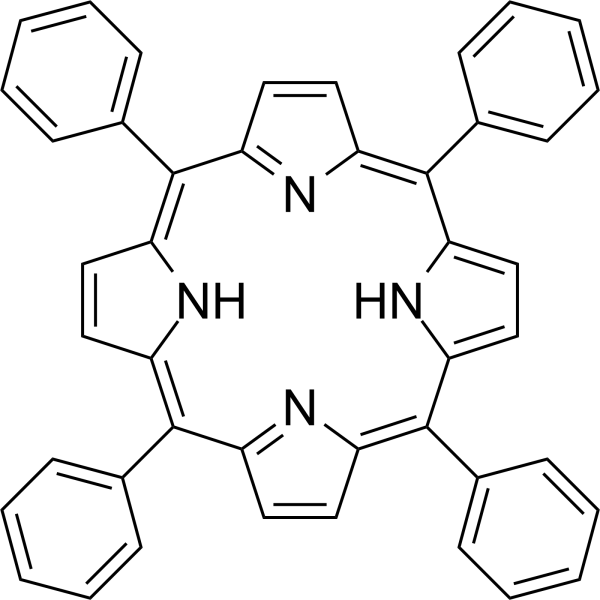
Tetraphenylporphyrin (TPP) is a symmetrically substituted porphyrin-based heterocyclic compound and used as a structural block for supramolecular synthesis. Tetraphenylporphyrin derivatives can be used for cancer research .
MitoPerOx (solution) is a mitochondrial-targeted, lipid peroxidation-indicating fluorescent probe with BODIPY581/591 fluorophores. The triphenylphosphine cation (TPP+) of MitoPerOx can be selectively enriched in mitochondria (depending on membrane potential) and can be used to detect lipid peroxidation in the inner mitochondrial membrane. Under the action of lipid peroxides, the BODIPY581/591 fluorophores of MitoPerOx shift their emission wavelength from 590 nm (reduced state) to 520 nm (oxidized state) , and ratiometric detection can be performed at an excitation wavelength of 488 nm. MitoPerOx can specifically monitor the peroxidation of mitochondrial phospholipids (especially cardiolipin) and is used in the study of oxidative stress-related diseases (such as aging, neurodegenerative diseases, and mitochondrial dysfunction) . Solvent and concentration: DMSO: 2 mM
Gamitrinib TPP is a Gamitrinib (GA) mitochondrial matrix inhibitor. Gamitrinib TPP is a mitochondrial targeted HSP90 inhibitor with anti-cancer activity.
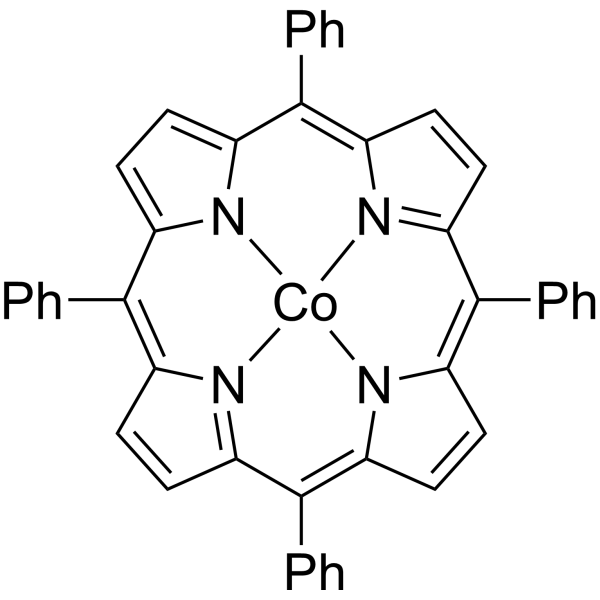
5,10,15,20-Tetraphenyl-21H,23H-porphine cobalt(II), commonly known as CoTPP or cobalt porphyrin, is a coordination compound. 5,10,15,20-Tetraphenyl-21H,23H-porphine cobalt(II) is widely used in various fields such as catalysis, sensing, and organic electronics because of its unique electronic and optical properties. An efficient catalyst for reactions including oxidation, reduction, and CH bond activation, moreover, it has been used as a fluorescent probe for detecting oxygen content in biological systems and as an active material in organic solar cells.
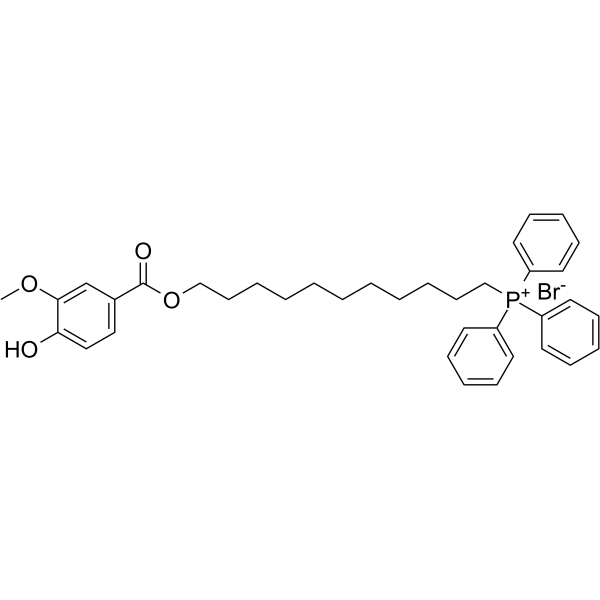
Mito-apocynin (C11), an orally active mitochondria-targeted triphenylphosphonium (TPP)-based compound, is synthesized by conjugating the Apocynin moiety with a TPP+ cation. Mito-apocynin (C11) selectively targets mitochondria, and shows neuroprotective effect. Mito-apocynin (C11) prevents hyposmia and corrects deficits in motor function .
TPP-resveratrol is a conjugate of Resveratrol (HY-16561) and triphenylphosphine (TPP) with anticancer activity. TPP-resveratrol increases the potency of Resveratrol through mitochondrial-targeted delivery and induces mitochondria-mediated apoptosis .
TPP-Ce6 is a mitochondria-targeted photosensitizer formed by the ester bond conjugation of chlorophyll e6 (Ce6) with triphenylphosphine (TPP). Under light irradiation or ultrasound exposure, TPP-Ce6 generates reactive oxygen species, induces cell apoptosis, and triggers immunogenic cell death. TPP-Ce6 can serve as a component of carrier-free co-delivery systems, undergo enzyme-induced self-assembly within tumors, and modulate tumor hypoxia. TPP-Ce6 is applicable to research on breast cancer and glioblastoma .
Chlorotris(triphenylphosphine)copper (CuCl(TPP)₃) is a DNA-targeted metal complex. Chlorotris(triphenylphosphine)copper involves non-covalent interactions (such as groove binding mode) through the copper(I) center to affect DNA function, showing inhibitory activity against bacteria, fungi, and tumor cells. Chlorotris(triphenylphosphine)copper is promising for research of antibacterial, antitumor, and antioxidant agents .
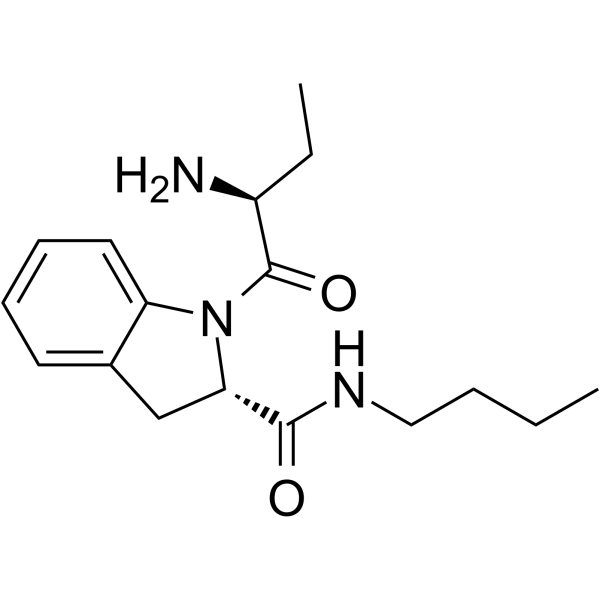
Butabindide (UCL-1397) is a potent, selective tripeptidvl peptidase II (TPP II) inhibitor with Ki values of 7 nM and 10 μM for TPP II and TPP I, respectively. Butabindide inhibits TPP II to protect CCK-8 against inactivation .
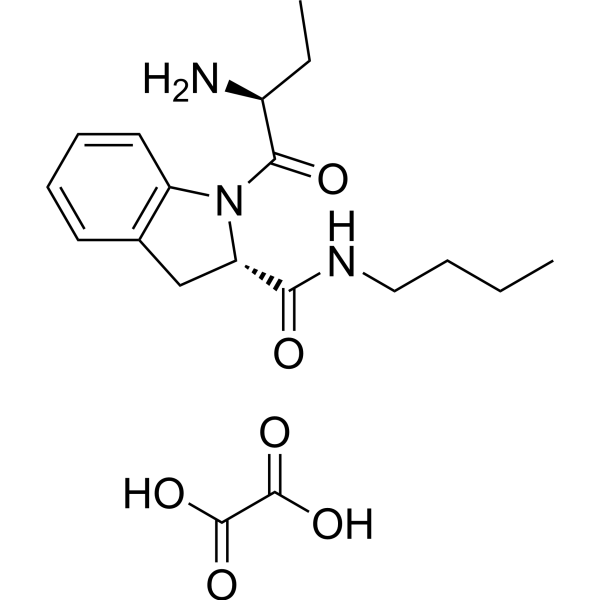
Butabindide (UCL-1397) oxalate is a potent, selective tripeptidvl peptidase II (TPP II) inhibitor with Ki values of 7 nM and 10 μM for TPP II and TPP I, respectively. Butabindide oxalate inhibits TPP II to protect CCK-8 against inactivation .
TPP-PEG2000-Mal is a PEG derivative composed of triphenyl phosphate (TPP), PEG units, and Maleimide (HY-W007324). Maleimide forms a stable thioether bond with sulfhydryl (-SH) groups .
TPP-PEG3400-Mal is a PEG derivative composed of triphenyl phosphate (TPP), PEG units, and Maleimide (HY-W007324). Maleimide forms a stable thioether bond with sulfhydryl (-SH) groups .
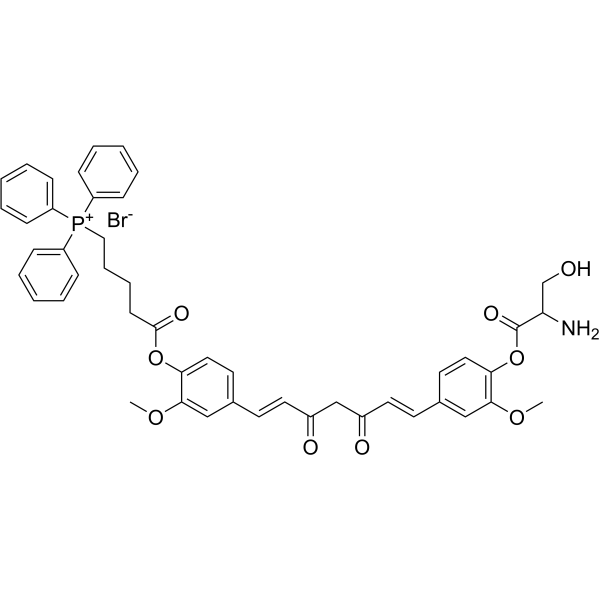
Ser@TPP@CUR is a Curcumin (HY-N0005) derivative. Ser@TPP@CUR effectively ameliorates injured renal tubular epithelial cells and improves renal functions of acute kidney injury (AKI) mice. Ser@TPP@CUR can be used for the research of AKI .
TPP-1 TFA is a potent inhibitor of the PD-1/PD-L1 interaction. TPP-1 TFA binds specifically to PD-L1 with a high affinity (KD=95 nM). TPP-1 TFA inhibits human tumor growth in vivo via reactivating T-cell function .
TPP@CUR is the product formed by the esterification reaction between Curcumin (HY-N0005) and (5-hydroxy-5-oxopentyl)triphenylphosphonium bromide (TPP). TPP@CUR can be used to synthesize Ser@TPP@CUR (HY-151342), which can then be used in studies of acute kidney injury .
TPP-PEG1000-Mal is a PEG derivative composed of triphenyl phosphate (TPP), PEG units, and Maleimide (HY-W007324). Maleimide forms a stable thioether bond with sulfhydryl (-SH) groups .
Ac-DEVDD-TPP is a porphyrin derivative that can be converted into D-TPP by caspase-3 cleavage and laser irradiation. The formed porphyrin nanofibers can effectively induce Apoptosis and Pyroptosis. Ac-DEVDD-TPP has antitumor activity .
N-Benzylethylenediamine is a polyamine compound. N-Benzylethylenediamine can effectively release Ca 2+ from the outer membrane of Escherichia coli (ED50: 200-500 μM), but cannot induce TPP+ uptake .
Allithiamine is a thiamin derivative with absorption characteristics similar to fat-soluble vitamins. Allithiamine acts as a cofactor precursor for thiamin pyrophosphate (TPP), which participates in carbohydrate metabolism by supporting the pyruvate dehydrogenase (PDH) complex to facilitate pyruvate entry into the tricarboxylic acid (TCA) cycle as acetyl CoA. Allithiamine can be used for researching thiamin metabolism .
TPP-IOA is a cytochrome c peroxidase inhibitor. TPP-IOA inhibits apoptosis by preventing cardiolipin oxidation and cytochrome c release to the cytosol. TPP-IOA disrupts oxidative phosphorylation in isolated mitochondria. TPP-IOA inhibits cell death in SH-SY5Y cells grown in glucose, but not galactose. TPP-IOA causes mitochondrial depolarization and network fragmentation. TPP-lOA mitigates radiation induced death in mice .
SF-C5-TPP is an potent mitochondria-targeted protonophoric uncoupler. SF-C5-TPP has significant proton transfer activity on model planar bilayer lipid membranes. SF-C5-TPP inhibits the growth of Bacillus subtilis with a MIC of 2 μM >[1].
CPPA-TPP (CPPA-Triphenylphosphonium) is a compound conjugated to the mitochondria-targeting moiety triphenylphosphonium (TPP). CPPA-TPP can be used in the synthesis of nanoparticles that release Camptothecin (HY-16560) in a reactive oxygen species dependent manner, leading to cancer cell death .
6BrCaQ-C10-TPP is a potent mitochondrial heat shock protein TRAP1 inhibitor, with antiproliferative activity in various human cancer cells (IC50=0.008-0.30 μM). 6BrCaQ-C10-TPP can also induces mitochondrial membrane disturbance .
TPP1 Human Pre-designed siRNA Set A contains three designed siRNAs for TPP1 gene (Human), as well as a negative control, a positive control, and a FAM-labeled negative control.
Tpp2 Rat Pre-designed siRNA Set A contains three designed siRNAs for Tpp2 gene (Rat), as well as a negative control, a positive control, and a FAM-labeled negative control.
Tpp1 Mouse Pre-designed siRNA Set A contains three designed siRNAs for Tpp1 gene (Mouse), as well as a negative control, a positive control, and a FAM-labeled negative control.
Mito-apocynin (C2), an orally active mitochondria-targeted triphenylphosphonium (TPP)-based compound, is synthesized by conjugating the Apocynin moiety with a TPP+ cation. Mito-apocynin (C2) exhibits antineuroinflammatory effect .
4-CF3-TPP-DC (4-CF3-Triphenylphosphonium-DC) is an inert mitochondrial targeting carrier, that delivers target drugs and probes to mitochondria without causing mitochondrial depolarization and cytotoxicity in cell C2C12 .
6BrCaQ is a potent mitochondrial heat shock protein TRAP1 inhibitor, with antiproliferative activity. 6BrCaQ can be used in the synthesis of 6BrCaQ-TPP conjugates .
MitoA (bromide) is a mitochondria-targeted H2S probe, which can be used to assess relative changes in mitochondrial levels of H2S in vivo. MitoA (bromide) can accumulate inside mitochondria within tissues in vivo due to tryphenylphosphonium (TPP) cation. MitoA (bromide) can be studied in research on myocardial ischemia .
Antifungal agent 45 is with fungicidal activities. Antifungal agent 45 shows excellent characteristics superior to Kresoxim-methyl (HY-125776), in which the activity enhancement against Phytophthora capsici was the most remarkable, with an EC50 value of about 5 μM .
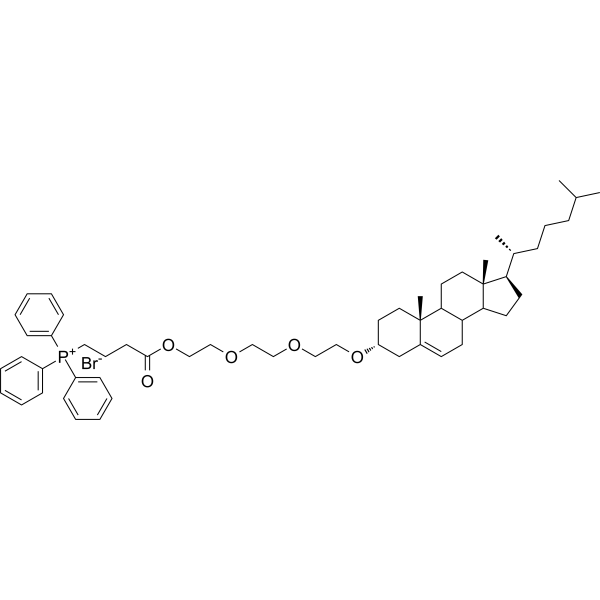
Chol-CTPP is a ligand with dual targeting effect on blood-brain barrier (BBB) and glioma cells. Lip-CTPP can be gained by Chol-CTPP and another mitochondria targeting ligand (Chol-TPP). Lip-CTPP is a promising potential carrier to exert the anti-glioma effect of doxorubicin (DOX) and lonidamine (LND) collaboratively. Lip-CTPP elevates the inhibition rate of tumor cell proliferation, migration and invasion, promote apoptosis and necrosis, and interfere with mitochondrial function .
Gamitrinib TPP hexafluorophosphate (Standard) is the analytical standard of Gamitrinib TPP hexafluorophosphate (HY-102007A). This product is intended for research and analytical applications. Gamitrinib TPP hexafluorophosphate is a Gamitrinib (GA) mitochondrial matrix inhibitor. Gamitrinib TPP hexafluorophosphate is a mitochondrial targeted HSP90 inhibitor with anti-cancer activity.
Tpp-CAQK can bind to mitochondria, enabling the construction of an engineered mitochondrial compound, Mito-Tpp-CAQK, with excellent bioactivity. Mito-Tpp-CAQK can be internalized by macrophages, thereby enhancing the phagocytosis of myelin debris, alleviating mitochondrial dysfunction, and reducing proinflammatory profiles, ultimately facilitating tissue repair and functional recovery in mice after spinal cord injury .
Tpp-CAQK TAF can bind to mitochondria, enabling the construction of an engineered mitochondrial compound, Mito-Tpp-CAQK TFA, with excellent bioactivity. Mito-Tpp-CAQK TFA can be internalized by macrophages, thereby enhancing the phagocytosis of myelin debris, alleviating mitochondrial dysfunction, and reducing proinflammatory profiles, ultimately facilitating tissue repair and functional recovery in mice after spinal cord injury .
Mal-GFLG-TPP-PPA is a drug-linker conjugate for ADC, and can be used for synthesis of ADCs. Mal-GFLG-TPP-PPA is used in the synthesis of PEG-iPDPA-GFLG-Y-TPPa .
TPP-PEG10000-Mal is a PEG derivative composed of triphenyl phosphate (TPP), PEG units, and Maleimide (HY-W007324). Maleimide forms a stable thioether bond with sulfhydryl (-SH) groups .
TPP-PEG5000-Mal is a PEG derivative composed of triphenyl phosphate (TPP), PEG units, and Maleimide (HY-W007324). Maleimide forms a stable thioether bond with sulfhydryl (-SH) groups .
TPP-9476 is an anti-human IL3RA (CD123) monoclonal antibody with human IL3RAKd of 11 nM and cynomolgus monkey IL3RAKd of 16 nM. TPP-9476 binds specifically to human and cynomolgus monkey IL3RA, undergoes target-dependent internalization into lysosomes of IL3RA-positive cells.TPP-9476 exerts antiproliferative effects in IL3RA-expressing acute myeloid leukemia and classical Hodgkin lymphoma cells, reduces tumor burden, improves survival, and induces complete tumor remission in relevant xenograft mouse models .
TPP2 Human Pre-designed siRNA Set A contains three designed siRNAs for TPP2 gene (Human), as well as a negative control, a positive control, and a FAM-labeled negative control.
Tpp1 Rat Pre-designed siRNA Set A contains three designed siRNAs for Tpp1 gene (Rat), as well as a negative control, a positive control, and a FAM-labeled negative control.
Tpp2 Mouse Pre-designed siRNA Set A contains three designed siRNAs for Tpp2 gene (Mouse), as well as a negative control, a positive control, and a FAM-labeled negative control.
Tetraphenylporphyrin (Standard) is the analytical standard of Tetraphenylporphyrin (HY-103656). This product is intended for research and analytical applications. Tetraphenylporphyrin (TPP) is a symmetrically substituted porphyrin-based heterocyclic compound and used as a structural block for supramolecular synthesis. Tetraphenylporphyrin derivatives can be used for cancer research .
4-(10,15,20-Triphenylporphyrin-5-yl)phenol (TPP-OH) is an intermediate. 4-(10,15,20-Triphenylporphyrin-5-yl)phenol can be used in the development of optical probes .
Lanerkitug (BAY3375968) is a fully human monoclonal IgG1 anti-human CCR8 antibody. Lanerkitug selectively depletes human CCR8 + Tregs via antibody dependent cellular cytotoxicity (ADCC) and antibody dependent cellular phagocytosis (ADCP). Lanerkitug can be used in the research of solid tumors .
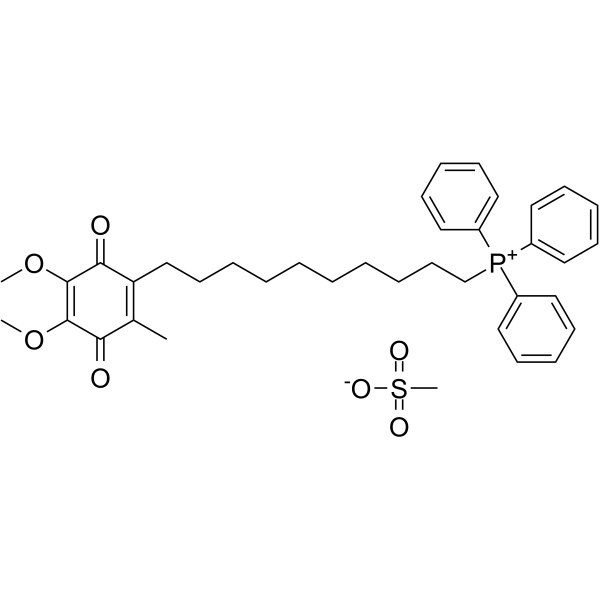
Mitoquinone (mesylate) (Standard) is the analytical standard of Mitoquinone (mesylate) (HY-100116A). This product is intended for research and analytical applications. Mitoquinone mesylate is a TPP-based, mitochondrially targeted antioxidant in order to protect against oxidative damage .
Lanerkitug (FUT8-KO) (BAY3375968 (FUT8-KO)) is an anti-CCR8 monoclonal antibody expressed by CHO cells with the fucosyltransferase 8 gene (FUT8) knocked out. Fucose deficiency enhances the ADCC effect of the antibody. Lanerkitug (HY-P991942) selectively depletes human CCR8+Tregs via antibody dependent cellular cytotoxicity (ADCC) and antibody dependent cellular phagocytosis (ADCP). Lanerkitug can be used in the research of solid tumors .
MitoPerOx is a mitochondrial-targeted, lipid peroxidation-indicating fluorescent probe with BODIPY581/591 fluorophores. The triphenylphosphine cation (TPP+) of MitoPerOx can be selectively enriched in mitochondria (depending on membrane potential) and can be used to detect lipid peroxidation in the inner mitochondrial membrane. Under the action of lipid peroxides, the BODIPY581/591 fluorophores of MitoPerOx shift their emission wavelength from 590 nm (reduced state) to 520 nm (oxidized state), and ratiometric detection can be performed at an excitation wavelength of 488 nm. MitoPerOx can specifically monitor the peroxidation of mitochondrial phospholipids (especially cardiolipin) and is used in the study of oxidative stress-related diseases (such as aging, neurodegenerative diseases, and mitochondrial dysfunction)[1][2].
MitoPerOx (solution) is a mitochondrial-targeted, lipid peroxidation-indicating fluorescent probe with BODIPY581/591 fluorophores. The triphenylphosphine cation (TPP+) of MitoPerOx can be selectively enriched in mitochondria (depending on membrane potential) and can be used to detect lipid peroxidation in the inner mitochondrial membrane. Under the action of lipid peroxides, the BODIPY581/591 fluorophores of MitoPerOx shift their emission wavelength from 590 nm (reduced state) to 520 nm (oxidized state) , and ratiometric detection can be performed at an excitation wavelength of 488 nm. MitoPerOx can specifically monitor the peroxidation of mitochondrial phospholipids (especially cardiolipin) and is used in the study of oxidative stress-related diseases (such as aging, neurodegenerative diseases, and mitochondrial dysfunction) . Solvent and concentration: DMSO: 2 mM
BCN-OH (endo-9-Hydroxymethylbicyclo[6.1.0]non-4-yne) is an alcohol functionalized cyclooctyne derivative. BCN-OH can act as a raw material for synthesizing other probes (such as BCN-TPP). BCN-OH is used to construct targeted probes by coupling with carboxyl-containing compounds (such as TPP-COOH). BCN-OH can be used as control reagent for BCN-TPP .
5,10,15,20-Tetraphenyl-21H,23H-porphine cobalt(II), commonly known as CoTPP or cobalt porphyrin, is a coordination compound. 5,10,15,20-Tetraphenyl-21H,23H-porphine cobalt(II) is widely used in various fields such as catalysis, sensing, and organic electronics because of its unique electronic and optical properties. An efficient catalyst for reactions including oxidation, reduction, and CH bond activation, moreover, it has been used as a fluorescent probe for detecting oxygen content in biological systems and as an active material in organic solar cells.
TPP-PEG2000-Mal is a PEG derivative composed of triphenyl phosphate (TPP), PEG units, and Maleimide (HY-W007324). Maleimide forms a stable thioether bond with sulfhydryl (-SH) groups .
TPP-PEG3400-Mal is a PEG derivative composed of triphenyl phosphate (TPP), PEG units, and Maleimide (HY-W007324). Maleimide forms a stable thioether bond with sulfhydryl (-SH) groups .
TPP-PEG1000-Mal is a PEG derivative composed of triphenyl phosphate (TPP), PEG units, and Maleimide (HY-W007324). Maleimide forms a stable thioether bond with sulfhydryl (-SH) groups .
TPP-PEG10000-Mal is a PEG derivative composed of triphenyl phosphate (TPP), PEG units, and Maleimide (HY-W007324). Maleimide forms a stable thioether bond with sulfhydryl (-SH) groups .
TPP-PEG5000-Mal is a PEG derivative composed of triphenyl phosphate (TPP), PEG units, and Maleimide (HY-W007324). Maleimide forms a stable thioether bond with sulfhydryl (-SH) groups .
TPP-1 is a potent inhibitor of the PD-1/PD-L1 interaction. TPP-1 binds specifically to PD-L1 with a high affinity (KD=95 nM). TPP-1 inhibits human tumor growth in vivo via reactivating T-cell function .
TPP-1 TFA is a potent inhibitor of the PD-1/PD-L1 interaction. TPP-1 TFA binds specifically to PD-L1 with a high affinity (KD=95 nM). TPP-1 TFA inhibits human tumor growth in vivo via reactivating T-cell function .
Ac-DEVDD-TPP is a porphyrin derivative that can be converted into D-TPP by caspase-3 cleavage and laser irradiation. The formed porphyrin nanofibers can effectively induce Apoptosis and Pyroptosis. Ac-DEVDD-TPP has antitumor activity .
Tpp-CAQK can bind to mitochondria, enabling the construction of an engineered mitochondrial compound, Mito-Tpp-CAQK, with excellent bioactivity. Mito-Tpp-CAQK can be internalized by macrophages, thereby enhancing the phagocytosis of myelin debris, alleviating mitochondrial dysfunction, and reducing proinflammatory profiles, ultimately facilitating tissue repair and functional recovery in mice after spinal cord injury .
Tpp-CAQK TAF can bind to mitochondria, enabling the construction of an engineered mitochondrial compound, Mito-Tpp-CAQK TFA, with excellent bioactivity. Mito-Tpp-CAQK TFA can be internalized by macrophages, thereby enhancing the phagocytosis of myelin debris, alleviating mitochondrial dysfunction, and reducing proinflammatory profiles, ultimately facilitating tissue repair and functional recovery in mice after spinal cord injury .
TPP-9476 is an anti-human IL3RA (CD123) monoclonal antibody with human IL3RAKd of 11 nM and cynomolgus monkey IL3RAKd of 16 nM. TPP-9476 binds specifically to human and cynomolgus monkey IL3RA, undergoes target-dependent internalization into lysosomes of IL3RA-positive cells.TPP-9476 exerts antiproliferative effects in IL3RA-expressing acute myeloid leukemia and classical Hodgkin lymphoma cells, reduces tumor burden, improves survival, and induces complete tumor remission in relevant xenograft mouse models .
Lanerkitug (BAY3375968) is a fully human monoclonal IgG1 anti-human CCR8 antibody. Lanerkitug selectively depletes human CCR8 + Tregs via antibody dependent cellular cytotoxicity (ADCC) and antibody dependent cellular phagocytosis (ADCP). Lanerkitug can be used in the research of solid tumors .
Lanerkitug (FUT8-KO) (BAY3375968 (FUT8-KO)) is an anti-CCR8 monoclonal antibody expressed by CHO cells with the fucosyltransferase 8 gene (FUT8) knocked out. Fucose deficiency enhances the ADCC effect of the antibody. Lanerkitug (HY-P991942) selectively depletes human CCR8+Tregs via antibody dependent cellular cytotoxicity (ADCC) and antibody dependent cellular phagocytosis (ADCP). Lanerkitug can be used in the research of solid tumors .
Allithiamine is a thiamin derivative with absorption characteristics similar to fat-soluble vitamins. Allithiamine acts as a cofactor precursor for thiamin pyrophosphate (TPP), which participates in carbohydrate metabolism by supporting the pyruvate dehydrogenase (PDH) complex to facilitate pyruvate entry into the tricarboxylic acid (TCA) cycle as acetyl CoA. Allithiamine can be used for researching thiamin metabolism .
TPP2 protein, a cytosolic tripeptidyl-peptidase, is a vital component of the ubiquitin-proteasome pathway, operating downstream of the 26S proteasome. It plays a crucial role in maintaining intracellular amino acid homeostasis by releasing N-terminal tripeptides from polypeptides. Furthermore, TPP2 protein is implicated in stimulating adipogenesis, contributing to processes involved in adipose tissue formation. TPP2 Protein, Human (Myc, His) is the recombinant human-derived TPP2 protein, expressed by E. coli , with N-His, C-Myc labeled tag.
TPP1, a lysosomal serine protease, acts as a non-specific lysosomal peptidase, displaying tripeptidyl-peptidase I activity in lysosomal protein degradation. Its function involves generating tripeptides from the breakdown products of other lysosomal proteinases, emphasizing its role in processing and hydrolyzing peptides within the lysosomal environment. Notably, TPP1 requires substrates with an unsubstituted N-terminus. TPP1 Protein, Human (HEK293, His) is the recombinant human-derived TPP1 protein, expressed by HEK293 , with C-6*His labeled tag.
TPP1, a lysosomal serine protease, acts as a non-specific lysosomal peptidase, displaying tripeptidyl-peptidase I activity in lysosomal protein degradation. Its function involves generating tripeptides from the breakdown products of other lysosomal proteinases, emphasizing its role in processing and hydrolyzing peptides within the lysosomal environment. Notably, TPP1 requires substrates with an unsubstituted N-terminus. TPP1 Protein, Mouse (sf9, His) is the recombinant mouse-derived TPP1 protein, expressed by Sf9 insect cells , with C-His labeled tag.
TPP1 Human Pre-designed siRNA Set A contains three designed siRNAs for TPP1 gene (Human), as well as a negative control, a positive control, and a FAM-labeled negative control.
Tpp2 Rat Pre-designed siRNA Set A contains three designed siRNAs for Tpp2 gene (Rat), as well as a negative control, a positive control, and a FAM-labeled negative control.
Tpp1 Mouse Pre-designed siRNA Set A contains three designed siRNAs for Tpp1 gene (Mouse), as well as a negative control, a positive control, and a FAM-labeled negative control.
TPP2 Human Pre-designed siRNA Set A contains three designed siRNAs for TPP2 gene (Human), as well as a negative control, a positive control, and a FAM-labeled negative control.
Tpp1 Rat Pre-designed siRNA Set A contains three designed siRNAs for Tpp1 gene (Rat), as well as a negative control, a positive control, and a FAM-labeled negative control.
Tpp2 Mouse Pre-designed siRNA Set A contains three designed siRNAs for Tpp2 gene (Mouse), as well as a negative control, a positive control, and a FAM-labeled negative control.
Inquiry Online
Your information is safe with us. * Required Fields.
Western blot analysis of extracts from THP-1(lane 2(20μg), Jurkat (lane 3(20μg) and NIH3T3(lane 4(20μg) using FOXO1A (HY-P80132) Rabbit mAb. Proteins were transferred
to a PVDF membrane and blocked with 5% non-fat milk in TBST for 2 hour at room temperature. The primary antibody (1/1000) and Loading control antibody (Beta Actin, HY-P80438, 1/10000) was
used in 5% non-fat milk in TBST at 4°C overnight. Goat Anti-Mouse/Rabbit IgG-HRP Secondary Antibody (1/10000) was used for 1 hour at room temperature.
Western blot analysis of extracts from THP-1(lane 2(20μg), Jurkat (lane 3(20μg) and NIH3T3(lane 4(20μg) using FOXO1A (HY-P80132) Rabbit mAb. Proteins were transferred
to a PVDF membrane and blocked with 5% non-fat milk in TBST for 2 hour at room temperature. The primary antibody (1/1000) and Loading control antibody (Beta Actin, HY-P80438, 1/10000) was
used in 5% non-fat milk in TBST at 4°C overnight. Goat Anti-Mouse/Rabbit IgG-HRP Secondary Antibody (1/10000) was used for 1 hour at room temperature.
Western blot analysis of extracts from THP-1(lane 2(20μg), Jurkat (lane 3(20μg) and NIH3T3(lane 4(20μg) using FOXO1A (HY-P80132) Rabbit mAb. Proteins were transferred
to a PVDF membrane and blocked with 5% non-fat milk in TBST for 2 hour at room temperature. The primary antibody (1/1000) and Loading control antibody (Beta Actin, HY-P80438, 1/10000) was
used in 5% non-fat milk in TBST at 4°C overnight. Goat Anti-Mouse/Rabbit IgG-HRP Secondary Antibody (1/10000) was used for 1 hour at room temperature.
Western blot analysis of extracts from THP-1(lane 2(20μg), Jurkat (lane 3(20μg) and NIH3T3(lane 4(20μg) using FOXO1A (HY-P80132) Rabbit mAb. Proteins were transferred
to a PVDF membrane and blocked with 5% non-fat milk in TBST for 2 hour at room temperature. The primary antibody (1/1000) and Loading control antibody (Beta Actin, HY-P80438, 1/10000) was
MedchemExpress Validation 03
Western blot analysis of extracts from THP-1(lane 2(20μg), Jurkat (lane 3(20μg) and NIH3T3(lane 4(20μg) using FOXO1A (HY-P80132) Rabbit mAb. Proteins were transferred
MedchemExpress Validation 04
Western blot analysis of extracts from THP-1(lane 2(20μg), Jurkat (lane 3(20μg) and NIH3T3(lane 4(20μg) using FOXO1A (HY-P80132) Rabbit mAb. Proteins were transferred
to a PVDF membrane and blocked with 5% non-fat milk in TBST for 2 hour at room temperature. The primary antibody (1/1000) and Loading control antibody (Beta Actin, HY-P80438, 1/10000) was
used in 5% non-fat milk in TBST at 4°C overnight. Goat Anti-Mouse/Rabbit IgG-HRP Secondary Antibody (1/10000) was used for 1 hour at room temperature.
MedchemExpress Validation
Western blot analysis of extracts from THP-1(lane 2(20μg), Jurkat (lane 3(20μg) and NIH3T3(lane 4(20μg) using FOXO1A (HY-P80132) Rabbit mAb. Proteins were transferred
to a PVDF membrane and blocked with 5% non-fat milk in TBST for 2 hour at room temperature. The primary antibody (1/1000) and Loading control antibody (Beta Actin, HY-P80438, 1/10000) was
used in 5% non-fat milk in TBST at 4°C overnight. Goat Anti-Mouse/Rabbit IgG-HRP Secondary Antibody (1/10000) was used for 1 hour at room temperature.
Western blot analysis of extracts from THP-1(lane 2(20μg), Jurkat (lane 3(20μg) and NIH3T3(lane 4(20μg) using FOXO1A (HY-P80132) Rabbit mAb. Proteins were transferred
to a PVDF membrane and blocked with 5% non-fat milk in TBST for 2 hour at room temperature. The primary antibody (1/1000) and Loading control antibody (Beta Actin, HY-P80438, 1/10000) was
used in 5% non-fat milk in TBST at 4°C overnight. Goat Anti-Mouse/Rabbit IgG-HRP Secondary Antibody (1/10000) was used for 1 hour at room temperature.
MedchemExpress Validation
Western blot analysis of extracts from THP-1(lane 2(20μg), Jurkat (lane 3(20μg) and NIH3T3(lane 4(20μg) using FOXO1A (HY-P80132) Rabbit mAb. Proteins were transferred
to a PVDF membrane and blocked with 5% non-fat milk in TBST for 2 hour at room temperature. The primary antibody (1/1000) and Loading control antibody (Beta Actin, HY-P80438, 1/10000) was
used in 5% non-fat milk in TBST at 4°C overnight. Goat Anti-Mouse/Rabbit IgG-HRP Secondary Antibody (1/10000) was used for 1 hour at room temperature.
MedchemExpress Validation
Western blot analysis of extracts from THP-1(lane 2(20μg), Jurkat (lane 3(20μg) and NIH3T3(lane 4(20μg) using FOXO1A (HY-P80132) Rabbit mAb. Proteins were transferred
to a PVDF membrane and blocked with 5% non-fat milk in TBST for 2 hour at room temperature. The primary antibody (1/1000) and Loading control antibody (Beta Actin, HY-P80438, 1/10000) was
used in 5% non-fat milk in TBST at 4°C overnight. Goat Anti-Mouse/Rabbit IgG-HRP Secondary Antibody (1/10000) was used for 1 hour at room temperature.
MedchemExpress Validation
Western blot analysis of extracts from THP-1(lane 2(20μg), Jurkat (lane 3(20μg) and NIH3T3(lane 4(20μg) using FOXO1A (HY-P80132) Rabbit mAb. Proteins were transferred
to a PVDF membrane and blocked with 5% non-fat milk in TBST for 2 hour at room temperature. The primary antibody (1/1000) and Loading control antibody (Beta Actin, HY-P80438, 1/10000) was
used in 5% non-fat milk in TBST at 4°C overnight. Goat Anti-Mouse/Rabbit IgG-HRP Secondary Antibody (1/10000) was used for 1 hour at room temperature.
MedchemExpress Validation
Western blot analysis of extracts from THP-1(lane 2(20μg), Jurkat (lane 3(20μg) and NIH3T3(lane 4(20μg) using FOXO1A (HY-P80132) Rabbit mAb. Proteins were transferred
to a PVDF membrane and blocked with 5% non-fat milk in TBST for 2 hour at room temperature. The primary antibody (1/1000) and Loading control antibody (Beta Actin, HY-P80438, 1/10000) was
used in 5% non-fat milk in TBST at 4°C overnight. Goat Anti-Mouse/Rabbit IgG-HRP Secondary Antibody (1/10000) was used for 1 hour at room temperature.
MedchemExpress Validation
Western blot analysis of extracts from THP-1(lane 2(20μg), Jurkat (lane 3(20μg) and NIH3T3(lane 4(20μg) using FOXO1A (HY-P80132) Rabbit mAb. Proteins were transferred
to a PVDF membrane and blocked with 5% non-fat milk in TBST for 2 hour at room temperature. The primary antibody (1/1000) and Loading control antibody (Beta Actin, HY-P80438, 1/10000) was
used in 5% non-fat milk in TBST at 4°C overnight. Goat Anti-Mouse/Rabbit IgG-HRP Secondary Antibody (1/10000) was used for 1 hour at room temperature.
MedchemExpress Validation
Western blot analysis of extracts from THP-1(lane 2(20μg), Jurkat (lane 3(20μg) and NIH3T3(lane 4(20μg) using FOXO1A (HY-P80132) Rabbit mAb. Proteins were transferred
to a PVDF membrane and blocked with 5% non-fat milk in TBST for 2 hour at room temperature. The primary antibody (1/1000) and Loading control antibody (Beta Actin, HY-P80438, 1/10000) was
used in 5% non-fat milk in TBST at 4°C overnight. Goat Anti-Mouse/Rabbit IgG-HRP Secondary Antibody (1/10000) was used for 1 hour at room temperature.
MedChemExpress values your privacy and your trust is important to us. We use cookies to enhance your website experience. Some cookies are necessary to run the website.
Privacy and Cookie Policy