18 Results for "

Transesterification

" in MedChemExpress (MCE) Product Catalog:
Products (18)

18 Results for "Transesterification" in MCE Product Catalog:

Cat. No.: HY-134124
CAS No.: 92614-59-0
Purity:  95.8%
Research Areas:  

Metabolic Disease

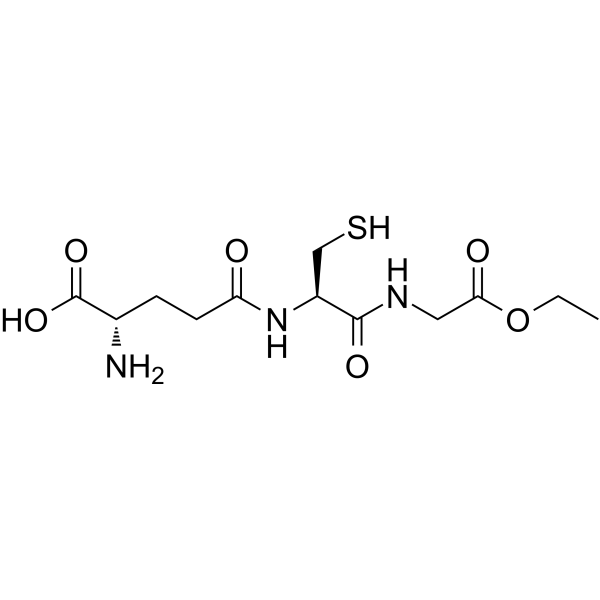
Glutathione ethyl ester is a cell-permeable GSH donor and provides an efficient supply of GSH to the oocyte. Glutathione ethyl ester shows positive effect on the in vitro production of embryos by enhancement of the antioxidative defense .
loading...
    loading...
Cat. No.: HY-Y1282
CAS No.: 1303-96-4
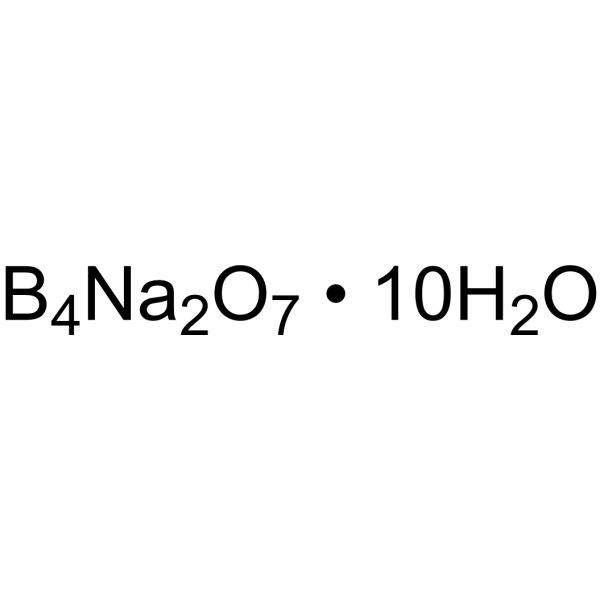
Sodium tetraborate decahydrate is an orally active biochemical reagent and antibacterial agent. Sodium tetraborate decahydrate leads to an increase in the activity of Catalase, Superoxide dismutase. Sodium tetraborate decahydrate reduces Hydrogen sulfide and the sulfate-reducing bacteria population of swine manure. Sodium tetraborate decahydrate serves as flame suppressant for wood cellulose. Sodium tetraborate decahydrate is a triglyceride transesterification catalyst. Sodium tetraborate decahydrate suppresses the formation of chlorinated by-products in Cl -containing water. Sodium tetraborate decahydrate has a neuroprotective effect against chromium poisoning. Sodium tetraborate decahydrate can protect the heart from chromium damage at low doses. Sodium tetraborate in a low dose with an isolated application shows an antioxidant effect .
loading...
    loading...
Cat. No.: HY-Y1422I
CAS No.: 9001-62-1
Lipase, Pseudomonas fluorescens (Immobilized) is an immobilized biocatalyst derived from Pseudomonas fluorescens. Lipase, Pseudomonas fluorescens (Immobilized) efficiently catalyzes the hydrolysis, esterification and transesterification of triacylglycerols in solvent-free systems, and is particularly suitable for biodiesel production from soybean oil and selective modification of oils rich in EPA and DHA. Lipase, Pseudomonas fluorescens (Immobilized) exhibits optimal activity at pH 8.5 and 45°C, and retains residual activity after repeated cycles of use. Lipase, Pseudomonas fluorescens (Immobilized) is activated by Ca 2+, but inhibited by Co 2+, Ni 2+, Fe 3+, Fe 2+ and EDTA .
loading...
    loading...
Cat. No.: HY-116544
CAS No.: 133978-15-1
Purity:  ≥98.0%
Research Areas:  

Others

Octan-2-yl 2-cyanoacrylate is an alkyl cyanoacrylate monomer, base-sensitive monofunctional 1,1-disubstituted electron-deficient olefin, polymerizable and copolymerizable monomer. Octan-2-yl 2-cyanoacrylate undergoes homopolymerization via nucleophilic initiation with pyridine as initiator. Octan-2-yl 2-cyanoacrylate forms true copolymers with ethyl 2-cyanoacrylate via nucleophilic initiation with pyridine as initiator .
loading...
    loading...
Cat. No.: HY-W004286
CAS No.: 111-82-0
Synonyms: Methyl dodecanoate
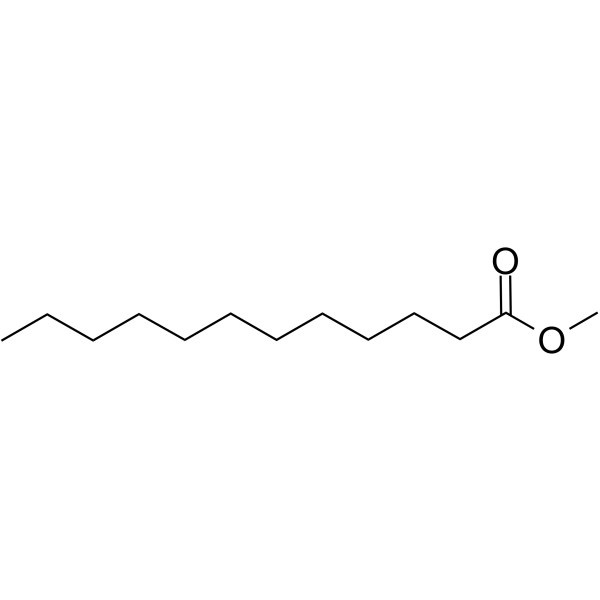
Methyl laurate (Methyl dodecanoate) is a fatty acid methyl ester. Methyl laurate can serve as a raw material to produce sucrose monolaurate via transesterification with sucrose .
loading...
    loading...
Cat. No.: HY-E70600
Research Areas:  

Others

Human CES1 Enzyme is a recombinantly expressed CES1 enzyme. Human CES1 Enzyme, an enzyme responsible for the hydrolysis of ester- and amide-containing molecules, is mainly expressed in the liver where it is crucial for the processing of active metabolites and is also involved in trans-esterification reactions .
loading...
    loading...
Cat. No.: HY-130581
CAS No.: 86559-73-1
Target:  

Bacterial

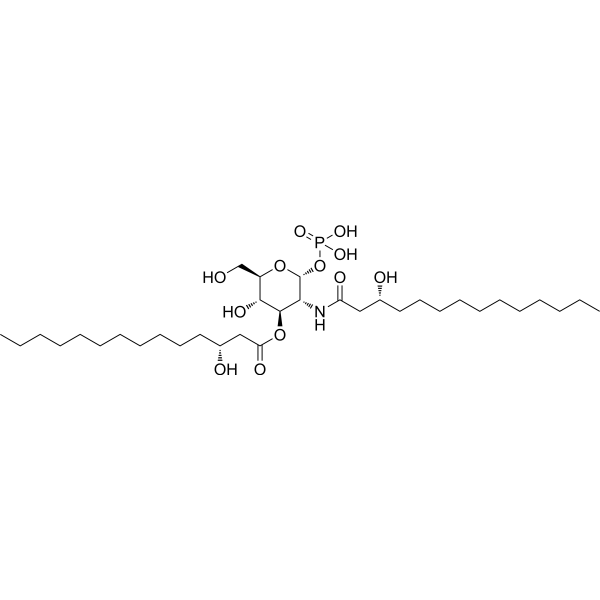
Lipid X is a 2,3-diacylglucosamine-1-phosphate that serves as the monosaccharide precursor of lipid A, possessing both LPS antagonist and weak agonist activities. Lipid X exerts protective effects by inhibiting tumor necrosis factor production, monocyte procoagulant activity, and neutrophil priming. Lipid X may induce transient pulmonary hypertension, neutropenia, and mild pyrogenic effects in laboratory animals. Lipid X has low toxicity and no in vitro antibacterial activity, but it significantly reduces mortality following Gram-negative bacterial infection and endotoxin exposure. Lipid X tends to accumulate in liver tissue, binds to circulating cellular components, and can be converted to lipid Y through transesterification. Lipid X can be used in research on Gram-negative bacterial sepsis, endotoxemia, and associated pulmonary hypertension .
loading...
    loading...
Cat. No.: HY-W012802
CAS No.: 1193-62-0
Methyl 1H-pyrrole-2-carboxylate is a drug intermediate that can act as an acyl donor. Methyl 1H-pyrrole-2-carboxylate can be synthesized into a series of pyrrolidine derivatives through tranesterification reactions with various alcohols .
loading...
    loading...
Cat. No.: HY-W014895
CAS No.: 80-40-0
Synonyms: Ethyl p-toluenesulfonate; Ethyl tosylate
Ethyl 4-methylbenzenesulfonate (Ethyl p-toluenesulfonate) is a drug intermediate that can be used for the synthesis of alkyl and substituted alkyl fluorides .
loading...
    loading...
Cat. No.: HY-P2424
CAS No.: 144396-38-3
Synonyms: CCK-J
Target:  

Calcium Channel

Research Areas:  

Others

Cholecystokinin-J (CCK-J), a cholecystokinin, stimulates Ca 2+ release .
loading...
    loading...
Cat. No.: HY-E70611
Research Areas:  

Others

C. rugosa Lipase is a biocatalyst that has recently attracted much attention because of its regio-selectivity in various types of reactions, such as trans-esterification, hydrolysis, and esterification .
loading...
    loading...
Cat. No.: HY-W754025
CAS No.: 927822-18-2
Target:  

VD/VDR

Research Areas:  

Others

Pre-vitamin D3 decanoate is a derivative of vitamin D3 that can be converted into the active form of vitamin D in the body. Pre-vitamin D3 decanoate is first converted to 25-hydroxyvitamin D3 in the liver and then further converted to 1,25-dihydroxyvitamin D3 in the kidneys. During preparation, vitamin D3 may react with the triglycerides in the formulation to form ester compounds, and this esterification affects the stability and bioavailability of vitamin D3. Pre-vitamin D3 decanoate can be used in the study of certain diseases associated with vitamin D, such as osteoporosis, autoimmune diseases, and certain cancers .
loading...
    loading...
Cat. No.: HY-W036734
CAS No.: 23868-34-0
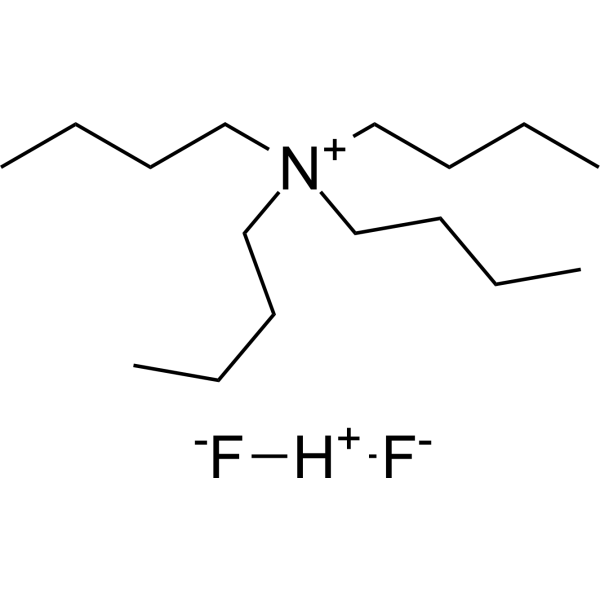
Tetrabutylammonium (hydrogen difluoride) is a quaternary ammonium salt containing fluoride ions. It is a highly active and effective reagent, often used in organic synthesis reactions, especially for the modification of organic molecules with fluorine atoms. Tetrabutylammonium (hydrogen difluoride) is also used as a catalyst for various chemical reactions such as esterification and transesterification. Additionally, it is used in the production of specialty chemicals such as surfactants and detergents.
loading...
    loading...
Cat. No.: HY-P5510
CAS No.: 188530-20-3
Synonyms: HCV NS3 protease substrate
Target:  

Peptides

Research Areas:  

Others

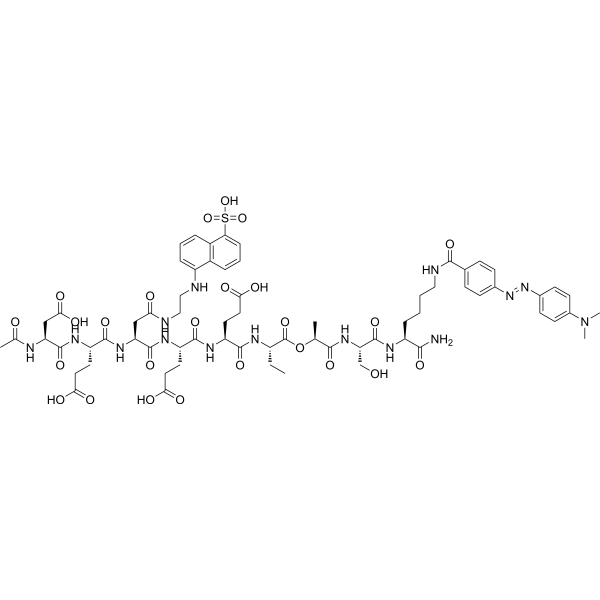
Ac-Asp-Glu-Asp(EDANS)-Glu-Glu-Abu-ψ-(COO)Ala-Ser-Lys(DABCYL)-NH2 (HCV NS3 protease substrate) is a biological active peptide. (This peptide is a HCV protease substrate incorporating an ester bond between residues P1 and P1. Due to ready transesterification of the scissile bond to the acyl-enzyme intermediate, this substrate shows very high kcat/Km values, enabling detection of activity with subnanomolar nonstructural protein 3 (NS3 protease) concentrations. It is widely used for the continuous assay of NS3 protease activity. Substrate cleavage is proportional to the enzyme concentration with a detection limit for NS3 between 1 nM and 250 pM.
loading...
    loading...
Cat. No.: HY-Y0884
CAS No.: 102-09-0
Research Areas:  

Others

Diphenyl carbonate is an organic compound that serves as a raw material for the synthesis of bisphenol-A polycarbonate. Diphenyl carbonate can be obtained via the transesterification reaction of bisphenol A with diphenyl carbonate. Diphenyl carbonate exhibits no inhibitory activity against mouse soluble epoxide hydrolase (MsEH). Diphenyl carbonate can be used in research related to the chemical industry .
loading...
    loading...
Cat. No.: HY-W111403
CAS No.: 1305-78-8
Calcium oxide (CaO) acts as a heterogeneous base catalyst. Calcium oxide can be extracted not only from waste materials such as oyster shells, eggshells and crab shells, but also exhibits tolerance to low to moderate oil quality, free fatty acid and water content in raw materials. Calcium oxide can be used in biodiesel production, where it effectively catalyzes the transesterification of vegetable oils or animal fats to produce alkyl esters .
loading...
    loading...
Cat. No.: HY-W143057
CAS No.: 27147-71-3
2-Methylhexadecanoic acid is a C17 branched-chain fatty acid and can be used as a branched fatty acid feedstock for transesterification .
loading...
    loading...
Cat. No.: HY-N19806
CAS No.: 56599-58-7
8,11-Octadecadienoic acid, methyl ester is a polyunsaturated fatty acid methyl ester that can be extracted from castor seeds via direct ultrasonic transesterification .
loading...
    loading...
  • 1

