4 Results for "

VREF

" in MedChemExpress (MCE) Product Catalog:
Products (4)

4 Results for "VREF" in MCE Product Catalog:

Cat. No.: HY-A0279
CAS No.: 270076-60-3
Synonyms: Pristinamycine
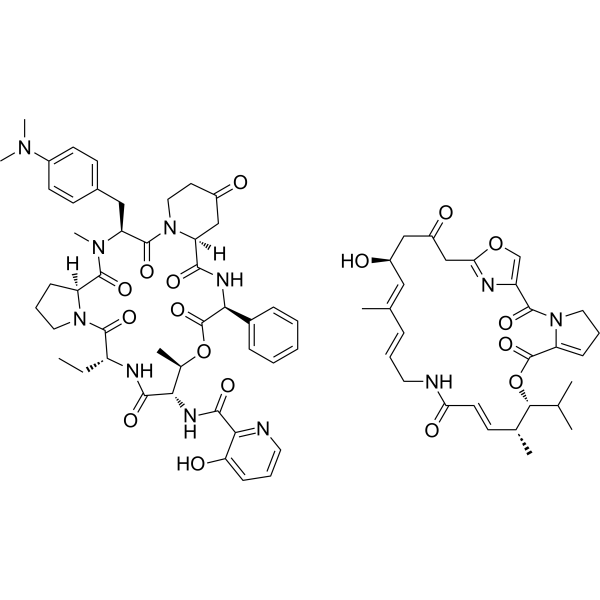
Pristinamycin, produced by Streptomyces pristinaespiralis, is an orally active streptogramin-like antibiotic consisting of two chemically unrelated components: Pristinamycin I (PI) and Pristinamycin II (PII). Pristinamycin is highly active against many antibiotic-resistant pathogens, particularly Gram-positive bacteria, including Methicillin-resistant Staphylococcus aureus (MRSA), Vancomycin-resistant S. aureus (VRSA) and Enterococcus faecium (VREF) .
loading...
    loading...
Cat. No.: HY-14849
CAS No.: 426253-04-5
Synonyms: Razupenem; SM 216601; SMP 601
Target:  

Antibiotic Bacterial

Research Areas:  

Others

PTZ601 (SMP 601) is an antibiotic, which inhibits the gram-positive bacteria, including the Vancomycin (HY-B0671)-resistant Enterococcus faecium (VREF) and Methicillin (HY-121544)-resistant Staphylococcus aureus (MRSA). PTZ601 exhibits antimicrobial activity in infected mouse models .
loading...
    loading...
Cat. No.: HY-N15019
CAS No.: 158446-31-2
Glycothiohexide α is a peptide antibiotic. Glycothiohexide α has strong activity against Gram-positive bacteria including methicillin-resistant Staphylococcus aureus (MRSA) and vancomycin resistant enterococcus (VREF), MIC values of 0.03-0.06 μg/mL .
loading...
    loading...
Cat. No.: HY-P11242
Cm-CATH2 is an antimicrobial peptide discovered from Chelonia mydas. Cm-CATH2 has a potent, broad-spectrum and rapid bactericidal ability by rapidly destroying the integrity of bacterial cell membranes. It shows strong activity against Gram-positive bacteria (such as VREF, Staphylococcus aureus), Gram-negative bacteria (such as Escherichia coli, Klebsiella pneumoniae), and fungi (such as Candida albicans) with MICs ranges from 1.17 to 18.75 μg/mL. Cm-CATH2 is also effective against various aquatic pathogenic bacteria. Cm-CATH2 not only inhibits biofilm formation but can also remove the formed biofilms. Cm-CATH2 has immunomodulatory functions and chemotactic effects on immune cells, and can inhibit the production of pro-inflammatory cytokines by macrophages stimulated by LPS (HY-D1056). Cm-CATH2 prevents the activation of NF-κB by inhibiting the degradation of IκBα, and also inhibits the phosphorylation of MAPK signaling pathways (p38, JNK, ERK). Cm-CATH2 demonstrates strong anti-infective ability in mouse peritonitis models and pneumonia models .
loading...
    loading...

