9 Results for "

WBC

" in MedChemExpress (MCE) Product Catalog:
Products (9)

9 Results for "WBC" in MCE Product Catalog:

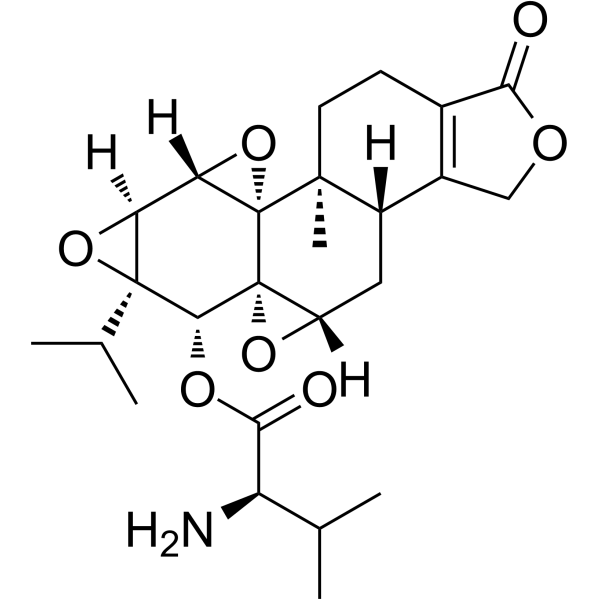
Cat. No.: HY-145898
CAS No.: 2095780-08-6
Purity:  ≥95.0%
Synonyms: 14-D-Valine-TPL
Target:  

c-Myc Molecular Glues

Research Areas:  

Cancer

WBC100 (14-D-Valine-TPL) is a potent, selective, and orally active c-Myc molecule glue degrader. WBC100 is a c-Myc degrader and targets ubiquitin E3 ligase CHIP mediated 26S proteasome pathway. WBC100 is used for c-Myc overexpressing tumors research .
loading...
    loading...
Cat. No.: HY-P10817
Corza6 is a potent and selective human voltage-gated proton channel (hHv1) peptide inhibitor. Corza6 binds to the external voltage sensor domain (VSD) loop in hHv1 with a Kd of ~1 nM at the natural, hyperpolarized resting membrane potential (RMP) of mammalian cells. Corza6 allows capacitation in sperm and permits sustained reactive oxygen species (ROS) production in white blood cells (WBCs) .
loading...
    loading...
Cat. No.: HY-P10817A
Corza6 TFA is a potent and selective human voltage-gated proton channel (hHv1) peptide inhibitor. Corza6 TFA binds to the external voltage sensor domain (VSD) loop in hHv1 with a Kd of ~1 nM at the natural, hyperpolarized resting membrane potential (RMP) of mammalian cells. Corza6 TFA allows capacitation in sperm and permits sustained reactive oxygen species (ROS) production in white blood cells (WBCs) .
loading...
    loading...
Cat. No.: HY-P99149

Target:  

TNF Receptor

Research Areas:  

Inflammation/Immunology Cancer

Anti-Mouse TNFR2 Antibody (TR75-54.7) is an anti-mouse TNFR2 IgG monoclonal antibody. Anti-Mouse TNFR2 Antibody (TR75-54.7) can reduce white blood cell count (WBC) and decrease the expression of some pro-inflammatory cytokines such as CCL2 and CXCL5. Anti-Mouse TNFR2 Antibody (TR75-54.7) can be used for researches on inflammation conditions and cancer such as breast cancer .
loading...
    loading...
Cat. No.: HY-173463
CAS No.: 925437-38-3
Target:  

Sirtuin

Sirtuin modulator 8 is a sirtuin modulator that can activate Sirtuin activity. Sirtuin modulator 8 significantly downregulates the expression of monocyte chemoattractant protein-1 (MCP-1) and upregulates the expression of fibroblast growth factor 21 (FGF21). Sirtuin modulator 8 regulates the expression of inflammation- and metabolism-related genes, showing potential for studying metabolic diseases (such as diabetes, obesity) and inflammatory diseases .
loading...
    loading...
Cat. No.: HY-P10759
CAS No.: 372491-73-1
Research Areas:  

Cancer

DTS-201 sodium (CPI-0004Na) is a peptidic prodrug of Doxorubicin (HY-15142A). DTS-201, comprising the tetrapeptide portion, is cleaved by endopeptidases in the tumor environment to produce metabolites that subsequently enter the cell and are converted to active Doxorubicin. DTS-201 shows antitumoral efficacy in tumor xenograft models of prostate, breast, and lung cancer .
loading...
    loading...
Cat. No.: HY-106154
CAS No.: 274912-87-7
Research Areas:  

Cancer

DTS-201 (CPI-0004) is a peptidic prodrug of Doxorubicin (HY-15142A). DTS-201, comprising the tetrapeptide portion, is cleaved by endopeptidases in the tumor environment to produce metabolites that subsequently enter the cell and are converted to active Doxorubicin. DTS-201 shows antitumoral efficacy in tumor xenograft models of prostate, breast, and lung cancer .
loading...
    loading...
Cat. No.: HY-187055
CAS No.: 307511-67-7
Target:  

Drug Derivative

Research Areas:  

Cancer

Antiproliferative agent-79 is a WBC-A analog with a IC50 lower than that of WBC-A. Antiproliferative agent-79 inhibits the proliferation of lung adenocarcinoma cells and can be used in studies related to lung adenocarcinoma .
loading...
    loading...
Cat. No.: HY-K0356

MCE Human CD3 Cell Depletion Magnetic Beads (Positive Selection) are magnetic beads covalently coupled with anti-human CD3 antibodies, enabling the specific binding and magnetic removal of CD3+ cells from single-cell suspensions derived from human peripheral blood mononuclear cells (PBMCs) or human peripheral blood leukocytes (WBCs). This allows efficient enrichment of the non-CD3+ cell population.

loading...
    loading...

