1. Search Result
Search Result
Results for "

acquired resistance

" in MedChemExpress (MCE) Product Catalog:

25

Inhibitors & Agonists

2

Screening Libraries

6

Natural
Products

1

Isotope-Labeled Compounds

Targets Recommended:
Cat. No. Product Name Target Research Areas Chemical Structure
  • HY-147214
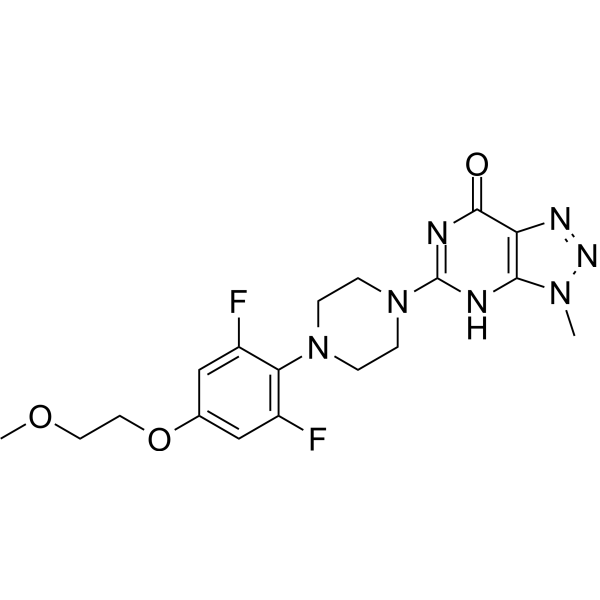
    GNE-7883
    5 Publications Verification

    YAP Cancer
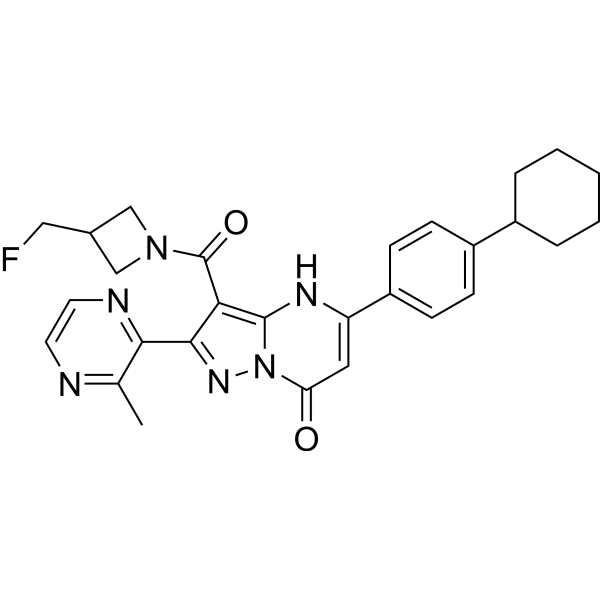
    GNE-7883 is a pan-TEAD inhibitor that blocks the association of YAP/TAZ with TEAD. GNE-7883 effectively reduces chromatin accessibility at TEAD motifs, inhibits cell proliferation in multiple cell line models, and achieves strong anti-tumor efficacy in vivo. In addition, GNE-7883 effectively overcomes intrinsic and acquired resistance to KRAS (Kirsten rat sarcoma viral oncogene homolog) G12C inhibitors in multiple preclinical models by inhibiting YAP/TAZ activation .
    GNE-7883
  • HY-147245

    STP1002

    PARP Cancer
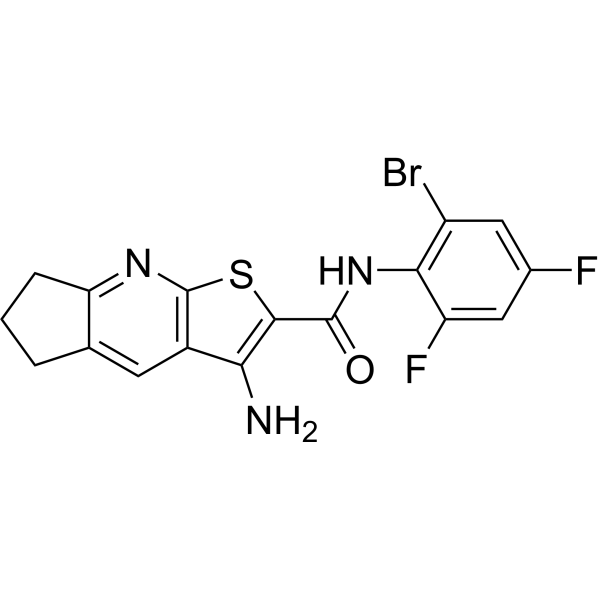
    Basroparib (STP1002) is a selective, orally active inhibitor of tankyrase (TNKS1/TNKS2) with IC50 of 29.94 nM and 3.68 nM for TNKS1 and TNKS2, respectively. Basroparib has an IC50 of >10 μM for PARP1. Basroparib binds to TNKS, stabilizes AXIN1/2 proteins, blocks Wnt/β-catenin signaling pathway, inhibits tumor cell proliferation and induces apoptosis, while reducing cancer stem cell properties. Basroparib can be used in colorectal cancer (CRC) studies with KRAS mutations (such as G12V/G12D) to overcome acquired resistance to MEK inhibitors. STP1002 has synergistic antitumor activity with MEK inhibitors .
    Basroparib
  • HY-N7378
    N-Hydroxypipecolic acid
    5 Publications Verification

    1-Hydroxy-2-piperidinecarboxylic acid; NHP

    Bacterial Inflammation/Immunology
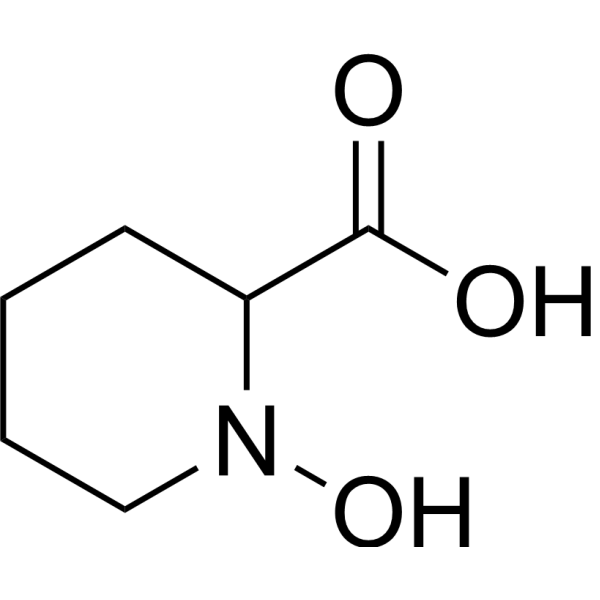
    N-Hydroxypipecolic acid (1-Hydroxy-2-piperidinecarboxylic acid), a plant metabolite and a systemic acquired resistance (SAR) regulator, orchestrates SAR establishment in concert with the immune signal salicylic acid. N-Hydroxypipecolic acid accumulates systemically in the plant foliage in response to pathogen attack. N-Hydroxypipecolic acid induces SAR to bacterial and oomycete infection .
    N-Hydroxypipecolic acid
  • HY-Y0189

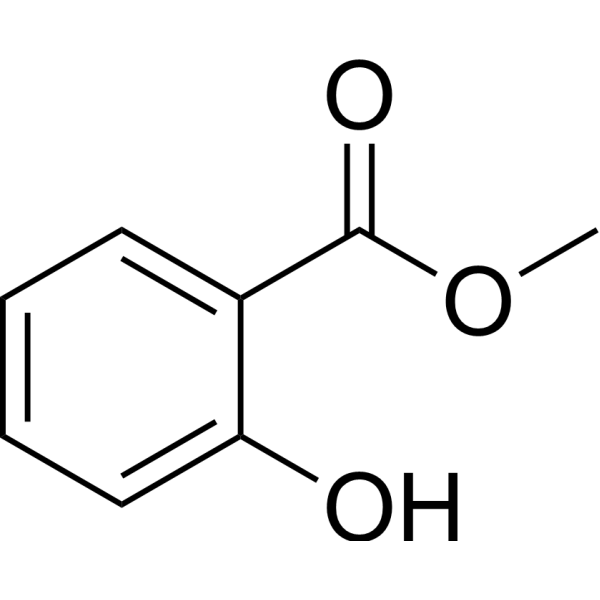
    Salicylic acid methyl ester

    Environmental Pollutants COX Inflammation/Immunology
    Methyl Salicylate (Wintergreen oil) is a topical analgesic and anti-inflammatory agent. Also used as a pesticide, a denaturant, a fragrance ingredient, and a flavoring agent in food and tobacco products . A systemic acquired resistance (SAR) signal in tobacco . A topical nonsteroidal anti-inflammatory agent (NSAID). Methyl salicylate lactoside is a COX inhibitor .
    Methyl Salicylate
  • HY-107636
    DC_AC50
    Maximum Cited Publications
    6 Publications Verification

    Apoptosis Cancer
    DC_AC50 is a dual inhibitor of Atox1 and CCS (copper chaperones). Inhibiting intracellular copper chaperones as a means of reducing/preventing acquired chemotherapy resistance .
    DC_AC50
  • HY-175839

    PROTACs EGFR ATP Synthase Cancer
    PROTAC EGFR degrader 15 is a Pomalidomide (HY-10984)-based Gefitinib (HY-50895) EGFR PROTAC degrader. PROTAC EGFR degrader 15 triggers EGFR degradation via ubiquitin-proteasome-dependent proteolysis and autophagy-lysosome activation pathways. PROTAC EGFR degrader 15 targets ETFA to enhance ATP production. PROTAC EGFR degrader 15 significantly suppresses tumor growth in a Gefitinib-acquired resistant HCC-827 xenograft model. PROTAC EGFR degrader 15 can be used for the study of non-small cell lung cancer (NSCLC) (Pink: EGFR ligand (HY-W109039); Blue: CRBN ligand (HY-10984); Black: Linker (HY-W679737)) .
    PROTAC EGFR degrader 15
  • HY-116541

    ASM

    Environmental Pollutants Fungal Bacterial Infection
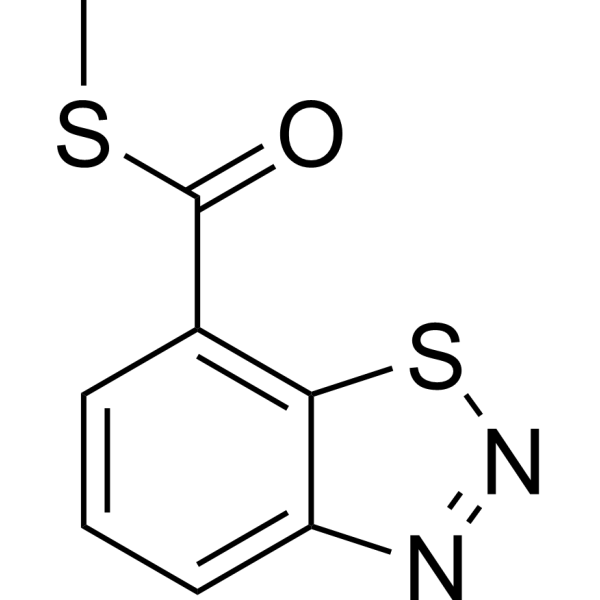
    Acibenzolar-S-methyl (ASM) is a plant resistance inducer that mimics pathogen-host interactions and leads to systemic acquired resistance in plants. Acibenzolar-S-methyl helps reduce the use of pesticides and can be used in research to prevent plant diseases .
    Acibenzolar-S-methyl
  • HY-125147

    NAMPT Cancer
    A-1293201 is a substrate-independent NAMPT inhibitor with antitumor activity. A-1293201 effectively reduces the total cellular NAD +/NADH (NADt) level, subsequently leading to ATP depletion and cancer cell death. In addition, A-1293201 can effectively overcome the acquired resistance mechanism of the NAMPT Y18 mutant to CHS-828 (HY-10079) .
    A-1293201
  • HY-Y0189R

    Salicylic acid methyl ester (Standard)

    Reference Standards COX Inflammation/Immunology
    Methyl Salicylate (Standard) is the analytical standard of Methyl Salicylate. This product is intended for research and analytical applications. Methyl Salicylate (Wintergreen oil) is a topical analgesic and anti-inflammatory agent. Also used as a pesticide, a denaturant, a fragrance ingredient, and a flavoring agent in food and tobacco products . A systemic acquired resistance (SAR) signal in tobacco . A topical nonsteroidal anti-inflammatory agent (NSAID). Methyl salicylate lactoside is a COX inhibitor .
    Methyl Salicylate (Standard)
  • HY-17517

    Fungal Biochemical Assay Reagents Infection
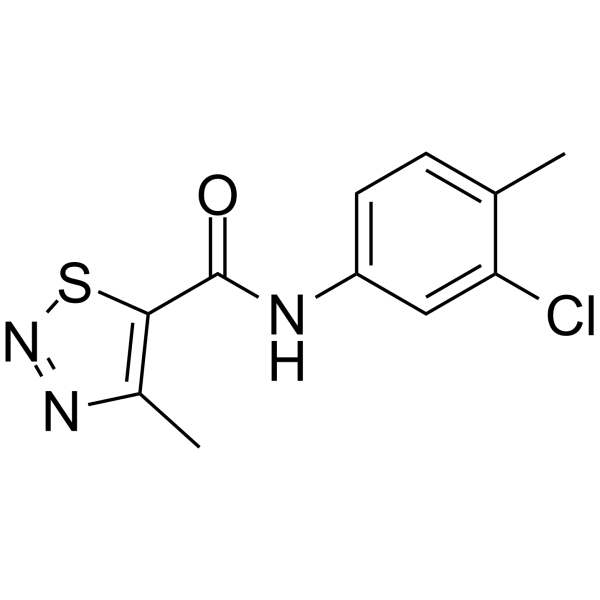
    Tiadinil is a systemic acquired resistance (SAR) inducer, plant elicitor and antifungal agent. Tiadinil promotes the production of herbivore-induced plant volatiles in Camellia sinensis (tea plant). Tiadinil inhibits mycelial growth, spore germination and germ tube elongation of Stagonosporopsis citrulli in vitro. Tiadinil can be used in studies related to vine blight .
    Tiadinil
  • HY-116541R

    ASM (Standard)

    Bacterial Fungal Reference Standards Infection
    Acibenzolar-S-methyl (Standard) is the analytical standard of Acibenzolar-S-methyl. This product is intended for research and analytical applications. Acibenzolar-S-methyl (ASM) is a plant resistance inducer that mimics pathogen-host interactions and leads to systemic acquired resistance in plants. Acibenzolar-S-methyl helps reduce the use of pesticides and can be used in research to prevent plant diseases .
    Acibenzolar-S-methyl (Standard)
  • HY-Y0189S

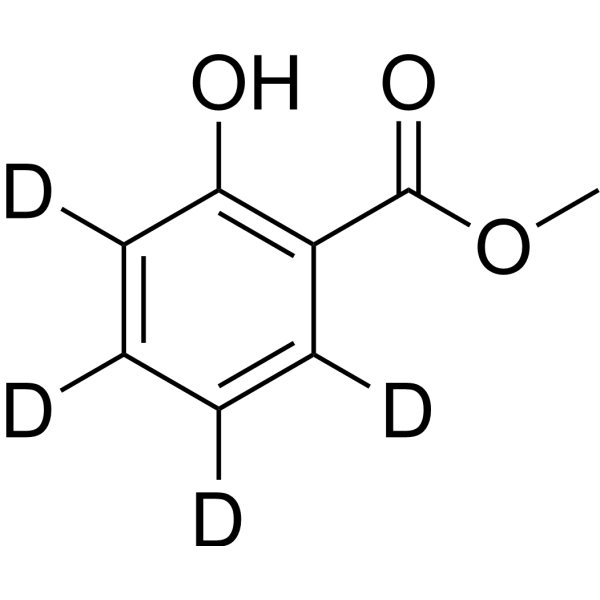
    Wintergreen oil-d4

    COX Inflammation/Immunology
    Methyl Salicylate-d4 is the deuterium labeled Methyl Salicylate . Methyl Salicylate (Wintergreen oil) is a topical analgesic and anti-inflammatory agent. Also used as a pesticide, a denaturant, a fragrance ingredient, and a flavoring agent in food and tobacco products . A systemic acquired resistance (SAR) signal in tobacco . A topical nonsteroidal anti-inflammatory agent (NSAID). Methyl salicylate lactoside is a COX inhibitor .
    Methyl Salicylate-d4
  • HY-Q66655

    DNA/RNA Synthesis Reactive Oxygen Species (ROS) Neurological Disease Cancer
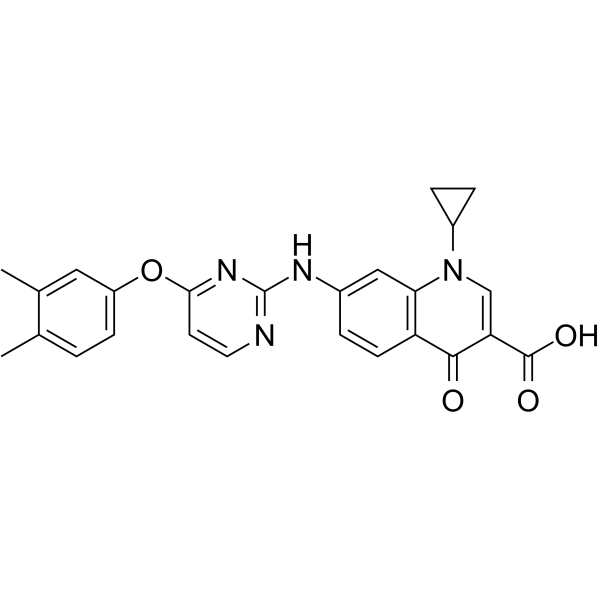
    YRDC-IN-1 is a blood-brain barrier-permeable YRDC inhibitor. YRDC is a key enzyme that catalyzes the formation of N 6-threonylcarbamoyladenosine at position 37 of tRNA (t 6A37). YRDC-IN-1 selectively inhibits the translation of ANN codon-enriched FABP7, thereby reducing lipid droplet formation, increasing ROS, and reversing the acquired resistance of GBM to Temozolomide (TMZ) (HY-17364). YRDC-IN-1 can be used for the research of glioblastoma .
    YRDC-IN-1
  • HY-174387

    c-Met/HGFR Cancer
    KIN-8741 is a highly selective Type IIb c-Met inhibitor. KIN-8741 has broad activity against c-Met kinase mutations. KIN-8741 shows antitumor activity in MET gene amplified and exon 14 deleted non-small cell lung cancer models. KIN-8741 can be used in the research of c-Met driven cancers, especially advanced tumors carrying MET exon 14 jump mutations, acquired drug resistance mutations, etc .
    KIN-8741
  • HY-174303

    HIV Reverse Transcriptase Infection
    NNRT-IN-9 (Compound EG28) is a non-nucleoside reverse transcriptase (NNRT) inhibitor. NNRT-IN-9 has potent antiviral and anti-resistance activity against wild-type (WT) HIV-1 and various clinically relevant mutations (E138K and K103N + Y181C) with EC50s of 55, 67 and 3910 nM, respectively. NNRT-IN-9 can be used for acquired immune deficiency syndrome (AIDS) research .
    NNRT-IN-9
  • HY-167948

    EGFR Cancer
    Dacomitinib metabolite M1/2 is a potent inhibitor of both wild-type (WT) EGFR and the T790M mutation, demonstrating significant activity against acquired resistance mechanisms in EGFR-mutant non-small-cell lung cancer (NSCLC).
    Dacomitinib metabolite M1/2
  • HY-149013

    Bacterial Infection
    Anti-MRSA agent 5 (B14) is a potent
    MRSA
    agent with MIC50 values of 0.38 μg/mL and has low hERG activity with an IC50 values of >40 μM. Anti-MRSA agent 5 (B14) also has low cytotoxicity to mammal cells and unlikely to acquire bacterial resistance .
    Anti-MRSA agent 5
  • HY-N1836

    3-Hydroxy-3-acetonyloxindole

    TMV Infection
    3-Acetonyl-3-hydroxyoxindole (AHO) is a potent systemic acquired resistance (SAR) inducer in plants. 3-Acetonyl-3-hydroxyoxindole induces resistance in tobacco plants against infection with tobacco mosaic virus (TMV) and the fungal pathogen Erysiphe cichoracearum. 3-Acetonyl-3-hydroxyoxindole increases the level of pathogenesis-related gene 1 (PR-1) expression, salicylic acid (SA) accumulation and phenylalanine ammonia-lyase activity .
    3-Acetonyl-3-hydroxyoxindole
  • HY-N7378A

    1-Hydroxy-2-piperidinecarboxylic acid potassium; NHP potassium

    Bacterial Inflammation/Immunology
    N-Hydroxypipecolic acid potassium (1-Hydroxy-2-piperidinecarboxylic acid potassium), a plant metabolite and a systemic acquired resistance (SAR) regulator, orchestrates SAR establishment in concert with the immune signal salicylic acid. N-Hydroxypipecolic acid potassium accumulates systemically in the plant foliage in response to pathogen attack. N-Hydroxypipecolic acid potassium induces SAR to bacterial and oomycete infection .
    N-Hydroxypipecolic acid potassium
  • HY-172922

    FGFR Cancer
    Arg-IN-1 is a selective Arginine (Arg)-targeting covalent inhibitor with IC50s of 9.7 nM and 30.4 nM for FGFR2 and FGFR3,respectively. Arg-IN-1 has the potential to avoid FGFR1/4-targeted toxicity as well as conquer acquired on-target resistance, potential for FGFR-targeting cancer therapy .
    FGFR-IN-19
  • HY-157166

    EGFR Cancer
    EGFR kinase inhibitor 2 (compound A-7) is a potent EGFR inhibitor targeting EGFRL858R/T790M/C797S and EGFRDel19/T790M/C797S mutants. EGFR kinase inhibitor 2 has the potential to address acquired resistance in the treatment of non-small cell lung cancer .
    EGFR kinase inhibitor 2
  • HY-175326

    SOS1 Cancer
    SOS1-IN-21 is an orally active inhibitor of son of Sevenless 1 (SOS1) with an IC50 of 15 nM. SOS1 is a guanine nucleotide exchange factor (GEF) that activates KRAS by facilitating the exchange of GDP for GTP. SOS1-IN-21 exhibits potent antiproliferative activity, with IC50 values of 16 nM in NCI-H358 and 17 nM in Mia Paca-2 cell proliferation assays. SOS1-IN-21 exhibits significant antitumor activity in the Mia Paca-2 xenograft model. SOS1-IN-21 can be used for the study of KRAS mutant tumors, such as pancreatic cancer .
    SOS1-IN-21
  • HY-107636R

    Reference Standards Apoptosis Cancer
    DC_AC50 (Standard) is the analytical standard of DC_AC50 (HY-107636). This product is intended for research and analytical applications. DC_AC50 is a dual inhibitor of Atox1 and CCS (copper chaperones). Inhibiting intracellular copper chaperones as a means of reducing/preventing acquired chemotherapy resistance .
    DC_AC50 (Standard)
  • HY-N7378R

    1-Hydroxy-2-piperidinecarboxylic acid (Standard); NHP (Standard)

    Bacterial Reference Standards Inflammation/Immunology
    N-Hydroxypipecolic acid (Standard) (1-Hydroxy-2-piperidinecarboxylic acid (Standard); NHP (Standard)) is the analytical standard of N-Hydroxypipecolic acid (HY-N7378). This product is intended for research and analytical applications. N-Hydroxypipecolic acid (1-Hydroxy-2-piperidinecarboxylic acid), a plant metabolite and a systemic acquired resistance (SAR) regulator, orchestrates SAR establishment in concert with the immune signal salicylic acid. N-Hydroxypipecolic acid accumulates systemically in the plant foliage in response to pathogen attack. N-Hydroxypipecolic acid induces SAR to bacterial and oomycete infection .
    N-Hydroxypipecolic acid (Standard)
  • HY-179559

    YAP Cancer
    OPN-9643 is a covalent inhibitor targeting the central palmitate binding pocket of TEADs with an IC50 of 15 nM, preventing autopalmitoylation and reducing TEAD-driven luciferase activity and canonical TEAD targets, CTGF and CYR61. OPN-9643 can be used for the research of cancer, such as melanoma .
    OPN-9643

Inquiry Online

Your information is safe with us. * Required Fields.

Salutation


Country or Region *

Applicant Name *


Organization Name *

Department *


Email Address *


Product Name *

Cat. No.


Requested quantity *

Phone Number *


Remarks

Inquiry Online

Inquiry Information

Product Name:
Cat. No.:
Quantity:
MCE Japan Authorized Agent:

