
Search Result
Results for "
anxiolytic activity
" in MedChemExpress (MCE) Product Catalog:
1
Biochemical Assay Reagents
13
Isotope-Labeled Compounds
| Cat. No. |
Product Name |
Target |
Research Areas |
Chemical Structure |
-
- HY-P1178
-
|
|
Trk Receptor
p38 MAPK
|
Neurological Disease
|
|
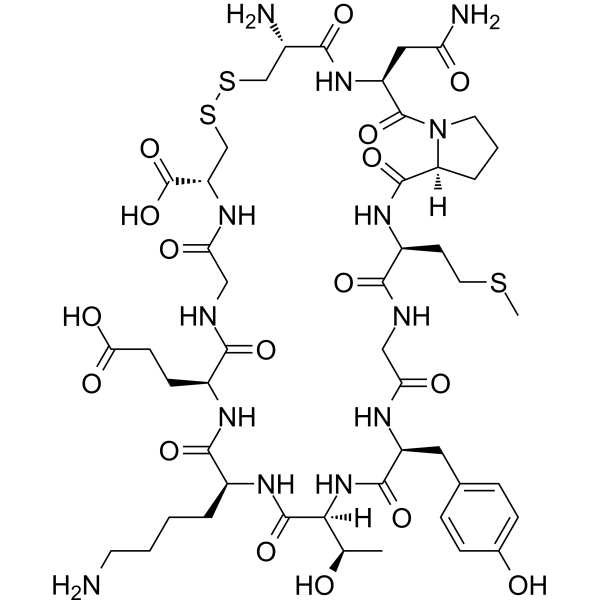
Cyclotraxin B is a BBB-penetrable and selective TrkB inhibitor. Cyclotraxin B inhibits BDNF-induced TrkB activity in a non-competitive manner, with an IC50 of 0.30 nM. Cyclotraxin B has analgesic and anxiolytic effects .
|
-
-
- HY-12598
-
|
|
mGluR
|
Neurological Disease
|
|
(S)-3,5-DHPG is a weak, but selective group I metabotropic glutamate receptors (mGluRs) agonist with Ki values of 0.9 μM and 3.9 μM for mGluR1a and mGluR5a, respectively . (S)-3,5-DHPG exhibits anxiolytic activity in rats subjected to hypoxia .
|
-
-
- HY-14895
-
|
CM346
|
Parasite
Monoamine Oxidase
Sigma Receptor
P-glycoprotein
|
Infection
Cardiovascular Disease
Neurological Disease
|
|
Fabomotizole (CM346) is an insecticide with anxiolytic, antianxiety, and neuroprotective activities and a substrate of p-glycoprotein. Fabomotizole inhibits the ST-segment depression induced by isoproterenol in a rat model of acute subendocardial ischemia. Fabomotizole also inhibits Giardia lamblia and has the potential to inhibit giardiasis. Fabomotizole also targets Sigma1R, NRH:quinone reductase 2 (NQO2), and MAO-A to exert anxiolytic effects .
|
-
-
- HY-103207
-
-
-
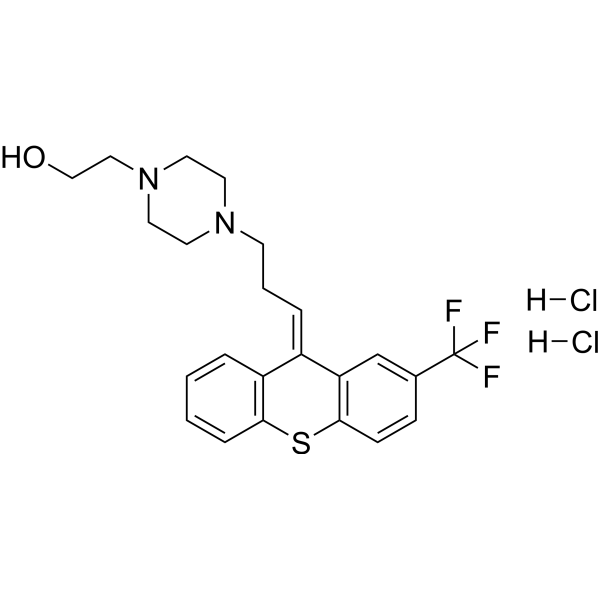
- HY-15856B
-
|
Flupenthixol dihydrochloride
|
Dopamine Receptor
PI3K
Apoptosis
|
Neurological Disease
Cancer
|
|
Flupentixol is an orally active D1/D2 dopamine receptor antagonist and new PI3K inhibitor (PI3Kα IC50=127 nM). Flupentixol shows anti-proliferative activity to cancer cells and induces apoptosis. Flupentixol can also be used in schizophrenia, anxiolytic and depressive research .
|
-
-
- HY-105042
-
|
Selanc; TP-7
|
GABA Receptor
|
Neurological Disease
|
|
Selank (Selanc; TP-7) is a GABAA receptor modulator with anxiolytic activity. Selank allosterically modulates the specific binding of GABA to GABAA receptors and alters the affinity of endogenous ligands for these receptors. Selank reduces elevated anxiety levels, attenuates stress-induced exacerbation of anxiety, and produces a synergistic anxiolytic effect with diazepam. Selank can be used in the research of anxiety disorders .
|
-
-
- HY-B1196
-
|
|
Dopamine Receptor
|
Neurological Disease
|
|
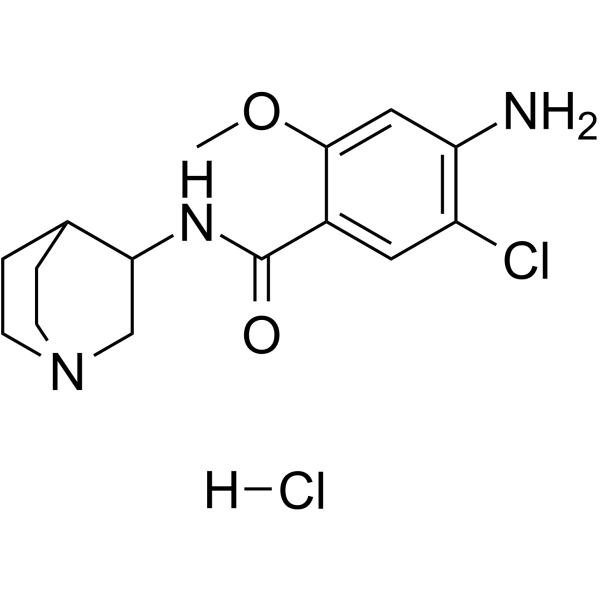
Tiapride hydrochloride is a selective and orally active D2 and D3 dopamine receptors antagonist with IC50 values of 110-320 nM and 180 nM, respectively. Tiapride hydrochloride shows anti-dyskinetic activity and anxiolytic activity. Tiapride hydrochloride is a neuroleptic agent .
|
-
-
- HY-108710
-
|
|
mGluR
|
Neurological Disease
|
|
VU0650786 is a potent and selective CNS penetrant negative allosteric modulator of metabotropic glutamate receptor subtype 3 (mGlu3 NAM), with an IC50 of 392 nM. VU0650786 has antidepressant and anxiolytic activity in rodents .
|
-
-
- HY-12129
-
|
|
CFTR
|
Neurological Disease
|
|
CP 154526 hydrochloride is a potent, brain-penetrant and selective corticotropin-releasing factor receptor 1 (CRF1) antagonist with a Ki of 2.7 nM. CP 154526 hydrochloride shows selective for CRF1 over CRF2 (Ki = >10 μM). CP 154526 hydrochloride has anxiolytic activities .
|
-
-
- HY-P2602
-
|
|
GABA Receptor
|
Neurological Disease
|
|
α-Casozepine is an orally effective anxiolytic that binds to the benzodiazepine site of the GABAA receptor in bovine samples with an IC50 of 88 μM. α-Casozepine exerts anxiolytic and anti-stress effects on cats exposed to unfamiliar environments and dogs undergoing road transport . α-Casozepine exhibits significant anxiolytic activity in rats. α-Casozepine can be used in studies related to fear, anxiety and stress .
|
-
-
- HY-B1737
-
-
-
- HY-114871
-
|
|
GABA Receptor
|
Neurological Disease
|
|
SL651498 is a full agonist of α2 and α3 GABAA receptors, and a partial agonist of α1 and α5 GABAA receptors. SL651498 shows anxiolytic and anticonvulsant activities .
|
-
-
- HY-14895A
-
|
CM346 hydrochloride
|
Parasite
|
Neurological Disease
|
|
Fabomotizole (CM346) hydrochloride is a compound with anxiolytic and neuroprotective activities. Fabomotizole (CM346) hydrochloride also has activity against Giardia lamblia and has the potential to inhibit giardiasis.
|
-
-
- HY-19477
-
-
-
- HY-110278
-
|
|
mGluR
|
Neurological Disease
|
|
ADX71743 is a highly selective, noncompetitive and brain-penetrant metabotropic glutamate receptor 7 negative allosteric modulator (mGlu7 NAM). ADX71743 can cross the blood-brain barrier (BBB) and possesses anxiolytic activity. .
|
-
-
- HY-116800
-
|
|
Adenosine Receptor
|
Neurological Disease
|
|
FR194921 is a potent, selective and orally active and cross the blood-brain barrier Adenosine A1 antagonist with Ki value of 6.6, 5400 nM for A1, A2A, respectively. FR194921 shows cognitive-enhancing and anxiolytic activity .
|
-
-
- HY-N9502
-
|
|
Endogenous Metabolite
|
Neurological Disease
|
|
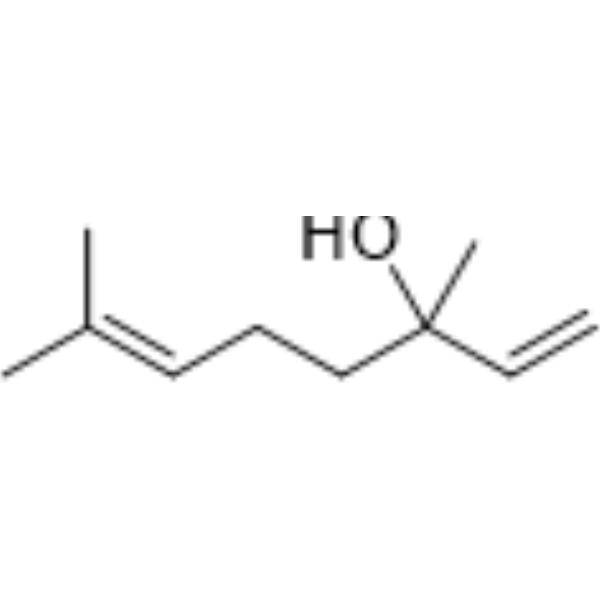
Linalool oxide is a monoterpene and found in aromatic plant essential oils and is a secondary metabolite in elongating wheat plants. Linalool oxide has antinociceptive, anticonvulsant, and anxiolytic activity. Linalool oxide can be used for the research of pain, epilepsy, anxiety disorders .
|
-
-
- HY-100140
-
-
-
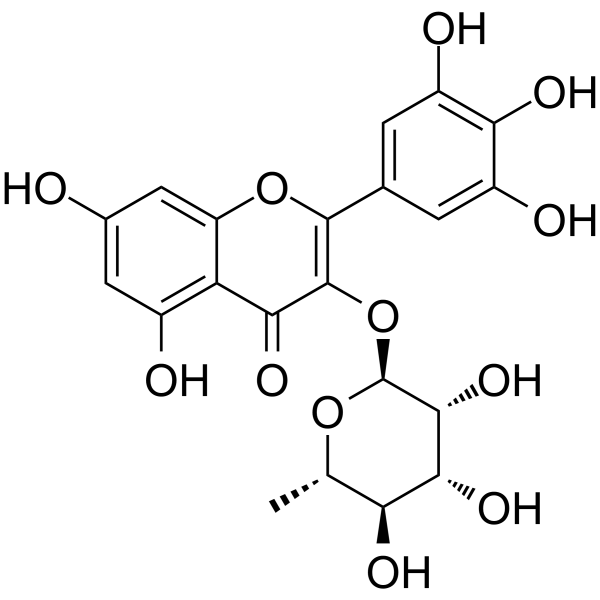
- HY-N6648
-
|
|
GABA Receptor
|
Neurological Disease
|
|
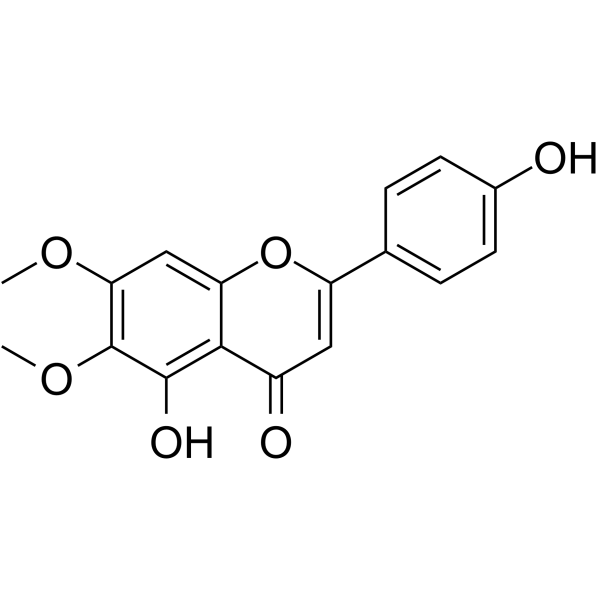
Cirsimaritin binds weakly to the benzodiazepine site on GABAA receptors, with antidepressant, anxiolytic and antinociceptive activities.
|
-
-
- HY-117820
-
-
-
- HY-152358
-
|
|
Nucleoside Antimetabolite/Analog
|
Others
|
|
N3-Methyl-2’-O-methyluridine is a uridine analogue. Uridine has potential antiepileptic effects, and its analogs can be used to study anticonvulsant and anxiolytic activities, as well as to develop new antihypertensive agents .
|
-
-
- HY-15856A
-
|
Flupenthixol
|
Dopamine Receptor
PI3K
Apoptosis
|
Neurological Disease
|
|
Flupentixol is an orally active D1/D2 dopamine receptor antagonist and new PI3K inhibitor (PI3Kα IC50=127 nM). Flupentixol shows anti-proliferative activity to cancer cells and induces apoptosis. Flupentixol can also be used in schizophrenia, anxiolytic and depressive research .
|
-
-
- HY-141795
-
|
Co 134444
|
Drug Derivative
|
Neurological Disease
|
|
Posovolone (Co 134444) is an orally active, neuroactive steroid. Posovolone has anticonvulsant and anxiolytic-like activity as well as ataxic effects .
|
-
-
- HY-103571
-
|
|
mGluR
|
Neurological Disease
|
|
VU0285683 is a selective mGluR5 positive allosteric modulator (PAM). VU0285683 has anxiolytic-like activity in rodent models for anxiety .
|
-
-
- HY-101387
-
|
|
mGluR
|
Neurological Disease
|
|
rel-ACPT-I is an agonist of group III mGluRs with diverse biological activities including neuroprotective, anticonvulsant, and anxiolytic-like effects .
|
-
-
- HY-12130
-
|
|
CRFR
|
Neurological Disease
|
|
CP 154526 is a potent, brain-penetrant and selective corticotropin-releasing factor receptor 1 (CRF1) antagonist with a Ki of 2.7 nM. CP 154526 shows selective for CRF1 over CRF2 (Ki = >10 μM). CP 154526 has anxiolytic activities .
|
-
-
- HY-107626
-
|
|
MCHR1 (GPR24)
5-HT Receptor
|
Neurological Disease
|
|
ATC0065 is a potent, selective and orally active melanin-concentrating hormone (MCH) receptor 1 (MCHR1) antagonist with an IC50 of 15.7 nM for human MCHR1. ATC0065 does not exhibits significant activity for MCHR2. ATC0065 has anxiolytic and antidepressant activities .
|
-
-
- HY-123840
-
|
|
GABA Receptor
|
Neurological Disease
|
|
MRK-623 (Compound 14k) is an orally active, high-affinity GABAA receptor agonist, with the Ki values of 0.85 nM, 3.7 nM, 4.0 nM, and 0.53 nM for α1, α2, α3, and α5, respectively. MRK-623 shows anxiolytic effect .
|
-
-
- HY-N3940
-
|
|
Others
|
Neurological Disease
Cancer
|
|
Gelsevirine is the major alkaloid in Gelsemium elegans with potent anxiolytic effects. The anxiolytic mechanism of Gelsevirine may be involved in the agonist action of the glycine receptor in the brain. Gelsevirine has anti-proliferation activity with IC50 values of 1.41 mM and 1.22 mM for SW480 cells and MGC80-3 cells, respectively .
|
-
-
- HY-106316
-
|
|
GABA Receptor
|
Neurological Disease
|
|
CGS 20625 is a potent, selective and orally active partial agonist for the central benzodiazepine receptor. CGS 20625 inhibits [3H]-flunitrazepam binding to central benzodiazepine receptors with an IC50 of 1.3 nM. CGS 20625 enhances GABA in Xenopus laevis oocytes . CGS 20625 can be used for the research of pentylenetetrazol-induced seizures and anxiety .
|
-
-
- HY-B1196A
-
|
|
Dopamine Receptor
|
Neurological Disease
|
|
Tiapride is a selective and orally active D2 and D3 dopamine receptors antagonist with IC50 values of 110-320 nM and 180 nM, respectively. Tiapride shows anti-dyskinetic activity and anxiolytic activity. Tiapride is a neuroleptic agent .
|
-
-
- HY-105170B
-
|
|
nAChR
|
Neurological Disease
|
|
ABT-418 hydrochloride is a potent and selective agonist of nAChRs with cognitive enhancing and anxiolytic activities. ABT-418 hydrochloride activates cholinergic channel and can be used for research of Alzheimer's disease .
|
-
-
- HY-152732
-
|
|
Nucleoside Antimetabolite/Analog
|
Others
|
|
6-Methyluridine is a uridine analogue. Uridine has potential antiepileptic effects, and its analogs can be used to study anticonvulsant and anxiolytic activities, as well as to develop new antihypertensive agents .
|
-
-
- HY-110001
-
|
|
5-HT Receptor
|
Neurological Disease
|
|
(S)-WAY 100135 dihydrochloride is a highly selective and potent antagonist of 5-HT 1A (IC50=33.9 nM). (S)-WAY 100135 dihydrochloride has anxiolytic activity in animal models .
|
-
-
- HY-154285
-
|
|
Nucleoside Antimetabolite/Analog
|
Cancer
|
|
3’-O-(2-Methoxyethyl) uridine is a uridine analog. Uridine has potential antiepileptic effects, and its analogs can be used to study anticonvulsant and anxiolytic activities, as well as to develop new antihypertensive agents .
|
-
-
- HY-W399186
-
|
|
Parasite
|
Infection
Neurological Disease
|
|
Methylclonazepam is a benzodiazepine with anxiolytic activity. Methylclonazepam inhibits the absorption of 5-hydroxytryptamine by Schistosoma mansoni. Methylclonazepam derivatives have anti-Schistosoma mansoni activity .
|
-
-
- HY-107626A
-
|
|
MCHR1 (GPR24)
5-HT Receptor
|
Neurological Disease
|
|
ATC0065 free base is a potent, selective and orally active melanin-concentrating hormone (MCH) receptor 1 (MCHR1) antagonist with an IC50 of 15.7 nM for human MCHR1. ATC0065 free base does not exhibits significant activity for MCHR2. ATC0065 free base has anxiolytic and antidepressant activities .
|
-
-
- HY-121393
-
|
|
GABA Receptor
|
Neurological Disease
|
|
Imidazenil is a partial positive allosteric modulator of GABAA receptors with anxiolytic, antipanic and anticonvulsant activities.
|
-
-
- HY-116590
-
|
|
VEGFR
|
Neurological Disease
|
|
(±)-Glaziovine, a proaporphine alkaloid, has anxiolytic activity. (±)-Glaziovine can be used for neuropharmacological research .
|
-
-
- HY-101322A
-
|
|
5-HT Receptor
|
Neurological Disease
|
|
MM 77 dihydrochloride is a potent postsynaptic antagonist of the 5-HT1A receptor. MM 77 dihydrochloride exhibits anxiolytic-like activity .
|
-
-
- HY-19046
-
|
SC 48274 hydrochloride
|
Tryptophan Hydroxylase
|
Neurological Disease
|
|
AGN-2979 (SC 48274) hydrochloride is a tryptophan hydroxylase activation inhibitor. AGN-2979 hydrochloride exhibits antidepressant and anxiolytic activities .
|
-
-
- HY-124393
-
|
|
mGluR
|
Neurological Disease
|
|
GRN-529 is a negative allosteric modulator (NAM) for mGluR5. GRN-259 modulates sleep-wake activity, and exhibits anxiolytic efficacy in rats .
|
-
-
- HY-129810
-
-
-
- HY-A0198
-
|
U 41123
|
GABA Receptor
|
Neurological Disease
|
|
Adinazolam (U 41123) is a triazolobenzodiazepine. Adinazolam binds to peripheral-type benzodiazepine receptors which interact allosterically with GABA receptors. Adinazolam has dual anxiolytic and antidepressant activities .
|
-
-
- HY-W020098
-
|
|
Nucleoside Antimetabolite/Analog
|
Cancer
|
|
2'-C-methyluridine is a uridine analog. Uridine has potential antiepileptic effects, and its analogs can be used to study anticonvulsant and anxiolytic activities, as well as to develop new antihypertensive agents .
|
-
-
- HY-W740297
-
|
|
Isotope-Labeled Compounds
Parasite
|
Infection
|
|
Methyl Clonazepam-d3 is the deuterium labeled Methylclonazepam (HY-W399186). Methylclonazepam is a benzodiazepine with anxiolytic activity. Methylclonazepam inhibits the absorption of 5-hydroxytryptamine by Schistosoma mansoni. Methylclonazepam derivatives have anti-Schistosoma mansoni activity .
|
-
-
- HY-B1196R
-
|
|
Reference Standards
Dopamine Receptor
|
Neurological Disease
|
|
Tiapride (hydrochloride) (Standard) is the analytical standard of Tiapride (hydrochloride). This product is intended for research and analytical applications. Tiapride hydrochloride is a selective and orally active D2 and D3 dopamine receptors antagonist with IC50 values of 110-320 nM and 180 nM, respectively. Tiapride hydrochloride shows anti-dyskinetic activity and anxiolytic activity. Tiapride hydrochloride is a neuroleptic agent .
|
-
-
- HY-123106
-
|
|
Melanocortin Receptor
|
Others
|
|
MCL-0129 is a compound with anxiolytic and antidepressant activity and is a selective MC4 receptor antagonist that exhibits anxiolytic and antidepressant-like behaviors in multiple rodent models.
|
-
-
- HY-116236
-
|
LY2607540
|
mGluR
|
Others
|
|
THIIC (LY2607540) is a compound with anxiolytic and antidepressant potential. It is a positive allosteric modulator of mGlu receptors, exhibits anxiolytic and antidepressant-like activities in multiple animal models, and can also affect sleep and neurochemical changes.
|
-
-
- HY-100140A
-
|
PK-8165 hydrochloride
|
GABA Receptor
|
Neurological Disease
|
|
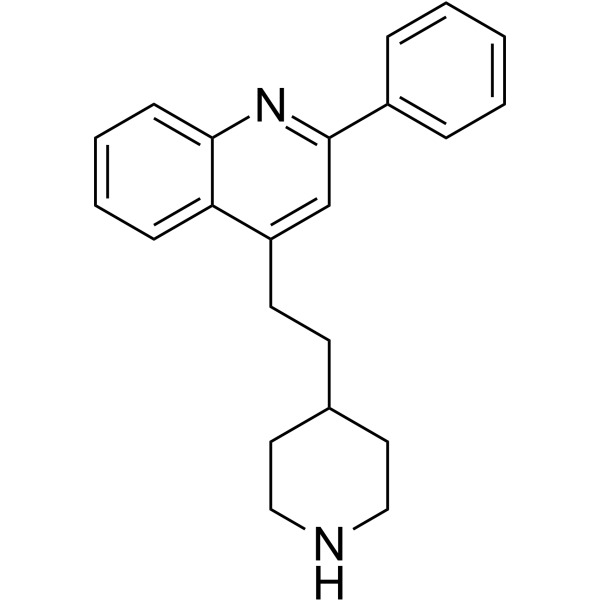
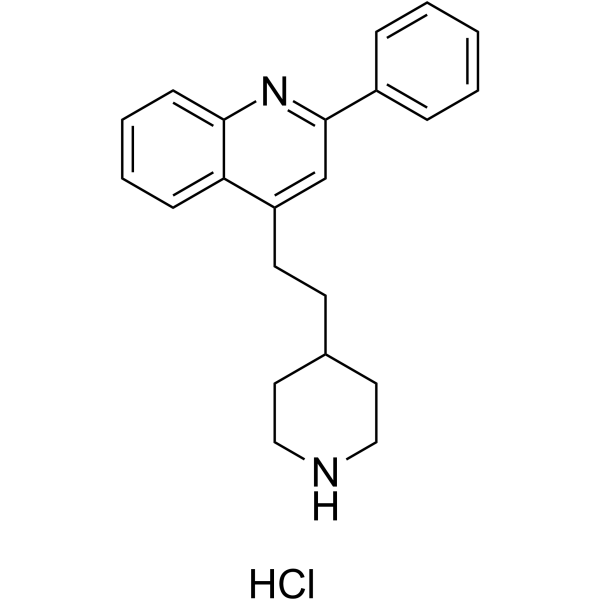
Pipequaline hydrochloride (PK-8165 hydrochloride) is a partial benzodiazepine receptor agonist with anxiolytic activity .
|
-
- HY-117955
-
|
WAY 141839; Co 2-6749
|
GABA Receptor
|
Neurological Disease
|
|
GMA-839 is a selective modulator of the γ-aminobutyric acid A receptor (GABAA) with an IC50 value of 230 nM. GMA-839 exhibits potent anxiolytic-like activity, demonstrating significant dose-dependent anxiolytic effects in animal models, with an effective oral dose of 1.6 mg/kg. Significant increases in punished responding were observed in squirrel monkeys and pigeons. GMA-839 shows promise for research in the field of anxiolytics .
|
-
- HY-N12098
-
|
|
Others
|
Neurological Disease
|
|
d-Laserpitin, pyranocoumarin, is a nature product with anxiolytic activity. d-Laserpitin can be isolated from the fruits of Seseli devenyense Simonk .
|
-
- HY-19134
-
-
- HY-151951
-
-
- HY-151950
-
-
- HY-106635
-
|
RP31264
|
GABA Receptor
|
Neurological Disease
|
|
Suriclone (RP31264) is a GABA receptor agonist. Suriclone is an anxiolytic agent with a high affinity for the benzodiazepine receptors. Suriclone has oral activity .
|
-
- HY-171253
-
-
- HY-101387A
-
|
|
mGluR
|
Neurological Disease
|
|
ACPT-II is an antagonist of group III mGluRs with diverse biological activities including neuroprotective, anticonvulsant, and anxiolytic-like effects .
|
-
- HY-W362839
-
|
|
5-HT Receptor
|
Neurological Disease
|
|
Binospirone is a 5-HT1A Receptor agonist. Binospirone has anxiolytic activity. Binospirone can be used in the study of movement disorders .
|
-
- HY-139802
-
|
|
Somatostatin Receptor
|
Neurological Disease
|
|
L-779976 is a compound with bradykinin agonist activity. Injection into the amygdala and septum of the rat brain can produce anxiolytic effects. Its bradykinin agonist activity has been verified by relevant experiments.
|
-
- HY-W979493
-
|
|
nAChR
|
Others
|
|
TC-2216 is a compound with antidepressant and anxiolytic activity that has shown activity in multiple animal models and may exert its effects by acting on α4β2 neuronal nicotinic receptors.
|
-
- HY-19082
-
|
|
GABA Receptor
|
Neurological Disease
|
|
Y-23684 is a partial agonist of benzodiazepine receptor (BZR) with anticonvulsant and anxiolytic activities. Y-23684 can be used in the research of treatment of anxiety disorders .
|
-
- HY-118008A
-
|
|
5-HT Receptor
|
Neurological Disease
|
|
Lesopitron hydrochloride is a 5-HT receptor agonist with potent anxiolytic-like effects. Lesopitron hydrochloride inhibits forskolin-stimulated adenylate cyclase activity with an IC50 value of 125 nM .
|
-
- HY-111479
-
-
- HY-125508
-
|
|
GABA Receptor
|
Neurological Disease
|
|
CCD-3693 is an orally active GABA receptor agonist. CCD-3693 has anxiolytic, anticonvulsant and sedative hypnotic activities and can be used in research related to neurological diseases .
|
-
- HY-118008
-
|
|
5-HT Receptor
|
Neurological Disease
|
|
Lesopitron (E-4424) is a 5-HT receptor agonist with potent anxiolytic-like effects. Lesopitron inhibits forskolin-stimulated adenylate cyclase activity with an IC50 value of 125 nM .
|
-
- HY-152755
-
|
|
Nucleoside Antimetabolite/Analog
|
Others
|
|
4’-Cyanouridine is a uridine analogue. Uridine has potential antiepileptic effects, and its analogs can be used to study anticonvulsant and anxiolytic activities, as well as to develop new antihypertensive agents .
|
-
- HY-14895AR
-
|
CM346 hydrochloride (Standard)
|
Parasite
Reference Standards
|
Neurological Disease
|
|
Fabomotizole (hydrochloride) (Standard) is the analytical standard of Fabomotizole (hydrochloride). This product is intended for research and analytical applications. Fabomotizole (CM346) hydrochloride is a compound with anxiolytic and neuroprotective activities. Fabomotizole (CM346) hydrochloride also has activity against Giardia lamblia and has the potential to inhibit giardiasis.
|
-
- HY-169445
-
|
(±)-Ro 11-3128; (±)-Ro 11-3128/002
|
Parasite
|
Infection
Neurological Disease
|
|
(±)-Meclonazepam ((±)-Ro 11-3128) is the racemate of Meclonazepam (HY-101725). Meclonazepam (Ro 11-3128) is a benzodiazepine compound with anxiolytic effect . Meclonazepam exhibits antischistosomal activity against S. mansoni .
|
-
- HY-A0198A
-
|
U 41123F mesylate
|
GABA Receptor
|
Neurological Disease
|
|
Adinazolam (U 41123F) mesylate is a triazolobenzodiazepine. Adinazolam mesylate binds to peripheral-type benzodiazepine receptors which interact allosterically with GABA receptors. Adinazolam mesylate has dual anxiolytic and antidepressant activities .
|
-
- HY-152764
-
|
|
Nucleoside Antimetabolite/Analog
|
Others
|
|
4’-α-C-Methyluridine is a uridine analogue. Uridine has potential antiepileptic effects, and its analogs can be used to study anticonvulsant and anxiolytic activities, as well as to develop new antihypertensive agents .
|
-
- HY-152777
-
|
|
Nucleoside Antimetabolite/Analog
|
Others
|
|
5’(R)-C-Methyluridine is a uridine analogue. Uridine has potential antiepileptic effects, and its analogs can be used to study anticonvulsant and anxiolytic activities, as well as to develop new antihypertensive agents .
|
-
- HY-152299
-
|
|
Nucleoside Antimetabolite/Analog
|
Others
|
|
5-(t-Butyloxycarbonylmethoxy)uridine is a uridine analogue. Uridine has potential antiepileptic effects, and its analogs can be used to study anticonvulsant and anxiolytic activities, as well as to develop new antihypertensive agents .
|
-
- HY-154735
-
|
|
Nucleoside Antimetabolite/Analog
|
Cancer
|
|
N3-Allyluridine is a uridine analog. Uridine has potential antiepileptic effects, and its analogs can be used to study anticonvulsant and anxiolytic activities, as well as to develop new antihypertensive agents .
|
-
- HY-152388
-
|
|
Nucleoside Antimetabolite/Analog
|
Others
|
|
3’-beta-C-Methyluridine is a uridine analogue. Uridine has potential antiepileptic effects, and its analogs can be used to study anticonvulsant and anxiolytic activities, as well as to develop new antihypertensive agents .
|
-
- HY-152665
-
|
|
Nucleoside Antimetabolite/Analog
|
Cancer
|
|
1-(β-D-Xylofuranosyl)uracil is a uridine analog. Uridine has potential antiepileptic effects, and its analogs can be used to study anticonvulsant and anxiolytic activities, as well as to develop new antihypertensive agents .
|
-
- HY-152970
-
|
|
Nucleoside Antimetabolite/Analog
Phosphoramidites
|
Others
|
|
7'-O-DMT-morpholino uracil is a uridine analog. Uridine has potential antiepileptic effects, and its analogs can be used to study anticonvulsant and anxiolytic activities, as well as to develop new antihypertensive agents .
|
-
- HY-154734
-
|
|
Nucleoside Antimetabolite/Analog
|
Cancer
|
|
N3-(4-Nitrobenzyl)uridine is a uridine analog. Uridine has potential antiepileptic effects, and its analogs can be used to study anticonvulsant and anxiolytic activities, as well as to develop new antihypertensive agents .
|
-
- HY-W557556
-
|
|
Nucleoside Antimetabolite/Analog
|
Cancer
|
|
2',5'-Bis-O-(triphenylMethyl)uridine is a uridine analog. Uridine has potential antiepileptic effects, and its analogs can be used to study anticonvulsant and anxiolytic activities, as well as to develop new antihypertensive agents .
|
-
- HY-152677
-
|
|
Nucleoside Antimetabolite/Analog
|
Others
|
|
N3-(2-Methoxy)ethyluridine is a uridine analogue. Uridine has potential antiepileptic effects, and its analogs can be used to study anticonvulsant and anxiolytic activities, as well as to develop new antihypertensive agents .
|
-
- HY-149077
-
|
|
Others
|
Others
|
|
2′-Deoxy-5-methoxyuridine is a uridine analogue. Uridine has potential antiepileptic effects, and its analogs can be used to study anticonvulsant and anxiolytic activities, as well as to develop new antihypertensive agents .
|
-
- HY-154217
-
|
|
Nucleoside Antimetabolite/Analog
|
Cancer
|
|
3′,5′-Bis-O-(triphenylmethyl)uridine is a uridine analog. Uridine has potential antiepileptic effects, and its analogs can be used to study anticonvulsant and anxiolytic activities, as well as to develop new antihypertensive agents .
|
-
- HY-152529
-
|
|
Nucleoside Antimetabolite/Analog
|
Others
|
|
4’-C-Methyl-5-methoxyuridine is a uridine analogue. Uridine has potential antiepileptic effects, and its analogs can be used to study anticonvulsant and anxiolytic activities, as well as to develop new antihypertensive agents .
|
-
- HY-152522
-
|
|
Nucleoside Antimetabolite/Analog
|
Others
|
|
5-Fluoro-4’-C-methyluridine is a uridine analogue. Uridine has potential antiepileptic effects, and its analogs can be used to study anticonvulsant and anxiolytic activities, as well as to develop new antihypertensive agents .
|
-
- HY-19438
-
|
RU 32698
|
GABA Receptor
|
Neurological Disease
|
|
Divaplon is a GABA receptor agonist with the EC50 values of 31 and 2 nM for α3β2γ2 and α5β2γ2, respectively. Divaplon shows anxiolytic activity .
|
-
- HY-154738
-
|
|
Nucleoside Antimetabolite/Analog
|
Cancer
|
|
N3-[3-(tert-Butoxycarbonyl)amino]propyluridine is a uridine analog. Uridine has potential antiepileptic effects, and its analogs can be used to study anticonvulsant and anxiolytic activities, as well as to develop new antihypertensive agents .
|
-
- HY-152783
-
|
|
Nucleoside Antimetabolite/Analog
|
Others
|
|
5’(R)-C-Methyl-5-fluorouridine is a uridine analogue. Uridine has potential antiepileptic effects, and its analogs can be used to study anticonvulsant and anxiolytic activities, as well as to develop new antihypertensive agents .
|
-
- HY-152969
-
|
|
Nucleoside Antimetabolite/Analog
|
Others
|
|
6-Chloro-N1-(trimethylsilylethoxymethyl)pseudouridine is a uridine analog. Uridine has potential antiepileptic effects, and its analogs can be used to study anticonvulsant and anxiolytic activities, as well as to develop new antihypertensive agents .
|
-
- HY-152779
-
|
|
Nucleoside Antimetabolite/Analog
|
Others
|
|
5-Methoxy-5’(R)-C-methyluridine is a uridine analogue. Uridine has potential antiepileptic effects, and its analogs can be used to study anticonvulsant and anxiolytic activities, as well as to develop new antihypertensive agents .
|
-
- HY-19006
-
|
|
GABA Receptor
|
Neurological Disease
|
|
ZK-91296 is a GABA receptor agonist with anxiolytic activity. ZK-91296 can reduce anxiety in animals without causing sedation. ZK-91296 may have pharmacological selectivity for interaction with specific types of benzodiazepine receptors .
|
-
- HY-152798
-
|
|
Nucleoside Antimetabolite/Analog
|
Others
|
|
5-Iodo-2’-β-C-methyl uridine is a uridine analogue. Uridine has potential antiepileptic effects, and its analogs can be used to study anticonvulsant and anxiolytic activities, as well as to develop new antihypertensive agents .
|
-
- HY-P1178A
-
|
|
Trk Receptor
|
Neurological Disease
|
|
Cyclotraxin B TFA is a BBB-penetrable and selective TrkB inhibitor. Cyclotraxin B TFA inhibits BDNF-induced TrkB activity in a non-competitive manner, with an IC50 of 0.30 nM. Cyclotraxin B TFA has analgesic and anxiolytic effects .
|
-
- HY-154737
-
|
|
Nucleoside Antimetabolite/Analog
|
Cancer
|
|
N3-[(Pyrid-4-yl)methyl]uridine is a uridine analog. Uridine has potential antiepileptic effects, and its analogs can be used to study anticonvulsant and anxiolytic activities, as well as to develop new antihypertensive agents .
|
-
- HY-152681
-
|
|
Nucleoside Antimetabolite/Analog
|
Others
|
|
N3-[(Tetrahydro-2-furanyl)methyl]uridine is a uridine analogue. Uridine has potential antiepileptic effects, and its analogs can be used to study anticonvulsant and anxiolytic activities, as well as to develop new antihypertensive agents .
|
-
- HY-152463
-
|
|
Nucleoside Antimetabolite/Analog
|
Cancer
|
|
4′-C-2-Propen-1-yluridine is a uridine analog. Uridine has potential antiepileptic effects, and its analogs can be used to study anticonvulsant and anxiolytic activities, as well as to develop new antihypertensive agents .
|
-
- HY-108710R
-
|
|
Reference Standards
mGluR
|
Neurological Disease
|
|
VU0650786 (Standard) is the analytical standard of VU0650786 (HY-108710). This product is intended for research and analytical applications. VU0650786 is a potent and selective CNS penetrant negative allosteric modulator of metabotropic glutamate receptor subtype 3 (mGlu3 NAM), with an IC50 of 392 nM. VU0650786 has antidepressant and anxiolytic activity in rodents .
|
-
- HY-116627
-
|
BMS-442608
|
Drug Metabolite
|
Neurological Disease
|
|
(R)-6-Hydroxybuspirone is a metabolite of the anxiolytic agent Buspirone (HY-B1115A). (R)-6-Hydroxybuspirone itself also has anxiolytic activity .
|
-
- HY-180372
-
-
- HY-100140R
-
|
PK-8165 (Standard)
|
Reference Standards
GABA Receptor
|
Neurological Disease
|
|
Pipequaline (Standard) is the analytical standard of Pipequaline. This product is intended for research and analytical applications. Pipequaline (PK 8165) is a partial benzodiazepine receptor agonist with anxiolytic activity .
|
-
- HY-N6648R
-
|
|
GABA Receptor
Reference Standards
|
Neurological Disease
|
|
Cirsimaritin (Standard) is the analytical standard of Cirsimaritin (HY-N6648). This product is intended for research and analytical applications. Cirsimaritin binds weakly to the benzodiazepine site on GABAA receptors, with antidepressant, anxiolytic and antinociceptive activities.
|
-
- HY-103505
-
|
|
GABA Receptor
|
Neurological Disease
|
|
CL 218872 is an orally active and selective ligand for the benzodiazepine receptor subtype BZ1. CL 218872 exhibits anxiolytic, sedative and anticonvulsant activities. CL 218872 can be used in researches of anxiety related disorders and epilepsy .
|
-
- HY-152683
-
|
|
Nucleoside Antimetabolite/Analog
|
Others
|
|
N3-[(Pyrid-2-yl)methyl]uridine is a uridine analogue. Uridine has potential antiepileptic effects, and its analogs can be used to study anticonvulsant and anxiolytic activities, as well as to develop new antihypertensive agents .
|
-
- HY-152674
-
|
|
Nucleoside Antimetabolite/Analog
|
Others
|
|
2′-Deoxy-2′-fluoro-5-methoxy-arabinouridine is a uridine analogue. Uridine has potential antiepileptic effects, and its analogs can be used to study anticonvulsant and anxiolytic activities, as well as to develop new antihypertensive agents .
|
-
- HY-136591
-
|
|
Drug Metabolite
|
Neurological Disease
Cancer
|
|
Demoxepam is a major metabolite of Chlordiazepoxide. Demoxepam exhibits cytotoxicity activity against cancer cell lines. Demoxepam has anticonvulsant and anxiolytic effects. Demoxepam has an inhibitory effect on in vitro [ 3H]tryptophan binding to rat hepatic nuclei .
|
-
- HY-154560
-
|
|
Nucleoside Antimetabolite/Analog
|
Cancer
|
|
2’,3’,5’-Tri-O-acetyl-N3-methyluridine is a uridine analog. Uridine has potential antiepileptic effects, and its analogs can be used to study anticonvulsant and anxiolytic activities, as well as to develop new antihypertensive agents .
|
-
- HY-152574
-
|
|
Nucleoside Antimetabolite/Analog
|
Others
|
|
5-Amino-2’-deoxy-2’-O-methyluridine hydrochloride is a uridine analogue. Uridine has potential antiepileptic effects, and its analogs can be used to study anticonvulsant and anxiolytic activities, as well as to develop new antihypertensive agents .
|
-
- HY-B1229
-
|
3-Methylbutanamide
|
GABA Receptor
|
Neurological Disease
Metabolic Disease
|
|
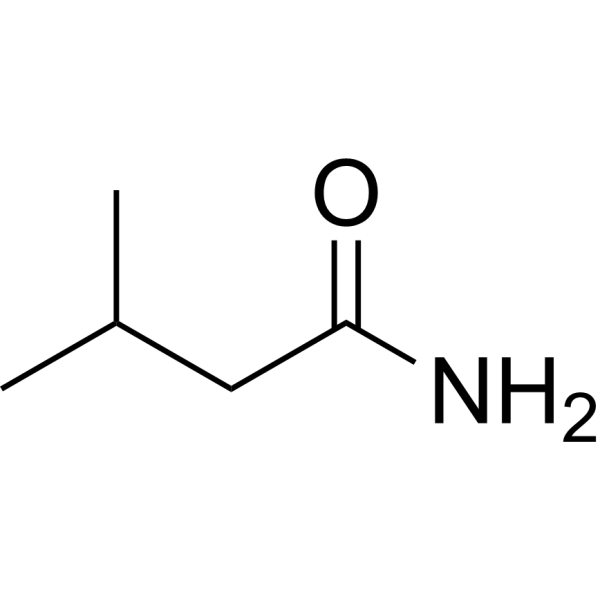
Isovaleramide (3-Methylbutanamide) is an orally active anticonvulsant. Isovaleramide inhibits alcohol dehydrogenase (ADH) activity and regulates GABAergic system. Isovaleramide reduces acute kidney injury. Isovaleramide has antiepileptic, anxiolytic, sedative and hypnotic effects[1] .
|
-
- HY-154466
-
|
|
Nucleoside Antimetabolite/Analog
|
Cancer
|
|
5’-O-(4,4’-Dimethoxytrityl)-3’-O-methyluridine is a uridine analog. Uridine has potential antiepileptic effects, and its analogs can be used to study anticonvulsant and anxiolytic activities, as well as to develop new antihypertensive agents .
|
-
- HY-110053
-
|
SM-3997 hydrochloride
|
5-HT Receptor
|
Neurological Disease
|
|
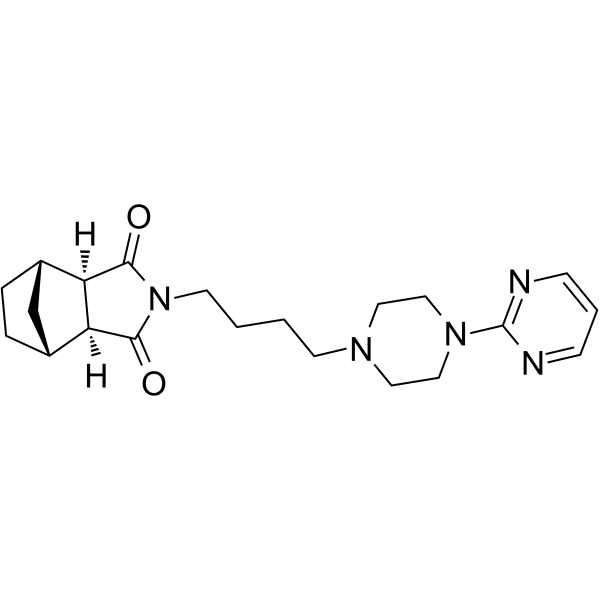
Tandospirone (SM-3997) hydrochloride is a potent and selective 5-HT1A receptor partial agonist, with a Ki of 27 nM. Tandospirone hydrochloride has anxiolytic and antidepressant activities. Tandospirone hydrochloride can be used for the research of the central nervous system disorders and the underlying mechanisms .
|
-
- HY-14558
-
|
SM-3997
|
5-HT Receptor
|
Neurological Disease
|
|
Tandospirone (SM-3997) is a potent and selective 5-HT1A receptor partial agonist, with a Ki of 27 nM. Tandospirone has anxiolytic and antidepressant activities. Tandospirone can be used for the research of the central nervous system disorders and the underlying mechanisms .
|
-
- HY-48973
-
|
|
Nucleoside Antimetabolite/Analog
Phosphoramidites
|
Others
|
|
2'-Fluoro-2'-deoxy-ara-U-3'-phosphoramidite is a uridine analog. Uridine has potential antiepileptic effects, and its analogs can be used to study anticonvulsant and anxiolytic activities, as well as to develop new antihypertensive agents .
|
-
- HY-W012735
-
|
(+)-β-Homoproline; (+)-Hexahydronicotinic acid; (+)-3-Carboxypiperidine
|
GABA Receptor
|
Neurological Disease
|
|
(+)-Nipecotic acid ((+)-β-Homoproline) is a GABA transport inhibitor with potential antidepressant and anxiolytic activities. (+)-Nipecotic acid can increase the concentration of GABA in the synaptic cleft, thereby enhancing inhibitory neurotransmission. The research on (+)-Nipecotic acid provides a possible direction for the development of new inhibitory compounds for psychiatric diseases .
|
-
- HY-N0152
-
-
- HY-154173
-
|
|
Nucleoside Antimetabolite/Analog
|
Cancer
|
|
3’-O-(t-Butyldimethylsilyl)-2’-O-(2-methoxyethyl) uridine is a uridine analog. Uridine has potential antiepileptic effects, and its analogs can be used to study anticonvulsant and anxiolytic activities, as well as to develop new antihypertensive agents .
|
-
- HY-154813
-
|
|
Nucleoside Antimetabolite/Analog
|
Others
|
|
3′,5′-Di-O-acetyl-2′-deoxy-2′-fluorouridine is a uridine analog. Uridine has potential antiepileptic effects, and its analogs can be used to study anticonvulsant and anxiolytic activities, as well as to develop new antihypertensive agents .
|
-
- HY-154358
-
|
|
Nucleoside Antimetabolite/Analog
|
Cancer
|
|
4’-alpha-C-Allyl-2’,3’-bis(O-t-butyldimethylsilyl) uridine is a uridine analog. Uridine has potential antiepileptic effects, and its analogs can be used to study anticonvulsant and anxiolytic activities, as well as to develop new antihypertensive agents .
|
-
- HY-49199
-
|
|
Nucleoside Antimetabolite/Analog
|
Cancer
|
|
2',3',5'-Tri-O-(t-butyldimethylsilyl)-4'-C-hydroxymethyl uridine is a uridine analog. Uridine has potential antiepileptic effects, and its analogs can be used to study anticonvulsant and anxiolytic activities, as well as to develop new antihypertensive agents .
|
-
- HY-152363
-
|
|
Nucleoside Antimetabolite/Analog
|
Others
|
|
N3-Methyl-2’-O-(2-methoxyethyl)uridine is a uridine analogue. Uridine has potential antiepileptic effects, and its analogs can be used to study anticonvulsant and anxiolytic activities, as well as to develop new antihypertensive agents .
|
-
- HY-154488
-
|
|
Nucleoside Antimetabolite/Analog
|
Cancer
|
|
3′-O-[(1,1-Dimethylethyl)dimethylsilyl]-2′-O-methyluridine is a uridine analog. Uridine has potential antiepileptic effects, and its analogs can be used to study anticonvulsant and anxiolytic activities, as well as to develop new antihypertensive agents .
|
-
- HY-106437
-
|
|
GABA Receptor
|
Neurological Disease
|
|
ELB-139 is a progesterone analogue. ELB-139 is a GABAA receptor partial agonist. ELB-139 has anxiolytic and anticonvulsant activity. ELB-139 induces increase of extracellular 5-HT in the striatum and the medial prefrontal cortex of rats .
|
-
- HY-W150182
-
|
|
Environmental Pollutants
|
Neurological Disease
Inflammation/Immunology
|
|
p-Cymen-8-ol is an alcohol. p-Cymen-8-ol can be used to make essential oils. Essential oils containing p-Cymen-8-ol exhibit immunomodulatory activity. p-Cymen-8-ol, when used in combination with other substances to make essential oils, exerts an anxiolytic-like effect and reduces hepatic lipid peroxidation levels in ICR mice. p-Cymen-8-ol may be used in research on anxiolytic and other neurological and immune system disorders .
|
-
- HY-154410
-
|
|
Nucleoside Antimetabolite/Analog
Phosphoramidites
|
Cancer
|
|
5’-O-DMT-2’-deoxy-2’-fluoro-β-D-arabinouridine is a uridine analog. Uridine has potential antiepileptic effects, and its analogs can be used to study anticonvulsant and anxiolytic activities, as well as to develop new antihypertensive agents .
|
-
- HY-134337
-
|
|
Nucleoside Antimetabolite/Analog
Phosphoramidites
|
Cancer
|
|
5'-O-DMTr-3'-O-methyl uridine-3'-CED-phosphoramidite is a uridine analog. Uridine has potential antiepileptic effects, and its analogs can be used to study anticonvulsant and anxiolytic activities, as well as to develop new antihypertensive agents .
|
-
- HY-121053A
-
|
WY-50324 hydrochloride; SEB-324 hydrochloride
|
5-HT Receptor
|
Neurological Disease
|
|
Adatanserin hydrochloride is a high affinity, selective and partial agonist for the 5-HT1A receptor with a Ki of 1 nM. Adatanserin hydrochloride is a moderate affinity 5-HT2 receptor antagonist with a Ki of 73 nM. Adatanserin hydrochloride shows significant anxiolytic and antidepressant activity in an animal conflict model .
|
-
- HY-N0368
-
-
- HY-152691
-
|
|
Nucleoside Antimetabolite/Analog
|
Others
|
|
2’-Deoxy-2’-fluoro-N3-(n-dodecyl)-beta-D-arabinouridine is a uridine analogue. Uridine has potential antiepileptic effects, and its analogs can be used to study anticonvulsant and anxiolytic activities, as well as to develop new antihypertensive agents .
|
-
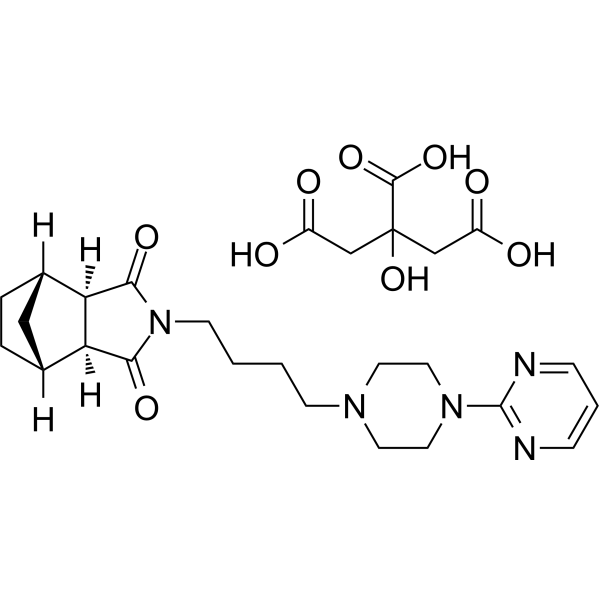
- HY-B0061
-
|
SM-3997 citrate
|
5-HT Receptor
|
Neurological Disease
Metabolic Disease
|
|
Tandospirone (SM-3997) citrate is a potent and selective 5-HT1A receptor partial agonist, with a Ki of 27 nM. Tandospirone citrate has anxiolytic and antidepressant activities. Tandospirone citrate can be used for the research of the central nervous system disorders and the underlying mechanisms .
|
-
- HY-154492
-
|
|
Nucleoside Antimetabolite/Analog
|
Cancer
|
|
2’,3’-Bis(O-t-butyldimethylsilyl)-4’,5’-didehydro-5’-deoxyuridine is a uridine analog. Uridine has potential antiepileptic effects, and its analogs can be used to study anticonvulsant and anxiolytic activities, as well as to develop new antihypertensive agents .
|
-
- HY-120381
-
|
CAM 1189
|
Cholecystokinin Receptor
|
Neurological Disease
Inflammation/Immunology
|
|
PD 136450 (CAM 1189) is an antagonist for cholecystokinin 2 (CCK2). PD 136450 exhibits anti-secretory, anxiolytic and anti-ulcer activities, inhibits gastric acid secretion (IC50=1 mg/kg), and ameliorates the haemorrhagic lesions (IC50=4.7 mg/kg) in rats .
|
-
- HY-154175
-
|
|
Nucleoside Antimetabolite/Analog
|
Others
|
|
1-[6-(Diethoxyphosphinyl)-2-O-(2-methoxyethyl)-β-D-ribo-hexofuranosyl]uracil is a uridine analog. Uridine has potential antiepileptic effects, and its analogs can be used to study anticonvulsant and anxiolytic activities, as well as to develop new antihypertensive agents .
|
-
- HY-N1440
-
|
|
Bcl-2 Family
|
Inflammation/Immunology
Cancer
|
|
Koumine is an alkaloid separated from Gelsemium elegans, shows potent anti-tumor activity. Koumine up-regulates the Bax/Bcl-2 ratio and caspase-3 expression in human breast cancer cells . Koumine has anxiolytic, antistress, antipsoriatic, and analgesic activities , protects against the development of arthritis in Rheumatoid arthritis (RA) animal models .
|
-
- HY-121053
-
|
WY-50324; SEB-324
|
5-HT Receptor
|
Neurological Disease
|
|
Adatanserin (WY-50324) is a high affinity, selective and partial agonist for the 5-HT1A receptor with a Ki of 1 nM. Adatanserin is a moderate affinity 5-HT2 receptor antagonist with a Ki of 73 nM. Adatanserin shows significant anxiolytic and antidepressant activity in an animal conflict model .
|
-
- HY-152792
-
|
|
Nucleoside Antimetabolite/Analog
|
Others
|
|
2’-Deoxy-2’-fluoro-N3-[(pyrid-2-yl)methyl]uridine is a uridine analogue. Uridine has potential antiepileptic effects, and its analogs can be used to study anticonvulsant and anxiolytic activities, as well as to develop new antihypertensive agents .
|
-
- HY-154552
-
|
|
Nucleoside Antimetabolite/Analog
|
Cancer
|
|
2’-O-Acetyl-5’-O-benzoyl-3’-O-(2-methoxyethyl) uridine is a uridine analog. Uridine has potential antiepileptic effects, and its analogs can be used to study anticonvulsant and anxiolytic activities, as well as to develop new antihypertensive agents .
|
-
- HY-A0198S
-
|
U 41123-d5
|
Isotope-Labeled Compounds
GABA Receptor
|
Neurological Disease
|
|
Adinazolam-d5 (U 41123-d5) is a deuterium labeled Adinazolam (HY-A0198). Adinazolam is a triazolobenzodiazepine. Adinazolam binds to peripheral-type benzodiazepine receptors which interact allosterically with GABA receptors. Adinazolam has dual anxiolytic and antidepressant activities .
|
-
- HY-11084
-
|
|
Endogenous Metabolite
|
Neurological Disease
|
|
SNAP-7941 is a selective antagonist with anxiolytic, antidepressant and appetite suppressant activities. SNAP-7941 showed promising biological activity in initial animal studies. SNAP-7941 targets the melanin concentrating hormone receptor MCH1 and has significant inhibitory potential. SNAP-7941 was shown to inhibit the centrally induced MCH-induced drinking effect in in vivo studies .
|
-
- HY-14348
-
|
|
5-HT Receptor
|
Neurological Disease
|
|
GSK163090 is a potent, selective and orally active 5-HT1A/1B/1D receptor antagonist with pKi values of 9.4, 8.5 and 9.7, respectively. GSK163090 inhibits the functional activity of serotonin reuptake transporter (SerT) with a pKi value of 6.1. GSK163090 has antidepressant and anxiolytic activities .
|
-
- HY-12394
-
|
Dosulepin; Dothep
|
Histamine Receptor
5-HT Receptor
|
Neurological Disease
|
|
Dothiepin (Dosulepin; Dothep) is an antidepressant agent with sedative/anxiolytic activity. Dothiepin is an inhibitor preferring of noradrenaline uptake than serotonin uptake. Dothiepin facilitates noradrenergic neurotransmission via inhibiting the neuronal uptake. Dothiepin is also an antagonist of histamine H1-receptor without cardiotoxicity. Dothiepin exhibits significant analgesic activity in psychogenic facial pain,idiopathic fibromyalgia syndrome or rheumatoid arthritis .
|
-
- HY-14264
-
|
|
5-HT Receptor
|
Neurological Disease
|
|
Cyamemazine is a neuroleptic agent that contains the phenothiazine chromophore. Cyamemazine is often used as an anxiolytic. Cyamemazine is a potent 5-HT3 (Ki of 12 nM), 5-HT2A (Ki = 1.5 nM) and 5-HT2C (Ki of 75 nM) receptors antagonist with antipsychotic activity .
|
-
- HY-154517
-
|
|
Nucleoside Antimetabolite/Analog
|
Cancer
|
|
N3-Cyanoethyl-5’-O-(4,4’-dimethoxytrityl)-2’-O-methyluridine is a uridine analog. Uridine has potential antiepileptic effects, and its analogs can be used to study anticonvulsant and anxiolytic activities, as well as to develop new antihypertensive agents .
|
-
- HY-154647
-
|
|
Nucleoside Antimetabolite/Analog
|
Cancer
|
|
N3-(2S)-[2-(tert-Butoxycarbonyl)amino-3-(tert-butoxy carbonyl)]propyluridine is a uridine analog. Uridine has potential antiepileptic effects, and its analogs can be used to study anticonvulsant and anxiolytic activities, as well as to develop new antihypertensive agents .
|
-
- HY-14349
-
|
|
5-HT Receptor
Dopamine Receptor
|
Neurological Disease
|
|
GSK-163090 dihydrochloride is a potent, selective and orally active 5-HT1A/1B/1D receptor antagonist with pKi values of 9.4, 8.5 and 9.7, respectively. GSK-163090 dihydrochloride inhibits the functional activity of serotonin reuptake transporter (SerT) with a pKi value of 6.1. GSK-163090 dihydrochloride has antidepressant and anxiolytic activities .
|
-
- HY-154582
-
|
|
Nucleoside Antimetabolite/Analog
|
Others
|
|
5-Naphthyl-beta-methylaminocarbony-3’-O-acetyl-2’-O-methyl-5’-O-DMTr-uridine is a uridine analog. Uridine has potential antiepileptic effects, and its analogs can be used to study anticonvulsant and anxiolytic activities, as well as to develop new antihypertensive agents .
|
-
- HY-136591R
-
|
|
Drug Metabolite
Reference Standards
|
Neurological Disease
Cancer
|
|
Demoxepam (Standard) is the analytical standard of Demoxepam. This product is intended for research and analytical applications. Demoxepam is a major metabolite of Chlordiazepoxide. Demoxepam exhibits cytotoxicity activity against cancer cell lines. Demoxepam has anticonvulsant and anxiolytic effects. Demoxepam has an inhibitory effect on in vitro [ 3H]tryptophan binding to rat hepatic nuclei .
|
-
- HY-105170BR
-
|
|
Reference Standards
nAChR
|
Neurological Disease
|
|
ABT-418 hydrochloride (Standard) is the analytical standard of ABT-418 hydrochloride (HY-105170B). This product is intended for research and analytical applications. ABT-418 hydrochloride is a potent and selective agonist of nAChRs with cognitive enhancing and anxiolytic activities. ABT-418 hydrochloride activates cholinergic channel and can be used for research of Alzheimer's disease .
|
-
- HY-103524
-
|
(-)-Valerenic Acid
|
GABA Receptor
5-HT Receptor
|
Neurological Disease
|
|
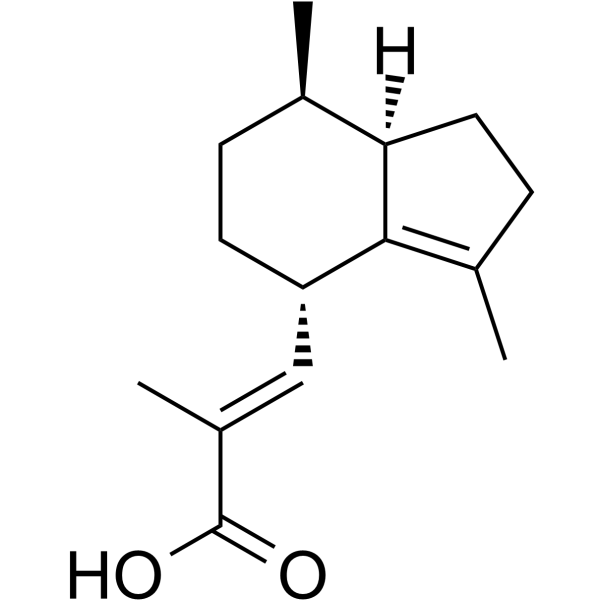
Valerenic acid ((-)-Valerenic Acid), a sesquiterpenoid, is an orally active positive allosteric modulator of GABAA receptors. Valerenic acid is also a partial agonist of the 5-HT5a receptor. Valerenic acid mediates anxiolytic activity via GABAA receptors containing the β3 subunit. Valerenic acid also exhibits potent antioxidant properties .
|
-
- HY-W007087
-
|
|
GABA Receptor
|
Metabolic Disease
|
|
Valerate sodium is the sodium salt of valeric acid, a short-chain fatty acid, and exhibits oral activity. Valerate sodium reduces binge ethanol intake and decreases blood ethanol concentration in mice, while also exerting anxiolytic effects. Valerate sodium increases GABA levels, regulates epigenetics and alters gut microbiome function. Valerate sodium can be used in research related to excessive alcohol consumption .
|
-
- HY-106003
-
|
|
Phosphodiesterase (PDE)
|
Neurological Disease
Inflammation/Immunology
|
|
GSK356278 is a potent, selective, orally bioavailable and brain-penetrant inhibitor of phosphodiesterase 4 (PDE4), with pIC50s of 8.6, 8.8, and 8.7 for human PDE4A, PDE4B, and PDE4D, respectively. GSK356278 has anti-inflammatory activity, and exhibits anxiolytic and cognition-enhancing effects .
|
-
- HY-N0152R
-
-
- HY-164728
-
|
|
Calcium Channel
|
Neurological Disease
|
|
Pregabalin diacid is an impurity of Pregabalin, a lipophilic GABA (γ-aminobutyric acid) analog with anxiolytic and anticonvulsant activity. Pregabalin may act on the α(2)β subunit of voltage-dependent calcium channels, which are widely distributed in the peripheral and central nervous systems. Pregabalin can effectively induce hypoalgesia and improve behavioral disorders .
|
-
- HY-14558R
-
|
SM-3997 (Standard)
|
Reference Standards
5-HT Receptor
|
Neurological Disease
|
|
Tandospirone (Standard) is the analytical standard of Tandospirone. This product is intended for research and analytical applications. Tandospirone (SM-3997) is a potent and selective 5-HT1A receptor partial agonist, with a Ki of 27 nM. Tandospirone has anxiolytic and antidepressant activities. Tandospirone can be used for the research of the central nervous system disorders and the underlying mechanisms .
|
-
- HY-19578A
-
|
(±)-Isamoltane hydrochloride
|
Adrenergic Receptor
5-HT Receptor
|
Neurological Disease
|
|
Isamoltan ((±)-Isamoltane) hydrochloride is a selective antagonist of 5-HT1B receptor, with an IC50 of 39 nM for inhibits the binding of [ 125I]ICYP to 5-HT1B recognition sites in rat brain membranes. Isamoltan hydrochloride is also a β-adrenoceptor ligand, with an IC50 of 8.4 nM. Isamoltan hydrochloride shows anxiolytic activity .
|
-
- HY-103505R
-
|
|
Reference Standards
GABA Receptor
|
Neurological Disease
|
|
CL 218872 (Standard) is the analytical standard of CL 218872 (HY-103505). This product is intended for research and analytical applications. CL 218872 is an orally active and selective ligand for the benzodiazepine receptor subtype BZ1. CL 218872 exhibits anxiolytic, sedative and anticonvulsant activities. CL 218872 can be used in researches of anxiety related disorders and epilepsy .
|
-
- HY-14264S
-
|
|
Isotope-Labeled Compounds
5-HT Receptor
|
Neurological Disease
|
|
Cyamemazine-d6 is the deuterium labeled Cyamemazine. Cyamemazine is a neuroleptic agent that contains the phenothiazine chromophore. Cyamemazine is often used as an anxiolytic. Cyamemazine is a potent 5-HT3 (Ki of 12 nM), 5-HT2A (Ki = 1.5 nM) and 5-HT2C (Ki of 75 nM) receptors antagonist with antipsychotic activity .
|
-
- HY-B1803
-
|
ICI 136753
|
GABA Receptor
|
Neurological Disease
|
|
Tracazolate (ICI 136753) is an orally active non-benzodiazepine anxiolytic. Tracazolate significantly enhances the binding of the radioligand 3H-flunitrazepam ( 3H-FLU) to brain tissue benzodiazepine receptors. Tracazolate enhances the binding of γ-aminobutyric acid (GABA) to its receptors. Tracazolate exhibits anticonvulsant activity. Tracazolate can be used in anxiety-related research .
|
-
- HY-N1440R
-
|
|
Reference Standards
Bcl-2 Family
|
Inflammation/Immunology
Cancer
|
|
Koumine (Standard) is the analytical standard of Koumine. This product is intended for research and analytical applications. Koumine is an alkaloid separated from Gelsemium elegans, shows potent anti-tumor activity. Koumine up-regulates the Bax/Bcl-2 ratio and caspase-3 expression in human breast cancer cells . Koumine has anxiolytic, antistress, antipsoriatic, and analgesic activities , protects against the development of arthritis in Rheumatoid arthritis (RA) animal models .
|
-
- HY-115861
-
|
|
Endogenous Metabolite
|
Neurological Disease
|
|
UCM765 is a selective MT2-type melatonin receptor ligand with hypnotic, analgesic and anxiolytic activities. The partial agonist effect of UCM765 has attracted attention in pharmacological studies. By structurally modifying UCM765, its water solubility and metabolic stability can be improved, thereby increasing its bioavailability. The biological activity of UCM765 has been verified in a rat model, supporting its potential for further pharmacological studies .
|
-
- HY-165378
-
|
(E)-Dosulepin hydrochloride; (E)-Dothep hydrochloride
|
Histamine Receptor
|
Neurological Disease
|
|
(E)-Dothiepin ((E)-Dosulepin;(E)-Dothep) hydrochloride is an antidepressant agent with sedative/anxiolytic activity. (E)-Dothiepin hydrochloride is an inhibitor preferring of noradrenaline uptake than serotonin uptake. (E)-Dothiepin hydrochloride facilitates noradrenergic neurotransmission via inhibiting the neuronal uptake. (E)-Dothiepin hydrochloride is also an antagonist of histamine H1-receptor without cardiotoxicity. (E)-Dothiepin hydrochloride exhibits significant analgesic activity in psychogenic facial pain,idiopathic fibromyalgia syndrome or rheumatoid arthritis .
|
-
- HY-167825
-
-
- HY-19578B
-
|
(±)-Isamoltane hemifumarate
|
5-HT Receptor
Adrenergic Receptor
|
Neurological Disease
|
|
Isamoltane hemifumarate is a selective antagonist of 5-HT1B receptor, with an IC50 of 39 nM for inhibits the binding of [ 125I]ICYP to 5-HT1B recognition sites in rat brain membranes. Isamoltane hemifumarate is also a β-adrenoceptor ligand, with an IC50 of 8.4 nM. Isamoltane hemifumarate shows anxiolytic activity .
|
-
- HY-N9502R
-
|
|
Reference Standards
Endogenous Metabolite
|
Neurological Disease
|
|
Linalool oxide (Standard) is the analytical standard of Linalool oxide (HY-N9502). This product is intended for research and analytical applications. Linalool oxide is a monoterpene and found in aromatic plant essential oils and is a secondary metabolite in elongating wheat plants. Linalool oxide has antinociceptive, anticonvulsant, and anxiolytic activity. Linalool oxide can be used for the research of pain, epilepsy, anxiety disorders .
|
-
- HY-154652
-
|
|
Nucleoside Antimetabolite/Analog
|
Cancer
|
|
1-(2,3,5-Tri-O-benzoyl-2-C-methyl-β-D-ribofuranosyl)-2,4(1H,3H)-pyrimidinedione is a uridine analog. Uridine has potential antiepileptic effects, and its analogs can be used to study anticonvulsant and anxiolytic activities, as well as to develop new antihypertensive agents .
|
-
- HY-14558S
-
|
SM-3997-d8
|
Isotope-Labeled Compounds
5-HT Receptor
|
Neurological Disease
|
|
Tandospirone-d8 (SM-3997-d8) is deuterium labeled Tandospirone. Tandospirone (SM-3997) is a potent and selective 5-HT1A receptor partial agonist, with a Ki of 27 nM. Tandospirone has anxiolytic and antidepressant activities. Tandospirone can be used for the research of the central nervous system disorders and the underlying mechanisms .
|
-
- HY-152476
-
|
|
Nucleoside Antimetabolite/Analog
|
Cancer
|
|
3’-β-C-Ethynyluridine is a uridine analog. Uridine has potential antiepileptic effects, and its analogs can be used to study anticonvulsant and anxiolytic activities, as well as to develop new antihypertensive agents . 3’-β-C-Ethynyluridine is a click chemistry reagent, it contains an Alkyne group and can undergo copper-catalyzed azide-alkyne cycloaddition (CuAAc) with molecules containing Azide groups.
|
-
- HY-N0368S1
-
|
|
Apoptosis
Endogenous Metabolite
iGluR
Bacterial
Isotope-Labeled Compounds
|
Cancer
|
|
Linalool- 13C3 is 13C labeled Linalool (HY-N0368). Linalool is a natural monoterpene which is a competitive NMDA receptor antagonist. Linalool is orally active and crosses the blood-brain barrier. Linalool has anticancer, antibacterial, anti-inflammatory, neuroprotective, anxiolytic, antidepressant, anti-stress, cardioprotective, hepatoprotective, nephroprotective and pulmonary protective activities .
|
-
- HY-152052S
-
|
|
Isotope-Labeled Compounds
|
Others
|
|
Linalool-d5 is the deuterium labeled Linalool (HY-N0368). Linalool is a natural monoterpene which is a competitive NMDA receptor antagonist. Linalool is orally active and crosses the blood-brain barrier. Linalool has anticancer, antibacterial, anti-inflammatory, neuroprotective, anxiolytic, antidepressant, anti-stress, cardioprotective, hepatoprotective, nephroprotective and pulmonary protective activities .
|
-
- HY-W644305
-
|
3β-Androstenol
|
GABA Receptor
Endogenous Metabolite
|
Neurological Disease
|
Androst-16-en-3-ol is a pheromone derived from boars that triggers mating responses in estrous sows. It also exists in human urine, plasma, saliva and sweat. As an endogenous neurosteroid, Androst-16-en-3-ol acts as a positive allosteric modulator of GABAA receptors (GABAA receptor) and exerts anxiolytic, antidepressant and anticonvulsant activities in mice.
|
-
- HY-14264R
-
|
|
5-HT Receptor
|
Neurological Disease
|
|
Cyamemazine (Standard) is the analytical standard of Cyamemazine. This product is intended for research and analytical applications. Cyamemazine is a neuroleptic agent that contains the phenothiazine chromophore. Cyamemazine is often used as an anxiolytic. Cyamemazine is a potent 5-HT3 (Ki of 12 nM), 5-HT2A (Ki = 1.5 nM) and 5-HT2C (Ki of 75 nM) receptors antagonist with antipsychotic activity .
|
-
- HY-101478
-
|
|
mGluR
Apoptosis
|
Neurological Disease
Cancer
|
|
Fenobam is a selective and orally active mGluR5 antagonist (IC50=84 nM) that can penetrate the blood-brain barrier. Fenobam shows the Kd values of 54 nM and 31 nM on rat and human recombinant mGlu5 receptors, respectively. Fenobam has anxiolytic activity, inhibits self-administration behavior in mice, and induces apoptosis in cancer cells. Fenobam can be used for research on neurological diseases, cancer and drug addiction .
|
-
- HY-103524R
-
|
(-)-Valerenic Acid (Standard)
|
5-HT Receptor
GABA Receptor
Reference Standards
|
Neurological Disease
|
|
Valerenic acid (Standard) is the analytical standard of Valerenic acid. This product is intended for research and analytical applications. Valerenic acid ((-)-Valerenic Acid), a sesquiterpenoid, is an orally active positive allosteric modulator of GABAA receptors. Valerenic acid is also a partial agonist of the 5-HT5a receptor. Valerenic acid mediates anxiolytic activity via GABAA receptors containing the β3 subunit. Valerenic acid also exhibits potent antioxidant properties .
|
-
- HY-101478A
-
|
|
mGluR
Apoptosis
|
Neurological Disease
Cancer
|
|
Fenobam hydrate is a selective and orally active mGluR5 antagonist (IC50=84 nM) that can penetrate the blood-brain barrier. Fenobam hydrate shows the Kd values of 54 nM and 31 nM on rat and human recombinant mGlu5 receptors, respectively. Fenobam hydrate has anxiolytic activity, inhibits self-administration behavior in rat, and induces apoptosis in cancer cells. Fenobam hydrate can be used for research on neurological diseases, cancer and drug addiction .
|
-
- HY-B1359
-
|
C.I. Basic Blue 9 trihydrate
|
Guanylate Cyclase
Monoamine Oxidase
NO Synthase
Parasite
|
Infection
Neurological Disease
Cancer
|
|
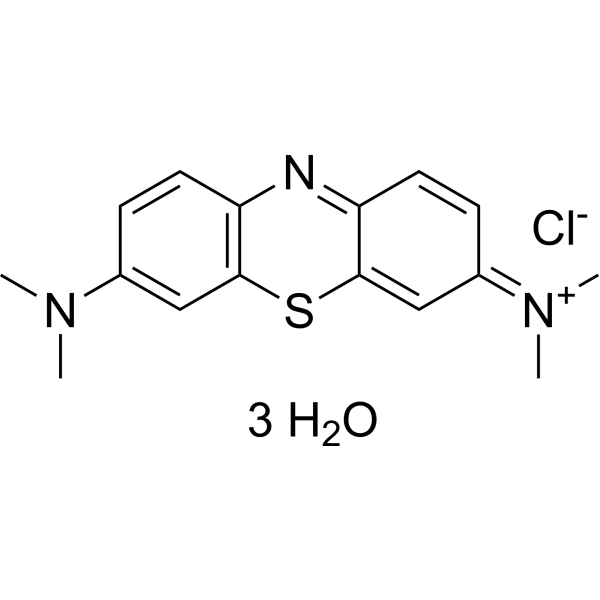
Methylene blue trihydrate (C.I. Basic Blue 9 trihydrate) is a guanylyl cyclase (sGC), monoamine oxidase A (MAO-A) and NO synthase (NOS) inhibitor. Methylene blue trihydrate is a vasopressor and is often used as a dye in several medical procedures. Methylene blue trihydrate has antinociception, antimalarial, antidepressant and anxiolytic activity effects. Methylene Blue trihydrate has the potential for methemoglobinemias, neurodegenerative disorders and ifosfamide-induced encephalopathytreatment .
|
-
- HY-12390S
-
|
|
Isotope-Labeled Compounds
|
Neurological Disease
|
|
Lofepramine-d3 (Lopramine-d3) is the deuterium labeled Lofepramine. Lofepramine (Lopramine) is a potent tricyclic antidepressant and is extensively metabolised to Desipramine. The antidepressant activity of Lofepramine stems from the facilitation of noradrenergic neurotransmission by uptake inhibition. Lofepramine may also potentiate serotoninergic neurotransmission by inhibition of the neuronal uptake of serotonin and the enzyme tryptophan pyrrolase. Lofepramine has significant anxiolytic efficacy in addition to its antidepressant properties .
|
-
- HY-169870
-
|
(+)-Mecamylamine; TC-5214
|
nAChR
|
Neurological Disease
|
|
Dexmecamylamine ((+)-Mecamylamine) is the antagonist for nicotinic acetylcholine receptor (nAChR), that antagonises the α3β4/α4β2/α7/α1β1γδ receptor with IC50 of micromolare levels. Dexmecamylamine exhibits anxiolytic and antidepressant-like activities .
|
-
- HY-W026772
-
|
|
Environmental Pollutants
Fluorescent Dye
TNF Receptor
Interleukin Related
SOD
Reactive Oxygen Species (ROS)
|
Inflammation/Immunology
|
|
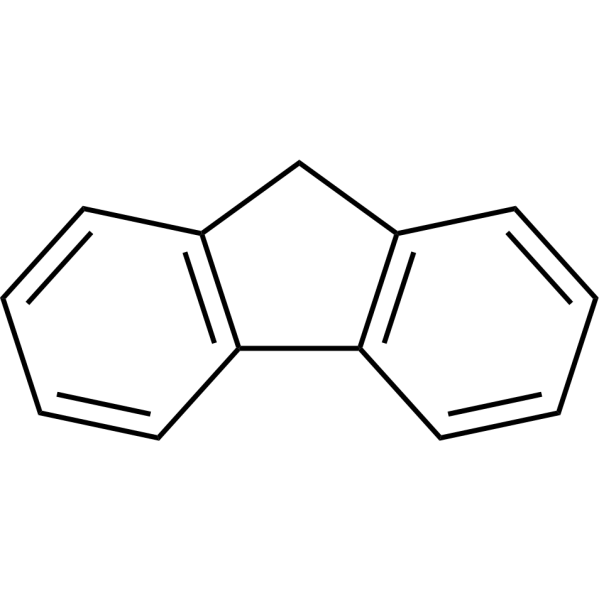
Fluorene is an orally active polycyclic aromatic hydrocarbon (PAH) and a precursor to other fluorene-based compounds. Fluorene and its derivatives serve as dye precursors for fluorene synthesis. In A549 cells, Fluorene induces oxidative stress and inflammatory responses by increasing ROS and SOD generation, exacerbating lipid peroxidation, modulating antioxidant enzyme activity, and upregulating the expression of pro-inflammatory factors TNF-α and IL-6. In vivo, Fluorene exhibits anxiolytic activity. Fluorene holds potential for research in inflammation and neurological disorders .
|
-
- HY-135483A
-
|
|
nAChR
|
Neurological Disease
|
|
AR-R17779 hydrochloride is a potent and selective full agonist of nAChR, with Kis of 92 and 16000 nM for α7 and α4β2 subtype, respectively. AR-R17779 hydrochloride can improve learning and memory in rats. AR-R17779 hydrochloride also has anxiolytic activity. AR-R17779 hydrochloride can reduce inflammation by activating antiinflammatory cholinergic (vagal) pathways .
|
-
- HY-118301
-
|
|
GABA Receptor
5-HT Receptor
|
Neurological Disease
|
|
ADX71441 is an orally active, blood-brain barrier penetrant positive allosteric modulator of GABAB receptor. ADX71441 potentiates the activity of endogenous GABA at GABAB receptor, with an EC50 of 96 nM. ADX71441 functionally inhibits adenosine transporters and 5-HT2B receptor. ADX71441 produces anxiolytic-like, analgesic, muscle relaxant, hypothermic and overactive bladder inhibitory effects, reduces acute locomotor activity levels, decreases voluntary intake of alcohol and saccharin, attenuates stress-induced neuronal activation, and exhibits anti-hyperalgesic activity .
|
-
- HY-15856BR
-
|
Flupenthixol dihydrochloride (Standard)
|
Reference Standards
Dopamine Receptor
PI3K
Apoptosis
|
Neurological Disease
Cancer
|
|
Flupentixol (dihydrochloride) (Standard) is the analytical standard of Flupentixol (dihydrochloride). This product is intended for research and analytical applications. Flupentixol is an orally active D1/D2 dopamine receptor antagonist and new PI3K inhibitor (PI3Kα IC50=127 nM). Flupentixol shows anti-proliferative activity to cancer cells and induces apoptosis. Flupentixol can also be used in schizophrenia, anxiolytic and depressive research .
|
-
- HY-A0165
-
|
|
Phosphodiesterase (PDE)
|
Neurological Disease
|
|
Tofisopam, a 2,3-benzodiazepine compound, is an orally active anxiolytic agent. Tofisopam can inhibit phosphodiesterase PDE isoenzyme activity, withIC50 values of 2.11 μM, 1.98 μM, 0.42 μM, and 0.92 μM for PDE-2A3, PDE-3A, PDE-4A1, and PDE-10A1, respectively. Tofisopam can be used for the study of anxiety .
|
-
- HY-108584
-
|
BMS-204352
|
Potassium Channel
|
Neurological Disease
|
|
Flindokalner (BMS-204352) is a potassium channel modulator. Flindokalner is a positive modulator of all neuronal Kv7 channel subtypes expressed in HEK293 cells. Flindokalner is also a large conductance calcium-activated K channel (BKca) positive modulator. Flindokalner shows a negative modulatory activity at Kv7.1 channels (Ki=3.7 μM), and acts as a negative modulator of GABAA receptors. Flindokalner shows anxiolytic efficacy in vivo .
|
-
- HY-103137
-
|
|
5-HT Receptor
|
Cardiovascular Disease
Neurological Disease
|
|
Zacopride hydrochloride is an orally active 5-HT3 receptor (Ki of 0.38 nM) antagonist and 5-HT4 receptor (Ki of 373 nM) agonist. Zacopride hydrochloride exhibits multiple activities, such as regulating gastrointestinal motility, affecting cardiac function, and exerting anxiolytic and antiemetic effects. Zacopride hydrochloride is currently mainly used in the research of gastrointestinal diseases, cardiovascular diseases, and psychiatric diseases such as anxiety .
|
-
- HY-154736
-
|
|
Nucleoside Antimetabolite/Analog
|
Cancer
|
|
N3-(Butyn-3-yl)uridine is a uridine analog. Uridine has potential antiepileptic effects, and its analogs can be used to study anticonvulsant and anxiolytic activities, as well as to develop new antihypertensive agents . N3-(Butyn-3-yl)uridine is a click chemistry reagent, it contains an Alkyne group and can undergo copper-catalyzed azide-alkyne cycloaddition (CuAAc) with molecules containing Azide groups.
|
-
- HY-106003R
-
|
|
Reference Standards
Phosphodiesterase (PDE)
|
Neurological Disease
Inflammation/Immunology
|
|
GSK356278 (Standard) is the analytical standard of GSK356278 (HY-106003). This product is intended for research and analytical applications. GSK356278 is a potent, selective, orally bioavailable and brain-penetrant inhibitor of phosphodiesterase 4 (PDE4), with pIC50s of 8.6, 8.8, and 8.7 for human PDE4A, PDE4B, and PDE4D, respectively. GSK356278 has anti-inflammatory activity, and exhibits anxiolytic and cognition-enhancing effects .
|
-
- HY-W010410S
-
|
|
Isotope-Labeled Compounds
|
Metabolic Disease
|
|
Oct-1-en-3-ol-d3 is deuterated labeled Linalool (HY-N0368). Linalool is a natural monoterpene which is a competitive NMDA receptor antagonist. Linalool is orally active and crosses the blood-brain barrier. Linalool has anticancer, antibacterial, anti-inflammatory, neuroprotective, anxiolytic, antidepressant, anti-stress, cardioprotective, hepatoprotective, nephroprotective and pulmonary protective activities .
|
-
- HY-101358
-
|
AH-002
|
Melatonin Receptor
|
Neurological Disease
|
|
8-M-PDOT (AH-002) is a selective melatonin MT2 receptor agonist. 8-M-PDOT is 5.2-fold selective for MT2 over MT1 receptors. 8-M-PDOT binds human recombinant MT2 and MT2 receptors with pKi values of 8.23 and 8.95 respectively. 8-M-PDOT has anxiolytic-like activity .
|
-
- HY-118317
-
|
|
5-HT Receptor
|
Cardiovascular Disease
Neurological Disease
|
|
Zacopride is an orally active 5-HT3 receptor (Ki of 0.38 nM) antagonist and 5-HT4 receptor (Ki of 373 nM) agonist. Zacopride exhibits multiple activities, such as regulating gastrointestinal motility, affecting cardiac function, and exerting anxiolytic and antiemetic effects. Zacopride is currently mainly used in the research of gastrointestinal diseases, cardiovascular diseases, and psychiatric diseases such as anxiety .
|
-
- HY-101478R
-
|
|
Reference Standards
mGluR
Apoptosis
|
Neurological Disease
Cancer
|
|
Fenobam (Standard) is the analytical standard of Fenobam. This product is intended for research and analytical applications. Fenobam is a selective and orally active mGluR5 antagonist (IC50=84 nM) that can penetrate the blood-brain barrier. Fenobam shows the Kd values of 54 nM and 31 nM on rat and human recombinant mGlu5 receptors, respectively. Fenobam has anxiolytic activity, inhibits self-administration behavior in mice, and induces apoptosis in cancer cells. Fenobam can be used for research on neurological diseases, cancer and drug addiction .
|
-
- HY-14794A
-
|
(1S,2R)-Milnacipran; F2695
|
Serotonin Transporter
Trk Receptor
PI3K
mTOR
P-glycoprotein
Akt
|
Neurological Disease
Inflammation/Immunology
|
|
Levomilnacipran ((1S,2R)-Milnacipran) is the enantiomer of Milnacipran (HY-B0168) and a strong substrate of P-gp that can cross the blood-brain barrier. Levomilnacipran is a serotonin and norepinephrine reuptake inhibitor, with IC50 values of 10.5 nM and 19.0 nM, and Ki values of 92.2 nM and 1.2 nM for human norepinephrine transporter (NET) and serotonin transporter (SERT), respectively. Levomilnacipran has antidepressant and anxiolytic activities. Levomilnacipran hydrochloride can be used for the research of depression .
|
-
- HY-B0168B
-
|
(1S,2R)-Milnacipran hydrochloride; F-2695 hydrochloride
|
Serotonin Transporter
Trk Receptor
PI3K
Akt
mTOR
P-glycoprotein
|
Neurological Disease
Inflammation/Immunology
|
|
Levomilnacipran ((1S,2R)-Milnacipran) hydrochloride is the enantiomer of Milnacipran (HY-B0168) and a strong substrate of P-gp that can cross the blood-brain barrier. Levomilnacipran hydrochloride is a serotonin and norepinephrine reuptake inhibitor, with IC50 values of 10.5 nM and 19.0 nM, and Ki values of 92.2 nM and 1.2 nM for human norepinephrine transporter (NET) and serotonin transporter (SERT), respectively. Levomilnacipran hydrochloride has antidepressant and anxiolytic activities. Levomilnacipran hydrochloride can be used for the research of depression .
|
-
- HY-12390A
-
|
Lopramine hydrochloride
|
5-HT Receptor
Adrenergic Receptor
|
Neurological Disease
|
|
Lofepramine (Lopramine) is a modified tricyclic and orally active antidepressant. Lofepramine inhibits the uptake of Noradrenaline (NA) (HY-13715) and 5-hydroxytryptamine (5-HT) with IC50s of 2.7 μM and 11 μM, respectively. Lofepramine exerts its antidepressant activity by promoting noradrenergic neurotransmission. Lofepramine also enhances serotonergic neurotransmission by inhibiting neuronal uptake of 5-HT and tryptophan pyrrolase. Lofepramine exhibits significant anxiolytic properties. .
|
-
- HY-12390
-
|
Lopramine
|
5-HT Receptor
Adrenergic Receptor
|
Neurological Disease
|
|
Lofepramine (Lopramine) is a modified tricyclic and orally active antidepressant. Lofepramine inhibits the uptake of Noradrenaline (NA) (HY-13715) and 5-hydroxytryptamine (5-HT) with IC50s of 2.7 μM and 11 μM, respectively. Lofepramine exerts its antidepressant activity by promoting noradrenergic neurotransmission. Lofepramine also enhances serotonergic neurotransmission by inhibiting neuronal uptake of 5-HT and tryptophan pyrrolase. Lofepramine exhibits significant anxiolytic properties. .
|
-
- HY-NP009
-
|
|
Bacterial
|
Infection
Neurological Disease
|
|
α-Lactalbumin is a globular whey protein that exists in milk. α-Lactalbumin binds Ca 2+, Mg 2+, Mn 2+, Na +, K + and Zn 2+ ions; among these, Ca 2+ binding enhances protein stability, while Zn 2+ binding reduces stability and induces aggregation. α-Lactalbumin forms amyloid fibrils, amorphous aggregates, nanoparticles and nanotubes depending on external conditions. α-Lactalbumin exhibits bactericidal and antiviral activities. α-Lactalbumin has anxiolytic and antidepressant activities, and its effects are enhanced under stress conditions .
|
-
- HY-W026772S1
-
|
|
Isotope-Labeled Compounds
Fluorescent Dye
Reactive Oxygen Species (ROS)
TNF Receptor
Interleukin Related
SOD
|
Inflammation/Immunology
|
|
Fluorene-d8 is the deuterium labeled Fluorene (HY-W026772). Fluorene is an orally active polycyclic aromatic hydrocarbon (PAH) and a precursor to other fluorene-based compounds. Fluorene and its derivatives serve as dye precursors for fluorene synthesis. In A549 cells, Fluorene induces oxidative stress and inflammatory responses by increasing ROS and SOD generation, exacerbating lipid peroxidation, modulating antioxidant enzyme activity, and upregulating the expression of pro-inflammatory factors TNF-α and IL-6. In vivo, Fluorene exhibits anxiolytic activity. Fluorene holds potential for research in inflammation and neurological disorders .
|
-
- HY-W777458
-
|
|
Reactive Oxygen Species (ROS)
|
Inflammation/Immunology
|
|
Fluorene- 13C6 is the 13C-labeled Fluorene (HY-W026772). Fluorene is an orally active polycyclic aromatic hydrocarbon (PAH) and a precursor to other fluorene-based compounds. Fluorene and its derivatives serve as dye precursors for fluorene synthesis. In A549 cells, Fluorene induces oxidative stress and inflammatory responses by increasing ROS and SOD generation, exacerbating lipid peroxidation, modulating antioxidant enzyme activity, and upregulating the expression of pro-inflammatory factors TNF-α and IL-6. In vivo, Fluorene exhibits anxiolytic activity. Fluorene holds potential for research in inflammation and neurological disorders .
|
-
- HY-77650
-
|
4'-Azidouridine
|
Nucleoside Antimetabolite/Analog
|
Others
|
|
4'-C-azidouridine (4'-Azidouridine) is a uridine analogue. Uridine has potential antiepileptic effects, and its analogs can be used to study anticonvulsant and anxiolytic activities, as well as to develop new antihypertensive agents . 4'-C-Azidouridine is a click chemistry reagent, it contains an Azide group and can undergo copper-catalyzed azide-alkyne cycloaddition reaction (CuAAc) with molecules containing Alkyne groups. It can also undergo strain-promoted alkyne-azide cycloaddition (SPAAC) reactions with molecules containing DBCO or BCN groups.
|
-
- HY-100834A
-
|
5,7-DCKA sodium
|
iGluR
|
Neurological Disease
|
|
5,7-Dichlorokynurenic acid (5,7-DCKA) sodium is a selective and competitive antagonist of the glycine site on NMDA receptor with a KB of 65 nM. 5,7-Dichlorokynurenic acid sodium reduces NMDA-induced neuron injury. 5,7-Dichlorokynurenic acid sodium increases social interaction time, increases open arm exploration time, disinhibits suppressed conflict responding in rodent models. 5,7-Dichlorokynurenic acid sodium exhibits anxiolytic-like activity in rodent models and supports exploration of glycine’s role in NMDA receptor-mediated synaptic transmission .
|
-
- HY-B1803A
-
|
ICI 136753 hydrochloride
|
GABA Receptor
|
Neurological Disease
|
|
Tracazolate (ICI 136753) hydrochloride is a potent GABAA receptor modulator. Tracazolate hydrochloride has selectivity for β3 and potentiates α1β1γ2s (EC50=13.2 μM), α1β3γ2 (EC50=1.5 μM). Tracazolate hydrochloride has the potency (EC50) determined by the nature of the third subunit (γ1-3, δ, ε) within the receptor complex. Tracazolate hydrochloride possesses anxiolytic and anticonvulsant activity .
|
-
- HY-108043
-
|
|
Opioid Receptor
|
Neurological Disease
|
|
AZD-2327 is a potent and selective δ-opioid receptor agonist. AZD-2327 binds to the human opioid receptor (Ki of 0.49 and 0.75 nM and EC50 of 24 and 9.2 nM at the C27 and F27 isoforms, respectively). AZD-2327 shows selectivity of >1000-fold over the human μ- and κ-opioid receptor subtypes as well as >130 other receptors and channels. AZD-2327 exhibits antidepressant and anxiolytic activities and can be used for the research of neurological disease .
|
-
- HY-100834
-
|
5,7-DCKA
|
iGluR
|
Neurological Disease
|
|
5,7-Dichlorokynurenic acid (5,7-DCKA) is a selective and competitive antagonist of the glycine site on NMDA receptor with a KB of 65 nM. 5,7-Dichlorokynurenic acid reduces NMDA-induced neuron injury. 5,7-Dichlorokynurenic acid increases social interaction time, increases open arm exploration time, disinhibits suppressed conflict responding in rodent models. 5,7-Dichlorokynurenic acid exhibits anxiolytic-like activity in rodent models and supports exploration of glycine’s role in NMDA receptor-mediated synaptic transmission .
|
-
- HY-108584R
-
|
BMS-204352 (Standard)
|
Potassium Channel
Reference Standards
|
Neurological Disease
|
|
Flindokalner (Standard) is the analytical standard of Flindokalner. This product is intended for research and analytical applications. Flindokalner (BMS-204352) is a potassium channel modulator. Flindokalner is a positive modulator of all neuronal Kv7 channel subtypes expressed in HEK293 cells. Flindokalner is also a large conductance calcium-activated K channel (BKca) positive modulator. Flindokalner shows a negative modulatory activity at Kv7.1 channels (Ki=3.7 μM), and acts as a negative modulator of GABAA receptors. Flindokalner shows anxiolytic efficacy in vivo .
|
-
- HY-117046A
-
|
|
5-HT Receptor
Histamine Receptor
Adrenergic Receptor
|
Neurological Disease
|
|
AVN-101 hydrochloride is a potent, brain-penetrant and orally active 5-HT7 receptor antagonist (Ki of 153 pM), with slightly lesser potency toward 5-HT6, 5-HT2A, and 5HT-2C receptors (Ki values of 2.04 nM, 1.56 nM, and 1.17 nM, respectively). AVN-101 hydrochloride also exhibits a rather high affinity toward histamine H1 (Ki of 0.58 nM) and adrenergic α2A, α2B, and α2C (Ki= 0.41-3.6 nM) receptors. AVN-101 hydrochloride can be studied in such diseases as general anxiety disorders, depression, schizophrenia, Alzheimer’s disease, and multiple sclerosis .
|
-
- HY-15080
-
|
LY 293606
|
iGluR
|
Cardiovascular Disease
Neurological Disease
|
|
GYKI 53405 is a non-competitive, orally active AMPA receptor antagonist. GYKI 53405 shows no significant binding affinity for GABAA, GABAB or benzodiazepine receptors. GYKI 53405 increases self-grooming behavior, induces wet dog-like shakes, reduces spontaneous activity, produces anxiolytic-like behavior, reverses the anxiogenic effect induced by mCPP, inhibits locomotor activity, suppresses sound-induced and maximal electroshock-induced seizures, prolongs survival in global cerebral ischemia models, and exhibits sustained anticonvulsant effects at doses below the sedation threshold. GYKI 53405 can be used in research related to absence epilepsy, anxiety disorders and global cerebral ischemia .
|
-
- HY-P1117
-
MMK1
1 Publications Verification
|
Formyl Peptide Receptor (FPR)
Calcium Channel
|
Neurological Disease
Inflammation/Immunology
|
|
MMK1 is a potent and selective human formyl peptide receptor like-1 (FPRL-1/FPR2) agonist with EC50s of <2 nM and >10000 nM for FPRL-1 and FPR1, respectively. MMK1 is a potent chemotactic and calcium-mobilizing agonist. MMK1 potently activates phagocytic leukocytes and enhances Pertussis Toxin-sensitive production by human monocytes of proinflammatory cytokines IL-1b and IL-6. MMK1 exerts anxiolytic-like activity .
|
-
- HY-12390R
-
|
Lopramine (Standard)
|
5-HT Receptor
Adrenergic Receptor
Reference Standards
|
Neurological Disease
|
|
Lofepramine (Standard) is the analytical standard of Lofepramine. This product is intended for research and analytical applications. Lofepramine (Lopramine) is a modified tricyclic and orally active antidepressant. Lofepramine inhibits the uptake of Noradrenaline (NA) (HY-13715) and 5-hydroxytryptamine (5-HT) with IC50s of 2.7 μM and 11 μM, respectively. Lofepramine exerts its antidepressant activity by promoting noradrenergic neurotransmission. Lofepramine also enhances serotonergic neurotransmission by inhibiting neuronal uptake of 5-HT and tryptophan pyrrolase. Lofepramine exhibits significant anxiolytic properties. .
|
-
- HY-120144
-
|
|
Opioid Receptor
|
Neurological Disease
|
|
SR-8993 is a highly selective nociceptin receptor agonist that can penetrate the blood-brain barrier and has the activity of reducing alcohol intake and relieving withdrawal anxiety. SR-8993 has shown mild anxiolytic effects in animal models and can effectively reverse anxiety caused by acute alcohol withdrawal. SR-8993 further reduces restricted drinking, operant responses for alcohol, and increased drinking induced by long-term intermittent exposure to alcohol. SR-8993 also reduces stress- and cue-related alcohol-seeking relapse .
|
-
- HY-P1117A
-
|
|
Formyl Peptide Receptor (FPR)
Calcium Channel
|
Neurological Disease
Inflammation/Immunology
|
|
MMK1 TFA is a potent and selective human formyl peptide receptor like-1 (FPRL-1/FPR2) agonist with EC50s of <2 nM and >10000 nM for FPRL-1 and FPR1, respectively. MMK1 TFA is a potent chemotactic and calcium-mobilizing agonist. MMK1 TFA potently activates phagocytic leukocytes and enhances Pertussis Toxin-sensitive production by human monocytes of proinflammatory cytokines IL-1b and IL-6. MMK1 TFA exerts anxiolytic-like activity .
|
-
- HY-172236
-
|
BNC210; IW-2143
|
nAChR
|
Neurological Disease
|
|
Soclenicant (BNC210) is an orally active α7 nAChR negative alteration modulator (NAM) with no apparent side effects. Soclenicant exhibits acute anxiolytic activity in rodent models of anxiety. Soclenicant inhibits rat and human α7 nAChR currents (in stably transfected cell lines) induced by acetylcholine, nicotine, choline, and the a7-specific agonist PNU-282987 (HY-12560A) with IC50 values in the range of 1.2 to 3 μM. Soclenicant can be used in studies of anxiety, trauma, and stressor-related disorders .
|
-
- HY-101358R
-
|
AH-002 (Standard)
|
Melatonin Receptor
Reference Standards
|
Neurological Disease
|
|
8-M-PDOT (Standard) is the analytical standard of 8-M-PDOT (HY-101358). This product is intended for research and analytical applications. 8-M-PDOT (AH-002) is a selective melatonin MT2 receptor agonist. 8-M-PDOT is 5.2-fold selective for MT2 over MT1 receptors. 8-M-PDOT binds human recombinant MT2 and MT2 receptors with pKi values of 8.23 and 8.95 respectively. 8-M-PDOT has anxiolytic-like activity .
|
-
- HY-B1213A
-
|
|
5-HT Receptor
Bacterial
|
Neurological Disease
|
|
Trimipramine is a 5-HT receptor antagonist, with pKi binding values of 6.39, 8.10, 4.66 for 5-HT1C, 5-HT2 and 5-HT1A, respectively. Trimipramine is also a potent and selective inhibitor targeting human noradrenaline (hNAT), serotonin (hSERT) and organic cation transporters (hOCT1, hOCT2) with IC50 values of 4.99 μM, 2.11 μM, 3.72 μM, 8.00 μM, respectively. Trimipramine has vascular activity and anxiolytic efficacy .
|
-
- HY-W010989
-
|
|
Biochemical Assay Reagents
Bacterial
|
Infection
Neurological Disease
Inflammation/Immunology
Cancer
|
|
Gly-His-Lys acetate is a natural, circulating regulatory and antimicrobial tripeptide derived from extracellular matrix proteins. Gly-His-Lys acetate binds Cu 2+ to support copper enzyme activation, antioxidant processes, cellular bioenergetics, and the synthesis of elastin, collagen and catecholamines. Gly-His-Lys acetate regulates cell growth, differentiation and tissue repair, and exerts regenerative, anxiolytic, anti-inflammatory, analgesic and immunosuppressive activities. Gly-His-Lys acetate induces liver degenerative changes. Gly-His-Lys acetate can be used for the research of infections, anxiety, pain-related behaviors and immune-associated liver diseases .
|
-
- HY-152985
-
|
|
Nucleoside Antimetabolite/Analog
|
Others
|
|
6-Chloro-N1-(trimethylsilylethoxymethyl)pseudouridine is a uridine analog. Uridine has potential antiepileptic effects, and its analogs can be used to study anticonvulsant and anxiolytic activities, as well as to develop new antihypertensive agents . 3’-Azido-3’-deoxy-4-deoxyuridine is a click chemistry reagent, it contains an Azide group and can undergo copper-catalyzed azide-alkyne cycloaddition reaction (CuAAc) with molecules containing Alkyne groups. It can also undergo strain-promoted alkyne-azide cycloaddition (SPAAC) reactions with molecules containing DBCO or BCN groups.
|
-
- HY-A0165R
-
|
|
Phosphodiesterase (PDE)
Reference Standards
|
Neurological Disease
|
|
Tofisopam (Standard) is the analytical standard of Tofisopam (HY-A0165). This product is intended for research and analytical applications. Tofisopam, a 2,3-benzodiazepine compound, is an orally active anxiolytic agent. Tofisopam can inhibit phosphodiesterase PDE isoenzyme activity, withIC50 values of 2.11 μM, 1.98 μM, 0.42 μM, and 0.92 μM for PDE-2A3, PDE-3A, PDE-4A1, and PDE-10A1, respectively. Tofisopam can be used for the study of anxiety .
|
-
- HY-173024
-
|
|
TRP Channel
|
Neurological Disease
|
|
TRPC4/5-IN-3 (Compound 32) is the orally active inhibitor for transient receptor potential canonical channel 4/5 (TRPC4/5) with IC50 of 3.6 nM and 5.5 nM. TRPC4/5-IN-3 inhibits hERG channel with IC50 of 6.5 µM. TRPC4/5-IN-3 exhibits good metabolic stability in human/rat/mouse liver microsomes. TRPC4/5-IN-3 exhibits antidepressant and anxiolytic activity in mouse models, exhibits good pharmacokinetic characteristics in mouse with an oral bioavailability of 87% .
|
-
- HY-154590
-
|
|
Nucleoside Antimetabolite/Analog
|
Cancer
|
|
2’,3’-Di-O-isopropylidene-4’-alpha-C-azidouridine is a uridine analog. Uridine has potential antiepileptic effects, and its analogs can be used to study anticonvulsant and anxiolytic activities, as well as to develop new antihypertensive agents . 2’,3’-Di-O-isopropylidene-4’-alpha-C-azidouridine is a click chemistry reagent, it contains an Azide group and can undergo copper-catalyzed azide-alkyne cycloaddition reaction (CuAAc) with molecules containing Alkyne groups. It can also undergo strain-promoted alkyne-azide cycloaddition (SPAAC) reactions with molecules containing DBCO or BCN groups.
|
-
- HY-B0168BS
-
|
(1S,2R)-Milnacipran-d5 hydrochloride; F-2695-d5 hydrochloride
|
Isotope-Labeled Compounds
Serotonin Transporter
Trk Receptor
PI3K
Akt
mTOR
P-glycoprotein
|
Neurological Disease
Inflammation/Immunology
|
|
Levomilnacipran-d5 ((1S,2R)-Milnacipran-d5) hydrochloride is deuterium labeled Levomilnacipran hydrochloride (HY-B0168B). Levomilnacipran ((1S,2R)-Milnacipran) hydrochloride is the enantiomer of Milnacipran (HY-B0168) and a strong substrate of P-gp that can cross the blood-brain barrier. Levomilnacipran hydrochloride is a serotonin and norepinephrine reuptake inhibitor, with IC50 values of 10.5 nM and 19.0 nM, and Ki values of 92.2 nM and 1.2 nM for human norepinephrine transporter (NET) and serotonin transporter (SERT), respectively. Levomilnacipran hydrochloride has antidepressant and anxiolytic activities. Levomilnacipran hydrochloride can be used for the research of depression .
|
-
- HY-152782
-
|
|
Nucleoside Antimetabolite/Analog
|
Others
|
|
4’-Azido-2’-deoxy-2’-fluoro-beta-D-arabinouridine is a uridine analogue. Uridine has potential antiepileptic effects, and its analogs can be used to study anticonvulsant and anxiolytic activities, as well as to develop new antihypertensive agents . 4’-Azido-2’-deoxy-2’-fluoro-beta-D-arabinouridine is a click chemistry reagent, it contains an Azide group and can undergo copper-catalyzed azide-alkyne cycloaddition reaction (CuAAc) with molecules containing Alkyne groups. It can also undergo strain-promoted alkyne-azide cycloaddition (SPAAC) reactions with molecules containing DBCO or BCN groups.
|
-
- HY-P10405
-
|
|
Dopamine Receptor
|
Neurological Disease
|
|
TAT-D1 peptide is a dopamine D1-D2 receptor heterodimer inhibitor. TAT-D1 peptide disrupts the function of dopamine D1-D2 receptor heteromers, enhances subchronic amphetamine-induced locomotor activity, and exacerbates the expression of amphetamine-induced locomotor sensitization. TAT-D1 peptide produces rapid anxiolytic and antidepressant-like effects in rat models of depression and anxiety, and inhibits c-fos expression in the nucleus accumbens of rats. TAT-D1 peptide can be used in the research of psychostimulant addiction, depression and anxiety disorders .
|
-
- HY-154357
-
|
|
Nucleoside Antimetabolite/Analog
|
Cancer
|
|
4’-alpha-C-Azido-2’,3’-bis(O-t-butyldimethylsilyl)uridine is a uridine analog. Uridine has potential antiepileptic effects, and its analogs can be used to study anticonvulsant and anxiolytic activities, as well as to develop new antihypertensive agents . 4’-alpha-C-Azido-2’,3’-bis(O-t-butyldimethylsilyl)uridine is a click chemistry reagent, it contains an Azide group and can undergo copper-catalyzed azide-alkyne cycloaddition reaction (CuAAc) with molecules containing Alkyne groups. It can also undergo strain-promoted alkyne-azide cycloaddition (SPAAC) reactions with molecules containing DBCO or BCN groups.
|
-
- HY-P10405A
-
|
|
Dopamine Receptor
|
Neurological Disease
|
|
TAT-D1 peptide acetate is a dopamine D1-D2 receptor heterodimer inhibitor. TAT-D1 peptide acetate disrupts the function of dopamine D1-D2 receptor heteromers, enhances subchronic amphetamine-induced locomotor activity, and exacerbates the expression of amphetamine-induced locomotor sensitization. TAT-D1 peptide acetate produces rapid anxiolytic and antidepressant-like effects in rat models of depression and anxiety, and inhibits c-fos expression in the nucleus accumbens of rats. TAT-D1 peptide acetate can be used in the research of psychostimulant addiction, depression and anxiety disorders .
|
-
- HY-14794AS
-
|
(1S,2R)-Milnacipran-d10 hydrochloride; F2695-d10 hydrochloride
|
Isotope-Labeled Compounds
Serotonin Transporter
Trk Receptor
PI3K
mTOR
P-glycoprotein
Akt
|
Neurological Disease
Inflammation/Immunology
|
|
Levomilnacipran-d10 ((1S,2R)-Milnacipran-d10) hydrochloride is deuterium labeled Levomilnacipran hydrochloride (HY-B0168B). Levomilnacipran ((1S,2R)-Milnacipran) hydrochloride is the enantiomer of Milnacipran (HY-B0168) and a strong substrate of P-gp that can cross the blood-brain barrier. Levomilnacipran hydrochloride is a serotonin and norepinephrine reuptake inhibitor, with IC50 values of 10.5 nM and 19.0 nM, and Ki values of 92.2 nM and 1.2 nM for human norepinephrine transporter (NET) and serotonin transporter (SERT), respectively. Levomilnacipran hydrochloride has antidepressant and anxiolytic activities. Levomilnacipran hydrochloride can be used for the research of depression .
|
-
- HY-W377455
-
|
|
Nucleoside Antimetabolite/Analog
|
Others
|
|
5-Fluoro-1-((2R,3S,4R,5R)-3-fluoro-4-hydroxy-5-(hydroxymethyl)tetrahydrofuran-2-yl)pyrimidine-2,4(1H,3H)-dione (2',5-difluoro-2'-deoxy-1-arabinosyluracil) is a uridine analogue. Uridine has potential antiepileptic effects, and its analogs can be used to study anticonvulsant and anxiolytic activities, as well as to develop new antihypertensive agents .
|
-
- HY-B1213
-
|
|
5-HT Receptor
Bacterial
|
Neurological Disease
|
|
Trimipramine maleate is a 5-HT receptor antagonist, with blood-brain barrier permeability. Trimipramine maleate has pKi binding values of 6.39, 8.10, 4.66 for 5-HT1C, 5-HT2 and 5-HT1A, respectively. Trimipramine maleate is also a potent and selective inhibitor targeting human noradrenaline (hNAT), serotonin (hSERT) and organic cation transporters (hOCT1, hOCT2) with IC50 values of 4.99 μM, 2.11 μM, 3.72 μM, 8.00 μM, respectively. Trimipramine maleate has vascular activity and anxiolytic efficacy .
|
-
- HY-B1213AR
-
|
|
Reference Standards
5-HT Receptor
Bacterial
|
Neurological Disease
|
|
Trimipramine (Standard) is the analytical standard of Trimipramine. This product is intended for research and analytical applications. Trimipramine is a 5-HT receptor antagonist, with pKi binding values of 6.39, 8.10, 4.66 for 5-HT1C, 5-HT2 and 5-HT1A, respectively. Trimipramine is also a potent and selective inhibitor targeting human noradrenaline (hNAT), serotonin (hSERT) and organic cation transporters (hOCT1, hOCT2) with IC50 values of 4.99 μM, 2.11 μM, 3.72 μM, 8.00 μM, respectively. Trimipramine has vascular activity and anxiolytic efficacy .
|
-
- HY-N9418R
-
|
|
Phytohormone
Reference Standards
|
Others
|
|
Trimipramine (Standard) is the analytical standard of Trimipramine. This product is intended for research and analytical applications. Trimipramine is a 5-HT receptor antagonist, with pKi binding values of 6.39, 8.10, 4.66 for 5-HT1C, 5-HT2 and 5-HT1A, respectively. Trimipramine is also a potent and selective inhibitor targeting human noradrenaline (hNAT), serotonin (hSERT) and organic cation transporters (hOCT1, hOCT2) with IC50 values of 4.99 μM, 2.11 μM, 3.72 μM, 8.00 μM, respectively. Trimipramine has vascular activity and anxiolytic efficacy .
|
-
- HY-100834R
-
|
5,7-DCKA (Standard)
|
Reference Standards
iGluR
|
Neurological Disease
|
|
5,7-Dichlorokynurenic acid (Standard) is the analytical standard of 5,7-Dichlorokynurenic acid (HY-100834). This product is intended for research and analytical applications. 5,7-Dichlorokynurenic acid (5,7-DCKA) is a selective and competitive antagonist of the glycine site on NMDA receptor with a KB of 65 nM. 5,7-Dichlorokynurenic acid reduces NMDA-induced neuron injury. 5,7-Dichlorokynurenic acid increases social interaction time, increases open arm exploration time, disinhibits suppressed conflict responding in rodent models. 5,7-Dichlorokynurenic acid exhibits anxiolytic-like activity in rodent models and supports exploration of glycine’s role in NMDA receptor-mediated synaptic transmission .
|
-
- HY-B1213R
-
|
|
Reference Standards
5-HT Receptor
Bacterial
|
Neurological Disease
|
|
Trimipramine (maleate) (Standard) is the analytical standard of Trimipramine (maleate). This product is intended for research and analytical applications. Trimipramine maleate is a 5-HT receptor antagonist, with pKi binding values of 6.39, 8.10, 4.66 for 5-HT1C, 5-HT2 and 5-HT1A, respectively . Trimipramine maleate is also a potent and selective inhibitor targeting human noradrenaline (hNAT), serotonin (hSERT) and organic cation transporters (hOCT1, hOCT2) with IC50 values of 4.99 μM, 2.11 μM, 3.72 μM, 8.00 μM, respectively . Trimipramine maleate has vascular activity and anxiolytic efficacy .
|
-
- HY-W013150
-
|
|
GABA Receptor
|
Neurological Disease
|
|
Alpidem, an anxiolytic agent, is an orally active and brain-penetrant GABAA receptor ligand, binds to α1β2γ2 subunit-containing GABAA receptors (IC50 of 17 nM) over α5β2γ2 subunit-containing GABAA receptors (IC50 of >10 μM). Alpidem modulates calcium-induced mitochondrial permeability transition, induces glutathione depletion and hepatocyte necrosis, potentiates TNF-α toxicity, inhibits marble-burying and locomotor activity, enhances stressed rodent feeding behavior, and exerts anticonvulsant effects. Alpidem can be used for the research of anxiety, anxiety disorders, and convulsions .
|
-
- HY-165527
-
|
|
Dopamine Receptor
5-HT Receptor
|
Neurological Disease
|
|
S18327 is a multi-target antipsychotic agent. S18327 exerts its efficacy by acting on multiple neurotransmitter systems in the brain, and it has antagonistic effects on dopamine receptors (particularly the D2 receptor) and 5-hydroxytryptamine 2A receptors (5-HT2A receptor). S18327 can counteract excessive dopamine activity and hypo-function of glutamate. S18327 exhibits a multi-parameter pharmacological profile that is highly similar to that of Clozapine (HY-14539). S18327 can produce the same discriminative stimulus as Clozapine, improve cognitive filtering deficits associated with schizophrenia, and display anxiolytic properties. S18327 has relatively weak affinity for histaminergic receptors and muscarinic receptors, which avoids the side effects of Clozapine .
|
-
- HY-114515
-
|
RG7090 sulfate; RO4917523 sulfate
|
mGluR
|
Neurological Disease
|
|
Basimglurant (RG7090; RO4917523) sulfate is a selective, orally active, blood-brain barrier permeable negative allosteric modulator of metabotropic glutamate receptor 5 (mGluR5), with a Ki of 1.4 nM (against [ 3H]-ABP688 (HY-110141)) and 35.6 nM (against [ 3H]-MPEP (HY-14609A)). Basimglurant sulfate inhibits mGlu5-mediated signaling pathways and receptor constitutive activity, regulates dopamine levels in the nucleus accumbens, exerts anxiolytic, antidepressant-like, analgesic and arousal-promoting effects, and alters δ-wave power during non-rapid eye movement sleep. Basimglurant sulfate can be used in research on depression, fragile X syndrome, anxiety disorders, etc .
|
-
- HY-19682A
-
|
|
5-HT Receptor
Adrenergic Receptor
|
Neurological Disease
|
|
Enciprazine dihydrochloride is an orally active non-benzodiazepine anxiolytic. Enciprazine dihydrochloride acts as an agonist of 5-HT1A receptor (5-HT1AR) and an antagonist of α1-adrenergic receptor (α1-adrenergic receptor) . Enciprazine dihydrochloride induces drug-related electroencephalogram changes by reducing the average power of δ waves and θ waves, and increasing the average power of α waves and fast β waves. Enciprazine dihydrochloride exhibits anti-aggressive activity, with only weak sedative and ataxic effects. Enciprazine dihydrochloride regulates plasma corticosterone levels and activates the hypothalamic-pituitary-adrenal axis. Enciprazine dihydrochloride can be used in research related to anxiety disorders, generalized anxiety syndrome and psychosis .
|
-
- HY-W013150R
-
|
|
Reference Standards
GABA Receptor
|
Neurological Disease
|
|
Alpidem (Standard) is the analytical standard of Alpidem (HY-W013150). This product is intended for research and analytical applications. Alpidem, an anxiolytic agent, is an orally active and brain-penetrant GABAA receptor ligand, binds to α1β2γ2 subunit-containing GABAA receptors (IC50 of 17 nM) over α5β2γ2 subunit-containing GABAA receptors (IC50 of >10 μM). Alpidem modulates calcium-induced mitochondrial permeability transition, induces glutathione depletion and hepatocyte necrosis, potentiates TNF-α toxicity, inhibits marble-burying and locomotor activity, enhances stressed rodent feeding behavior, and exerts anticonvulsant effects. Alpidem can be used for the research of anxiety, anxiety disorders, and convulsions.
|
-
- HY-15446
-
|
RG7090; RO4917523
|
mGluR
|
Neurological Disease
|
|
Basimglurant (RG7090; RO4917523) is a selective, orally active, blood-brain barrier permeable negative allosteric modulator of metabotropic glutamate receptor 5 (mGluR5), with a Ki of 1.4 nM (against [ 3H]-ABP688 (HY-110141)) and 35.6 nM (against [ 3H]-MPEP (HY-14609A)). Basimglurant inhibits mGlu5-mediated signaling pathways and receptor constitutive activity, regulates dopamine levels in the nucleus accumbens, exerts anxiolytic, antidepressant-like, analgesic and arousal-promoting effects, and alters δ-wave power during non-rapid eye movement sleep. Basimglurant can be used in research on depression, fragile X syndrome, anxiety disorders, etc .
|
-
- HY-W013150S
-
|
|
Isotope-Labeled Compounds
GABA Receptor
|
Neurological Disease
|
|
Alpidem-d14 is the deuterium labeled Alpidem (HY-W013150) . Alpidem, an anxiolytic agent, is an orally active and brain-penetrant GABAA receptor ligand, binds to α1β2γ2 subunit-containing GABAA receptors (IC50 of 17 nM) over α5β2γ2 subunit-containing GABAA receptors (IC50 of >10 μM). Alpidem modulates calcium-induced mitochondrial permeability transition, induces glutathione depletion and hepatocyte necrosis, potentiates TNF-α toxicity, inhibits marble-burying and locomotor activity, enhances stressed rodent feeding behavior, and exerts anticonvulsant effects. Alpidem can be used for the research of anxiety, anxiety disorders, and convulsions.
|
-
- HY-19682
-
|
|
5-HT Receptor
Adrenergic Receptor
|
Neurological Disease
|
|
Enciprazine is an orally active non-benzodiazepine anxiolytic. Enciprazine acts as an agonist of 5-HT1A receptor (5-HT1AR) and an antagonist of α1-adrenergic receptor (α1-adrenergic receptor) . Enciprazine induces drug-related electroencephalogram changes by reducing the average power of δ waves and θ waves, and increasing the average power of α waves and fast β waves. Enciprazine exhibits anti-aggressive activity, with only weak sedative and ataxic effects. Enciprazine regulates plasma corticosterone levels and activates the hypothalamic-pituitary-adrenal axis. Enciprazine can be used in research related to anxiety disorders, generalized anxiety syndrome and psychosis .
|
-
- HY-N0008
-
|
|
Wnt
p38 MAPK
mTOR
Keap1-Nrf2
TGF-β Receptor
|
Neurological Disease
Metabolic Disease
|
|
Orcinol glucoside is an orally active, blood-brain barrier permeable osteoblast proliferation promoter that targets the Nrf2/Keap1, mTOR and p38 signaling pathways. Orcinol glucoside promotes Nrf2 nuclear translocation, upregulates antioxidant enzyme levels, enhances the phosphorylation of mTOR and p70S6K, and inhibits the enzymatic activity of HAS2 as well as the nuclear translocation of GR. Orcinol glucoside also alleviates oxidative stress, inhibits autophagic flux, osteoclastogenesis and TGF-β1-induced M2 polarization, while reducing collagen deposition and effectively promoting the proliferation, differentiation and mineralization of osteoblasts. Orcinol glucoside also exhibits anti-pulmonary fibrosis, anxiolytic and antidepressant activities. Orcinol glucoside can be used in the research of senile and glucocorticoid-induced osteoporosis, idiopathic pulmonary fibrosis (IPF), anxiety and other related diseases .
|
-
- HY-15446R
-
|
RG7090 (Standard); RO4917523 (Standard)
|
Reference Standards
mGluR
|
Neurological Disease
|
|
Basimglurant (RG7090; RO4917523) (Standard) is the analytical standard of Basimglurant. This product is intended for research and analytical applications. Basimglurant is a selective, orally active, blood-brain barrier permeable negative allosteric modulator of metabotropic glutamate receptor 5 (mGluR5), with a Ki of 1.4 nM (against [ 3H]-ABP688 (HY-110141)) and 35.6 nM (against [ 3H]-MPEP (HY-14609A)). Basimglurant inhibits mGlu5-mediated signaling pathways and receptor constitutive activity, regulates dopamine levels in the nucleus accumbens, exerts anxiolytic, antidepressant-like, analgesic and arousal-promoting effects, and alters δ-wave power during non-rapid eye movement sleep. Basimglurant can be used in research on depression, fragile X syndrome, anxiety disorders, etc.
|
-
- HY-120874
-
|
PF-06372865; CVL-865
|
GABA Receptor
|
Neurological Disease
|
|
Darigabat (PF-06372865) is an orally active, α2/α3/α5 subtype-selective GABAA positive allosteric modulator (PAM). Darigabat is a high affinity ligand at GABAA receptors containing α1/α2/α3/α5 subunits (Kis of 2.9 nM, 21 nM, 134 nM for α2, α1 PAM, α2 PAM, respectively), with low affinity for α4/α6 subunits. Darigabat can across the blood-brain barrier (BBB). Darigabat has anxiolytic activity and has the potential for epilepsy .
|
-
- HY-103117
-
|
|
5-HT Receptor
|
Neurological Disease
|
|
S 32212 hydrochloride is an inverse agonist of 5-HT receptors 5-HT2(CINI) and 5-HT2(CVSV) (Kis=6.6, 8.9 nM) and an antagonist of 5-HT2A and α2β-adrenergic receptors (Ki=5.8, 5.8 nM). S 32212 hydrochloride can reduce the binding of GTPγS to Gαq, and reduce the activity of phospholipase C (PLC) in HEK293 cells expressing 5-HT2(CINI) receptor and CHO cells expressing 5-HT2(CVSV) receptor (EC50=38 and 18.6 nM, respectively). S 32212 hydrochloride (2.5 mg/kg) reduces 5-HT receptor agonist-induced head twitches and penile erections in mice and rats. S 32212 hydrochloride (10, 40 mg/kg) reduces immobility time in the forced swim test and marble burying behavior in mice and rats, exerting antidepressant and anxiolytic activities.
|
-
| Cat. No. |
Product Name |
Type |
-
- HY-NP009
-
|
|
Biochemical Assay Reagents
|
|
α-Lactalbumin is a globular whey protein that exists in milk. α-Lactalbumin binds Ca 2+, Mg 2+, Mn 2+, Na +, K + and Zn 2+ ions; among these, Ca 2+ binding enhances protein stability, while Zn 2+ binding reduces stability and induces aggregation. α-Lactalbumin forms amyloid fibrils, amorphous aggregates, nanoparticles and nanotubes depending on external conditions. α-Lactalbumin exhibits bactericidal and antiviral activities. α-Lactalbumin has anxiolytic and antidepressant activities, and its effects are enhanced under stress conditions .
|
| Cat. No. |
Product Name |
Target |
Research Area |
-
- HY-P1178
-
|
|
Trk Receptor
p38 MAPK
|
Neurological Disease
|
|
Cyclotraxin B is a BBB-penetrable and selective TrkB inhibitor. Cyclotraxin B inhibits BDNF-induced TrkB activity in a non-competitive manner, with an IC50 of 0.30 nM. Cyclotraxin B has analgesic and anxiolytic effects .
|
-
- HY-105042
-
|
Selanc; TP-7
|
GABA Receptor
|
Neurological Disease
|
|
Selank (Selanc; TP-7) is a GABAA receptor modulator with anxiolytic activity. Selank allosterically modulates the specific binding of GABA to GABAA receptors and alters the affinity of endogenous ligands for these receptors. Selank reduces elevated anxiety levels, attenuates stress-induced exacerbation of anxiety, and produces a synergistic anxiolytic effect with diazepam. Selank can be used in the research of anxiety disorders .
|
-
- HY-P2602
-
|
|
GABA Receptor
|
Neurological Disease
|
|
α-Casozepine is an orally effective anxiolytic that binds to the benzodiazepine site of the GABAA receptor in bovine samples with an IC50 of 88 μM. α-Casozepine exerts anxiolytic and anti-stress effects on cats exposed to unfamiliar environments and dogs undergoing road transport . α-Casozepine exhibits significant anxiolytic activity in rats. α-Casozepine can be used in studies related to fear, anxiety and stress .
|
-
- HY-105042A
-
|
Selanc diacetate; TP-7 diacetate
|
Peptides
|
Neurological Disease
|
|
Selank (Selanc) acetate is a synthetic peptide derived from tuftsin. Selank acetate has anxiolytic activity, and is a nootropic, neuropsychotropic, antidepressant, and antistress compound .
|
-
- HY-P1117
-
MMK1
1 Publications Verification
|
Formyl Peptide Receptor (FPR)
Calcium Channel
|
Neurological Disease
Inflammation/Immunology
|
|
MMK1 is a potent and selective human formyl peptide receptor like-1 (FPRL-1/FPR2) agonist with EC50s of <2 nM and >10000 nM for FPRL-1 and FPR1, respectively. MMK1 is a potent chemotactic and calcium-mobilizing agonist. MMK1 potently activates phagocytic leukocytes and enhances Pertussis Toxin-sensitive production by human monocytes of proinflammatory cytokines IL-1b and IL-6. MMK1 exerts anxiolytic-like activity .
|
-
- HY-P10405A
-
|
|
Dopamine Receptor
|
Neurological Disease
|
|
TAT-D1 peptide acetate is a dopamine D1-D2 receptor heterodimer inhibitor. TAT-D1 peptide acetate disrupts the function of dopamine D1-D2 receptor heteromers, enhances subchronic amphetamine-induced locomotor activity, and exacerbates the expression of amphetamine-induced locomotor sensitization. TAT-D1 peptide acetate produces rapid anxiolytic and antidepressant-like effects in rat models of depression and anxiety, and inhibits c-fos expression in the nucleus accumbens of rats. TAT-D1 peptide acetate can be used in the research of psychostimulant addiction, depression and anxiety disorders .
|
-
- HY-P10405
-
|
|
Dopamine Receptor
|
Neurological Disease
|
|
TAT-D1 peptide is a dopamine D1-D2 receptor heterodimer inhibitor. TAT-D1 peptide disrupts the function of dopamine D1-D2 receptor heteromers, enhances subchronic amphetamine-induced locomotor activity, and exacerbates the expression of amphetamine-induced locomotor sensitization. TAT-D1 peptide produces rapid anxiolytic and antidepressant-like effects in rat models of depression and anxiety, and inhibits c-fos expression in the nucleus accumbens of rats. TAT-D1 peptide can be used in the research of psychostimulant addiction, depression and anxiety disorders .
|
-
- HY-P1178A
-
|
|
Trk Receptor
|
Neurological Disease
|
|
Cyclotraxin B TFA is a BBB-penetrable and selective TrkB inhibitor. Cyclotraxin B TFA inhibits BDNF-induced TrkB activity in a non-competitive manner, with an IC50 of 0.30 nM. Cyclotraxin B TFA has analgesic and anxiolytic effects .
|
-
- HY-P1117A
-
|
|
Formyl Peptide Receptor (FPR)
Calcium Channel
|
Neurological Disease
Inflammation/Immunology
|
|
MMK1 TFA is a potent and selective human formyl peptide receptor like-1 (FPRL-1/FPR2) agonist with EC50s of <2 nM and >10000 nM for FPRL-1 and FPR1, respectively. MMK1 TFA is a potent chemotactic and calcium-mobilizing agonist. MMK1 TFA potently activates phagocytic leukocytes and enhances Pertussis Toxin-sensitive production by human monocytes of proinflammatory cytokines IL-1b and IL-6. MMK1 TFA exerts anxiolytic-like activity .
|
| Cat. No. |
Product Name |
Category |
Target |
Chemical Structure |
-
- HY-N0152
-
-
-
- HY-N0368
-
-
-
- HY-B1229
-
-
-
- HY-N1440
-
-
-
- HY-N0008
-
|
|
Curculigo orchioides Gaertn.
Structural Classification
Monophenols
Phenols
Plants
Amaryllidaceae
Source Classification
|
Wnt
p38 MAPK
mTOR
Keap1-Nrf2
TGF-β Receptor
|
|
Orcinol glucoside is an orally active, blood-brain barrier permeable osteoblast proliferation promoter that targets the Nrf2/Keap1, mTOR and p38 signaling pathways. Orcinol glucoside promotes Nrf2 nuclear translocation, upregulates antioxidant enzyme levels, enhances the phosphorylation of mTOR and p70S6K, and inhibits the enzymatic activity of HAS2 as well as the nuclear translocation of GR. Orcinol glucoside also alleviates oxidative stress, inhibits autophagic flux, osteoclastogenesis and TGF-β1-induced M2 polarization, while reducing collagen deposition and effectively promoting the proliferation, differentiation and mineralization of osteoblasts. Orcinol glucoside also exhibits anti-pulmonary fibrosis, anxiolytic and antidepressant activities. Orcinol glucoside can be used in the research of senile and glucocorticoid-induced osteoporosis, idiopathic pulmonary fibrosis (IPF), anxiety and other related diseases .
|
-
-
- HY-N9502
-
-
-
- HY-N6648
-
-
-
- HY-N3940
-
-
-
- HY-116590
-
-
-
- HY-167825
-
-
-
- HY-N12098
-
-
-
- HY-N0152R
-
-
-
- HY-N1440R
-
-
-
- HY-N9502R
-
-
-
- HY-N9418R
-
|
|
Rosaceae
Plants
Rosa canina Gremli ex Christ
Source Classification
|
Phytohormone
Reference Standards
|
|
Trimipramine (Standard) is the analytical standard of Trimipramine. This product is intended for research and analytical applications. Trimipramine is a 5-HT receptor antagonist, with pKi binding values of 6.39, 8.10, 4.66 for 5-HT1C, 5-HT2 and 5-HT1A, respectively. Trimipramine is also a potent and selective inhibitor targeting human noradrenaline (hNAT), serotonin (hSERT) and organic cation transporters (hOCT1, hOCT2) with IC50 values of 4.99 μM, 2.11 μM, 3.72 μM, 8.00 μM, respectively. Trimipramine has vascular activity and anxiolytic efficacy .
|
-
-
- HY-N6648R
-
-
| Cat. No. |
Product Name |
Chemical Structure |
-
- HY-152052S
-
|
|
|
Linalool-d5 is the deuterium labeled Linalool (HY-N0368). Linalool is a natural monoterpene which is a competitive NMDA receptor antagonist. Linalool is orally active and crosses the blood-brain barrier. Linalool has anticancer, antibacterial, anti-inflammatory, neuroprotective, anxiolytic, antidepressant, anti-stress, cardioprotective, hepatoprotective, nephroprotective and pulmonary protective activities .
|
-
-
- HY-W740297
-
|
|
|
Methyl Clonazepam-d3 is the deuterium labeled Methylclonazepam (HY-W399186). Methylclonazepam is a benzodiazepine with anxiolytic activity. Methylclonazepam inhibits the absorption of 5-hydroxytryptamine by Schistosoma mansoni. Methylclonazepam derivatives have anti-Schistosoma mansoni activity .
|
-
-
- HY-N0368S1
-
|
|
|
Linalool- 13C3 is 13C labeled Linalool (HY-N0368). Linalool is a natural monoterpene which is a competitive NMDA receptor antagonist. Linalool is orally active and crosses the blood-brain barrier. Linalool has anticancer, antibacterial, anti-inflammatory, neuroprotective, anxiolytic, antidepressant, anti-stress, cardioprotective, hepatoprotective, nephroprotective and pulmonary protective activities .
|
-
-
- HY-A0198S
-
|
|
|
Adinazolam-d5 (U 41123-d5) is a deuterium labeled Adinazolam (HY-A0198). Adinazolam is a triazolobenzodiazepine. Adinazolam binds to peripheral-type benzodiazepine receptors which interact allosterically with GABA receptors. Adinazolam has dual anxiolytic and antidepressant activities .
|
-
-
- HY-14264S
-
|
|
|
Cyamemazine-d6 is the deuterium labeled Cyamemazine. Cyamemazine is a neuroleptic agent that contains the phenothiazine chromophore. Cyamemazine is often used as an anxiolytic. Cyamemazine is a potent 5-HT3 (Ki of 12 nM), 5-HT2A (Ki = 1.5 nM) and 5-HT2C (Ki of 75 nM) receptors antagonist with antipsychotic activity .
|
-
-
- HY-14558S
-
|
|
|
Tandospirone-d8 (SM-3997-d8) is deuterium labeled Tandospirone. Tandospirone (SM-3997) is a potent and selective 5-HT1A receptor partial agonist, with a Ki of 27 nM. Tandospirone has anxiolytic and antidepressant activities. Tandospirone can be used for the research of the central nervous system disorders and the underlying mechanisms .
|
-
-
- HY-12390S
-
|
|
|
Lofepramine-d3 (Lopramine-d3) is the deuterium labeled Lofepramine. Lofepramine (Lopramine) is a potent tricyclic antidepressant and is extensively metabolised to Desipramine. The antidepressant activity of Lofepramine stems from the facilitation of noradrenergic neurotransmission by uptake inhibition. Lofepramine may also potentiate serotoninergic neurotransmission by inhibition of the neuronal uptake of serotonin and the enzyme tryptophan pyrrolase. Lofepramine has significant anxiolytic efficacy in addition to its antidepressant properties .
|
-
-
- HY-W010410S
-
|
|
|
Oct-1-en-3-ol-d3 is deuterated labeled Linalool (HY-N0368). Linalool is a natural monoterpene which is a competitive NMDA receptor antagonist. Linalool is orally active and crosses the blood-brain barrier. Linalool has anticancer, antibacterial, anti-inflammatory, neuroprotective, anxiolytic, antidepressant, anti-stress, cardioprotective, hepatoprotective, nephroprotective and pulmonary protective activities .
|
-
-
- HY-W026772S1
-
|
|
|
Fluorene-d8 is the deuterium labeled Fluorene (HY-W026772). Fluorene is an orally active polycyclic aromatic hydrocarbon (PAH) and a precursor to other fluorene-based compounds. Fluorene and its derivatives serve as dye precursors for fluorene synthesis. In A549 cells, Fluorene induces oxidative stress and inflammatory responses by increasing ROS and SOD generation, exacerbating lipid peroxidation, modulating antioxidant enzyme activity, and upregulating the expression of pro-inflammatory factors TNF-α and IL-6. In vivo, Fluorene exhibits anxiolytic activity. Fluorene holds potential for research in inflammation and neurological disorders .
|
-
-
- HY-W777458
-
|
|
|
Fluorene- 13C6 is the 13C-labeled Fluorene (HY-W026772). Fluorene is an orally active polycyclic aromatic hydrocarbon (PAH) and a precursor to other fluorene-based compounds. Fluorene and its derivatives serve as dye precursors for fluorene synthesis. In A549 cells, Fluorene induces oxidative stress and inflammatory responses by increasing ROS and SOD generation, exacerbating lipid peroxidation, modulating antioxidant enzyme activity, and upregulating the expression of pro-inflammatory factors TNF-α and IL-6. In vivo, Fluorene exhibits anxiolytic activity. Fluorene holds potential for research in inflammation and neurological disorders .
|
-
-
- HY-B0168BS
-
|
|
|
Levomilnacipran-d5 ((1S,2R)-Milnacipran-d5) hydrochloride is deuterium labeled Levomilnacipran hydrochloride (HY-B0168B). Levomilnacipran ((1S,2R)-Milnacipran) hydrochloride is the enantiomer of Milnacipran (HY-B0168) and a strong substrate of P-gp that can cross the blood-brain barrier. Levomilnacipran hydrochloride is a serotonin and norepinephrine reuptake inhibitor, with IC50 values of 10.5 nM and 19.0 nM, and Ki values of 92.2 nM and 1.2 nM for human norepinephrine transporter (NET) and serotonin transporter (SERT), respectively. Levomilnacipran hydrochloride has antidepressant and anxiolytic activities. Levomilnacipran hydrochloride can be used for the research of depression .
|
-
-
- HY-14794AS
-
|
|
|
Levomilnacipran-d10 ((1S,2R)-Milnacipran-d10) hydrochloride is deuterium labeled Levomilnacipran hydrochloride (HY-B0168B). Levomilnacipran ((1S,2R)-Milnacipran) hydrochloride is the enantiomer of Milnacipran (HY-B0168) and a strong substrate of P-gp that can cross the blood-brain barrier. Levomilnacipran hydrochloride is a serotonin and norepinephrine reuptake inhibitor, with IC50 values of 10.5 nM and 19.0 nM, and Ki values of 92.2 nM and 1.2 nM for human norepinephrine transporter (NET) and serotonin transporter (SERT), respectively. Levomilnacipran hydrochloride has antidepressant and anxiolytic activities. Levomilnacipran hydrochloride can be used for the research of depression .
|
-
-
- HY-W013150S
-
|
|
|
Alpidem-d14 is the deuterium labeled Alpidem (HY-W013150) . Alpidem, an anxiolytic agent, is an orally active and brain-penetrant GABAA receptor ligand, binds to α1β2γ2 subunit-containing GABAA receptors (IC50 of 17 nM) over α5β2γ2 subunit-containing GABAA receptors (IC50 of >10 μM). Alpidem modulates calcium-induced mitochondrial permeability transition, induces glutathione depletion and hepatocyte necrosis, potentiates TNF-α toxicity, inhibits marble-burying and locomotor activity, enhances stressed rodent feeding behavior, and exerts anticonvulsant effects. Alpidem can be used for the research of anxiety, anxiety disorders, and convulsions.
|
-
| Cat. No. |
Product Name |
|
Classification |
-
- HY-152782
-
|
|
|
Azide
|
|
4’-Azido-2’-deoxy-2’-fluoro-beta-D-arabinouridine is a uridine analogue. Uridine has potential antiepileptic effects, and its analogs can be used to study anticonvulsant and anxiolytic activities, as well as to develop new antihypertensive agents . 4’-Azido-2’-deoxy-2’-fluoro-beta-D-arabinouridine is a click chemistry reagent, it contains an Azide group and can undergo copper-catalyzed azide-alkyne cycloaddition reaction (CuAAc) with molecules containing Alkyne groups. It can also undergo strain-promoted alkyne-azide cycloaddition (SPAAC) reactions with molecules containing DBCO or BCN groups.
|
-
- HY-152476
-
|
|
|
Alkynes
|
|
3’-β-C-Ethynyluridine is a uridine analog. Uridine has potential antiepileptic effects, and its analogs can be used to study anticonvulsant and anxiolytic activities, as well as to develop new antihypertensive agents . 3’-β-C-Ethynyluridine is a click chemistry reagent, it contains an Alkyne group and can undergo copper-catalyzed azide-alkyne cycloaddition (CuAAc) with molecules containing Azide groups.
|
-
- HY-154736
-
|
|
|
Alkynes
|
|
N3-(Butyn-3-yl)uridine is a uridine analog. Uridine has potential antiepileptic effects, and its analogs can be used to study anticonvulsant and anxiolytic activities, as well as to develop new antihypertensive agents . N3-(Butyn-3-yl)uridine is a click chemistry reagent, it contains an Alkyne group and can undergo copper-catalyzed azide-alkyne cycloaddition (CuAAc) with molecules containing Azide groups.
|
-
- HY-152985
-
|
|
|
Azide
|
|
6-Chloro-N1-(trimethylsilylethoxymethyl)pseudouridine is a uridine analog. Uridine has potential antiepileptic effects, and its analogs can be used to study anticonvulsant and anxiolytic activities, as well as to develop new antihypertensive agents . 3’-Azido-3’-deoxy-4-deoxyuridine is a click chemistry reagent, it contains an Azide group and can undergo copper-catalyzed azide-alkyne cycloaddition reaction (CuAAc) with molecules containing Alkyne groups. It can also undergo strain-promoted alkyne-azide cycloaddition (SPAAC) reactions with molecules containing DBCO or BCN groups.
|
-
- HY-154590
-
|
|
|
Azide
|
|
2’,3’-Di-O-isopropylidene-4’-alpha-C-azidouridine is a uridine analog. Uridine has potential antiepileptic effects, and its analogs can be used to study anticonvulsant and anxiolytic activities, as well as to develop new antihypertensive agents . 2’,3’-Di-O-isopropylidene-4’-alpha-C-azidouridine is a click chemistry reagent, it contains an Azide group and can undergo copper-catalyzed azide-alkyne cycloaddition reaction (CuAAc) with molecules containing Alkyne groups. It can also undergo strain-promoted alkyne-azide cycloaddition (SPAAC) reactions with molecules containing DBCO or BCN groups.
|
-
- HY-154357
-
|
|
|
Azide
|
|
4’-alpha-C-Azido-2’,3’-bis(O-t-butyldimethylsilyl)uridine is a uridine analog. Uridine has potential antiepileptic effects, and its analogs can be used to study anticonvulsant and anxiolytic activities, as well as to develop new antihypertensive agents . 4’-alpha-C-Azido-2’,3’-bis(O-t-butyldimethylsilyl)uridine is a click chemistry reagent, it contains an Azide group and can undergo copper-catalyzed azide-alkyne cycloaddition reaction (CuAAc) with molecules containing Alkyne groups. It can also undergo strain-promoted alkyne-azide cycloaddition (SPAAC) reactions with molecules containing DBCO or BCN groups.
|
| Cat. No. |
Product Name |
|
Classification |
-
- HY-152358
-
|
|
|
Nucleoside Analogs
Uridine
|
|
N3-Methyl-2’-O-methyluridine is a uridine analogue. Uridine has potential antiepileptic effects, and its analogs can be used to study anticonvulsant and anxiolytic activities, as well as to develop new antihypertensive agents .
|
-
- HY-134337
-
|
|
|
Phosphoramidites
Uracil
|
|
5'-O-DMTr-3'-O-methyl uridine-3'-CED-phosphoramidite is a uridine analog. Uridine has potential antiepileptic effects, and its analogs can be used to study anticonvulsant and anxiolytic activities, as well as to develop new antihypertensive agents .
|
-
- HY-152732
-
|
|
|
Nucleoside Analogs
Uridine
|
|
6-Methyluridine is a uridine analogue. Uridine has potential antiepileptic effects, and its analogs can be used to study anticonvulsant and anxiolytic activities, as well as to develop new antihypertensive agents .
|
-
- HY-154285
-
|
|
|
Nucleoside Analogs
Uridine
|
|
3’-O-(2-Methoxyethyl) uridine is a uridine analog. Uridine has potential antiepileptic effects, and its analogs can be used to study anticonvulsant and anxiolytic activities, as well as to develop new antihypertensive agents .
|
-
- HY-154466
-
|
|
|
Nucleoside Analogs
Uridine
|
|
5’-O-(4,4’-Dimethoxytrityl)-3’-O-methyluridine is a uridine analog. Uridine has potential antiepileptic effects, and its analogs can be used to study anticonvulsant and anxiolytic activities, as well as to develop new antihypertensive agents .
|
-
- HY-48973
-
|
|
|
Phosphoramidites
Uracil
|
|
2'-Fluoro-2'-deoxy-ara-U-3'-phosphoramidite is a uridine analog. Uridine has potential antiepileptic effects, and its analogs can be used to study anticonvulsant and anxiolytic activities, as well as to develop new antihypertensive agents .
|
-
- HY-154358
-
|
|
|
Nucleoside Analogs
Uridine
|
|
4’-alpha-C-Allyl-2’,3’-bis(O-t-butyldimethylsilyl) uridine is a uridine analog. Uridine has potential antiepileptic effects, and its analogs can be used to study anticonvulsant and anxiolytic activities, as well as to develop new antihypertensive agents .
|
-
- HY-154492
-
|
|
|
Nucleoside Analogs
Uridine
|
|
2’,3’-Bis(O-t-butyldimethylsilyl)-4’,5’-didehydro-5’-deoxyuridine is a uridine analog. Uridine has potential antiepileptic effects, and its analogs can be used to study anticonvulsant and anxiolytic activities, as well as to develop new antihypertensive agents .
|
-
- HY-154582
-
|
|
|
Nucleoside Analogs
Uridine
|
|
5-Naphthyl-beta-methylaminocarbony-3’-O-acetyl-2’-O-methyl-5’-O-DMTr-uridine is a uridine analog. Uridine has potential antiepileptic effects, and its analogs can be used to study anticonvulsant and anxiolytic activities, as well as to develop new antihypertensive agents .
|
-
- HY-152782
-
|
|
|
Nucleoside Analogs
Uridine
|
|
4’-Azido-2’-deoxy-2’-fluoro-beta-D-arabinouridine is a uridine analogue. Uridine has potential antiepileptic effects, and its analogs can be used to study anticonvulsant and anxiolytic activities, as well as to develop new antihypertensive agents . 4’-Azido-2’-deoxy-2’-fluoro-beta-D-arabinouridine is a click chemistry reagent, it contains an Azide group and can undergo copper-catalyzed azide-alkyne cycloaddition reaction (CuAAc) with molecules containing Alkyne groups. It can also undergo strain-promoted alkyne-azide cycloaddition (SPAAC) reactions with molecules containing DBCO or BCN groups.
|
-
- HY-W020098
-
|
|
|
Nucleoside Analogs
Uridine
|
|
2'-C-methyluridine is a uridine analog. Uridine has potential antiepileptic effects, and its analogs can be used to study anticonvulsant and anxiolytic activities, as well as to develop new antihypertensive agents .
|
-
- HY-154488
-
|
|
|
Nucleoside Analogs
Uridine
|
|
3′-O-[(1,1-Dimethylethyl)dimethylsilyl]-2′-O-methyluridine is a uridine analog. Uridine has potential antiepileptic effects, and its analogs can be used to study anticonvulsant and anxiolytic activities, as well as to develop new antihypertensive agents .
|
-
- HY-154517
-
|
|
|
Nucleoside Analogs
Uridine
|
|
N3-Cyanoethyl-5’-O-(4,4’-dimethoxytrityl)-2’-O-methyluridine is a uridine analog. Uridine has potential antiepileptic effects, and its analogs can be used to study anticonvulsant and anxiolytic activities, as well as to develop new antihypertensive agents .
|
-
- HY-152755
-
|
|
|
Nucleoside Analogs
Uridine
|
|
4’-Cyanouridine is a uridine analogue. Uridine has potential antiepileptic effects, and its analogs can be used to study anticonvulsant and anxiolytic activities, as well as to develop new antihypertensive agents .
|
-
- HY-152764
-
|
|
|
Nucleoside Analogs
Uridine
|
|
4’-α-C-Methyluridine is a uridine analogue. Uridine has potential antiepileptic effects, and its analogs can be used to study anticonvulsant and anxiolytic activities, as well as to develop new antihypertensive agents .
|
-
- HY-152777
-
|
|
|
Nucleoside Analogs
Uridine
|
|
5’(R)-C-Methyluridine is a uridine analogue. Uridine has potential antiepileptic effects, and its analogs can be used to study anticonvulsant and anxiolytic activities, as well as to develop new antihypertensive agents .
|
-
- HY-152299
-
|
|
|
Nucleoside Analogs
Uridine
|
|
5-(t-Butyloxycarbonylmethoxy)uridine is a uridine analogue. Uridine has potential antiepileptic effects, and its analogs can be used to study anticonvulsant and anxiolytic activities, as well as to develop new antihypertensive agents .
|
-
- HY-154735
-
|
|
|
Nucleoside Analogs
Uridine
|
|
N3-Allyluridine is a uridine analog. Uridine has potential antiepileptic effects, and its analogs can be used to study anticonvulsant and anxiolytic activities, as well as to develop new antihypertensive agents .
|
-
- HY-152388
-
|
|
|
Nucleoside Analogs
Uridine
|
|
3’-beta-C-Methyluridine is a uridine analogue. Uridine has potential antiepileptic effects, and its analogs can be used to study anticonvulsant and anxiolytic activities, as well as to develop new antihypertensive agents .
|
-
- HY-152665
-
|
|
|
Nucleoside Analogs
Uridine
|
|
1-(β-D-Xylofuranosyl)uracil is a uridine analog. Uridine has potential antiepileptic effects, and its analogs can be used to study anticonvulsant and anxiolytic activities, as well as to develop new antihypertensive agents .
|
-
- HY-152970
-
|
|
|
Phosphoramidites
Uracil
|
|
7'-O-DMT-morpholino uracil is a uridine analog. Uridine has potential antiepileptic effects, and its analogs can be used to study anticonvulsant and anxiolytic activities, as well as to develop new antihypertensive agents .
|
-
- HY-154734
-
|
|
|
Nucleoside Analogs
Uridine
|
|
N3-(4-Nitrobenzyl)uridine is a uridine analog. Uridine has potential antiepileptic effects, and its analogs can be used to study anticonvulsant and anxiolytic activities, as well as to develop new antihypertensive agents .
|
-
- HY-W557556
-
|
|
|
Nucleoside Analogs
Uridine
|
|
2',5'-Bis-O-(triphenylMethyl)uridine is a uridine analog. Uridine has potential antiepileptic effects, and its analogs can be used to study anticonvulsant and anxiolytic activities, as well as to develop new antihypertensive agents .
|
-
- HY-152677
-
|
|
|
Nucleoside Analogs
Uridine
|
|
N3-(2-Methoxy)ethyluridine is a uridine analogue. Uridine has potential antiepileptic effects, and its analogs can be used to study anticonvulsant and anxiolytic activities, as well as to develop new antihypertensive agents .
|
-
- HY-154217
-
|
|
|
Nucleoside Analogs
Uridine
|
|
3′,5′-Bis-O-(triphenylmethyl)uridine is a uridine analog. Uridine has potential antiepileptic effects, and its analogs can be used to study anticonvulsant and anxiolytic activities, as well as to develop new antihypertensive agents .
|
-
- HY-152529
-
|
|
|
Nucleoside Analogs
Uridine
|
|
4’-C-Methyl-5-methoxyuridine is a uridine analogue. Uridine has potential antiepileptic effects, and its analogs can be used to study anticonvulsant and anxiolytic activities, as well as to develop new antihypertensive agents .
|
-
- HY-152522
-
|
|
|
Nucleoside Analogs
Uridine
|
|
5-Fluoro-4’-C-methyluridine is a uridine analogue. Uridine has potential antiepileptic effects, and its analogs can be used to study anticonvulsant and anxiolytic activities, as well as to develop new antihypertensive agents .
|
-
- HY-154738
-
|
|
|
Nucleoside Analogs
Uridine
|
|
N3-[3-(tert-Butoxycarbonyl)amino]propyluridine is a uridine analog. Uridine has potential antiepileptic effects, and its analogs can be used to study anticonvulsant and anxiolytic activities, as well as to develop new antihypertensive agents .
|
-
- HY-152783
-
|
|
|
Nucleoside Analogs
Uridine
|
|
5’(R)-C-Methyl-5-fluorouridine is a uridine analogue. Uridine has potential antiepileptic effects, and its analogs can be used to study anticonvulsant and anxiolytic activities, as well as to develop new antihypertensive agents .
|
-
- HY-152969
-
|
|
|
Nucleoside Analogs
Uridine
|
|
6-Chloro-N1-(trimethylsilylethoxymethyl)pseudouridine is a uridine analog. Uridine has potential antiepileptic effects, and its analogs can be used to study anticonvulsant and anxiolytic activities, as well as to develop new antihypertensive agents .
|
-
- HY-152779
-
|
|
|
Nucleoside Analogs
Uridine
|
|
5-Methoxy-5’(R)-C-methyluridine is a uridine analogue. Uridine has potential antiepileptic effects, and its analogs can be used to study anticonvulsant and anxiolytic activities, as well as to develop new antihypertensive agents .
|
-
- HY-152798
-
|
|
|
Nucleoside Analogs
Uridine
|
|
5-Iodo-2’-β-C-methyl uridine is a uridine analogue. Uridine has potential antiepileptic effects, and its analogs can be used to study anticonvulsant and anxiolytic activities, as well as to develop new antihypertensive agents .
|
-
- HY-154737
-
|
|
|
Nucleoside Analogs
Uridine
|
|
N3-[(Pyrid-4-yl)methyl]uridine is a uridine analog. Uridine has potential antiepileptic effects, and its analogs can be used to study anticonvulsant and anxiolytic activities, as well as to develop new antihypertensive agents .
|
-
- HY-152681
-
|
|
|
Nucleoside Analogs
Uridine
|
|
N3-[(Tetrahydro-2-furanyl)methyl]uridine is a uridine analogue. Uridine has potential antiepileptic effects, and its analogs can be used to study anticonvulsant and anxiolytic activities, as well as to develop new antihypertensive agents .
|
-
- HY-152463
-
|
|
|
Nucleoside Analogs
Uridine
|
|
4′-C-2-Propen-1-yluridine is a uridine analog. Uridine has potential antiepileptic effects, and its analogs can be used to study anticonvulsant and anxiolytic activities, as well as to develop new antihypertensive agents .
|
-
- HY-152683
-
|
|
|
Nucleoside Analogs
Uridine
|
|
N3-[(Pyrid-2-yl)methyl]uridine is a uridine analogue. Uridine has potential antiepileptic effects, and its analogs can be used to study anticonvulsant and anxiolytic activities, as well as to develop new antihypertensive agents .
|
-
- HY-152674
-
|
|
|
Nucleoside Analogs
Uridine
|
|
2′-Deoxy-2′-fluoro-5-methoxy-arabinouridine is a uridine analogue. Uridine has potential antiepileptic effects, and its analogs can be used to study anticonvulsant and anxiolytic activities, as well as to develop new antihypertensive agents .
|
-
- HY-154560
-
|
|
|
Nucleoside Analogs
Uridine
|
|
2’,3’,5’-Tri-O-acetyl-N3-methyluridine is a uridine analog. Uridine has potential antiepileptic effects, and its analogs can be used to study anticonvulsant and anxiolytic activities, as well as to develop new antihypertensive agents .
|
-
- HY-152574
-
|
|
|
Nucleoside Analogs
Uridine
|
|
5-Amino-2’-deoxy-2’-O-methyluridine hydrochloride is a uridine analogue. Uridine has potential antiepileptic effects, and its analogs can be used to study anticonvulsant and anxiolytic activities, as well as to develop new antihypertensive agents .
|
-
- HY-154173
-
|
|
|
Nucleoside Analogs
Uridine
|
|
3’-O-(t-Butyldimethylsilyl)-2’-O-(2-methoxyethyl) uridine is a uridine analog. Uridine has potential antiepileptic effects, and its analogs can be used to study anticonvulsant and anxiolytic activities, as well as to develop new antihypertensive agents .
|
-
- HY-154813
-
|
|
|
Nucleoside Analogs
Uridine
|
|
3′,5′-Di-O-acetyl-2′-deoxy-2′-fluorouridine is a uridine analog. Uridine has potential antiepileptic effects, and its analogs can be used to study anticonvulsant and anxiolytic activities, as well as to develop new antihypertensive agents .
|
-
- HY-49199
-
|
|
|
Nucleoside Analogs
Uridine
|
|
2',3',5'-Tri-O-(t-butyldimethylsilyl)-4'-C-hydroxymethyl uridine is a uridine analog. Uridine has potential antiepileptic effects, and its analogs can be used to study anticonvulsant and anxiolytic activities, as well as to develop new antihypertensive agents .
|
-
- HY-152363
-
|
|
|
Nucleoside Analogs
Uridine
|
|
N3-Methyl-2’-O-(2-methoxyethyl)uridine is a uridine analogue. Uridine has potential antiepileptic effects, and its analogs can be used to study anticonvulsant and anxiolytic activities, as well as to develop new antihypertensive agents .
|
-
- HY-154410
-
|
|
|
Phosphoramidites
Uracil
|
|
5’-O-DMT-2’-deoxy-2’-fluoro-β-D-arabinouridine is a uridine analog. Uridine has potential antiepileptic effects, and its analogs can be used to study anticonvulsant and anxiolytic activities, as well as to develop new antihypertensive agents .
|
-
- HY-152691
-
|
|
|
Nucleoside Analogs
Uridine
|
|
2’-Deoxy-2’-fluoro-N3-(n-dodecyl)-beta-D-arabinouridine is a uridine analogue. Uridine has potential antiepileptic effects, and its analogs can be used to study anticonvulsant and anxiolytic activities, as well as to develop new antihypertensive agents .
|
-
- HY-154175
-
|
|
|
Nucleoside Analogs
Uridine
|
|
1-[6-(Diethoxyphosphinyl)-2-O-(2-methoxyethyl)-β-D-ribo-hexofuranosyl]uracil is a uridine analog. Uridine has potential antiepileptic effects, and its analogs can be used to study anticonvulsant and anxiolytic activities, as well as to develop new antihypertensive agents .
|
-
- HY-152792
-
|
|
|
Nucleoside Analogs
Uridine
|
|
2’-Deoxy-2’-fluoro-N3-[(pyrid-2-yl)methyl]uridine is a uridine analogue. Uridine has potential antiepileptic effects, and its analogs can be used to study anticonvulsant and anxiolytic activities, as well as to develop new antihypertensive agents .
|
-
- HY-154552
-
|
|
|
Nucleoside Analogs
Uridine
|
|
2’-O-Acetyl-5’-O-benzoyl-3’-O-(2-methoxyethyl) uridine is a uridine analog. Uridine has potential antiepileptic effects, and its analogs can be used to study anticonvulsant and anxiolytic activities, as well as to develop new antihypertensive agents .
|
-
- HY-154647
-
|
|
|
Nucleoside Analogs
Uridine
|
|
N3-(2S)-[2-(tert-Butoxycarbonyl)amino-3-(tert-butoxy carbonyl)]propyluridine is a uridine analog. Uridine has potential antiepileptic effects, and its analogs can be used to study anticonvulsant and anxiolytic activities, as well as to develop new antihypertensive agents .
|
-
- HY-154652
-
|
|
|
Nucleoside Analogs
|
|
1-(2,3,5-Tri-O-benzoyl-2-C-methyl-β-D-ribofuranosyl)-2,4(1H,3H)-pyrimidinedione is a uridine analog. Uridine has potential antiepileptic effects, and its analogs can be used to study anticonvulsant and anxiolytic activities, as well as to develop new antihypertensive agents .
|
- HY-152476
-
|
|
|
Nucleoside Analogs
Uridine
|
|
3’-β-C-Ethynyluridine is a uridine analog. Uridine has potential antiepileptic effects, and its analogs can be used to study anticonvulsant and anxiolytic activities, as well as to develop new antihypertensive agents . 3’-β-C-Ethynyluridine is a click chemistry reagent, it contains an Alkyne group and can undergo copper-catalyzed azide-alkyne cycloaddition (CuAAc) with molecules containing Azide groups.
|
- HY-154736
-
|
|
|
Nucleoside Analogs
Uridine
|
|
N3-(Butyn-3-yl)uridine is a uridine analog. Uridine has potential antiepileptic effects, and its analogs can be used to study anticonvulsant and anxiolytic activities, as well as to develop new antihypertensive agents . N3-(Butyn-3-yl)uridine is a click chemistry reagent, it contains an Alkyne group and can undergo copper-catalyzed azide-alkyne cycloaddition (CuAAc) with molecules containing Azide groups.
|
- HY-77650
-
|
4'-Azidouridine
|
|
Nucleoside Analogs
Uridine
|
|
4'-C-azidouridine (4'-Azidouridine) is a uridine analogue. Uridine has potential antiepileptic effects, and its analogs can be used to study anticonvulsant and anxiolytic activities, as well as to develop new antihypertensive agents . 4'-C-Azidouridine is a click chemistry reagent, it contains an Azide group and can undergo copper-catalyzed azide-alkyne cycloaddition reaction (CuAAc) with molecules containing Alkyne groups. It can also undergo strain-promoted alkyne-azide cycloaddition (SPAAC) reactions with molecules containing DBCO or BCN groups.
|
- HY-152985
-
|
|
|
Nucleoside Analogs
Uridine
|
|
6-Chloro-N1-(trimethylsilylethoxymethyl)pseudouridine is a uridine analog. Uridine has potential antiepileptic effects, and its analogs can be used to study anticonvulsant and anxiolytic activities, as well as to develop new antihypertensive agents . 3’-Azido-3’-deoxy-4-deoxyuridine is a click chemistry reagent, it contains an Azide group and can undergo copper-catalyzed azide-alkyne cycloaddition reaction (CuAAc) with molecules containing Alkyne groups. It can also undergo strain-promoted alkyne-azide cycloaddition (SPAAC) reactions with molecules containing DBCO or BCN groups.
|
- HY-154590
-
|
|
|
Nucleoside Analogs
Uridine
|
|
2’,3’-Di-O-isopropylidene-4’-alpha-C-azidouridine is a uridine analog. Uridine has potential antiepileptic effects, and its analogs can be used to study anticonvulsant and anxiolytic activities, as well as to develop new antihypertensive agents . 2’,3’-Di-O-isopropylidene-4’-alpha-C-azidouridine is a click chemistry reagent, it contains an Azide group and can undergo copper-catalyzed azide-alkyne cycloaddition reaction (CuAAc) with molecules containing Alkyne groups. It can also undergo strain-promoted alkyne-azide cycloaddition (SPAAC) reactions with molecules containing DBCO or BCN groups.
|
- HY-154357
-
|
|
|
Nucleoside Analogs
Uridine
|
|
4’-alpha-C-Azido-2’,3’-bis(O-t-butyldimethylsilyl)uridine is a uridine analog. Uridine has potential antiepileptic effects, and its analogs can be used to study anticonvulsant and anxiolytic activities, as well as to develop new antihypertensive agents . 4’-alpha-C-Azido-2’,3’-bis(O-t-butyldimethylsilyl)uridine is a click chemistry reagent, it contains an Azide group and can undergo copper-catalyzed azide-alkyne cycloaddition reaction (CuAAc) with molecules containing Alkyne groups. It can also undergo strain-promoted alkyne-azide cycloaddition (SPAAC) reactions with molecules containing DBCO or BCN groups.
|
Your information is safe with us. * Required Fields.
Inquiry Information
- Product Name:
- Cat. No.:
- Quantity:
- MCE Japan Authorized Agent:

