





208 Results for "

autoimmune inflammatory disease

" in MedChemExpress (MCE) Product Catalog:
Products (208)

208 Results for "autoimmune inflammatory disease" in MCE Product Catalog:

53
53 Publications Verification
Cat. No.: HY-10320A
CAS No.: 1283526-53-3
Synonyms: BIRB 796 hydrochloride
Target:  

Autophagy Raf p38 MAPK

Research Areas:  

Inflammation/Immunology

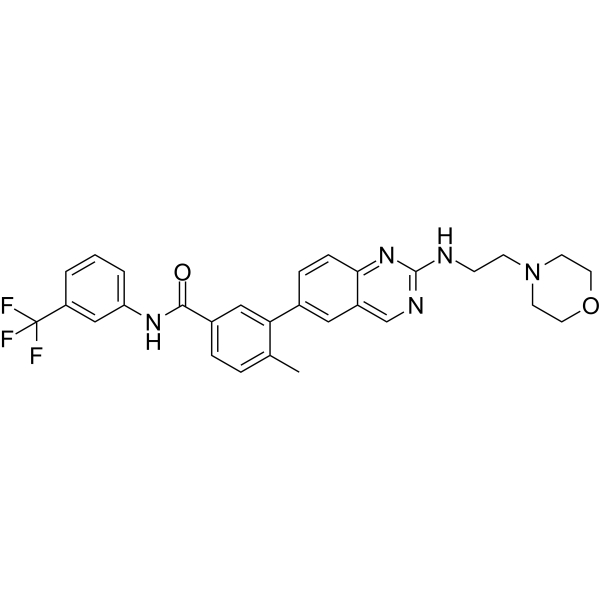
Doramapimod hydrochloride (BIRB 796 hydrochloride) is an anti-inflammatory compound with biological activity through inhibition of p38 MAPK. Doramapimod hydrochloride can significantly inhibit the activities of TNF-α and IL-1β induced by LPS, LTA and PGN. Doramapimod hydrochloride showed a stronger inhibitory effect on inflammation induced by all three bacterial toxins, which was more significant compared with the effects of other compounds. Doramapimod hydrochloride can be used in the research of autoimmune diseases .
loading...
    loading...
30
30 Cited Publications
Cat. No.: HY-P9970
CAS No.: 170277-31-3
Synonyms: Avakine; CT-P13; SB2; TA-650
Infliximab (Avakine) is a chimeric monoclonal IgG1 antibody that specifically binds to TNF-α. Infliximab prevents the interaction of TNF-α with TNF-α receptor (TNFR1 and TNFR2). Infliximab has the potential for autoimmune, chronic inflammatory diseases and diabetic neuropathy research .
The component ratio of this product is Active ingredient : Excipients = 9 : 47.
loading...
    loading...
30
30 Cited Publications
Cat. No.: HY-P9970A
Synonyms: Avakine (Anti-TNF-α); CT-P13 (Anti-TNF-α)
Infliximab (Anti-TNF-α) (Avakine (Anti-TNF-α)) is a chimeric monoclonal IgG1 antibody that specifically binds to TNF-α. Infliximab (Anti-TNF-α) prevents the interaction of TNF-α with TNF-α receptor (TNFR1 and TNFR2). Infliximab (Anti-TNF-α) has the potential for autoimmune, chronic inflammatory diseases and diabetic neuropathy research .
loading...
    loading...
15
15 Cited Publications
Cat. No.: HY-145010
CAS No.: 2249435-90-1
Purity:  99.73%
Target:  

STING

Research Areas:  

Inflammation/Immunology

SN-011 is a potent and selective mouse and human STING inhibitor, with an IC50 of 76 nM for STING signaling. SN-011 competes with cyclic dinucleotide (CDN) for the binding pocket of the STING dimer, blocking CDN binding and STING activation. SN-011 can be used for the research of STING-driven autoimmune and inflammatory disease .
loading...
    loading...
10
10 Cited Publications
Cat. No.: HY-13591
CAS No.: 152918-18-8
Purity:  99.01%
Synonyms: IB-MECA; CF-101
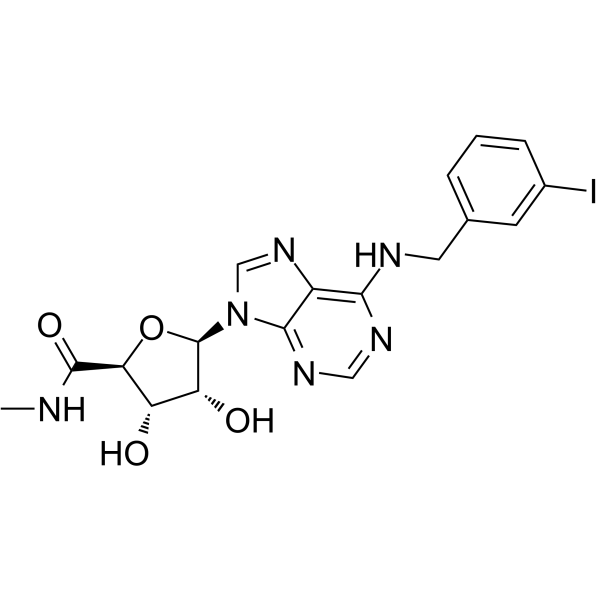
Piclidenoson (IB-MECA) is a first-in-class, orally active and selective A3 adenosine receptor (A3AR) agonist. Piclidenoson exhibits antiproliferative effect and induces apoptosis in different cancer cell types like melanoma, leukemia. Piclidenoson can be used for the research of autoimmune inflammatory diseases and COVID-19 .
loading...
    loading...
5
5 Cited Publications
Cat. No.: HY-148141
CAS No.: 1254036-23-1
Purity:  99.96%
Target:  

Complement System

Research Areas:  

Inflammation/Immunology

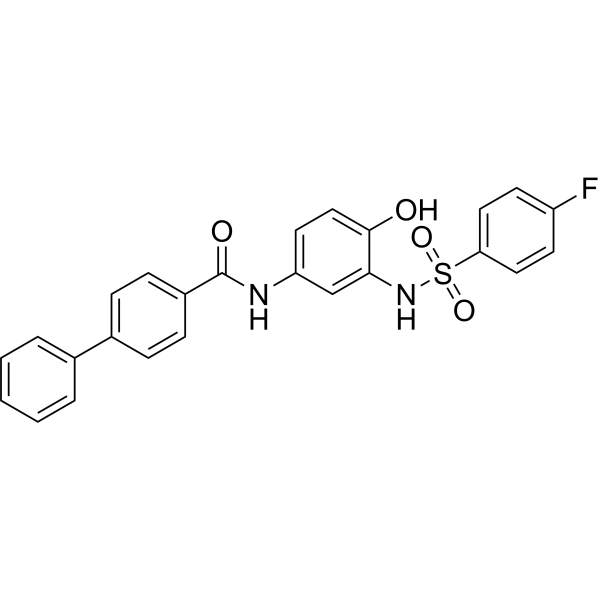
JPE-1375 is a complement C5a receptor 1 (C5aR1) antagonist. JPE-1375 effectively inhibits polymorphonuclear leukocyte mobilization (EC50=6.9 μM) and reduces TNF levels (EC50=4.5 μM) in mice. JPE-1375 can be used in studies of autoimmune and inflammatory diseases .
loading...
    loading...
4
4 Cited Publications
Cat. No.: HY-151435
CAS No.: 588674-64-0
Purity:  99.30%
Target:  

CCR

Research Areas:  

Inflammation/Immunology

CCR6 antagonist 1 is a CCR6 antagonist that inhibits the CCL20/CCR6 axis. CCR6 antagonist 1 can be used in the research of autoimmune-mediated inflammatory diseases, such as inflammatory bowel diseases (IBDs) .
loading...
    loading...
4
4 Cited Publications
Cat. No.: HY-14908
CAS No.: 717824-30-1
Purity:  99.14%
Synonyms: 4sc-101; SC12267
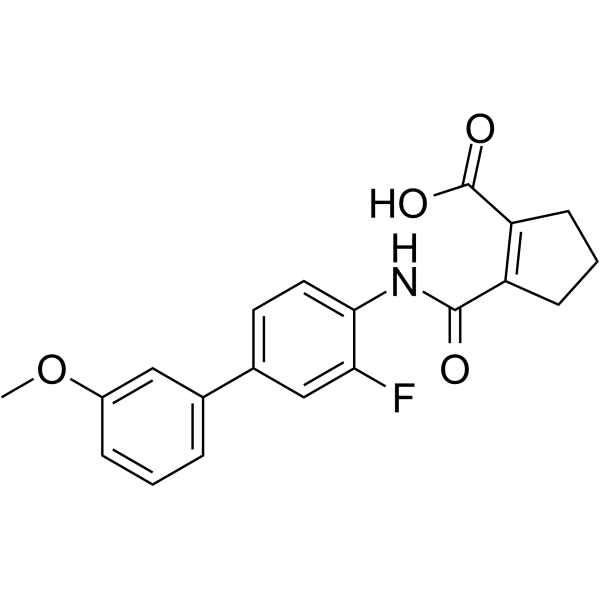
Vidofludimus is an orally active inhibitor for dihydroorotate dehydrogenase (DHODH) and also is a novel modulator for farnesoid X receptor (FXR). Vidofludimus, as an immunomodulatory agent, can be used for the research of autoimmune disorders such as inflammatory bowel disease (IBD). Vidofludimus also can be used for the research of fatty liver by targeting FXR .
loading...
    loading...
4
4 Cited Publications
Cat. No.: HY-108831
CAS No.: 189261-10-7
Purity:  99.10%
Natalizumab (AN100226; BG00002) is a humanized monoclonal IgG4 antibody inhibitor that selectively targets α4 integrin (CD49d). It blocks the interaction of integrins such as α4β1 (VLA-4) with vascular cell adhesion molecule VCAM-1, intercellular adhesion molecule ICAM-1, and fibronectin by competitively binding to the α4 subunit. Natalizumab inhibits the adhesion, retention, and transendothelial migration of immune cells (such as CD4 + T cells), reducing the infiltration of inflammatory cells into the central nervous system or lesion sites, thus exerting anti-inflammatory and immunomodulatory activity. Natalizumab is used in the study of relapsing-remitting multiple sclerosis (RRMS) and also has applications in the study of autoimmune or inflammation-related diseases such as Crohn's disease, B-cell lymphoma, and non-infectious uveitis. Natalizumab can also prevent lymphocytes from entering the central nervous system, thereby preventing acute demyelinating relapses .
loading...
    loading...
4
4 Cited Publications
Cat. No.: HY-108831A
CAS No.: 189261-10-7
Purity:  98.72%
Synonyms: AN100226; BG00002
Natalizumab (Anti-CD49d) (AN100226; BG00002) Solution is a humanized monoclonal IgG4 antibody inhibitor that selectively targets α4 integrin (CD49d), blocking the interaction of integrins such as α4β1 (VLA-4) with vascular cell adhesion molecule VCAM-1, intercellular adhesion molecule ICAM-1, and fibronectin by competitively binding to the α4 subunit. Natalizumab solution inhibits the adhesion, retention, and transendothelial migration of immune cells (such as CD4 + T cells), reducing the infiltration of inflammatory cells into the central nervous system or lesion sites, thereby exerting anti-inflammatory and immunomodulatory activity. Natalizumab (Anti-CD49d) solution is used in the study of relapsing-remitting multiple sclerosis (RRMS) and is also applied in the research of autoimmune or inflammation-related diseases such as Crohn's disease, B-cell lymphoma, and non-infectious uveitis. Natalizumab (Anti-CD49d) can also prevent lymphocytes from entering the central nervous system, thus preventing acute demyelinating relapses .
loading...
    loading...
3
3 Cited Publications
Cat. No.: HY-173236
Target:  

STAT

STAT4-IN-1 is an inhibitor of STAT4 with a Ki of 0.35 μM. STAT4-IN-1 is expected to be used in the research of autoimmune diseases, including inflammatory bowel disease, multiple sclerosis, rheumatoid arthritis, and diabetes .
loading...
    loading...
3
3 Cited Publications
Cat. No.: HY-133807
CAS No.: 2550398-89-3
Purity:  99.26%
Target:  

TNF Receptor

Research Areas:  

Inflammation/Immunology

Benpyrine is a highly specific and orally active TNF-α inhibitor with a KD value of 82.1 μM. Benpyrine tightly binds to TNF-α and blocks its interaction with TNFR1, with an IC50 value of 0.109 µM. Benpyrine has the potential for TNF-α mediated inflammatory and autoimmune disease research .
loading...
    loading...
3
3 Cited Publications
Cat. No.: HY-N2303
CAS No.: 84745-95-9
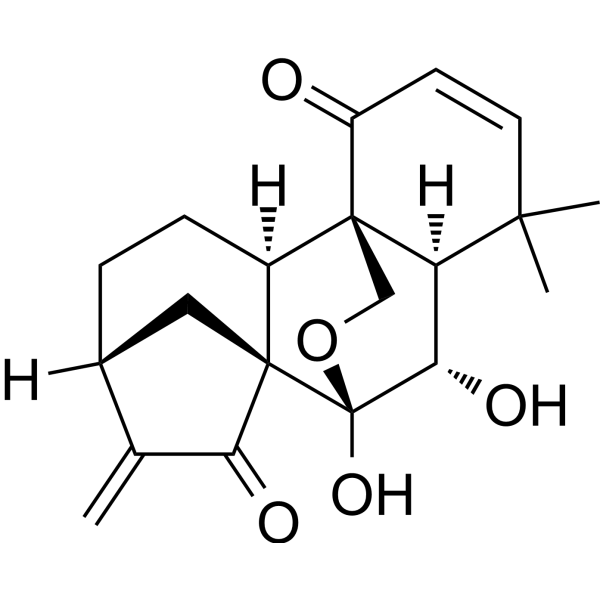
Eriocalyxin B is a diterpenoid compound that can be isolated from Chinese herb Isodon eriocalyx. Eriocalyxin B exhibits multiple activities, such as anti-cancer, anti-inflammatory, and inhibition of adipogenesis. Eriocalyxin B is capable of inducing apoptosis and autophagy in tumor cells. Eriocalyxin B can be used in the research of cancers, autoimmune diseases, and other conditions .
loading...
    loading...
3
3 Cited Publications
Cat. No.: HY-Y0344J
CAS No.: 7647-14-5
Synonyms: Halite, for molecular biology
Sodium chloride is an orally active salt. Sodium chloride induces the expression of ATP1A1. Sodium chloride induces the pro-inflammatory cytokines IL-2, TNFα, IL-9 and several chemokines. Sodium chloride enhances the anti-tumor activities of Digoxin (HY-B1049) against small cell lung cancer. Sodium chloride drives autoimmune disease by the induction of pathogenic Th17 cells .
loading...
    loading...
3
3 Cited Publications
Cat. No.: HY-Y0344D
CAS No.: 7647-14-5
Synonyms: Halite, for cell culture
Sodium chloride, for cell culture is an orally active salt. Sodium chloride, for cell culture induces the expression of ATP1A1. Sodium chloride, for cell culture induces the pro-inflammatory cytokines IL-2, TNFα, IL-9 and several chemokines. Sodium chloride, for cell culture enhances the anti-tumor activities of Digoxin (HY-B1049) against small cell lung cancer. Sodium chloride, for cell culture drives autoimmune disease by the induction of pathogenic Th17 cells .
loading...
    loading...
3
3 Cited Publications
Cat. No.: HY-103435
CAS No.: 858134-23-3
Purity:  99.90%
Synonyms: Terrestrin A
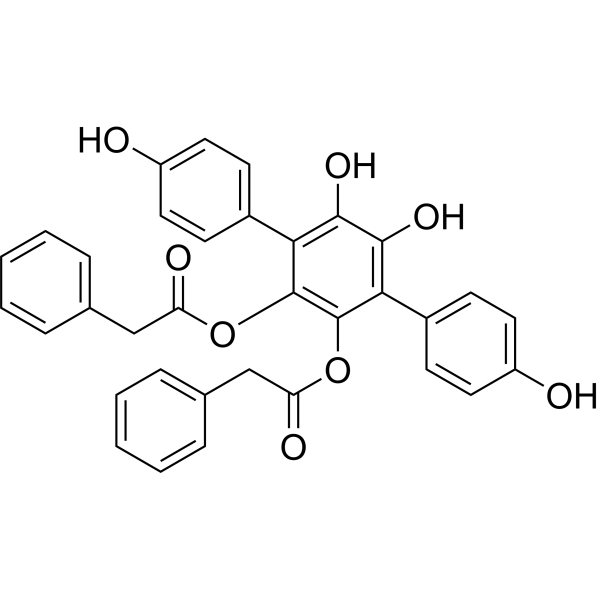
Vialinin A (Terrestrin A) is a p-terphenyl compound that can be derived from a Chinese edible mushroom. Vialinin A is an inhibitor of ubiquitin-specific peptidase 4 (USP4) and has anti-inflammatory and antioxidant properties. Vialinin A can alleviate cerebral ischaemia-reperfusion injury-induced neurological deficits and neuronal apoptosis. Vialinin A promotes activation of Keap1-Nrf2-ARE signaling pathway and increases the protein degradation of Keap1. Vialinin A possesses various pharmacological activities in cancer, Kawasaki disease, asthma, and pathological scarring. Vialinin A is a potent inhibitor of TNF-α, USP4, USP5, and sentrin/SUMO-specific protease 1 (SENP1). Vialinin A can be studied in reseach for autoimmune diseases, cancer and ischaemic stroke .
loading...
    loading...
3
3 Cited Publications
Cat. No.: HY-18303
CAS No.: 882663-88-9
Target:  

Src VEGFR p38 MAPK JAK

Research Areas:  

Inflammation/Immunology

AMG-47a is an orally active, ATP-competitive Lck inhibitor (IC50=0.2 nM). AMG-47a inhibits VEGF2, p38α, p38α, Jak3, MLR, and IL-2 with IC50 of 1 nM, 3 nM, 72 nM, 30 nM, and 21 nM, respectively. AMG-47a reduces T cell activation and the production of cytokines such as TGF-β, exerting anti-inflammatory and anti-fibrotic activities. AMG-47a can be used in the research of autoimmune diseases, pulmonary fibrosis, and KRAS mutation-associated cancers[1][2][3].
loading...
    loading...
3
3 Cited Publications
Cat. No.: HY-Y0344I
CAS No.: 7647-14-5
Synonyms: Halite, meets analytical specification of Ph. Eur. BP USP
Sodium chloride, meets analytical specification of Ph. Eur. BP USP, ≤0.00002% Al, an inorganic salt is an orally active salt. Sodium chloride, meets analytical specification of Ph. Eur. BP USP, ≤0.00002% Al, an inorganic salt induces the expression of ATP1A1. Sodium chloride, meets analytical specification of Ph. Eur. BP USP, ≤0.00002% Al, an inorganic salt induces the pro-inflammatory cytokines IL-2, TNFα, IL-9 and several chemokines. Sodium chloride, meets analytical specification of Ph. Eur. BP USP, ≤0.00002% Al, an inorganic salt enhances the anti-tumor activities of Digoxin (HY-B1049) against small cell lung cancer. Sodium chloride, meets analytical specification of Ph. Eur. BP USP, ≤0.00002% Al, an inorganic salt drives autoimmune disease by the induction of pathogenic Th17 cells .
loading...
    loading...
2
2 Cited Publications
Cat. No.: HY-128726
CAS No.: 1309784-09-5
Purity:  99.66%
Target:  

Itk

Research Areas:  

Inflammation/Immunology

ITK inhibitor 2 is a ITK inhibitor with an IC50 of 2 nM. ITK inhibitor 2 is used for research on inflammatory diseases, allergic diseases, autoimmune diseases and transplant rejection .
loading...
    loading...
2
2 Cited Publications
Cat. No.: HY-148104
CAS No.: 2332820-04-7
Purity:  99.49%
ACSS2-IN-2 is an acyl-CoA synthetase short-chain family member 2 (ACSS2) inhibitor. ACSS2-IN-2 can inhibit ACSS2 activity with an IC50 value of 3.8 nM. ACSS2-IN-2 can be used for the research of several diseases, such as viral infection, metabolic disorders, neuropsychiatric diseases, inflammatory/autoimmune conditions and cancer .
loading...
    loading...

