8 Results for "

bacterial α-glucosidase

" in MedChemExpress (MCE) Product Catalog:
Products (8)

8 Results for "bacterial α-glucosidase" in MCE Product Catalog:

3
3 Cited Publications
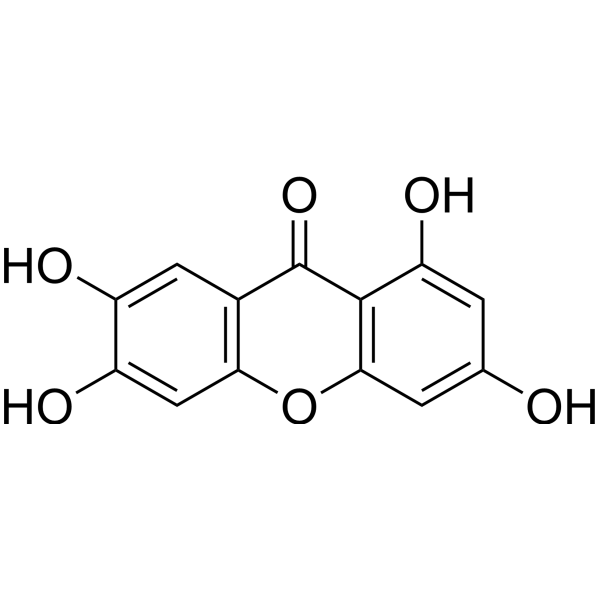
Cat. No.: HY-N1029
CAS No.: 3542-72-1
Synonyms: Mangiferitin
Norathyriol (Mangiferitin) is a natural metabolite of Mangifera. Norathyriol inhibits α-glucosidase in a noncompetitive manner with an IC50 of 3.12 μM . Norathyriol inhibits PPARα, PPARβ, and PPARγ with IC50s of 92.8 µM, 102.4 µM, and 153.5 µM, respectively . Antioxidant, anticancer, antimicrobial, anti-inflammatory, anti-bacterial activities.
loading...
    loading...
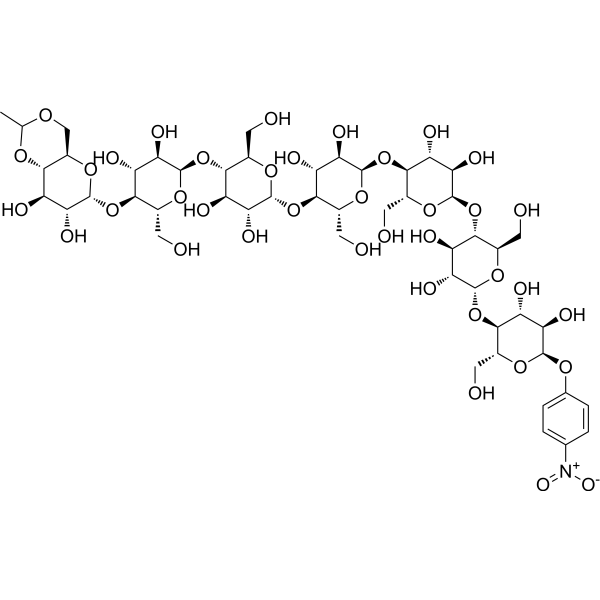
Cat. No.: HY-112835
CAS No.: 96597-16-9
Purity:  99.42%
Synonyms: pNP-G7
Target:  

Amylases Glycosidase

Research Areas:  

Inflammation/Immunology

Ethylidene-4-nitrophenyl-α-D-Maltoheptaoside (EPS; pNP-G7) serves as a substrate for α-amylase. In the presence of an auxiliary enzyme such as α-glucosidase (α-glucosidase), Ethylidene-4-nitrophenyl-α-D-Maltoheptaoside is degraded by amylase (Amylase) to release a chromophore, enabling the measurement of amylase activity. Ethylidene-4-nitrophenyl-α-D-Maltoheptaoside is applicable for the diagnosis of pancreatitis [2].
loading...
    loading...
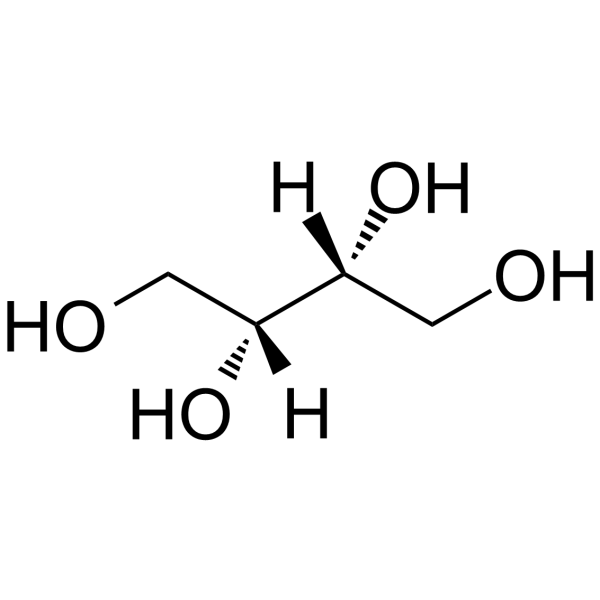
Cat. No.: HY-W012846
CAS No.: 2418-52-2
D-Threitol is a naturally occurring four-carbon sugar alcohol and an α-glucosidase (α‑glucosidase) inhibitor with an IC50 of 49 mM against yeast α-glucosidase, and it is orally active. D-Threitol modulates gut microbiota composition, increases microbial diversity, enriches beneficial bacterial genera, and restores fecal short-chain fatty acid levels. D-Threitol reduces body weight gain and fat accumulation, improves glucose tolerance and insulin sensitivity, and alleviates liver, kidney, and pancreatic tissue damage. D-Threitol inhibits hepatic accumulation of ceramides and diacylglycerols. D-Threitol preserves glomerular morphology and islet structure in diabetes models. D-Threitol is also a low-calorie sweetener. D-Threitol serves as a cryoprotective polyol that stabilizes protein structure at low temperatures. D-Threitol is used in research on type 2 diabetes and as an antifreeze agent for the Alaskan beetle .
loading...
    loading...
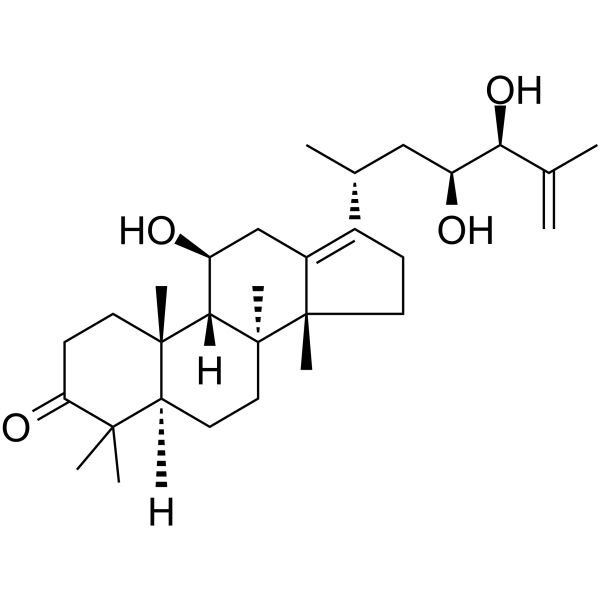
Cat. No.: HY-N0855
CAS No.: 155521-46-3
Synonyms: Alisol-G; 25-Anhydroalisol A
Alisol G (25-Anhydroalisol A) is a human carboxylesterase 2 (hCES2) inhibitor with an IC50 of 3.85 μM. Alisol G exhibits cytotoxic activity against human cancer cells, antibacterial activity against Gram-positive strains, and anti-hepatitis B virus activity. Alisol G can be used in research related to lung cancer, breast cancer, prostate cancer, bacterial infections, and HBV infections .
loading...
    loading...
Cat. No.: HY-W012846R
CAS No.: 2418-52-2
D-Threitol (Standard) is the analytical standard of D-Threitol (HY-W012846). This product is intended for research and analytical applications. D-Threitol is a naturally occurring four-carbon sugar alcohol and an α-glucosidase (α‑glucosidase) inhibitor with an IC50 of 49 mM against yeast α-glucosidase, and it is orally active. D-Threitol modulates gut microbiota composition, increases microbial diversity, enriches beneficial bacterial genera, and restores fecal short-chain fatty acid levels. D-Threitol reduces body weight gain and fat accumulation, improves glucose tolerance and insulin sensitivity, and alleviates liver, kidney, and pancreatic tissue damage. D-Threitol inhibits hepatic accumulation of ceramides and diacylglycerols. D-Threitol preserves glomerular morphology and islet structure in diabetes models. D-Threitol is also a low-calorie sweetener. D-Threitol serves as a cryoprotective polyol that stabilizes protein structure at low temperatures. D-Threitol is used in research on type 2 diabetes and as an antifreeze agent for the Alaskan beetle .
loading...
    loading...
Cat. No.: HY-159796
CAS No.: 127182-67-6
Synonyms: GR69153 hydrate
Research Areas:  

Infection Metabolic Disease

Cefetecol hydrate (GR69153 hydrate) is a semisynthetic β-lactam antibacterial agent and α-glucosidase inhibitor (yeast IC50 = 2.1 μM; Ki = 5.78 μM) that crosses the blood-brain barrier. Cefetecol hydrate reduces blood glucose levels in Streptozotocin-induced diabetic mice. Cefetecol hydrate decreases the mRNA expression of GSK-3, PPAR-γ, and UCP-3. Cefetecol hydrate induces bacterial cell filamentation and exhibits bactericidal activity against Gram-positive and Gram-negative bacteria. Cefetecol hydrate is used in the study of diabetes and bacterial infections .
loading...
    loading...
Cat. No.: HY-159796A
CAS No.: 117211-03-7
Synonyms: GR69153
Cefetecol (GR69153) is a semisynthetic β-lactam antibacterial agent and α-glucosidase inhibitor (yeast IC50 = 2.1 μM; Ki = 5.78 μM) that crosses the blood-brain barrier. Cefetecol reduces blood glucose levels in Streptozotocin-induced diabetic mice. Cefetecol decreases the mRNA expression of GSK-3, PPAR-γ, and UCP-3. Cefetecol induces bacterial cell filamentation and exhibits bactericidal activity against Gram-positive and Gram-negative bacteria. Cefetecol is used in the study of diabetes and bacterial infections .
loading...
    loading...
Cat. No.: HY-N20674
CAS No.: 76472-89-4
Chalcomoracin is an orally active anticancer agent. Chalcomoracin exhibits anticancer, antibacterial, and α-glucosidase inhibitory activities, with an IC50 of 14.23 µM against yeast α-glucosidase and an IC50 of 5.5 μM against FabI of Staphylococcus aureus. Chalcomoracin reduces the phosphorylation levels of ERK, JNK, and P38; enhances the phosphorylation level of ERK1/2; regulates the MAPK, mTOR, AKT, and p53 signaling pathways; upregulates the expression of Chop, Bip, PINK1, GRP78, and GADD153; and downregulates the expression of Alix. Chalcomoracin induces apoptosis (apoptosis), endoplasmic reticulum stress (endoplasmic reticulum stress), paraptosis (paraptosis), ROS production, mitophagy (mitophagy), and autophagy (autophagy); it inhibits cancer cell viability, colony-forming ability, migration, invasion, proliferation, tumorigenesis, fatty acid synthesis, S. aureus growth, vitreous-stimulated retinal cell activity, and cell cycle progression at the G0/G1 phase. Chalcomoracin can be used in research related to hepatocellular carcinoma, non-small cell lung cancer, triple-negative breast cancer, prostate cancer, proliferative vitreoretinopathy, pancreatic cancer, diabetes, and bacterial infections .
loading...
    loading...

