
71 Results for "

bacterial peptidoglycan

" in MedChemExpress (MCE) Product Catalog:
Products (71)

71 Results for "bacterial peptidoglycan" in MCE Product Catalog:

14
14 Publications Verification
Cat. No.: HY-131045
CAS No.: 2253733-10-5
Purity:  99.08%
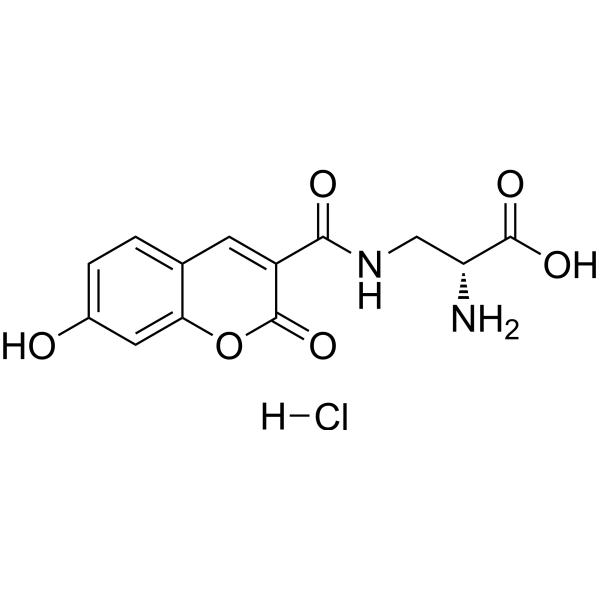
Synonyms: HCC-Amino-D-alanine hydrochloride
HADA hydrochloride (HCC-Amino-D-alanine hydrochloride) is a blue (λem~450 nm) fluorescent D-amino acid (FDAA). FDAAs are efficiently incorporated into the peptidoglycans (PGs) of diverse bacterial species at the sites of PG biosynthesis, allowing specific and covalent probing of bacterial growth with minimal perturbation .
loading...
    loading...
8
8 Cited Publications
Cat. No.: HY-B0030
CAS No.: 68-41-7
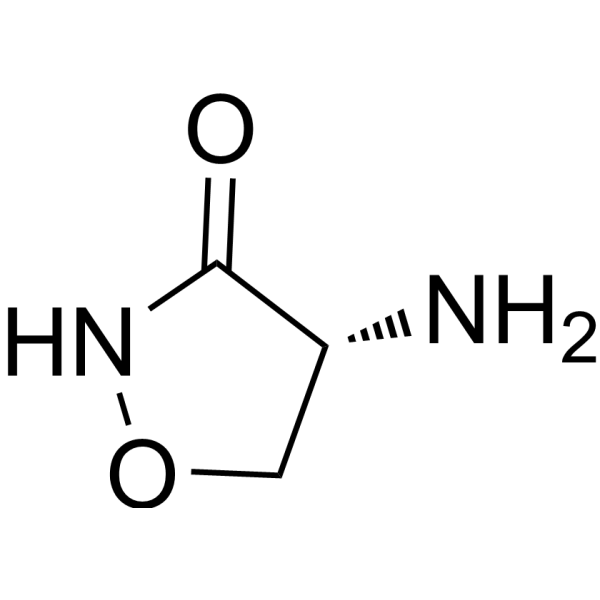
D-Cycloserine is an antibiotic which targets sequential bacterial cell wall peptidoglycan biosynthesis enzymes, with blood-brain barrier permeability. D-Cycloserine is a partial NMDA agonist that can improve cognitive functions. D-Cycloserine can be used for multidrug-resistant tuberculosis research .
loading...
    loading...
8
8 Cited Publications
Cat. No.: HY-P1068
CAS No.: 9001-63-2
Synonyms: Muramidase
Lysozyme (Muramidase) is a conserved antimicrobial protein. Lysozyme exerts its bactericidal effect by hydrolyzing bacterial cell wall peptidoglycan (PG). Lysozyme plays an important role in limiting bacterial growth on mucosal surfaces and other sites, not only controlling potential pathogens but also limiting overgrowth of microbiota to prevent dysbiosis. Extracellular lysozyme can also degrade polymeric PG into soluble fragments, activate NOD receptors in mucosal epithelial cells, and lead to the secretion of chemokines and activating factors by neutrophils and macrophages .
loading...
    loading...
8
8 Cited Publications
Cat. No.: HY-P1068A
CAS No.: 9001-63-2
Target:  

Bacterial

Research Areas:  

Infection

Recombinant human lysozyme (plant expression) is a conserved anti-bacterial protein that causes bacterial lysis and death by hydrolyzing bacterial cell wall peptidoglycan (PG). Recombinant human lysozyme (plant expression) can be used to study bacterial infections .
loading...
    loading...
6
6 Cited Publications
Cat. No.: HY-B0898
CAS No.: 104010-37-9
Synonyms: sodium ceftiofur
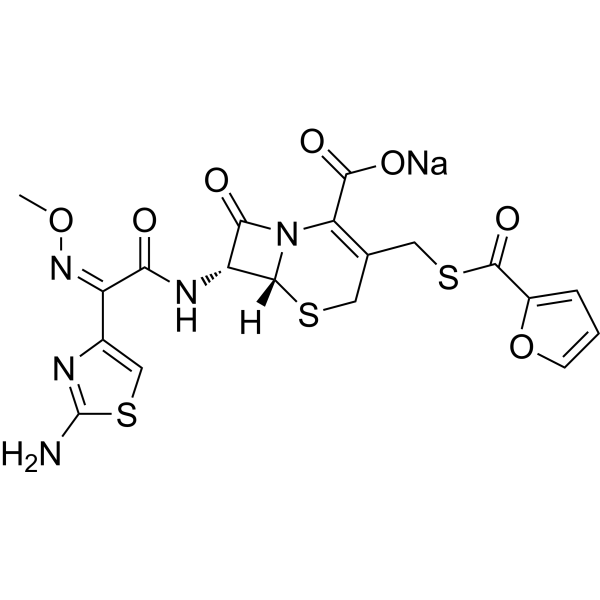
Ceftiofur sodium is a cell wall synthesis inhibitor that targets bacterial penicillin-binding proteins (PBPs) and has anti-inflammatory effects in endotoxemia. Ceftiofur sodium exerts bactericidal effects by inhibiting the synthesis of bacterial cell wall peptidoglycan, leading to bacterial cell lysis. Ceftiofur sodium also inhibits the activation of NF-κB and MAPKs, thereby reducing the secretion of pro-inflammatory cytokines such as TNF-α, IL-1β, and IL-6 .
loading...
    loading...
6
6 Cited Publications
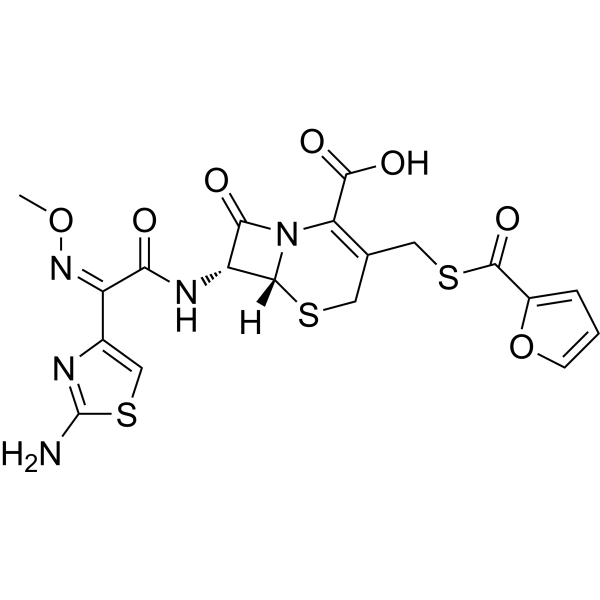
Cat. No.: HY-N7102
CAS No.: 80370-57-6
Ceftiofur is a cell wall synthesis inhibitor that targets bacterial penicillin-binding proteins (PBPs) and has anti-inflammatory effects in endotoxemia. Ceftiofur exerts bactericidal effects by inhibiting the synthesis of bacterial cell wall peptidoglycan, leading to bacterial cell lysis. Ceftiofur also inhibits the activation of NF-κB and MAPKs, thereby reducing the secretion of pro-inflammatory cytokines such as TNF-α, IL-1β, and IL-6 .
loading...
    loading...
6
6 Cited Publications
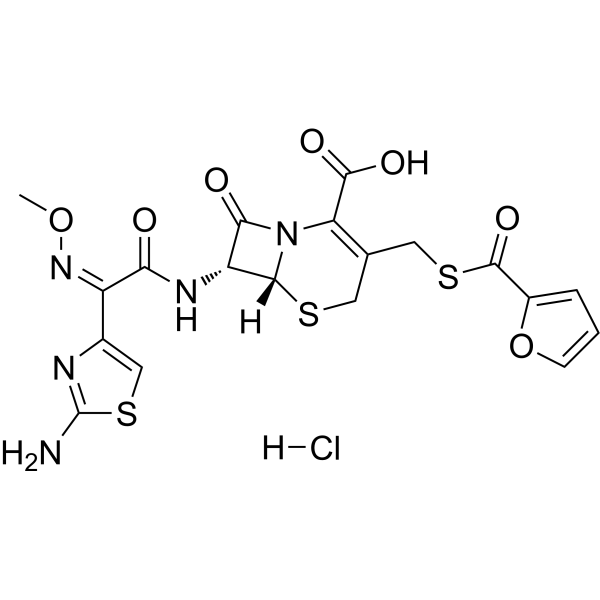
Cat. No.: HY-B0026
CAS No.: 103980-44-5
Ceftiofur hydrochloride is a cell wall synthesis inhibitor that targets bacterial penicillin-binding proteins (PBPs) and has anti-inflammatory effects in endotoxemia. Ceftiofur hydrochloride exerts bactericidal effects by inhibiting the synthesis of bacterial cell wall peptidoglycan, leading to bacterial cell lysis. Ceftiofur hydrochloride also inhibits the activation of NF-κB and MAPKs, thereby reducing the secretion of pro-inflammatory cytokines such as TNF-α, IL-1β, and IL-6 .
loading...
    loading...
5
5 Cited Publications
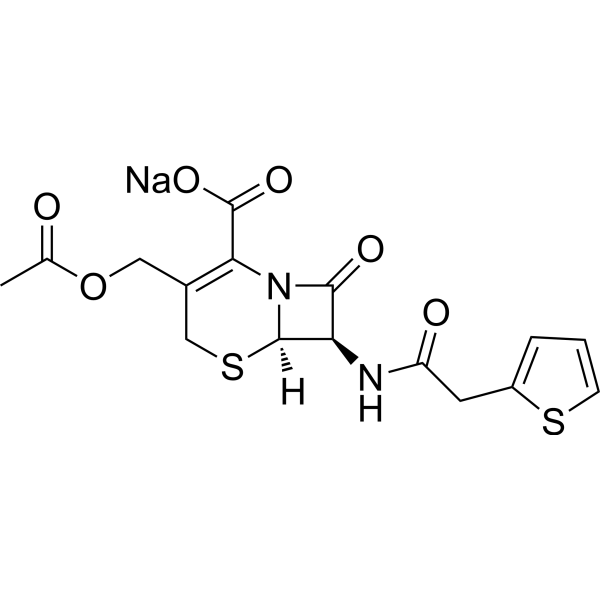
Cat. No.: HY-B1275
CAS No.: 58-71-9
Synonyms: Cefalotin sodium
Research Areas:  

Infection

Cephalothin (Cephalotin) sodium is a semi-synthetic cephalosporin antibiotic and beta-lactam antibiotic. Cephalothin inhibits class C β-lactamase AmpC, with an Ki of 0.32 µM. Cephalothin sodium binds to penicillin-binding proteins, interfering with the cross-linking of peptidoglycan in the cell wall and thus hindering the normal synthesis of the bacterial cell wall. Cephalothin sodium shows antibacterial activity against a variety of bacteria. Cephalothin sodium can be used in hematological and nephrotoxicity studies .
loading...
    loading...
5
5 Cited Publications
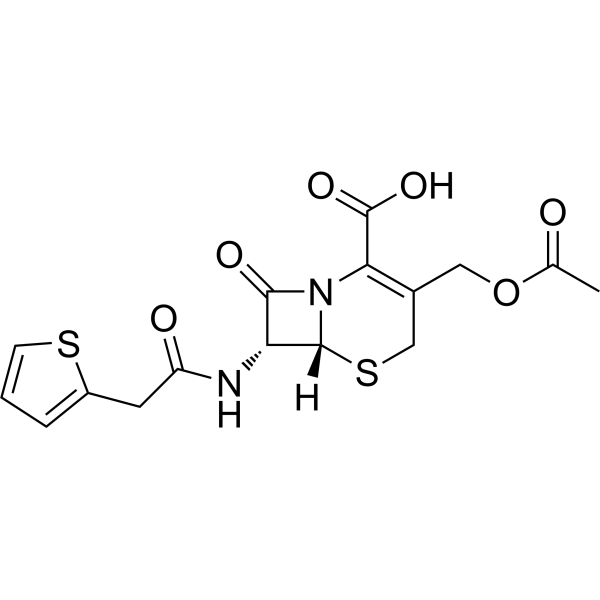
Cat. No.: HY-B1275A
CAS No.: 153-61-7
Synonyms: Cephalotin
Cephalothin (Cephalotin) is a semi-synthetic cephalosporin antibiotic and beta-lactam antibiotic. Cephalothin inhibits class C β-lactamase AmpC, with an Ki of 0.32 µM. Cephalothin binds to penicillin-binding proteins, interfering with the cross-linking of peptidoglycan in the cell wall and thus hindering the normal synthesis of the bacterial cell wall. Cephalothin shows antibacterial activity against a variety of bacteria. Cephalothin can be used in hematological and nephrotoxicity studies .
loading...
    loading...
1
1 Cited Publications
Cat. No.: HY-105049
CAS No.: 189345-04-8
Purity:  96.14%
Synonyms: T-91825; PPI-0903M
Target:  

Bacterial Antibiotic

Research Areas:  

Infection

Ceftaroline (T-91825) is a cephalosporin compound and the active form of Ceftaroline fosamil (HY-14737). Ceftaroline exhibits activity against Gram-positive bacteria, Gram-negative bacteria, and some anaerobic bacteria. Ceftaroline binds to penicillin-binding proteins 2 and 2A, thereby inhibiting the synthesis of bacterial peptidoglycan and cell wall, and acts as a bactericide, synergist, and resistance inhibitor. Ceftaroline can be used in research related to complicated skin and soft tissue infections, community-acquired pneumonia, Enterococcus faecalis infective endocarditis, and bacterial infections .
loading...
    loading...
1
1 Cited Publications
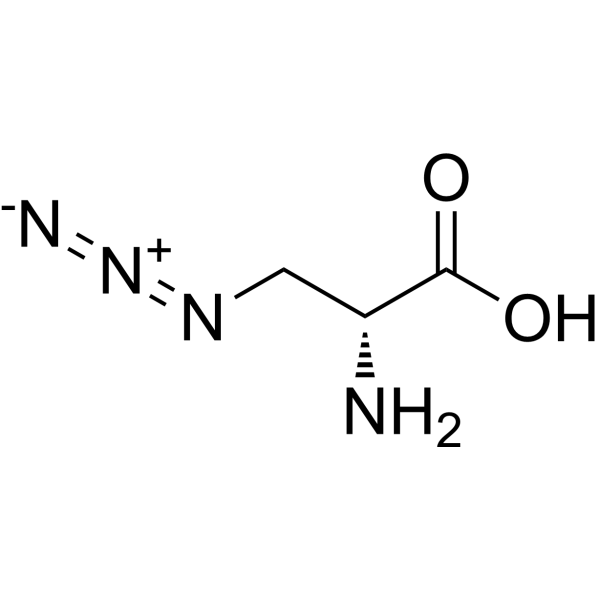
Cat. No.: HY-151642
CAS No.: 105928-88-9
3-Azido-D-alanine is an orally active, selective metabolic tracer applicable for click chemistry labeling. 3-Azido-D-alanine can be selectively incorporated into bacterial cell wall peptidoglycans, introducing azido groups to enable copper-free click chemistry-based modification, labeling and single-cell tracing, while it cannot be metabolically incorporated by mammalian cells. 3-Azido-D-alanine can be used in studies related to bacterial infection, intracranial infection, otitis media, intestinal inflammation and tissue damage, as well as sepsis .
loading...
    loading...
1
1 Cited Publications
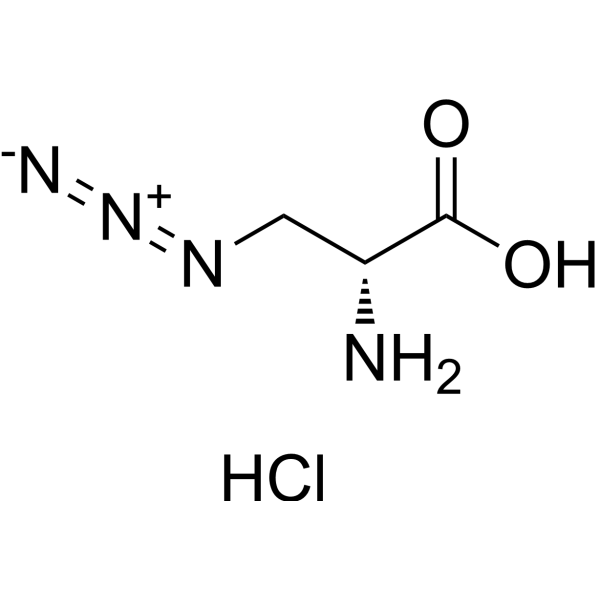
Cat. No.: HY-151642A
CAS No.: 1379690-01-3
Purity:  99.13%
3-Azido-D-alanine (hydrochloride) is an orally active, selective metabolic tracer applicable for click chemistry labeling. 3-Azido-D-alanine (hydrochloride) can be selectively incorporated into bacterial cell wall peptidoglycans, introducing azido groups to enable copper-free click chemistry-based modification, labeling and single-cell tracing, while it cannot be metabolically incorporated by mammalian cells. 3-Azido-D-alanine (hydrochloride) can be used in studies related to bacterial infection, intracranial infection, otitis media, intestinal inflammation and tissue damage, as well as sepsis .
loading...
    loading...
1
1 Cited Publications
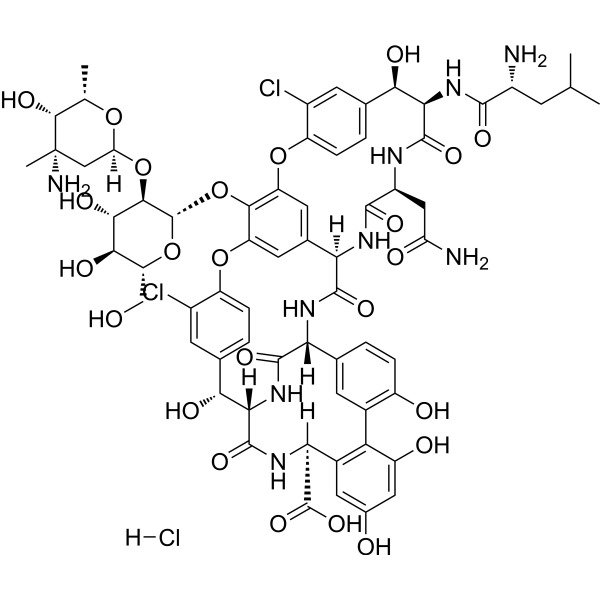
Cat. No.: HY-B1924
CAS No.: 213997-73-0
Synonyms: N-Demethylvancomycin monohydrochloride; NVCM monohydrochloride
Target:  

Bacterial

Research Areas:  

Infection

Norvancomycin hydrochloride is a cell wall synthesis inhibitor targeting peptidoglycan precursors of Gram-positive bacteria and cannot pass the blood-brain barrier. Norvancomycin hydrochloride can competitively bind to peptidoglycan precursors, irreversibly inhibit bacterial cell wall synthesis, and exert antibacterial activity. Norvancomycin hydrochloride is mainly used in the study of Gram-positive bacterial infections, especially infections caused by methicillin-resistant Staphylococcus aureus (MRSA) and methicillin-resistant Staphylococcus epidermidis (MRSE). Norvancomycin hydrochloride can also be incorporated into the bionic calcium phosphate coating of titanium implants to enhance antibacterial activity and inhibit postoperative orthopedic infections .
loading...
    loading...
1
1 Cited Publications
Cat. No.: HY-B1596
CAS No.: 68401-81-0
Target:  

Bacterial Antibiotic

Research Areas:  

Infection

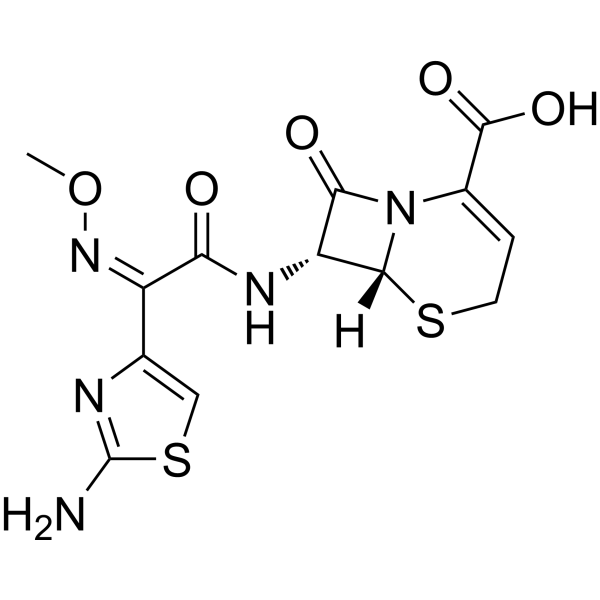
Ceftizoxime is a bacterial inhibitor which acts by interfering with bacterial cell wall synthesis and inhibiting cross-linking of the peptidoglycan.
loading...
    loading...
1
1 Cited Publications
Cat. No.: HY-157573
CAS No.: 2245794-64-1
Purity:  97.0%
Target:  

Bacterial

Research Areas:  

Infection

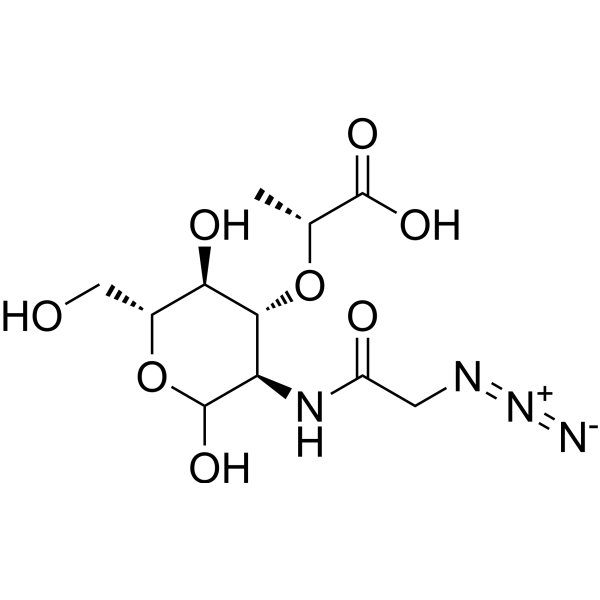
N-Acetylmuramic acid-azide (Compound 2) is a derivative of N-acetylaminoacetic acid (NAM) in bacterial peptidoglycan. Incorporated into bacterial peptidoglycan during biosynthesis .
loading...
    loading...
1
1 Cited Publications
Cat. No.: HY-16485
CAS No.: 560130-42-9
Synonyms: TD-6424 hydrochloride
Target:  

Antibiotic Bacterial

Research Areas:  

Infection

Telavancin hydrochloride (TD-6424 hydrochloride) is a bactericidal agent that exhibits inhibitory activity against Staphylococcus aureus. Telavancin hydrochloride inhibits bacterial cell wall synthesis by binding to the lipid-linked N-acetylglucosamine-N-muramyl pentapeptide (with a D-Ala-D-Ala terminus), a peptidoglycan precursor, and blocks the transglycosylation and transpeptidation steps. Telavancin hydrochloride disrupts bacterial membrane barrier function, induces dissipation of bacterial membrane potential, and causes leakage of cytoplasmic ATP and potassium ions, with its activity restricted exclusively to bacterial membranes. Telavancin hydrochloride can be used in research on bacterial infections, central venous catheter-related bloodstream infections, and Gram-positive bacterial pneumonia .
loading...
    loading...
1
1 Cited Publications
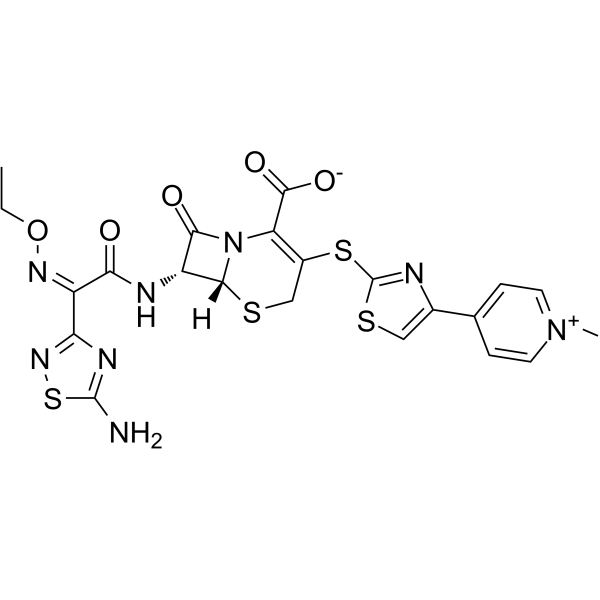
Cat. No.: HY-105049A
Target:  

Bacterial Antibiotic

Research Areas:  

Infection

Ceftaroline hydrochloride is a cephalosporin compound and the active form of Ceftaroline fosamil (HY-14737). Ceftaroline hydrochloride exhibits activity against Gram-positive bacteria, Gram-negative bacteria, and some anaerobic bacteria. Ceftaroline hydrochloride binds to penicillin-binding proteins 2 and 2A, thereby inhibiting the synthesis of bacterial peptidoglycan and cell wall, and acts as a bactericide, synergist, and resistance inhibitor. Ceftaroline hydrochloride can be used in research related to complicated skin and soft tissue infections, community-acquired pneumonia, Enterococcus faecalis infective endocarditis, and bacterial infections .
loading...
    loading...
Cat. No.: HY-W009274
CAS No.: 10597-89-4
Synonyms: MurNAc; NAMA
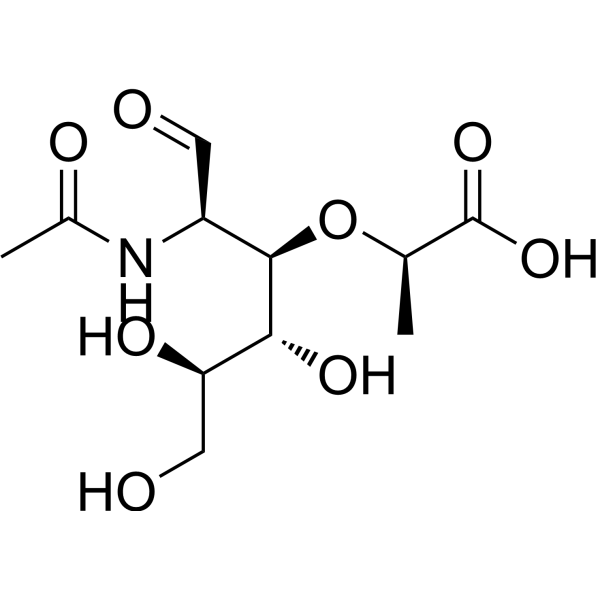
N-acetylmuramic acid is a component of the bacterial cell wall peptidoglycan, essential for maintaining cell shape and integrity . N-acetylmuramic acid inhibits spore germination by inhibiting a coat-associated hexosaminidase and a core enzyme . N-acetylmuramic acid is required by Bacteroides forsythus for proliferation and the maintenance of its cell shape . N-Acetylmuramic acid inhibits the p38 MAPK/NF-κB signaling pathway, and exhibits anti-inflammatory activity. N-Acetylmuramic acid is orally active .
loading...
    loading...
Cat. No.: HY-Y0079
CAS No.: 673-06-3
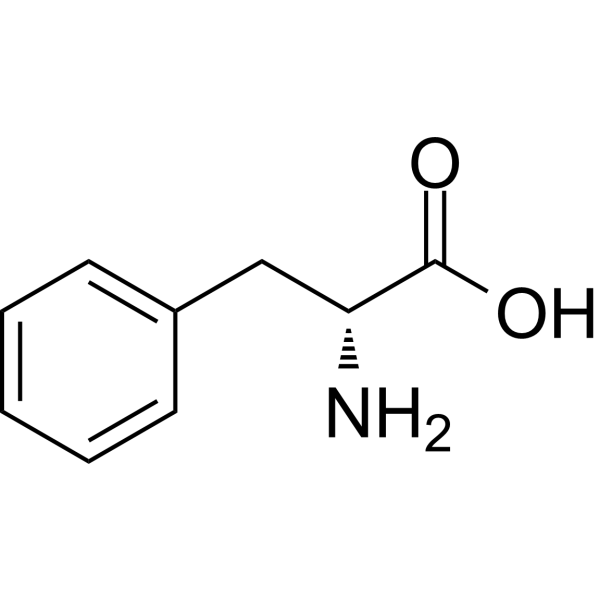
D-Phenylalanine is an atypical D-amino acid and an inhibitor of bacterial biofilm formation. D-Phenylalanine mainly replaces D-alanine (D-Ala) by incorporating into the fourth and fifth positions of bacterial peptidoglycan (PG), changing the cell wall structure, enhancing bacterial acid resistance and affecting biofilm formation. D-Phenylalanine may promote the secretion of peptide tyrosine tyrosine (PYY) in mammals by activating the intestinal GPR109B receptor. D-Phenylalanine can inhibit the maturation of microbial biofilms and promote the release of specific hormones. It can be used for antibacterial preservation, improving the yield of probiotics in the food industry, and studying appetite regulation and blood sugar control in metabolic diseases such as diabetes .
loading...
    loading...
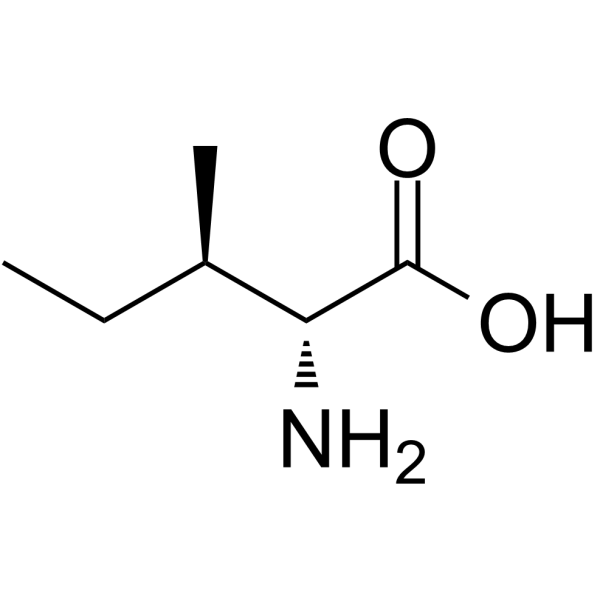
Cat. No.: HY-I1070
CAS No.: 319-78-8
Synonyms: (R)-Isoleucine
D-Isoleucine is a selective competitive activator of the Asc-1 antiporter (Ki=0.98 mM). D-Isoleucine promotes the release of D-serine and glycine by binding to the Asc-1 protein on the neuronal cell membrane, and enhances NMDA receptor-dependent synaptic plasticity. D-Isoleucine can be used in the study of neurodegenerative diseases (such as Alzheimer's disease and schizophrenia). D-Isoleucine also acts as a non-classical D-amino acid, interferes with bacterial peptidoglycan synthesis, and inhibits the formation of Staphylococcus aureus biofilm, and has potential antibacterial application value[1][2].
loading...
    loading...

