

1. Search Result
Search Result
Results for "

catalytic residue

" in MedChemExpress (MCE) Product Catalog:

30

Inhibitors & Agonists

1

Screening Libraries

2

Biochemical Assay Reagents

6

Peptides

1

Natural
Products

Cat. No. Product Name Target Research Areas Chemical Structure
  • HY-P5979

    LRRK2 Neurological Disease
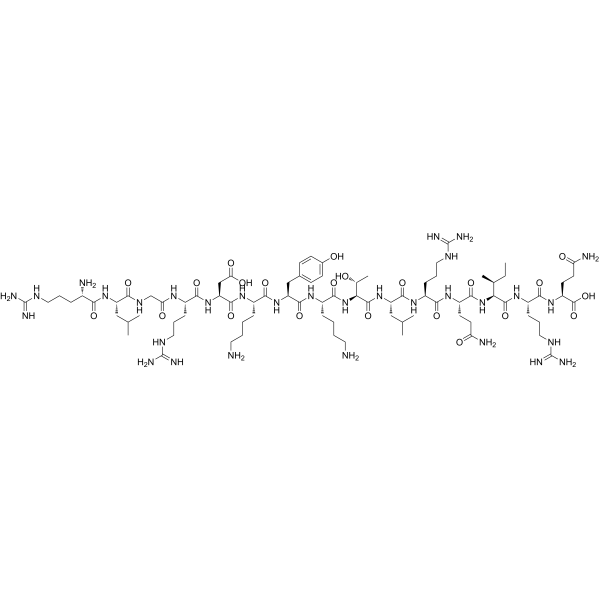
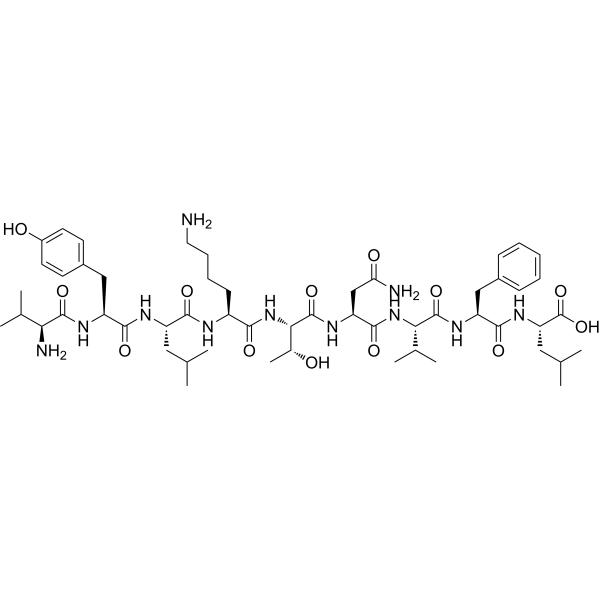
    LRRKtide is a polypeptide substrate. LRRKtide is a specific phosphorylation substrate of LRRK2, a kinase associated with Parkinson's disease, and its phosphorylation site is a threonine residue. LRRKtide can be used for characterization of the catalytic properties of LRRK2, as well as studies on kinase activity and inhibition. LRRKtide is applicable to research related to Parkinson's disease .
    LRRKtide
  • HY-157521

    Acyltransferase Neurological Disease Metabolic Disease
    AANAT-IN-1 is an arylalkylamine N-acetyltransferase (AANAT) inhibitor with a sheep AANAT IC50 of 9.9 μM. AANAT-IN-1 binds to the active site of sheep AANAT, interacting with amino acid residues via hydrogen bonds, hydrophobic interactions, ionic interactions, and water bridges, inhibiting the enzyme's catalytic activity. AANAT-IN-1 can be used for the researches of circadian rhythm-associated neuropsychiatric conditions, seasonal affective disorder, and other diseases associated with abnormally elevated melatonin levels .
    AANAT-IN-1
  • HY-136276

    Amino Acid Derivatives Others
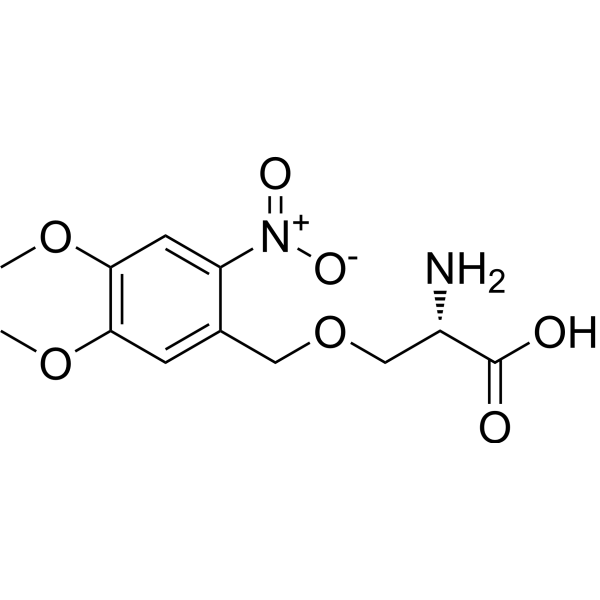
    DMNB-caged-Serine is a photocaged amino acid. DMNB-caged-Serine can be used as a catalytic residue, hydrogen bonding partner or site of post-translational modification. DMNB-caged-Serine can be used for the control of protein phosphorylation .
    DMNB-caged-Serine
  • HY-P5489

    IFNAR Metabolic Disease Inflammation/Immunology
    IGRP(206-214) is a biological active peptide. IGRP(206-214) corresponds to residues 206-214 of murine islet-specific glucose-6-phosphatase catalytic subunit-related protein (IGRP). IGRP(206-214) is T cells specific for proinsulin and IGRP induces diabetes in non-obese diabetic (NOD) mice .
    IGRP(206-214)
  • HY-78035

    Methylmaleic anhydride

    Biochemical Assay Reagents Others
    Citraconic anhydride (Methylmaleic anhydride) is a derivative of maleic anhydride (HY-Z0060) and novel antigen retrieval solution. Citraconic anhydride reversibly blocks protein amino groups, stabilizing specific enzymes and improving their catalytic performance. Citraconic anhydride reacts with free amino groups on proteins (especially lysine residues), converting positively charged NH3 + into carboxyl groups, thereby disrupting methylene bridge crosslinks caused by Formaldehyde during antigen retrieval. Citraconic anhydride functionalizes Isotactic polypropylene. Citraconic anhydride precisely responds to pH changes to achieve reversible modification. Citraconic anhydride is irritating to skin and eyes .
    Citraconic anhydride
  • HY-P2935

    Endogenous Metabolite Others
    Glutamic acid protease is a type of proteolytic enzyme containing glutamic acid residues, which mainly exists in fungi. Glutamic acid protease exerts its catalytic function through a glutamate-glutamine dyad .
    Glutamic acid protease
  • HY-P10463

    Histone Methyltransferase Cancer
    ssK36 is a supersubstrate peptide of the histone methyltransferase (SET) domain protein 2 (SETD2), and ssK36 is designed for the SETD2 protein, a specific PKMT. ssK36 is responsible in human cells for adding methyl groups to the 36th lysine residue of histone H3 (H3K36) to form H3K36me3. ssK36 can be methylated by SETD2 at a rate more than 100 times faster than the natural substrate H3K36. ssK36 can be used to study the catalytic mechanism of PKMTs, especially substrate specificity and catalytic efficiency .
    ssK36
  • HY-P4035

    HCV Infection
    HCV NS4A Protein (18-40) (JT strain) is an HCV NS4A peptide, which comprised residues 18 to 40 of the NS4A protein and is known to increase the catalytic efficiency of NS3 protease .
    HCV NS4A Protein (18-40) (JT strain)
  • HY-152158

    Glycosidase Metabolic Disease
    α-Glucosidase-IN-22 (Compound 7i) is a α-glucosidase inhibitor with an IC50 value of 0.64 μM. α-Glucosidase-IN-22 can be used for the research of type 2 diabetes .
    α-Glucosidase-IN-22
  • HY-P10463A

    Histone Methyltransferase Cancer
    ssK36 TFA is a supersubstrate peptide of the histone methyltransferase (SET) domain protein 2 (SETD2) , and ssK36 TFA is designed for the SETD2 protein, a specific PKMT. ssK36 TFA is responsible in human cells for adding methyl groups to the 36th lysine residue of histone H3 (H3K36) to form H3K36me3. ssK36 TFA can be methylated by SETD2 at a rate more than 100 times faster than the natural substrate H3K36. ssK36 TFA can be used to study the catalytic mechanism of PKMTs, especially substrate specificity and catalytic efficiency .
    ssK36 TFA
  • HY-146201

    Phosphodiesterase (PDE) 5-HT Receptor Neurological Disease
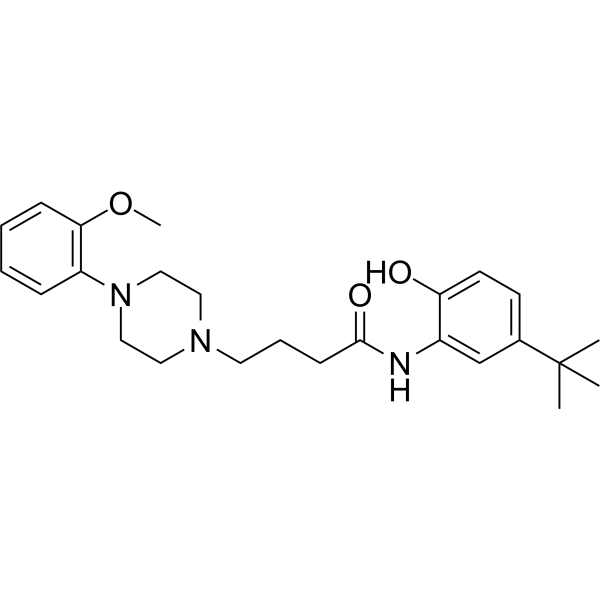
    PDE4B/7A-IN-1 is a dual PDE4B/PDE7A inhibitor. PDE4B/7A-IN-1 shows IC50 values of 69.0 μM for PDE4B and 57.0 μM for PDE7A, as well as Ki values of 539 nM for 5-HT1A and 328 nM for 5-HT7. PDE4B/7A-IN-1 shows favorable membrane permeability. PDE4B/7A-IN-1 can be used for the study of cognitive impairment and depression .
    PDE4B/7A-IN-1
  • HY-124308

    PKC Cancer
    PS315, a derivative of PS48 (HY-15967), is an allosteric PKC inhibitor by binding to the PIF-pocket of aPKC and inducing a displacement of the active site residue Lys111. PS315 inhibits the full-length and catalytic domain constructs of PKCζ (IC50=10 μM) and PKCη (IC50=30 μM). PS315 has anti-cancer activity .
    PS315
  • HY-175031

    HIV Protease Infection
    GRL-07524 (Compound 4e) is a potent inhibitor of HIV-1 protease (Ki = 0.22 nM). GRL-07524 contains oxaspirocyclic carbamates as the P2 ligands. GRL-07524 exhibits good antiviral activity with an EC50 = 210 nM. GRL-07524 binds to the HIV-1 PR active site in one of the four symmetry independent molecules along with key catalytic residues .
    GRL-07524
  • HY-169846

    Sirtuin Metabolic Disease
    CL5D is an activator of protein deacetylase SIRT6. CL5D can significantly enhance the deacetylation activity of SIRT6 and improve its catalytic efficiency. CL5D regulates SIRT6 activity by promoting conformational changes, especially dependent on the role of Arg-65 residue. CL5D can be used to study the activation mechanism of SIRT6 and its function in metabolism, DNA repair and aging .
    CL5D
  • HY-164144

    Histone Methyltransferase Cancer
    EPZ033294 is an inhibitor of SYMD2 (IC50 is 3.9 nM). SYMD2 itself has catalytic activity and can methylate the lysine residue of BTF3 to BTF3me1, which was experimentally demonstrated by detecting an IC50 of 2.9 nM for inhibition of BTF3ME1 by SYMD2, indicating an active inhibition of SYMD2 by EPZ033294. EPZ033294 (0-50 µM) has an inhibitory effect on SYMD2 and a concentration-dependent inhibitory effect in 293T .
    EPZ033294
  • HY-117798

    Thrombin Cardiovascular Disease
    LY 806303 is a potent and selective inhibitor of human α-thrombin. LY 806303 specifically acylates Ser-205 within the catalytic triad of α-thrombin on the heavy chain and a key site involved in the enzymatic activity of thrombin. The mechanism of action of LY 806303 as an enzyme inhibitor is through the specific acylation of this catalytic serine residue .
    LY 806303
  • HY-N12776

    Phosphatase Cancer
    Illudalic acid is a potent and selective Leukocyte antigen-related (LAR) phosphatase inhibitor with an IC50 value of 1.30 µM. Illudalic acid inhibits LAR phosphatase through covalent ligation to the catalytic cysteine residue .
    Illudalic acid
  • HY-E70691

    CDK Cancer
    CLK1 is one of the dual specificity kinases and is the founding member of the 'LAMMER' family of kinases. CLK1 activity is positively regulated by phosphorylation on either tyrosine residues or serine/threonine residues, and is negatively regulated by steric constraints mediated by the N-terminal domain, as well as, by phosphorylation on a subset of serine/threonine residues within the catalytic domain. CLK1 Recombinant Human Active Protein Kinase is a recombinant CLK1 protein that can be used to study CLK1-related functions .
    CLK1 Recombinant Human Active Protein Kinase
  • HY-173267

    Carboxylesterase (CES) Metabolic Disease Cancer
    CES2A-IN-2 (compound 14n) is an orally active, highly specific, irreversible and covalent CES2A inhibitor with an IC50 of 0.04 nM for human CES2A. CES2A-IN-2 covalently binds to CES2A by specifically targeting the catalytic serine residue (Ser-228). CES2A-IN-2 can significantly ameliorate Irinotecan-triggered gut toxicity (ITGT) without diminishing the anti-tumor effects of Irinotecan (HY-16562) in tumor-bearing mice .
    CES2A-IN-2
  • HY-179091

    PARP Cancer
    CU-TZD-20 is a PARP-1 inhibitor. CU-TZD-20 has a high affinity for binding to the PARP-1 catalytic domain and good structural stability. CU-TZD-20 competitively occupies NAD + binding sites and forms stable interactions with key catalytic residues. CU-TZD-20 can be used for cancer research .
    CU-TZD-20
  • HY-181744

    Cholinesterase (ChE) Neurological Disease
    AChE-IN-108 is a potent mixed-type acetylcholinesterase (AChE) inhibitor with an in vitro IC50 of 0.17 nM. AChE-IN-108 acts on both free AChE and the enzyme-substrate complex to exert mixed-type inhibition. AChE-IN-108 can be used for the study of acetylcholinesterase inhibition in Alzheimer’s disease (AD) .
    AChE-IN-108
  • HY-183060

    Cancer
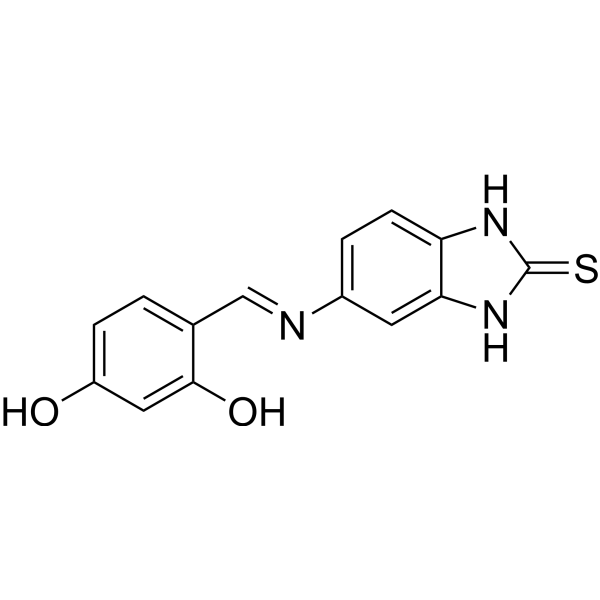
    Antitumor agent-215 is an antitumor agent. Antitumor agent-215 occupies the binding pocket of thymidylate synthase and interacts with key catalytic residues. Antitumor agent-215 induces cancer cell apoptosis and cell cycle arrest, and inhibits cell proliferation. Antitumor agent-215 can be used in the research of breast cancer and colorectal cancer .
    Antitumor agent-215
  • HY-103084

    Phosphodiesterase (PDE) Cardiovascular Disease
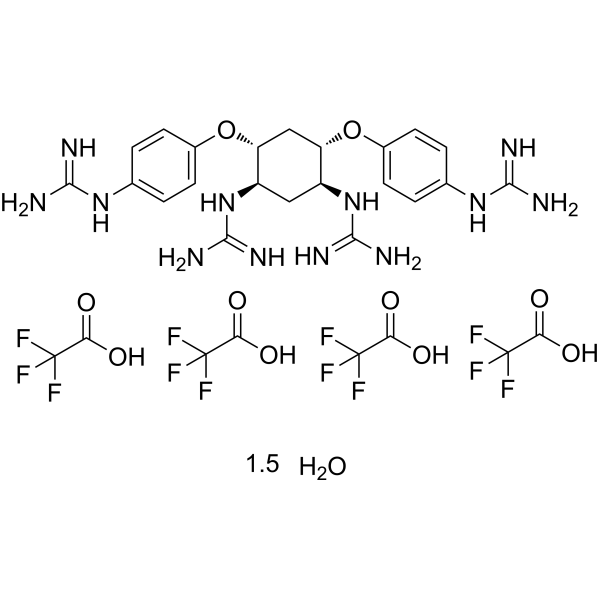
    PDE5-IN-1 is an orally active, selective PDE5 inhibitor with an IC50 of 5.6 nM. PDE5-IN-1 forms hydrogen bond interactions with the Q817 residue in the catalytic domain of PDE5, and aromatic π-π stacking interactions with the F820 residue. PDE5-IN-1 exerts anti-cardiac hypertrophy and vasodilatory effects, reduces mean pulmonary arterial pressure and right ventricular hypertrophy index. PDE5-IN-1 can be used in the research of pulmonary arterial hypertension .
    PDE5-IN-1
  • HY-P2782A

    Endogenous Metabolite Metabolic Disease
    Chloramphenicol Acetyltransferase, Escherichia coli is a bacterial enzyme that detoxifies the antibiotic chloramphenicol and is responsible for chloramphenicol resistance in bacteria. Chloramphenicol Acetyltransferase, Escherichia coli covalently attaches an acetyl group from acetyl-CoA to chloramphenicol, which prevents chloramphenicol from binding to ribosomes. A histidine residue, located in the C-terminal section of Chloramphenicol Acetyltransferase, Escherichia coli, plays a central role in its catalytic mechanism.
    Chloramphenicol Acetyltransferase, Escherichia coli
  • HY-173263

    Cholinesterase (ChE) Neurological Disease
    AChE-IN-86 (Compound 6f) is an inhibitor of enzyme acetylcholinesterase (AChE) with IC50 values of 25.33 μg/mL. AChE-IN-86 exerts inhibitory activity against AChE through forming hydrogen bonds, π-π and π-alkyl interactions with amino acid residues at the key catalytic sites of AChE. AChE-IN-86 can be used for Alzheimer's disease study .
    AChE-IN-86
  • HY-183373

    EGFR PARP Cancer
    EGFR/PARP-1-IN-1 is a dual EGFR and PARP-1 inhibitor with IC50 values of 64 nM and 12 nM, respectively. EGFR/PARP-1-IN-1 binds to the ATP-binding pocket of EGFR and interacts with the catalytic domain of PARP-1, inhibiting kinase and enzymatic activity via hydrogen bond formation with key residues in both targets. EGFR/PARP-1-IN-1 induces apoptosis through the endogenous mitochondrial pathway, arrests the cell cycle at the G2 phase, and inhibits cell proliferation. EGFR/PARP-1-IN-1 can be used for research on triple-negative breast cancer .
    EGFR/PARP-1-IN-1
  • HY-182396

    Penicillin-binding protein (PBP) Bacterial Infection
    YU253434 is a PBP3 inhibitor with an IC50 of 2.5 μM against Pseudomonas aeruginosa PBP3. YU253434 contains a siderophore domain that facilitates its uptake into the periplasmic space of Gram-negative bacilli. YU253434 exhibits antibacterial activity against multidrug-resistant Gram-negative bacilli. YU253434 can be used in studies of multidrug-resistant Gram-negative bacterial infections .
    YU253434
  • HY-115373

    MMP Inflammation/Immunology
    RO314724 is a selective MMP-1 inhibitor. RO314724 chelates to the catalytic zinc ion within the active site of MMP-1 and forms a stable complex with MMP-1. RO314724 can be used for the research of osteoarthritis .
    RO314724
  • HY-181494

    FAP Cancer
    FAPI-X5 is a fibroblast activation protein (FAP) inhibitor. FAPI-X5 binds to the FAP catalytic domain, forming hydrogen bonds with key active residues and engaging in π-π stacking to drive functional inhibition. FAPI-X5 exhibits albumin binding activity to prolong systemic circulation half-life. FAPI-X5 induces cytostatic effects on glioblastoma tumors, slowing tumor growth without regression. FAPI-X5, when labeled with 68Ga, acts as a PET tracer with rapid tumor uptake and high-contrast imaging in glioblastoma tumor-bearing mice. FAPI-X5, when labeled with 177Lu or 47Sc, functions as a targeted radionuclide agent with prolonged tumor retention. FAPI-X5 can be used for the research of glioblastoma .
    FAPI-X5
  • HY-117641

    Ser/Thr Protease Cardiovascular Disease
    CP 81282 is a tripeptide aspartic protease inhibitor, with an IC50 of 1 nM against human renin and an IC50 of 11 nM against endopeptidase. CP 81282 is applicable to the research of hypertension .
    CP 81282

Inquiry Online

Your information is safe with us. * Required Fields.

Salutation


Country or Region *

Applicant Name *


Organization Name *

Department *


Email Address *


Product Name *

Cat. No.


Requested quantity *

Phone Number *


Remarks

Inquiry Online

Inquiry Information

Product Name:
Cat. No.:
Quantity:
MCE Japan Authorized Agent:

