1. Search Result
Search Result
Pathways Recommended: Membrane Transporter/Ion Channel
Results for "

channel inhibitor

" in MedChemExpress (MCE) Product Catalog:

1352

Inhibitors & Agonists

10

Screening Libraries

9

Fluorescent Dyes

16

Biochemical Assay Reagents

110

Peptides

1

MCE Kits

151

Natural
Products

140

Isotope-Labeled Compounds

3

Click Chemistry

2

Oligonucleotides

3

GMP Molecules

Cat. No. Product Name Target Research Areas Chemical Structure
  • HY-B0545
    Probenecid
    40+ Cited Publications

    TRP Channel Bacterial HIV Metabolic Disease Cancer
    Probenecid is a potent and selective agonist of transient receptor potential vanilloid 2 (TRPV2) channels. Probenecid also inhibits pannexin 1 channels.
    Probenecid
  • HY-N6691
    Veratridine
    4 Publications Verification

    3-Veratroylveracevine

    Sodium Channel Neurological Disease
    Veratridine (3-Veratroylveracevine) is a plant neurotoxin, a voltage-gated sodium channels (VGSCs) agonist. Veratridine inhibits the peak current of Nav1.7, with an IC50 of 18.39 µM. Veratridine regulates sodium ion channels mainly by activating sodium ion channels, preventing channel inactivation and increasing sodium ion flow .
    Veratridine
  • HY-B1221
    Flufenamic acid
    5+ Cited Publications

    COX AMPK Potassium Channel Chloride Channel Calcium Channel Parasite Inflammation/Immunology
    Flufenamic acid is a non-steroidal anti-inflammatory agent, inhibits cyclooxygenase (COX), activates AMPK, and also modulates ion channels, blocking chloride channels and L-type Ca 2+ channels, modulating non-selective cation channels (NSC), activating K + channels. Flufenamic acid binds to the central pocket of TEAD2 YBD and inhibits both TEAD function and TEAD-YAP-dependent processes, such as cell migration and proliferation.
    Flufenamic acid
  • HY-16787
    ICA-121431
    4 Publications Verification

    Sodium Channel Cardiovascular Disease
    ICA-121431 is a nanomolar potent and broad-spectrum voltage-gated sodium channel (Nav) blocker, shows equipotent selectivity for human Nav1.1 and Nav1.3 subtypes with IC50 values of 13 nM and 23 nM, respectively. ICA-121431 shows less potent inhibition of Nav1.2 (IC50=240 nM) and 1,000 fold selectivity against Nav1.4, Nav1.6, and the TTX-resistant human Nav1.5 and Nav1.8 channels (IC50s >10 μM).
    ICA-121431
  • HY-101942
    Zegocractin
    15+ Cited Publications

    CM-4620

    CRAC Channel Neurological Disease
    Zegocractin (CM-4620) is a calcium-release activated calcium-channel (CRAC channel) inhibitor, with IC50s of 119 nM and 895 nM for Orai1/STIM1 and Orai2/STIM1 channels, respectively .
    Zegocractin
  • HY-105917
    Emidurdar
    5+ Cited Publications

    Endovion; NS3728

    Chloride Channel Others
    Endovion is a pharmacological anion channel inhibitor (like chloride channel) and the specific VRAC/VSOAC blocker. Endovion (NS3728) is also an Anoctamin-1 (ANO 1) channel inhibitor .
    Emidurdar
  • HY-111325
    Synta66
    5 Publications Verification

    CRAC Channel Neurological Disease
    Synta66 is an inhibitor of store-operated calcium entry channel Orai, which forms the pore of the CRAC channel, and used for the research of neurological disease.
    Synta66
  • HY-B0552A
    Dibucaine hydrochloride
    4 Publications Verification

    Cinchocaine hydrochloride

    Sodium Channel Neurological Disease
    Dibucaine hydrochloride (Cinchocaine hydrochloride) is a sodium channel inhibitor. Dibucaine hydrochloride is a potent SChE inhibitor .
    Dibucaine hydrochloride
  • HY-171244

    Sodium Channel Neurological Disease
    Sodium Channel inhibitor 6 (compound I) is a selective Nav1.8 inhibitor that can be used in the study of neuropathic pain .
    Sodium Channel inhibitor 6
  • HY-10035
    TTA-P2
    2 Publications Verification

    T-Type calcium channel inhibitor

    Calcium Channel Neurological Disease
    TTA-P2 (T-Type calcium channel inhibitor) is a selective, orally active, and BBB-penetrant T-type calcium channel blocker (IC50 = 22 nM). TTA-P2 reduces mechanical hypersensitivity and alleviates acute as well as chronic pain. TTA-P2 significantly reduces firing rates in temporal lobe epilepsy (TLE) neurons to control levels and suppresses synaptically evoked burst firing. TTA-P2 can be studied in research for neurological diseases such as tremor and absence epilepsy < sup>[4] .
    TTA-P2
  • HY-N0126
    Xanthone
    3 Publications Verification

    Environmental Pollutants Calcium Channel Monoamine Oxidase Cardiovascular Disease Neurological Disease
    Xanthone is a monoamine oxidase A (MAO-A) inhibitor with an IC50 of 0.84 µM. Xanthon inhibits Norepinephrine (HY-13715) and high-K +-induced vasoconstriction with IC50 values of 60.26 μM and 82.9 μM, respectively. Xanthon increases intracellular cyclic adenosine 3′,5′-monophosphate (cAMP) content and blocks Ca 2+ channels. Xanthone is the scaffold of several pharmacologically active compounds .
    Xanthone
  • HY-B1448

    KW-3049

    Calcium Channel Apoptosis Cardiovascular Disease
    Benidipine hydrochloride is an orally active calcium channel antagonist. Benidipine hydrochloride can inhibit cell proliferation and apoptosis. Benidipine hydrochloride has antioxidant activity and can increase nitric oxide synthase activity and improve coronary circulation in hypertensive rats .
    Benidipine hydrochloride
  • HY-12796A

    Vixotrigine hydrochloride; GSK-1014802 hydrochloride; CNV1014802 hydrochloride

    Sodium Channel Neurological Disease
    Raxatrigine hydrochloride (GSK-1014802 hydrochloride) is a novel small molecule state-dependent sodium channel blocker; Nav1.7 sodium channel inhibitor.
    Raxatrigine hydrochloride
  • HY-12796

    Vixotrigine; GSK-1014802; CNV1014802

    Sodium Channel Neurological Disease
    Raxatrigine (GSK-1014802) is a novel small molecule state-dependent sodium channel blocker; Nav1.7 sodium channel inhibitor.
    Raxatrigine
  • HY-100345
    AMTB hydrochloride
    2 Publications Verification

    TRP Channel Neurological Disease Cancer
    AMTB hydrochloride is a selective TRPM8 channel blocker. AMTB hydrochloride inhibits icilin-induced TRPM8 channel activation with a pIC50 of 6.23. AMTB hydrochloride can be used for the research of the overactive bladder and painful bladder syndrome. AMTB hydrochloride is a non-selective inhibitor of voltage-gated sodium channels (NaV) .
    AMTB hydrochloride
  • HY-B0552
    Dibucaine
    4 Publications Verification

    Cinchocaine

    Sodium Channel Neurological Disease
    Dibucaine (Cinchocaine) is a sodium channel inhibitor. Dibucaine is a potent SChE inhibitor .
    Dibucaine
  • HY-16723

    TV 45070; XEN402

    Sodium Channel Neurological Disease Inflammation/Immunology
    Funapide (TV 45070; XEN402) is an orally active inhibitor of voltage-gated sodium channels (VGSC) in the peripheral nervous system with IC50 values ??of 84 nM and 54 nM for Nav1.5 and Nav1.7, respectively. Funapide has analgesic effects .
    Funapide
  • HY-159819

    Sodium Channel Neurological Disease
    Vormatrigine is an orally active sodium channel inhibitor with anti-epileptic activity. Vormatrigine can be used to study human focal and generalized epilepsy .
    Vormatrigine
  • HY-D1543

    DNA Stain Infection
    Pyronin B is an organic cationic dye used for the staining of bacteria, mycobacteria and ribonucleic acids. Pyronin B is also used as a small hydrophobic (SH) protein channel inhibitor .
    Pyronin B
  • HY-162322

    Potassium Channel Cardiovascular Disease
    VU0542270 is a selective vascular Kir6.1/SUR2B KATP channel inhibitor with an IC50 value of 100 nM. VU0542270 has an IC50 > 30 μM for the other nine members of the Kir channel family. VU0542270 can be used in the study of cardiovascular disease .
    VU0542270
  • HY-108585A

    Potassium Channel Neurological Disease
    VU591 is a potent, selective renal outer medullary potassium channel (ROMK or Kir1.1) inhibitor, with an IC50 of 0.24 μM. VU591 can be used for neurological research with HY-108585 (the equivalent of VU591 hydrochloride) .
    VU591
  • HY-B0407AS

    Dopamine Receptor 5-HT Receptor Sodium Channel Potassium Channel Neurological Disease Cancer
    Chlorpromazine-d6 (hydrochloride) is the deuterium labeled Chlorpromazine. Chlorpromazine is an inhibitor of dopamine receptor, 5-HT receptor, potassium channel, sodium channel.
    Chlorpromazine-d6 hydrochloride
  • HY-P1221A

    Sodium Channel Neurological Disease
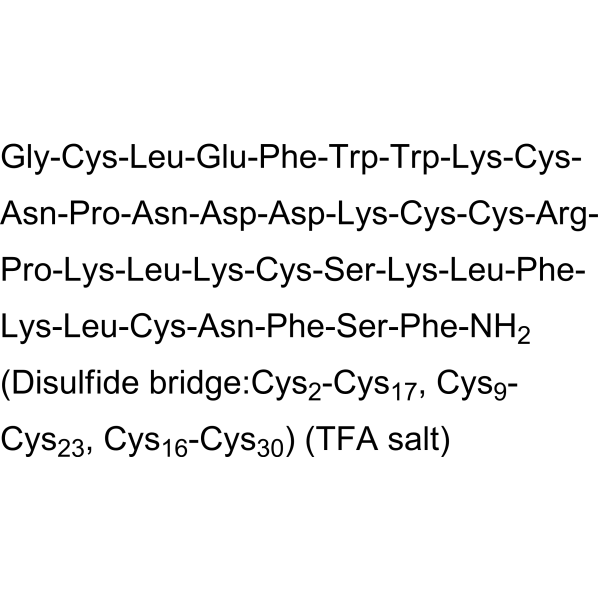
    ProTx II TFA is a selective blocker of Nav1.7 sodium channels with an IC50 of 0.3 nM, and is at least 100-fold selective for Nav1.7 over other sodium channel subtypes. ProTx-II inhibits sodium channels by decreasing channel conductance and shifting activation to more positive potentials and blocks action potential propagation in nociceptors .
    ProTx II TFA
  • HY-175728

    Potassium Channel Sodium Channel Calcium Channel Metabolic Disease
    VU6032735 is a potent and subtype-selective sperm-specific potassium channel 3 (SLO3) inhibitor with IC50 values of 165 nM (hSLO3) and 730 nM (mSLO3). VU6032735 also inhibits sodium channel and L-type calcium channel VU6032735 can sustain high tissue exposure in the fertilized oviduct. VU6032735 can be used for the research of contraception .
    VU6032735
  • HY-126486

    A293

    Potassium Channel Cardiovascular Disease
    AVE1231 (A293) is a dual-pore potassium channel TASK-1 inhibitor. AVE1231 blocks carbamoylcholine chloride (HY-B1208)-activated IKACh (IC50=8.4 μM). AVE1231 can be used in the study of arrhythmias and atrial fibrillation .
    AVE1231
  • HY-157784

    Sodium Channel Neurological Disease
    XPC-7724 is a selective Nav1.6 channel inhibitor with a IC50 value of 0.078 μM. XPC-7724 can be used in the study of neurological diseases .
    XPC-7724
  • HY-P5142

    ω-ACTX-Hv1; ω-Atracotoxin-HV1

    Insecticide Calcium Channel Apoptosis Necroptosis Cardiovascular Disease Neurological Disease Inflammation/Immunology
    ω-Hexatoxin-Hv1a (ω-ACTX-Hv1; ω-Atracotoxin-HV1) is an orally active insecticidal neurotoxin containing an inhibitor cystine knot motif and a selective calcium channel inhibitor. ω-Hexatoxin-Hv1a blocks L-type voltage-dependent Ca 2+ channels and reduces intracellular calcium ion concentration, thereby decreasing apoptosis, necroptosis and oxidative stress, and promoting cell recovery and energy level elevation. ω-Hexatoxin-Hv1a causes larval paralysis and death by impairing neurotransmission in the central nervous system of insects. It shows high injectable toxicity against insects of multiple orders, but exhibits weak oral toxicity. ω-Hexatoxin-Hv1a is widely applicable to studies related to ischemia-reperfusion injury, atopic dermatitis, and ischemic injury of cardiomyocytes and neurons .
    ω-Hexatoxin-Hv1a
  • HY-114633
    VU625
    2 Publications Verification

    Potassium Channel Others
    VU625 is an inhibitor for potassium channel, that selectively inhibits mosquito Aedes aegypti inward rectifier potassium channel 1 (AeKir), with IC50 of 96.8 nM in HEK293 cell. VU625 can be used in development of insecticide .
    VU625
  • HY-126583

    Calcium Channel Cancer
    Nemadipine-A is a specific inhibitor of the EGL-19 L-type Ca 2+ channel . Nemadipine-A, a cell-permeable L-type calcium channel inhibitor, sensitizes TRAIL-resistant cancer cells to this ligand .
    Nemadipine-A
  • HY-108585

    Potassium Channel Neurological Disease
    VU591 hydrochloride is a potent, selective renal outer medullary potassium channel (ROMK or Kir1.1) inhibitor, with an IC50 of 0.24 μM. VU591 hydrochloride can be used for neurological research with HY-108585A (the equivalent of VU591 hydrochloride) .
    VU591 hydrochloride
  • HY-P1221

    Sodium Channel Neurological Disease
    ProTx II is a selective blocker of Nav1.7 sodium channels with an IC50 of 0.3 nM, and is at least 100-fold selective for Nav1.7 over other sodium channel subtypes. ProTx-II inhibits sodium channels by decreasing channel conductance and shifting activation to more positive potentials and blocks action potential propagation in nociceptors .
    ProTx II
  • HY-108335
    Sipatrigine
    1 Publications Verification

    619C89; BW 619C89

    Sodium Channel Calcium Channel Neurological Disease
    Sipatrigine (619C89), a neuroprotective agent, is a glutamate release inhibitor, voltage-dependent sodium channel and calcium channel inhibitor, penetrating the central nervous system. Has the potential in the study for focal cerebral ischemia and stroke .
    Sipatrigine
  • HY-44153

    Potassium Channel Neurological Disease
    KV2 channel inhibitor-1 is a selective KV2 channel inhibitor with IC50s of 0.2 μM and 0.41 μM for KV2.1 and KV2.2, respectively. KV2 channel inhibitor-1 possesses good selectivity over KV1.2 (IC50>10 μM). KV2 channel inhibitor-1 is >10-fold selective over NaV channels and other KV channels and displays weak activity on CaV channels .
    KV2 channel inhibitor-1
  • HY-155058

    Sodium Channel Neurological Disease
    Nav1.3 channel inhibitor 1 (compound 15b) is a state-dependent voltage-gated sodium channel Nav1.3 inhibitor (IC50=20 nM). Nav1.3 channel inhibitor 1 can penetrate the blood-brain barrier and can be used in the research of nervous system diseases .
    Nav1.3 channel inhibitor 1
  • HY-P5818

    Sodium Channel Neurological Disease
    BDS-II is a peptide toxin, and is composed of 43 amino acids. BDS-II is a selective Kv3.4 channel inhibitor .
    BDS-II
  • HY-P5182A

    Potassium Channel Inflammation/Immunology
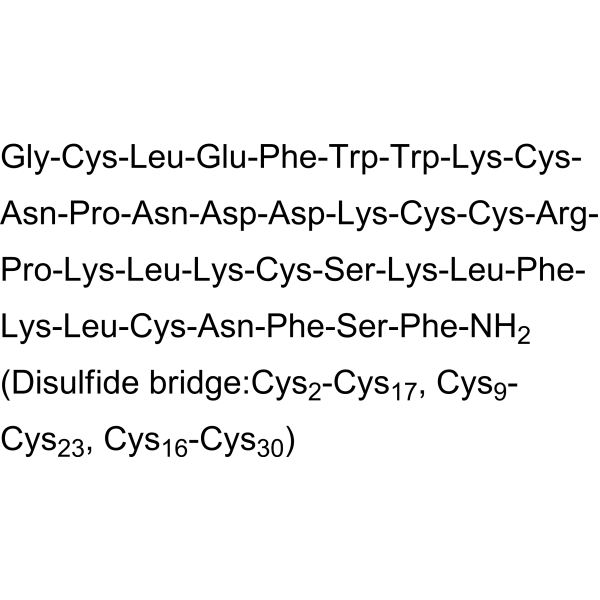
    HsTX1 (TFA) toxin, from the scorpion Heterometrus spinnifer, is a 34-residue, C-terminally amidated peptide cross-linked by four disulfide bridges. HsTX1 (TFA) is an the inhibitor of potassium channel, with IC50 for Kv1.3 of 12 pM and inhibits TEM cell activation and attenuates inflammation in autoimmunity .
    HsTX1 TFA
  • HY-N5101
    Kobusin
    1 Publications Verification

    CFTR Chloride Channel Neurological Disease Inflammation/Immunology
    Kobusin is a bisepoxylignan isolated from the Pnonobio biondii Pamp. Kobusin is an activator of CFTR and CaCCgie chloride channels and a inhibitor of ANO1/CaCC (calcium-activated chloride channel) channel .
    Kobusin
  • HY-15736

    Sodium Channel Neurological Disease
    Sodium Channel inhibitor 1 is a state-dependent voltage-gated NaV1.7 inhibitor with an IC50 of 0.087 μM. Sodium Channel inhibitor 1 can be used for research of pain .
    Sodium Channel inhibitor 1
  • HY-50707

    (Rac)-T-Type calcium channel inhibitor

    Calcium Channel Drug Isomer Neurological Disease
    (Rac)-TTA-P2 is the isomer of TTA-P2 (HY-10035), and can be used as an experimental control. TTA-P2 (T-Type calcium channel inhibitor) is a potent inhibitor of T-Type calcium channel. TTA-P2 penetrates well the CNS and blocks the native T-type currents in deep cerebellar nuclear neurons, the window current is completely abolished both for wild-type and mutant Cav3.1 channels. TTA-P2 has the potential for the research of neurology disease .
    (Rac)-TTA-P2
  • HY-P3065

    Calcium Channel Neurological Disease
    Calcicludine is a protein toxin from the venom of the green mamba that inhibits high-voltage-activated calcium channel, especially L-type calcium channel .
    Calcicludine
  • HY-P5925

    SsTx Toxin

    Potassium Channel Neurological Disease Inflammation/Immunology
    Ssm Spooky Toxin is found in Scolopendra mutilans that potently inhibits KCNQ (voltage-gated potassium channel family 7) channels, with IC50s of 2.8 μM, 5.26 μM and 0.1-0.3 M for Kv7.4, Kv1.3, and Shal channel, respectivily. Ssm Spooky Toxin inhibits cytokine generation by specifically acting on the KV1.3 channel in T cells. Ssm Spooky Toxin plays an essential role in the centipede’s circulatory system .
    Ssm spooky toxin
  • HY-134559

    Potassium Channel Neurological Disease
    TKIM is a TREK-1 channel inhibitor with an IC50 of 2.96 μM. TKIM binds to the pocket of the intermediate (IM) state of TREK-1 .
    TKIM
  • HY-177311

    Sodium Channel Metabolic Disease
    NVP-QBE170 is a selective Epithelial sodium channel (ENaC) inhibitor with an IC50 of 57.5 nM. NVP-QBE170 potently inhibits ENaC function in HBECs and shows a longer duration of action. NVP-QBE170 significantly attenuates ENaC activity in the airways of guinea pig models. NVP-QBE170 can be used for hyperkalaemia research .
    NVP-QBE170
  • HY-146380

    Histone Demethylase Cancer
    S1427 is a tranylcypromine-derived LSD1 inhibitor with the IC50 of 390 nM and Ki of 80 nM. S1427 exhibits desirable hERG channel inhibition and microsomal stability profiles. Inhibition of LSD1 partially reduces the proliferation of cancer cells .
    S1427
  • HY-175003

    Proton Pump Cancer
    HV1-IN-2 (Compound 14c) is a human voltage-gated proton channel (HV1) inhibitor with an IC50 of 2.14 μM. HV1-IN-2 has a potent anticancer activity with significant antiproliferative effects against THP-1 and MCF-7 cells. HV1-IN-2 can be used for cancers research, such as colorectal tumours, leukaemia, and breast cancer .
    HV1-IN-2
  • HY-U00309

    HCN Channel Cardiovascular Disease
    YM758 is a "funny" If current channel (If channel) inhibitor.
    YM758
  • HY-W990281

    Restacorin

    Sodium Channel Cardiovascular Disease
    B-GYKI-38233 hydrochloride (Restacorin) is a sodium channel blocker used in antiarrhythmic research .
    B-GYKI-38233 hydrochloride
  • HY-121841

    O-1821; CBD-C1

    TRP Channel Inflammation/Immunology Cancer
    Cannabidiorcol (CBDO, CBD-C1, O-1821) is related to cannabidiol, with the pentyl side chain shortened to a methyl group. Cannabidiorcol has low affinity for cannabinoid receptors (CBs) and is an agonist of the transient receptor potential channel (TRP channel), through which it produces antiinflammatory effects, but can also promote tumorigenesis at high concentrations .
    Cannabidiorcol
  • HY-49066

    Sodium Channel Neurological Disease
    Sodium Channel inhibitor 4 is a sodium channel inhibitor .
    Sodium Channel inhibitor 4
  • HY-163637

    Sodium Channel Cardiovascular Disease
    Sodium Channel inhibitor 5 (compound 7d) is a potent inhibitor of sodium channel, with the IC50 of 2.7 μM. Sodium Channel inhibitor 5 plays an important role in antiarrhythmic research .
    Sodium Channel inhibitor 5

Inquiry Online

Your information is safe with us. * Required Fields.

Salutation


Country or Region *

Applicant Name *


Organization Name *

Department *


Email Address *


Product Name *

Cat. No.


Requested quantity *

Phone Number *


Remarks

Inquiry Online

Inquiry Information

Product Name:
Cat. No.:
Quantity:
MCE Japan Authorized Agent:

