5 Results for "

cholesterol translocation

" in MedChemExpress (MCE) Product Catalog:
Products (5)

5 Results for "cholesterol translocation" in MCE Product Catalog:

7
7 Cited Publications
Cat. No.: HY-N0010
CAS No.: 27741-01-1
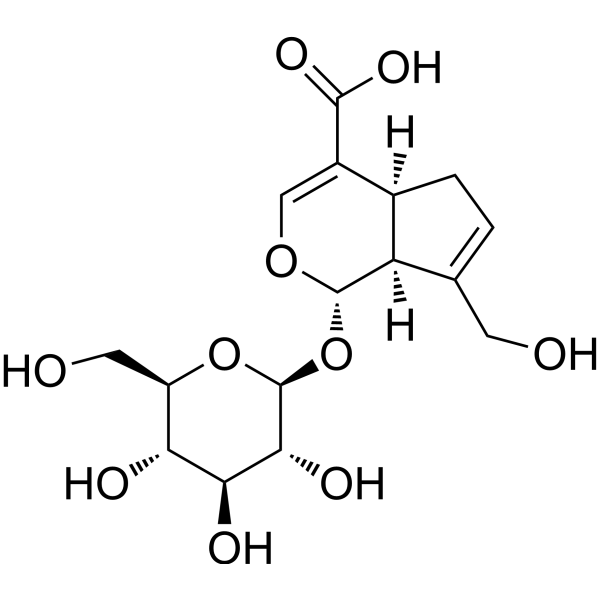
Geniposidic acid is an orally active FXR modulator and SIRT6 activator. Geniposidic acid binds to the Ser332 and His447 sites on the FXR ligand-binding domain, thereby driving nuclear translocation, coactivator recruitment, and transcription of downstream bile acid and cholesterol metabolism-related genes. Geniposidic acid improves metabolic dysfunction-related fatty liver disease by activating the SIRT6 signaling pathway. Geniposidic acid inhibits inflammation and modulates gut microbiota to alleviate colitis. Geniposidic acid can be used in research on drug-induced liver injury, inflammatory bowel disease, metabolic dysfunction-related fatty liver disease, and metabolic dysfunction-related steatohepatitis .
loading...
    loading...
1
1 Cited Publications
Cat. No.: HY-N0857
CAS No.: 79233-15-1
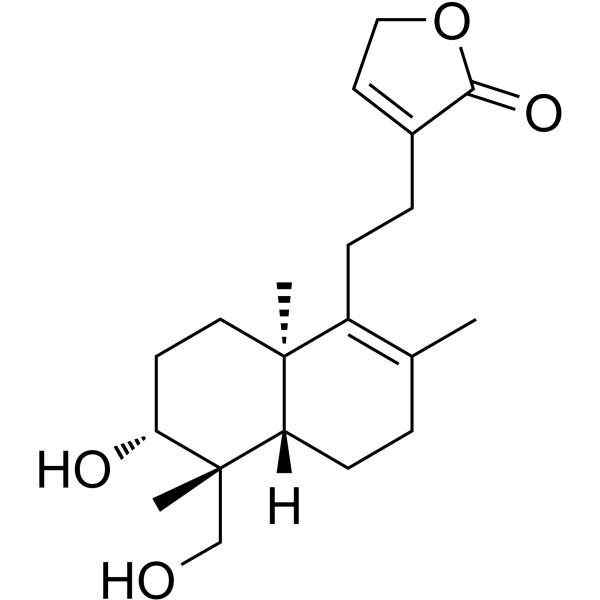
Deoxyandrographolide is an orally active lactone found in the Andrographis paniculata Nees. Deoxyandrographolide shows a KD of 38.4 μM of HDAC1. Deoxyandrographolide enhances GLUT4 plasma membrane translocation, activates PI3K and AMPK-dependent signaling pathways, suppresses fasting blood glucose, serum insulin, triglycerides, and LDL-cholesterol levels. Deoxyandrographolide enhances HDAC1 expression via inhibited ubiquitination degradation, represses H3K4me3, improves chromosome stability, and restrains aging biomarkers p16, p21, γH2A.X, p53 and ROS production. Deoxyandrographolide interacts with Foot-and-Mouth Disease Virus 3Cpro active site, inhibits protease and IFN-antagonist activity, derepresses ISG expression, and inhibits viral replication. Deoxyandrographolide can be used for the researches of type 2 diabetes mellitus, vascular senescence and virus infection .
loading...
    loading...
Cat. No.: HY-B1608
CAS No.: 10025-73-7
Chromium chloride is a trivalent chromium compound and an essential trace mineral. Chromium chloride enhances insulin-stimulated GLUT4 translocation and glucose uptake in skeletal muscle. Chromium chloride regulates glucose and lipid metabolism, inhibits TNF-α secretion and oxidative stress in monocytes treated with high glucose or H2O2, and reverses hydrogen peroxide-induced cell growth inhibition. Chromium chloride reduces coronary and aortic lipid deposition and serum cholesterol levels in hypercholesterolemic rabbits. Chromium chloride can be used in research related to diabetes and cardiac atherosclerosis .
loading...
    loading...
Cat. No.: HY-173033
CAS No.: 2530027-71-3
MI-883 is orally active constitutive androstane receptor (CAR) (EC50 of 73 nM) agonist and pregnane X Receptor (PXR) (IC50 of 100 nM) antagonist. MI-883 binds to CAR and PXR ligand-binding domains, promotes CAR LBD assembly, activates CAR3 variant, stimulates CAR cytoplasmic-nuclear translocation, upregulates CAR target genes, recruits coactivators NCOA1, NCOA2, NCOA3, inhibits basal and agonist-induced PXR activation, downregulates PXR target genes, disrupts PXR-NCOR2 interaction, blocks agonist-mediated PXR-NCOA1 recruitment. MI-883 reduces plasma total cholesterol, LDL cholesterol, and hepatic free cholesterol levels, increases fecal bile acid excretion, regulates genes involved in xenobiotic metabolism, cholesterol homeostasis, and bile acid homeostasis. MI-883 exhibits metabolic stability, liver-predominant distribution, a safety profile with no observed toxicity, and does not stimulate human hepatocyte hypertrophy or hyperplasia. MI-883 can be used for the research of diet-induced hypercholesterolemia .
loading...
    loading...
Cat. No.: HY-184337
CAS No.: 143111-84-6
Dihydroparadol is a iNOS inhibitor with an IC50 of 7.24 μM, and it is found in ginger. Dihydroparadol partially inhibits the catalytic activity of iNOS, blocks the nuclear translocation of NF-κB p65, reduces NF-κB activity, and attenuates lipopolysaccharide-induced degradation of IκB-α, thereby inhibiting NF-κB-mediated iNOS gene expression and protein production. Dihydroparadol inhibits lipopolysaccharide-induced nitric oxide production in macrophages and exhibits anti-inflammatory activity. Dihydroparadol increases ABCA1 protein abundance by elevating mRNA levels and reducing proteasomal degradation, and also increases ABCG1 protein abundance by enhancing protein stability. Dihydroparadol promotes cholesterol efflux from cholesterol-loaded macrophages via apolipoprotein A1-mediated and plasma-mediated pathways. Dihydroparadol inhibits PDGF-induced vascular smooth muscle cell proliferation, shows no cytotoxicity to vascular smooth muscle cells within the tested concentration range, and does not interfere with endothelial cell proliferation. Dihydroparadol can be used in the research of inflammatory diseases, atherosclerosis and cardiovascular diseases .
loading...
    loading...

