1. Search Result
Search Result
Results for "

colorant

" in MedChemExpress (MCE) Product Catalog:

66

Inhibitors & Agonists

50

Fluorescent Dyes

10

Natural
Products

1

Isotope-Labeled Compounds

2

Oligonucleotides

Cat. No. Product Name Target Research Areas Chemical Structure
  • HY-D0915
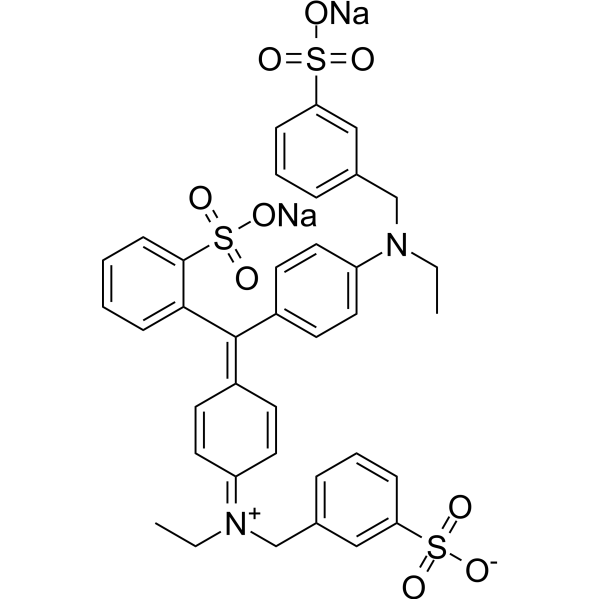
    Brilliant Blue FCF
    5 Publications Verification

    Acid Blue 9; FD&C Blue No. 1; E133

    Environmental Pollutants Fluorescent Dye Others
    Brilliant Blue FCF is an aromatic hydrocarbon, a synthetic dye produced from petroleum and used as a colorant for food and other substances. The solution has a maximum absorption at 628 nm.
    Brilliant Blue FCF
  • HY-D0257
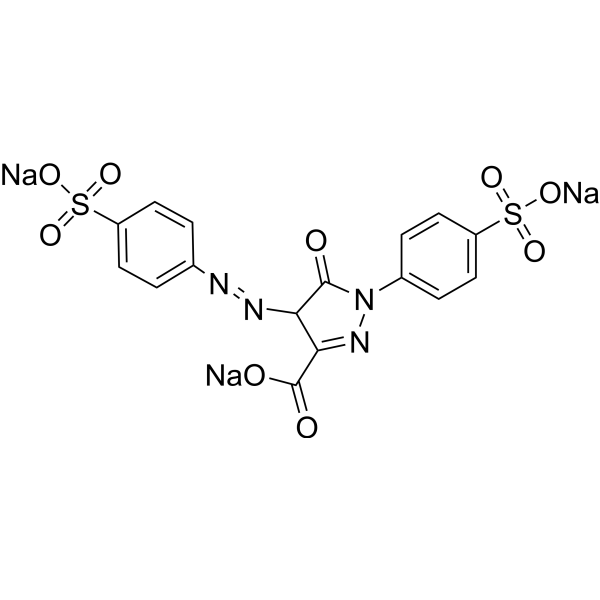
    Tartrazine
    1 Publications Verification

    Acid Yellow 23; FD&C Yellow No. 5

    Environmental Pollutants Fluorescent Dye Cardiovascular Disease Neurological Disease
    Tartrazine (Acid Yellow 23; FD&C Yellow No. 5) is an orally active azo acid dye, orange-yellow powder, soluble in water and turns yellow. Tartrazine is mainly used as a synthetic lemon yellow azo dye for food coloring. Tartrazine is the most stable colorant.Tartrazine induces mitochondria-mediated Apoptosis. Tartrazine can cause neurodevelopmental toxicity, cytotoxicity, and genotoxicity .
    Tartrazine
  • HY-123630

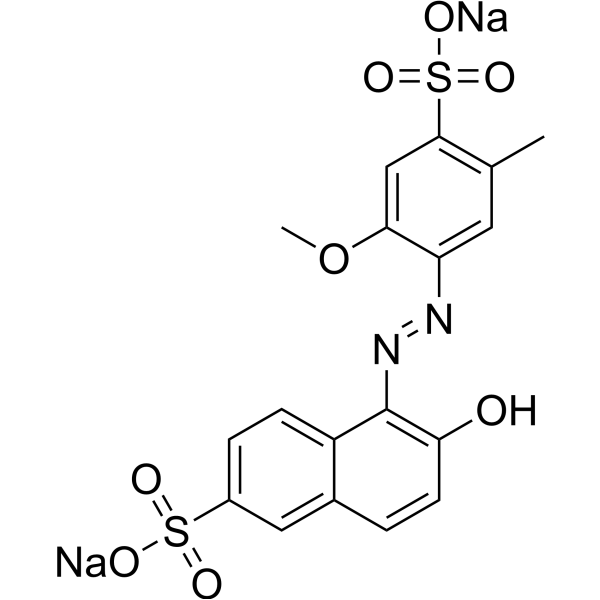
    FD&C RED NO. 40; CI 16035

    Environmental Pollutants Fluorescent Dye 5-HT Receptor Interleukin Related Reactive Oxygen Species (ROS) IFNAR Inflammation/Immunology
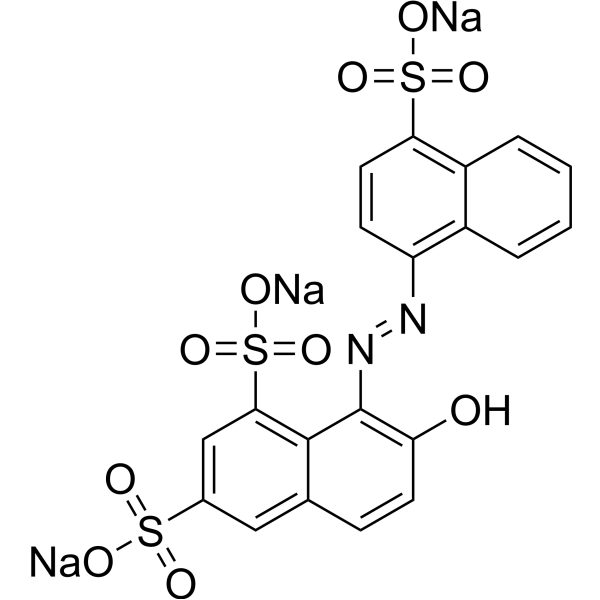
    Allura Red AC is a food colorant, appearing as a deep red water-soluble powder or granules, used in various applications such as beverages, syrups, candies, and cereals. Allura Red AC can statically quench the intrinsic fluorescence of HSA. Additionally, Allura Red AC is a 5-hydroxytryptamine (5-HT) pathway-associated pro-inflammatory agent, capable of exacerbating experimental colitis. Allura Red AC holds potential for research in inflammatory bowel disease (IBD), intestinal barrier function, and food additive safety .
    Allura Red AC
  • HY-W051271

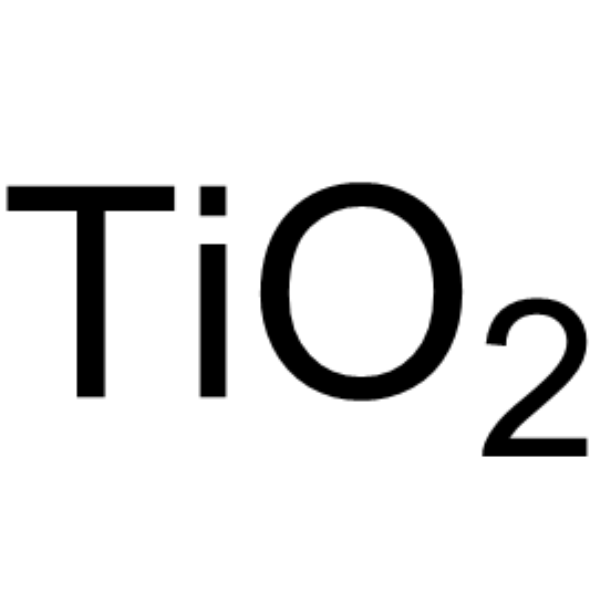
    Titanium dioxide

    Environmental Pollutants Reactive Oxygen Species (ROS) Photosensitizer Others
    Titanium(IV) oxide is a photosensitizer and photocatalyst. Titanium(IV) oxide can be used as a pharmaceutical excipient such as a flow aid, coating agent, sunscreen, colorant, etc. Pharmaceutical excipients or pharmaceutical excipients refer to other chemical substances used in the pharmaceutical process other than the drug ingredients. Pharmaceutical excipients generally refer to inactive ingredients in pharmaceutical preparations that can improve the stability, solubility and processability of pharmaceutical preparations. Pharmaceutical excipients also affect the absorption, distribution, metabolism and elimination (ADME) process of co-administered drugs. Titanium(IV) oxide can use light energy to generate electron-hole pairs to degrade pollutants. Photons excite electrons in TiO2 to generate active oxygen species (such as ·OH and ·O2 -), thereby oxidizing and mineralizing pollutants such as organic compounds and heavy metals. TiO2 can be used in the research of environmental remediation fields such as water treatment, air purification and self-cleaning materials .
    Titanium(IV) oxide
  • HY-112578

    Others Metabolic Disease Inflammation/Immunology
    Betanin has potent antioxidant and anti-inflammatory effect, that could inhibit peroxynitrite (ONOO -), with an IC50 of 19.2 μM. Betanin is a red glycoside obtained from beets that can be used as colorant.
    Betanin
  • HY-128448

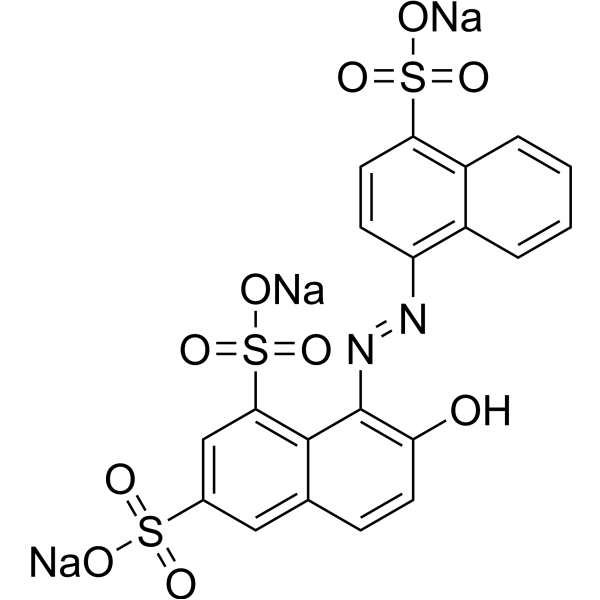
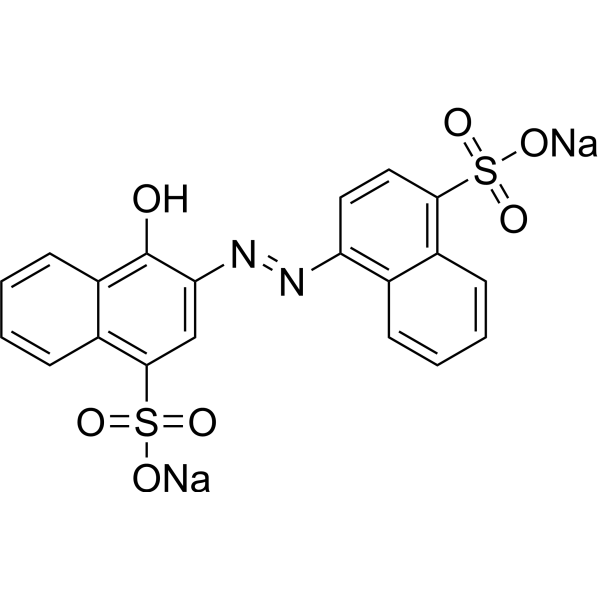
    Azorubine; Acid Red 14; E122

    Environmental Pollutants Fluorescent Dye Inflammation/Immunology
    Carmoisine (Azorubine) is an azo dye that can be used as a food additive .
    Carmoisine
  • HY-D0193
    Ponceau 4R
    1 Publications Verification

    Acid Red 18; New Coccine

    Environmental Pollutants Fluorescent Dye Others
    Ponceau 4R is a synthetic colorant that can be used for food coloring. Ponceau 4R is a strawberry red azo dye that can be used in a variety of foods, usually synthesized from aromatic hydrocarbons, and is stable to light, heat, and acids .
    Ponceau 4R
  • HY-N8407

    Fluorescent Dye Interleukin Related Reactive Oxygen Species (ROS) NF-κB JNK Keap1-Nrf2 SOD Inflammation/Immunology
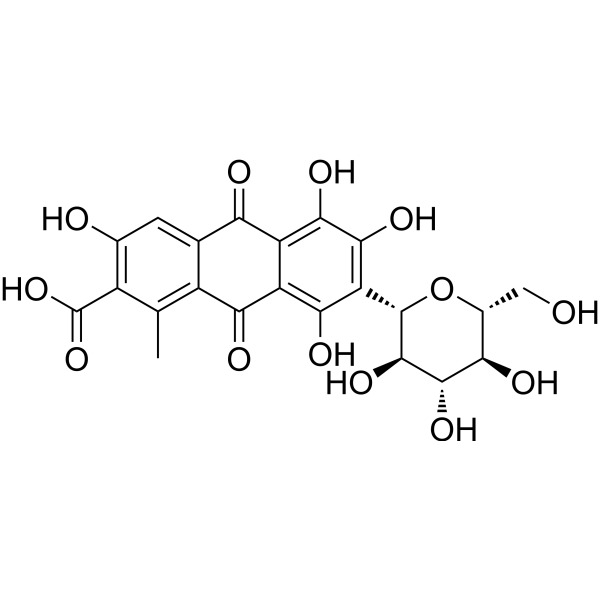
    Carminic acid is a widely used and orally active natural red pigment that can be used in industries such as food, cosmetics, and pharmaceuticals. In addition, carminic acid has anti-inflammatory and antioxidant activities .
    Carminic acid
  • HY-D0166A

    Biochemical Assay Reagents Others
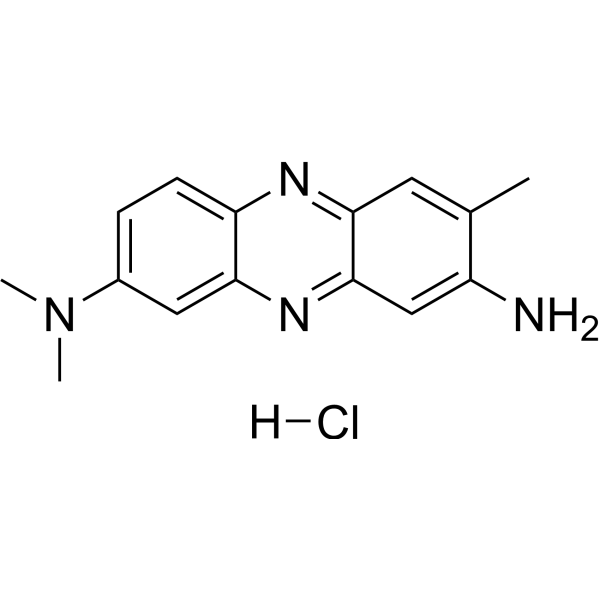
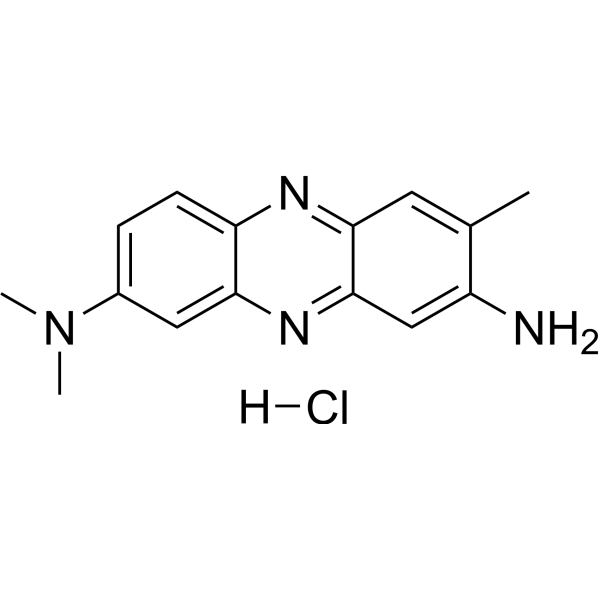
    Neutral Red (IND) is an organic dye commonly used in biology and cytology laboratories. It can be used to stain living cells, secreted proteins and other molecular structures, etc., and has a wide range of applications in cell imaging and staining. In addition, Neutral Red (IND) is widely used in industrial fields such as water treatment, food processing and paper manufacturing, for example as an indicator or colorant. Although the compound has no direct medical application, it has important application value in the fields of biology, chemistry and industry.
    Neutral Red (IND)
  • HY-N1442

    Orange II; D&C Orange NO. 4

    Environmental Pollutants Biochemical Assay Reagents Others
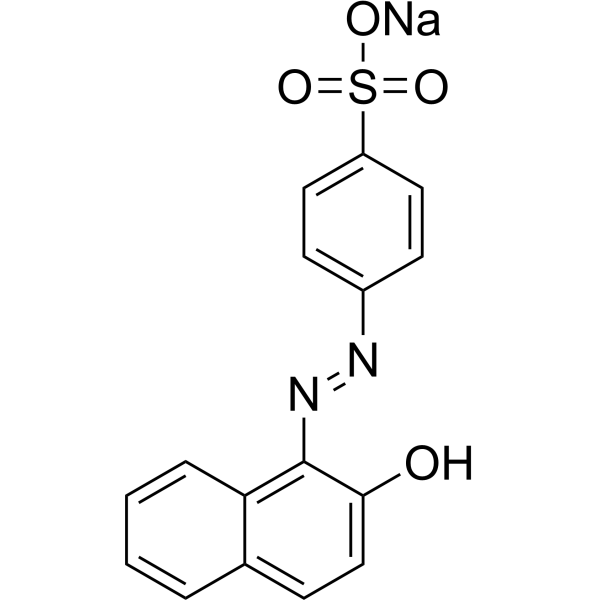
    Acid Orange 7 (Orange II; D&C Orange NO. 4) is an azo dye widely used in the textile, food and cosmetic industries. Acid Orange 7 is mainly used as a colorant by combining with fibers and other substances through azo bonds. Acid Orange 7 has a maximum absorption wavelength at 484-485 nm, and the concentration is measured using a UV-visible spectrophotometer. Acid Orange 7 is difficult to degrade and has a certain degree of toxicity. It is often used to study various sewage treatment technologies and photocatalytic degradation reactions, and to evaluate the removal effects of different treatment methods on organic pollutants .
    Acid orange 7
  • HY-N6951

    Apoptosis Akt mTOR Reactive Oxygen Species (ROS) Caspase Bacterial Fungal Infection Neurological Disease Metabolic Disease Inflammation/Immunology Cancer
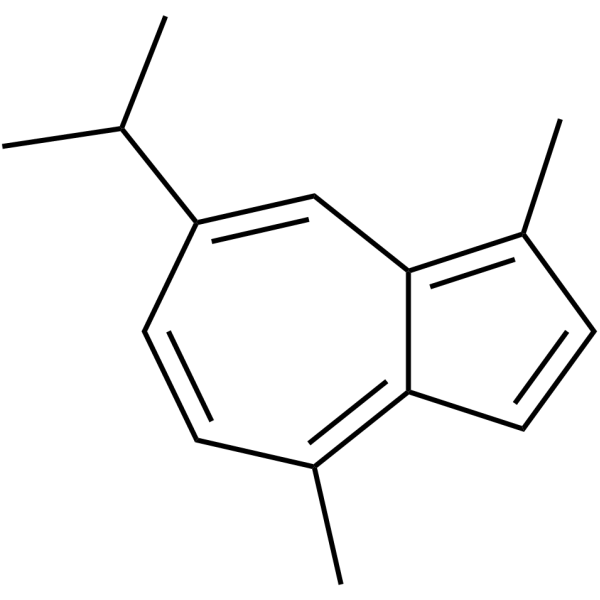
    Guaiazulene is a bicyclic sesquiterpene. Guaiazulene exhibits various biological activities such as anti-inflammatory, antioxidant, hepatoprotective, antibacterial, and anti-tumor properties. Guaiazulene is also commonly used as a colorant in cosmetics. Guaiazulene shows in vitro cytotoxicity to rat neuronal cells and N2a neuroblastoma cells at high concentrations .
    Guaiazulene
  • HY-128382

    E 151

    Enterovirus Infection
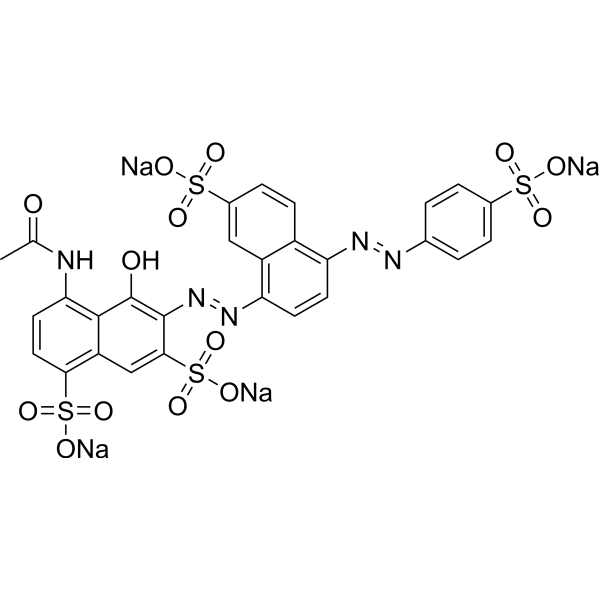
    Brilliant black BN (E151) is an azo dye and a food colorant . Brilliant black BN is a promising antiviral agent against EV71 infection via inhibiting the interaction between EV71 and its cellular uncoating factor cyclophilin A. Brilliant black BN has the potential for the investigation of contagious disease .
    Brilliant Black BN
  • HY-N2533

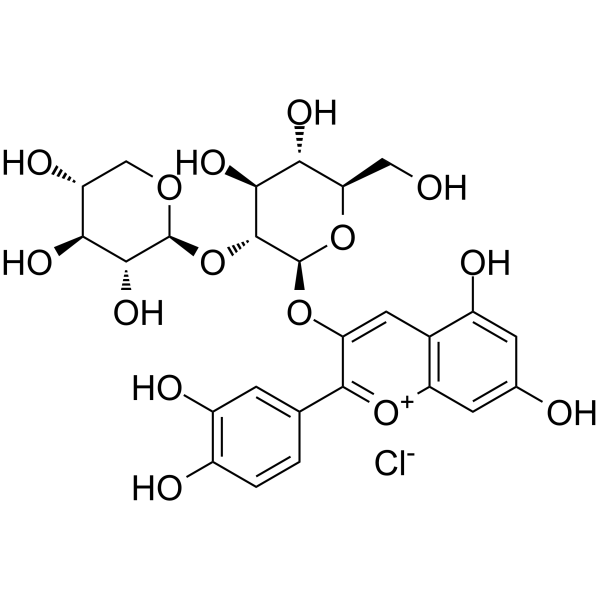
    Cyanidin-3-O-sambubioside chloride

    Influenza Virus Angiotensin-converting Enzyme (ACE) Akt MMP Infection Cardiovascular Disease Inflammation/Immunology Cancer
    Cyanidin 3-sambubioside chloride (Cyanidin-3-O-sambubioside chloride), a major anthocyanin, a natural colorant, and is a potent NO inhibitor. Cyanidin 3-sambubioside chloride is a H274Y mutation inhibitor, and inhibits influenza neuraminidase activity with an IC50 of 72 μM. Cyanidin 3-sambubioside chloride inhibits angiotensin-converting enzyme (ACE) activity and has antioxidant, anti-angiogenic and antiviral properties .
    Cyanidin 3-sambubioside chloride
  • HY-D0376

    C.I. 48160

    Fluorescent Dye Others
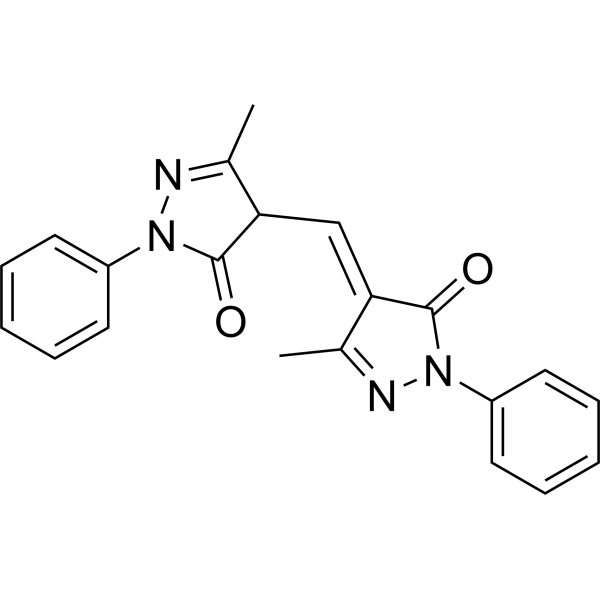
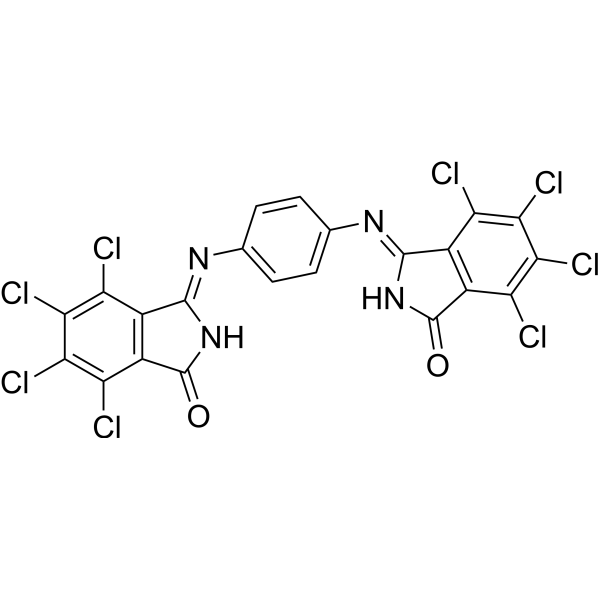
    Solvent Yellow 93 (C.I. 48160) is an azomethine dye. Solvent Yellow 93 is used as a colorant of toner. Solvent Yellow 93 is used for the coloring of polyester fiber pulp and is also used to make polyester masterbatch .
    Solvent Yellow 93
  • HY-154696

    Biochemical Assay Reagents Others
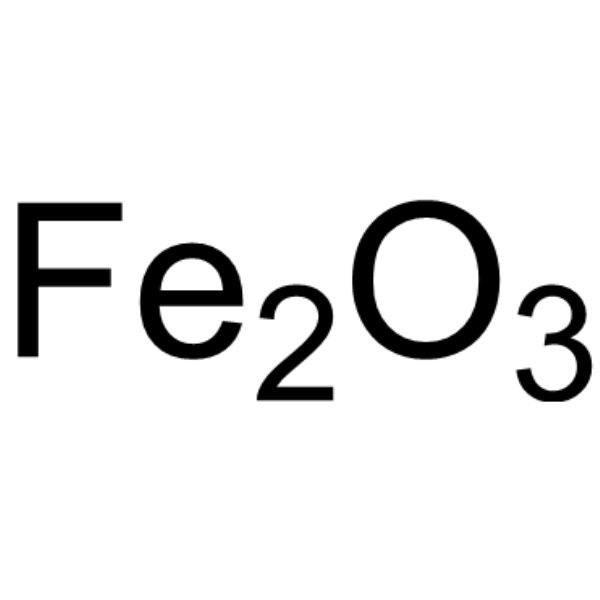
    Ferric oxide, yellow can be used as an excipient, such as colorant. Pharmaceutical excipients, or pharmaceutical auxiliaries, refer to other chemical substances used in the pharmaceutical process other than pharmaceutical ingredients. Pharmaceutical excipients generally refer to inactive ingredients in pharmaceutical preparations, which can improve the stability, solubility and processability of pharmaceutical preparations. Pharmaceutical excipients also affect the absorption, distribution, metabolism, and elimination (ADME) processes of co-administered drugs .
    Ferric oxide, yellow
  • HY-W250147

    Victoria blue B

    Biochemical Assay Reagents Others
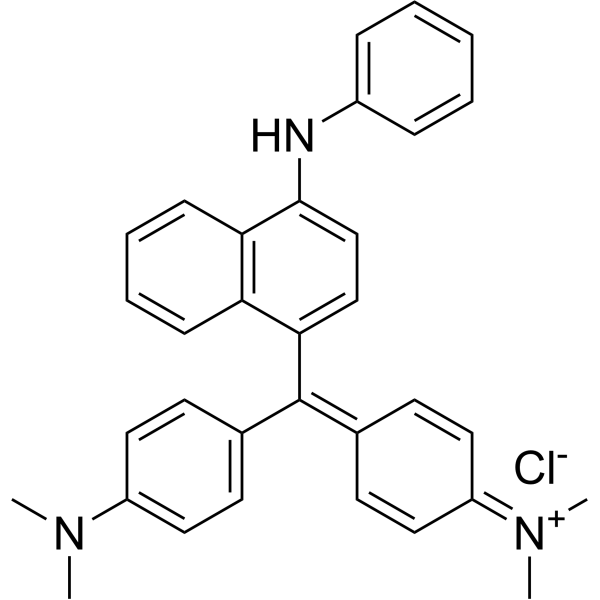
    Basic blue 26 (Victoria blue B) is a synthetic cationic dye belonging to the class of triarylmethane dyes. It has a bright blue color and is commonly used as a colorant for a variety of applications, including textiles, paper and leather. Basic Blue 26 is also used as a biological stain for DNA and protein detection in laboratories. Due to its ability to bind negatively charged materials, it can be used as an indicator of the presence of specific molecules in biological samples. However, Basic blue 26 has been reported to have potentially harmful effects on human health and the environment and its use is regulated in some countries. Proper handling and disposal procedures are necessary to minimize its impact on the environment.
    Basic blue 26
  • HY-D0193A

    Acid Red 18 (85%); New Coccine (85%)

    Environmental Pollutants Drug Derivative Neurological Disease Inflammation/Immunology
    Ponceau 4R (85%) (Acid Red 18 (85%); New Coccine (85%)) is an orally active synthetic food colorant and a HSA-binding aggregator. Ponceau 4R (85%) binds to HSA, inducing its partial unfolding, conformational changes and aggregation. Ponceau 4R (85%) serves as a food colorant and can be used in research on diseases including type Ⅱ diabetes, Parkinson's disease, Huntington's disease and spongiform encephalopathy .
    Ponceau 4R (85%)
  • HY-D1137

    Fluorescent Dye
    C.I. Pigment yellow 110 is the most important colorant used to add color or change the color of something and is chemically essentially unaffected by the carrier or medium into which it is incorporated. It can be widely used in textile, medicine, food, cosmetics, plastics, paint, ink, photography and paper industries.
    C.I. Pigment yellow 110
  • HY-154696A

    Biochemical Assay Reagents Others
    Ferric oxide, red can be used as an excipient, such as colorant. Pharmaceutical excipients, or pharmaceutical auxiliaries, refer to other chemical substances used in the pharmaceutical process other than pharmaceutical ingredients. Pharmaceutical excipients generally refer to inactive ingredients in pharmaceutical preparations, which can improve the stability, solubility and processability of pharmaceutical preparations. Pharmaceutical excipients also affect the absorption, distribution, metabolism, and elimination (ADME) processes of co-administered drugs .
    Ferric oxide, red
  • HY-N8407R

    Fluorescent Dye Interleukin Related Reactive Oxygen Species (ROS) NF-κB JNK Keap1-Nrf2 SOD Reference Standards Inflammation/Immunology
    Carminic acid (Standard) is the analytical standard of Carminic acid (HY-N8407). This product is intended for research and analytical applications. Carminic acid is a widely used and orally active natural red pigment that can be used in industries such as food, cosmetics, and pharmaceuticals. In addition, carminic acid has anti-inflammatory and antioxidant activities .
    Carminic acid (Standard)
  • HY-D0429

    Fluorescent Dye
    C.I. Pigment red 5 is the most important colorant used to add color or change the color of something and is chemically essentially unaffected by the carrier or medium into which it is incorporated. It can be widely used in textile, medicine, food, cosmetics, plastics, paint, ink, photography and paper industries.
    C.I. Pigment red 5
  • HY-D0283

    Fluorescent Dye Others
    Pigment Yellow 83 is a yellow colorant .
    Pigment Yellow 83
  • HY-D0531

    Fluorescent Dye
    C.I. Pigment red 123 is the most important colorant used to add color or change the color of something and is chemically essentially unaffected by the carrier or medium into which it is incorporated. It can be widely used in textile, medicine, food, cosmetics, plastics, paint, ink, photography and paper industries.
    C.I. Pigment red 123
  • HY-D0960

    Fluorescent Dye
    C.I. Solvent Blue 43 is the most important colorant used to add color or change the color of something and is chemically essentially unaffected by the carrier or medium into which it is incorporated. It can be widely used in textile, medicine, food, cosmetics, plastics, paint, ink, photography and paper industries.
    C.I. Solvent Blue 43
  • HY-W206911

    Environmental Pollutants Biochemical Assay Reagents Others
    Erythrosin B sodium salt, is a synthetic azo dye commonly used as a food colorant and textile dye. It is a water-soluble compound that produces a bright red color and is often used to improve the appearance of products. Erythrosin B sodium salt is also used in the textile industry for dyeing wool, silk and leather. However, it has been linked to potentially negative health effects, such as allergic reactions and hyperactivity in children.
    Erythrosin B sodium salt
  • HY-W250148

    Spirit nigrosine

    Biochemical Assay Reagents Others
    Solvent black 5 (Spirit nigrosine) is a synthetic dye belonging to the family of azo dyes. Also known as oil black or naphthol black, it is dark blue-black and has excellent solubility in organic solvents. Solvent black 5 is commonly used as a colorant in various industrial applications such as printing inks, coatings and plastics. It can also be used as an indicator dye to detect the presence of metals in solution. Furthermore, due to its high absorption and emission properties in the near-infrared region, it has been used in scientific research as a fluorescent biomarker for tissues and cells. However, Solvent black 5 has been reported to have potentially toxic effects on human health and the environment and its use is therefore regulated in some countries.
    Solvent black 5
  • HY-N11071

    Bacterial Infection
    Monascorubramine is a microbial colorant. Monascorubramine is capable of producing by the Monascus, which is from the bacteria Talaromyces. Under the condition of different pH value, the hue and chromaticity value of the colorant are also different .
    Monascorubramine
  • HY-D0324

    Fluorescent Dye Others
    Pigment Yellow 101 is a yellow bis-azomethine pigment (excitation/emission: 411 nm/512 nm). Pigment Yellow 101 exhibits solid-state fluorescence. Pigment Yellow 101 is available as a commercial colorant .
    Pigment Yellow 101
  • HY-D0405

    Fluorescent Dye
    C.I. Pigment yellow 74 is the most important colorant used to add color or change the color of something and is chemically essentially unaffected by the carrier or medium into which it is incorporated. It can be widely used in textile, medicine, food, cosmetics, plastics, paint, ink, photography and paper industries.
    C.I. Pigment yellow 74
  • HY-D0457

    Fluorescent Dye
    C.I. Solvent red 179 is the most important colorant used to add color or change the color of something and is chemically essentially unaffected by the carrier or medium into which it is incorporated. It can be widely used in textile, medicine, food, cosmetics, plastics, paint, ink, photography and paper industries.
    C.I. Solvent red 179
  • HY-A0181AR

    5'-AMP monohydrate (Standard)

    Reference Standards Endogenous Metabolite Adenosine Receptor HSV Infection Metabolic Disease
    Cyanidin 3-sambubioside (chloride) (Standard) is the analytical standard of Cyanidin 3-sambubioside (chloride). This product is intended for research and analytical applications. Cyanidin 3-sambubioside chloride (Cyanidin-3-O-sambubioside chloride), a major anthocyanin, a natural colorant, and is a potent NO inhibitor. Cyanidin 3-sambubioside chloride is a H274Y mutation inhibitor, and inhibits influenza neuraminidase activity with an IC50 of 72 μM. Cyanidin 3-sambubioside chloride inhibits angiotensin-converting enzyme (ACE) activity and has antioxidant, anti-angiogenic and antiviral properties .
    Adenosine 5'-monophosphate monohydrate (Standard)
  • HY-W012081

    Biochemical Assay Reagents Others
    2,4-Diaminophenoxyethanol dihydrochloride is an oxidation colorant used in hair dyes .
    2,4-Diaminophenoxyethanol dihydrochloride
  • HY-128448R

    Azorubine (Standard); Acid Red 14 (Standard); E122 (Standard)

    Fluorescent Dye Reference Standards Inflammation/Immunology
    Carmoisine (Standard) is the analytical standard of Carmoisine. This product is intended for research and analytical applications. Carmoisine (Azorubine) is an azo dye that can be used as a food additive .
    Carmoisine (Standard)
  • HY-D0257R

    Acid Yellow 23 (Standard); FD&C Yellow No. 5 (Standard)

    Fluorescent Dye Reference Standards Others
    Tartrazine (Standard) is the analytical standard of Tartrazine. This product is intended for research and analytical applications. Tartrazine is an azo acid dye, orange-yellow powder, soluble in water and turns yellow. It is mainly used as a synthetic lemon yellow azo dye for food coloring. It is the most stable colorant.
    Tartrazine (Standard)
  • HY-D0488

    Fluorescent Dye
    C.I. Pigment orange 36 is the most important colorant used to add color or change the color of something and is chemically essentially unaffected by the carrier or medium into which it is incorporated. It can be widely used in textile, medicine, food, cosmetics, plastics, paint, ink, photography and paper industries.
    C.I. Pigment orange 36
  • HY-D0489

    Fluorescent Dye
    C.I. Pigment orange 38 is the most important colorant used to add color or change the color of something and is chemically essentially unaffected by the carrier or medium into which it is incorporated. It can be widely used in textile, medicine, food, cosmetics, plastics, paint, ink, photography and paper industries.
    C.I. Pigment orange 38
  • HY-D0459

    Fluorescent Dye
    C.I. Pigment brown 25 is the most important colorant used to add color or change the color of something and is chemically essentially unaffected by the carrier or medium into which it is incorporated. It can be widely used in textile, medicine, food, cosmetics, plastics, paint, ink, photography and paper industries.
    C.I. Pigment brown 25
  • HY-D0686

    Fluorescent Dye
    C.I. Pigment red 221 is the most important colorant used to add color or change the color of something and is chemically essentially unaffected by the carrier or medium into which it is incorporated. It can be widely used in textile, medicine, food, cosmetics, plastics, paint, ink, photography and paper industries.
    C.I. Pigment red 221
  • HY-D0450

    Fluorescent Dye
    C.I. Pigment red 112 is the most important colorant used to add color or change the color of something and is chemically essentially unaffected by the carrier or medium into which it is incorporated. It can be widely used in textile, medicine, food, cosmetics, plastics, paint, ink, photography and paper industries.
    C.I. Pigment red 112
  • HY-D0486

    Fluorescent Dye
    C.I. Pigment violet 32 is the most important colorant used to add color or change the color of something and is chemically essentially unaffected by the carrier or medium into which it is incorporated. It can be widely used in textile, medicine, food, cosmetics, plastics, paint, ink, photography and paper industries.
    C.I. Pigment violet 32
  • HY-D0442

    Fluorescent Dye
    C.I. Pigment red 14 is the most important colorant used to add color or change the color of something and is chemically essentially unaffected by the carrier or medium into which it is incorporated. It can be widely used in textile, medicine, food, cosmetics, plastics, paint, ink, photography and paper industries.
    C.I. Pigment red 14
  • HY-D0510

    Fluorescent Dye
    C.I. Pigment orange 34 is the most important colorant used to add color or change the color of something and is chemically essentially unaffected by the carrier or medium into which it is incorporated. It can be widely used in textile, medicine, food, cosmetics, plastics, paint, ink, photography and paper industries.
    C.I. Pigment orange 34
  • HY-D0725

    Fluorescent Dye
    C.I. Pigment yellow 180 is the most important colorant used to add color or change the color of something and is chemically essentially unaffected by the carrier or medium into which it is incorporated. It can be widely used in textile, medicine, food, cosmetics, plastics, paint, ink, photography and paper industries.
    C.I. Pigment yellow 180
  • HY-D0445

    Fluorescent Dye
    C.I. Pigment orange 16 is the most important colorant used to add color or change the color of something and is chemically essentially unaffected by the carrier or medium into which it is incorporated. It can be widely used in textile, medicine, food, cosmetics, plastics, paint, ink, photography and paper industries.
    C.I. Pigment orange 16
  • HY-D0426

    Fluorescent Dye
    C.I. Pigment red 8 is the most important colorant used to add color or change the color of something and is chemically essentially unaffected by the carrier or medium into which it is incorporated. It can be widely used in textile, medicine, food, cosmetics, plastics, paint, ink, photography and paper industries.
    C.I. Pigment red 8
  • HY-D0428

    Fluorescent Dye
    C.I. Pigment red 9 is the most important colorant used to add color or change the color of something and is chemically essentially unaffected by the carrier or medium into which it is incorporated. It can be widely used in textile, medicine, food, cosmetics, plastics, paint, ink, photography and paper industries.
    C.I. Pigment red 9
  • HY-D0460

    Pigment red 48 calcium salt

    Fluorescent Dye
    C.I. Pigment red 48 is the most important colorant used to add color or change the color of something and is chemically essentially unaffected by the carrier or medium into which it is incorporated. It can be widely used in textile, medicine, food, cosmetics, plastics, paint, ink, photography and paper industries.
    C.I. Pigment red 48
  • HY-D0394

    Fluorescent Dye
    C.I. Pigment red 2 is the most important colorant used to add color or change the color of something and is chemically essentially unaffected by the carrier or medium into which it is incorporated. It can be widely used in textile, medicine, food, cosmetics, plastics, paint, ink, photography and paper industries.
    C.I. Pigment red 2
  • HY-D0519

    Fluorescent Dye
    C.I. Pigment red 52:1 is the most important colorant used to add color or change the color of something and is chemically essentially unaffected by the carrier or medium into which it is incorporated. It can be widely used in textile, medicine, food, cosmetics, plastics, paint, ink, photography and paper industries.
    C.I. Pigment red 52:1
  • HY-117964

    Lake Red C

    Endogenous Metabolite
    Pigment Red 53 (Lake Red C) is an organic pigment with good color stability and spectral properties. Pigment Red 53 is widely used in the coatings and plastics industries to provide a vivid red color. Pigment Red 53 is also used in food and cosmetics as a safe colorant to ensure an attractive product appearance.
    Pigment Red 53

Inquiry Online

Your information is safe with us. * Required Fields.

Salutation


Country or Region *

Applicant Name *


Organization Name *

Department *


Email Address *


Product Name *

Cat. No.


Requested quantity *

Phone Number *


Remarks

Inquiry Online

Inquiry Information

Product Name:
Cat. No.:
Quantity:
MCE Japan Authorized Agent:

