

11 Results for "

dietary cholesterol

" in MedChemExpress (MCE) Product Catalog:
Products (11)

11 Results for "dietary cholesterol" in MCE Product Catalog:

1
1 Cited Publications
Cat. No.: HY-13995A
CAS No.: 152751-57-0
Purity:  ≥98.0%
Target:  

FXR

Research Areas:  

Metabolic Disease Endocrinology

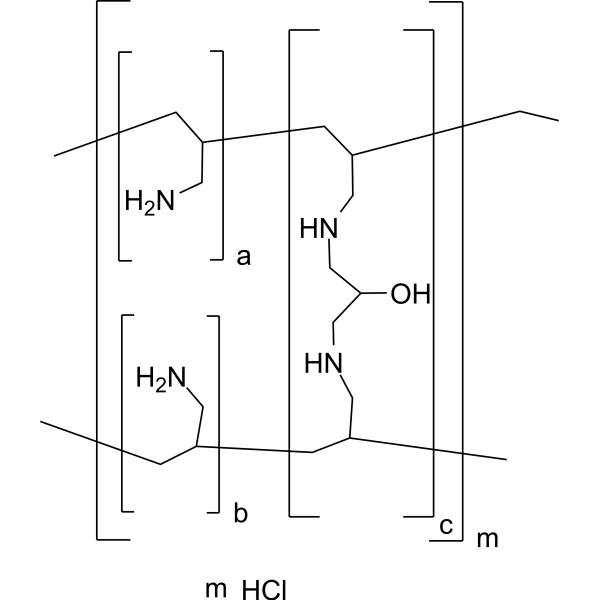
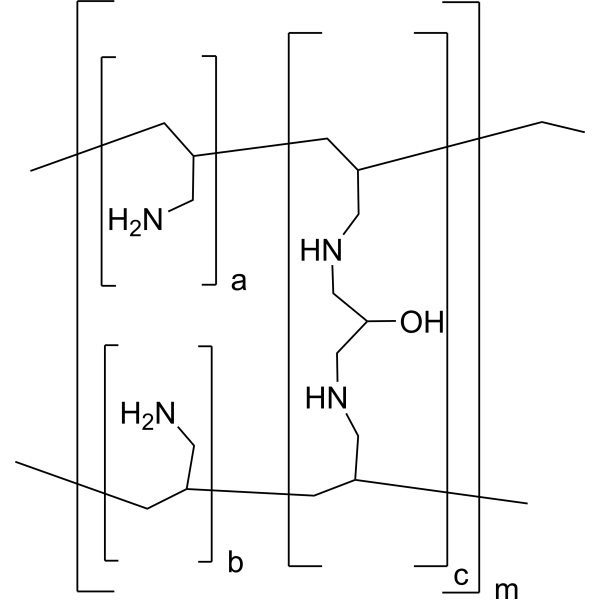
Sevelamer hydrochloride is an orally active polymeric phosphate binder and bile acid sequestrant. Sevelamer hydrochloride binds dietary phosphate in the gastrointestinal tract, reducing phosphate absorption and serum phosphorus levels, and reduces urinary phosphate excretion. Sevelamer hydrochloride binds polyanion bile acids, increases bile acid faecal excretion, and reduces total cholesterol and LDL cholesterol levels. Sevelamer hydrochloride can be used for the research of hyperphosphataemia, hyperparathyroidism, chronic renal failure, kidney disease, and type 2 diabetes .
loading...
    loading...
1
1 Cited Publications
Cat. No.: HY-108750
CAS No.: 8001-22-7
Synonyms: VT 18 (oil); Vegetoil; Wesson
Soybean oil (VT 18 (oil); Vegetoil; Wesson) is an edible vegetable oil. Soybean oil reduces circulating blood cholesterol levels when it replaces dietary saturated fats. Soybean oil does not affect inflammatory biomarkers or increase oxidative stress. Soybean oil contains γ-tocopherol and δ-tocopherol, which possess antioxidant properties. Soybean oil can be used in research related to coronary heart disease .
loading...
    loading...
1
1 Cited Publications
Cat. No.: HY-13995B
CAS No.: 845273-93-0
Target:  

FXR

Research Areas:  

Metabolic Disease Endocrinology

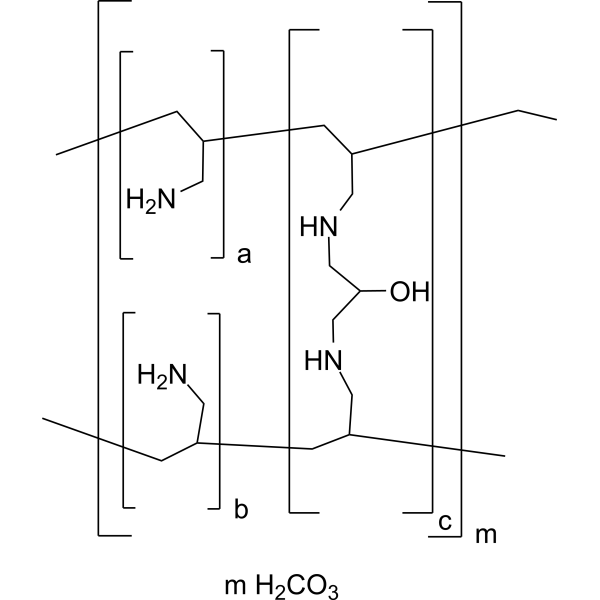
Sevelamer carbonate is an orally active polymeric phosphate binder and bile acid sequestrant. Sevelamer carbonate binds dietary phosphate in the gastrointestinal tract, reducing phosphate absorption and serum phosphorus levels, and reduces urinary phosphate excretion. Sevelamer carbonate binds polyanion bile acids, increases bile acid faecal excretion, and reduces total cholesterol and LDL cholesterol levels. Sevelamer carbonate can be used for the research of hyperphosphataemia, hyperparathyroidism, chronic renal failure, kidney disease, and type 2 diabetes .
loading...
    loading...
Cat. No.: HY-133971
CAS No.: 1250-95-9
Purity:  98.40%
Synonyms: 5α,6α-Epoxycholesterol
Target:  

Liposome

Research Areas:  

Others

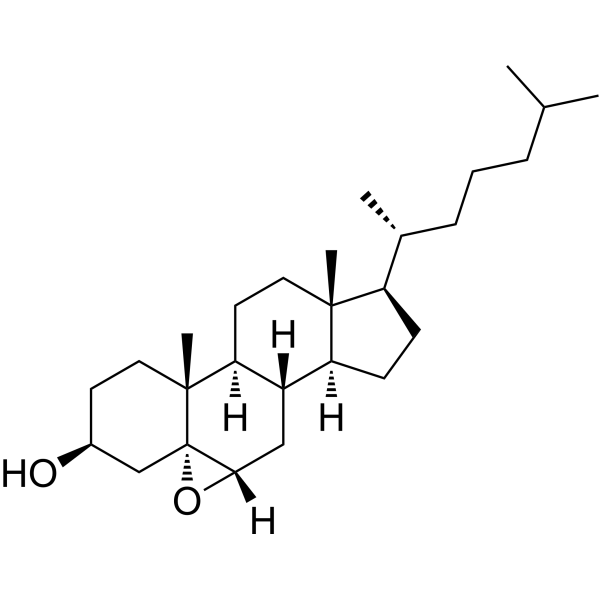
Cholesterol-5α,6α-epoxide is an epoxide derivative of cholesterol formed by the enzymatic oxidation of cholesterol in the liver and other tissues. Cholesterol-5α,6α-epoxide has unique chemical properties that make it an important intermediate in the biosynthesis of bile acids, which play a key role in the digestion and absorption of dietary fats. It also has a potential physiological role in regulating cholesterol metabolism and transport, although its biological function is not fully understood.
loading...
    loading...
Cat. No.: HY-W250120
CAS No.: 37220-17-0
Konjac glucomannan (Viscosity≥15000mPa.s) is an orally active acetylated (1-4)-β-D-glucomannan with multiple biological activities including anti-diabetic, anti-obesity, anti-inflammatory effects, as well as film-forming and gelling properties. Konjac glucomannan (Viscosity≥15000mPa.s) forms a defensive coating on the intestinal surface, reducing levels of blood glucose, cholesterol, triglycerides and blood pressure; it is specifically degraded by colonic β-mannanase produced by human colonic bacteria. Konjac glucomannan (Viscosity≥15000mPa.s) can be used as a food additive, dietary supplement and excipient for oral colon-targeted drug delivery systems. Konjac glucomannan (Viscosity≥15000mPa.s) is applicable to research related to various diseases such as type 2 diabetes, obesity, atopic dermatitis and metabolic syndrome, as well as research in fields including biotechnology, pharmaceuticals and tissue engineering .
loading...
    loading...
Cat. No.: HY-W250146
CAS No.: 9000-40-2
Synonyms: Locust bean gum, Polysaccharide>75%, 5000-6500 mPa·S
Locust bean gum is a natural polysaccharide derived from the seeds of the carob tree. It is commonly used as a thickening, stabilizing and gelling agent in a variety of foods, including dairy, baked goods and meat products. Locust bean gum has several properties suitable for these applications, including high water retention capacity, ability to form stable gels at low temperatures, and resistance to acidic conditions. Additionally, it can be used as a dietary fiber supplement due to its potential health benefits, including improving digestion and lowering cholesterol levels.
loading...
    loading...
Cat. No.: HY-13995
CAS No.: 52757-95-6
Target:  

FXR

Research Areas:  

Metabolic Disease Endocrinology

Sevelamer is an orally active polymeric phosphate binder and bile acid sequestrant. Sevelamer binds dietary phosphate in the gastrointestinal tract, reducing phosphate absorption and serum phosphorus levels, and reduces urinary phosphate excretion. Sevelamer binds polyanion bile acids, increases bile acid faecal excretion, and reduces total cholesterol and LDL cholesterol levels. Sevelamer can be used for the research of hyperphosphataemia, hyperparathyroidism, chronic renal failure, kidney disease, and type 2 diabetes .
loading...
    loading...
Cat. No.: HY-106106
CAS No.: 99759-19-0
Synonyms: CP‐88,818; β‐Tigogenin cellobioside
Target:  

CETP

Research Areas:  

Metabolic Disease

Tiqueside (CP‐88,818) is an orally active cholesterol absorption inhibitor. Tiqueside inhibits absorption of both dietary cholesterol and endogenous cholesterol excreted into the intestinal lumen via the bile. Tiqueside can be used in the research of hypercholesterolemia .
loading...
    loading...
Cat. No.: HY-106902
CAS No.: 162490-89-3
Target:  

Acyltransferase

Research Areas:  

Cardiovascular Disease

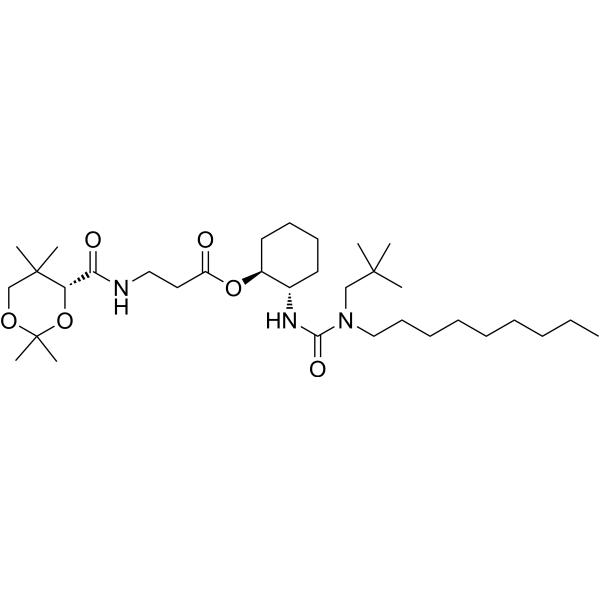
F-1394 is an orally active acyl-CoA:cholesterol acyltransferase (ACAT) inhibitor that inhibits dietary cholesterol absorption in mice. F-1394 can be used in cardiovascular disease research .
loading...
    loading...
Cat. No.: HY-134451
CAS No.: 897-83-6
Synonyms: DEUP
Target:  

Endogenous Metabolite

Research Areas:  

Metabolic Disease

Diethylumbelliferyl phosphate (DEUP), a selective and potent inhibitor of cholesterol esterase, does not inhibit protein kinase activity A in vitro, and it effectively disrupts steroidogenesis by blocking the transport of cholesterol into the mitochondria of steroidogenic cells, with an IC50 of 11.6 μM, potentially limiting dietary cholesterol absorption.
loading...
    loading...
Cat. No.: HY-120984
CAS No.: 140112-65-8
Target:  

Endogenous Metabolite

Research Areas:  

Metabolic Disease

AcylCoA:cholesterol acyltransferase (ACAT) is an intracellular cholesteryl ester synthase tied closely to the absorption of dietary cholesterol.1 Oleic acid-2,6-diisopropylanilide is an inhibitor of acylCoA:cholesterol acyltransferase with an IC50 of 7 nM.2 When co-administered to rabbits or rats fed a high fat, high cholesterol diet, oleic acid-2,6-diisopropylanilide decreased low density lipoproteins and elevated high density lipoprotein levels when administered at 0.05%.
loading...
    loading...
  • 1

