7 Results for "

encephalomyocarditis

" in MedChemExpress (MCE) Product Catalog:
Products (7)

7 Results for "encephalomyocarditis" in MCE Product Catalog:

51
51 Cited Publications
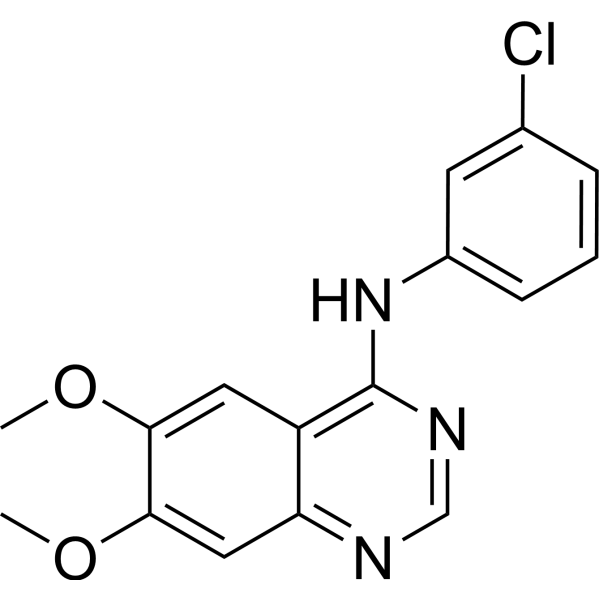
Cat. No.: HY-13524
CAS No.: 153436-53-4
Purity:  99.57%
Synonyms: Tyrphostin AG-1478; NSC 693255
AG-1478 (Tyrphostin AG-1478) is a selective EGFR tyrosine kinase inhibitor with IC50 of 3 nM. AG-1478 has antiviral effects against HCV and encephalomyocarditis virus (EMCV).
loading...
    loading...
Cat. No.: HY-173189A
Synonyms: 2′,5′-ApApA pentasodium; 2′,5′-trioligoadenylate pentasodium; 5'-O-Triphosphoryladenylyl-(2'→5')-adenylyl-(2'→5')-adenosine pentasodium
Target:  

RSV DNA/RNA Synthesis

Research Areas:  

Infection Cancer

2-5A (2′,5′-ApApA) pentasodium solution 100 mM is a high-affinity (Ka=0.04 nM) RNase L binder. 2-5A pentasodium solution 100 mM activates the nuclease activity of latent RNase L to cleave single-stranded RNA by inducing conformational changes and dimerization of latent RNase L, thereby mediating critical antiviral responses and enhancing interferon effects. 2-5A pentasodium solution 100 mM not only effectively inhibits Rauscher murine leukemia virus replication, reduces viremia and splenomegaly, but also enhances antileukemic efficacy when combined with amphotericin B and exhibits favorable high-dose tolerance. 2-5A pentasodium solution 100 mM is an important tool molecule for investigating the pathological mechanisms of viral infection, hereditary prostate cancer and leukemia .
loading...
    loading...
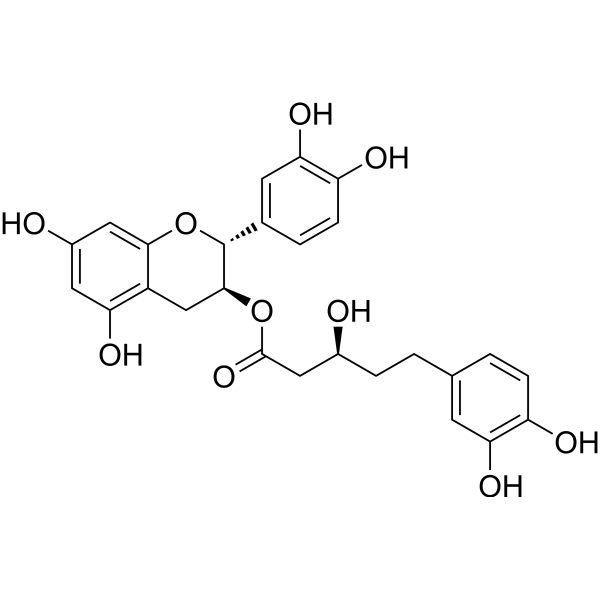
Cat. No.: HY-134467
CAS No.: 98570-83-3
Phylloflavan is an antileishmanial (Antileishmanial) agent with an EC50 of 3.2 nM against intracellular amastigotes of Leishmania donovani. Phylloflavan is isolated from Phyllocldus plants. Phylloflavan induces moderate levels of NO release. Phylloflavan also inhibits the cytopathic effect of encephalomyocarditis virus on L929 fibroblasts (38 U/mL) .
loading...
    loading...
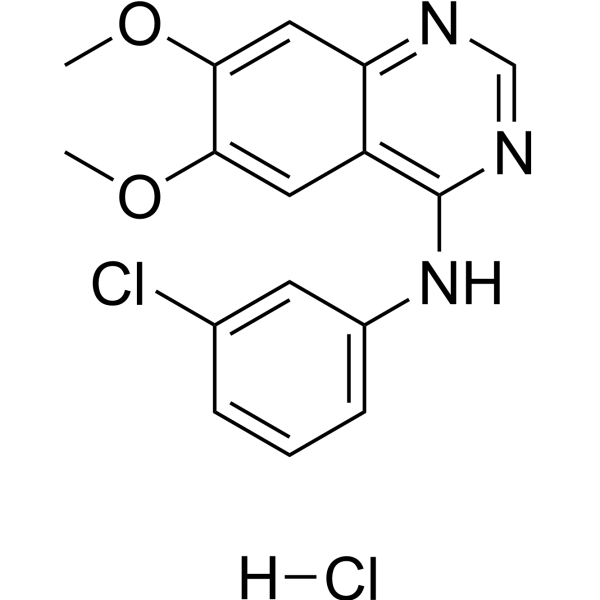
Cat. No.: HY-13524A
CAS No.: 170449-18-0
Synonyms: Tyrphostin AG-1478 hydrochloride; NSC 693255 hydrochloride
AG-1478 hydrochloride (Tyrphostin AG-1478 hydrochloride) is a selective EGFR tyrosine kinase inhibitor with IC50 of 3 nM. AG-1478 hydrochloride has antiviral effects against HCV and encephalomyocarditis virus (EMCV) .
loading...
    loading...
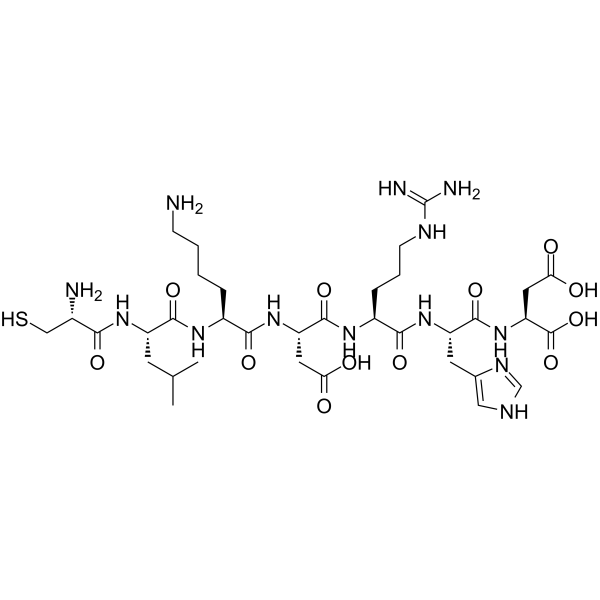
Cat. No.: HY-P1758
CAS No.: 153840-64-3
Synonyms: IRRP1
Target:  

IFNAR STAT Influenza Virus

Research Areas:  

Infection

IFN-α Receptor Recognition Peptide 1 (IRRP1) is an amino acid synthetic peptide and also a regulator of IFN-α Receptor. IFN-α Receptor Recognition Peptide 1 binds to IFNAR2, enhances the binding capacity of IFN-α receptor, and slightly increases the IFN-α-induced growth inhibitory activity. IFN-α Receptor Recognition Peptide 1 inhibits IFN-α-induced STAT1 phosphorylation and STAT-DNA binding by blocking the activation of IFNAR by IFN-α. IFN-α Receptor Recognition Peptide 1 increases the occupancy of IFN-α on cell surface receptors, enhances the phosphorylation activation of ISGF3, and elevates IFN-α-induced antiviral activity. IFN-α Receptor Recognition Peptide 1 can be used in studies related to encephalomyocarditis virus infection .
loading...
    loading...
Cat. No.: HY-13524R
CAS No.: 153436-53-4
Synonyms: Tyrphostin AG-1478 (Standard); NSC 693255 (Standard)
AG-1478 (Standard) is the analytical standard of AG-1478. This product is intended for research and analytical applications. AG-1478 (Tyrphostin AG-1478) is a selective EGFR tyrosine kinase inhibitor with IC50 of 3 nM. AG-1478 has antiviral effects against HCV and encephalomyocarditis virus (EMCV).
loading...
    loading...
Cat. No.: HY-P1758A
Synonyms: IRRP1 acetate
Target:  

IFNAR STAT Influenza Virus

Research Areas:  

Infection

IFN-α Receptor Recognition Peptide 1 acetate (IRRP1 acetate) is an amino acid synthetic peptide and also a regulator of IFN-α Receptor. IFN-α Receptor Recognition Peptide 1 acetate binds to IFNAR2, enhances the binding capacity of IFN-α receptor, and slightly increases the IFN-α-induced growth inhibitory activity. IFN-α Receptor Recognition Peptide 1 acetate inhibits IFN-α-induced STAT1 phosphorylation and STAT-DNA binding by blocking the activation of IFNAR by IFN-α. IFN-α Receptor Recognition Peptide 1 acetate increases the occupancy of IFN-α on cell surface receptors, enhances the phosphorylation activation of ISGF3, and elevates IFN-α-induced antiviral activity. IFN-α Receptor Recognition Peptide 1 acetate can be used in studies related to encephalomyocarditis virus infection .
loading...
    loading...

