1. Search Result
Search Result
Results for "

female mouse

" in MedChemExpress (MCE) Product Catalog:

11

Inhibitors & Agonists

1

Peptides

1

Natural
Products

1

Click Chemistry

Cat. No. Product Name Target Research Areas Chemical Structure
  • HY-15671

    Glucokinase Metabolic Disease
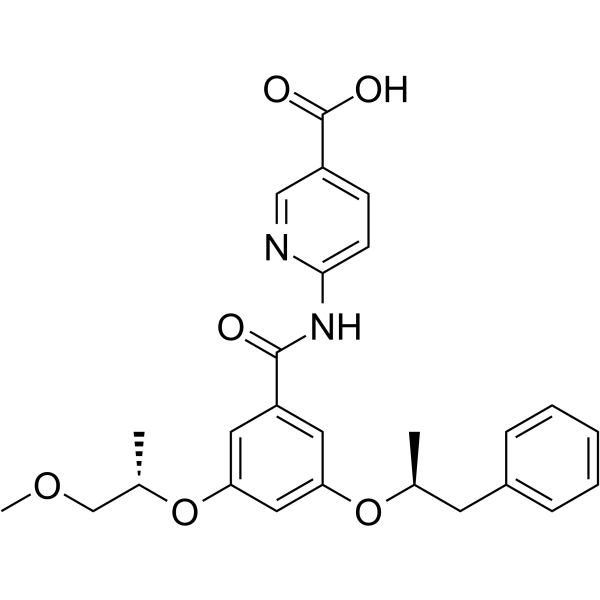
    GKA50 is a potent glucokinase activator (EC50=33 nM at 5 mM glucose). GKA50 stimulates insulin release from mouse islets of Langerhans. GKA50 is a glucose-like activator of beta-cell metabolism in rodent and human islets and a Ca 2+-dependent modulator of insulin secretion. GKA50 shows significant glucose lowering in high fat fed female rats .
    GKA50
  • HY-B1012

    W-3566

    Estrogen Receptor/ERR Cytochrome P450 GnRH Receptor Metabolic Disease Endocrinology
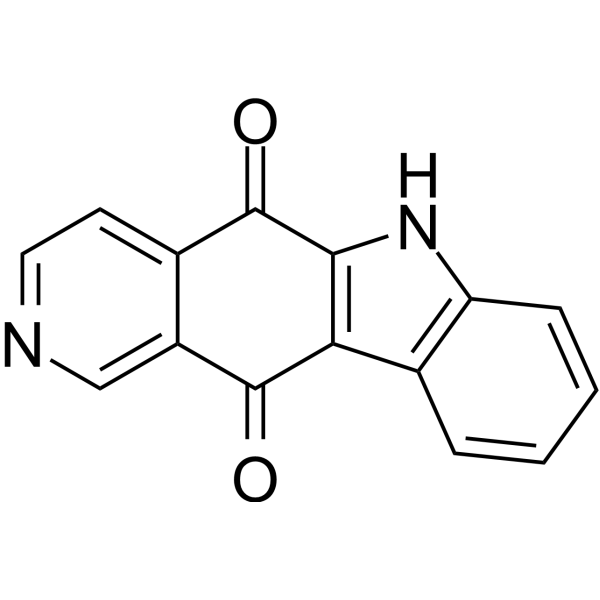
    Quinestrol (W-3566) is an orally effective synthetic estrogen compound that acts on CYP3A4, CYP1A2, and GnRH. Quinestrol interferes with GnRH release and disrupts the hypothalamic-pituitary-ovarian axis. Quinestrol downregulates the gene expression of follicle-stimulating hormone β and luteinizing hormone β, induces oxidative stress, damages reproductive organs, reduces sperm density and motility, increases sperm malformation rate, and alters the levels of sex hormones such as testosterone, luteinizing hormone, estradiol, and progesterone. Quinestrol can be used in studies related to reproductive function regulation .
    Quinestrol
  • HY-B0708
    β-Estradiol 17-acetate
    1 Publications Verification

    1,3,5(10)-Estratriene-3,17β-diol 17-acetate

    Estrogen Receptor/ERR Endocrinology
    β-Estradiol 17-acetate (1,3,5(10)-Estratriene-3,17β-diol 17-acetate) is a long-acting endogenous estrogen precursor and also a cell viability and proliferation enhancer. β-Estradiol 17-acetate promotes the adhesion and proliferation of freshly isolated and revived female-derived human brain microvascular endothelial cells, and reverses the decreased viability of revived male-derived human brain microvascular endothelial cells. β-Estradiol 17-acetate exerts the microvascular protective effect of estrogen, enabling non-tumor human brain microvascular endothelial cells to be cultured in vitro for 2 months after cryopreservation. β-Estradiol 17-acetate is biotransformed into β-estradiol via hydrolase action in the in vitro skin of humans, hairless dogs, rats and hairless mice .
    β-Estradiol 17-acetate
  • HY-116568

    JAU-6476

    Fungal Cytochrome P450 Microtubule/Tubulin Mitochondrial Metabolism DNA/RNA Synthesis Apoptosis Fatty Acid Synthase (FASN) Infection Metabolic Disease Endocrinology
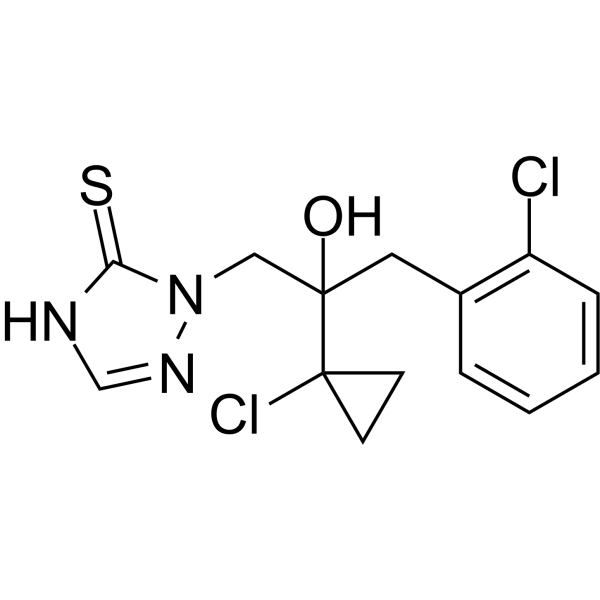
    Prothioconazole is an orally active broad-spectrum fungicide. Prothioconazole weakly inhibits CaCYP51 activity in Candida albicans, with an apparent IC50 of approximately 120 μM. Prothioconazole disrupts Microtubule stability by reducing the acetylation level of α-tubulin. Prothioconazole induces Mitochondrial dysfunction, oxidative stress, DNA damage, and Apoptosis. Prothioconazole accumulates 14-methylated sterols and depletes ergosterol in cells, culture media, plants, and animals. Prothioconazole interferes with pyruvate metabolism and glycolysis/gluconeogenesis processes in mouse liver, downregulates Fasn mRNA expression, and induces hepatotoxicity and renal metabolic disorders. Prothioconazole reduces the fertility of female mice. Prothioconazole inhibits body weight gain and increases liver/kidney indices in mice. Prothioconazole can be used in studies related to candidiasis .
    Prothioconazole
  • HY-174285

    Thrombin Cardiovascular Disease
    NAPAP is a selective direct thrombin inhibitor. NAPAP rapidly binds to thrombin and inhibits its activity, and reduces LPS (HY-D1056)-induced brain inflammation and coagulation factor expression in vivo. NAPAP can be used in studies related to coagulation and neuroinflammation .
    NAPAP
  • HY-P10775A

    MMP Cancer
    BT1769 acetate is a conjugate and antitumor agent targeting MT1-MMP, with a Kd value of 3.35 nM against human targets. BT1769 acetate exhibits favorable pharmacokinetic properties. BT1769 acetate specifically binds to MT1-MMP via its bicyclic peptide component, delivering the cytotoxic agent MMAE (HY-15162) to antigen-expressing cells. It effectively inhibits tumor growth, induces complete responses, and significantly prolongs event-free survival in osteosarcoma patient-derived xenograft models. BT1769 acetate shows extremely low activity in Ewing sarcoma models and can be used in osteosarcoma-related research .
    BT1769 acetate
  • HY-15671A

    Glucokinase Metabolic Disease
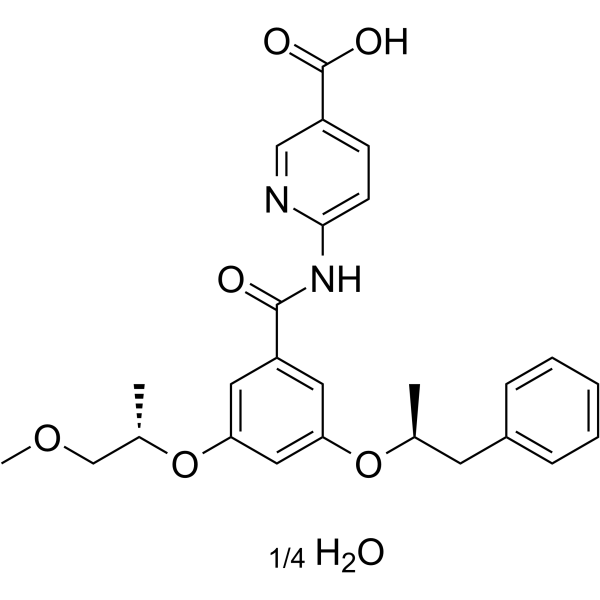
    GKA50 quarterhydrate is a potent glucokinase activator (EC50=33 nM at 5 mM glucose) and stimulates insulin release from mouse islets of Langerhans. GKA50 quarterhydrate is a glucose-like activator of beta-cell metabolism in rodent and human islets and a Ca 2+-dependent modulator of insulin secretion. GKA50 quarterhydrate shows significant glucose lowering in high fat fed female rats .
    GKA50 quarterhydrate
  • HY-111096

    Caspase Cardiovascular Disease Metabolic Disease
    IDN-7314 is a pan-Caspase inhibitor with an IC50 of 0.2-7 nM against all tested Caspases. IDN-7314 abrogates Jo2-induced caspase-3/7 activity. IDN-7314 reduces the procoagulant activity of tissue factor in hepatocytes. IDN-7314 is applicable to research related to chemically induced hepatitis, fulminant liver failure and apoptotic liver injury .
    IDN-7314
  • HY-182378

    Cancer
    Vps34-IN-5 is an orally active VPS34 inhibitor, 98% target inhibition, and an IC50 categorized as B. Vps34-IN-5 induces additive or synergistic anti-proliferative activity with EGFR inhibitors in cancer cells. Vps34-IN-5 is administered orally alone or with Erlotinib (HY-50896) in mouse xenograft models. Vps34-IN-5 can be used for the research of non-small cell lung cancer .
    Vps34-IN-5
  • HY-133151

    CXCR Cancer
    CXCR6 antagonist 1 (Compound 81) is an orally active CXCR6 antagonist. CXCR6 antagonist 1 inhibits the CXCR6 receptor signaling pathway, including β-arrestin recruitment and Forskolin (HY-15371)-induced cAMP production. CXCR6 antagonist 1 reduces tumor growth in a mouse xenograft model of hepatocellular carcinoma. CXCR6 antagonist 1 can be used in research related to hepatocellular carcinoma .
    CXCR6 antagonist 1
  • HY-114811

    Insecticide GABA Receptor Chloride Channel Infection Neurological Disease
    Leptophos oxon, a metabolite of leptophos, is a GABAA receptor chloride channel inhibitor with an IC50 values of 89.6 μM. Leptophos oxon inhibits GABA-induced chloride influx, binds to GABAA receptor-associated TBPS sites, and inhibits TBPS binding to voltage-dependent chloride channels. Leptophos oxon is a insecticide. Leptophos oxon can be used for the research of neurological disease .
    Leptophos oxon

Inquiry Online

Your information is safe with us. * Required Fields.

Salutation


Country or Region *

Applicant Name *


Organization Name *

Department *


Email Address *


Product Name *

Cat. No.


Requested quantity *

Phone Number *


Remarks

Inquiry Online

Inquiry Information

Product Name:
Cat. No.:
Quantity:
MCE Japan Authorized Agent:

