Search Result
Results for "
food colorant
" in MedChemExpress (MCE) Product Catalog:
1
Isotope-Labeled Compounds
| Cat. No. |
Product Name |
Target |
Research Areas |
Chemical Structure |
-
- HY-D0915
-
|
Acid Blue 9; FD&C Blue No. 1; E133
|
Environmental Pollutants
Fluorescent Dye
|
Others
|
|
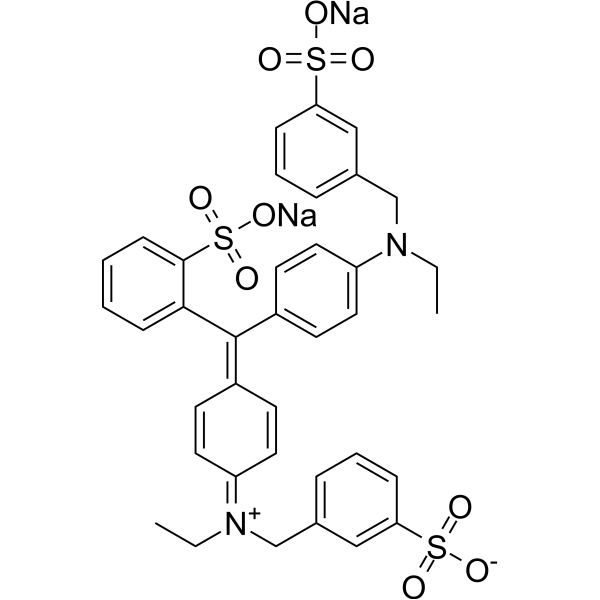
Brilliant Blue FCF is an aromatic hydrocarbon, a synthetic dye produced from petroleum and used as a colorant for food and other substances. The solution has a maximum absorption at 628 nm.
|
-
-
- HY-D0257
-
|
Acid Yellow 23; FD&C Yellow No. 5
|
Environmental Pollutants
Fluorescent Dye
|
Cardiovascular Disease
Neurological Disease
|
|
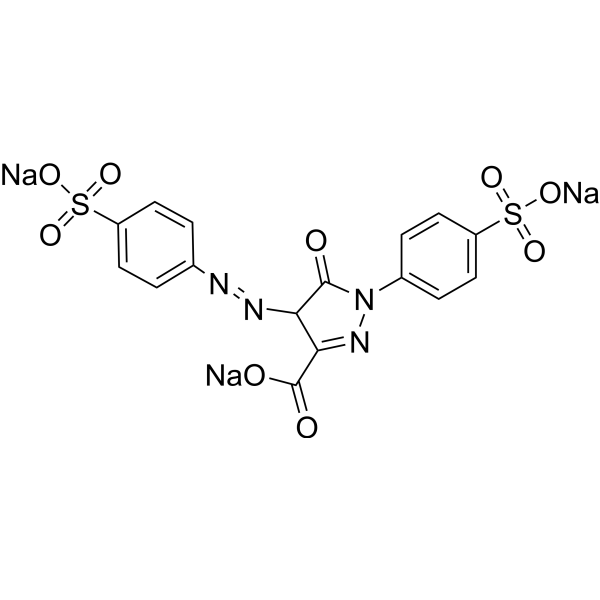
Tartrazine (Acid Yellow 23; FD&C Yellow No. 5) is an orally active azo acid dye, orange-yellow powder, soluble in water and turns yellow. Tartrazine is mainly used as a synthetic lemon yellow azo dye for food coloring. Tartrazine is the most stable colorant.Tartrazine induces mitochondria-mediated Apoptosis. Tartrazine can cause neurodevelopmental toxicity, cytotoxicity, and genotoxicity .
|
-
-
- HY-123630
-
|
FD&C RED NO. 40; CI 16035
|
Environmental Pollutants
Fluorescent Dye
5-HT Receptor
Interleukin Related
Reactive Oxygen Species (ROS)
IFNAR
|
Inflammation/Immunology
|
|
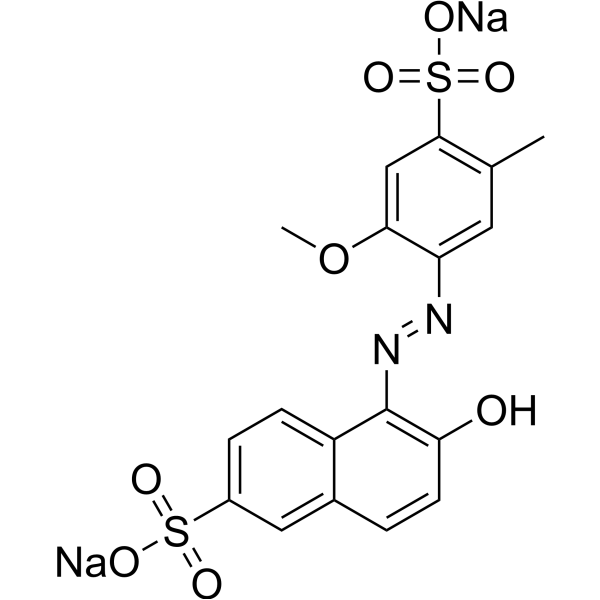
Allura Red AC is a food colorant, appearing as a deep red water-soluble powder or granules, used in various applications such as beverages, syrups, candies, and cereals. Allura Red AC can statically quench the intrinsic fluorescence of HSA. Additionally, Allura Red AC is a 5-hydroxytryptamine (5-HT) pathway-associated pro-inflammatory agent, capable of exacerbating experimental colitis. Allura Red AC holds potential for research in inflammatory bowel disease (IBD), intestinal barrier function, and food additive safety .
|
-
-
- HY-D0193
-
|
Acid Red 18; New Coccine
|
Environmental Pollutants
Fluorescent Dye
|
Others
|
|
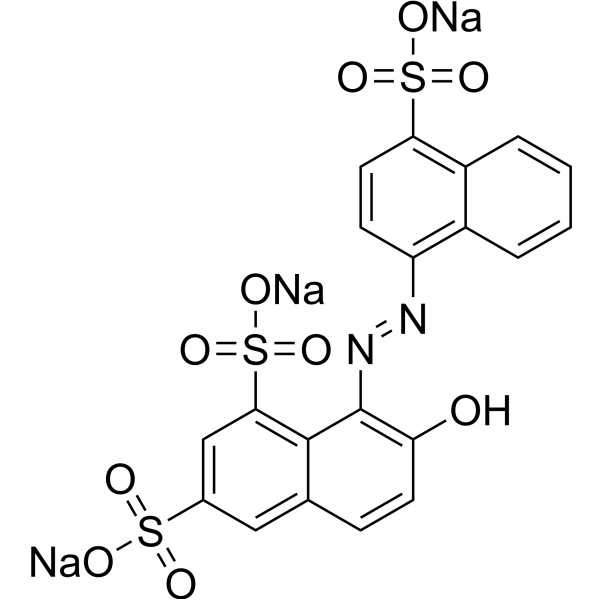
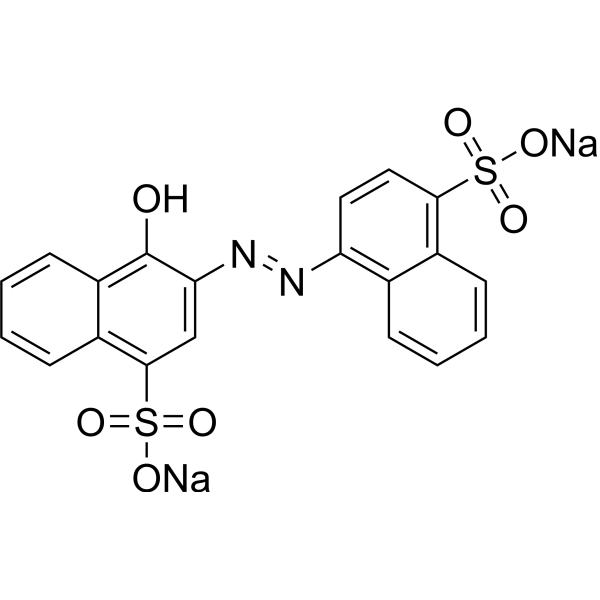
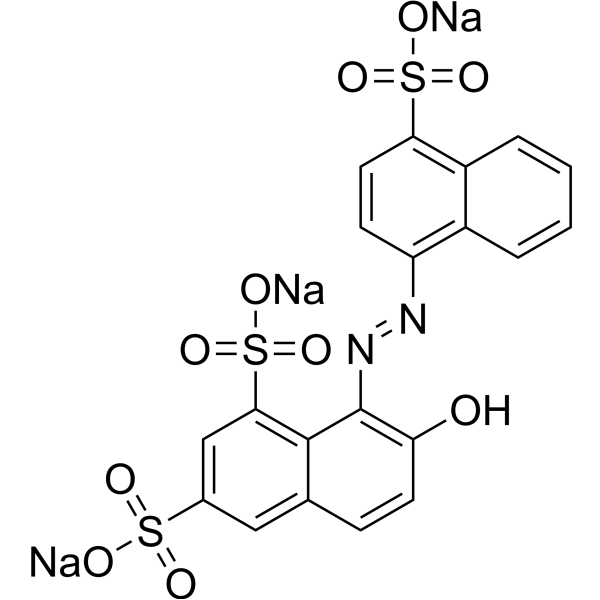
Ponceau 4R is a synthetic colorant that can be used for food coloring. Ponceau 4R is a strawberry red azo dye that can be used in a variety of foods, usually synthesized from aromatic hydrocarbons, and is stable to light, heat, and acids .
|
-
-
- HY-128448
-
-
-
- HY-D0166A
-
|
|
Biochemical Assay Reagents
|
Others
|
|
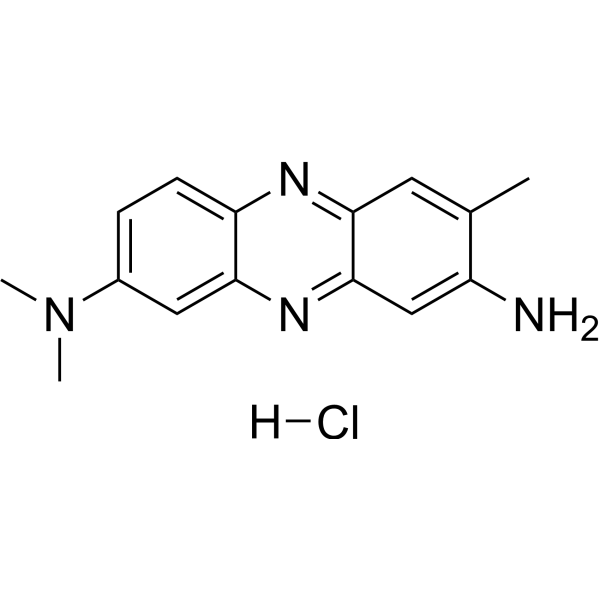
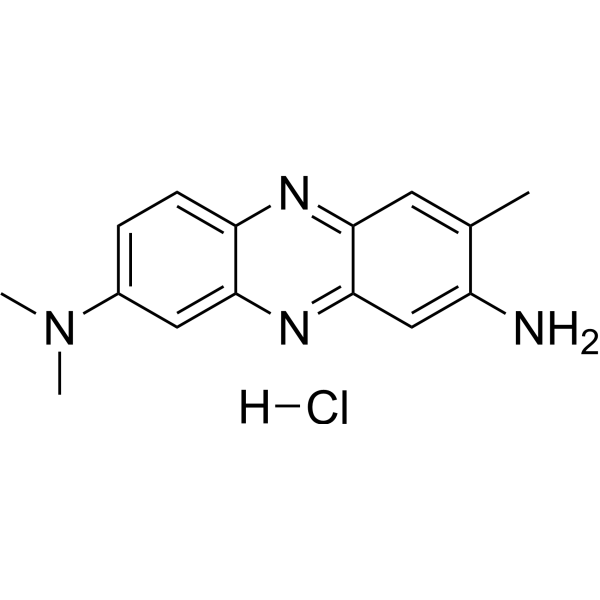
Neutral Red (IND) is an organic dye commonly used in biology and cytology laboratories. It can be used to stain living cells, secreted proteins and other molecular structures, etc., and has a wide range of applications in cell imaging and staining. In addition, Neutral Red (IND) is widely used in industrial fields such as water treatment, food processing and paper manufacturing, for example as an indicator or colorant. Although the compound has no direct medical application, it has important application value in the fields of biology, chemistry and industry.
|
-
-
- HY-N1442
-
|
Orange II; D&C Orange NO. 4
|
Environmental Pollutants
Biochemical Assay Reagents
|
Others
|
|
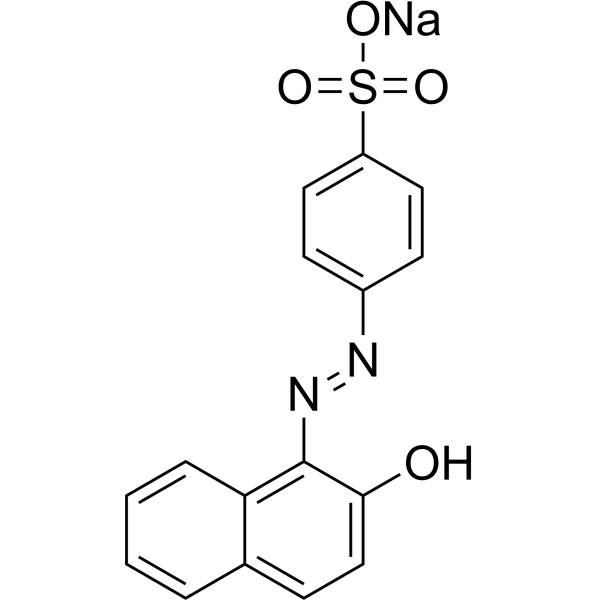
Acid Orange 7 (Orange II; D&C Orange NO. 4) is an azo dye widely used in the textile, food and cosmetic industries. Acid Orange 7 is mainly used as a colorant by combining with fibers and other substances through azo bonds. Acid Orange 7 has a maximum absorption wavelength at 484-485 nm, and the concentration is measured using a UV-visible spectrophotometer. Acid Orange 7 is difficult to degrade and has a certain degree of toxicity. It is often used to study various sewage treatment technologies and photocatalytic degradation reactions, and to evaluate the removal effects of different treatment methods on organic pollutants .
|
-
-
- HY-128382
-
|
E 151
|
Enterovirus
|
Infection
|
|
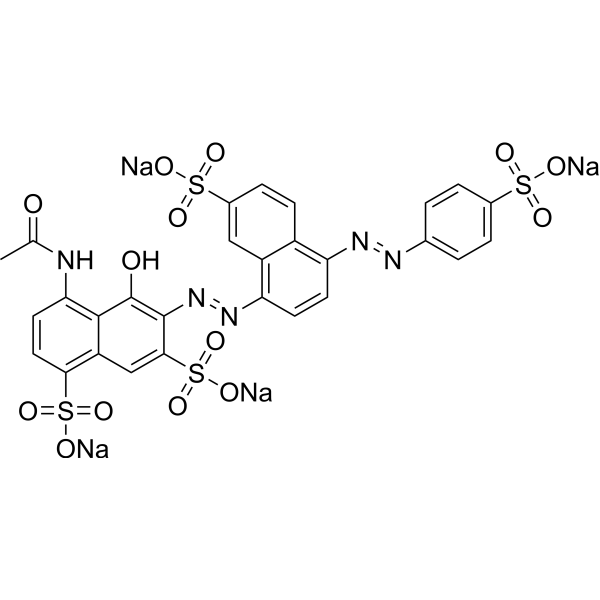
Brilliant black BN (E151) is an azo dye and a food colorant . Brilliant black BN is a promising antiviral agent against EV71 infection via inhibiting the interaction between EV71 and its cellular uncoating factor cyclophilin A. Brilliant black BN has the potential for the investigation of contagious disease .
|
-
-
- HY-D0193A
-
|
Acid Red 18 (85%); New Coccine (85%)
|
Environmental Pollutants
Drug Derivative
|
Neurological Disease
Inflammation/Immunology
|
|
Ponceau 4R (85%) (Acid Red 18 (85%); New Coccine (85%)) is an orally active synthetic food colorant and a HSA-binding aggregator. Ponceau 4R (85%) binds to HSA, inducing its partial unfolding, conformational changes and aggregation. Ponceau 4R (85%) serves as a food colorant and can be used in research on diseases including type Ⅱ diabetes, Parkinson's disease, Huntington's disease and spongiform encephalopathy .
|
-
-
- HY-D1137
-
|
|
Fluorescent Dye
|
|
|
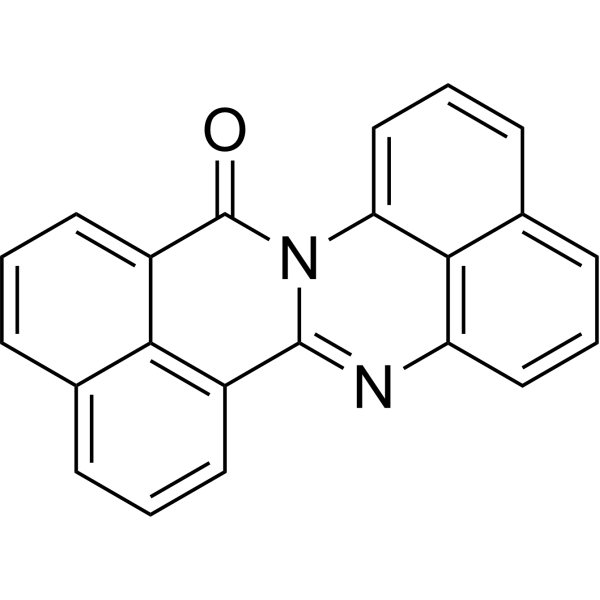
C.I. Pigment yellow 110 is the most important colorant used to add color or change the color of something and is chemically essentially unaffected by the carrier or medium into which it is incorporated. It can be widely used in textile, medicine, food, cosmetics, plastics, paint, ink, photography and paper industries.
|
-
-
- HY-D0429
-
|
|
Fluorescent Dye
|
|
|
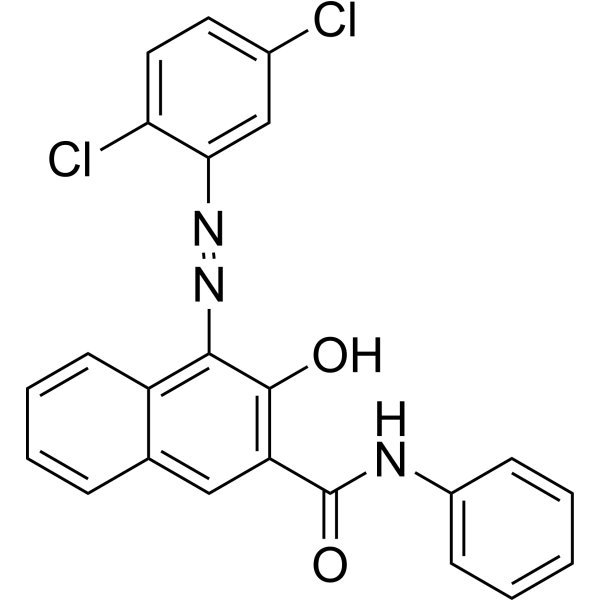
C.I. Pigment red 5 is the most important colorant used to add color or change the color of something and is chemically essentially unaffected by the carrier or medium into which it is incorporated. It can be widely used in textile, medicine, food, cosmetics, plastics, paint, ink, photography and paper industries.
|
-
-
- HY-D0531
-
|
|
Fluorescent Dye
|
|
|
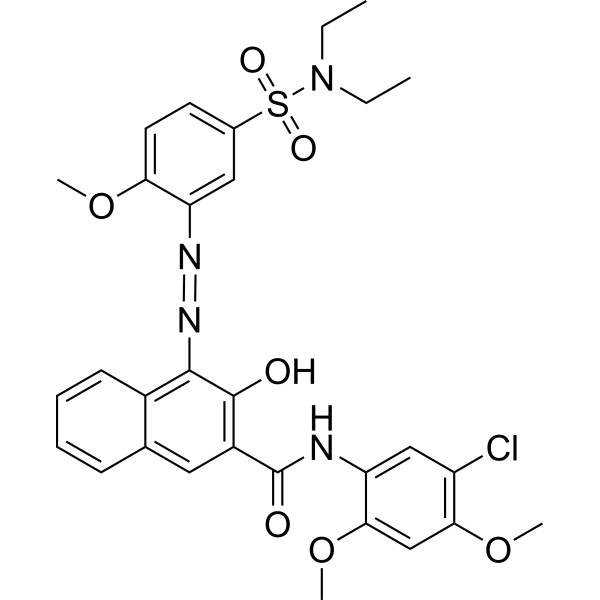
C.I. Pigment red 123 is the most important colorant used to add color or change the color of something and is chemically essentially unaffected by the carrier or medium into which it is incorporated. It can be widely used in textile, medicine, food, cosmetics, plastics, paint, ink, photography and paper industries.
|
-
-
- HY-D0960
-
|
|
Fluorescent Dye
|
|
|
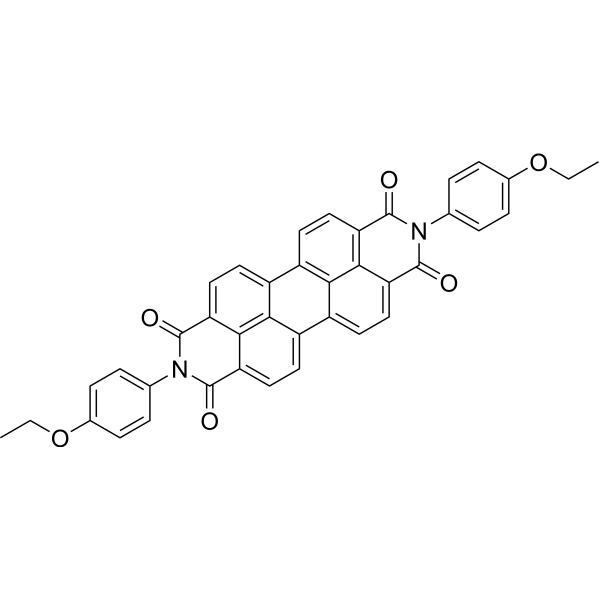
C.I. Solvent Blue 43 is the most important colorant used to add color or change the color of something and is chemically essentially unaffected by the carrier or medium into which it is incorporated. It can be widely used in textile, medicine, food, cosmetics, plastics, paint, ink, photography and paper industries.
|
-
-
- HY-W206911
-
|
|
Environmental Pollutants
Biochemical Assay Reagents
|
Others
|
|
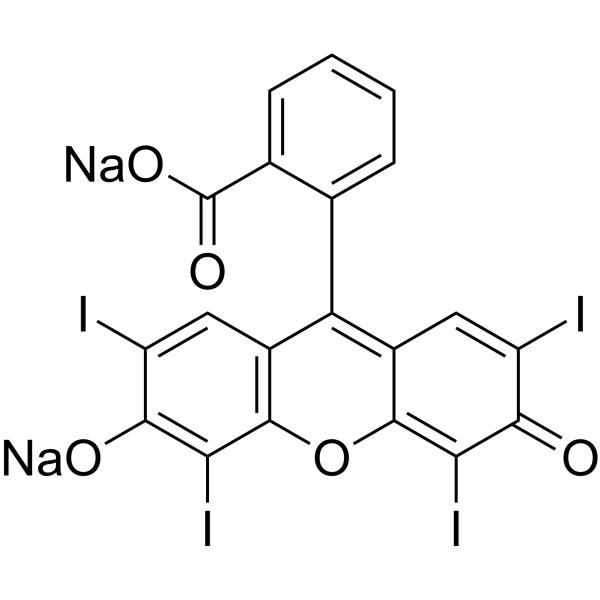
Erythrosin B sodium salt, is a synthetic azo dye commonly used as a food colorant and textile dye. It is a water-soluble compound that produces a bright red color and is often used to improve the appearance of products. Erythrosin B sodium salt is also used in the textile industry for dyeing wool, silk and leather. However, it has been linked to potentially negative health effects, such as allergic reactions and hyperactivity in children.
|
-
-
- HY-D0405
-
|
|
Fluorescent Dye
|
|
|
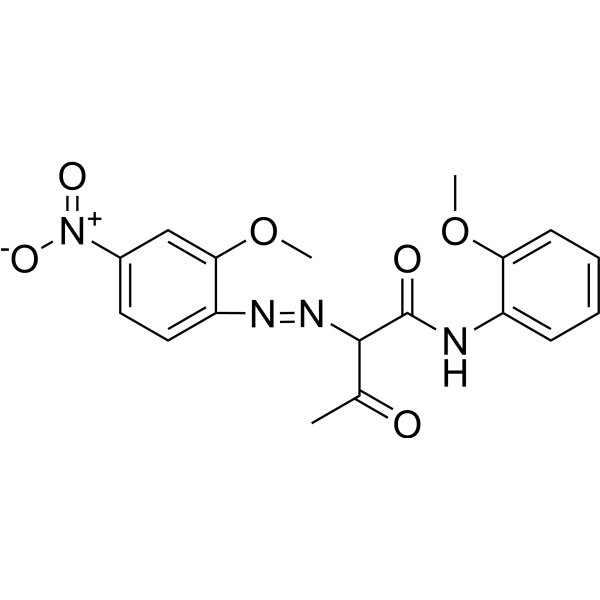
C.I. Pigment yellow 74 is the most important colorant used to add color or change the color of something and is chemically essentially unaffected by the carrier or medium into which it is incorporated. It can be widely used in textile, medicine, food, cosmetics, plastics, paint, ink, photography and paper industries.
|
-
-
- HY-D0457
-
|
|
Fluorescent Dye
|
|
|
C.I. Solvent red 179 is the most important colorant used to add color or change the color of something and is chemically essentially unaffected by the carrier or medium into which it is incorporated. It can be widely used in textile, medicine, food, cosmetics, plastics, paint, ink, photography and paper industries.
|
-
-
- HY-128448R
-
|
Azorubine (Standard); Acid Red 14 (Standard); E122 (Standard)
|
Fluorescent Dye
Reference Standards
|
Inflammation/Immunology
|
|
Carmoisine (Standard) is the analytical standard of Carmoisine. This product is intended for research and analytical applications. Carmoisine (Azorubine) is an azo dye that can be used as a food additive .
|
-
-
- HY-D0257R
-
|
Acid Yellow 23 (Standard); FD&C Yellow No. 5 (Standard)
|
Fluorescent Dye
Reference Standards
|
Others
|
|
Tartrazine (Standard) is the analytical standard of Tartrazine. This product is intended for research and analytical applications. Tartrazine is an azo acid dye, orange-yellow powder, soluble in water and turns yellow. It is mainly used as a synthetic lemon yellow azo dye for food coloring. It is the most stable colorant.
|
-
-
- HY-D0488
-
|
|
Fluorescent Dye
|
|
|
C.I. Pigment orange 36 is the most important colorant used to add color or change the color of something and is chemically essentially unaffected by the carrier or medium into which it is incorporated. It can be widely used in textile, medicine, food, cosmetics, plastics, paint, ink, photography and paper industries.
|
-
-
- HY-D0510
-
|
|
Fluorescent Dye
|
|
|
C.I. Pigment orange 34 is the most important colorant used to add color or change the color of something and is chemically essentially unaffected by the carrier or medium into which it is incorporated. It can be widely used in textile, medicine, food, cosmetics, plastics, paint, ink, photography and paper industries.
|
-
-
- HY-D0686
-
|
|
Fluorescent Dye
|
|
|
C.I. Pigment red 221 is the most important colorant used to add color or change the color of something and is chemically essentially unaffected by the carrier or medium into which it is incorporated. It can be widely used in textile, medicine, food, cosmetics, plastics, paint, ink, photography and paper industries.
|
-
-
- HY-D0450
-
|
|
Fluorescent Dye
|
|
|
C.I. Pigment red 112 is the most important colorant used to add color or change the color of something and is chemically essentially unaffected by the carrier or medium into which it is incorporated. It can be widely used in textile, medicine, food, cosmetics, plastics, paint, ink, photography and paper industries.
|
-
-
- HY-D0486
-
|
|
Fluorescent Dye
|
|
|
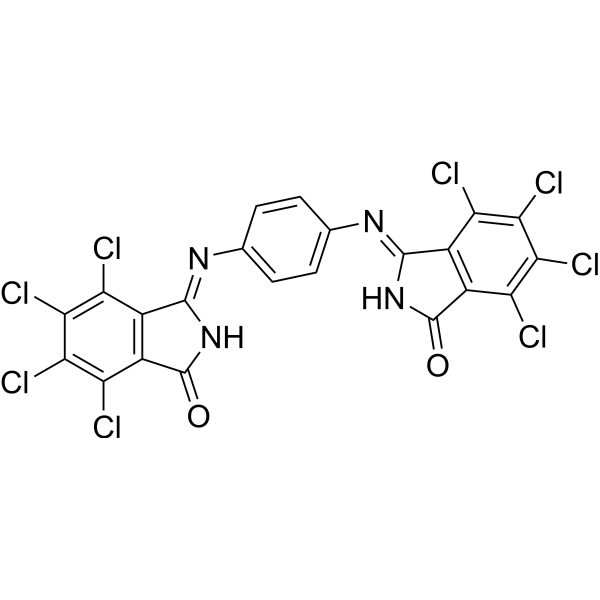
C.I. Pigment violet 32 is the most important colorant used to add color or change the color of something and is chemically essentially unaffected by the carrier or medium into which it is incorporated. It can be widely used in textile, medicine, food, cosmetics, plastics, paint, ink, photography and paper industries.
|
-
-
- HY-D0442
-
|
|
Fluorescent Dye
|
|
|
C.I. Pigment red 14 is the most important colorant used to add color or change the color of something and is chemically essentially unaffected by the carrier or medium into which it is incorporated. It can be widely used in textile, medicine, food, cosmetics, plastics, paint, ink, photography and paper industries.
|
-
-
- HY-D0725
-
|
|
Fluorescent Dye
|
|
|
C.I. Pigment yellow 180 is the most important colorant used to add color or change the color of something and is chemically essentially unaffected by the carrier or medium into which it is incorporated. It can be widely used in textile, medicine, food, cosmetics, plastics, paint, ink, photography and paper industries.
|
-
-
- HY-D0445
-
|
|
Fluorescent Dye
|
|
|
C.I. Pigment orange 16 is the most important colorant used to add color or change the color of something and is chemically essentially unaffected by the carrier or medium into which it is incorporated. It can be widely used in textile, medicine, food, cosmetics, plastics, paint, ink, photography and paper industries.
|
-
-
- HY-D0489
-
|
|
Fluorescent Dye
|
|
|
C.I. Pigment orange 38 is the most important colorant used to add color or change the color of something and is chemically essentially unaffected by the carrier or medium into which it is incorporated. It can be widely used in textile, medicine, food, cosmetics, plastics, paint, ink, photography and paper industries.
|
-
-
- HY-D0459
-
|
|
Fluorescent Dye
|
|
|
C.I. Pigment brown 25 is the most important colorant used to add color or change the color of something and is chemically essentially unaffected by the carrier or medium into which it is incorporated. It can be widely used in textile, medicine, food, cosmetics, plastics, paint, ink, photography and paper industries.
|
-
-
- HY-D0426
-
|
|
Fluorescent Dye
|
|
|
C.I. Pigment red 8 is the most important colorant used to add color or change the color of something and is chemically essentially unaffected by the carrier or medium into which it is incorporated. It can be widely used in textile, medicine, food, cosmetics, plastics, paint, ink, photography and paper industries.
|
-
-
- HY-D0428
-
|
|
Fluorescent Dye
|
|
|
C.I. Pigment red 9 is the most important colorant used to add color or change the color of something and is chemically essentially unaffected by the carrier or medium into which it is incorporated. It can be widely used in textile, medicine, food, cosmetics, plastics, paint, ink, photography and paper industries.
|
-
-
- HY-D0460
-
|
Pigment red 48 calcium salt
|
Fluorescent Dye
|
|
|
C.I. Pigment red 48 is the most important colorant used to add color or change the color of something and is chemically essentially unaffected by the carrier or medium into which it is incorporated. It can be widely used in textile, medicine, food, cosmetics, plastics, paint, ink, photography and paper industries.
|
-
-
- HY-D0394
-
|
|
Fluorescent Dye
|
|
|
C.I. Pigment red 2 is the most important colorant used to add color or change the color of something and is chemically essentially unaffected by the carrier or medium into which it is incorporated. It can be widely used in textile, medicine, food, cosmetics, plastics, paint, ink, photography and paper industries.
|
-
-
- HY-D0519
-
|
|
Fluorescent Dye
|
|
|
C.I. Pigment red 52:1 is the most important colorant used to add color or change the color of something and is chemically essentially unaffected by the carrier or medium into which it is incorporated. It can be widely used in textile, medicine, food, cosmetics, plastics, paint, ink, photography and paper industries.
|
-
-
- HY-117964
-
|
Lake Red C
|
Endogenous Metabolite
|
|
|
Pigment Red 53 (Lake Red C) is an organic pigment with good color stability and spectral properties. Pigment Red 53 is widely used in the coatings and plastics industries to provide a vivid red color. Pigment Red 53 is also used in food and cosmetics as a safe colorant to ensure an attractive product appearance.
|
-
-
- HY-123630R
-
|
FD&C RED NO. 40 (Standard); CI 16035 (Standard)
|
Fluorescent Dye
Interleukin Related
5-HT Receptor
IFNAR
Reactive Oxygen Species (ROS)
Reference Standards
|
Inflammation/Immunology
|
|
Allura Red AC (Standard) is an analytical standard of Allura Red AC. This product is intended for research and analytical applications. Allura Red AC is a food colorant, appearing as a deep red water-soluble powder or granules, used in various applications such as beverages, syrups, candies, and cereals. Allura Red AC can statically quench the intrinsic fluorescence of HSA. Additionally, Allura Red AC is a 5-hydroxytryptamine (5-HT) pathway-associated pro-inflammatory agent, capable of exacerbating experimental colitis. Allura Red AC holds potential for research in inflammatory bowel disease (IBD), intestinal barrier function, and food additive safety .
|
-
-
- HY-130774
-
-
-
- HY-D0431
-
|
|
Fluorescent Dye
|
|
|
C.I. Pigment blue 56 is the most important colorant used to add color or change the color of something and is chemically essentially unaffected by the carrier or medium into which it is incorporated. It can be widely used in textile, medicine, food, cosmetics, plastics, paint, ink, photography and paper industries.
|
-
-
- HY-D0415
-
|
|
Fluorescent Dye
|
|
|
C.I. Vat blue 22 is the most important colorant used to add color or change the color of something and is chemically essentially unaffected by the carrier or medium into which it is incorporated. It can be widely used in textile, medicine, food, cosmetics, plastics, paint, ink, photography and paper industries.
|
-
-
- HY-D0493
-
|
|
Fluorescent Dye
|
|
|
C.I. Pigment yellow 62 is the most important colorant used to add color or change the color of something and is chemically essentially unaffected by the carrier or medium into which it is incorporated. It can be widely used in textile, medicine, food, cosmetics, plastics, paint, ink, photography and paper industries.
|
-
-
- HY-D0408
-
|
|
Fluorescent Dye
|
|
|
C.I. Pigment red 38 is the most important colorant used to add color or change the color of something and is chemically essentially unaffected by the carrier or medium into which it is incorporated. It can be widely used in textile, medicine, food, cosmetics, plastics, paint, ink, photography and paper industries.
|
-
-
- HY-D0392
-
|
|
Fluorescent Dye
|
|
|
C. I. Pigment yellow 16 is the most important colorant used to add color or change the color of something and is chemically essentially unaffected by the carrier or medium into which it is incorporated. It can be widely used in textile, medicine, food, cosmetics, plastics, paint, ink, photography and paper industries.
|
-
-
- HY-D0433
-
|
Navy Blue G
|
Fluorescent Dye
|
|
|
C.I. Vat Blue 16 is the most important colorant used to add color or change the color of something and is chemically essentially unaffected by the carrier or medium into which it is incorporated. It can be widely used in textile, medicine, food, cosmetics, plastics, paint, ink, photography and paper industries.
|
-
-
- HY-D0441
-
|
|
Fluorescent Dye
|
|
|
C.I. Pigment red 23 is the most important colorant used to add color or change the color of something and is chemically essentially unaffected by the carrier or medium into which it is incorporated. It can be widely used in textile, medicine, food, cosmetics, plastics, paint, ink, photography and paper industries.
|
-
-
- HY-D0427
-
|
|
Fluorescent Dye
|
|
|
C.I. Pigment red 12 is the most important colorant used to add color or change the color of something and is chemically essentially unaffected by the carrier or medium into which it is incorporated. It can be widely used in textile, medicine, food, cosmetics, plastics, paint, ink, photography and paper industries.
|
-
-
- HY-W750212
-
|
Orange II-13C6; D&C Orange NO. 4-13C6
|
Isotope-Labeled Compounds
Biochemical Assay Reagents
|
Others
|
|
Acid Orange 7- 13C6 (Orange II- 13C6) is the 13C-labeled Acid orange 7 (HY-N1442). Acid Orange 7 (Orange II; D&C Orange NO. 4) is an azo dye widely used in the textile, food and cosmetic industries. Acid Orange 7 is mainly used as a colorant by combining with fibers and other substances through azo bonds. Acid Orange 7 has a maximum absorption wavelength at 484-485 nm, and the concentration is measured using a UV-visible spectrophotometer. Acid Orange 7 is difficult to degrade and has a certain degree of toxicity. It is often used to study various sewage treatment technologies and photocatalytic degradation reactions, and to evaluate the removal effects of different treatment methods on organic pollutants .
|
-
-
- HY-N1442R
-
|
Orange II (Standard); D&C Orange NO. 4 (Standard)
|
Biochemical Assay Reagents
Reference Standards
|
Others
|
|
Acid orange 7 (Standard) is the analytical standard of Acid orange 7 (HY-1442). This product is intended for research and analytical applications. Acid Orange 7 (Orange II; D&C Orange NO. 4) is an azo dye widely used in the textile, food and cosmetic industries. Acid Orange 7 is mainly used as a colorant by combining with fibers and other substances through azo bonds. Acid Orange 7 has a maximum absorption wavelength at 484-485 nm, and the concentration is measured using a UV-visible spectrophotometer. Acid Orange 7 is difficult to degrade and has a certain degree of toxicity. Acid Orange 7 is often used to study various sewage treatment technologies and photocatalytic degradation reactions, and to evaluate the removal effects of different treatment methods on organic pollutants .
|
-
-
- HY-Z17706
-
|
|
Others
|
Others
|
|
Crocin Impurity 1 is a carotenoid glycosyl ester and pigment.Crocin Impurity 1 can be found in Gardenia jasminoides fruits and Crocus sativus stigmas.Crocin Impurity 1 functions as a food colorant .
|
-
| Cat. No. |
Product Name |
Type |
-
- HY-D0915
-
|
Acid Blue 9; FD&C Blue No. 1; E133
|
Fluorescent Dyes
|
|
Brilliant Blue FCF is an aromatic hydrocarbon, a synthetic dye produced from petroleum and used as a colorant for food and other substances. The solution has a maximum absorption at 628 nm.
|
-
- HY-D0257
-
|
Acid Yellow 23; FD&C Yellow No. 5
|
Fluorescent Dyes
|
|
Tartrazine (Acid Yellow 23; FD&C Yellow No. 5) is an orally active azo acid dye, orange-yellow powder, soluble in water and turns yellow. Tartrazine is mainly used as a synthetic lemon yellow azo dye for food coloring. Tartrazine is the most stable colorant.Tartrazine induces mitochondria-mediated Apoptosis. Tartrazine can cause neurodevelopmental toxicity, cytotoxicity, and genotoxicity .
|
-
- HY-123630
-
|
FD&C RED NO. 40; CI 16035
|
Fluorescent Dyes
|
|
Allura Red AC is a food colorant, appearing as a deep red water-soluble powder or granules, used in various applications such as beverages, syrups, candies, and cereals. Allura Red AC can statically quench the intrinsic fluorescence of HSA. Additionally, Allura Red AC is a 5-hydroxytryptamine (5-HT) pathway-associated pro-inflammatory agent, capable of exacerbating experimental colitis. Allura Red AC holds potential for research in inflammatory bowel disease (IBD), intestinal barrier function, and food additive safety .
|
-
- HY-D0193
-
|
Acid Red 18; New Coccine
|
Fluorescent Dyes
|
|
Ponceau 4R is a synthetic colorant that can be used for food coloring. Ponceau 4R is a strawberry red azo dye that can be used in a variety of foods, usually synthesized from aromatic hydrocarbons, and is stable to light, heat, and acids .
|
-
- HY-128448
-
|
Azorubine; Acid Red 14; E122
|
Fluorescent Dyes
|
|
Carmoisine (Azorubine) is an azo dye that can be used as a food additive .
|
-
- HY-D0166A
-
|
|
Fluorescent Dyes
|
|
Neutral Red (IND) is an organic dye commonly used in biology and cytology laboratories. It can be used to stain living cells, secreted proteins and other molecular structures, etc., and has a wide range of applications in cell imaging and staining. In addition, Neutral Red (IND) is widely used in industrial fields such as water treatment, food processing and paper manufacturing, for example as an indicator or colorant. Although the compound has no direct medical application, it has important application value in the fields of biology, chemistry and industry.
|
-
- HY-N1442
-
|
Orange II; D&C Orange NO. 4
|
Fluorescent Dyes
|
|
Acid Orange 7 (Orange II; D&C Orange NO. 4) is an azo dye widely used in the textile, food and cosmetic industries. Acid Orange 7 is mainly used as a colorant by combining with fibers and other substances through azo bonds. Acid Orange 7 has a maximum absorption wavelength at 484-485 nm, and the concentration is measured using a UV-visible spectrophotometer. Acid Orange 7 is difficult to degrade and has a certain degree of toxicity. It is often used to study various sewage treatment technologies and photocatalytic degradation reactions, and to evaluate the removal effects of different treatment methods on organic pollutants .
|
-
- HY-128382
-
|
E 151
|
Fluorescent Dyes
|
|
Brilliant black BN (E151) is an azo dye and a food colorant . Brilliant black BN is a promising antiviral agent against EV71 infection via inhibiting the interaction between EV71 and its cellular uncoating factor cyclophilin A. Brilliant black BN has the potential for the investigation of contagious disease .
|
-
- HY-D0193A
-
|
Acid Red 18 (85%); New Coccine (85%)
|
Fluorescent Dyes
|
|
Ponceau 4R (85%) (Acid Red 18 (85%); New Coccine (85%)) is an orally active synthetic food colorant and a HSA-binding aggregator. Ponceau 4R (85%) binds to HSA, inducing its partial unfolding, conformational changes and aggregation. Ponceau 4R (85%) serves as a food colorant and can be used in research on diseases including type Ⅱ diabetes, Parkinson's disease, Huntington's disease and spongiform encephalopathy .
|
-
- HY-D1137
-
|
|
Fluorescent Dyes
|
|
C.I. Pigment yellow 110 is the most important colorant used to add color or change the color of something and is chemically essentially unaffected by the carrier or medium into which it is incorporated. It can be widely used in textile, medicine, food, cosmetics, plastics, paint, ink, photography and paper industries.
|
-
- HY-D0429
-
|
|
Fluorescent Dyes
|
|
C.I. Pigment red 5 is the most important colorant used to add color or change the color of something and is chemically essentially unaffected by the carrier or medium into which it is incorporated. It can be widely used in textile, medicine, food, cosmetics, plastics, paint, ink, photography and paper industries.
|
-
- HY-D0531
-
|
|
Fluorescent Dyes
|
|
C.I. Pigment red 123 is the most important colorant used to add color or change the color of something and is chemically essentially unaffected by the carrier or medium into which it is incorporated. It can be widely used in textile, medicine, food, cosmetics, plastics, paint, ink, photography and paper industries.
|
-
- HY-D0960
-
|
|
Fluorescent Dyes
|
|
C.I. Solvent Blue 43 is the most important colorant used to add color or change the color of something and is chemically essentially unaffected by the carrier or medium into which it is incorporated. It can be widely used in textile, medicine, food, cosmetics, plastics, paint, ink, photography and paper industries.
|
-
- HY-W206911
-
|
|
Fluorescent Dyes
|
|
Erythrosin B sodium salt, is a synthetic azo dye commonly used as a food colorant and textile dye. It is a water-soluble compound that produces a bright red color and is often used to improve the appearance of products. Erythrosin B sodium salt is also used in the textile industry for dyeing wool, silk and leather. However, it has been linked to potentially negative health effects, such as allergic reactions and hyperactivity in children.
|
-
- HY-D0405
-
|
|
Fluorescent Dyes
|
|
C.I. Pigment yellow 74 is the most important colorant used to add color or change the color of something and is chemically essentially unaffected by the carrier or medium into which it is incorporated. It can be widely used in textile, medicine, food, cosmetics, plastics, paint, ink, photography and paper industries.
|
-
- HY-D0457
-
|
|
Fluorescent Dyes
|
|
C.I. Solvent red 179 is the most important colorant used to add color or change the color of something and is chemically essentially unaffected by the carrier or medium into which it is incorporated. It can be widely used in textile, medicine, food, cosmetics, plastics, paint, ink, photography and paper industries.
|
-
- HY-128448R
-
|
Azorubine (Standard); Acid Red 14 (Standard); E122 (Standard)
|
Fluorescent Dyes
|
|
Carmoisine (Standard) is the analytical standard of Carmoisine. This product is intended for research and analytical applications. Carmoisine (Azorubine) is an azo dye that can be used as a food additive .
|
-
- HY-D0257R
-
|
Acid Yellow 23 (Standard); FD&C Yellow No. 5 (Standard)
|
Fluorescent Dyes
|
|
Tartrazine (Standard) is the analytical standard of Tartrazine. This product is intended for research and analytical applications. Tartrazine is an azo acid dye, orange-yellow powder, soluble in water and turns yellow. It is mainly used as a synthetic lemon yellow azo dye for food coloring. It is the most stable colorant.
|
-
- HY-D0488
-
|
|
Fluorescent Dyes
|
|
C.I. Pigment orange 36 is the most important colorant used to add color or change the color of something and is chemically essentially unaffected by the carrier or medium into which it is incorporated. It can be widely used in textile, medicine, food, cosmetics, plastics, paint, ink, photography and paper industries.
|
-
- HY-D0510
-
|
|
Fluorescent Dyes
|
|
C.I. Pigment orange 34 is the most important colorant used to add color or change the color of something and is chemically essentially unaffected by the carrier or medium into which it is incorporated. It can be widely used in textile, medicine, food, cosmetics, plastics, paint, ink, photography and paper industries.
|
-
- HY-D0686
-
|
|
Fluorescent Dyes
|
|
C.I. Pigment red 221 is the most important colorant used to add color or change the color of something and is chemically essentially unaffected by the carrier or medium into which it is incorporated. It can be widely used in textile, medicine, food, cosmetics, plastics, paint, ink, photography and paper industries.
|
-
- HY-D0450
-
|
|
Fluorescent Dyes
|
|
C.I. Pigment red 112 is the most important colorant used to add color or change the color of something and is chemically essentially unaffected by the carrier or medium into which it is incorporated. It can be widely used in textile, medicine, food, cosmetics, plastics, paint, ink, photography and paper industries.
|
-
- HY-D0486
-
|
|
Fluorescent Dyes
|
|
C.I. Pigment violet 32 is the most important colorant used to add color or change the color of something and is chemically essentially unaffected by the carrier or medium into which it is incorporated. It can be widely used in textile, medicine, food, cosmetics, plastics, paint, ink, photography and paper industries.
|
-
- HY-D0442
-
|
|
Fluorescent Dyes
|
|
C.I. Pigment red 14 is the most important colorant used to add color or change the color of something and is chemically essentially unaffected by the carrier or medium into which it is incorporated. It can be widely used in textile, medicine, food, cosmetics, plastics, paint, ink, photography and paper industries.
|
-
- HY-D0725
-
|
|
Fluorescent Dyes
|
|
C.I. Pigment yellow 180 is the most important colorant used to add color or change the color of something and is chemically essentially unaffected by the carrier or medium into which it is incorporated. It can be widely used in textile, medicine, food, cosmetics, plastics, paint, ink, photography and paper industries.
|
-
- HY-D0445
-
|
|
Fluorescent Dyes
|
|
C.I. Pigment orange 16 is the most important colorant used to add color or change the color of something and is chemically essentially unaffected by the carrier or medium into which it is incorporated. It can be widely used in textile, medicine, food, cosmetics, plastics, paint, ink, photography and paper industries.
|
-
- HY-D0489
-
|
|
Fluorescent Dyes
|
|
C.I. Pigment orange 38 is the most important colorant used to add color or change the color of something and is chemically essentially unaffected by the carrier or medium into which it is incorporated. It can be widely used in textile, medicine, food, cosmetics, plastics, paint, ink, photography and paper industries.
|
-
- HY-D0459
-
|
|
Fluorescent Dyes
|
|
C.I. Pigment brown 25 is the most important colorant used to add color or change the color of something and is chemically essentially unaffected by the carrier or medium into which it is incorporated. It can be widely used in textile, medicine, food, cosmetics, plastics, paint, ink, photography and paper industries.
|
-
- HY-D0426
-
|
|
Fluorescent Dyes
|
|
C.I. Pigment red 8 is the most important colorant used to add color or change the color of something and is chemically essentially unaffected by the carrier or medium into which it is incorporated. It can be widely used in textile, medicine, food, cosmetics, plastics, paint, ink, photography and paper industries.
|
-
- HY-D0428
-
|
|
Fluorescent Dyes
|
|
C.I. Pigment red 9 is the most important colorant used to add color or change the color of something and is chemically essentially unaffected by the carrier or medium into which it is incorporated. It can be widely used in textile, medicine, food, cosmetics, plastics, paint, ink, photography and paper industries.
|
-
- HY-D0460
-
|
Pigment red 48 calcium salt
|
Fluorescent Dyes
|
|
C.I. Pigment red 48 is the most important colorant used to add color or change the color of something and is chemically essentially unaffected by the carrier or medium into which it is incorporated. It can be widely used in textile, medicine, food, cosmetics, plastics, paint, ink, photography and paper industries.
|
-
- HY-D0394
-
|
|
Fluorescent Dyes
|
|
C.I. Pigment red 2 is the most important colorant used to add color or change the color of something and is chemically essentially unaffected by the carrier or medium into which it is incorporated. It can be widely used in textile, medicine, food, cosmetics, plastics, paint, ink, photography and paper industries.
|
-
- HY-D0519
-
|
|
Fluorescent Dyes
|
|
C.I. Pigment red 52:1 is the most important colorant used to add color or change the color of something and is chemically essentially unaffected by the carrier or medium into which it is incorporated. It can be widely used in textile, medicine, food, cosmetics, plastics, paint, ink, photography and paper industries.
|
-
- HY-123630R
-
|
FD&C RED NO. 40 (Standard); CI 16035 (Standard)
|
Fluorescent Dyes
|
|
Allura Red AC (Standard) is an analytical standard of Allura Red AC. This product is intended for research and analytical applications. Allura Red AC is a food colorant, appearing as a deep red water-soluble powder or granules, used in various applications such as beverages, syrups, candies, and cereals. Allura Red AC can statically quench the intrinsic fluorescence of HSA. Additionally, Allura Red AC is a 5-hydroxytryptamine (5-HT) pathway-associated pro-inflammatory agent, capable of exacerbating experimental colitis. Allura Red AC holds potential for research in inflammatory bowel disease (IBD), intestinal barrier function, and food additive safety .
|
-
- HY-D0431
-
|
|
Fluorescent Dyes
|
|
C.I. Pigment blue 56 is the most important colorant used to add color or change the color of something and is chemically essentially unaffected by the carrier or medium into which it is incorporated. It can be widely used in textile, medicine, food, cosmetics, plastics, paint, ink, photography and paper industries.
|
-
- HY-D0415
-
|
|
Fluorescent Dyes
|
|
C.I. Vat blue 22 is the most important colorant used to add color or change the color of something and is chemically essentially unaffected by the carrier or medium into which it is incorporated. It can be widely used in textile, medicine, food, cosmetics, plastics, paint, ink, photography and paper industries.
|
-
- HY-D0493
-
|
|
Fluorescent Dyes
|
|
C.I. Pigment yellow 62 is the most important colorant used to add color or change the color of something and is chemically essentially unaffected by the carrier or medium into which it is incorporated. It can be widely used in textile, medicine, food, cosmetics, plastics, paint, ink, photography and paper industries.
|
-
- HY-D0408
-
|
|
Fluorescent Dyes
|
|
C.I. Pigment red 38 is the most important colorant used to add color or change the color of something and is chemically essentially unaffected by the carrier or medium into which it is incorporated. It can be widely used in textile, medicine, food, cosmetics, plastics, paint, ink, photography and paper industries.
|
-
- HY-D0392
-
|
|
Fluorescent Dyes
|
|
C. I. Pigment yellow 16 is the most important colorant used to add color or change the color of something and is chemically essentially unaffected by the carrier or medium into which it is incorporated. It can be widely used in textile, medicine, food, cosmetics, plastics, paint, ink, photography and paper industries.
|
-
- HY-D0433
-
|
Navy Blue G
|
Fluorescent Dyes
|
|
C.I. Vat Blue 16 is the most important colorant used to add color or change the color of something and is chemically essentially unaffected by the carrier or medium into which it is incorporated. It can be widely used in textile, medicine, food, cosmetics, plastics, paint, ink, photography and paper industries.
|
-
- HY-D0441
-
|
|
Fluorescent Dyes
|
|
C.I. Pigment red 23 is the most important colorant used to add color or change the color of something and is chemically essentially unaffected by the carrier or medium into which it is incorporated. It can be widely used in textile, medicine, food, cosmetics, plastics, paint, ink, photography and paper industries.
|
-
- HY-D0427
-
|
|
Fluorescent Dyes
|
|
C.I. Pigment red 12 is the most important colorant used to add color or change the color of something and is chemically essentially unaffected by the carrier or medium into which it is incorporated. It can be widely used in textile, medicine, food, cosmetics, plastics, paint, ink, photography and paper industries.
|
-
- HY-N1442R
-
|
Orange II (Standard); D&C Orange NO. 4 (Standard)
|
Fluorescent Dyes
|
|
Acid orange 7 (Standard) is the analytical standard of Acid orange 7 (HY-1442). This product is intended for research and analytical applications. Acid Orange 7 (Orange II; D&C Orange NO. 4) is an azo dye widely used in the textile, food and cosmetic industries. Acid Orange 7 is mainly used as a colorant by combining with fibers and other substances through azo bonds. Acid Orange 7 has a maximum absorption wavelength at 484-485 nm, and the concentration is measured using a UV-visible spectrophotometer. Acid Orange 7 is difficult to degrade and has a certain degree of toxicity. Acid Orange 7 is often used to study various sewage treatment technologies and photocatalytic degradation reactions, and to evaluate the removal effects of different treatment methods on organic pollutants .
|
| Cat. No. |
Product Name |
Category |
Target |
Chemical Structure |
| Cat. No. |
Product Name |
Chemical Structure |
-
- HY-W750212
-
|
|
|
Acid Orange 7- 13C6 (Orange II- 13C6) is the 13C-labeled Acid orange 7 (HY-N1442). Acid Orange 7 (Orange II; D&C Orange NO. 4) is an azo dye widely used in the textile, food and cosmetic industries. Acid Orange 7 is mainly used as a colorant by combining with fibers and other substances through azo bonds. Acid Orange 7 has a maximum absorption wavelength at 484-485 nm, and the concentration is measured using a UV-visible spectrophotometer. Acid Orange 7 is difficult to degrade and has a certain degree of toxicity. It is often used to study various sewage treatment technologies and photocatalytic degradation reactions, and to evaluate the removal effects of different treatment methods on organic pollutants .
|
-
Your information is safe with us. * Required Fields.
Inquiry Information
- Product Name:
- Cat. No.:
- Quantity:
- MCE Japan Authorized Agent:

