5 Results for "

frog brain

" in MedChemExpress (MCE) Product Catalog:
Products (5)

5 Results for "frog brain" in MCE Product Catalog:

Cat. No.: HY-W127668
CAS No.: 5957-17-5
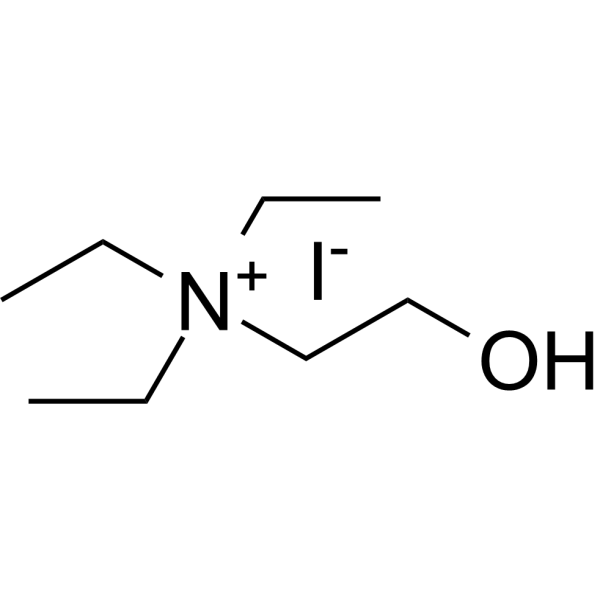
Triethylcholine iodide is a choline acetyltransferase inhibitor and a regulator of the acetylcholine synthesis pathway. Triethylcholine iodide inhibits acetylcholine synthesis in brain tissues and blocks neuromuscular and autonomic ganglionic transmission. Triethylcholine iodide exerts weak curare-like effects at extremely high concentrations. Triethylcholine iodide elevates the pentylenetetrazol seizure threshold, alters electroencephalogram patterns in Felis catus, but does not affect the maximal electroshock seizure threshold in Oryctolagus cuniculus. Triethylcholine iodide can be used in seizure-related research .
loading...
    loading...
Cat. No.: HY-P1343
CAS No.: 881640-56-8
Target:  

Peptides

Research Areas:  

Others

Frog 26RFa is a neuropeptide that can be isolated from frog brain. Frog 26RFa has pro-oxygen activity .
loading...
    loading...
Cat. No.: HY-18612
CAS No.: 1034152-93-6
Target:  

Bombesin Receptor

Research Areas:  

Metabolic Disease

MK-7725 is a selective, orally active, and blood-brain barrier-permeable agonist of the subtype 3 of the frog skin peptide receptor (BRS-3). MK-7725 has a high affinity for the human BRS-3 (hBRS-3), with an IC50 of 3 nM, and its functional activity in the mouse-derived BRS-3 (mBRS-3) model with an EC50 of 22 nM (105% agonistic). MK-7725 significantly reduces the body weight of obese rats and obese dogs. MK-7725 can be used for the treatment of obesity .
loading...
    loading...
Cat. No.: HY-123320S
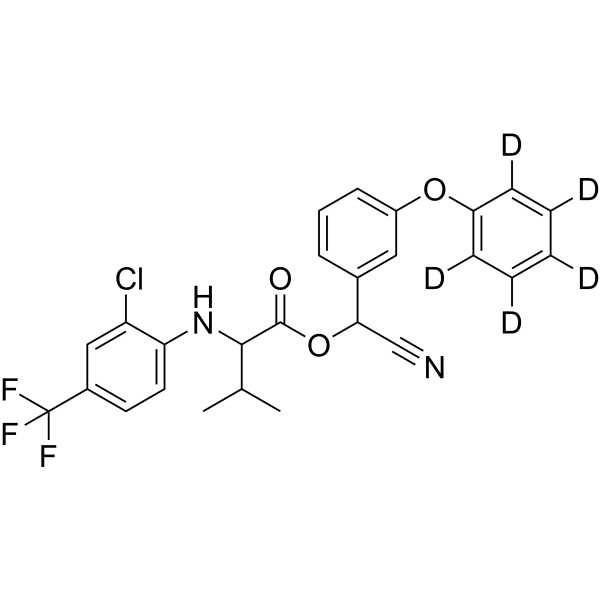
Fluvalinate-d5 is the deuterated-labeled Fluvalinate (HY-123320). Fluvalinate is an orally active acaricide classified as a sodium channel inhibitor. Fluvalinate delays sodium channel closure, prolongs cell membrane depolarization, inhibits the excitability of honeybee brain neurons, and exerts a central nervous system inhibitory effect. Fluvalinate negatively affects the learning ability, memory ability, sucrose responsiveness, and survival of honeybees. Fluvalinate potentiates pentobarbital-induced hypnosis, reduces spontaneous activity in mice, and decreases the total white blood cell count and absolute lymphocyte count in mice. Fluvalinate induces acute toxic symptoms in rats, acts as a cholinergic stimulant, and induces the production of hepatic enzymes in rats. Fluvalinate causes the death of Varroa jacobsoni sensitive to τ-Fluvalinate (HY-B2021). Fluvalinate can be used in studies related to mite pest control .
loading...
    loading...
Cat. No.: HY-123320
CAS No.: 69409-94-5
Research Areas:  

Infection Neurological Disease

Fluvalinate is an orally active acaricide classified as a sodium channel inhibitor. Fluvalinate delays sodium channel closure, prolongs cell membrane depolarization, inhibits the excitability of honeybee brain neurons, and exerts a central nervous system inhibitory effect. Fluvalinate negatively affects the learning ability, memory ability, sucrose responsiveness, and survival of honeybees. Fluvalinate potentiates pentobarbital-induced hypnosis, reduces spontaneous activity in mice, and decreases the total white blood cell count and absolute lymphocyte count in mice. Fluvalinate induces acute toxic symptoms in rats, acts as a cholinergic stimulant, and induces the production of hepatic enzymes in rats. Fluvalinate causes the death of Varroa jacobsoni sensitive to τ-Fluvalinate (HY-B2021). Fluvalinate can be used in studies related to mite pest control .
loading...
    loading...

