27 Results for "

gastric tissue

" in MedChemExpress (MCE) Product Catalog:
Products (27)

27 Results for "gastric tissue" in MCE Product Catalog:

7
7 Publications Verification
Cat. No.: HY-B0377
CAS No.: 76824-35-6
Synonyms: MK-208
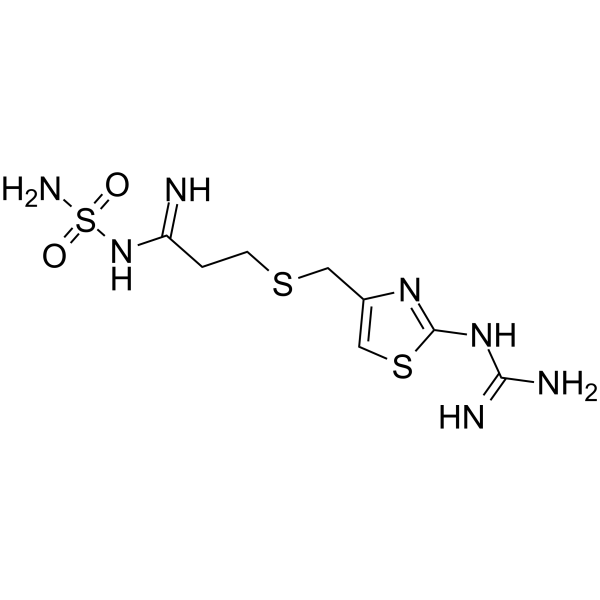
Famotidine (MK-208) is an orally active and highly selective histamine H2 receptor antagonist. It inhibits gastric acid secretion by blocking the Gs signaling pathway, and regulates intracellular cAMP and ERK pathways. Famotidine inhibits TLR3-mediated inflammatory pathways, and reduces the expression of various inflammatory mediators and interferon-related genes. Famotidine scavenges DPPH and nitric oxide free radicals, alleviates oxidative stress damage in gastric tissue, inhibits proMMP-9, improves vascular endothelial permeability, and restores the normal physiological functions of neutrophils and eosinophils. Famotidine crosses intestinal epithelial cells via facilitated diffusion and passive diffusion, blocks paracellular cation transport, and increases intestinal transepithelial electrical resistance. Famotidine reduces serum levels of transaminases and alkaline phosphatase, exerts analgesic effects and gastric protective effects simultaneously. Famotidine can be used in studies related to COVID-19, liver injury and acute gastric ulcer .
loading...
    loading...
2
2 Cited Publications
Cat. No.: HY-B0653A
CAS No.: 27262-48-2
Synonyms: (S)-(-)-Bupivacaine monohydrochloride
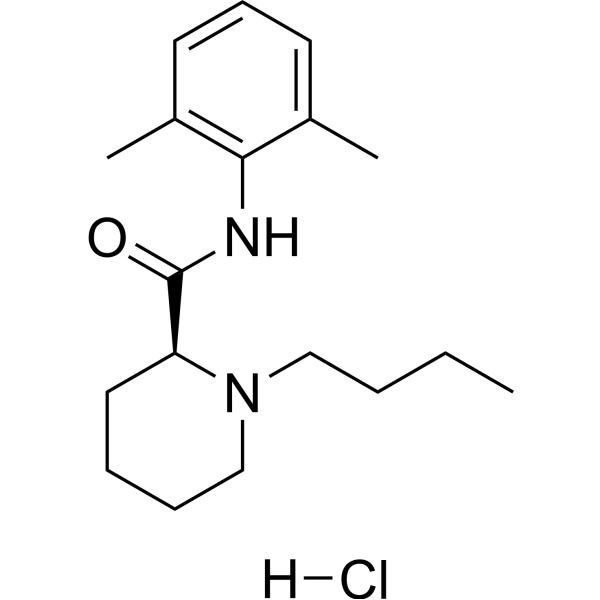
Levobupivacaine hydrochloride ((S)-(-)-Bupivacaine monohydrochloride) is a long-acting amide local agent that can suppress or relieve pain. Levobupivacaine hydrochloride exerts agent that can suppress or relieve pain. and analgesic effects through reversible blockade of neuronal sodium channel. Levobupivacaine hydrochloride can inhibit impulse transmission and conduction in cardiovascular and other tissues, possessing certain cardiac and CNS toxicity. Levobupivacaine hydrochloride is metabolized by hepatic cytochrome P450 (CYP450) enzymes in vivo. Levobupivacaine hydrochloride can also induce ferroptosis by miR-489-3p/SLC7A11 signaling in gastric cancer .
loading...
    loading...
2
2 Cited Publications
Cat. No.: HY-B0653
CAS No.: 27262-47-1
Synonyms: (S)-(-)-Bupivacaine
Research Areas:  

Neurological Disease Cancer

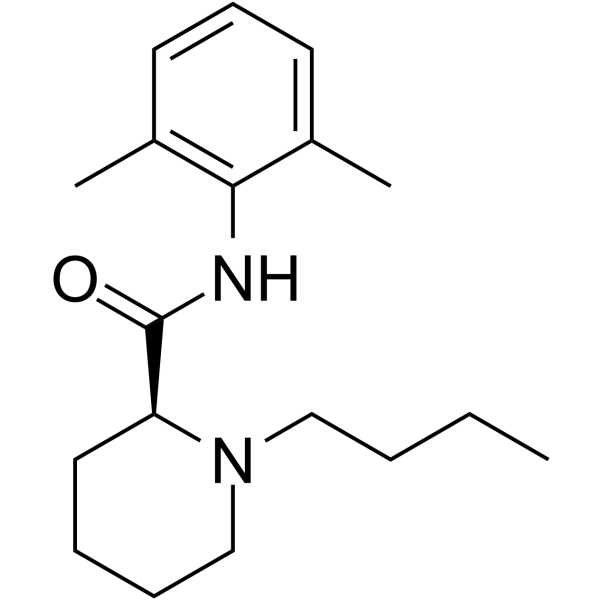
Levobupivacaine ((S)-(-)-Bupivacaine) is a long-acting amide local agent that can suppress or relieve pain. Levobupivacaine exerts agent that can suppress or relieve pain. and analgesic effects through reversible blockade of neuronal sodium channel. Levobupivacaine can inhibit impulse transmission and conduction in cardiovascular and other tissues, possessing certain cardiac and CNS toxicity. Levobupivacaine is metabolized by hepatic cytochrome P450 (CYP450) enzymes in vivo. Levobupivacaine can also induce ferroptosis by miR-489-3p/SLC7A11 signaling in gastric cancer .
loading...
    loading...
1
1 Cited Publications
Cat. No.: HY-N4280
CAS No.: 2445-80-9
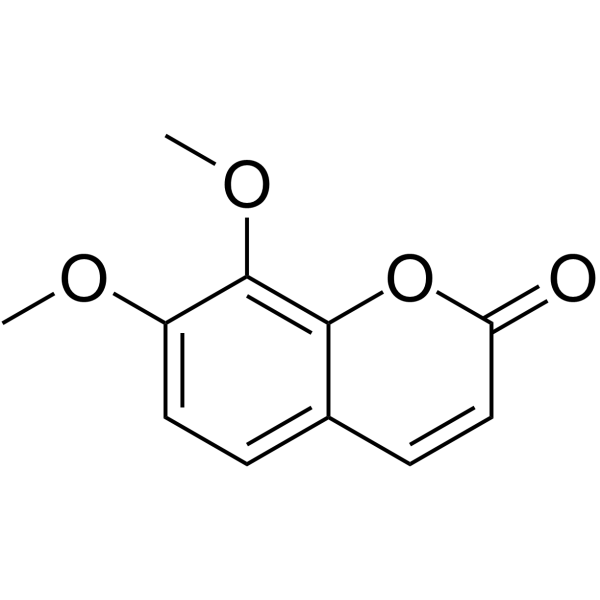
7,8-Dimethoxycoumarin is a coumarin compound derived from Artemisia caruifolia with oral activity. 7,8-Dimethoxycoumarin inhibits mitochondrial permeability transition pore and H +/K +-ATPase, and exhibits antioxidant, anti-inflammatory, renoprotective, neuroprotective and gastroprotective effects. 7,8-Dimethoxycoumarin reduces lipid peroxidation (TBARS), increases GSH levels, inhibits myeloperoxidase (MPO) activity, and regulates the expression of inflammatory factors by inhibiting the NF‑κB and MAPK pathways. 7,8-Dimethoxycoumarin ameliorates gastric mucosal injury, alleviates renal tissue lesions and relieves neuropathic pain. 7,8-Dimethoxycoumarin can be used in studies related to acute renal failure, trigeminal neuralgia and gastritis .
loading...
    loading...
Cat. No.: HY-P10735
CAS No.: 181591-59-3
Synonyms: gastric inhibitory polypeptide(mouse); GIP(1-42) (mouse)
Target:  

Lipase Apoptosis

Research Areas:  

Metabolic Disease

GIP (Gastric inhibitory polypeptide) (mouse) is a gastrointestinal hormone that is secreted by the intestinal K cells, and also expressed in and secreted from pancreatic islets. GIP (mouse) promotes insulin secretion from pancreatic β cells via the G-protein-coupled GIP receptor (GIPR). GIP (mouse) promotes pancreatic β cell proliferation and inhibits apoptosis. GIP (mouse) also exerts direct lipogenic effects on adipose tissue .
loading...
    loading...
Cat. No.: HY-Y0651
CAS No.: 7757-83-7
Sodium sulfite is an inorganic salt used as an antioxidant and preservative. Sodium sulfite is also used in sulfonation and sulfomethylation reactions. Sodium sulfite can also be used as a bleaching agent, desulfurizer, and dechlorinator. Sodium sulfite inhibits hepatocyte proliferation, promotes hepatocyte apoptosis and necrosis, and impairs mitochondrial integrity. Sodium sulfite induces superoxide anion production, primes neutrophils for enhanced superoxide anion generation, and induces neutrophil gene expression. Sodium sulfite can be used in studies related to pulmonary inflammation and gastric tissue injury .
loading...
    loading...
Cat. No.: HY-N3031
CAS No.: 156980-60-8
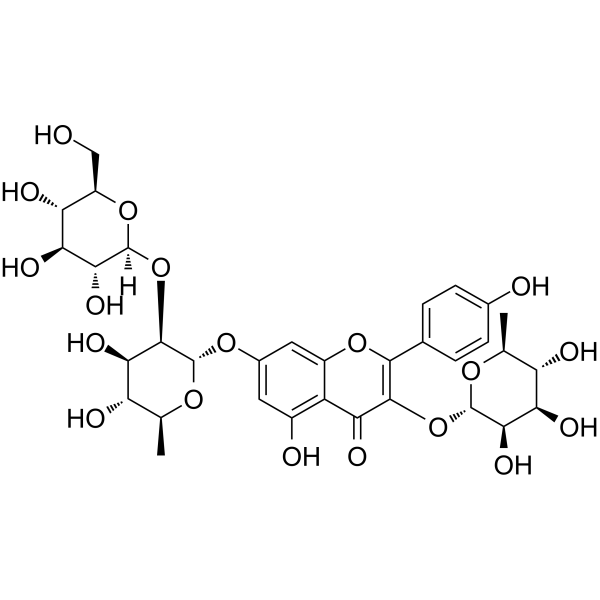
Grosvenorine is an orally active flavonoid glycoside found in S. grosvenorii. Grosvenorine exhibits antibacterial, antioxidant and antiinflammation activities. Grosvenorine can induce apoptosis and increases anti-apoptotic Bcl-2 protein expression and reduces pro-apoptotic P53 protein expression in gastric tissues. Grosvenorine enhances mucin/glycoprotein secretion, regulates gastric pH, and reduces gastric lesion incidence.Grosvenorine increases glutathione peroxidase, catalase, and SOD levels, reduces lipid peroxidation (MDA), and lowers TNF-α and IL-6 levels. Grosvenorine can be used for the researches of bacterial infection and Gastric ulcer .
loading...
    loading...
Cat. No.: HY-29347
CAS No.: 6701-17-3
Research Areas:  

Cardiovascular Disease

Ocrylate is a tissue adhesive that contains an 8-carbon alkyl cyanoacrylate in its structure. Ocrylate can be used in research on gastric fundal varices, bone and cartilage grafting, cerebrospinal fluid leakage repair, and skin closure. Additionally, the rapid polymerization property of Ocrylate makes it suitable for inhibiting vascular embolization .
loading...
    loading...
Cat. No.: HY-W707517
CAS No.: 2707433-64-3
Synonyms: MK-208-d4
Famotidine-d4 (MK-208-d4) is the deuterated-labeled Famotidine (HY-B0377). Famotidine (MK-208) is an orally active and highly selective histamine H2 receptor antagonist. It inhibits gastric acid secretion by blocking the Gs signaling pathway, and regulates intracellular cAMP and ERK pathways. Famotidine inhibits TLR3-mediated inflammatory pathways, and reduces the expression of various inflammatory mediators and interferon-related genes. Famotidine scavenges DPPH and nitric oxide free radicals, alleviates oxidative stress damage in gastric tissue, inhibits proMMP-9, improves vascular endothelial permeability, and restores the normal physiological functions of neutrophils and eosinophils. Famotidine crosses intestinal epithelial cells via facilitated diffusion and passive diffusion, blocks paracellular cation transport, and increases intestinal transepithelial electrical resistance. Famotidine reduces serum levels of transaminases and alkaline phosphatase, exerts analgesic effects and gastric protective effects simultaneously. Famotidine can be used in studies related to COVID-19, liver injury and acute gastric ulcer .
loading...
    loading...
Cat. No.: HY-B0377S
CAS No.: 2744683-81-4
Synonyms: MK-208-13C,d3
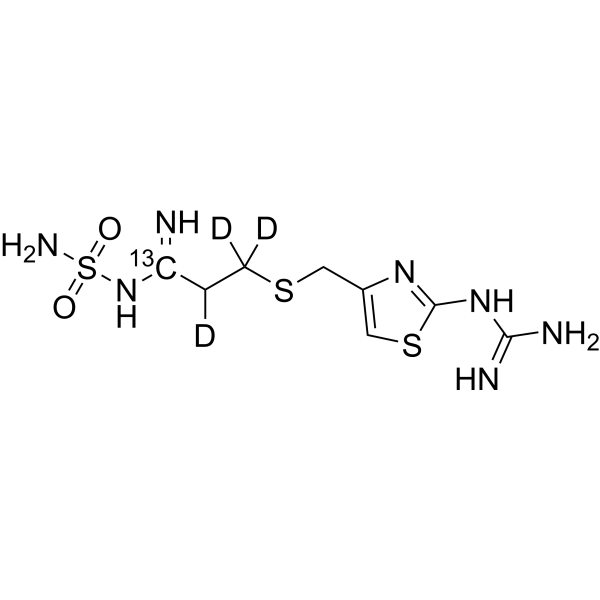
Famotidine- 13C,d3 (MK-208- 13C,d3) is the deuterated, 13C-labeled Famotidine (HY-B0377). Famotidine (MK-208) is an orally active and highly selective histamine H2 receptor antagonist. It inhibits gastric acid secretion by blocking the Gs signaling pathway, and regulates intracellular cAMP and ERK pathways. Famotidine inhibits TLR3-mediated inflammatory pathways, and reduces the expression of various inflammatory mediators and interferon-related genes. Famotidine scavenges DPPH and nitric oxide free radicals, alleviates oxidative stress damage in gastric tissue, inhibits proMMP-9, improves vascular endothelial permeability, and restores the normal physiological functions of neutrophils and eosinophils. Famotidine crosses intestinal epithelial cells via facilitated diffusion and passive diffusion, blocks paracellular cation transport, and increases intestinal transepithelial electrical resistance. Famotidine reduces serum levels of transaminases and alkaline phosphatase, exerts analgesic effects and gastric protective effects simultaneously. Famotidine can be used in studies related to COVID-19, liver injury and acute gastric ulcer .
loading...
    loading...
Cat. No.: HY-N3031R
CAS No.: 156980-60-8
Grosvenorine (Standard) is the analytical standard of Grosvenorine. This product is intended for research and analytical applications. Grosvenorine is an orally active flavonoid glycoside found in S. grosvenorii. Grosvenorine exhibits antibacterial, antioxidant and antiinflammation activities. Grosvenorine can induce apoptosis and increases anti-apoptotic Bcl-2 protein expression and reduces pro-apoptotic P53 protein expression in gastric tissues. Grosvenorine enhances mucin/glycoprotein secretion, regulates gastric pH, and reduces gastric lesion incidence.Grosvenorine increases glutathione peroxidase, catalase, and SOD levels, reduces lipid peroxidation (MDA), and lowers TNF-α and IL-6 levels. Grosvenorine can be used for the researches of bacterial infection and Gastric ulcer .
loading...
    loading...
Cat. No.: HY-106323
CAS No.: 59530-69-7
Synonyms: KW-5139
Target:  

Motilin Receptor

Research Areas:  

Metabolic Disease

[Leu13]-Motilin (KW-5139) is a motilin analogue. [Leu13]-Motilin stimulates gastrointestinal motility in the rabbit. [Leu13]-Motilin causes concentration-dependent contractions of the gastric antrum, duodenum, jejunum, ileum and the descending colon in vitro .
loading...
    loading...
Cat. No.: HY-B0377G
CAS No.: 76824-35-6
Synonyms: MK-208 (GMP)
Famotidine GMP (MK-208 GMP) is Famotidine (HY-B0377) produced in GMP guideline. Famotidine is an orally active and highly selective histamine H2 receptor antagonist. It inhibits gastric acid secretion by blocking the Gs signaling pathway, and regulates intracellular cAMP and ERK pathways. Famotidine inhibits TLR3-mediated inflammatory pathways, and reduces the expression of various inflammatory mediators and interferon-related genes. Famotidine scavenges DPPH and nitric oxide free radicals, alleviates oxidative stress damage in gastric tissue, inhibits proMMP-9, improves vascular endothelial permeability, and restores the normal physiological functions of neutrophils and eosinophils. Famotidine crosses intestinal epithelial cells via facilitated diffusion and passive diffusion, blocks paracellular cation transport, and increases intestinal transepithelial electrical resistance. Famotidine reduces serum levels of transaminases and alkaline phosphatase, exerts analgesic effects and gastric protective effects simultaneously. Famotidine can be used in studies related to COVID-19, liver injury and acute gastric ulcer .
loading...
    loading...
Cat. No.: HY-B0377R
CAS No.: 76824-35-6
Synonyms: MK-208 (Standard)
Famotidine (Standard) (MK-208 (Standard)) is the analytical standard of Famotidine (HY-B0377). This product is intended for research and analytical applications. Famotidine (MK-208) is an orally active and highly selective histamine H2 receptor antagonist. It inhibits gastric acid secretion by blocking the Gs signaling pathway, and regulates intracellular cAMP and ERK pathways. Famotidine inhibits TLR3-mediated inflammatory pathways, and reduces the expression of various inflammatory mediators and interferon-related genes. Famotidine scavenges DPPH and nitric oxide free radicals, alleviates oxidative stress damage in gastric tissue, inhibits proMMP-9, improves vascular endothelial permeability, and restores the normal physiological functions of neutrophils and eosinophils. Famotidine crosses intestinal epithelial cells via facilitated diffusion and passive diffusion, blocks paracellular cation transport, and increases intestinal transepithelial electrical resistance. Famotidine reduces serum levels of transaminases and alkaline phosphatase, exerts analgesic effects and gastric protective effects simultaneously. Famotidine can be used in studies related to COVID-19, liver injury and acute gastric ulcer .
loading...
    loading...
Cat. No.: HY-B0377S1
Synonyms: MK-208-13C
Famotidine- 13C (MK-208- 13C) is the 13C-labeled Famotidine (HY-B0377). Famotidine (MK-208) is an orally active and highly selective histamine H2 receptor antagonist. It inhibits gastric acid secretion by blocking the Gs signaling pathway, and regulates intracellular cAMP and ERK pathways. Famotidine inhibits TLR3-mediated inflammatory pathways, and reduces the expression of various inflammatory mediators and interferon-related genes. Famotidine scavenges DPPH and nitric oxide free radicals, alleviates oxidative stress damage in gastric tissue, inhibits proMMP-9, improves vascular endothelial permeability, and restores the normal physiological functions of neutrophils and eosinophils. Famotidine crosses intestinal epithelial cells via facilitated diffusion and passive diffusion, blocks paracellular cation transport, and increases intestinal transepithelial electrical resistance. Famotidine reduces serum levels of transaminases and alkaline phosphatase, exerts analgesic effects and gastric protective effects simultaneously. Famotidine can be used in studies related to COVID-19, liver injury and acute gastric ulcer .
loading...
    loading...
Cat. No.: HY-W777002
CAS No.: 1185241-48-8
Synonyms: MK-208-13C3
Famotidine- 13C3 (MK-208- 13C3) is the 13C3-labeled Famotidine (HY-B0377). Famotidine (MK-208) is an orally active and highly selective histamine H2 receptor antagonist. It inhibits gastric acid secretion by blocking the Gs signaling pathway, and regulates intracellular cAMP and ERK pathways. Famotidine inhibits TLR3-mediated inflammatory pathways, and reduces the expression of various inflammatory mediators and interferon-related genes. Famotidine scavenges DPPH and nitric oxide free radicals, alleviates oxidative stress damage in gastric tissue, inhibits proMMP-9, improves vascular endothelial permeability, and restores the normal physiological functions of neutrophils and eosinophils. Famotidine crosses intestinal epithelial cells via facilitated diffusion and passive diffusion, blocks paracellular cation transport, and increases intestinal transepithelial electrical resistance. Famotidine reduces serum levels of transaminases and alkaline phosphatase, exerts analgesic effects and gastric protective effects simultaneously. Famotidine can be used in studies related to COVID-19, liver injury and acute gastric ulcer .
loading...
    loading...
Cat. No.: HY-B0653AS
Synonyms: (S)-(–)-Bupivacaie-d9hydrochloride
Levobupivacaine-d9 ((S)-(–)-Bupivacaie-d9) hydrochloride is deuterium labeled Levobupivacaine hydrochloride (HY-B0653A). Levobupivacaine hydrochloride ((S)-(-)-Bupivacaine monohydrochloride) is a long-acting amide local agent that can suppress or relieve pain. Levobupivacaine hydrochloride exerts agent that can suppress or relieve pain. and analgesic effects through reversible blockade of neuronal sodium channel. Levobupivacaine hydrochloride can inhibit impulse transmission and conduction in cardiovascular and other tissues, possessing certain cardiac and CNS toxicity. Levobupivacaine hydrochloride is metabolized by hepatic cytochrome P450 (CYP450) enzymes in vivo. Levobupivacaine hydrochloride can also induce ferroptosis by miR-489-3p/SLC7A11 signaling in gastric cancer .
loading...
    loading...
Cat. No.: HY-D3159
CAS No.: 2304942-78-5
Research Areas:  

Others

BTC1070 is an anti-quenching pentamethine cyanine NIR-II fluorescent probe. BTC1070 exhibits high brightness and excellent photostability in aqueous solution (Ex/Em = 1015/1065 nm). BTC1070 can clearly visualize lymphatic structures after intradermal injection, and produces a ratiometric fluorescence response in the acidic range to non-invasively quantify gastric pH. BTC1070 is applicable to studies related to in vivo deep tissue imaging and gastric pH sensing .
loading...
    loading...
Cat. No.: HY-187186
CAS No.: 115037-71-3
Target:  

Urease

Urease-IN-25 (Compound 10a) is a urease inhibitor with an IC50 value of 0.50 μM against jack bean urease. Urease-IN-25 can be used in the research of Helicobacter pylori infection, chronic gastritis, peptic ulcer disease, gastric cancer, mucosa-associated lymphoid tissue lymphoma, and other conditions .
loading...
    loading...
Cat. No.: HY-P992508
Synonyms: SX001

Target:  

Claudin

Research Areas:  

Cancer

SPX-101 (SX001) is a humanized monoclonal antibody targeting CLDN18.2. CLDN18.2 is only transiently expressed in the differentiated epithelial cells of the gastric mucosa and is hardly found in healthy tissues, thus having an extremely wide therapeutic window. SPX-101 can be used for the study of solid tumors.
loading...
    loading...

