

1. Search Result
Search Result
Results for "

glycogen metabolism

" in MedChemExpress (MCE) Product Catalog:

14

Inhibitors & Agonists

3

Biochemical Assay Reagents

3

Natural
Products

2

Isotope-Labeled Compounds

Cat. No. Product Name Target Research Areas Chemical Structure
  • HY-112537
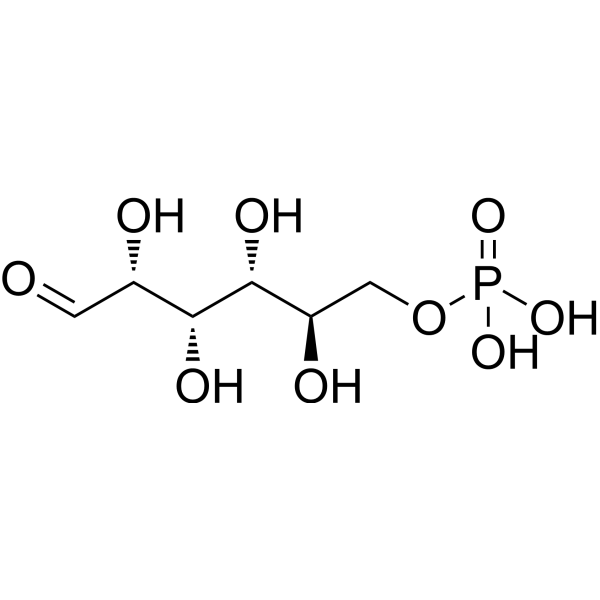
    D-Glucose 6-phosphate
    4 Publications Verification

    Endogenous Metabolite mTOR Cardiovascular Disease Metabolic Disease
    D-Glucose 6-phosphate is a key central node metabolite in glucose metabolism. It serves as the initiating metabolite for glycolysis and the pentose phosphate pathway, as well as a substrate for glycogen synthesis. D-Glucose 6-phosphate acts as a metabolic stress signal, which activates the mTOR pathway to promote protein synthesis, especially when phosphoglucose isomerase (PGI) is inhibited, thereby participating in cardiac remodeling processes. D-Glucose 6-phosphate can be used in research related to non-insulin-dependent diabetes mellitus and heart failure .
    D-Glucose 6-phosphate
  • HY-P2857

    Amyloglucosidase, Aspergillus niger

    Endogenous Metabolite Metabolic Disease
    Amyloglucosidase, Aspergillus niger (Amyloglucosidase, Aspergillus niger) is a starch-hydrolyzing enzyme with high catalytic efficiency towards soluble starch and raw starch. Amyloglucosidase, Aspergillus niger hydrolyzes α-1,4 and α-1,6 glycosidic linkages in starch and similar substrates, and primarily releases β-glucose molecules from the non-reducing ends. Amyloglucosidase, Aspergillus niger participates in glycogen metabolism and is associated with type II glycogen storage disease. Amyloglucosidase, Aspergillus niger converts starch into glucose, and is applicable to the industrial production of high-fructose syrup, ethanol and other fermented products .
    Glucoamylase, Aspergillus niger
  • HY-128417A

    Biochemical Assay Reagents Others
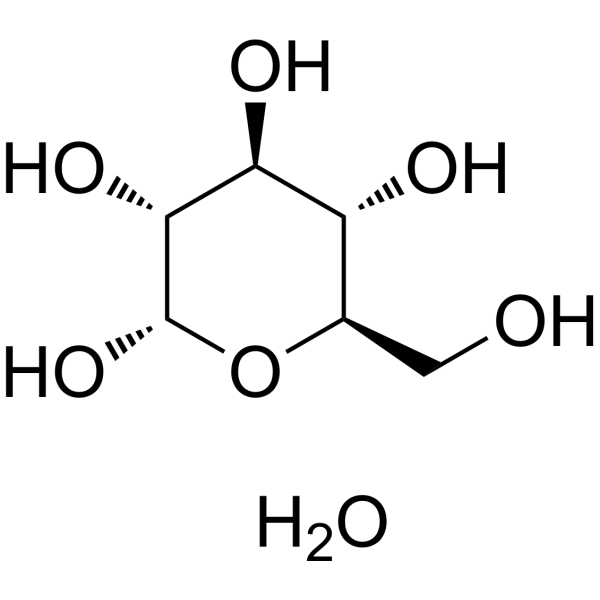
    alpha-D-glucose hydrate is a monosaccharide and the most common form of glucose. It is a monosaccharide, which means it cannot be broken down into simpler sugars. alpha-D-glucose plays a vital role in energy metabolism and is the primary source of energy for many cells in the body. It is also a building block of larger carbohydrates such as starch and glycogen. The "α" prefix refers to the orientation of the hydroxyl group attached to the first carbon atom. Alpha-D-glucose exists in solution as a hydrate, which means it is bound to water molecules.
    alpha-D-glucose hydrate
  • HY-112537S1

    Isotope-Labeled Compounds Endogenous Metabolite mTOR Cardiovascular Disease Metabolic Disease
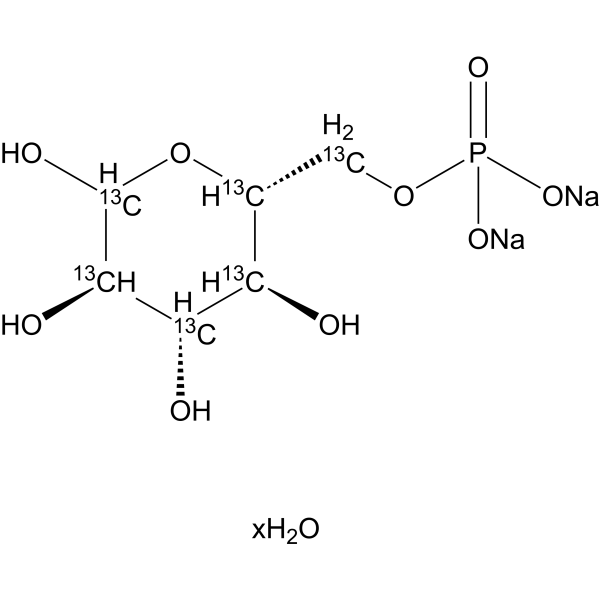
    D-Glucose 6-Phosphate- 13C6 disodium xhydrate is a 13C-labeled D-Glucose 6-phosphate disodium xhydrate. D-Glucose 6-phosphate disodium xhydrate is a key central node metabolite in sugar metabolism, serving as the initial metabolite of glycolysis and pentose phosphate pathway, and also a substrate for glycogen synthesis. D-Glucose 6-phosphate disodium xhydrate can act as a metabolic stress signal, especially when phosphoglucomutase (PGI) is inhibited, activating the mTOR pathway, promoting protein synthesis, and thereby participating in the remodeling process of the heart. D-Glucose 6-phosphate disodium xhydrate can be used in research related to non-insulin-dependent diabetes and heart failure.
    D-Glucose 6-Phosphate-13C6 (disodium xhydrate)
  • HY-P2857A

    Amyloglucosidase, Rhizopus sp.

    Endogenous Metabolite Metabolic Disease
    Glucoamylase, Rhizopus sp. (Amyloglucosidase, Rhizopus sp.) is a starch-hydrolyzing enzyme with high catalytic efficiency towards soluble starch and raw starch. Glucoamylase, Rhizopus sp. hydrolyzes α-1,4 and α-1,6 glycosidic linkages in starch and similar substrates, and primarily releases β-glucose molecules from the non-reducing ends. Glucoamylase, Rhizopus sp. participates in glycogen metabolism and is associated with type II glycogen storage disease. Glucoamylase, Rhizopus sp. converts starch into glucose, and is applicable to the industrial production of high-fructose syrup, ethanol and other fermented products .
    Glucoamylase, Rhizopus sp.
  • HY-112537S2

    Isotope-Labeled Compounds Endogenous Metabolite mTOR Others
    D-Glucose 6-phosphate- 13C is 13C labeled D-Glucose 6-phosphate (HY-112537). D-Glucose 6-phosphate is a key central node metabolite in glucose metabolism. It serves as the initiating metabolite for glycolysis and the pentose phosphate pathway, as well as a substrate for glycogen synthesis. D-Glucose 6-phosphate acts as a metabolic stress signal, which activates the mTOR pathway to promote protein synthesis, especially when phosphoglucose isomerase (PGI) is inhibited, thereby participating in cardiac remodeling processes. D-Glucose 6-phosphate can be used in research related to non-insulin-dependent diabetes mellitus and heart failure.
    D-Glucose 6-phosphate-13C
  • HY-W400427

    Biochemical Assay Reagents Others
    α-D-Glucose-1-phosphate is an important intermediate in sugar metabolism, functioning as a glycosyl donor in glycosyl transfer reactions and participating in glycogen synthesis and degradation through the action of phosphorylases .
    α-D-Glucose-1-phosphate
  • HY-120872

    Glycosyltransferase Metabolic Disease
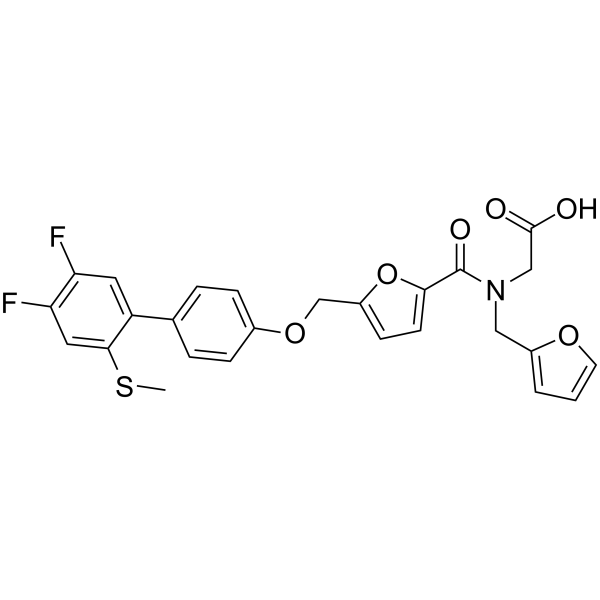
    AJS1669 free acid is a potent and orally available glycogen synthase (GS) activator. AJS1669 improves glucose metabolism and reduces body fat mass in mice[1].
    AJS1669 free acid
  • HY-112537A

    Endogenous Metabolite mTOR Cardiovascular Disease Metabolic Disease
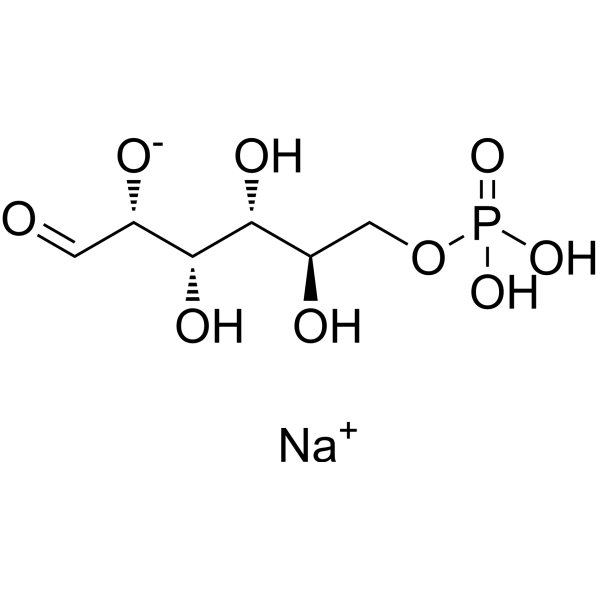
    D-Glucose 6-phosphate dipotassium is a key central node metabolite in glucose metabolism. It serves as the initiating metabolite for glycolysis and the pentose phosphate pathway, as well as a substrate for glycogen synthesis. D-Glucose 6-phosphate dipotassium acts as a metabolic stress signal, which activates the mTOR pathway to promote protein synthesis, especially when phosphoglucose isomerase (PGI) is inhibited, thereby participating in cardiac remodeling processes. D-Glucose 6-phosphate dipotassium can be used in research related to non-insulin-dependent diabetes mellitus and heart failure .
    D-Glucose 6-phosphate dipotassium
  • HY-Y1150

    Trimethylmethanecarboxylic acid; Versatic 5 acid; tert-Pentanoic acid

    Antibiotic Inflammation/Immunology
    Pivalic acid (Trimethylmethanecarboxylic acid) is a carboxylic acid. Pivalic acid induces Carnitine deficiency. Pivalic acid conjugated with Antibiotics, such as Pivmecillinam (HY-B0810) and Pivampicillin (HY-119011), are used in urinary tract infection. Pivalic acid can be used in physical exercise research .
    Pivalic acid
  • HY-113002

    Phosphomannose Isomerase (PMI) Infection Metabolic Disease
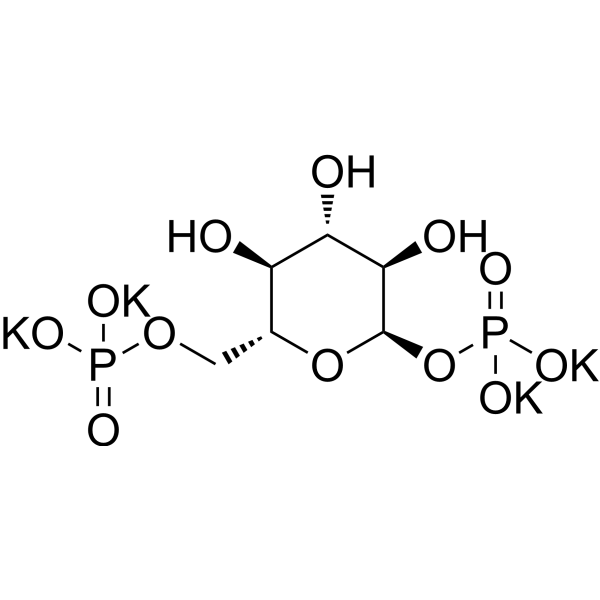
    α-D-Glucose 1,6-bisphosphate is an activator of PMM2 and phosphoglucomutase. α-D-Glucose 1,6-bisphosphate regulates glycogen metabolism, glycolysis, amino sugar synthesis, as well as the formation of bacterial cell walls and capsules. α-D-Glucose 1,6-bisphosphate can be used in studies related to pmm2-cdg (cdg-1a or Jaeken syndrome) .
    α-D-Glucose 1,6-bisphosphate
  • HY-126756

    Phosphorylase Metabolic Disease Cancer
    Amorphin is a phosphorylase b with glycogen metabolism activity. Amorphin binds directly to alpha-actinin, with alpha-actinin mediating its binding to actin filaments. Amorphin can be used for the research of McArdle’s disease and breast cancer .
    Amorphin
  • HY-128417AR

    Biochemical Assay Reagents Reference Standards Others
    alpha-D-glucose (hydrate) (Standard) is the analytical standard of alpha-D-glucose (hydrate). This product is intended for research and analytical applications. alpha-D-glucose hydrate is a monosaccharide and the most common form of glucose. It is a monosaccharide, which means it cannot be broken down into simpler sugars. alpha-D-glucose plays a vital role in energy metabolism and is the primary source of energy for many cells in the body. It is also a building block of larger carbohydrates such as starch and glycogen. The "α" prefix refers to the orientation of the hydroxyl group attached to the first carbon atom. Alpha-D-glucose exists in solution as a hydrate, which means it is bound to water molecules.
    alpha-D-glucose hydrate (Standard)
  • HY-W685358

    Insecticide Apoptosis Infection Metabolic Disease Inflammation/Immunology
    D-Tetramethrin is a type I synthetic pyrethroid insecticide and hepatotoxicity inducer. D-Tetramethrin induces oxidative stress in the liver of zebrafish. D-Tetramethrin induces Apoptosis and inflammatory responses. D-Tetramethrin causes severe liver damage in zebrafish. D-Tetramethrin can be used in studies related to hepatotoxicity .
    D-Tetramethrin

Inquiry Online

Your information is safe with us. * Required Fields.

Salutation


Country or Region *

Applicant Name *


Organization Name *

Department *


Email Address *


Product Name *

Cat. No.


Requested quantity *

Phone Number *


Remarks

Inquiry Online

Inquiry Information

Product Name:
Cat. No.:
Quantity:
MCE Japan Authorized Agent:

