10 Results for "

highly metastatic tumor cells

" in MedChemExpress (MCE) Product Catalog:
Products (10)

10 Results for "highly metastatic tumor cells" in MCE Product Catalog:

Cat. No.: HY-148808
CAS No.: 2365193-22-0
Purity:  99.33%
Synonyms: RXC007
Target:  

ROCK

Research Areas:  

Cancer

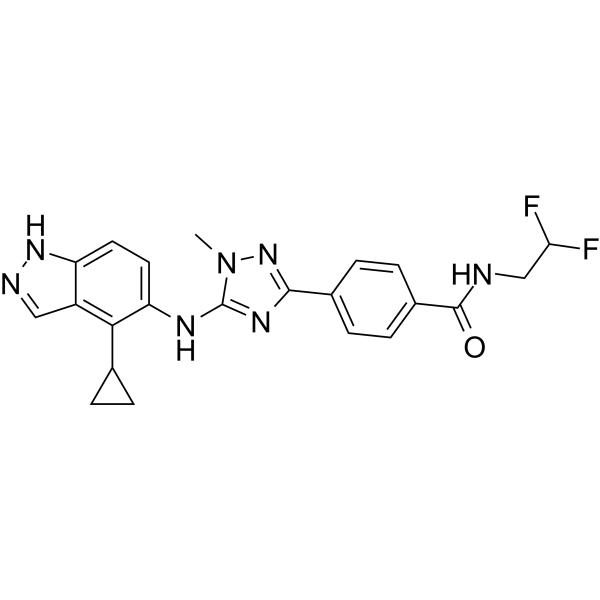
Zelasudil (RXC007) is an orally active, highly selective small molecule Rho-associated coiled-coil containing protein kinase 2 (ROCK2) inhibitor with anti-fibrotic efficacy. Zelasudil elicits positive immunomodulatory effects in metastatic pancreatic tumors with increase of CD8+ and CD4+ T cell infiltrate into the tumor cortex and reduction in immunosuppressive FOXP3+ regulatory T cells at the tumor border. Zelasudil is promising for research of pancreatic ductal adenocarcinoma .
loading...
    loading...
Cat. No.: HY-155052
CAS No.: 2642327-52-2
Research Areas:  

Cancer

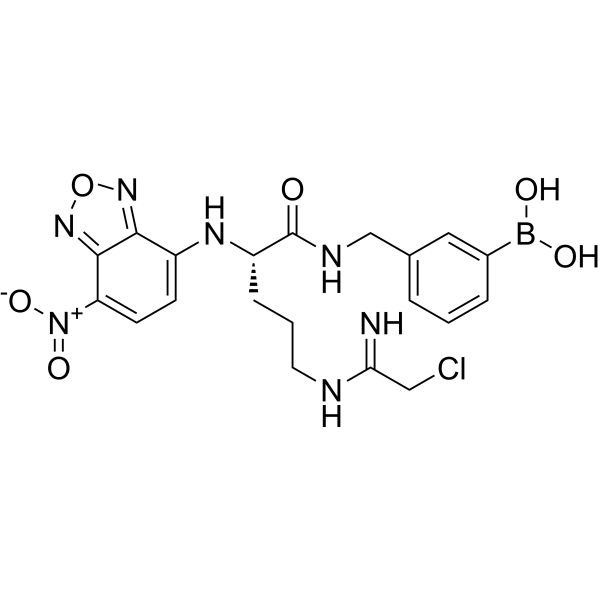
PAD4-IN-2 is a highly tumor-targeted and irreversible PAD4 inhibitor with an IC50 of 1.94 μM. It selectively recognizes sialic acid on tumor surfaces and accumulates in tumor tissues, with distribution in the cytoplasm of tumor cells and nuclei of neutrophils. PAD4-IN-2 inhibits the PAD4-H3cit-NETs (Neutrophil Extracellular Traps) pathway, reduces senescent tumor-associated neutrophils, and promotes M1 macrophage polarization. The compound exhibits potent anti-tumor and anti-metastatic activities and is suitable for breast cancer research .
loading...
    loading...
Cat. No.: HY-155052A
Purity:  95.64%
Research Areas:  

Cancer

PAD4-IN-2 TFA is a highly tumor-targeted and irreversible PAD4 inhibitor with an IC50 of 1.94 μM. PAD4-IN-2 TFA selectively recognizes sialic acid on tumor surfaces and accumulates in tumor tissues, with distribution in the cytoplasm of tumor cells and nuclei of neutrophils. PAD4-IN-2 TFA inhibits the PAD4-H3cit-NETs (Neutrophil Extracellular Traps) pathway, reduces senescent tumor-associated neutrophils, and promotes M1 macrophage polarization. The compound exhibits potent anti-tumor and anti-metastatic activities and is suitable for breast cancer research .
loading...
    loading...
Cat. No.: HY-164429
CAS No.: 2418533-90-9
Target:  

Integrin Elastase

Research Areas:  

Cancer

VIP236 is a small-molecule drug conjugate targeting αvβ3 integrin. VIP236 achieves tumor homing via specific binding to αvβ3 integrin and delivers its payload to the tumor microenvironment. The linker of VIP236 is cleavable by neutrophil elastase, which is highly expressed in the tumor microenvironment, to release the payload 7-ethylcamptothecin. This payload induces DNA damage by inhibiting topoisomerase 1, thereby exerting anti-tumor effects. VIP236 exhibits excellent plasma stability and tumor targeting property, with a tumor/plasma payload ratio 10-fold higher than that of the single administration. It effectively induces tumor regression, reduces metastasis formation, and shows good tolerance in mouse models. VIP236 has been used in studies related to non-small cell lung cancer, clear cell renal cell carcinoma, colon cancer, triple-negative breast cancer, small cell lung cancer, and metastatic solid tumors .
loading...
    loading...
Cat. No.: HY-103043
CAS No.: 1400998-20-0
Target:  

Others

Research Areas:  

Cancer

Pz 285 is an anti-cancer agent. Pz 285 shows significant inhibitory effect on the viability of MDA-MB-231 breast cancer cells, with an IC50 of 15.0 μM. Pz 285 exhibits remarkable antitumor effects in the mouse tumor xenograft model constructed with highly lung-metastatic MDA-MB-231 LM24 Her2+ breast cancer cells. Pz 285 can be used for the study of breast cancer, especially metastatic breast cancer .
loading...
    loading...
Cat. No.: HY-P11265
Research Areas:  

Cancer

YQGN-7 is a targeted fluorescent probe for the gonadotropin-releasing hormone receptor (RnRHR). YQGN-7 exhibits high selectivity and affinity for breast cancer cells (KD = 217.8 nM). YQGN-7 achieves precise visualization of the primary and metastatic lesions of breast cancer by targeting the highly expressed GnRHR in tumor cells. YQGN-7 can be used in the research of breast cancer breast-conserving surgery (BCS) .
loading...
    loading...
Cat. No.: HY-N8230
CAS No.: 2231756-23-1
Ganosinensic acid C is a triterpenoid compound that can be extracted from Ganoderma lucidum. Ganosinensic acid C has important biological activities such as anti-tumor, anti-prostate cancer, anti-inflammatory, and inhibition of HIV-I protease. Ganosinensic acid C has an IC50 value of 10.5 μM against human highly metastatic lung cancer cell line 95D. Ganosinensic acid C has an IC50 value of Ganosinensic acid C against cervical cancer cell line Hela is 13.2 μM .
loading...
    loading...
Cat. No.: HY-P11814
Synonyms: Cyclic TMTP1
cTMTP1 (Cyclic TMTP1) is the cyclic form of TMTP1 (HY-P11815). TMTP1 is a tumor-targeting peptide that selectively targets highly metastatic tumor cells. The cTMTP1-based [ 68Ga]Ga-DOTA-cTMTP1 probe is used for visualization of hepatocellular carcinoma. cTMTP1 can form a 68Ga-DOTA radiotracer that accumulates in highly metastatic cervical cancer cells and is used for microPET tumor visualization. cTMTP1 is applicable to research related to hepatocellular carcinoma and cervical cancer .
loading...
    loading...
Cat. No.: HY-P11816
Research Areas:  

Cancer

DOTA-cTMTP1 is a cyclic tumor-homing peptide precursor molecule. DOTA-cTMTP1 selectively binds to XPNPEP2 on highly metastatic tumor cells, accumulates and retains in hepatocellular carcinoma tumors, and maintains a high tumor-to-liver contrast over time in small animal models. After radiolabeling with 68Ga, DOTA-cTMTP1 forms a PET probe for positron emission tomography (PET) imaging of hepatocellular carcinoma (HCC).
loading...
    loading...
Cat. No.: HY-P992339

Research Areas:  

Cancer

cT84.66 is a highly efficient tumor-targeting agent against carcinoembryonic antigen (CEA). cT84.66 engages in bivalent binding with CEA via variable region antigen-binding sites, enabling precise targeting of CEA-producing tumor cells for delivery of therapeutic radiation. cT84.66 exhibits high tumor uptake rate, rapid clearance rate, and excellent tumor-to-blood ratio. With dual functions as an imaging agent and an antibody-directed radiotherapy agent, cT84.66 is widely used in studies of colorectal cancer and metastatic CEA-positive malignancies .
loading...
    loading...

