15 Results for "

human skin keratinocytes

" in MedChemExpress (MCE) Product Catalog:
Products (15)

15 Results for "human skin keratinocytes" in MCE Product Catalog:

3
3 Cited Publications
Cat. No.: HY-163731
CAS No.: 3077196-25-6
EGR-1-IN-1 is a EGR-1 inhibitor with an IC50 of 1.86 μM. EGR-1-IN-1 binds to the zinc finger DNA-binding domain of EGR-1 and promotes the dissociation of the EGR-1-DNA complex. EGR-1-IN-1 reduces the mRNA expression levels of EGR-1-regulated inflammatory genes induced by TNFα. EGR-1-IN-1 alleviates atopic dermatitis-like lesions in the ear skin of mice. EGR-1-IN-1 serves as a lead compound for the development of targeted compounds for inflammatory skin diseases. EGR-1-IN-1 can be used in studies related to atopic dermatitis .
loading...
    loading...
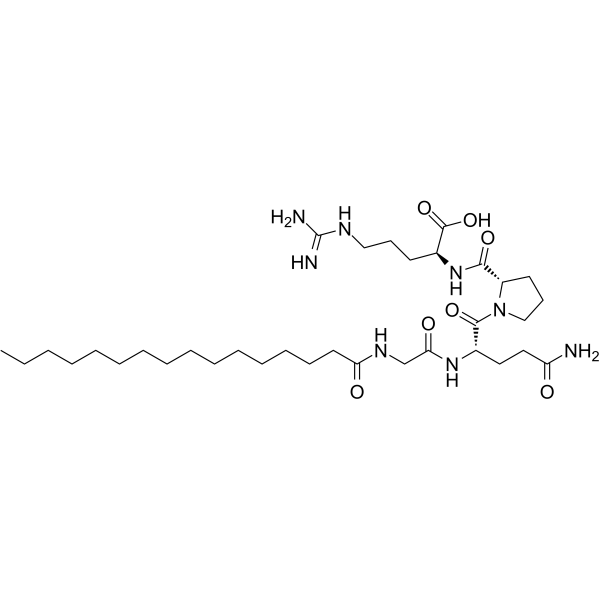
Cat. No.: HY-P0064
CAS No.: 221227-05-0
Synonyms: Palmitoyl Tetrapeptide-7
Target:  

Interleukin Related

Research Areas:  

Inflammation/Immunology

Palmitoyl Tetrapeptide-3 (Palmitoyl Tetrapeptide-7) is a synthetic peptide corresponding to amino acids 341-344 of the human immunoglobulin heavy chain, with the ability to stimulate phagocytosis. Palmitoyl tetrapeptide-3 reduces interleukin-6 (IL-6) secretion in keratinocytes and inhibits the UVB radiation-exposure inflammatory response of skin. Palmitoyl tetrapeptide-3 It also has anti-inflammatory and anti-aging effects, reducing skin wrinkles by promoting the production of elastic fibers in the papillary dermis .
loading...
    loading...
Cat. No.: HY-Y0850U3
CAS No.: 9002-89-5
Synonyms: Polyvinyl alcohol (Mw 125000, 98-99% hydrolyzed, ~2800 polymerization); Poly(Ethenol) (Mw 125000, 98-99% hydrolyzed, ~2800 polymerization)
PVA (Polyvinyl alcohol) (Mw 125000, 98-99% hydrolyzed, ~2800 polymerization) is a water-soluble, biodegradable, biocompatible and non-immunogenic polymer. PVA (Mw 125000, 98-99% hydrolyzed, ~2800 polymerization) causes no irritation to rabbit eyes, no skin sensitization in guinea pigs, promotes the proliferation of human skin keratinocytes, and reduces the loss of corneal endothelial cells. The LD50 of PVA (Mw 125000, 98-99% hydrolyzed, ~2800 polymerization) in rats and dogs is greater than 10 g/kg. PVA (Mw 125000, 98-99% hydrolyzed, ~2800 polymerization) is hardly absorbed by the digestive system, causes no adverse effects upon long-term oral administration, and shows no mutagenicity or carcinogenicity. However, repeated intravenous or portal vein injection of PVA (Mw 125000, 98-99% hydrolyzed, ~2800 polymerization) may induce pathological changes such as glomerular lesions, anemia, hypertension or liver fibrosis in rats or dogs. Crosslinked nanofibers prepared by modifying PVA (Mw 125000, 98-99% hydrolyzed, ~2800 polymerization) can be used in studies related to wound dressings and other applications .
loading...
    loading...
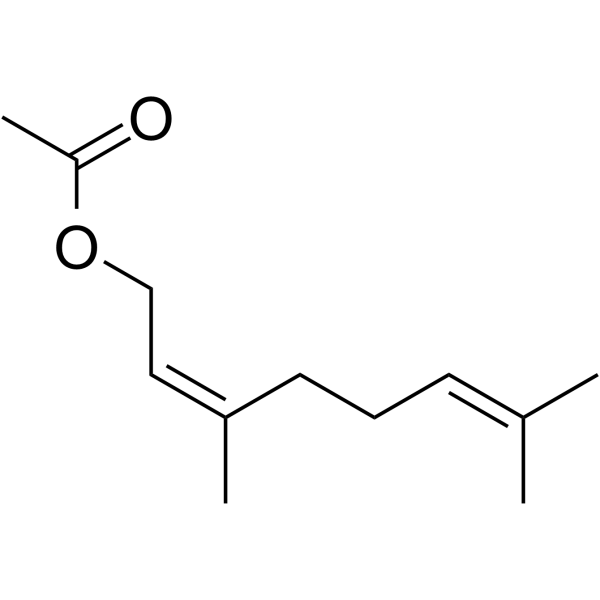
Cat. No.: HY-W014983
CAS No.: 141-12-8
Neryl acetate is an essential oil component. Neryl acetate upregulates genes associated with epidermal differentiation, skin barrier formation and ceramide synthesis; it also increases filaggrin expression, total lipid and ceramide contents. Neryl acetate acts as the core driver mediating the skin barrier-forming and antibacterial effects of Helichrysum italicum essential oil .
loading...
    loading...
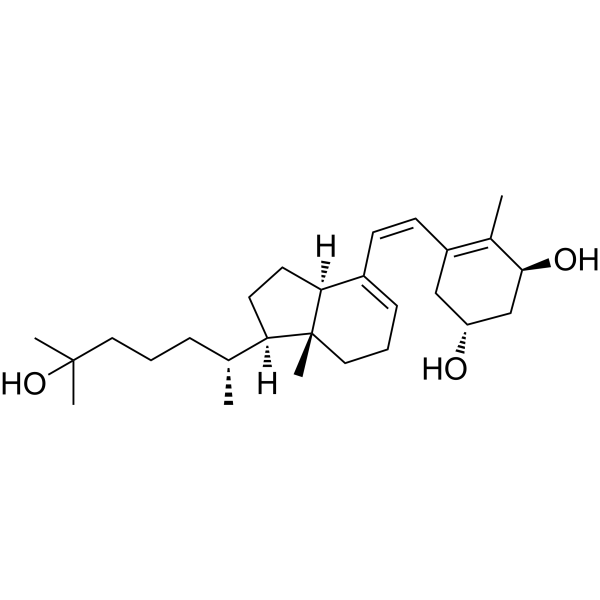
Cat. No.: HY-131450
CAS No.: 57102-09-7
Target:  

Drug Metabolite

Research Areas:  

Others

1α,25-Dihydroxyprevitamin D3 is the precursor of Vitamin D3 .
loading...
    loading...
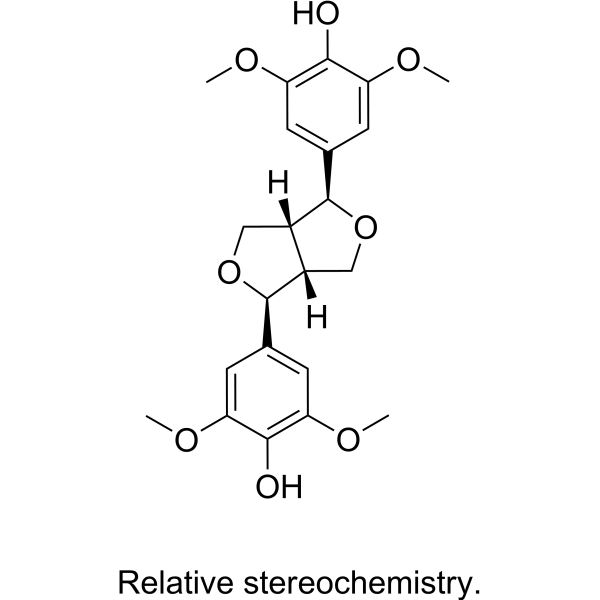
Cat. No.: HY-N1190
CAS No.: 1177-14-6
Synonyms: (±)-Syringaresinol
DL-Syringaresinol ((±)-Syringaresinol), a lignin, inhibits UVA-induced upregulation of MMP-1 by suppressing MAPK/AP-1 signaling in human HaCaT keratinocytes and dermal fibroblasts (HDFs). DL-Syringaresinol has antiphotoaging properties against UVA-induced skin aging. DL-Syringaresinol exhibits weak antimycobacterial activity against Mycobacterium tuberculosis H37Rv .
loading...
    loading...
Cat. No.: HY-W050154R
CAS No.: 501-30-4
Kojic acid (Standard) is the analytical standard of Kojic acid. This product is intended for research and analytical applications. Kojic acid is a substance produced by Aspergillus oryzae, with various biological activities including antitumor, insecticidal, antibacterial, antioxidant, and radioprotective effects. Kojic acid exhibits tyrosinase inhibition activity by capturing copper ions that bind to the active site of tyrosinase, preventing its activation. Tyrosinase is a key enzyme in the biosynthesis of melanin, so kojic acid can block melanin production. Additionally, kojic acid shows potential inhibition of NF-κB activity in human keratinocytes, which may also be related to the anti-melanogenic effect induced by kojic acid. Kojic acid is effective when administered orally and can also be absorbed transdermally. Nano-carrier systems prepared with kojic acid demonstrate effective delivery of anticancer drugs. Kojic acid holds promise for research in cancer, infectious diseases, and skin whitening among other fields .
loading...
    loading...
Cat. No.: HY-172148
CAS No.: 2641132-66-1
Target:  

Interleukin Related

Research Areas:  

Inflammation/Immunology

Itaconic acid prodrug-1 (Compound P2) is an orally active prodrug of Itaconic acid (HY-Y0520) that efficiently delivers the active ingredient Itaconic acid to skin tissue following oral administration. Itaconic acid prodrug-1 possesses immunomodulatory properties, significantly inhibiting Poly(I:C)/IFNγ-induced inflammatory cytokines in human epidermal keratinocytes. Itaconic acid prodrug-1 can be utilized for the research of alopecia areata and other inflammatory skin diseases .
loading...
    loading...
Cat. No.: HY-170579
Antioxidant agent-20 (Compound 3d) has potent anti-inflammatory and antioxidant activity. Antioxidant agent-20 reduces reactive oxygen species (ROS) and apoptosis in a dose-dependent manner. Antioxidant agent-20 exhibits photoprotective effect against UVB-irradiated human skin keratinocytes (HaCaT) (IC50=5.13 µM) via activation of Nrf2/HO-1 signaling and inhibition of NF-κB pathway .
loading...
    loading...
Cat. No.: HY-165553
CAS No.: 873541-45-8
ASB16165 is a selective and potent PDE7A inhibitor with an IC50 of 15 nM against human PDE7A. ASB16165 inhibits IL-12-induced IFN-γ production via a cAMP/PKA-dependent mechanism, reduces cutaneous TNF-α production, and suppresses keratinocyte proliferation. ASB16165 can be used in research on skin diseases such as psoriasis .
loading...
    loading...
Cat. No.: HY-183647
Target:  

NO Synthase

Research Areas:  

Inflammation/Immunology

iNOs-IN-9 is a selective inducible nitric oxide synthase (iNOS) inhibitor with an IC50 of 82 nM against hiNOS. iNOs-IN-9 reduces cytokine-induced inflammatory responses and cell necrosis in inflammatory cell models. iNOs-IN-9 can be used for research related to psoriasis .
loading...
    loading...
Cat. No.: HY-W010790
CAS No.: 27668-52-6
Target:  

Bacterial Fungal

Research Areas:  

Infection

Dimethyloctadecyl[3-(trimethoxysilyl) propyl]ammonium chloride is a quaternary ammonium silane monomer-based disinfectant/antimicrobial agent. Dimethyloctadecylammonium chloride exhibits bactericidal activity against Gram-positive and Gram-negative bacteria, as well as fungicidal activity against Candida albicans in solution; it can form a hydrophobic glass coating that displays bactericidal activity against Gram-positive and Gram-negative bacteria but has limited fungicidal activity against Candida albicans .
loading...
    loading...
Cat. No.: HY-N12630
CAS No.: 65318-21-0
Synonyms: Mycosporine-Gly
Mycosporine glycine (Mycosporine-Gly) is a mycosporine-like amino acid derived from marine organisms, which possesses free radical scavenging, antioxidant, anti-inflammatory and photoprotective activities . Mycosporine glycine inhibits the UV-induced upregulation of COX-2 mRNA and gene expression levels, scavenges free radicals, ROS and peroxyl radicals, and inhibits free radical chain lipid peroxidation and phosphatidylcholine peroxidation. Mycosporine glycine restores PCOLCE and elastin levels suppressed by ultraviolet radiation, alleviates photooxidative stress and UV-mediated skin cell damage. Mycosporine glycine can be used in studies related to UV-induced skin inflammation, skin photoaging and skin damage .
loading...
    loading...
Cat. No.: HY-122859
CAS No.: 2252153-94-7
Target:  

TOPK ERK p38 MAPK JNK AP-1

Research Areas:  

Inflammation/Immunology

ADA-07 is a TOPK inhibitor with activity at the ATP-binding pocket that does not inhibit MEK1 activity. ADA-07 suppresses solar ultraviolet (SUV)-induced phosphorylation of ERK1/2, p38, and JNKs, and inhibits AP-1 activity. ADA-07 attenuates tumor incidence, multiplicity, and volume in SUV-exposed SKH-1 hairless mice. ADA-07 can be used for the research of solar ultraviolet-induced skin carcinogenesis .
loading...
    loading...
Cat. No.: HY-P992384

Target:  

Interleukin Related

Research Areas:  

Inflammation/Immunology

IMG-008 is a fully human antagonistic antibody targeting IL-36R, acting as a high-affinity IL-36R inhibitor (Kd = 6.23 pM). IMG-008 competitively blocks the pro-inflammatory signaling pathway mediated by human IL-36R, inhibiting receptor activation and the production of inflammatory cytokines. IMG-008 suppresses Imiquimod (HY-B0180)-induced skin inflammation in humanized mice, and Fc modification increases its serum exposure and prolongs its half-life. IMG-008 can be used in studies related to IL-36R-mediated inflammatory diseases such as psoriasis .
loading...
    loading...
  • 1

