Search Result
Results for "
inflammation/immunology research
" in MedChemExpress (MCE) Product Catalog:
1
Biochemical Assay Reagents
4
Isotope-Labeled Compounds
| Cat. No. |
Product Name |
Target |
Research Areas |
Chemical Structure |
-
- HY-78131
-
Ibuprofen
Maximum Cited Publications
22 Publications Verification
(±)-Ibuprofen
|
COX
Apoptosis
Parasite
|
Infection
Neurological Disease
Inflammation/Immunology
Cancer
|
|
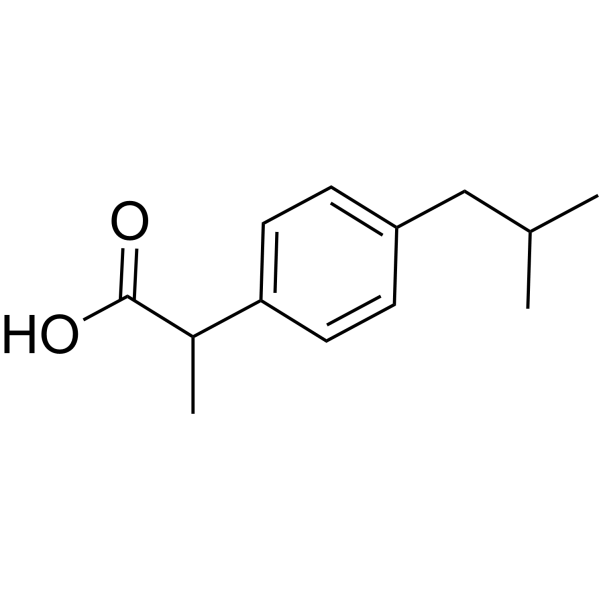
Ibuprofen ((±)-Ibuprofen) is a potent, orally active, selective COX-1 inhibitor with an IC50 value of 13 μM. Ibuprofen inhibits cell proliferation, angiogenesis, and induces cell apoptosis. Ibuprofen is a nonsteroidal anti-inflammatory agent and a nitric oxide (NO) donor. Ibuprofen ((±)-Ibuprofen) can be used in the research of pain, swelling, inflammation, infection, immunology, cancers .
|
-
-
- HY-B0227
-
|
RP-19583
|
COX
|
Metabolic Disease
Inflammation/Immunology
Cancer
|
|
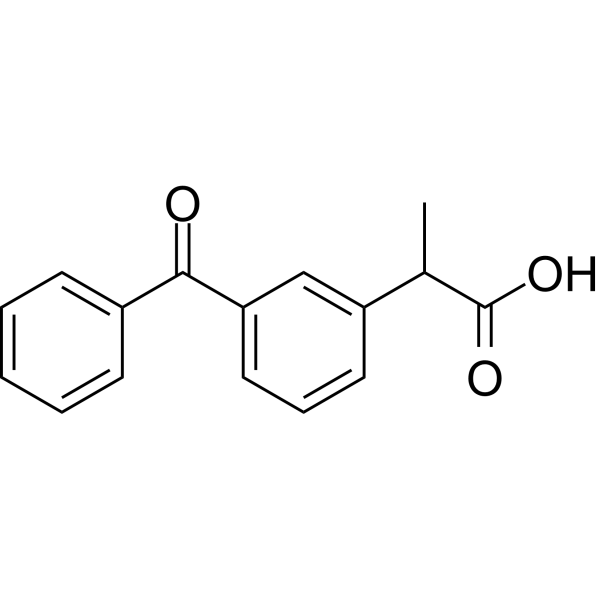
Ketoprofen (RP-19583) is a non-steroidal anti-inflammatory agent. Ketoprofen can inhibits the activity of cyclooxygenase with IC50 values of 2 nM (COX-1) and 26 nM (COX-2). which is potential in the research of inflammation, immunology, and metabolic disease such as obesity .
|
-
-
- HY-134238
-
-
-
- HY-110252
-
|
|
Opioid Receptor
|
Neurological Disease
Inflammation/Immunology
|
|
Salvinorin B is a selective and brain-penetrant kappa opioid receptor (KOPr) agonist with an EC50 of 248 nM and Ki of 2.95 μM. Salvinorin B activates downstream signaling pathways by binding to KOPr, inhibits pain transmission and reduces inflammatory response. Salvinorin B can be used for the researches of inflammation, immunology and neurological disease, such as neuropathic pain, multiple sclerosis and anxiety .
|
-
-
- HY-A0103
-
|
|
Environmental Pollutants
Biochemical Assay Reagents
|
Inflammation/Immunology
|
|
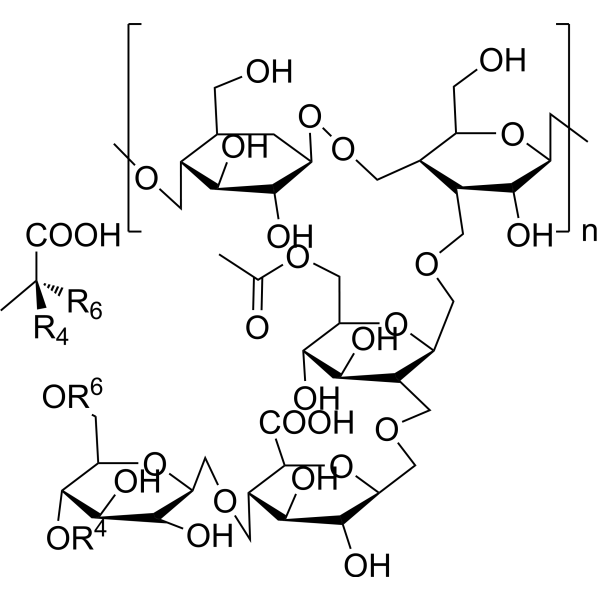
Xanthan gum interacts with gelatin (HY-Y1365) via hydrogen bonds, thereby increasing the viscosity and stability of the hydrogel while promoting cell growth and creating a microenvironment conducive to cell differentiation [1][2]. Xanthan gum induces pro-inflammatory responses by increasing the levels of TNF-α, IL-6, and IL-10. Xanthan gum can be used for inflammation and immunology research .
|
-
-
- HY-78131C
-
|
(±)-Ibuprofen sodium
|
COX
Apoptosis
Parasite
|
Infection
Neurological Disease
Inflammation/Immunology
Cancer
|
|
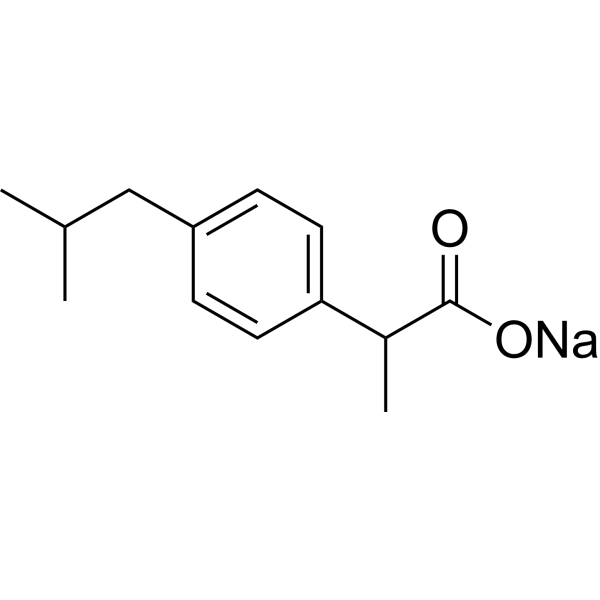
Ibuprofen ((±)-Ibuprofen) sodium is an orally active, selective COX-1 inhibitor with an IC50 value of 13 μM. Ibuprofen sodium inhibits cell proliferation, angiogenesis, and induces cell apoptosis. Ibuprofen sodium is a nonsteroidal anti-inflammatory agent and a nitric oxide (NO) donor. Ibuprofen sodium can be used in the research of pain, swelling, inflammation, infection, immunology, cancers .
|
-
-
- HY-P990798
-
|
|
IFNAR
|
Inflammation/Immunology
Cancer
|
|
Anti-Mouse IFN gamma Antibody (XMG1.2) is a kind of rat-derived IgG1 antibody inhibitor, targeting to IFN-γ. Anti-Mouse IFN gamma Antibody (XMG1.2) can neutralize IFN-γ. Anti-Mouse IFN gamma Antibody (XMG1.2) can be used for the researches of cancer, inflammation and immunology, such as multiple myeloma and chronic inflammation .
|
-
-
- HY-B0910A
-
|
Pyritinol dihydrochloride; Pyridoxine disulfide dihydrochloride; Vitamin B6 disulfide dihydrochloride
|
Drug Derivative
|
Infection
Neurological Disease
Metabolic Disease
Inflammation/Immunology
Cancer
|
|
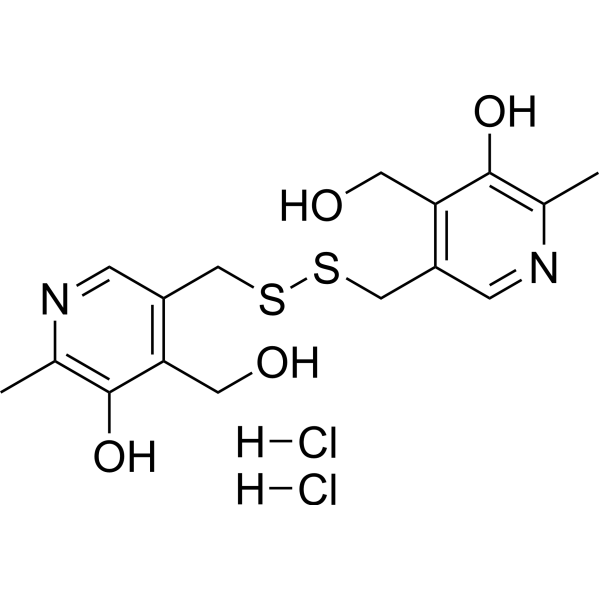
Pyrithioxin (Pyritinol) dihydrochloride is the dihydrochloride salt of Pyrithioxin (HY-B0910). Pyrithioxin (Pyritinol) is an orally active neurodynamic compound. Pyrithioxin can promote the metabolism of glucose and amino acids, increase carotid blood flow and improve cerebral blood flow. Pyrithioxin exhibits anti-inflammation, anti-tumor and neuroprotective effect. Pyrithioxin can be used for the researches of cancer, inflammation, immunology, metabolic and neurological disease such as cerebral infarct, epilepsy, fibrosarcomas and rheumatoid polyarthritis .
|
-
-
- HY-148016
-
|
|
Protease Activated Receptor (PAR)
ERK
|
Inflammation/Immunology
|
|
I-287 is a orally active selective PAR2 inhibitor that acting as a negative allosteric regulator on Gαq and Gα12/13 activity and their downstream effectors. I-287 reduces Complete Freund's adjuvant (HY-153808)-induced inflammation in mice and can be used for inflammation/immunology research .
|
-
-
- HY-107560
-
|
|
Histamine Receptor
|
Inflammation/Immunology
Cancer
|
|
4-Methylhistamine hydrochloride is the dihydrochloride salt of 4-Methylhistamine (HY-W580721). 4-Methylhistamine hydrochloride is a potent and selective agonist of histamine 4 receptor (H4R) with a Ki of 50 nM. 4-Methylhistamine hydrochloride has a >100-fold selectivity for the hH4R over the other histamine receptor subtypes. 4-Methylhistamine hydrochloride can potently activate the hH4R (pEC50 = 7.4). 4-Methylhistamine hydrochloride can be used for the researches of cancer, inflammation and immunology, such as lung cancer and skin inflammation .
|
-
-
- HY-138113
-
-
-
- HY-P5005
-
|
|
CMV
PD-1/PD-L1
|
Infection
Inflammation/Immunology
Cancer
|
|
VIPhyb is a vasoactive intestinal polypeptide (VIP) receptor antagonist. VIPhyb can inhibit VIP signaling, increase T-cell immunity and downregulate PD1. VIPhyb can inhibit cancer cell proliferation. VIPhyb can reduce inflammatory cytokine expression. VIPhyb can enhance viral clearance. VIPhyb can be used for the researches of cancer, infection and inflammation and immunology, such as non-small cell lung cancer (NSCLC), cytomegalovirus infection and colitis .
|
-
-
- HY-P1263A
-
-
-
- HY-N1403
-
|
|
Apoptosis
|
Cardiovascular Disease
Metabolic Disease
Inflammation/Immunology
Cancer
|
|
Tigogenin is a steroidal sapogenins. Tigogenin can inhibit adipocytic differentiation and induce osteoblastic differentiation in mouse bone marrow stromal cells. Tigogenin can inhibit cells proliferation and induce apoptosis. Tigogenin can be used for the researches of cancer, inflammation, immunology, metabolic and cardiovascular disease, such as mammary gland carcinoma, rheumatoid arthritis, osteoporosis and atherosclerosis .
|
-
-
- HY-175479
-
|
|
Salt-inducible Kinase (SIK)
TNF Receptor
Interleukin Related
|
Inflammation/Immunology
|
|
GLPG4970 is a potent, selective and orally active salt-inducible kinase 2/3 (SIK2/SIK3) dual inhibitor with IC50 values of 0.3 nM and 0.7 nM. GLPG4970 has weak inhibition of hERG channel with an IC50 of 29 μM. GLPG4970 can decrease TNFα release and increase IL-10 release GLPG4970 can be used for the researches of inflammation and immunology, such as colitis .
|
-
-
- HY-115870
-
|
|
PI3K
|
Inflammation/Immunology
|
|
AZD8154 is a selective PI3Kγδ dual inhibitor. AZD8154 can suppress PI3Kγ and PI3Kδ signaling pathway activation. AZD8154 can be used for the researches of inflammation and immunology, such as asthma .
|
-
-
- HY-P1263
-
-
-
- HY-N16579
-
|
|
Others
|
Inflammation/Immunology
|
|
(+)-Catechin 3-O-β-D-glucopyranoside (Compound 13) is an anti-allergic agent found in Edulis Superba. (+)-Catechin 3-O-β-D-glucopyranoside can be used for the research of inflammation and immunology .
|
-
-
- HY-P990260
-
|
|
Transmembrane Glycoprotein
|
Inflammation/Immunology
|
|
Anti-Mouse CD86/B7-2 Antibody (GL-1) is a rat-derived IgG2a κ type antibody inhibitor, targeting to mouse CD86/B7-2. Anti-Mouse CD86/B7-2 Antibody (GL-1) can be used for the researches of inflammation and immunology, such as allergic pulmonary inflammation .
|
-
-
- HY-N15663
-
|
EGCG4′′Me
|
Drug Derivative
|
Inflammation/Immunology
|
|
(-)-Epigallocatechin-3-O-(4-O-methyl)gallate is an orally active catechin derivative found in Taiwanese oolong tea. (-)-Epigallocatechin-3-O-(4-O-methyl)gallate can inhibit histamine release and exhibits anti-inflammation and anti-allergic effect. (-)-Epigallocatechin-3-O-(4-O-methyl)gallate can be used for the researches of immunology and inflammation, such as type I allergic .
|
-
-
- HY-78131R
-
|
(±)-Ibuprofen (Standard)
|
MOFs
|
Infection
Neurological Disease
Inflammation/Immunology
Cancer
|
|
Ibuprofen (Standard) is the analytical standard of Ibuprofen. This product is intended for research and analytical applications. Ibuprofen ((±)-Ibuprofen) is a potent, orally active, selective COX-1 inhibitor with an IC50 value of 13 μM. Ibuprofen inhibits cell proliferation, angiogenesis, and induces cell apoptosis. Ibuprofen is a nonsteroidal anti-inflammatory agent and a nitric oxide (NO) donor. Ibuprofen ((±)-Ibuprofen) can be used in the research of pain, swelling, inflammation, infection, immunology, cancers .
|
-
-
- HY-P990227
-
|
|
Interleukin Related
Bacterial
|
Infection
Inflammation/Immunology
|
|
Anti-Mouse IL-12 Antibody (R1-5D9) is a rat-derived IgG2a type antibody inhibitor, targeting to mouse IL-12. Anti-Mouse IL-12 Antibody (R1-5D9) can neutralize IL-12. Anti-Mouse IL-12 Antibody (R1-5D9) can be used for the researches of infection, inflammation and immunology, such as Leishmania infection and skin inflammation .
|
-
-
- HY-175533
-
|
|
Toll-like Receptor (TLR)
|
Neurological Disease
Inflammation/Immunology
|
|
TLR2 antagonist-1 is a selective Toll-like receptor 2 (TLR2) antagonist. TLR2 antagonist-1 can effectively inhibit excessive TLR2 activation (IC50 = 11.41 μM) and the production of inflammatory factors. TLR2 antagonist-1 has metabolic stability with a half-life (T1/2) of 16.67 min in mouse liver microsomes. TLR2 antagonist-1 can be used for the researches of inflammation, immunology, and neurological disease .
|
-
-
- HY-B0910
-
|
Pyritinol; Pyridoxine disulfide; Vitamin B6 disulfide
|
Drug Derivative
|
Neurological Disease
Metabolic Disease
Inflammation/Immunology
Cancer
|
|
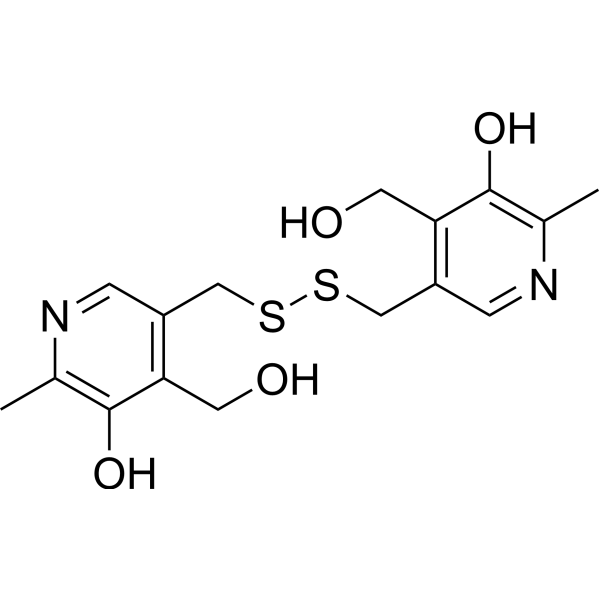
Pyrithioxin (Pyritinol) is an orally active neurodynamic compound. Pyrithioxin can promote the metabolism of glucose and amino acids, increase carotid blood flow and improve cerebral blood flow. Pyrithioxin exhibits anti-inflammation, anti-tumor and neuroprotective effect. Pyrithioxin can be used for the researches of cancer, inflammation, immunology, metabolic and neurological disease such as cerebral infarct, epilepsy, fibrosarcomas and rheumatoid polyarthritis .
|
-
-
- HY-100586
-
|
(±)-Ibuprofen L-lysine
|
COX
Apoptosis
Parasite
|
Infection
Inflammation/Immunology
Cancer
|
|
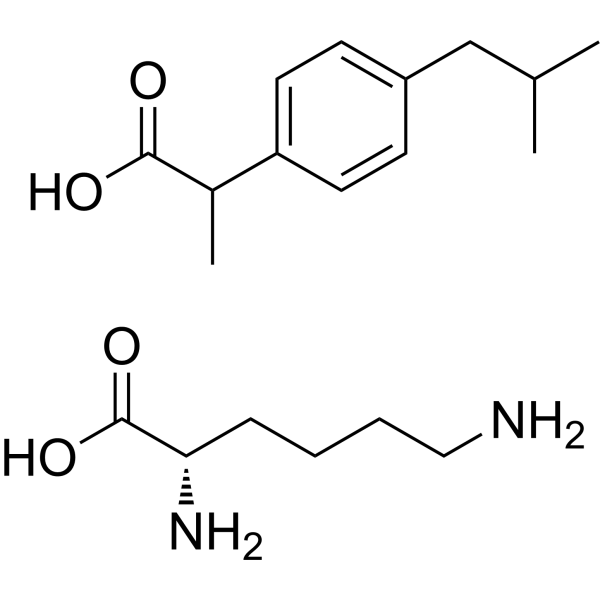
Ibuprofen ((±)-Ibuprofen) L-lysine is a potent orally active, selective COX-1 inhibitor with an IC50 value of 13 μM. Ibuprofen L-lysine inhibits cell proliferation, angiogenesis, and induces cell apoptosis. Ibuprofen L-lysine is a nonsteroidal anti-inflammatory agent and a nitric oxide (NO) donor. Ibuprofen L-lysine can be used in the research of pain, swelling, inflammation, infection, immunology, cancers .
|
-
-
- HY-78131CS
-
|
(±)-Ibuprofen-d3 sodium
|
Apoptosis
COX
Isotope-Labeled Compounds
Parasite
|
Infection
Neurological Disease
Inflammation/Immunology
Cancer
|
|
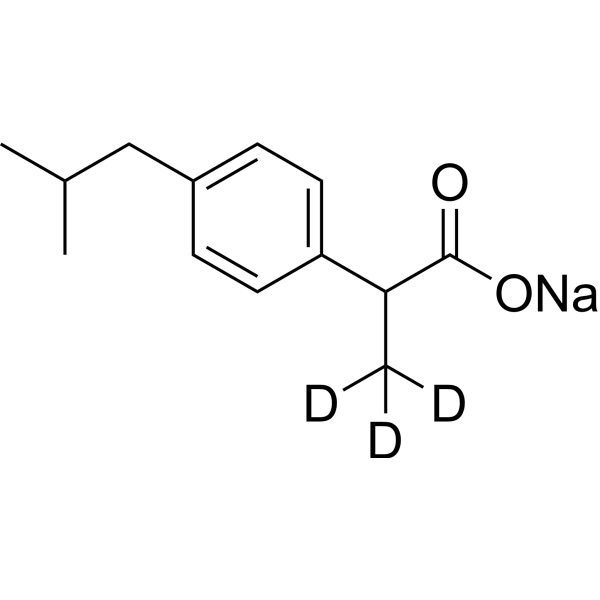
Ibuprofen-d3 ((±)-Ibuprofen-d3) sodium is the deuterium labeled Ibuprofen sodium (HY-78131C). Ibuprofen sodium is an orally active, selective COX-1 inhibitor with an IC50 value of 13 μM. Ibuprofen sodium inhibits cell proliferation, angiogenesis, and induces cell apoptosis. Ibuprofen sodium is a nonsteroidal anti-inflammatory agent and a nitric oxide (NO) donor. Ibuprofen sodium can be used in the research of pain, swelling, inflammation, infection, immunology, cancers .
|
-
-
- HY-P990287
-
|
|
CD1
|
Inflammation/Immunology
|
|
Anti-Mouse CD1d Antibody (19G11) is a rat-derived IgG1 type antibody inhibitor, targeting to mouse CD1d. Anti-Mouse CD1d Antibody (19G11) can neutralize CD1d and inhibit the activation of invariant natural killer T (iNKT) cells. Anti-Mouse CD1d Antibody (19G11) can be used for the researches of inflammation and immunology, such as colitis .
|
-
-
- HY-78131S3
-
|
(±)-Ibuprofen-13C6
|
Isotope-Labeled Compounds
Apoptosis
Parasite
COX
|
Cancer
|
|
Ibuprofen- 13C6 ((±)-Ibuprofen- 13C6) is a 13C labeled Ibuprofen (HY-78131). Ibuprofen ((±)-Ibuprofen) is a potent, orally active, selective COX-1 inhibitor with an IC50 value of 13 μM. Ibuprofen inhibits cell proliferation, angiogenesis, and induces cell apoptosis. Ibuprofen is a nonsteroidal anti-inflammatory agent and a nitric oxide (NO) donor. Ibuprofen ((±)-Ibuprofen) can be used in the research of pain, swelling, inflammation, infection, immunology, cancers .
|
-
-
- HY-P990218
-
|
|
Interleukin Related
|
Infection
Inflammation/Immunology
Cancer
|
|
Anti-Mouse IL-21R Antibody (4A9) is a rat-derived IgG2a κ type antibody inhibitor, targeting to mouse IL-21R. Anti-Mouse IL-21R Antibody (4A9) blocks IL-21 signaling. Anti-Mouse IL-21R Antibody (4A9) can be used for the researches of cancer, infection immunology and inflammation, such as psoriasis, hepatocellular carcinoma and C. rodentium infection .
|
-
-
- HY-P990262
-
|
|
Transmembrane Glycoprotein
|
Metabolic Disease
Inflammation/Immunology
Cancer
|
|
Anti-Mouse CD8 Antibody (HB-129) is a mouse-derived IgG2a κ type antibody inhibitor, targeting to mouse CD8. Anti-Mouse CD8 Antibody (HB-129) can deplete CD8 + T cells. Anti-Mouse CD8 Antibody (HB-129) can be used for the researches of cancer, inflammation, immunology and metabolic disease, such as P815 tumor, experimental autoimmune thyroiditis (EAT) and graft versus host disease (GVHD) .
|
-
-
- HY-117478
-
|
CH-2856
|
Kallikrein
|
Inflammation/Immunology
Cancer
|
|
FE-999024 (CH-2856) is a specific tissue kallikrein inhibitor. FE-999024 can inhibit cancer cells invasion with a maximum of 39%. FE-999024 can reduce eosinophilia in a model of allergic inflammation. FE-999024 can be used for the researches of cancer, inflammation and immunology .
|
-
-
- HY-164216A
-
|
|
STAT
|
Inflammation/Immunology
Cancer
|
|
(trans)-STAT6-IN-13 (Compound 95) is a STAT6 inhibitor with IC50 values of ≤300 nM. (trans)-STAT6-IN-13 has weak inhibitory for STAT3. (trans)-STAT6-IN-13 can be used for the researches of cancer, inflammation and immunology .
|
-
-
- HY-117317
-
|
|
Lipoxygenase
|
Inflammation/Immunology
|
|
BLX-2477 is a potent and selective 15-lipoxygenase-1 (15-LOX-1) inhibitor with an IC50 value of 99 nM. BLX-2477 can inhibit the generation of inflammatory lipid mediators such as 15-hydroxy-eicosatetraenoic acid (15-HETE). BLX-2477 can be used for the research of inflammation and immunology .
|
-
-
- HY-176920
-
|
|
Leukotriene Receptor
|
Inflammation/Immunology
|
|
BRI-12349 (Compound 50) is a dual antagonist of CysLT1R/CysLT2R with Ki values of 1.03 and 6.46 μM. BRI-12349 can inhibit the generation of IP1 induced by LTD4 (the main ligand of CysLTs). BRI-12349 can be used for the research of immunology and inflammation, such as asthma .
|
-
-
- HY-P99131
-
|
|
Transmembrane Glycoprotein
|
Infection
Inflammation/Immunology
|
|
Anti-Mouse CD90.2 Antibody (30H12) is an anti-mouse CD90.2 IgG2b antibody inhibitor derived from host Rat. Anti-Mouse CD90.2 Antibody (30H12) can deplete innate lymphoid cells (ILC) and T cells. Anti-Mouse CD90.2 Antibody (30H12) can be used for the researches of infection, inflammation and immunology, such as Yersinia enterocolitica infection and airway inflammation .
|
-
-
- HY-150085
-
|
|
Kallikrein
|
Inflammation/Immunology
|
|
GSK951 is a potent and selective Kallikrein-5 (KLK5) inhibitor amenable to epidermal delivery. GSK951 shows an IC50 of 250 pM for KLK5 and greater than 100-fold selectivity over KLK7 and KLK14. GSK951 can reduce transepidermal water loss, and decrease proinflammatory cytokine expression. GSK951 can be used for the researches of inflammation and immunology, such as Netherton syndrome .
|
-
-
- HY-P990295
-
|
|
Integrin
|
Metabolic Disease
Inflammation/Immunology
Cancer
|
|
Anti-Mouse CD103 Antibody (M290) is a rat-derived IgG2a κ type antibody inhibitor, targeting to mouse CD103. Anti-Mouse CD103 Antibody (M290) can neutralize CD103. Anti-Mouse CD103 Antibody (M290) can be used for the researches of cancer, inflammation, immunology and metabolic disease, such as B16.gp33 tumor, colitis and diabetes .
|
-
-
- HY-P990163
-
|
|
Transmembrane Glycoprotein
|
Inflammation/Immunology
|
|
Anti-Mouse Siglec-H Antibody (440c) is a rat-derived IgG2b type antibody inhibitor, targeting to mouse Siglec-H. Anti-Mouse Siglec-H Antibody (440c) recognizes sialic acid-binding immunoglobulin (Ig)-like lectin family (Siglec-H) selectively expressing on plasmacytoid DCs and interferon–producing cells. Anti-Mouse Siglec-H Antibody (440c) can be used for the researches of inflammation and immunology, such as colitis .
|
-
-
- HY-121185
-
|
|
Adrenergic Receptor
|
Infection
Neurological Disease
Inflammation/Immunology
Endocrinology
|
|
Hexoprenaline is an orally active and selective β-adrenergic receptor agonist. Hexoprenaline can dilate the bronchi. Hexoprenaline can activate adenylate cyclase and increases 14C-Aminopyrine uptake. Hexoprenaline exhibits anti-infection and anti-inflammmation effect. Hexoprenaline can increase placental weight and blood flow. Hexoprenaline can be used for the researches of inflammation, immunology, infection, endocrinology and neurological disease, such as asthma, chronic bronchitis, sepsis and intoxication of organophosphorus compounds .
|
-
-
- HY-176921
-
|
|
Leukotriene Receptor
|
Inflammation/Immunology
|
|
ONO-2570366 (Compound 11a) is an antagonist of the cysteinyl leukotriene receptors CysLT1R and CysLT2R (IC50 = 14 nM). ONO-2570366 inhibits the binding of LTD4researches of inflammation and immunology, such as asthma .
|
-
-
- HY-179226
-
|
|
Molecular Glues
Adrenergic Receptor
|
Inflammation/Immunology
|
|
AP-7-168, molecular glues, is a β-arrestin-biased negative allosteric modulator of the β2-adrenergic receptor (β2AR). AP-7-168 can promote β2AR homodimerization and inhibit GRK5-mediated β2AR phosphorylation. AP-7-168 can sustain bronchorelaxation in cell and tissue. AP-7-168 can be used for the researches of inflammation and immunology, such as asthma .
|
-
-
- HY-19390
-
-
-
- HY-177712
-
|
|
ROR
|
Inflammation/Immunology
|
|
RORγt inverse agonist 36 (S configuration of Compound 16) is a RORγt inverse agonist. RORγt inverse agonist 36 can be used for the research of inflammation and immunology .
|
-
-
- HY-178287
-
|
|
TNF Receptor
|
Inflammation/Immunology
|
|
TNF-α-IN-27 (Compound 1) is a TNF-α inhibitor with inhibition rate of 64% at 10 μM. TNF-α-IN-27 can be used for the researches of inflammation and immunology, such as asthma .
|
-
-
- HY-106870
-
|
|
Histamine Receptor
|
Inflammation/Immunology
|
|
Pibaxizine is an orally active anti-inflammatory agent. Pibaxizine shows antagonist effect on the Histamine (HY-B1204) induced bronchoconstriction. Pibaxizine can be used for the researches of inflammation and immunology, such as asthma .
|
-
-
- HY-105462
-
-
-
- HY-P99846
-
|
QAX576
|
Interleukin Related
|
Inflammation/Immunology
|
|
Dectrekumab (QAX576) is a human monoclonal antibody that targets IL-13. Dectrekumab significantly improves intraepithelial esophageal eosinophil counts and dysregulated esophageal disease-related transcripts with Eosinophilic esophagitis (EoE) in a sustained manner and can be used for inflammation and immunology related research .
|
-
-
- HY-105483
-
|
|
Leukotriene Receptor
|
Inflammation/Immunology
|
|
MDL 43291 is a competitive leukotriene (LT) receptor antagonist. MDL 43291 antagonize LTD4 and LTE4 with pA2 of 6.7. MDL 43291 does not antagonize histamine, carbachol or substance P. MDL 43291 can be used for the researches of inflammation and immunology, such as asthma .
|
-
-
- HY-B0227A
-
|
RP-19583 (lysinate)
|
COX
|
Metabolic Disease
Inflammation/Immunology
Cancer
|
|
Ketoprofen (RP-19583) lysinate is a non-steroidal anti-inflammatory agent. Ketoprofen lysinate can inhibit the activity of cyclooxygenase with IC50 values of 2 nM (COX-1) and 26 nM (COX-2). which is potential in the research of inflammation, immunology, and metabolic disease such as obesity .
|
-
-
- HY-114218
-
|
|
Phosphodiesterase (PDE)
|
Cardiovascular Disease
Inflammation/Immunology
|
|
BL-122 is a selective phosphodiesterase-5 (PDE-5) inhibitor. BL-122 can increase the level of cGMP in the tissue, promote the expression of nitric oxide (NO), and mediate the relaxation of smooth muscle. BL-122 can be used for the researches of inflammation, immunology and cardiovascular disease, such as asthma and hypertension .
|
-
- HY-W580721
-
|
|
Histamine Receptor
|
Inflammation/Immunology
Cancer
|
|
4-Methylhistamine is a potent and selective agonist of histamine 4 receptor (H4R) with a Ki of 50 nM. 4-Methylhistamine has a >100-fold selectivity for the hH4R over the other histamine receptor subtypes. 4-Methylhistamine can potently activate the hH4R (pEC50 = 7.4). 4-Methylhistamine can be used for the researches of cancer, inflammation and immunology, such as lung cancer and skin inflammation .
|
-
- HY-B0227AR
-
|
RP-19583 (lysinate) (Standard)
|
Reference Standards
COX
|
Metabolic Disease
Inflammation/Immunology
Cancer
|
|
Ketoprofen (lysinate) (Standard) is the analytical standard of Ketoprofen (lysinate). This product is intended for research and analytical applications. Ketoprofen (RP-19583) lysinate is a non-steroidal anti-inflammatory agent. Ketoprofen lysinate can inhibit the activity of cyclooxygenase with IC50 values of 2 nM (COX-1) and 26 nM (COX-2). which is potential in the research of inflammation, immunology, and metabolic disease such as obesity .
|
-
- HY-P990268
-
|
|
Phosphatase
|
Inflammation/Immunology
|
|
Anti-Mouse CD45.2 Antibody (104.2) is a mouse-derived IgG2a κ type antibody inhibitor, targeting to mouse CD45.2. Anti-Mouse CD45.2 Antibody (104.2) can inhibit B Cell differentiation. Anti-Mouse CD45.2 Antibody (104.2) can be used for the researches of inflammation and immunology, such as LPS (HY-D1056)-induced inflammation and autoimmunity .
|
-
- HY-156203
-
|
|
P2Y Receptor
|
Inflammation/Immunology
|
|
MRS4608 (Compound 17) is a selective P2Y14 receptor antagonist with IC50 values of 20 (hP2Y14R) and 21.4 nM (mP2Y14R). MRS4608 has anti-inflammatory activity and can reduce the infiltration of eosinophils. MRS4608 can be used for the researches of inflammation and immunology, such as asthma .
|
-
- HY-78131CR
-
|
(±)-Ibuprofen sodium (Standard)
|
COX
Apoptosis
Parasite
Reference Standards
|
Infection
Neurological Disease
Inflammation/Immunology
Cancer
|
|
Ibuprofen (sodium) (Standard) is the analytical standard of Ibuprofen (sodium). This product is intended for research and analytical applications. Ibuprofen ((±)-Ibuprofen) sodium is an orally active, selective COX-1 inhibitor with an IC50 value of 13 μM. Ibuprofen sodium inhibits cell proliferation, angiogenesis, and induces cell apoptosis. Ibuprofen sodium is a nonsteroidal anti-inflammatory agent and a nitric oxide (NO) donor. Ibuprofen sodium can be used in the research of pain, swelling, inflammation, infection, immunology, cancers .
|
-
- HY-106979
-
|
SAR-943
|
Drug Derivative
Interleukin Related
|
Inflammation/Immunology
|
|
Olcorolimus (SAR-943) is a Rapamycin (HY-10219) derivative. Olcorolimus can reduce IL-4, IL-5, eosinophil, neutrophil, lymphocyte, cellular fibronectin; lung epithelial cell proliferation and mucus hypersecretory phenotype in Ovalbumin (HY-W250978)-sensitized BALB/c mice. Olcorolimus can be used for the researches of inflammation and immunology, such as asthma .
|
-
- HY-119094
-
|
|
Phospholipase
|
Inflammation/Immunology
|
|
WAY-196025 is a selective and orally active indole cytosolic phospholipase A2 alpha (cPLA2α) inhibitor with an IC50 of 0.01μM and a Kd of 0.013 μM. WAY-196025 can inhibit the production of prostaglandins (such as PGE2) and leukotrienes (such as LTB4), and reduce the release of inflammatory mediators. WAY-196025 can be used for the researches of inflammation and immunology, such as asthma .
|
-
- HY-78131S2
-
|
|
Isotope-Labeled Compounds
COX
Apoptosis
Parasite
|
Infection
Neurological Disease
Inflammation/Immunology
Cancer
|
|
Ibuprofen-d4 is a deuterium labeled Ibuprofen (HY-78131). Ibuprofen is a potent, orally active, selective COX-1 inhibitor with an IC50 value of 13 μM. Ibuprofen inhibits cell proliferation, angiogenesis, and induces cell apoptosis. Ibuprofen is a nonsteroidal anti-inflammatory agent and a nitric oxide (NO) donor. Ibuprofen ((±)-Ibuprofen) can be used in the research of pain, swelling, inflammation, infection, immunology, cancers .
|
-
- HY-P990286
-
|
|
CD2
|
Inflammation/Immunology
Cancer
|
|
Anti-Rat CD2 Antibody (OX-34) is mouse-derived IgG2a κ type antibody inhibitor, targeting to rat CD2. Anti-Rat CD2 Antibody (OX-34) can block CD2 and inhibit the mixed lymphocyte reaction. Anti-Rat CD2 Antibody (OX-34) can be used for the researches of cancer, inflammation and immunology, such as RNK-16 tumor and arthritis .
|
-
- HY-19395
-
|
|
Leukotriene Receptor
|
Inflammation/Immunology
|
|
MEN-91507 is an orally activecysteinyl leukotriene receptor 1 (CysLTR1) receptor antagonist. MEN-91507 behaves as insurmountable antagonist of Leukotriene D4 (HY-113456)-induced calcium transients, with a pKb of 10.25. MEN-91507 can inhibit Leukotriene D4-induced bronchoconstriction and microvascular leakage in guinea-pigs. MEN-91507 can be used for the researches of inflammation, immunology .
|
-
- HY-171096
-
|
|
Protease Activated Receptor (PAR)
p38 MAPK
|
Neurological Disease
Inflammation/Immunology
|
|
PAR2 modulator-1 (Compound C781) is a protease activated receptor type 2 (PAR2) antagonist. PAR2 modulator-1 can specifically inhibit the PAR2-dependent MAPK signaling pathway with an IC50 value of 8.5 μM. PAR2 modulator-1 can block the pain response triggered by PAR2 agonists. PAR2 modulator-1 can be used for the researches of inflammation, immunology and neurological disease, such as chronic pain and asthma .
|
-
- HY-P990164
-
|
|
Transmembrane Glycoprotein
|
Inflammation/Immunology
Cancer
|
|
Anti-Mouse RGMb Antibody (307.9D1) is a rat-derived IgG2a κ type antibody inhibitor, targeting to mouse RGMb. Anti-Mouse RGMb Antibody (307.9D1) blocks RGMb binding to PD-L2. Anti-Mouse RGMb Antibody (307.9D1) can be used for the researches of cancer inflammation and immunology, such as acute myeloid leukemia (AML) and graft versus-host disease (GVHD) .
|
-
- HY-105505
-
|
|
Phosphodiesterase (PDE)
Histamine Receptor
|
Inflammation/Immunology
|
|
KF-17625 is an orally active bronchodilator. KF-17625 can inhibit bronchoconstriction induced by Carbachol (HY-B1208), Histamine (HY-B1204), or Leukotriene D4 (HY-113456). KF-17625 can inhibit canine tracheal phosphodiesterase (PDE) IV (IC50 = 12 μM) and Concanavalin-A (HY-P2149)-induced histamine release from rat mast cells (44% inhibition at 10 mM). KF-17625 can be used for the researches of immunology and inflammation .
|
-
- HY-13214
-
-
- HY-105426
-
-
- HY-100158
-
|
|
Bacterial
HSV
|
Infection
Inflammation/Immunology
|
|
FCE-20696 hydrochloride is an orally active immunomodulator. FCE-20696 hydrochloride also shows anti-inflammation and anti-infection effects. FCE-20696 hydrochloride can be used for the researches of infection, inflammation and immunology, such as adjuvant arthritis .
|
-
- HY-106806
-
|
|
Leukotriene Receptor
|
Inflammation/Immunology
|
|
NZ-107 is an orally active leukotriene receptor antagonist. NZ-107 can inhibit anaphylaxis reaction. NZ-107 can be used for the researches of inflammation and immunology .
|
-
- HY-147283
-
-
- HY-105488
-
|
|
TNF Receptor
MHC
|
Inflammation/Immunology
|
|
MDL 201112 is a carbocyclic nucleoside. MDL 201112 can decrease TNF-α production and inhibit MHC class II Ia+ antigen expression. MDL 201112 can be used for the research of inflammation and immunology .
|
-
- HY-N16652
-
|
|
Others
|
Inflammation/Immunology
Cancer
|
|
Foeniculoside I is a stilbene trimer glycoside compound found in Foeniculum vulgare. Foeniculoside I has strong antioxidant activity and moderate hyaluronidase inhibitory activity. Foeniculoside I can be used for the researches of cancer, inflammation and immunology .
|
-
- HY-N16660
-
|
|
Drug Derivative
|
Neurological Disease
Inflammation/Immunology
|
|
Tangshenoside V is a phenylpropanoid glucoside found in the roots of Codonopsis tangshen. Tangshenoside V has potential anti-inflammatory, immunomodulatory and mucosal protective effects. Tangshenoside V can be used for the researches of inflammation, immunology and neurological disease .
|
-
- HY-155029
-
|
|
Epoxide Hydrolase
|
Inflammation/Immunology
|
|
sEH inhibitor-16 is a soluble epoxide hydrolase (sEH) inhibitors with an IC50 of 2 nM. sEH inhibitor-16 reduces the inflammatory damage in Cerulein (HY-A0190)-induced acute pancreatitis (AP) in mice and can be used for inflammation/immunology research .
|
-
- HY-167630
-
|
19583 RP-Na
|
COX
|
Metabolic Disease
Inflammation/Immunology
Cancer
|
|
Ketoprofen (RP-19583) sodium is a non-steroidal anti-inflammatory agent. Ketoprofen sodium can inhibit the activity of Cyclooxygenase with IC50 values of 2 nM (COX-1) and 26 nM (COX-2). Ketoprofen is potential in the research of inflammation, immunology, and metabolic disease such as obesity .
|
-
- HY-178978
-
|
|
Drug Derivative
Phosphatase
ERK
Ras
|
Inflammation/Immunology
|
|
α,δ-NAG is an orally active glutaminase-resistant less-hydrolyzable L-Glutamine derivative. α,δ-NAG is a G protein-coupled receptor (GPCR) allosteric modulator. α,δ-NAG suppresses neutrophilic airway inflammation by activating the GPCR/ERK/MKP-1 pathway. α,δ-NAG can be used for the researches of inflammation and immunology, such as asthma .
|
-
- HY-B0227R
-
|
RP-19583 (Standard)
|
Reference Standards
COX
|
Metabolic Disease
Inflammation/Immunology
Cancer
|
|
Ketoprofen (Standard) is the analytical standard of Ketoprofen. This product is intended for research and analytical applications. Ketoprofen (RP-19583) is a non-steroidal anti-inflammatory agent. Ketoprofen can inhibits the activity of cyclooxygenase with IC50 values of 2 nM (COX-1) and 26 nM (COX-2). which is potential in the research of inflammation, immunology, and metabolic disease such as obesity .
|
-
- HY-P4684
-
|
PTHrP (107–111)
|
PTHR
|
Inflammation/Immunology
|
|
Osteostatin, a fragment of parathyroid hormone-related protein (PTHrP) 107-111, promotes bone repair in animal models of bone defects and prevents bone erosion in inflammatory arthritis, inhibits collagen-induced arthritis and inhibits osteoclastic bone resorption directly. Osteostatin can be used for inflammation and immunology research .
|
-
- HY-114980
-
|
|
Src
Interleukin Related
TNF Receptor
|
Inflammation/Immunology
|
|
BMS-279700 is an orally active Src-family kinase p56Lck inhibitor. BMS-279700 can block the production of proinflammatory cytokines (IL-2 and TNFα). BMS-279700 can inhibit T cell proliferation. BMS-279700 can be used for the researches of inflammation and immunology .
|
-
- HY-19380
-
|
|
Drug Derivative
VD/VDR
|
Inflammation/Immunology
|
|
Ro-65-2299 is an orally active retiferol Vitamin D analogue and a potential VDR agonist (ED50 = 180 nM). Ro-65-2299 can induce thickening of the epidermis and exhibits antipsoriatic effect in hairless mice (ED50 = 7.5 mg/kg). Ro-65-2299 can be used for the researches of inflammation and immunology, such as psoriasis .
|
-
- HY-N6773R
-
|
|
Reference Standards
HIV Protease
Fungal
|
Infection
|
|
Ketoprofen (lysinate) (Standard) is the analytical standard of Ketoprofen (lysinate). This product is intended for research and analytical applications. Ketoprofen (RP-19583) lysinate is a non-steroidal anti-inflammatory agent. Ketoprofen lysinate can inhibit the activity of cyclooxygenase with IC50 values of 2 nM (COX-1) and 26 nM (COX-2). which is potential in the research of inflammation, immunology, and metabolic disease such as obesity .
|
-
- HY-B0910AR
-
|
Pyritinol dihydrochloride (Standard); Pyridoxine disulfide dihydrochloride (Standard); Vitamin B6 disulfide dihydrochloride (Standard)
|
Reference Standards
Drug Derivative
|
Neurological Disease
Metabolic Disease
Inflammation/Immunology
Cancer
|
|
Pyrithioxin (Pyritinol) dihydrochloride (Standard) is the analytical standard of Pyrithioxin dihydrochloride (HY-B0910A). Pyrithioxin (Pyritinol) is an orally active neurodynamic compound. Pyrithioxin can promote the metabolism of glucose and amino acids, increase carotid blood flow and improve cerebral blood flow. Pyrithioxin exhibits anti-inflammation, anti-tumor and neuroprotective effect. Pyrithioxin can be used for the researches of cancer, inflammation, immunology, metabolic and neurological disease such as cerebral infarct, epilepsy, fibrosarcomas and rheumatoid polyarthritis .
|
-
- HY-B0227S3
-
|
RP-19583-13C6
|
Isotope-Labeled Compounds
COX
|
Metabolic Disease
Inflammation/Immunology
Cancer
|
|
Ketoprofen- 13C6 (RP-19583- 13C6) is 13C labeled Ketoprofen. Ketoprofen (RP-19583) is a non-steroidal anti-inflammatory agent. Ketoprofen can inhibits the activity of cyclooxygenase with IC50 values of 2 nM (COX-1) and 26 nM (COX-2). which is potential in the research of inflammation, immunology, and metabolic disease such as obesity .
|
-
- HY-N1403R
-
|
|
Reference Standards
Apoptosis
|
Cardiovascular Disease
Metabolic Disease
Inflammation/Immunology
Cancer
|
|
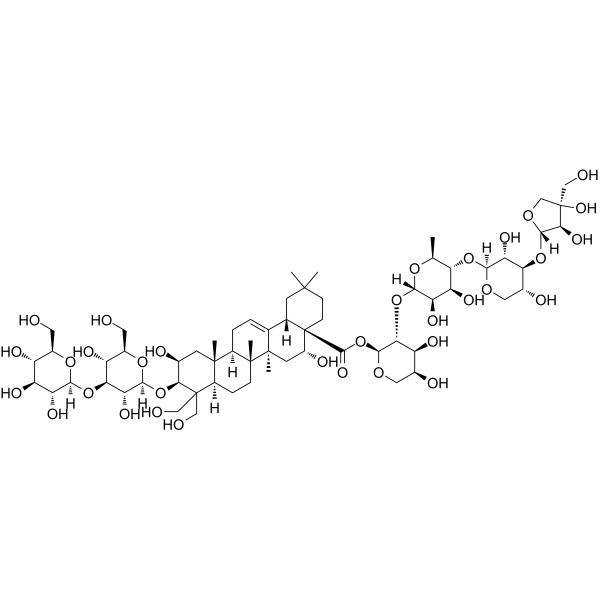
Tigogenin (Standard) is a steroidal sapogenins. Tigogenin (Standard) can inhibit adipocytic differentiation and induce osteoblastic differentiation in mouse bone marrow stromal cells. Tigogenin (Standard) can inhibit cells proliferation and induce apoptosis. Tigogenin (Standard) can be used for the researches of cancer, inflammation, immunology, metabolic and cardiovascular disease, such as mammary gland carcinoma, rheumatoid arthritis, osteoporosis and atherosclerosis .
|
-
- HY-P990226
-
|
|
Interleukin Related
|
Infection
Inflammation/Immunology
|
|
Anti-Mouse IL-12 p35 Antibody (C18.2) is a rat-derived IgG2a κ type antibody inhibitor, targeting to mouse IL-12 p35. Anti-Mouse IL-12 p35 Antibody (C18.2) can neutralize IL-12. Anti-Mouse IL-12 p35 Antibody (C18.2) can be used for the researches of infection, inflammation and immunology, such as airway inflammation and F. tularensis infection .
|
-
- HY-W580721A
-
|
|
Histamine Receptor
|
Inflammation/Immunology
Cancer
|
|
4-Methylhistamine hydrochloride is the hydrochloride salt of 4-Methylhistamine (HY-W580721). 4-Methylhistamine hydrochloride is a potent and selective agonist of histamine 4 receptor (H4R) with a Ki of 50 nM. 4-Methylhistamine hydrochloride has a >100-fold selectivity for the hH4R over the other histamine receptor subtypes. 4-Methylhistamine hydrochloride can potently activate the hH4R (pEC50 = 7.4). 4-Methylhistamine hydrochloride can be used for the researches of cancer, inflammation and immunology, such as lung cancer and skin inflammation .
|
-
- HY-P990137
-
|
|
CD28
|
Neurological Disease
Inflammation/Immunology
|
|
Anti-Rat CD28 Antibody (JJ319) is a mouse-derived IgG1 κ type antibody inhibitor, targeting to rat CD28. Anti-Rat CD28 Antibody (JJ319) activates T cells in the presence of T cell receptor-stimulation. Anti-Rat CD28 Antibody (JJ319) can be used for the researches of inflammation and immunology, such as transplantation and neuritis .
|
-
- HY-P99122
-
|
|
C-type Lectin-like Receptors (CTLRs)
Parasite
|
Infection
Inflammation/Immunology
|
|
Anti-Mouse CD209b Antibody (22D1) is an anti-mouse CD209b IgG1 antibody inhibitor derived from the host Armenian Hamster. Anti-Mouse CD209b Antibody (22D1) can block SIGN-R1. Anti-Mouse CD209b Antibody (22D1) can be used for the researches of infection, inflammation and immunology, such as toxoplasma infection and pneumonia .
|
-
- HY-P990819
-
|
|
CD28
|
Neurological Disease
Inflammation/Immunology
|
|
Anti-Rat CD28 Antibody (JJ316) is a mouse-derived agonistic IgG1 κ type antibody, targeting to rat CD28. Anti-Rat CD28 Antibody (JJ316) can induce T cell proliferation. Anti-Rat CD28 Antibody (JJ316) can be used for the researches of inflammation, immunology and neurological disease, such as experimental autoimmune encephalomyelitis (EAE) and graft-versus-host disease (GvHD) .
|
-
- HY-P990793
-
|
|
CD28
|
Neurological Disease
Inflammation/Immunology
Cancer
|
|
Anti-Mouse CD28 Antibody (D665) is a mouse-derived agonistic IgG1 κ type antibody, targeting to mouse CD28. Anti-Mouse CD28 Antibody (D665) induces the activation of T cells. Anti-Mouse CD28 Antibody (D665) can be used for the researches of neurological disease, inflammation, immunology and cancer, such as Parkinson disease (PD), arthritis and graft-versus-host disease (GVHD) .
|
-
- HY-100586R
-
|
(±)-Ibuprofen L-lysine (Standard)
|
Reference Standards
COX
Apoptosis
Parasite
|
Infection
Inflammation/Immunology
Cancer
|
|
Ibuprofen (L-lysine) (Standard) is the analytical standard of Ibuprofen (L-lysine). This product is intended for research and analytical applications. Ibuprofen ((±)-Ibuprofen) L-lysine is a potent orally active, selective COX-1 inhibitor with an IC50 value of 13 μM. Ibuprofen L-lysine inhibits cell proliferation, angiogenesis, and induces cell apoptosis. Ibuprofen L-lysine is a nonsteroidal anti-inflammatory agent and a nitric oxide (NO) donor. Ibuprofen L-lysine can be used in the research of pain, swelling, inflammation, infection, immunology, cancers .
|
-
- HY-121185A
-
|
|
Adrenergic Receptor
|
Infection
Neurological Disease
Inflammation/Immunology
Endocrinology
|
|
Hexoprenaline sulfate is an orally active and selective β-adrenergic receptor agonist. Hexoprenaline sulfate can dilate the bronchi. Hexoprenaline sulfate can activate adenylate cyclase and increases 14C-Aminopyrine uptake. Hexoprenaline sulfate exhibits anti-infection and anti-inflammmation effect. Hexoprenaline sulfate can increase placental weight and blood flow. Hexoprenaline sulfate can be used for the researches of inflammation, immunology, infection, endocrinology and neurological disease, such as asthma, chronic bronchitis, sepsis and intoxication of organophosphorus compounds .
|
-
- HY-105400
-
|
|
Drug Derivative
|
Inflammation/Immunology
|
|
NIP 502 is a pyridazinone derivative with orally active anti-inflammation and anti-immunology effects. NIP 502 can be used for the research of asthma .
|
-
- HY-19591
-
-
- HY-186156
-
|
|
RAR/RXR
|
Inflammation/Immunology
|
|
RARγ antagonist 1 (Compound in claim 4, P20) is a RARγ antagonist. RARγ antagonist 1 can be used for the researches of inflammation and immunology .
|
-
- HY-19653A
-
|
JO 1222
|
Glucocorticoid Receptor
|
Inflammation/Immunology
|
|
Butixocort propionate (JO 1222), a corticosteroid, is a potent Glucocorticoid Receptor agonist. Butixocort propionate exhibits anti-inflammatory activity. Butixocort propionate can be used for the researches of inflammation, immunology and metabolic disease, such as asthma and arthritis .
|
-
- HY-107138
-
|
|
Others
|
Inflammation/Immunology
|
|
AIM-102 is an immune modulating anti-inflammatory agent. AIM-102 can inhibit LPS (HY-D1056)-induced neutrophilia increase. AIM-102 can be used for the researches of inflammation and immunology, such as allergic asthma .
|
-
- HY-164216
-
|
|
STAT
|
Inflammation/Immunology
Cancer
|
|
STAT6-IN-13 (Compound 22) is a STAT6 inhibitor with IC50 values of ≤300 nM. STAT6-IN-13 has weak inhibitory for STAT3. STAT6-IN-13 can be used for the researches of cancer, inflammation and immunology .
|
-
- HY-180168
-
|
|
Quinone Reductase
NOD-like Receptor (NLR)
|
Inflammation/Immunology
|
|
NQO2 activator-1 (Compound 1d) is a selective NQO2 activator with 20.89% increase of NQO2 activity at 10 μM. NQO2 activator-1 strongly inhibits NLRP3 inflammasome activation. NQO2 activator-1 can be used for the research of inflammation and immunology, such as rheumatoid arthritis .
|
-
- HY-W1121912
-
|
|
Drug Derivative
|
Inflammation/Immunology
|
|
Nerylformate is a terpenoid derivative secreted by American house dust mites (Dermatophagoides farinae) and European house dust mites (Dermatophagoides pteronyssinus). Nerylformate has a significant attraction effect on both male and female individuals of the two species of house dust mites. Nerylformate guides the mites to gather together to reduce dehydration and enhance defense. Nerylformate can be used for the research of immunology and inflammation, such as allergic rhinitis .
|
-
- HY-107560R
-
|
|
Reference Standards
Histamine Receptor
|
Inflammation/Immunology
Cancer
|
|
4-Methylhistamine dihydrochloride (Standard) is the analytical standard of 4-Methylhistamine (dihydrochloride) (HY-107560). This product is intended for research and analytical applications. 4-Methylhistamine hydrochloride is the dihydrochloride salt of 4-Methylhistamine (HY-W580721). 4-Methylhistamine hydrochloride is a potent and selective agonist of histamine 4 receptor (H4R) with a Ki of 50 nM. 4-Methylhistamine hydrochloride has a >100-fold selectivity for the hH4R over the other histamine receptor subtypes. 4-Methylhistamine hydrochloride can potently activate the hH4R (pEC50 = 7.4). 4-Methylhistamine hydrochloride can be used for the researches of cancer, inflammation and immunology, such as lung cancer and sKin inflammation .
|
-
- HY-180120
-
|
|
STING
IKK
NF-κB
IFNAR
Interleukin Related
|
Inflammation/Immunology
|
|
UM-203 is a reversible covalent STING antagonist. UM-203 is effective against both mouse and human STING, and in particular, it inhibits the most common human STING R232 variant. UM-203 can inhibit STING oligomerization and reduce phosphorylation of downstream TBK1 and IRF3, thereby blocking the IRF3 and NF-κB-mediated signaling pathways and inhibiting IFNβ and IL-6 secretion. UM-203 can be used for the research of inflammation and immunology, such as systemic lupus erythematosus .
|
-
- HY-W585843
-
|
|
Interleukin Related
|
Inflammation/Immunology
|
|
1,1′-Ethylidenebis[L-tryptophan] is an impurity in the synthesis of L-tryptophan. 1,1′-Ethylidenebis[L-tryptophan] promotes the proliferation of eosinophilic leukemia cells, induces the release of eosinophil cationic protein from eosinophils, and stimulates T cells to produce IL-5. 1,1′-Ethylidenebis[L-tryptophan] (40 µg/kg) can induce fascia thickening, mast cell infiltration, and fibrosis in adipose and subcutaneous muscle tissues in mice. 1,1′-Ethylidenebis[L-tryptophan] can be used in immunology and inflammation research .
|
-
- HY-P990822
-
|
|
Transmembrane Glycoprotein
|
Cardiovascular Disease
Inflammation/Immunology
|
|
Anti-Mouse TIM-1/CD365 Antibody (3D10) is a rat-derived IgG1 κ type antibody inhibitor, targeting to mouse TIM-1/CD365. Anti-Mouse TIM-1/CD365 Antibody (3D10) can block mouse T cell immunoglobulin and mucin domain 1 (TIM-1) also known as CD365. Anti-Mouse TIM-1/CD365 Antibody (3D10) can be used for the researches of inflammation, immunology and cardiovascular disease, such as graft-versus-host disease (GVHD), airway inflammation and atherosclerosis .
|
-
- HY-P990291
-
|
|
Fc Receptor (FcR)
|
Inflammation/Immunology
Cancer
|
|
Anti-Mouse CD16.2 Antibody (9E9) is a Armenian hamster-derived IgG type antibody inhibitor, targeting to mouse CD16.2. Anti-Mouse CD16.2 Antibody (9E9) reacts with mouse CD16.2, also known as FcγRIV (Fc receptor, IgG, low affinity IV). Anti-Mouse CD16.2 Antibody (9E9) inhibits cellular CD16.2 expression and signaling and blocks FcγRIV. Anti-Mouse CD16.2 Antibody (9E9) can be used for the researches of cancer, inflammation and immunology, such as CT26 tumor and lung inflammation .
|
-
- HY-P990284
-
|
|
C-type Lectin-like Receptors (CTLRs)
|
Metabolic Disease
Inflammation/Immunology
Cancer
|
|
Anti-Mouse CD205 Antibody (NLDC-145) is a rat-derived IgG2aκ type antibody inhibitor, targeting to mouse CD205. Anti-Mouse CD205 Antibody (NLDC-145) reacts with CD205 also known as DEC-205. Anti-Mouse CD205 Antibody (NLDC-145) can be used for the researches of cancer, inflammation, immunology and metabolic disease, such as colitis, D2F2/E2 tumor and diabetes .
|
-
- HY-N2414
-
-
- HY-P99120
-
|
|
Integrin
|
Inflammation/Immunology
Cancer
|
|
Anti-Mouse CD11a Antibody (FD441.8) is an anti-mouse CD11a IgG2b antibody inhibitor derived from the host Rat. Anti-Mouse CD11a Antibody (FD441.8) can neutralize CD11a also known as LFA-1α (lymphocyte function-associated antigen 1 alpha). Anti-Mouse CD11a Antibody (FD441.8) can be used for the researches of inflammation, immunology and cancer, such as transplant and leukemia .
|
-
- HY-123876
-
|
|
PIKfyve
Interleukin Related
MHC
|
Inflammation/Immunology
|
|
AS2677131 is a potent and orally active PIKfyve inhibitor. AS2677131 inhibits f IL-12p40, IL-6 and IL-1β through a PIKfyve-c-Rel pathway. AS2677131 selectively inhibits DNA-binding activity of c-Rel to IL-12p40 and IL-1β promoter. AS2677131 inhibits MHC class II expression on B cells. AS2677131 can be used for the researches of inflammation and immunology, such as arthritis .
|
-
- HY-P990225
-
|
|
Interleukin Related
|
Metabolic Disease
Inflammation/Immunology
|
|
Anti-Mouse IL-12 p40 Antibody (C17.8) is a rat-derived anti-mouse IL-12 p40 IgG2a κ type antibody inhibitor. Anti-Mouse IL-12 p40 Antibody (C17.8) binds p40 subunit of IL-12. Anti-Mouse IL-12 p40 Antibody (C17.8) can be used for the researches of inflammation, immunology and metabolic disease, such as diabetes and arthritis .
|
-
- HY-180579
-
|
|
IRAK
TNF Receptor
IFNAR
|
Inflammation/Immunology
|
|
IRAK4-IN-33 (Compound 22) is a selective, potent and orally active interleukin-1 receptor-associated kinase 4 (IRAK4) inhibitor with an IC50 0.36 nM. IRAK4-IN-33 can block the pro-inflammatory signaling pathway mediated by IRAK4 and inhibit the release of TNFα and IFNα. IRAK4-IN-33 shows weak inhibition for hERG channel (IC50 > 30 μM). IRAK4-IN-33 can be used for the research of inflammation and immunology, such as rheumatoid arthritis .
|
-
- HY-P990265
-
|
|
Transmembrane Glycoprotein
Orthopoxvirus
|
Infection
Others
Inflammation/Immunology
Cancer
|
|
Anti-Mouse CD69 Antibody (CD69.2.2) is a mouse-derived IgG1 κ type antibody inhibitor, targeting to mouse CD69. Anti-Mouse CD69 Antibody (CD69.2.2) causes CD69 to be internalized but does not deplete CD69 + cells. Anti-Mouse CD69 Antibody (CD69.2.2) can be used for the researches of cancer, infection, inflammation and immunology, such as RMA-S tumor, arthritis and vaccinia virus (VACV) infection .
|
-
- HY-P99134
-
|
|
c-Fms
|
Infection
Inflammation/Immunology
Cancer
|
|
Anti-Mouse GM-CSF Antibody (MP1-22E9) is a rat-derived anti-mouse GM-CSF IgG2a antibody inhibitor. Anti-Mouse GM-CSF Antibody (MP1-22E9) can neutralize GM-CSF. Anti-Mouse GM-CSF Antibody (MP1-22E9) can be used for the researches of cancer, infection inflammation and immunology, such as cholangiocarcinoma and arthritis .
|
-
- HY-P990266
-
|
|
Transmembrane Glycoprotein
|
Inflammation/Immunology
Cancer
|
|
Anti-Mouse CD48 Antibody (HM48-1) is an Armenian hamster-derived IgG type antibody inhibitor, targeting to mouse CD48. Anti-Mouse CD48 Antibody (HM48-1) can block block the CD48/CD2 and CD48/CD244 interactions. Anti-Mouse CD48 Antibody (HM48-1) can be used for the researches of cancer, inflammation and immunology, such as myeloma and experimental autoimmune encephalomyelitis .
|
-
- HY-P990220
-
|
|
Interleukin Related
|
Infection
Inflammation/Immunology
Cancer
|
|
Anti-Mouse IL-18 Antibody (YIGIF74-1G7) is a rat-derived IgG2a κ type antibody inhibitor, targeting to mouse IL-18. Anti-Mouse IL-18 Antibody (YIGIF74-1G7) can neutralize IL-18. Anti-Mouse IL-18 Antibody (YIGIF74-1G7) can be used for the researches of cancer, infection, inflammation and immunology, such as hepatocellular carcinoma and eosinophilic esophagitis .
|
-
- HY-P990807
-
|
|
CD1
|
Infection
Inflammation/Immunology
Cancer
|
|
Anti-Mouse CD1d Antibody (20H2 (HB323)) is a rat-derived IgG1 κ type antibody inhibitor, targeting to mouse CD1d. Anti-Mouse CD1d Antibody (20H2 (HB323)) can block CD1d and neutralize invariant natural killer
T (iNKT) cells. Anti-Mouse CD1d Antibody (20H2 (HB323)) can be used for the researches of cancer, infection, inflammation and immunology, such as melanoma, L. monocytogenes infection and arthritis .
|
-
- HY-124655
-
|
|
LPL Receptor
|
Inflammation/Immunology
|
|
S1PL-IN-2 (Compound 28) is a potent sphingosine-1-phosphate lyase (S1PL) inhibitor with an IC50 of 120 nM. S1PL-IN-2 shows an IC50 of 230 nM on HEK293 cells. S1PL-IN-2 block the conversion of Vitamin B6 into the active pyridoxal-4-phosphate cofactor required for S1P lyase activity. S1PL-IN-2 can be used for the researches of inflammation and immunology, such as rheumatoid arthritis .
|
-
- HY-P990133
-
|
|
TNF Receptor
|
Inflammation/Immunology
|
|
Anti-Monkey/Human CD40L/CD154 Antibody (5C8) is a mouse-derived IgG2a type antibody inhibitor, targeting to monkey/human CD40L/CD154. Anti-Monkey/Human CD40L/CD154 Antibody (5C8) blocks the interactionbetween CD154 and CD40. Anti-Monkey/Human CD40L/CD154 Antibody (5C8) can be used for the researches of inflammation and immunology, such as colitis and transplant .
|
-
- HY-P990157
-
|
|
Transmembrane Glycoprotein
|
Others
|
|
Anti-Mouse Thy1/CD90 Antibody (M5/49.4.1) is an anti-mouse Thy1/CD90 IgG2a monoclonal antibody. Anti-Mouse Thy1/CD90 Antibody (M5/49.4.1) can clear T cells from the spleen and bone marrow. Anti-Mouse Thy1/CD90 Antibody (M5/49.4.1) can be used for researches on immunology and inflammation conditions such as colitis .
|
-
- HY-P990276
-
|
|
Transmembrane Glycoprotein
|
Infection
Inflammation/Immunology
Cancer
|
|
Anti-Mouse CD317/BST2 Antibody (927) is a rat-derived IgG2b κ type antibody inhibitor, targeting to mouse CD317/BST2. Anti-Mouse CD317/BST2 Antibody (927) can deplete plasmacytoid dendritic cells (pDC). Anti-Mouse CD317/BST2 Antibody (927) can be used for the researches of cancer, infection, inflammation and immunology, such as head and neck squamous cell carcinoma (HNSCC), murine cytomegalovirus (MCMV) infection and asthma .
|
-
- HY-P990178
-
-
- HY-P990166
-
|
|
Apoptosis
Transmembrane Glycoprotein
Arenavirus
|
Infection
Inflammation/Immunology
|
|
Anti-Mouse PSGL-1/CD162 Antibody (4RA10) is a rat-derived IgG1 κ type antibody inhibitor, targeting to mouse PSGL-1/CD162. Anti-Mouse PSGL-1/CD162 Antibody (4RA10) blocks PSGL signaling and inhibits leukocyte rolling. Anti-Mouse PSGL-1/CD162 Antibody (4RA10) can be used for the researches of inflammation, immunology and infection, such as pneumonia and lymphocytic choriomeningitis virus infection .
|
-
- HY-P990680
-
|
|
Transmembrane Glycoprotein
TNF Receptor
|
Infection
Inflammation/Immunology
Cancer
|
|
Anti-Mouse CD40 Antibody (FGK4.5/FGK45) is an agonistic rat-derived IgG2a monoclonal antibody targeting mouse CD40. Anti-Mouse CD40 Antibody (FGK4.5/FGK45) enhances T cells responses, dendritic cells maturation and NK cells activation. Anti-Mouse CD40 Antibody (FGK4.5/FGK45) can be used for the researches of cancer, infection, inflammation and immunology, such as CT26 tumor, vesicular stomatitis virus (VSV) infection and transplantation .
|
-
- HY-P990233
-
|
|
IFNAR
|
Infection
Inflammation/Immunology
Cancer
|
|
Anti-Mouse IFNγR/CD119 Antibody (GR-20) is a rat-derived IgG2a κ type antibody inhibitor, targeting to mouse IFNγR/CD119.Anti-Mouse IFNγR/CD119 Antibody (GR-20) reacts with the mouse IFNγR (interferon gamma receptor) α chain also known as CD119 and IFNγ receptor 1. Anti-Mouse IFNγR/CD119 Antibody (GR-20) blocks the binding of IFNγ to CD119 therefore inhibiting IFNγ signaling. Anti-Mouse IFNγR/CD119 Antibody (GR-20) can be used for the researches of cancer, infection, inflammation and immunology, such as melanoma and C. trachomatis infected genital tract inflammation .
|
-
- HY-N2414R
-
|
|
Reference Standards
Reactive Oxygen Species (ROS)
Necroptosis
Pyroptosis
Interleukin Related
Caspase
NOD-like Receptor (NLR)
|
Inflammation/Immunology
Cancer
|
|
Periplogenin (Standard) is the analytical standard of Periplogenin (HY-N2414). Periplogenin is an orally active cardiac glycoside found in Cortex periplocae. Periplogenin can induce ROS production and necroptosis and cause G0/G1 phase arrest. Periplogenin can inhibit pyroptosis by regulating the NLRP3/Caspase-1/GSDMD signaling. Periplogenin suppresses growth of prostate carcinoma cells by docking to an ATP1A1 protein pocket and forming a hydrogen bond with T804. Periplogenin can be used for the researches of cancer, inflammation and immunology, such as prostate carcinoma, rheumatoid arthritis and psoriasis .
|
-
- HY-P990192
-
|
|
MHC
|
Inflammation/Immunology
|
|
Anti-Mouse MHC Class I (H-2Kk) Antibody (AF3-12.1.3) is a mouse-derived IgG1 type antibody inhibitor, targeting to mouse MHC Class I. Anti-Mouse MHC Class I (H-2Kk) Antibody (AF3-12.1.3) reacts with the mouse H-2Kk MHC class I alloantigen. Anti-Mouse MHC Class I (H-2Kk) Antibody (AF3-12.1.3) can be used for the researches of inflammation and immunology, such as obliterative airway disease .
|
-
- HY-P990821
-
|
|
Tim3
|
Inflammation/Immunology
|
|
Anti-Mouse TIM-3 Antibody (RMT3-23) is a kind of rat-derived anti-mouse TIM-3 IgG2a antibody inhibitor. Anti-Mouse TIM-3 Antibody (RMT3-23) blocks Tim-3 binding to phosphatidylserine (PtdSer) and carcinoembryonic antigen cell adhesion molecule 1 (CEACAM1). Anti-Mouse TIM-3 Antibody (RMT3-23) inhibits phagocytosis of apoptotic cells in peritoneal exudate Mac1+ cells. Anti-Mouse TIM-3 Antibody (RMT3-23) can be used for the researches of inflammation and immunology, such as rheumatoid arthritis .
|
-
- HY-P99123A
-
|
|
CD28
|
Neurological Disease
Inflammation/Immunology
Cancer
|
|
Anti-Mouse CD28 (LALA-PG) Antibody (D665) is an anti-mouse CD28 IgG2a monoclonal antibody. Anti-Mouse CD28 (LALA-PG) Antibody (D665) is a chimeric antibody of the original D665 antibody (HY-P990793). Anti-Mouse CD28 (LALA-PG) Antibody (D665) contains the LALA-PG mutation region. Anti-Mouse CD28 Antibody (D665) induces the activation of T cells. Anti-Mouse CD28 Antibody (D665) can be used for research on neurological conditions, inflammation, immunology and cancer, such as Parkinson disease (PD), arthritis and graft-versus-host disease (GVHD).
|
-
- HY-P990281
-
|
|
Interleukin Related
|
Inflammation/Immunology
|
|
Anti-Mouse CD25/IL-2Rα Antibody (PC-61.5.3) is a rat-derived IgG1 λ type antibody inhibitor, targeting to mouse CD25/IL-2Rα. Anti-Mouse CD25/IL-2Rα Antibody (PC-61.5.3) can deplete CD25+ T cells. Anti-Mouse CD25/IL-2Rα Antibody (PC-61.5.3) can be used for the researches of immunology and inflammation, such as atopic dermatitis .
|
-
- HY-P990292
-
|
|
Interleukin Related
|
Metabolic Disease
Inflammation/Immunology
Cancer
|
|
Anti-Mouse CD132 (common γ chain) Antibody (3E12) is a rat-derived IgG2b type antibody inhibitor, targeting to mouse CD132. Anti-Mouse CD132 (common γ chain) Antibody (3E12) can block IL-2, IL-4 and IL-7. Anti-Mouse CD132 (common γ chain) Antibody (3E12) can inhibit T cells and B cells. Anti-Mouse CD132 (common γ chain) Antibody (3E12) can be used for the researches of cancer, immunology, inflammation and metabolic disease, such as tumor, skin transfer and diabetes .
|
-
- HY-163897
-
|
|
PROTACs
Ferroptosis
Reactive Oxygen Species (ROS)
|
Inflammation/Immunology
|
|
PROTAC NCOA4 degrader-1 is a VHL-based PROTAC NCOA4 degrader. PROTAC NCOA4 degrader-1 is a ferroptosis inhibitor. PROTAC NCOA4 degrader-1 reduces Fe 2+ elevation, ROS production, MDA content and PTGS2 mRNA expression. PROTAC NCOA4 degrader-1 ameliorates liver damage in a CCl4-induced acute liver injury model. PROTAC NCOA4 degrader-1 can be used for the researches of inflammation and immunology. (Pink: NCOA4 ligand (HY-149457). Black: linker (HY-163903). Blue: VHL ligand (HY-138678B)) .
|
-
- HY-P990296
-
|
|
CCR
|
Infection
Inflammation/Immunology
Cancer
|
|
Anti-Mouse CCR3/CD193 Antibody (6S2-19-4) is a rat-derived IgG2b λ type antibody inhibitor, targeting to mouse CCR3/CD193. Anti-Mouse CCR3/CD193 Antibody (6S2-19-4) can deplete eosinophils. Anti-Mouse CCR3/CD193 Antibody (6S2-19-4) can be used for the researches of cancer, infection, inflammation and immunology, such as lymphoma, ileitis and strongyloides stercoralis infection .
|
-
- HY-P990804
-
|
|
Transmembrane Glycoprotein
|
Infection
Inflammation/Immunology
Cancer
|
|
Anti-Mouse NKG2D/CD314 Antibody (HMG2D) is an Armenian hamster-derived IgG antibody inhibitor, targeting to mouse NKG2D/CD314. Anti-Mouse NKG2D/CD314 Antibody (HMG2D) can block NKG2D. Anti-Mouse NKG2D/CD314 Antibody (HMG2D) can be used for the researches of cancer, infection, inflammation and immunology, such as B16F10 tumor, colitis and L. major parasites and lymphocytic choriomeningitis virus (LCMV) co-infection .
|
-
- HY-P990170
-
|
|
Transmembrane Glycoprotein
|
Inflammation/Immunology
|
|
Anti-Mouse PD-L2/B7-DC Antibody (TY25) is a rat-derived IgG2a κ type antibody inhibitor, targeting to mouse PD-L2/B7-DC. Anti-Mouse PD-L2/B7-DC Antibody (TY25) blocks PD-L2 binding to PD-1 and blocks PD-1 signaling. Anti-Mouse PD-L2/B7-DC Antibody (TY25) can be used for the researches of inflammation and immunology, such as conjunctivitis and transplantation .
|
-
- HY-P990857
-
|
|
Integrin
|
Inflammation/Immunology
|
|
Anti-CD54/ICAM-1 Antibody (R6-5-D6) is a kind of mouse IgG2a chimeric antibody inhibitor, targeting to human CD54/ICAM-1. Anti-CD54/ICAM-1 Antibody (R6-5-D6) can block CD54 binding to its ligand Lymphocyte Function-Associated Antigen 1 (LFA-1). Anti-CD54/ICAM-1 Antibody (R6-5-D6) can be used for the researches of inflammation and immunology .
|
-
- HY-P990791
-
|
|
Transferrin Receptor
|
Infection
Inflammation/Immunology
Cancer
|
|
Anti-Mouse CD71/TfR1 Antibody (R17 217.1.3) is a rat-derived IgG2a κ type antibody inhibitor, targeting to mouse CD71/TfR1. Anti-Mouse CD71/TfR1 Antibody (R17 217.1.3) can deplete CD71 + cells and inhibit transferrin receptor. Anti-Mouse CD71/TfR1 Antibody (R17 217.1.3) can be used for the researches of cancer, infection, inflammation and immunology, such as lung cancer, lymphocytic choriomeningitis virus (LCMV) infection and Cardiac allograft .
|
-
- HY-P990154
-
|
|
Transmembrane Glycoprotein
|
Inflammation/Immunology
Cancer
|
|
Anti-Mouse TIM-1/CD365 Antibody (3B3) is a rat-derived IgG2a κ type agonistic antibody, targeting to mouse TIM-1/CD365. Anti-Mouse TIM-1/CD365 Antibody (3B3) enhances T-cell proliferation and responses by forming a stable TIM-1 complex and bringing TIM-1 into the T-cell receptor (TCR)-CD3 complex. Anti-Mouse TIM-1/CD365 Antibody (3B3) can be used for the researches of cancer, inflammation and immunology, such as experimental autoimmune encephalomyelitis, B16 F10 tumor and transplant .
|
-
- HY-P990127
-
|
|
Transmembrane Glycoprotein
|
Inflammation/Immunology
|
|
Anti-Mouse CD80/B7-1 Antibody (RM80) is an anti-mouse CD80/B7-1 IgG2a monoclonal antibody. Anti-Mouse CD80/B7-1 Antibody (RM80) can inhibit the number of tissue-resident memory (TRM) cells. Anti-Mouse CD80/B7-1 Antibody (RM80) can prolong the survival time of transplants combined with CD86 mAb. Anti-Mouse CD80/B7-1 Antibody (RM80) can be used for researches on inflammation conditions and immunology such as viral myocarditis and corneal transplant .
|
-
- HY-P990209
-
|
|
Interleukin Related
|
Infection
Cardiovascular Disease
Metabolic Disease
Inflammation/Immunology
Cancer
|
|
Anti-Mouse IL-7Rα/CD127 Antibody (A7R34) is a rat-derived IgG2a κ type antibody inhibitor, targeting to mouse IL-7Rα/CD127. Anti-Mouse IL-7Rα/CD127 Antibody (A7R34) blocks IL-7 signaling. Anti-Mouse IL-7Rα/CD127 Antibody (A7R34) can be used for the researches of cancer,infection, inflammation, immunology, cardiovascular and metabolic disease, such as abdominal aortic aneurysms, helicobacter felis-induced gastritis and diabetes .
|
-
- HY-P990304
-
|
|
TNF Receptor
|
Infection
Inflammation/Immunology
Cancer
|
|
Anti-Mouse 4-1BBL/CD137L Antibody (TKS-1) is a rat-derived IgG2a κ antibody inhibitor, targeting to mouse 4-1BBL/CD137L. Anti-Mouse 4-1BBL/CD137L Antibody (TKS-1) can block 4-1BB ligand (4-1BBL) and inhibit CD4 + and CD8 + T cells. Anti-Mouse 4-1BBL/CD137L Antibody (TKS-1) can be used for the researches of cancer, infection, inflammation and immunology, such as MC38 tumor, lymphocytic choriomeningitis virus (LCMV) infection and herpetic stromal keratitis (HSK) .
|
-
- HY-N4087
-
|
|
Mitophagy
Autophagy
Ferroptosis
Interleukin Related
IFNAR
Reactive Oxygen Species (ROS)
|
Inflammation/Immunology
Cancer
|
|
Platycodin D2 is an orally active triterpenoid saponin found in Platycodon grandiflorum. Platycodin D2 induces mitophagy in cancer cells through NIX, thereby activating the P21/CyclinA2 pathway and promoting cell senescence. Platycodin D2 induces mitochondrial dysfunction, enhances autophagy, inhibits hepatocellular carcinoma cell proliferation, and exhibits anti-tumor activity against multiple cancer cell types. Platycodin D2 promotes mRNA expression of T-bet, GATA-3, Th1 cytokines IL-2 and IFN-γ, and Th2 cytokines IL-4 and IL-10, enhances splenocyte proliferation, and acts as a vaccine adjuvant with low rabbit red blood cell hemolytic activity. Platycodin D2 induces mitochondrial ROS production, incomplete autophagy, and ferroptosis to inhibit breast cancer cell proliferation. Platycodin D2 can be used for the research of cancer, inflammation and immunology .
|
-
- HY-P990808
-
|
|
Interleukin Related
|
Infection
Metabolic Disease
Inflammation/Immunology
Cancer
|
|
Anti-Mouse CD122/IL-2Rβ Antibody (TM-Beta 1) is a rat-derived IgG2b κ type antibody inhibito, targeting to mouse CD122/IL-2Rβ. Anti-Mouse CD122/IL-2Rβ Antibody (TM-Beta 1) can block IL-2 and IL-15. Anti-Mouse CD122/IL-2Rβ Antibody (TM-Beta 1) can deplete natural killer (NK) cells and NKT cells. Anti-Mouse CD122/IL-2Rβ Antibody (TM-Beta 1) can be used for the researches of cancer, infection, inflammation, immunology and metabolic disease, such as melanoma, experimental autoimmune encephalomyelitis (EAE) and diabetes .
|
-
- HY-P990304A
-
|
|
TNF Receptor
|
Infection
Inflammation/Immunology
Cancer
|
|
Anti-Mouse 4-1BBL/CD137L Antibody (TKS-1-Mouse IgG2a) is a mouse-derived IgG2a κ antibody inhibitor that targets mouse 4-1BBL/CD137L. Anti-Mouse 4-1BBL/CD137L Antibody (TKS-1-Mouse IgG2a) is a chimeric version of the original TKS-1 antibody (HY-P990304). The variable domain sequences are identical to the original TKS-1 but the constant region sequences have been switched from rat IgG2a to mouse IgG2a. Anti-Mouse 4-1BBL/CD137L Antibody (TKS-1-Mouse IgG2a) reacts with mouse 4-1BB ligand (4-1BBL). Anti-Mouse 4-1BBL/CD137L Antibody (TKS-1-Mouse IgG2a) can be used for the researches of cancer, infection, inflammation and immunology.
|
-
- HY-P990269
-
|
|
TNF Receptor
|
Inflammation/Immunology
Cancer
|
|
Anti-Mouse CD40L/CD154 (LALA-PG) Antibody (MR-1) is a mouse-derived IgG2a κ type antibody inhibitor, targeting to mouse CD40L/CD154. Anti-Mouse CD40L/CD154 (LALA-PG) Antibody (MR-1) is a chimeric version of the original MR-1 antibody (HY-P990134). The variable domain sequences are identical to the original MR-1 but the constant region sequences have been switched from Armenian hamster IgG to mouse IgG2a. Anti-Mouse CD40L/CD154 (LALA-PG) Antibody (MR-1) contains a LALA-PG mutation in the Fc fragment rendering it unable to bind to endogenous Fcγ receptors. Anti-Mouse CD40L/CD154 (LALA-PG) Antibody (MR-1) blocks CD40/CD40L signaling. Anti-Mouse CD40L/CD154 (LALA-PG) Antibody (MR-1) can be used for researches of cancer, inflammation and immunology.
|
-
- HY-P990304B
-
|
|
TNF Receptor
|
Infection
Inflammation/Immunology
Cancer
|
|
Anti-Mouse 4-1BBL/CD137L (D265A) Antibody (TKS-1) is a mouse-derived IgG1 κ antibody inhibitor that targets mouse 4-1BBL/CD137L. Anti-Mouse 4-1BBL/CD137L (D265A) Antibody (TKS-1) is a chimeric version of the original TKS-1 antibody (HY-P990304). The variable domain sequences are identical to the original TKS-1 but the constant region sequences have been switched from rat IgG2a to mouse IgG1. Anti-Mouse 4-1BBL/CD137L (D265A) Antibody (TKS-1) contains a D265A mutation in the Fc fragment rendering it unable to bind to endogenous Fcγ receptors. Anti-Mouse 4-1BBL/CD137L (D265A) Antibody (TKS-1) reacts with mouse 4-1BB ligand (4-1BBL). Anti-Mouse 4-1BBL/CD137L (D265A) Antibody (TKS-1) can be used for the researches of cancer, infection, inflammation and immunology.
|
-
- HY-P990270
-
|
|
TNF Receptor
|
Inflammation/Immunology
Cancer
|
|
Anti-Mouse CD40L/CD154 (D265A) Antibody (MR-1) is a mouse-derived IgG1 κ type antibody inhibitor, targeting to mouse CD40L/CD154. Anti-Mouse CD40L/CD154 (D265A) Antibody (MR-1) is a chimeric version of the original MR-1 antibody (HY-P990134). The variable domain sequences are identical to the original MR-1 but the constant region sequences have been switched from Armenian hamster IgG to mouse IgG1. Anti-Mouse CD40L/CD154 (D265A) Antibody (MR-1) contains a D265A mutation in the Fc fragment rendering it unable to bind to endogenous Fcγ receptors. Anti-Mouse CD40L/CD154 (D265A) Antibody (MR-1) blocks CD40/CD40L signaling. Anti-Mouse CD40L/CD154 (D265A) Antibody (MR-1) can be used for researches of cancer, inflammation and immunology.
|
-
- HY-P990304C
-
|
|
TNF Receptor
|
Infection
Others
Inflammation/Immunology
Cancer
|
|
Anti-Mouse 4-1BBL/CD137L (LALA-PG) Antibody (TKS-1) is a mouse-derived IgG2a κ antibody inhibitor that targets mouse 4-1BBL/CD137L.Anti-Mouse 4-1BBL/CD137L (LALA-PG) Antibody (TKS-1) is a chimeric version of the original TKS-1 antibody (HY-P990304). The variable domain sequences are identical to the original TKS-1 but the constant region sequences have been switched from rat IgG2a to mouse IgG2a. Anti-Mouse 4-1BBL/CD137L (LALA-PG) Antibody (TKS-1) contains a LALA-PG mutation in the Fc fragment rendering it unable to bind to endogenous Fcγ receptors. Anti-Mouse 4-1BBL/CD137L (LALA-PG) Antibody (TKS-1) reacts with mouse 4-1BB ligand (4-1BBL). Anti-Mouse 4-1BBL/CD137L (LALA-PG) Antibody (TKS-1) can be used for the researches of cancer, infection, inflammation and immunology.
|
-
-
-
HY-L007
-
|
|
7,846 compounds
|
|
The immune system is a host defense system comprising many biological structures and processes within an organism that protects against disease. To function properly, an immune system must detect a wide variety of agents, known as pathogens, from viruses to parasitic worms, and distinguish them from the organism's own healthy tissue. Inflammation is also the body's attempt at self-protection to remove harmful stimuli and begin the healing process. It’s part of the body's immune response. The immune system recognizes damaged cells, irritants, and pathogens, and inflammation begins the healing process. Inflammatory abnormalities are a large group of disorders that underlie a vast variety of human diseases. The immune system is often involved with inflammatory disorders, demonstrated in both allergic reactions and some myopathies, with many immune system disorders resulting in abnormal inflammation.
MCE designs a unique collection of 7,846 compounds that are useful tool for Immunology/Inflammation research or autoimmune inflammatory diseases drug discovery.
|
| Cat. No. |
Product Name |
Type |
-
- HY-A0103
-
|
|
Biochemical Assay Reagents
|
|
Xanthan gum interacts with gelatin (HY-Y1365) via hydrogen bonds, thereby increasing the viscosity and stability of the hydrogel while promoting cell growth and creating a microenvironment conducive to cell differentiation [1][2]. Xanthan gum induces pro-inflammatory responses by increasing the levels of TNF-α, IL-6, and IL-10. Xanthan gum can be used for inflammation and immunology research .
|
| Cat. No. |
Product Name |
Target |
Research Area |
-
- HY-P5005
-
|
|
CMV
PD-1/PD-L1
|
Infection
Inflammation/Immunology
Cancer
|
|
VIPhyb is a vasoactive intestinal polypeptide (VIP) receptor antagonist. VIPhyb can inhibit VIP signaling, increase T-cell immunity and downregulate PD1. VIPhyb can inhibit cancer cell proliferation. VIPhyb can reduce inflammatory cytokine expression. VIPhyb can enhance viral clearance. VIPhyb can be used for the researches of cancer, infection and inflammation and immunology, such as non-small cell lung cancer (NSCLC), cytomegalovirus infection and colitis .
|
-
- HY-P1263A
-
-
- HY-P1263
-
-
- HY-P4684
-
|
PTHrP (107–111)
|
PTHR
|
Inflammation/Immunology
|
|
Osteostatin, a fragment of parathyroid hormone-related protein (PTHrP) 107-111, promotes bone repair in animal models of bone defects and prevents bone erosion in inflammatory arthritis, inhibits collagen-induced arthritis and inhibits osteoclastic bone resorption directly. Osteostatin can be used for inflammation and immunology research .
|
| Cat. No. |
Product Name |
Target |
Research Area |
Image |
-
- HY-P990798
-
|
|
IFNAR
|
Inflammation/Immunology
Cancer
|
|
Anti-Mouse IFN gamma Antibody (XMG1.2) is a kind of rat-derived IgG1 antibody inhibitor, targeting to IFN-γ. Anti-Mouse IFN gamma Antibody (XMG1.2) can neutralize IFN-γ. Anti-Mouse IFN gamma Antibody (XMG1.2) can be used for the researches of cancer, inflammation and immunology, such as multiple myeloma and chronic inflammation .
|
-
(5)
-
- HY-P990281
-
|
|
Interleukin Related
|
Inflammation/Immunology
|
|
Anti-Mouse CD25/IL-2Rα Antibody (PC-61.5.3) is a rat-derived IgG1 λ type antibody inhibitor, targeting to mouse CD25/IL-2Rα. Anti-Mouse CD25/IL-2Rα Antibody (PC-61.5.3) can deplete CD25+ T cells. Anti-Mouse CD25/IL-2Rα Antibody (PC-61.5.3) can be used for the researches of immunology and inflammation, such as atopic dermatitis .
|
-
(5)
-
- HY-P990220
-
|
|
Interleukin Related
|
Infection
Inflammation/Immunology
Cancer
|
|
Anti-Mouse IL-18 Antibody (YIGIF74-1G7) is a rat-derived IgG2a κ type antibody inhibitor, targeting to mouse IL-18. Anti-Mouse IL-18 Antibody (YIGIF74-1G7) can neutralize IL-18. Anti-Mouse IL-18 Antibody (YIGIF74-1G7) can be used for the researches of cancer, infection, inflammation and immunology, such as hepatocellular carcinoma and eosinophilic esophagitis .
|
-
(5)
-
- HY-P990680
-
|
|
Transmembrane Glycoprotein
TNF Receptor
|
Infection
Inflammation/Immunology
Cancer
|
|
Anti-Mouse CD40 Antibody (FGK4.5/FGK45) is an agonistic rat-derived IgG2a monoclonal antibody targeting mouse CD40. Anti-Mouse CD40 Antibody (FGK4.5/FGK45) enhances T cells responses, dendritic cells maturation and NK cells activation. Anti-Mouse CD40 Antibody (FGK4.5/FGK45) can be used for the researches of cancer, infection, inflammation and immunology, such as CT26 tumor, vesicular stomatitis virus (VSV) infection and transplantation .
|
-
(5)
-
- HY-P990821
-
|
|
Tim3
|
Inflammation/Immunology
|
|
Anti-Mouse TIM-3 Antibody (RMT3-23) is a kind of rat-derived anti-mouse TIM-3 IgG2a antibody inhibitor. Anti-Mouse TIM-3 Antibody (RMT3-23) blocks Tim-3 binding to phosphatidylserine (PtdSer) and carcinoembryonic antigen cell adhesion molecule 1 (CEACAM1). Anti-Mouse TIM-3 Antibody (RMT3-23) inhibits phagocytosis of apoptotic cells in peritoneal exudate Mac1+ cells. Anti-Mouse TIM-3 Antibody (RMT3-23) can be used for the researches of inflammation and immunology, such as rheumatoid arthritis .
|
-
(5)
-
- HY-P990284
-
|
|
C-type Lectin-like Receptors (CTLRs)
|
Metabolic Disease
Inflammation/Immunology
Cancer
|
|
Anti-Mouse CD205 Antibody (NLDC-145) is a rat-derived IgG2aκ type antibody inhibitor, targeting to mouse CD205. Anti-Mouse CD205 Antibody (NLDC-145) reacts with CD205 also known as DEC-205. Anti-Mouse CD205 Antibody (NLDC-145) can be used for the researches of cancer, inflammation, immunology and metabolic disease, such as colitis, D2F2/E2 tumor and diabetes .
|
-
(5)
-
- HY-P990166
-
|
|
Apoptosis
Transmembrane Glycoprotein
Arenavirus
|
Infection
Inflammation/Immunology
|
|
Anti-Mouse PSGL-1/CD162 Antibody (4RA10) is a rat-derived IgG1 κ type antibody inhibitor, targeting to mouse PSGL-1/CD162. Anti-Mouse PSGL-1/CD162 Antibody (4RA10) blocks PSGL signaling and inhibits leukocyte rolling. Anti-Mouse PSGL-1/CD162 Antibody (4RA10) can be used for the researches of inflammation, immunology and infection, such as pneumonia and lymphocytic choriomeningitis virus infection .
|
-
(5)
-
- HY-P990260
-
|
|
Transmembrane Glycoprotein
|
Inflammation/Immunology
|
|
Anti-Mouse CD86/B7-2 Antibody (GL-1) is a rat-derived IgG2a κ type antibody inhibitor, targeting to mouse CD86/B7-2. Anti-Mouse CD86/B7-2 Antibody (GL-1) can be used for the researches of inflammation and immunology, such as allergic pulmonary inflammation .
|
-
(5)
-
- HY-P990227
-
|
|
Interleukin Related
Bacterial
|
Infection
Inflammation/Immunology
|
|
Anti-Mouse IL-12 Antibody (R1-5D9) is a rat-derived IgG2a type antibody inhibitor, targeting to mouse IL-12. Anti-Mouse IL-12 Antibody (R1-5D9) can neutralize IL-12. Anti-Mouse IL-12 Antibody (R1-5D9) can be used for the researches of infection, inflammation and immunology, such as Leishmania infection and skin inflammation .
|
-
(5)
-
- HY-P990291
-
|
|
Fc Receptor (FcR)
|
Inflammation/Immunology
Cancer
|
|
Anti-Mouse CD16.2 Antibody (9E9) is a Armenian hamster-derived IgG type antibody inhibitor, targeting to mouse CD16.2. Anti-Mouse CD16.2 Antibody (9E9) reacts with mouse CD16.2, also known as FcγRIV (Fc receptor, IgG, low affinity IV). Anti-Mouse CD16.2 Antibody (9E9) inhibits cellular CD16.2 expression and signaling and blocks FcγRIV. Anti-Mouse CD16.2 Antibody (9E9) can be used for the researches of cancer, inflammation and immunology, such as CT26 tumor and lung inflammation .
|
-
(5)
-
- HY-P99134
-
|
|
c-Fms
|
Infection
Inflammation/Immunology
Cancer
|
|
Anti-Mouse GM-CSF Antibody (MP1-22E9) is a rat-derived anti-mouse GM-CSF IgG2a antibody inhibitor. Anti-Mouse GM-CSF Antibody (MP1-22E9) can neutralize GM-CSF. Anti-Mouse GM-CSF Antibody (MP1-22E9) can be used for the researches of cancer, infection inflammation and immunology, such as cholangiocarcinoma and arthritis .
|
-
(5)
-
- HY-P990225
-
|
|
Interleukin Related
|
Metabolic Disease
Inflammation/Immunology
|
|
Anti-Mouse IL-12 p40 Antibody (C17.8) is a rat-derived anti-mouse IL-12 p40 IgG2a κ type antibody inhibitor. Anti-Mouse IL-12 p40 Antibody (C17.8) binds p40 subunit of IL-12. Anti-Mouse IL-12 p40 Antibody (C17.8) can be used for the researches of inflammation, immunology and metabolic disease, such as diabetes and arthritis .
|
-
(5)
-
- HY-P990133
-
|
|
TNF Receptor
|
Inflammation/Immunology
|
|
Anti-Monkey/Human CD40L/CD154 Antibody (5C8) is a mouse-derived IgG2a type antibody inhibitor, targeting to monkey/human CD40L/CD154. Anti-Monkey/Human CD40L/CD154 Antibody (5C8) blocks the interactionbetween CD154 and CD40. Anti-Monkey/Human CD40L/CD154 Antibody (5C8) can be used for the researches of inflammation and immunology, such as colitis and transplant .
|
-
(5)
-
- HY-P990178
-
-
(5)
-
- HY-P990209
-
|
|
Interleukin Related
|
Infection
Cardiovascular Disease
Metabolic Disease
Inflammation/Immunology
Cancer
|
|
Anti-Mouse IL-7Rα/CD127 Antibody (A7R34) is a rat-derived IgG2a κ type antibody inhibitor, targeting to mouse IL-7Rα/CD127. Anti-Mouse IL-7Rα/CD127 Antibody (A7R34) blocks IL-7 signaling. Anti-Mouse IL-7Rα/CD127 Antibody (A7R34) can be used for the researches of cancer,infection, inflammation, immunology, cardiovascular and metabolic disease, such as abdominal aortic aneurysms, helicobacter felis-induced gastritis and diabetes .
|
-
(5)
-
- HY-P990127
-
|
|
Transmembrane Glycoprotein
|
Inflammation/Immunology
|
|
Anti-Mouse CD80/B7-1 Antibody (RM80) is an anti-mouse CD80/B7-1 IgG2a monoclonal antibody. Anti-Mouse CD80/B7-1 Antibody (RM80) can inhibit the number of tissue-resident memory (TRM) cells. Anti-Mouse CD80/B7-1 Antibody (RM80) can prolong the survival time of transplants combined with CD86 mAb. Anti-Mouse CD80/B7-1 Antibody (RM80) can be used for researches on inflammation conditions and immunology such as viral myocarditis and corneal transplant .
|
-
(5)
-
- HY-P990287
-
|
|
CD1
|
Inflammation/Immunology
|
|
Anti-Mouse CD1d Antibody (19G11) is a rat-derived IgG1 type antibody inhibitor, targeting to mouse CD1d. Anti-Mouse CD1d Antibody (19G11) can neutralize CD1d and inhibit the activation of invariant natural killer T (iNKT) cells. Anti-Mouse CD1d Antibody (19G11) can be used for the researches of inflammation and immunology, such as colitis .
|
-
(5)
-
- HY-P990218
-
|
|
Interleukin Related
|
Infection
Inflammation/Immunology
Cancer
|
|
Anti-Mouse IL-21R Antibody (4A9) is a rat-derived IgG2a κ type antibody inhibitor, targeting to mouse IL-21R. Anti-Mouse IL-21R Antibody (4A9) blocks IL-21 signaling. Anti-Mouse IL-21R Antibody (4A9) can be used for the researches of cancer, infection immunology and inflammation, such as psoriasis, hepatocellular carcinoma and C. rodentium infection .
|
-
(5)
-
- HY-P990262
-
|
|
Transmembrane Glycoprotein
|
Metabolic Disease
Inflammation/Immunology
Cancer
|
|
Anti-Mouse CD8 Antibody (HB-129) is a mouse-derived IgG2a κ type antibody inhibitor, targeting to mouse CD8. Anti-Mouse CD8 Antibody (HB-129) can deplete CD8 + T cells. Anti-Mouse CD8 Antibody (HB-129) can be used for the researches of cancer, inflammation, immunology and metabolic disease, such as P815 tumor, experimental autoimmune thyroiditis (EAT) and graft versus host disease (GVHD) .
|
-
(5)
-
- HY-P990157
-
|
|
Transmembrane Glycoprotein
|
Others
|
|
Anti-Mouse Thy1/CD90 Antibody (M5/49.4.1) is an anti-mouse Thy1/CD90 IgG2a monoclonal antibody. Anti-Mouse Thy1/CD90 Antibody (M5/49.4.1) can clear T cells from the spleen and bone marrow. Anti-Mouse Thy1/CD90 Antibody (M5/49.4.1) can be used for researches on immunology and inflammation conditions such as colitis .
|
-
(5)
-
- HY-P990233
-
|
|
IFNAR
|
Infection
Inflammation/Immunology
Cancer
|
|
Anti-Mouse IFNγR/CD119 Antibody (GR-20) is a rat-derived IgG2a κ type antibody inhibitor, targeting to mouse IFNγR/CD119.Anti-Mouse IFNγR/CD119 Antibody (GR-20) reacts with the mouse IFNγR (interferon gamma receptor) α chain also known as CD119 and IFNγ receptor 1. Anti-Mouse IFNγR/CD119 Antibody (GR-20) blocks the binding of IFNγ to CD119 therefore inhibiting IFNγ signaling. Anti-Mouse IFNγR/CD119 Antibody (GR-20) can be used for the researches of cancer, infection, inflammation and immunology, such as melanoma and C. trachomatis infected genital tract inflammation .
|
-
(5)
-
- HY-P990791
-
|
|
Transferrin Receptor
|
Infection
Inflammation/Immunology
Cancer
|
|
Anti-Mouse CD71/TfR1 Antibody (R17 217.1.3) is a rat-derived IgG2a κ type antibody inhibitor, targeting to mouse CD71/TfR1. Anti-Mouse CD71/TfR1 Antibody (R17 217.1.3) can deplete CD71 + cells and inhibit transferrin receptor. Anti-Mouse CD71/TfR1 Antibody (R17 217.1.3) can be used for the researches of cancer, infection, inflammation and immunology, such as lung cancer, lymphocytic choriomeningitis virus (LCMV) infection and Cardiac allograft .
|
-
(5)
-
- HY-P990808
-
|
|
Interleukin Related
|
Infection
Metabolic Disease
Inflammation/Immunology
Cancer
|
|
Anti-Mouse CD122/IL-2Rβ Antibody (TM-Beta 1) is a rat-derived IgG2b κ type antibody inhibito, targeting to mouse CD122/IL-2Rβ. Anti-Mouse CD122/IL-2Rβ Antibody (TM-Beta 1) can block IL-2 and IL-15. Anti-Mouse CD122/IL-2Rβ Antibody (TM-Beta 1) can deplete natural killer (NK) cells and NKT cells. Anti-Mouse CD122/IL-2Rβ Antibody (TM-Beta 1) can be used for the researches of cancer, infection, inflammation, immunology and metabolic disease, such as melanoma, experimental autoimmune encephalomyelitis (EAE) and diabetes .
|
-
(5)
-
- HY-P990269
-
|
|
TNF Receptor
|
Inflammation/Immunology
Cancer
|
|
Anti-Mouse CD40L/CD154 (LALA-PG) Antibody (MR-1) is a mouse-derived IgG2a κ type antibody inhibitor, targeting to mouse CD40L/CD154. Anti-Mouse CD40L/CD154 (LALA-PG) Antibody (MR-1) is a chimeric version of the original MR-1 antibody (HY-P990134). The variable domain sequences are identical to the original MR-1 but the constant region sequences have been switched from Armenian hamster IgG to mouse IgG2a. Anti-Mouse CD40L/CD154 (LALA-PG) Antibody (MR-1) contains a LALA-PG mutation in the Fc fragment rendering it unable to bind to endogenous Fcγ receptors. Anti-Mouse CD40L/CD154 (LALA-PG) Antibody (MR-1) blocks CD40/CD40L signaling. Anti-Mouse CD40L/CD154 (LALA-PG) Antibody (MR-1) can be used for researches of cancer, inflammation and immunology.
|
-
(5)
-
- HY-P99131
-
|
|
Transmembrane Glycoprotein
|
Infection
Inflammation/Immunology
|
|
Anti-Mouse CD90.2 Antibody (30H12) is an anti-mouse CD90.2 IgG2b antibody inhibitor derived from host Rat. Anti-Mouse CD90.2 Antibody (30H12) can deplete innate lymphoid cells (ILC) and T cells. Anti-Mouse CD90.2 Antibody (30H12) can be used for the researches of infection, inflammation and immunology, such as Yersinia enterocolitica infection and airway inflammation .
|
-
(5)
-
- HY-P990295
-
|
|
Integrin
|
Metabolic Disease
Inflammation/Immunology
Cancer
|
|
Anti-Mouse CD103 Antibody (M290) is a rat-derived IgG2a κ type antibody inhibitor, targeting to mouse CD103. Anti-Mouse CD103 Antibody (M290) can neutralize CD103. Anti-Mouse CD103 Antibody (M290) can be used for the researches of cancer, inflammation, immunology and metabolic disease, such as B16.gp33 tumor, colitis and diabetes .
|
-
(5)
-
- HY-P990163
-
|
|
Transmembrane Glycoprotein
|
Inflammation/Immunology
|
|
Anti-Mouse Siglec-H Antibody (440c) is a rat-derived IgG2b type antibody inhibitor, targeting to mouse Siglec-H. Anti-Mouse Siglec-H Antibody (440c) recognizes sialic acid-binding immunoglobulin (Ig)-like lectin family (Siglec-H) selectively expressing on plasmacytoid DCs and interferon–producing cells. Anti-Mouse Siglec-H Antibody (440c) can be used for the researches of inflammation and immunology, such as colitis .
|
-
(5)
-
- HY-P990265
-
|
|
Transmembrane Glycoprotein
Orthopoxvirus
|
Infection
Others
Inflammation/Immunology
Cancer
|
|
Anti-Mouse CD69 Antibody (CD69.2.2) is a mouse-derived IgG1 κ type antibody inhibitor, targeting to mouse CD69. Anti-Mouse CD69 Antibody (CD69.2.2) causes CD69 to be internalized but does not deplete CD69 + cells. Anti-Mouse CD69 Antibody (CD69.2.2) can be used for the researches of cancer, infection, inflammation and immunology, such as RMA-S tumor, arthritis and vaccinia virus (VACV) infection .
|
-
(5)
-
- HY-P990276
-
|
|
Transmembrane Glycoprotein
|
Infection
Inflammation/Immunology
Cancer
|
|
Anti-Mouse CD317/BST2 Antibody (927) is a rat-derived IgG2b κ type antibody inhibitor, targeting to mouse CD317/BST2. Anti-Mouse CD317/BST2 Antibody (927) can deplete plasmacytoid dendritic cells (pDC). Anti-Mouse CD317/BST2 Antibody (927) can be used for the researches of cancer, infection, inflammation and immunology, such as head and neck squamous cell carcinoma (HNSCC), murine cytomegalovirus (MCMV) infection and asthma .
|
-
(5)
-
- HY-P990296
-
|
|
CCR
|
Infection
Inflammation/Immunology
Cancer
|
|
Anti-Mouse CCR3/CD193 Antibody (6S2-19-4) is a rat-derived IgG2b λ type antibody inhibitor, targeting to mouse CCR3/CD193. Anti-Mouse CCR3/CD193 Antibody (6S2-19-4) can deplete eosinophils. Anti-Mouse CCR3/CD193 Antibody (6S2-19-4) can be used for the researches of cancer, infection, inflammation and immunology, such as lymphoma, ileitis and strongyloides stercoralis infection .
|
-
(5)
-
- HY-P990304
-
|
|
TNF Receptor
|
Infection
Inflammation/Immunology
Cancer
|
|
Anti-Mouse 4-1BBL/CD137L Antibody (TKS-1) is a rat-derived IgG2a κ antibody inhibitor, targeting to mouse 4-1BBL/CD137L. Anti-Mouse 4-1BBL/CD137L Antibody (TKS-1) can block 4-1BB ligand (4-1BBL) and inhibit CD4 + and CD8 + T cells. Anti-Mouse 4-1BBL/CD137L Antibody (TKS-1) can be used for the researches of cancer, infection, inflammation and immunology, such as MC38 tumor, lymphocytic choriomeningitis virus (LCMV) infection and herpetic stromal keratitis (HSK) .
|
-
(5)
-
- HY-P99846
-
|
QAX576
|
Interleukin Related
|
Inflammation/Immunology
|
|
Dectrekumab (QAX576) is a human monoclonal antibody that targets IL-13. Dectrekumab significantly improves intraepithelial esophageal eosinophil counts and dysregulated esophageal disease-related transcripts with Eosinophilic esophagitis (EoE) in a sustained manner and can be used for inflammation and immunology related research .
|
-
(5)
-
- HY-P990268
-
|
|
Phosphatase
|
Inflammation/Immunology
|
|
Anti-Mouse CD45.2 Antibody (104.2) is a mouse-derived IgG2a κ type antibody inhibitor, targeting to mouse CD45.2. Anti-Mouse CD45.2 Antibody (104.2) can inhibit B Cell differentiation. Anti-Mouse CD45.2 Antibody (104.2) can be used for the researches of inflammation and immunology, such as LPS (HY-D1056)-induced inflammation and autoimmunity .
|
-
(5)
-
- HY-P990286
-
|
|
CD2
|
Inflammation/Immunology
Cancer
|
|
Anti-Rat CD2 Antibody (OX-34) is mouse-derived IgG2a κ type antibody inhibitor, targeting to rat CD2. Anti-Rat CD2 Antibody (OX-34) can block CD2 and inhibit the mixed lymphocyte reaction. Anti-Rat CD2 Antibody (OX-34) can be used for the researches of cancer, inflammation and immunology, such as RNK-16 tumor and arthritis .
|
-
(5)
-
- HY-P990164
-
|
|
Transmembrane Glycoprotein
|
Inflammation/Immunology
Cancer
|
|
Anti-Mouse RGMb Antibody (307.9D1) is a rat-derived IgG2a κ type antibody inhibitor, targeting to mouse RGMb. Anti-Mouse RGMb Antibody (307.9D1) blocks RGMb binding to PD-L2. Anti-Mouse RGMb Antibody (307.9D1) can be used for the researches of cancer inflammation and immunology, such as acute myeloid leukemia (AML) and graft versus-host disease (GVHD) .
|
-
(5)
-
- HY-P990266
-
|
|
Transmembrane Glycoprotein
|
Inflammation/Immunology
Cancer
|
|
Anti-Mouse CD48 Antibody (HM48-1) is an Armenian hamster-derived IgG type antibody inhibitor, targeting to mouse CD48. Anti-Mouse CD48 Antibody (HM48-1) can block block the CD48/CD2 and CD48/CD244 interactions. Anti-Mouse CD48 Antibody (HM48-1) can be used for the researches of cancer, inflammation and immunology, such as myeloma and experimental autoimmune encephalomyelitis .
|
-
(5)
-
- HY-P990170
-
|
|
Transmembrane Glycoprotein
|
Inflammation/Immunology
|
|
Anti-Mouse PD-L2/B7-DC Antibody (TY25) is a rat-derived IgG2a κ type antibody inhibitor, targeting to mouse PD-L2/B7-DC. Anti-Mouse PD-L2/B7-DC Antibody (TY25) blocks PD-L2 binding to PD-1 and blocks PD-1 signaling. Anti-Mouse PD-L2/B7-DC Antibody (TY25) can be used for the researches of inflammation and immunology, such as conjunctivitis and transplantation .
|
-
(5)
-
- HY-P990226
-
|
|
Interleukin Related
|
Infection
Inflammation/Immunology
|
|
Anti-Mouse IL-12 p35 Antibody (C18.2) is a rat-derived IgG2a κ type antibody inhibitor, targeting to mouse IL-12 p35. Anti-Mouse IL-12 p35 Antibody (C18.2) can neutralize IL-12. Anti-Mouse IL-12 p35 Antibody (C18.2) can be used for the researches of infection, inflammation and immunology, such as airway inflammation and F. tularensis infection .
|
-
(5)
-
- HY-P990137
-
|
|
CD28
|
Neurological Disease
Inflammation/Immunology
|
|
Anti-Rat CD28 Antibody (JJ319) is a mouse-derived IgG1 κ type antibody inhibitor, targeting to rat CD28. Anti-Rat CD28 Antibody (JJ319) activates T cells in the presence of T cell receptor-stimulation. Anti-Rat CD28 Antibody (JJ319) can be used for the researches of inflammation and immunology, such as transplantation and neuritis .
|
-
(5)
-
- HY-P99122
-
|
|
C-type Lectin-like Receptors (CTLRs)
Parasite
|
Infection
Inflammation/Immunology
|
|
Anti-Mouse CD209b Antibody (22D1) is an anti-mouse CD209b IgG1 antibody inhibitor derived from the host Armenian Hamster. Anti-Mouse CD209b Antibody (22D1) can block SIGN-R1. Anti-Mouse CD209b Antibody (22D1) can be used for the researches of infection, inflammation and immunology, such as toxoplasma infection and pneumonia .
|
-
(5)
-
- HY-P990819
-
|
|
CD28
|
Neurological Disease
Inflammation/Immunology
|
|
Anti-Rat CD28 Antibody (JJ316) is a mouse-derived agonistic IgG1 κ type antibody, targeting to rat CD28. Anti-Rat CD28 Antibody (JJ316) can induce T cell proliferation. Anti-Rat CD28 Antibody (JJ316) can be used for the researches of inflammation, immunology and neurological disease, such as experimental autoimmune encephalomyelitis (EAE) and graft-versus-host disease (GvHD) .
|
-
(5)
-
- HY-P990793
-
|
|
CD28
|
Neurological Disease
Inflammation/Immunology
Cancer
|
|
Anti-Mouse CD28 Antibody (D665) is a mouse-derived agonistic IgG1 κ type antibody, targeting to mouse CD28. Anti-Mouse CD28 Antibody (D665) induces the activation of T cells. Anti-Mouse CD28 Antibody (D665) can be used for the researches of neurological disease, inflammation, immunology and cancer, such as Parkinson disease (PD), arthritis and graft-versus-host disease (GVHD) .
|
-
(5)
-
- HY-P990822
-
|
|
Transmembrane Glycoprotein
|
Cardiovascular Disease
Inflammation/Immunology
|
|
Anti-Mouse TIM-1/CD365 Antibody (3D10) is a rat-derived IgG1 κ type antibody inhibitor, targeting to mouse TIM-1/CD365. Anti-Mouse TIM-1/CD365 Antibody (3D10) can block mouse T cell immunoglobulin and mucin domain 1 (TIM-1) also known as CD365. Anti-Mouse TIM-1/CD365 Antibody (3D10) can be used for the researches of inflammation, immunology and cardiovascular disease, such as graft-versus-host disease (GVHD), airway inflammation and atherosclerosis .
|
-
(5)
-
- HY-P99120
-
|
|
Integrin
|
Inflammation/Immunology
Cancer
|
|
Anti-Mouse CD11a Antibody (FD441.8) is an anti-mouse CD11a IgG2b antibody inhibitor derived from the host Rat. Anti-Mouse CD11a Antibody (FD441.8) can neutralize CD11a also known as LFA-1α (lymphocyte function-associated antigen 1 alpha). Anti-Mouse CD11a Antibody (FD441.8) can be used for the researches of inflammation, immunology and cancer, such as transplant and leukemia .
|
-
(5)
-
- HY-P990807
-
|
|
CD1
|
Infection
Inflammation/Immunology
Cancer
|
|
Anti-Mouse CD1d Antibody (20H2 (HB323)) is a rat-derived IgG1 κ type antibody inhibitor, targeting to mouse CD1d. Anti-Mouse CD1d Antibody (20H2 (HB323)) can block CD1d and neutralize invariant natural killer
T (iNKT) cells. Anti-Mouse CD1d Antibody (20H2 (HB323)) can be used for the researches of cancer, infection, inflammation and immunology, such as melanoma, L. monocytogenes infection and arthritis .
|
-
(5)
-
- HY-P990192
-
|
|
MHC
|
Inflammation/Immunology
|
|
Anti-Mouse MHC Class I (H-2Kk) Antibody (AF3-12.1.3) is a mouse-derived IgG1 type antibody inhibitor, targeting to mouse MHC Class I. Anti-Mouse MHC Class I (H-2Kk) Antibody (AF3-12.1.3) reacts with the mouse H-2Kk MHC class I alloantigen. Anti-Mouse MHC Class I (H-2Kk) Antibody (AF3-12.1.3) can be used for the researches of inflammation and immunology, such as obliterative airway disease .
|
-
(5)
-
- HY-P99123A
-
|
|
CD28
|
Neurological Disease
Inflammation/Immunology
Cancer
|
|
Anti-Mouse CD28 (LALA-PG) Antibody (D665) is an anti-mouse CD28 IgG2a monoclonal antibody. Anti-Mouse CD28 (LALA-PG) Antibody (D665) is a chimeric antibody of the original D665 antibody (HY-P990793). Anti-Mouse CD28 (LALA-PG) Antibody (D665) contains the LALA-PG mutation region. Anti-Mouse CD28 Antibody (D665) induces the activation of T cells. Anti-Mouse CD28 Antibody (D665) can be used for research on neurological conditions, inflammation, immunology and cancer, such as Parkinson disease (PD), arthritis and graft-versus-host disease (GVHD).
|
-
(5)
-
- HY-P990292
-
|
|
Interleukin Related
|
Metabolic Disease
Inflammation/Immunology
Cancer
|
|
Anti-Mouse CD132 (common γ chain) Antibody (3E12) is a rat-derived IgG2b type antibody inhibitor, targeting to mouse CD132. Anti-Mouse CD132 (common γ chain) Antibody (3E12) can block IL-2, IL-4 and IL-7. Anti-Mouse CD132 (common γ chain) Antibody (3E12) can inhibit T cells and B cells. Anti-Mouse CD132 (common γ chain) Antibody (3E12) can be used for the researches of cancer, immunology, inflammation and metabolic disease, such as tumor, skin transfer and diabetes .
|
-
(5)
-
- HY-P990804
-
|
|
Transmembrane Glycoprotein
|
Infection
Inflammation/Immunology
Cancer
|
|
Anti-Mouse NKG2D/CD314 Antibody (HMG2D) is an Armenian hamster-derived IgG antibody inhibitor, targeting to mouse NKG2D/CD314. Anti-Mouse NKG2D/CD314 Antibody (HMG2D) can block NKG2D. Anti-Mouse NKG2D/CD314 Antibody (HMG2D) can be used for the researches of cancer, infection, inflammation and immunology, such as B16F10 tumor, colitis and L. major parasites and lymphocytic choriomeningitis virus (LCMV) co-infection .
|
-
(5)
-
- HY-P990857
-
|
|
Integrin
|
Inflammation/Immunology
|
|
Anti-CD54/ICAM-1 Antibody (R6-5-D6) is a kind of mouse IgG2a chimeric antibody inhibitor, targeting to human CD54/ICAM-1. Anti-CD54/ICAM-1 Antibody (R6-5-D6) can block CD54 binding to its ligand Lymphocyte Function-Associated Antigen 1 (LFA-1). Anti-CD54/ICAM-1 Antibody (R6-5-D6) can be used for the researches of inflammation and immunology .
|
-
(5)
- HY-P990154
-
|
|
Transmembrane Glycoprotein
|
Inflammation/Immunology
Cancer
|
|
Anti-Mouse TIM-1/CD365 Antibody (3B3) is a rat-derived IgG2a κ type agonistic antibody, targeting to mouse TIM-1/CD365. Anti-Mouse TIM-1/CD365 Antibody (3B3) enhances T-cell proliferation and responses by forming a stable TIM-1 complex and bringing TIM-1 into the T-cell receptor (TCR)-CD3 complex. Anti-Mouse TIM-1/CD365 Antibody (3B3) can be used for the researches of cancer, inflammation and immunology, such as experimental autoimmune encephalomyelitis, B16 F10 tumor and transplant .
|
-
(5)
- HY-P990304A
-
|
|
TNF Receptor
|
Infection
Inflammation/Immunology
Cancer
|
|
Anti-Mouse 4-1BBL/CD137L Antibody (TKS-1-Mouse IgG2a) is a mouse-derived IgG2a κ antibody inhibitor that targets mouse 4-1BBL/CD137L. Anti-Mouse 4-1BBL/CD137L Antibody (TKS-1-Mouse IgG2a) is a chimeric version of the original TKS-1 antibody (HY-P990304). The variable domain sequences are identical to the original TKS-1 but the constant region sequences have been switched from rat IgG2a to mouse IgG2a. Anti-Mouse 4-1BBL/CD137L Antibody (TKS-1-Mouse IgG2a) reacts with mouse 4-1BB ligand (4-1BBL). Anti-Mouse 4-1BBL/CD137L Antibody (TKS-1-Mouse IgG2a) can be used for the researches of cancer, infection, inflammation and immunology.
|
-
(5)
- HY-P990304B
-
|
|
TNF Receptor
|
Infection
Inflammation/Immunology
Cancer
|
|
Anti-Mouse 4-1BBL/CD137L (D265A) Antibody (TKS-1) is a mouse-derived IgG1 κ antibody inhibitor that targets mouse 4-1BBL/CD137L. Anti-Mouse 4-1BBL/CD137L (D265A) Antibody (TKS-1) is a chimeric version of the original TKS-1 antibody (HY-P990304). The variable domain sequences are identical to the original TKS-1 but the constant region sequences have been switched from rat IgG2a to mouse IgG1. Anti-Mouse 4-1BBL/CD137L (D265A) Antibody (TKS-1) contains a D265A mutation in the Fc fragment rendering it unable to bind to endogenous Fcγ receptors. Anti-Mouse 4-1BBL/CD137L (D265A) Antibody (TKS-1) reacts with mouse 4-1BB ligand (4-1BBL). Anti-Mouse 4-1BBL/CD137L (D265A) Antibody (TKS-1) can be used for the researches of cancer, infection, inflammation and immunology.
|
-
(5)
- HY-P990270
-
|
|
TNF Receptor
|
Inflammation/Immunology
Cancer
|
|
Anti-Mouse CD40L/CD154 (D265A) Antibody (MR-1) is a mouse-derived IgG1 κ type antibody inhibitor, targeting to mouse CD40L/CD154. Anti-Mouse CD40L/CD154 (D265A) Antibody (MR-1) is a chimeric version of the original MR-1 antibody (HY-P990134). The variable domain sequences are identical to the original MR-1 but the constant region sequences have been switched from Armenian hamster IgG to mouse IgG1. Anti-Mouse CD40L/CD154 (D265A) Antibody (MR-1) contains a D265A mutation in the Fc fragment rendering it unable to bind to endogenous Fcγ receptors. Anti-Mouse CD40L/CD154 (D265A) Antibody (MR-1) blocks CD40/CD40L signaling. Anti-Mouse CD40L/CD154 (D265A) Antibody (MR-1) can be used for researches of cancer, inflammation and immunology.
|
-
(5)
- HY-P990304C
-
|
|
TNF Receptor
|
Infection
Others
Inflammation/Immunology
Cancer
|
|
Anti-Mouse 4-1BBL/CD137L (LALA-PG) Antibody (TKS-1) is a mouse-derived IgG2a κ antibody inhibitor that targets mouse 4-1BBL/CD137L.Anti-Mouse 4-1BBL/CD137L (LALA-PG) Antibody (TKS-1) is a chimeric version of the original TKS-1 antibody (HY-P990304). The variable domain sequences are identical to the original TKS-1 but the constant region sequences have been switched from rat IgG2a to mouse IgG2a. Anti-Mouse 4-1BBL/CD137L (LALA-PG) Antibody (TKS-1) contains a LALA-PG mutation in the Fc fragment rendering it unable to bind to endogenous Fcγ receptors. Anti-Mouse 4-1BBL/CD137L (LALA-PG) Antibody (TKS-1) reacts with mouse 4-1BB ligand (4-1BBL). Anti-Mouse 4-1BBL/CD137L (LALA-PG) Antibody (TKS-1) can be used for the researches of cancer, infection, inflammation and immunology.
|
-
(5)
| Cat. No. |
Product Name |
Category |
Target |
Chemical Structure |
-
- HY-134238
-
-
-
- HY-110252
-
|
|
Terpenoids
Labiatae
Encelia stenophylla Greene
Diterpenoids
Plants
Source Classification
|
Opioid Receptor
|
|
Salvinorin B is a selective and brain-penetrant kappa opioid receptor (KOPr) agonist with an EC50 of 248 nM and Ki of 2.95 μM. Salvinorin B activates downstream signaling pathways by binding to KOPr, inhibits pain transmission and reduces inflammatory response. Salvinorin B can be used for the researches of inflammation, immunology and neurological disease, such as neuropathic pain, multiple sclerosis and anxiety .
|
-
-
- HY-N2414
-
-
-
- HY-B0910A
-
-
-
- HY-N4087
-
|
|
Triterpenes
Structural Classification
Classification of Application Fields
Terpenoids
Platycodon grandiflorus (Jacq.) A. DC.
Campanulaceae
Plants
Disease Research Fields
Source Classification
Cancer
|
Mitophagy
Autophagy
Ferroptosis
Interleukin Related
IFNAR
Reactive Oxygen Species (ROS)
|
|
Platycodin D2 is an orally active triterpenoid saponin found in Platycodon grandiflorum. Platycodin D2 induces mitophagy in cancer cells through NIX, thereby activating the P21/CyclinA2 pathway and promoting cell senescence. Platycodin D2 induces mitochondrial dysfunction, enhances autophagy, inhibits hepatocellular carcinoma cell proliferation, and exhibits anti-tumor activity against multiple cancer cell types. Platycodin D2 promotes mRNA expression of T-bet, GATA-3, Th1 cytokines IL-2 and IFN-γ, and Th2 cytokines IL-4 and IL-10, enhances splenocyte proliferation, and acts as a vaccine adjuvant with low rabbit red blood cell hemolytic activity. Platycodin D2 induces mitochondrial ROS production, incomplete autophagy, and ferroptosis to inhibit breast cancer cell proliferation. Platycodin D2 can be used for the research of cancer, inflammation and immunology .
|
-
-
- HY-N1403
-
-
-
- HY-N16579
-
-
-
- HY-N15663
-
-
-
- HY-B0910
-
|
Pyritinol; Pyridoxine disulfide; Vitamin B6 disulfide
|
Structural Classification
Natural Products
Endogenous metabolite
Source Classification
|
Drug Derivative
|
|
Pyrithioxin (Pyritinol) is an orally active neurodynamic compound. Pyrithioxin can promote the metabolism of glucose and amino acids, increase carotid blood flow and improve cerebral blood flow. Pyrithioxin exhibits anti-inflammation, anti-tumor and neuroprotective effect. Pyrithioxin can be used for the researches of cancer, inflammation, immunology, metabolic and neurological disease such as cerebral infarct, epilepsy, fibrosarcomas and rheumatoid polyarthritis .
|
-
-
- HY-N16652
-
-
-
- HY-N16660
-
-
-
- HY-N6773R
-
-
-
- HY-B0910AR
-
|
Pyritinol dihydrochloride (Standard); Pyridoxine disulfide dihydrochloride (Standard); Vitamin B6 disulfide dihydrochloride (Standard)
|
Structural Classification
Natural Products
Endogenous metabolite
Source Classification
|
Reference Standards
Drug Derivative
|
|
Pyrithioxin (Pyritinol) dihydrochloride (Standard) is the analytical standard of Pyrithioxin dihydrochloride (HY-B0910A). Pyrithioxin (Pyritinol) is an orally active neurodynamic compound. Pyrithioxin can promote the metabolism of glucose and amino acids, increase carotid blood flow and improve cerebral blood flow. Pyrithioxin exhibits anti-inflammation, anti-tumor and neuroprotective effect. Pyrithioxin can be used for the researches of cancer, inflammation, immunology, metabolic and neurological disease such as cerebral infarct, epilepsy, fibrosarcomas and rheumatoid polyarthritis .
|
-
-
- HY-N1403R
-
-
-
- HY-N2414R
-
-
-
- HY-W1121912
-
|
|
Structural Classification
Rosa damascena Mill.
Ketones, Aldehydes, Acids
Rosaceae
Plants
Source Classification
|
Drug Derivative
|
|
Nerylformate is a terpenoid derivative secreted by American house dust mites (Dermatophagoides farinae) and European house dust mites (Dermatophagoides pteronyssinus). Nerylformate has a significant attraction effect on both male and female individuals of the two species of house dust mites. Nerylformate guides the mites to gather together to reduce dehydration and enhance defense. Nerylformate can be used for the research of immunology and inflammation, such as allergic rhinitis .
|
-
| Cat. No. |
Product Name |
Chemical Structure |
-
- HY-78131CS
-
1 Publications Verification
|
|
Ibuprofen-d3 ((±)-Ibuprofen-d3) sodium is the deuterium labeled Ibuprofen sodium (HY-78131C). Ibuprofen sodium is an orally active, selective COX-1 inhibitor with an IC50 value of 13 μM. Ibuprofen sodium inhibits cell proliferation, angiogenesis, and induces cell apoptosis. Ibuprofen sodium is a nonsteroidal anti-inflammatory agent and a nitric oxide (NO) donor. Ibuprofen sodium can be used in the research of pain, swelling, inflammation, infection, immunology, cancers .
|
-
-
- HY-78131S3
-
|
|
|
Ibuprofen- 13C6 ((±)-Ibuprofen- 13C6) is a 13C labeled Ibuprofen (HY-78131). Ibuprofen ((±)-Ibuprofen) is a potent, orally active, selective COX-1 inhibitor with an IC50 value of 13 μM. Ibuprofen inhibits cell proliferation, angiogenesis, and induces cell apoptosis. Ibuprofen is a nonsteroidal anti-inflammatory agent and a nitric oxide (NO) donor. Ibuprofen ((±)-Ibuprofen) can be used in the research of pain, swelling, inflammation, infection, immunology, cancers .
|
-
-
- HY-78131S2
-
|
|
|
Ibuprofen-d4 is a deuterium labeled Ibuprofen (HY-78131). Ibuprofen is a potent, orally active, selective COX-1 inhibitor with an IC50 value of 13 μM. Ibuprofen inhibits cell proliferation, angiogenesis, and induces cell apoptosis. Ibuprofen is a nonsteroidal anti-inflammatory agent and a nitric oxide (NO) donor. Ibuprofen ((±)-Ibuprofen) can be used in the research of pain, swelling, inflammation, infection, immunology, cancers .
|
-
-
- HY-B0227S3
-
|
|
|
Ketoprofen- 13C6 (RP-19583- 13C6) is 13C labeled Ketoprofen. Ketoprofen (RP-19583) is a non-steroidal anti-inflammatory agent. Ketoprofen can inhibits the activity of cyclooxygenase with IC50 values of 2 nM (COX-1) and 26 nM (COX-2). which is potential in the research of inflammation, immunology, and metabolic disease such as obesity .
|
-
| Cat. No. |
Product Name |
|
Classification |
-
- HY-180120
-
|
|
|
Alkynes
|
|
UM-203 is a reversible covalent STING antagonist. UM-203 is effective against both mouse and human STING, and in particular, it inhibits the most common human STING R232 variant. UM-203 can inhibit STING oligomerization and reduce phosphorylation of downstream TBK1 and IRF3, thereby blocking the IRF3 and NF-κB-mediated signaling pathways and inhibiting IFNβ and IL-6 secretion. UM-203 can be used for the research of inflammation and immunology, such as systemic lupus erythematosus .
|
| Cat. No. |
Product Name |
|
Classification |
-
- HY-A0103
-
|
|
|
Emulsifiers
Thickeners
|
|
Xanthan gum interacts with gelatin (HY-Y1365) via hydrogen bonds, thereby increasing the viscosity and stability of the hydrogel while promoting cell growth and creating a microenvironment conducive to cell differentiation [1][2]. Xanthan gum induces pro-inflammatory responses by increasing the levels of TNF-α, IL-6, and IL-10. Xanthan gum can be used for inflammation and immunology research .
|
Your information is safe with us. * Required Fields.
Inquiry Information
- Product Name:
- Cat. No.:
- Quantity:
- MCE Japan Authorized Agent:

