
12561 Results for "

inhibitor of DNA Binding 2

" in MedChemExpress (MCE) Product Catalog:
Products (12561)

12561 Results for "inhibitor of DNA Binding 2" in MCE Product Catalog:

1221
1221 Publications Verification
Cat. No.: HY-10108
CAS No.: 154447-36-6
Purity:  99.86%
Research Areas:  

Infection Cancer

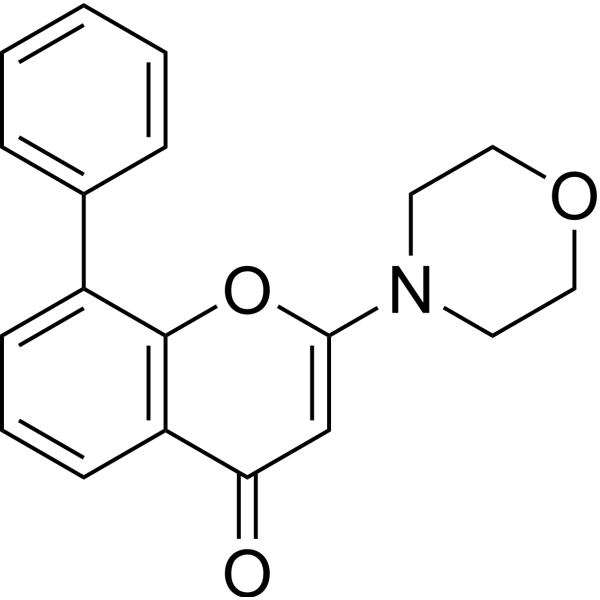
LY294002 is a broad-spectrum inhibitor of PI3K with IC50s of 0.5, 0.57, and 0.97 μM for PI3Kα, PI3Kδ and PI3Kβ, respectively . LY294002 also inhibits CK2 with an IC50 of 98 nM [2]. LY294002 is a competitive DNA-PK inhibitor that binds reversibly to the kinase domain of DNA-PK with an IC50 of 1.4 μM. LY294002 is an apoptosis activator .
loading...
    loading...
859
859 Cited Publications
Cat. No.: HY-17394
CAS No.: 15663-27-1
Synonyms: cis-Platinum; CDDP; cis-Diaminodichloroplatinum
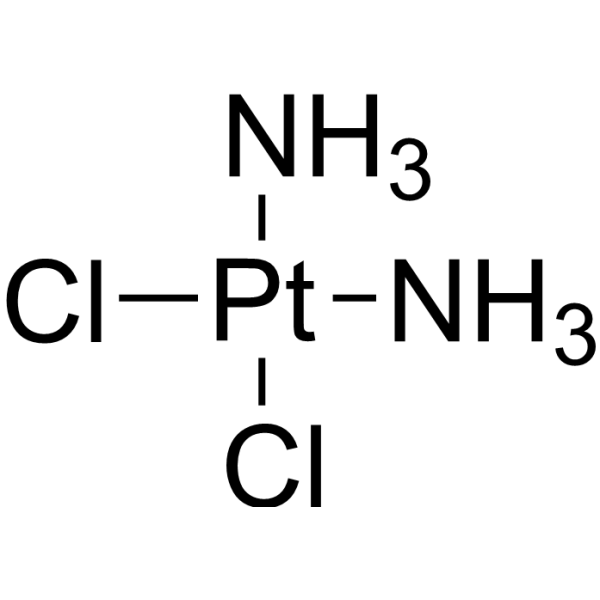
Cisplatin (CDDP) is an antineoplastic chemotherapy agent by cross-linking with DNA and causing DNA damage in cancer cells. Cisplatin activates ferroptosis and induces autophagy [2] .
loading...
    loading...
711
711 Cited Publications
Cat. No.: HY-15142
CAS No.: 25316-40-9
Purity:  99.90%
Synonyms: Hydroxydaunorubicin hydrochloride; ADR
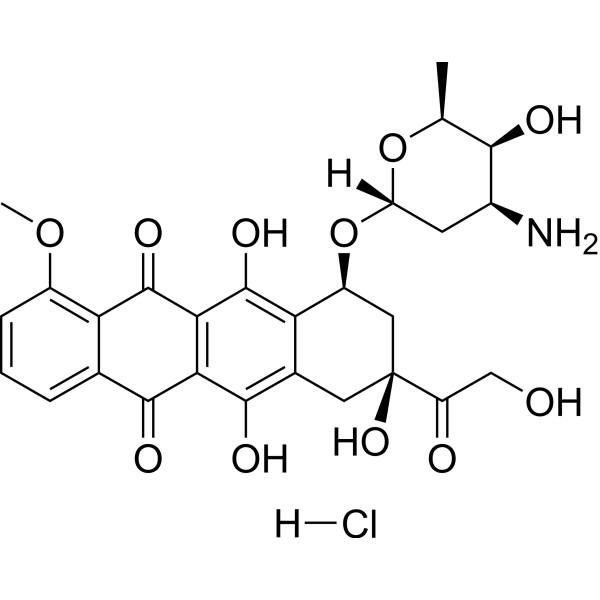
Doxorubicin hydrochloride (Hydroxydaunorubicin hydrochloride; ADR), a cytotoxic anthracycline antibiotic, is an anti-cancer chemotherapy agent. Doxorubicin hydrochloride is a potent human DNA topoisomerase I and topoisomerase II inhibitor with IC50s of 0.8 μM and 2.67 μM, respectively. Doxorubicin hydrochloride reduces basal phosphorylation of AMPK and its downstream target acetyl-CoA carboxylase. Doxorubicin hydrochloride induces apoptosis and autophagy [2] .
loading...
    loading...
644
644 Cited Publications
Cat. No.: HY-100523
CAS No.: 846557-71-9
Purity:  99.96%
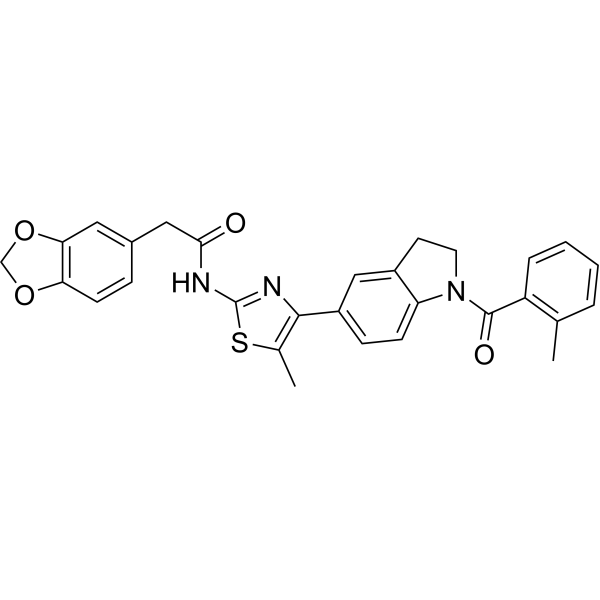
ML385 is a potent and selective Nrf2 inhibitor with an IC50 of 1.9 μM. ML385 directly binds to the Neh1 domain of NRF2, interferes with the binding of the MAFG-NRF2 protein complex to the antioxidant response element (ARE) DNA sequence, thereby blocking the expression of downstream target genes of NRF2. ML385 can be used in studies related to adult T-cell leukemia, breast cancer, myocardial ischemia/reperfusion injury, non-small cell lung cancer, esophageal squamous cell carcinoma, head and neck squamous cell carcinoma, and lung squamous cell carcinoma [2] .
loading...
    loading...
427
427 Cited Publications
Cat. No.: HY-12028
CAS No.: 167869-21-8
Purity:  98.89%
Research Areas:  

Cancer

PD98059 is a potent and selective MEK inhibitor with an IC50 of 5 µM. PD98059 binds to the inactive form of MEK, thereby preventing the activation of MEK1 (IC50 of 2-7 µM) and MEK2 (IC50 of 50 µM) by upstream kinases. PD98059 is a ERK1/2 signaling inhibitor. PD98059 is a ligand for the aryl hydrocarbon receptor (AHR), and suppresses TCDD binding (IC50 of 4 μM) and AHR transformation (IC50 of 1 μM). PD98059 also inhibits Mycobacterium bovis Bacillus CalmetteGuerin (BCG)-induced autophagy [2] .
loading...
    loading...
322
322 Cited Publications
Cat. No.: HY-13818
CAS No.: 19983-44-9
Purity:  99.58%
Target:  

STAT Apoptosis

Research Areas:  

Inflammation/Immunology Cancer

Stattic is a potent STAT3 inhibitor and inhibits STAT3 phosphorylation (at Y705 and S727) . Stattic inhibits the binding of a high affinity phosphopeptide for the SH2 domain of STAT3 [2]. Stattic ameliorates the renal dysfunction in Alport syndrome (AS) mice .
loading...
    loading...
301
301 Cited Publications
Cat. No.: HY-K0501

MCE qPCR Master Mix is provided as a simple-to-use, stabilized 2× formulation that includes all components for qPCR except sample DNA, primers and water. The 100 rxns is defined as the base specification. All larger sizes correspond to incremental volumes of this base.

loading...
    loading...
300
300 Cited Publications
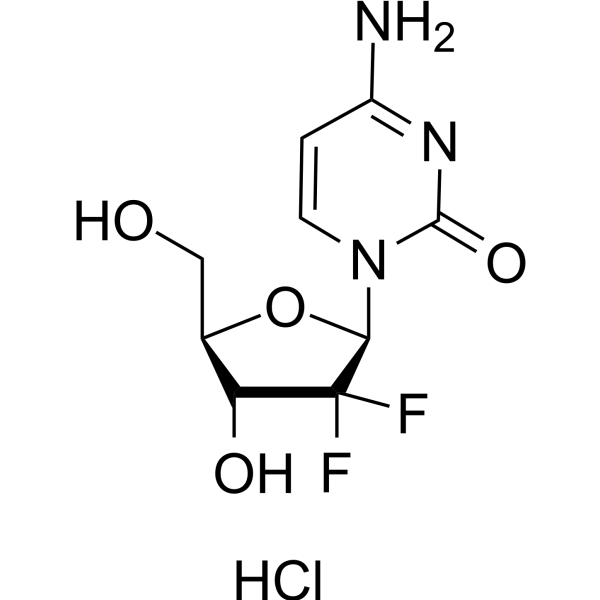
Cat. No.: HY-B0003
CAS No.: 122111-03-9
Synonyms: LY 188011 hydrochloride
Gemcitabine Hydrochloride (LY 188011 Hydrochloride) is a pyrimidine nucleoside analog antimetabolite and an antineoplastic agent. Gemcitabine Hydrochloride inhibits DNA synthesis and repair, resulting in autophagyand apoptosis [2].
loading...
    loading...
300
300 Cited Publications
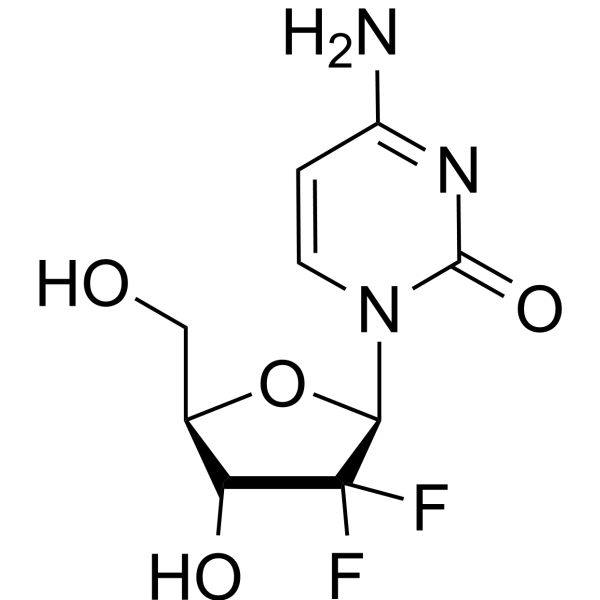
Cat. No.: HY-17026
CAS No.: 95058-81-4
Synonyms: LY 188011
Gemcitabine (LY 188011) is a pyrimidine nucleoside analog antimetabolite and an antineoplastic agent. Gemcitabine inhibits DNA synthesis and repair, and can modulate autophagy. Gemcitabine induces apoptosis through the activation of p38 MAPK. Gemcitabine demonstrates efficacy in mouse models of pancreatic and breast cancer. Gemcitabine can be used for cancer research, such as pancreatic cancer, non-small cell lung cancer, and breast cancer [2] .
loading...
    loading...
268
268 Cited Publications
Cat. No.: HY-P0175
CAS No.: 1236188-16-1
Synonyms: 740YPDGFR; PDGFR 740Y-P
Target:  

PI3K Autophagy

Research Areas:  

Cancer

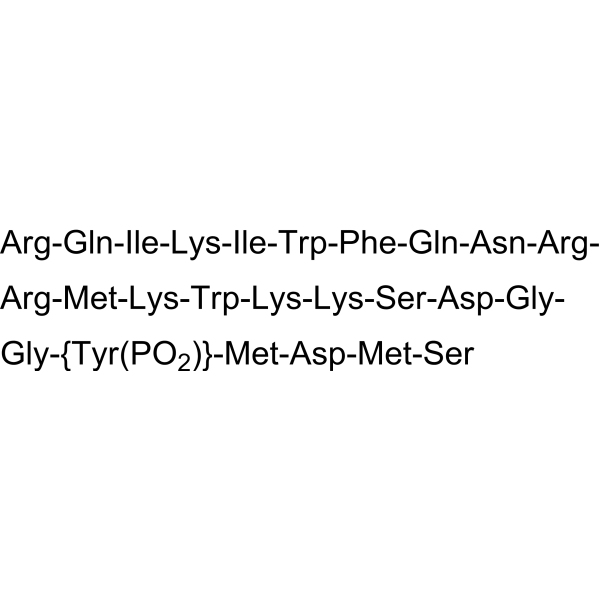
740 Y-P (740YPDGFR; PDGFR 740Y-P) is a potent and cell-permeable PI3K activator. 740 Y-P readily binds GST fusion proteins containing both the N- and C- terminal SH2 domains of p85 but fails to bind GST alone .
loading...
    loading...
236
236 Cited Publications
Cat. No.: HY-17371
CAS No.: 61825-94-3
Research Areas:  

Inflammation/Immunology Cancer

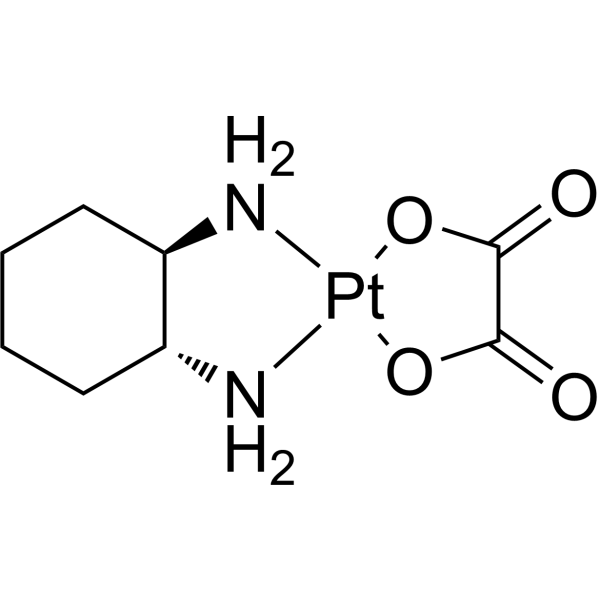
Oxaliplatin is a DNA synthesis inhibitor. Oxaliplatin causes DNA crosslinking damage, prevents DNA replication and transcription and induces apoptosis. Oxaliplatin can be used for cancer research [2] .
loading...
    loading...
232
232 Cited Publications
Cat. No.: HY-10484
CAS No.: 1160295-21-5
Purity:  98.58%
Synonyms: MLN4924 hydrochloride
Research Areas:  

Cancer

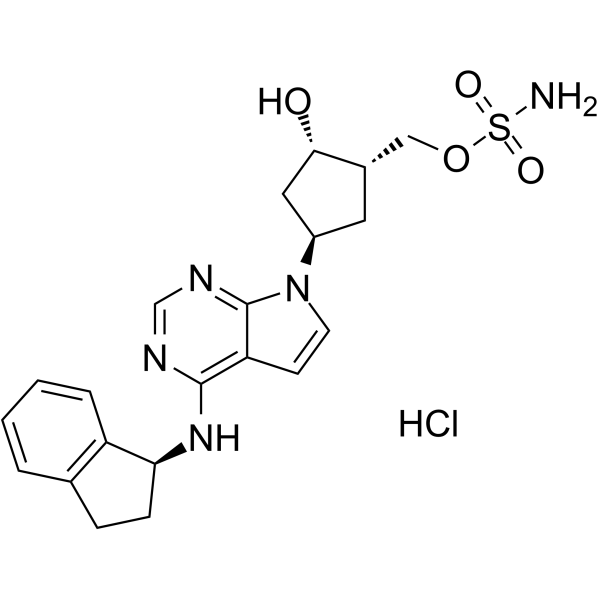
Pevonedistat (MLN4924) hydrochloride is a potent and selective NEDD8-activating enzyme (NAE) inhibitor, with an IC50 of 4.7 nM. Pevonedistat hydrochloride induces the deregulation of S-phase DNA synthesis, thereby disrupting protein turnover mediated by cullin-RING ligase, leading to apoptosis of human tumor cells. Pevonedistat hydrochloride suppresses the growth of human tumour xenografts in mice .
loading...
    loading...
232
232 Cited Publications
Cat. No.: HY-70062
CAS No.: 905579-51-3
Synonyms: MLN4924
Research Areas:  

Cancer

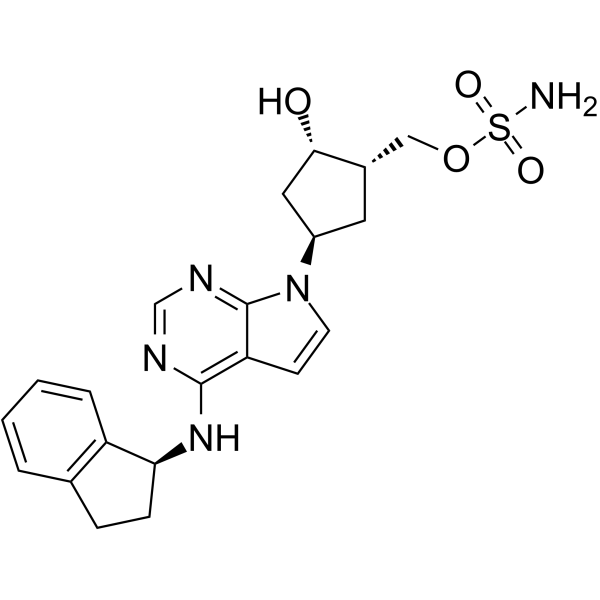
Pevonedistat (MLN4924) is a potent and selective NEDD8-activating enzyme (NAE) inhibitor with an IC50 of 4.7 nM. Pevonedistat induces the deregulation of S-phase DNA synthesis, thereby disrupting protein turnover mediated by cullin-RING ligase, leading to apoptosis of human tumor cells. Pevonedistat suppresses the growth of human tumour xenografts in mice .
loading...
    loading...
230
230 Cited Publications
Cat. No.: HY-104077
CAS No.: 1809249-37-3
Purity:  99.95%
Synonyms: GS-5734
Research Areas:  

Infection

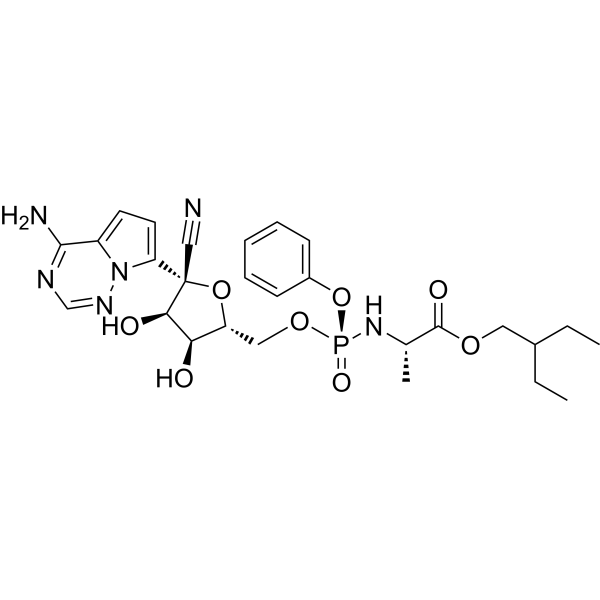
Remdesivir (GS-5734) is a nucleoside analogue with effective antiviral activity. Remdesivir can inhibit the synthesis of viral DNA or RNA. Remdesivir can be used for the research of infection, such as SARS-CoV and MHV infection [2] .
loading...
    loading...
217
217 Cited Publications
Cat. No.: HY-17565A
CAS No.: 67763-87-5
Research Areas:  

Cancer

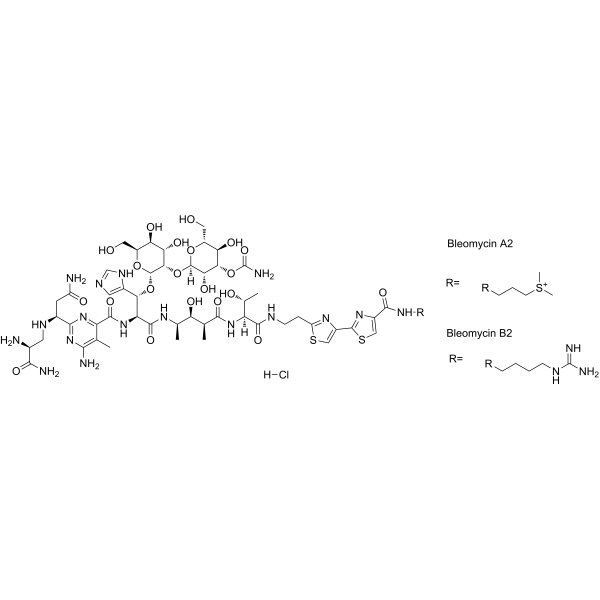
Bleomycin hydrochloride is a DNA synthesis inhibitor. Bleomycin hydrochloride is a DNA damaging agent. Bleomycin hydrochloride is an antitumor antibiotic .
loading...
    loading...
217
217 Cited Publications
Cat. No.: HY-17565
CAS No.: 9041-93-4
Synonyms: Bleomycin sulfate
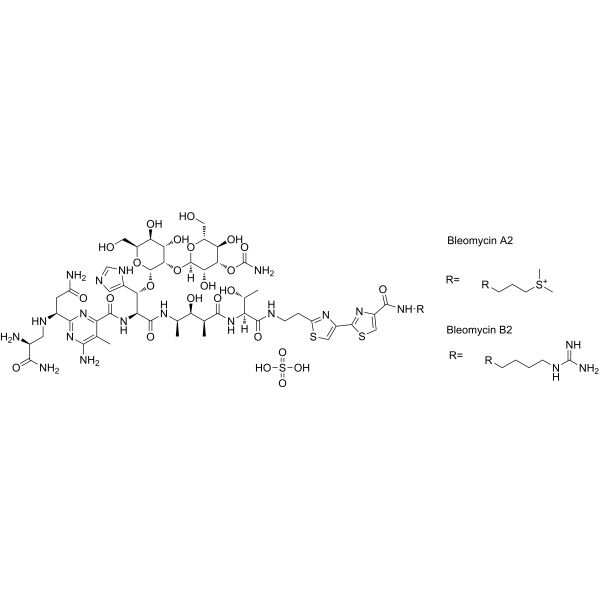
Bleomycin sulfate is a DNA synthesis inhibitor. Bleomycin hydrochloride is a DNA damaging agent. Bleomycin sulfate is an antitumor antibiotic .
loading...
    loading...
207
207 Cited Publications
Cat. No.: HY-17364
CAS No.: 85622-93-1
Synonyms: NSC 362856; CCRG 81045; TMZ
Research Areas:  

Cancer

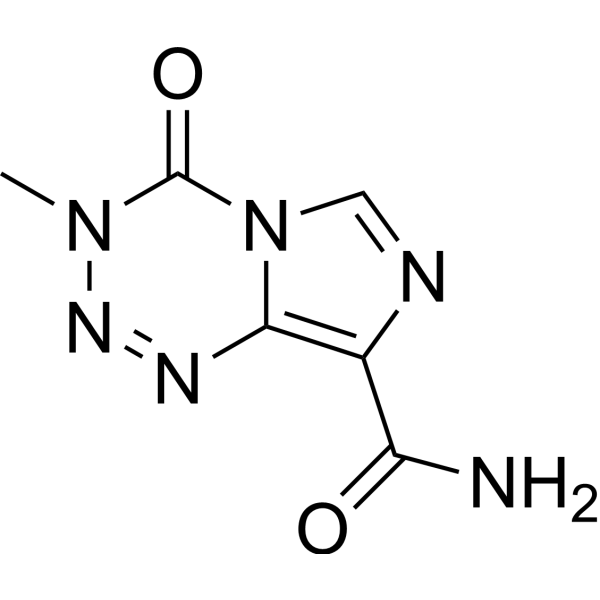
Temozolomide (NSC 362856) is an oral active DNA alkylating agent that crosses the blood-brain barrier. Temozolomide is also a proautophagic and proapoptotic agent. Temozolomide is effective against tumor cells that are characterized by low levels of O6-alkylguanine DNA alkyltransferase (OGAT) and a functional mismatch repair system. Temozolomide has antitumor and antiangiogenic effects [2].
loading...
    loading...
194
194 Cited Publications
Cat. No.: HY-D0079
CAS No.: 104821-25-2
Synonyms: Hydroethidine; PD-MY 003
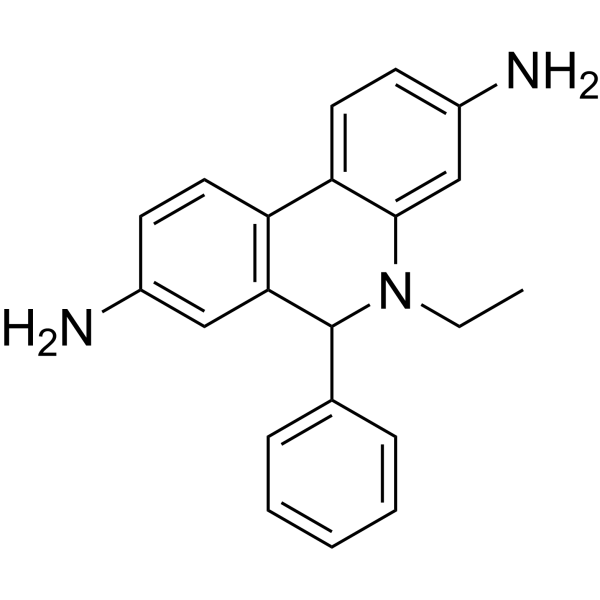
Dihydroethidium, also known as DHE, is a peroxide indicator. Dihydroethidium penetrates cell membranes to form a fluorescent protein complex with blue fluoresces. After entering the cells, Dihydroethidium is mainly localized in the cell membrane, cytoplasm and nucleus, and the staining effect is the strongest in the nucleus. Dihydroethidium produces inherent blue fluorescence with a maximum excitation wavelength of 370 nm and a maximum emission wavelength of 420 nm; after dehydrogenation, Dihydroethidium combines with RNA or DNA to produce red fluorescence with a maximum excitation wavelength of 300 nm and a maximum emission wavelength of 610 nm. 535 nm can also be used as the excitation wavelength for actual observation .
loading...
    loading...
191
191 Cited Publications
Cat. No.: HY-13629
CAS No.: 33419-42-0
Purity:  99.94%
Synonyms: VP-16; VP-16-213
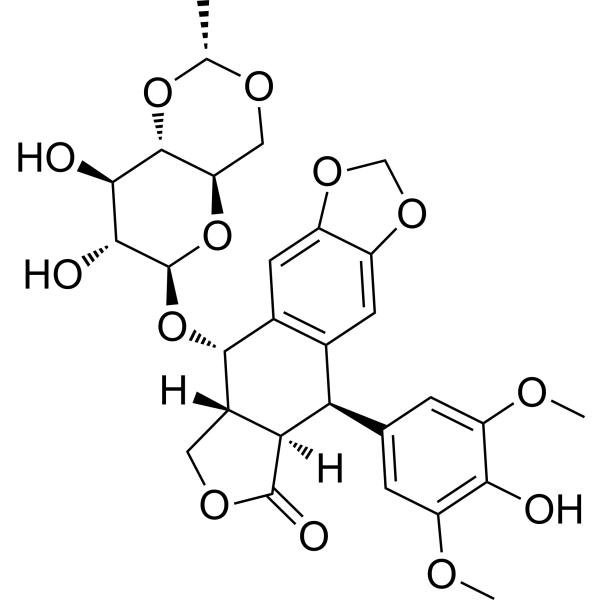
Etoposide (VP-16; VP-16-213) is an anti-cancer chemotherapy agent. Etoposide inhibits topoisomerase II, thus stopping DNA replication. Etoposide induces cell cycle arrest, apoptosis and autophagy .
loading...
    loading...
191
191 Cited Publications
Cat. No.: HY-13630
CAS No.: 117091-64-2
Purity:  99.28%
Synonyms: BMY-40481
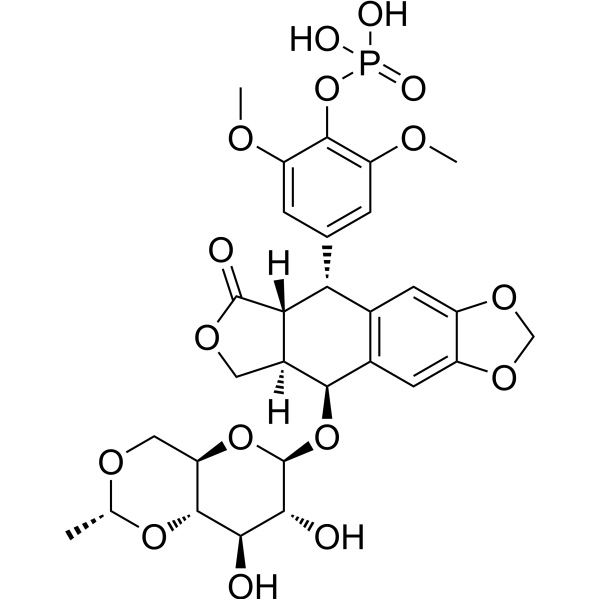
Etoposide phosphate (BMY-40481) is a potent anti-cancer chemotherapy agent and a selective topoisomerase II inhibitor to prevent re-ligation of DNA strands. Etoposide phosphate is the phosphate ester proagent of etoposide and is considered as active equivalent to Etoposide. Etoposide phosphate induces cell cycle arrest, apoptosis, and autophagy.
loading...
    loading...

