
6 Results for "

intracellular retention

" in MedChemExpress (MCE) Product Catalog:
Products (6)

6 Results for "intracellular retention" in MCE Product Catalog:

Cat. No.: HY-P10152
CAS No.: 185462-59-3
Research Areas:  

Infection

INF7 is a derivative of the N-terminal domain of the HA2 protein and is sensitive to pH. INF7 disrupts the stability of endosomal membranes through a mechanism independent of membrane fusion. INF7 can be used to enhance the endosome escape of complex or liposome-encapsulated proteins. Co-encapsulation of INF7 and molecular imaging probes in liposomes can enhance intracellular signaling and probe retention .
loading...
    loading...
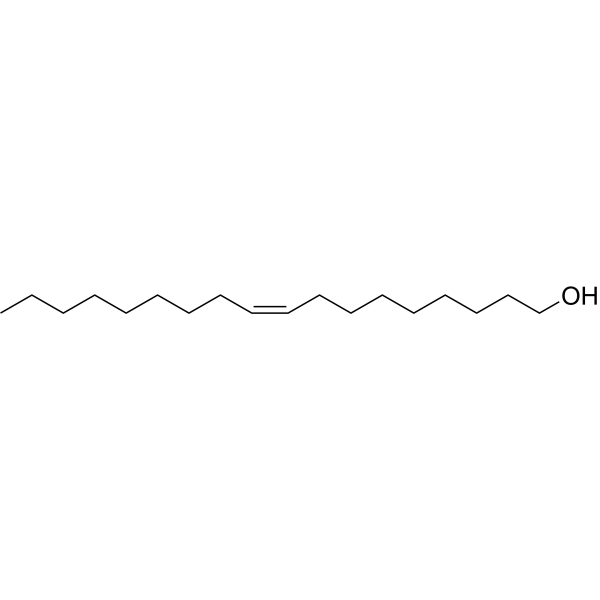
Cat. No.: HY-141573
CAS No.: 143-28-2
Purity:  84.00%
Research Areas:  

Neurological Disease Cancer

Oleyl alcohol is an anti-tumor compound that inhibits tumor growth. Oleyl alcohol induces cytotoxicity, cell death and apoptosis. The intracellular accumulation of Oleyl alcohol correlates with its cytotoxicity against tumor cells. Oleyl alcohol forms enhancer-enriched fluid domains in stratum corneum lipids, increases the retention of diclofenac diethylamine in ex vivo human epidermis and dermis, and enhances the skin permeability of diclofenac diethylamine. Oleyl alcohol can be used in studies related to neuroblastoma .
loading...
    loading...
Cat. No.: HY-159771
CAS No.: 3095069-75-0
Target:  

FAP

Research Areas:  

Cancer

FAP6-19 is a fibroblast activation protein (FAP) targeting radioligand with a Kd of 18.2 nM. FAP6-19 selectively delivers therapeutic radioactive nuclides (such as 177Lu) to the tumor site by targeting the overexpressed FAP protein in the tumor microenvironment, achieving precise killing of cancer cells while minimizing radiation damage to healthy tissues. FAP6-19 exhibits extremely high total cellular uptake and good intracellular retention ability in HT1080 cells. After being labeled with 111In, FAP6-19 produced extremely high tumor/kidney and tumor/liver dose ratios in the mouse model with 4T1 tumors. FAP6-19 can be used in the research of solid tumors expressing FAP.
loading...
    loading...
Cat. No.: HY-W791041
CAS No.: 116371-66-5
Synonyms: dFdCDP
Research Areas:  

Cancer

Gemcitabine 5'-diphosphate (dFdCDP) is a core active metabolic intermediate of Gemcitabine (HY-17026) and a potent ribonucleotide reductase (RNR) inhibitor. Gemcitabine 5'-diphosphate depletes deoxyribonucleotide pools, consumes deoxycytidine triphosphate and increases the phosphorylation level of gemcitabine. Gemcitabine 5'-diphosphate prolongs the intracellular retention duration of gemcitabine metabolites, enhances the nucleic acid incorporation of gemcitabine, and exerts anti-tumor/cytotoxic effects .
loading...
    loading...
Cat. No.: HY-113837
CAS No.: 1070878-63-5
Flortanidazole is a derivative of 2-Nitroimidazole (HY-N0195). Under hypoxic conditions, Flortanidazole accumulates in hypoxic tissues through the reduction of 2-nitroimidazole and the retention of reactive intermediates by viable hypoxic cells. Flortanidazole binds to intracellular macromolecules under hypoxic conditions, thereby enabling quantification of tumor hypoxia. [ 18F]Flortanidazole, formed after labeling Flortanidazole with 18F, is a hypoxic PET imaging tracer and prognostic imaging biomarker. Flortanidazole can be used in the study of non-small cell lung cancer and colorectal cancer .
loading...
    loading...
Cat. No.: HY-123366
CAS No.: 70386-06-0
Research Areas:  

Cardiovascular Disease

Y-590 is an orally active platelet cyclic adenosine monophosphate phosphodiesterase (cAMP-PDE) inhibitor with an IC50 of 0.9 nM against rabbit cAMP-PDE. Y-590 inhibits platelet aggregation, disaggregates aggregated platelets, suppresses collagen-induced platelet release, reduces platelet retention and inhibits cAMP degradation in platelets. Y-590 enhances PGI2-mediated elevation of intracellular cAMP in platelets and exerts a synergistic effect with PGI2 on ADP-induced platelet aggregation. Y-590 can be used in studies related to thrombotic diseases and thrombosis .
loading...
    loading...

