1. Search Result
Search Result
Results for "

lipophilic probe

" in MedChemExpress (MCE) Product Catalog:

9

Inhibitors & Agonists

6

Fluorescent Dyes

1

Biochemical Assay Reagents

Cat. No. Product Name Target Research Areas Chemical Structure
  • HY-D1459

    Fluorescent Dye Metabolic Disease
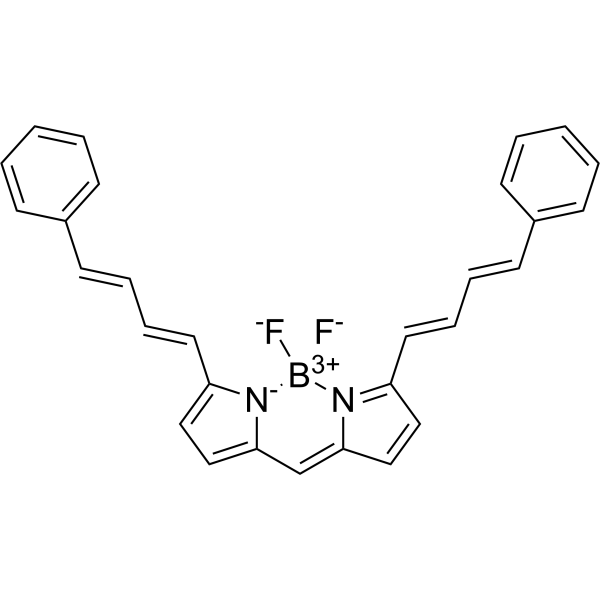
    BODIPY 665/676 is a lipophilic radical-sensitive fluorescent probe that can be used to study radical-driven lipid autoxidation (Ex/Em=665/676 nm) .
    BODIPY 665/676
  • HY-117401

    Fluorescent Dye Others
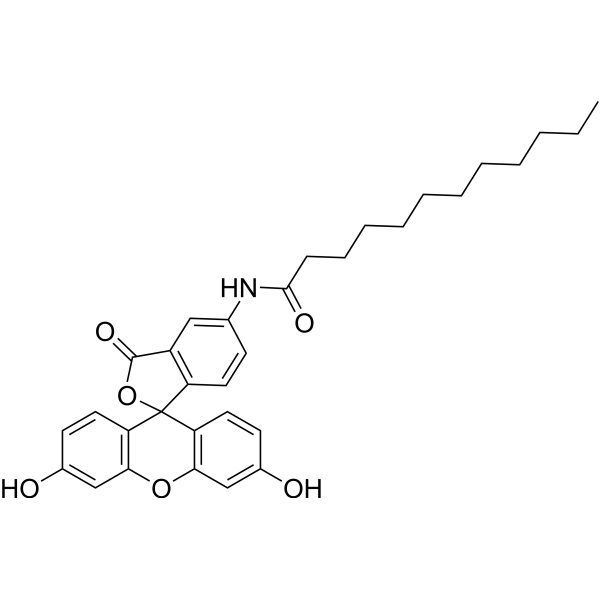
    5-Dodecanoylaminofluorescein is an amphipathic (amphoteric) fluorescent probe (Ex/Em = 485 nm/515-535 nm), which consists of a hydrophilic fluorescein core and a hydrophobic dodecanoyl group (C12 fatty acid chain) linked by an amide bond. 5-Dodecanoylaminofluorescein is mainly used as an interface-localized radical trapping/indicator probe. Dodecanoylaminofluorescein can be used for the determination of the antioxidant properties of emulsions, or can serve as a lipophilic drug model for the study of passive skin penetration when encapsulated in tyrosine-derived nanospheres .
    5-Dodecanoylaminofluorescein
  • HY-133876

    DiA

    Fluorescent Dye Others
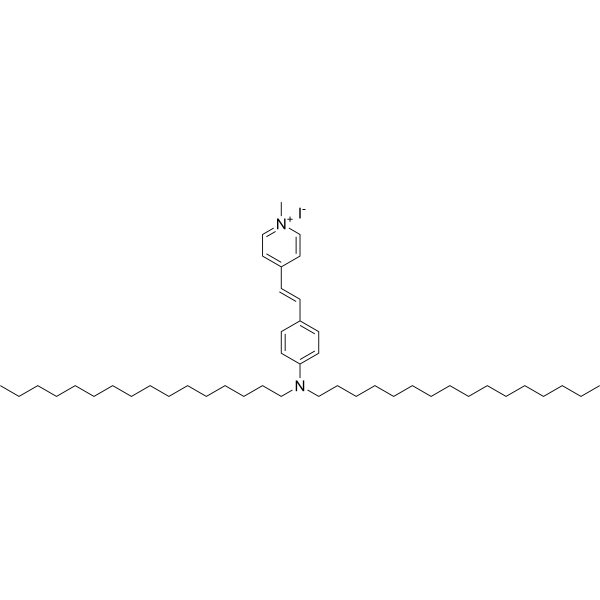
    4-Di-16-ASP is a green fluorescent membrane dye. 4-Di-16-ASP is a lipophilic aminostyryl probe with a broad emission spectrum (can be detected with green, orange or even red filters). It is commonly used for neuronal membrane tracing (it diffuses faster than DiO) .
    4-Di-16-ASP
  • HY-D1595

    Fluorescent Dye Others
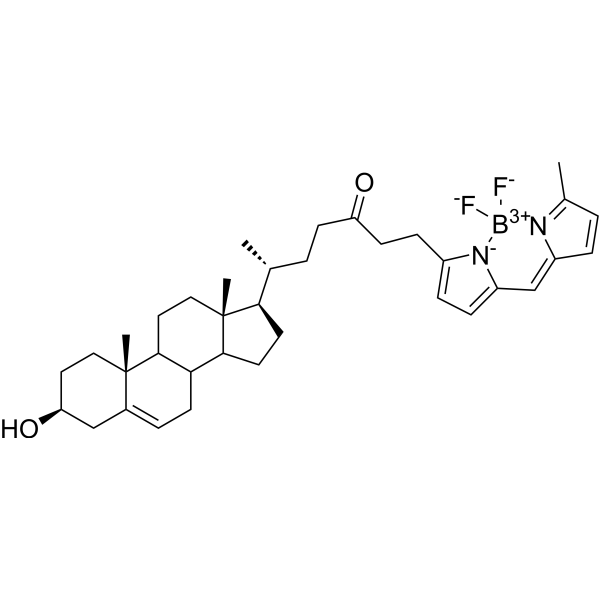
    BODIPY FL Cholesterol is a green fluorescent, lipophilic probe. BODIPY FL Cholesterol can be used for the research of lipid transport processes and lipid-protein interactions .
    BODIPY FL Cholesterol
  • HY-119216

    PAK Cancer
    AZ13711265 is an orally active PAK1 inhibitor with high selectivity. AZ13711265 has IC50 values of 0.58 nM and 0.11 µM for PAK1 and pPAK1, respectively. AZ13711265 has low lipophilicity and low clearance, and can be used as an in vivo probe compound for PAK1. AZ13711265 can be used in the study of cancer .
    AZ13711265
  • HY-W099563

    Biochemical Assay Reagents Others
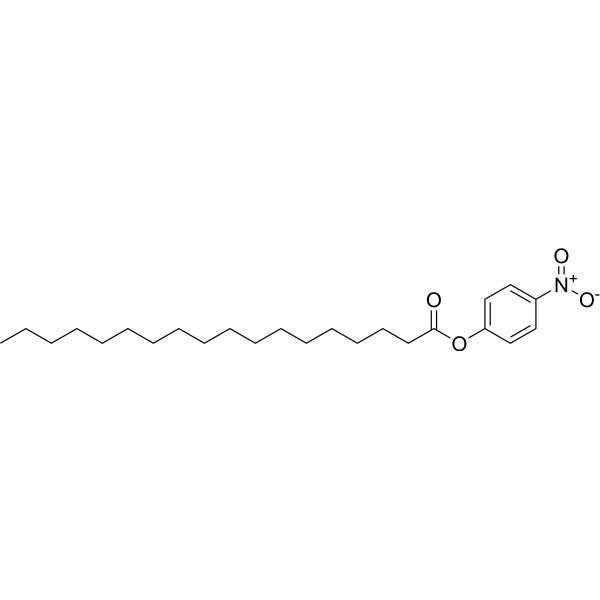
    4-Nitrophenyl stearate, which is an ester formed by the condensation of stearic acid and 4-nitrophenol, is commonly used as a substrate for enzymatic assays, where the hydrolysis of ester bonds by esterase and lipase can be measured by absorbance or ratio In addition, 4-Nitrophenyl stearate has been used as a model compound to study the enzymatic activity and selectivity of lipases and esterases from various sources. The long hydrophobic tail of the molecule makes it suitable for use in lipophilic Good solubility in the environment makes it a useful probe for studying lipid metabolism.
    4-Nitrophenyl stearate
  • HY-163286

    Fluorescent Dye Ferroptosis Others
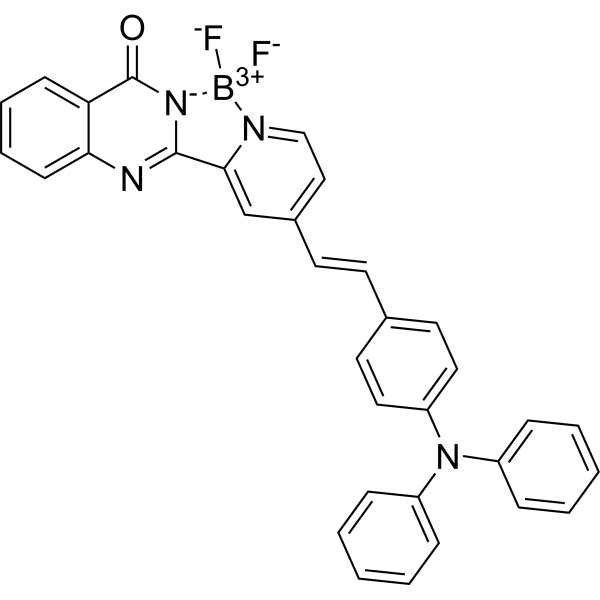
    BODIQPy-TPA is a lipophilic probes, which induces ferroptosis in B16 and HepG2 cells upon light irradiation through lipid peroxidation. BODIQPy-TPA reveals a maximum absorption wavelength of 488 nm and a maximum emission wavelength above 640 nm .
    BODIQPy-TPA
  • HY-D3007

    Fluorescent Dye Others
    LD-CK is a fluorescent probe based on a coumarin-chromone structure, specifically designed to visualize lipid droplet polarity changes and endowed with multimodal imaging capability. LD-CK contains a high-performance lipophilic coumarin moiety, which enables it to specifically target lipid droplets upon cellular entry while minimizing background fluorescence to the greatest extent. LD-CK has an excitation wavelength (Ex) of 488 nm and an emission wavelength (Em) of 540 nm (in low-polarity environments such as toluene) or 640 nm (in high-polarity environments such as glycerol), with its emission peak undergoing a redshift as solvent polarity increases .
    LD-CK
  • HY-W783351

    Coppersensor 790 acetoxymethyl ester

    Fluorescent Dye Metabolic Disease
    CS790AM (Coppersensor 790 acetoxymethyl ester) is a cell-permeable, Cu +-targeted near-infrared fluorescent probe (λabs=760 nm, λem=790 nm) applicable to live cells. CS790AM can cross lipophilic cell membranes, and is converted into negatively charged CS790 under the action of intracellular esterases to be retained, thus enabling highly sensitive, reversible "turn-on" detection of labile Cu + pools in live cells and mice. CS790AM possesses excellent biocompatibility and selectivity, avoids interference from other metal ions, shows no obvious toxicity, and can be rapidly cleared. CS790AM allows long-term longitudinal monitoring of individual mice, visualizes copper levels in internal organs and isolated livers, and effectively evaluates abnormal copper accumulation in Wilson's disease models (Atp7b -/-) as well as dynamic changes after chelator treatment. CS790AM can be used for research on Wilson's disease and related copper metabolic disorders .
    CS790AM

Inquiry Online

Your information is safe with us. * Required Fields.

Salutation


Country or Region *

Applicant Name *


Organization Name *

Department *


Email Address *


Product Name *

Cat. No.


Requested quantity *

Phone Number *


Remarks

Inquiry Online

Inquiry Information

Product Name:
Cat. No.:
Quantity:
MCE Japan Authorized Agent:

