
18 Results for "

living human cells

" in MedChemExpress (MCE) Product Catalog:
Products (18)

18 Results for "living human cells" in MCE Product Catalog:

11
11 Publications Verification
Cat. No.: HY-111391
CAS No.: 62758-13-8
Purity:  ≥98.0%
Synonyms: Diazoresorcinol sodium
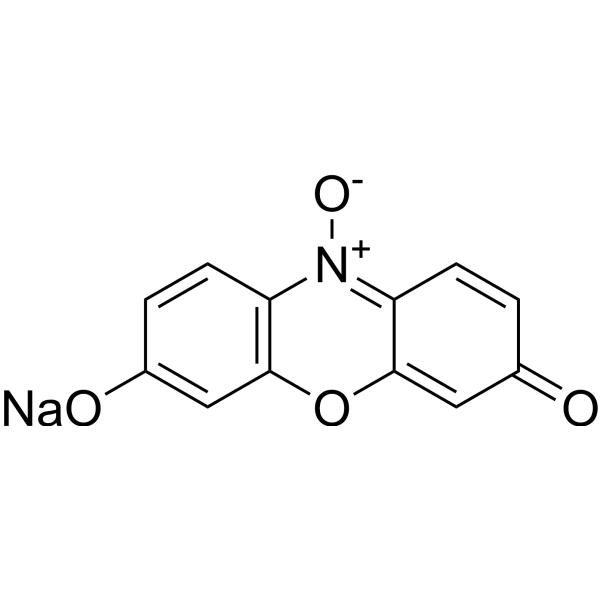
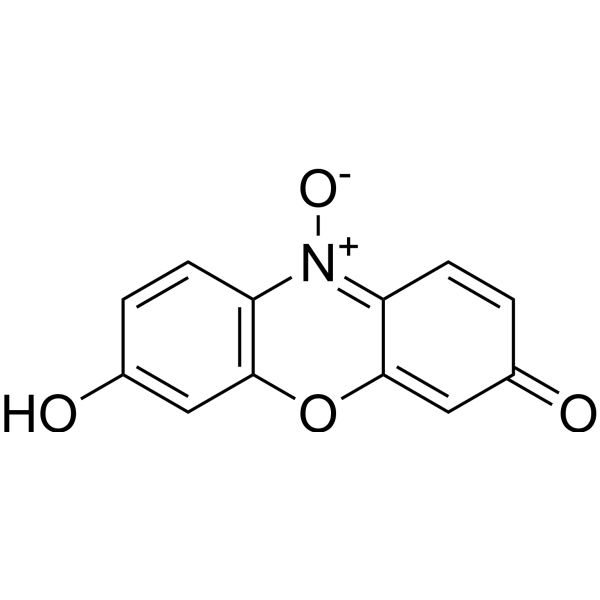
Resazurin sodium (Diazoresorcinol sodium) is a non-toxic, stable, membrane-permeable blue non-fluorescent dye (faintly fluorescent). Resazurin sodium is used as a redox indicator, can be reduced to pink, highly fluorescent Resorufin (Ex=530-560 nm, Em=590 nm) in living cells. Resazurin sodium can be used for the detection of cell viability, toxicity, proliferation, migration and invasion in cells (human, plant and animal, bacterial and fungal) .
loading...
    loading...
1
1 Cited Publications
Cat. No.: HY-12833
CAS No.: 1313613-09-0
Purity:  99.76%
Target:  

Phosphatase Akt ERK

Research Areas:  

Others

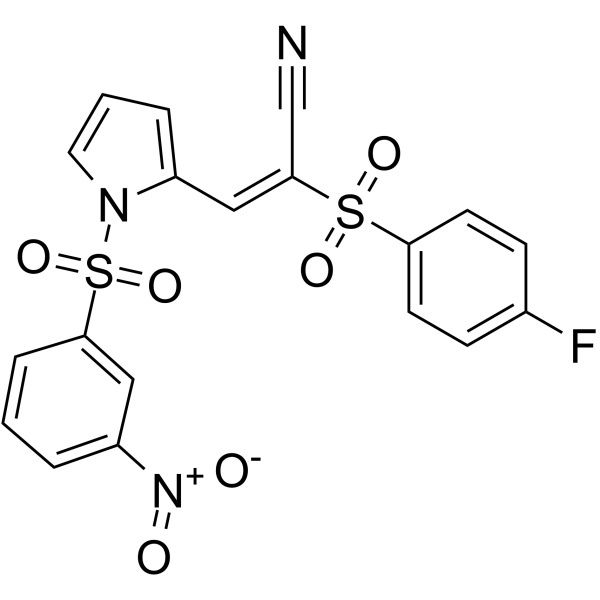
AMZ30 is selective protein phosphatase methylesterase-1(PME-1) inhibitor with IC50s of 600 nM and 3.5 µM in human cell lysates and in HEK 293T cells, respectively. AMZ30 shows >100-fold selectivity relative to other serine hydrolases. AMZ30 reduces the demethylated form of PP2A in living cells. AMZ30 attenuates muscle cell differentiation. AMZ30 increases the resistance of U87MG and U251MG glioblastoma cells to t-BHP-induced oxidative stress. AMZ30can be used for the study of glioblastoma .
loading...
    loading...
1
1 Cited Publications
Cat. No.: HY-138802
CAS No.: 1306638-12-9
Purity:  99.86%
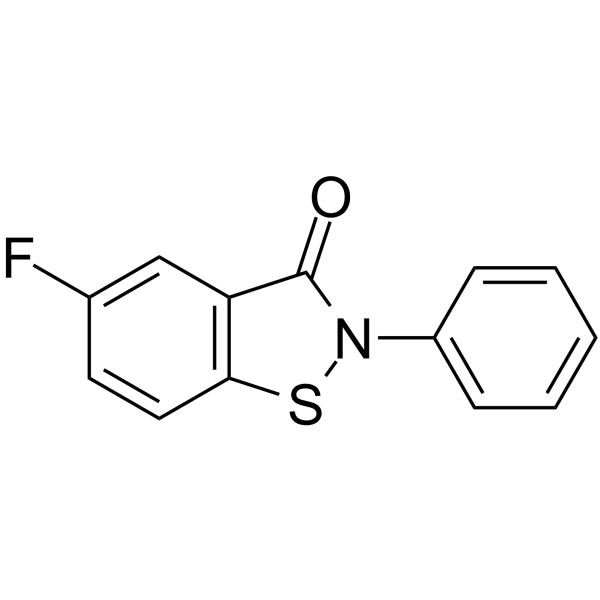
ML089 is an orally active inhibitor of phosphomannose isomerase (PMI) and PHOSPHO1, with an IC50 value of 1.3 μM against human PMI and an IC50 value of 0.8 μM against PHOSPHO1. ML089 blocks the catabolism of mannose-6-phosphate, directs mannose-6-phosphate to participate in protein glycosylation, increases mannose incorporation into cellular proteins, and reduces tritiated water production from mannose-6-phosphate. ML089 inhibits PMI in living cells. ML089 can be used in research related to congenital disorder of glycosylation type Ia (CDG-Ia) .
loading...
    loading...
Cat. No.: HY-111391A
CAS No.: 62758-13-8
Purity:  98.06%
Synonyms: Diazoresorcinol sodium, indicator
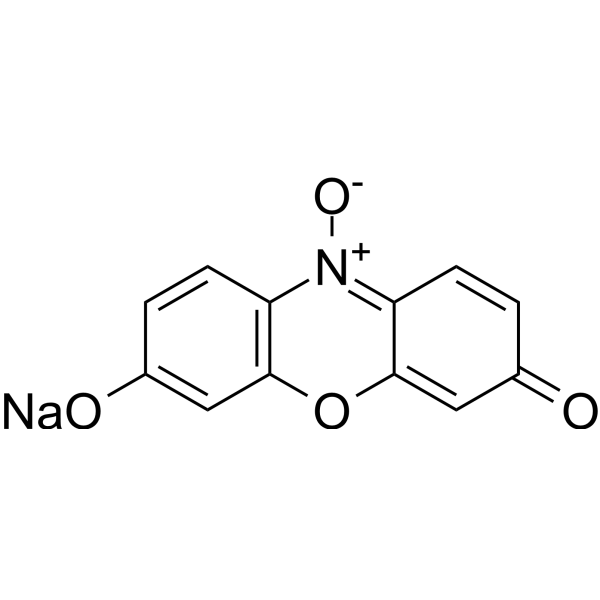
Resazurin (Diazoresorcinol) sodium, indicator is a non-toxic, stable, membrane-permeable blue non-fluorescent dye (faintly fluorescent). Resazurin sodium, indicator is used as a redox indicator, can be reduced to pink, highly fluorescent Resorufin (Ex=530-560 nm, Em=590 nm) in living cells. Resazurin sodium, indicator can be used for the detection of cell viability, toxicity, proliferation, migration and invasion in cells (human, plant and animal, bacterial and fungal) .
loading...
    loading...
Cat. No.: HY-118540
CAS No.: 550-82-3
Synonyms: Diazoresorcinol
Resazurin (Diazoresorcinol) is a water-soluble, non-toxic, stable, membrane-permeable blue non-fluorescent dye (faintly fluorescent). Resazurin is used as a redox indicator, can be reduced to pink, highly fluorescent Resorufin (Ex=530-560 nm, Em=590 nm) in living cells. Resazurin can be used for the detection of cell viability, toxicity, proliferation, migration and invasion in cells (human, plant and animal, bacterial and fungal) .
loading...
    loading...
Cat. No.: HY-110172
CAS No.: 1461648-55-4
Target:  

PDI

Research Areas:  

Cancer

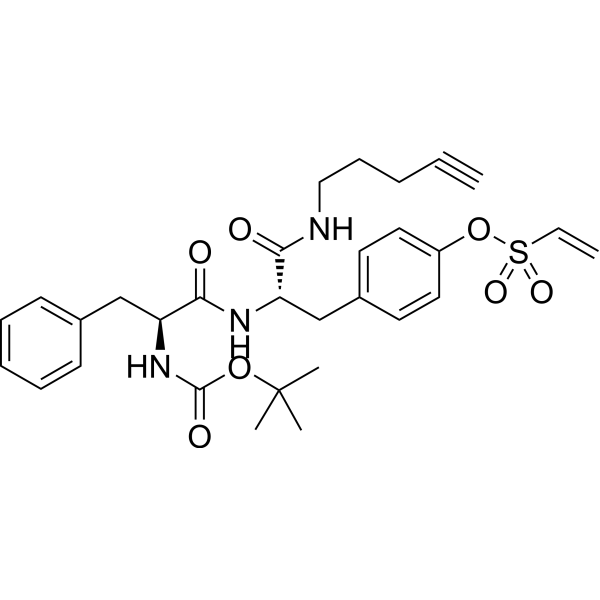
PDI-IN-1 is a cell-permeable PDI covalent inhibitor with an IC50 of 1.7 μM against bovine PDI. PDI-IN-1 specifically modifies the Cys397 residue at the active site of human PDI, selectively labels endogenous PDI in living mammalian cancer cells, and effectively inhibits PDI-mediated insulin aggregation in vitro. PDI-IN-1 exhibits significant anti-tumor activity and inhibits the growth of various cancer cell lines .
loading...
    loading...
Cat. No.: HY-DY1051
CAS No.: 62758-13-8
Resazurin sodium (Diazoresorcinol sodium) (solution) is a non-toxic, stable, membrane-permeable blue non-fluorescent dye (faintly fluorescent). Resazurin sodium is used as a redox indicator, can be reduced to pink, highly fluorescent Resorufin (Ex=530-560 nm, Em=590 nm) in living cells. Resazurin sodium can be used for the detection of cell viability, toxicity, proliferation, migration and invasion in cells (human, plant and animal, bacterial and fungal) .
Solvent and Concentration: Sterile water: 10 mM
loading...
    loading...
Cat. No.: HY-130736
CAS No.: 1811539-32-8
Synonyms: JF549, SE; JF549, NHS
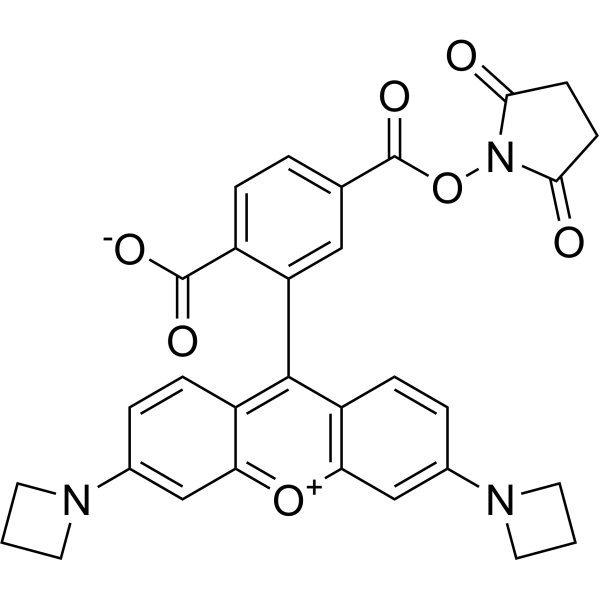
Janelia Fluor? 549, SE (JF549, SE) is a cell-permeable fluorescent dye with an NHS ester (succinimidyl ester (SE)) reactive group. NHS esters react with primary amines and are commonly used to conjugate dyes to proteins, antibodies, amine-modified oligonucleotides, and other molecules. Janelia Fluor fluorescent dyes can be chemically conjugated to the specific HaloTag substrate (a chloroalkane ligand) to form a fluorescent ligand, rather than binding directly to the HaloTag protein itself. Janelia Fluor? 549, SE also acts as a ligand for self-labeling tags such as HaloTag and SNAP-tag, and can be used in live-cell imaging studies (Ex/Em = 549 nm/571 nm) .
loading...
    loading...
Cat. No.: HY-155181
CAS No.: 2994634-52-3
Purity:  98.18%
Research Areas:  

Cancer

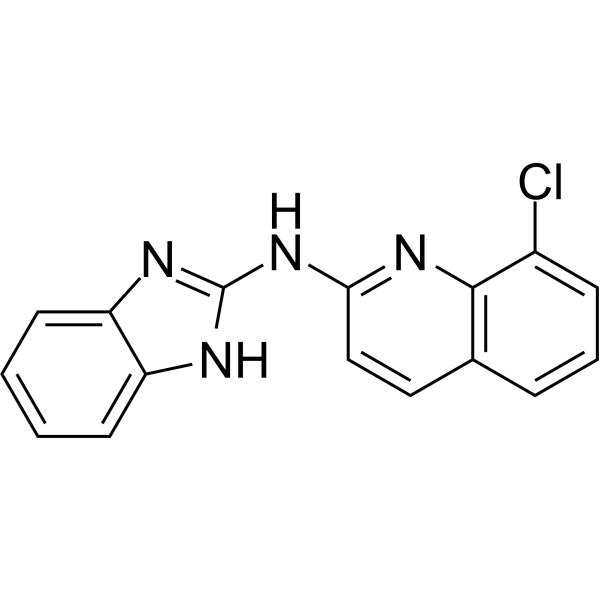
CES2-IN-1 (Compound 24) is a reversible and selective CES2 inhibitor (IC50: 6.72 μM for human CES2). CES2-IN-1 reduces the level of CES2 in living cells. CES2-IN-1 is effective against Irinotecan (HY-16562)-induced delayed diarrhea and DSS-induced ulcerative colitis .
loading...
    loading...
Cat. No.: HY-178335
CAS No.: 3125107-49-2
Target:  

LDLR Wnt CMV

Research Areas:  

Infection

SGC-CK1γ-1 is a potent and selective probe for the CK1γ subfamily. SGC-CK1γ-1 can inhibit LRP6 phosphorylation levels. SGC-CK1γ-1 can selectively inhibit the CK1γ kinases in living cells and inhibit both WNT signaling and human cytomegalovirus (CMV) replication. SGC-CK1γ-1 can be used for the research of infection .
loading...
    loading...
Cat. No.: HY-P2510
Research Areas:  

Metabolic Disease

Parathyroid Hormone (1-34), human, biotinylated is a probe for the parathyroid hormone receptor, can be used for analyzing the interaction between parathyroid hormone and parathyroid hormone receptors in living cells and for purifying hormone-receptor complexes with affinity columns .
loading...
    loading...
Cat. No.: HY-151704
CAS No.: 1622335-41-4
Purity:  99.17%
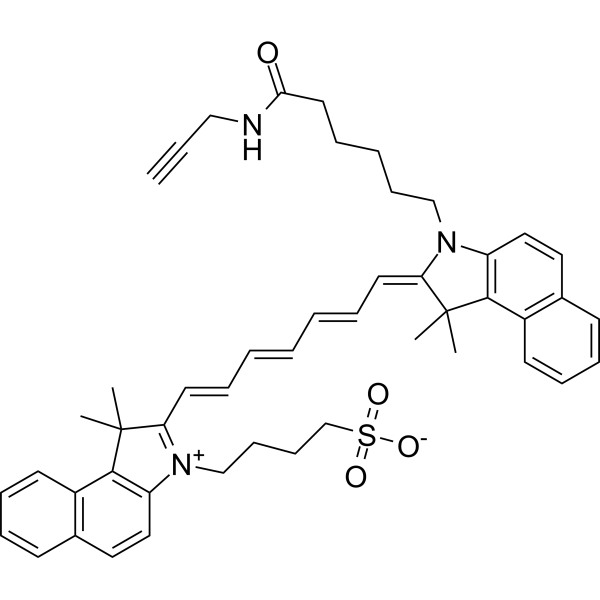
ICG-alkyne is a short-wave infrared (SWIR)-emitting cyanine fluorescent probe based on alkyne-derivatized indocyanine green. ICG-alkyne can undergo click chemistry reaction to conjugate with antibody molecules via binding to the azide groups introduced into antibodies. ICG-alkyne enables SWIR fluorescent molecular imaging of breast tumors in living mice. ICG-alkyne can be used in breast cancer-related research .
loading...
    loading...
Cat. No.: HY-D2941
Synonyms: SNAP-AF
BGAF (SNAP-AF) is a fluorescent diacetyl fluorescein-labeled SNAP tag fluorescent probe, specifically designed for the covalent labeling of SNAP-tag fusion proteins in living cells. BGAF utilizes the specific reaction of the human DNA repair protein hAGT to achieve specific fluorescent labeling of the target protein in the living cell environment .
loading...
    loading...
Cat. No.: HY-W190925
CAS No.: 2170240-97-6
Research Areas:  

Others

APN-C3-biotin is a heterobifunctional linker containing an APN moiety with exquisite chemoselectivity for cysteine and Biotin. The superior stability of APN-cysteine conjugates in aqueous media, human plasma, and living cells makes this new thiol-click reaction a promising methodology for applications in bioconjugation.
loading...
    loading...
Cat. No.: HY-111391AR
CAS No.: 62758-13-8
Synonyms: Diazoresorcinol sodium, indicator (Standard)
Research Areas:  

Others

Resazurin (sodium), indicator (Standard) is the analytical standard of Resazurin (sodium), indicator (HY-111391A). This product is intended for research and analytical applications. Resazurin (Diazoresorcinol) sodium, indicator is a non-toxic, stable, membrane-permeable blue non-fluorescent dye (faintly fluorescent). Resazurin sodium, indicator is used as a redox indicator, can be reduced to pink, highly fluorescent Resorufin (Ex=530-560 nm, Em=590 nm) in living cells. Resazurin sodium, indicator can be used for the detection of cell viability, toxicity, proliferation, migration and invasion in cells (human, plant and animal, bacterial and fungal) .
loading...
    loading...
Cat. No.: HY-D3198
CAS No.: 2351937-34-1
Research Areas:  

Cancer

NIR-fluorescent ceramide is a neutral near-infrared (NIF) fluorescent probe (λem=650 nm) based on the C-bridged nitrobenzoxadiazole SCOTfluor core, which enables visualization of lipid metabolic processes such as sphingolipid trafficking. The emission signal of NIR-fluorescent ceramide increases significantly in liposomal environments. NIR-fluorescent ceramide acts as an intracellular trafficking tracer, localizing to regions surrounding the endoplasmic reticulum and Golgi apparatus within a short period, and then translocating to recycling lysosomes over a longer period, thus enabling real-time visualization of sphingolipid trafficking and biological lipid functions in living cells. NIR-fluorescent ceramide also generates metabolic uptake profiles and provides multiple metabolic readouts in human cancer cell lines .
loading...
    loading...
Cat. No.: HY-D3189
CAS No.: 2370825-44-6
5GluAF-2MeTG is an activatable fluorescent probe targeting the glutamate carboxypeptidase (CP) activity of PSMA (Ex/Em=490/500-600 nm). After being hydrolyzed by PSMA, 5GluAF-2MeTG releases a cell membrane-permeable fluorescent product, and achieves fluorescence activation by disrupting donor-excited photoinduced electron transfer (d-PeT). 5GluAF-2MeTG enables fluorescence imaging of live PSMA-expressing prostate cancer cells in vitro and visualizes the carboxypeptidase activity of PSMA. 5GluAF-2MeTG can be used to detect prostate cancer regions in preclinical excised tissue specimens .
loading...
    loading...
Cat. No.: HY-D3602
CAS No.: 2558211-88-2
Target:  

Fluorescent Dye

Research Areas:  

Others

Mito-CS1 is a fluorescent probe for imaging and reversible detection of the exchangeable mitochondrial Cu + pool in living cells. Mito-CS1 combines a Cu +-responsive fluorescent platform with a mitochondria-targeted triphenylphosphonium group, which localizes the probe to mitochondria via a proton gradient. Mito-CS1 contains a thioether-rich receptor for the selective recognition and binding of Cu +, triggering a fluorescence turn-on response by inhibiting photoinduced electron transfer. The apo-form of Mito-CS1 has excitation/emission wavelengths of 555/569 nm, while those of Mito-CS1 after binding to Cu + are 550/558 nm .
loading...
    loading...
  • 1

