1. Search Result
Search Result
Results for "

low temperature stress

" in MedChemExpress (MCE) Product Catalog:

6

Inhibitors & Agonists

1

Biochemical Assay Reagents

4

Natural
Products

1

Isotope-Labeled Compounds

Cat. No. Product Name Target Research Areas Chemical Structure
  • HY-N1964
    Gibberellic acid
    1 Publications Verification

    Gibberellin A3

    Environmental Pollutants Drug Derivative Metabolic Disease
    Gibberellic acid (GA3) is a natural plant growth regulator with oral bioactivity. Gibberellic acid governs multiple plant developmental events, including seed germination, cell elongation, floral organ formation, and rice spikelet fertility. Gibberellic acid optimizes root morphology and secondary metabolite production in Echinacea purpurea hairy roots, and serves as a bioactive seed priming agent to improve chilling stress tolerance in chickpea. Gibberellic acid mediates modulation of enzyme activity and secondary metabolism in plants and exerts tissue-specific regulatory effects on antioxidant systems and lipid peroxidation in rats. Gibberellic acid can be used in studies of plant growth, metabolism, and abiotic stress responses .
    Gibberellic acid
  • HY-N9497

    Galectin Fungal Infection
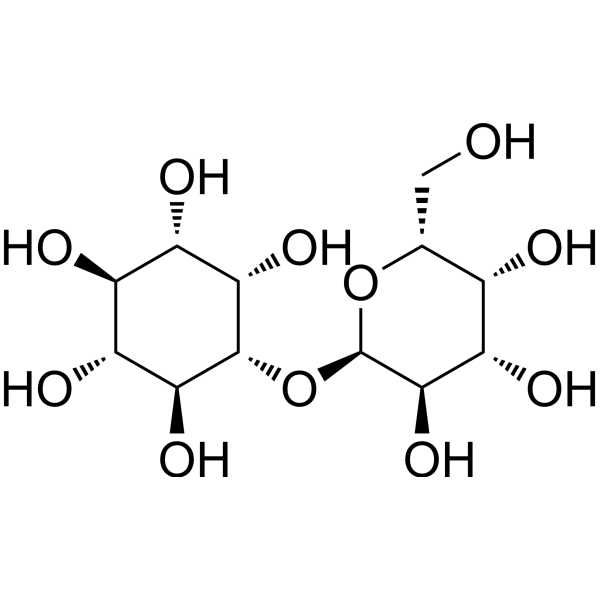
    Galactinol is a disaccharide carbohydrate serving as a galactosyl donor, which belongs to the raffinose family oligosaccharide pathway and acts as an important osmoprotectant. Galactinol not only induces disease resistance in plants against fungal and bacterial pathogens, but also significantly enhances plant tolerance to abiotic stresses such as drought, high salinity, low temperature and oxidative damage. In addition, Galactinol has the ability to scavenge hydroxyl radicals, can act as a signaling component for root colonization-induced systemic resistance, and is positively correlated with seed longevity in various crops, making it a potential biomarker for evaluating seed vigor. Therefore, Galactinol can be used in the research of various plant diseases including fungal leaf spot, bacterial angular leaf spot, gray mold and soft rot .
    Galactinol
  • HY-135258

    Galectin Fungal Others
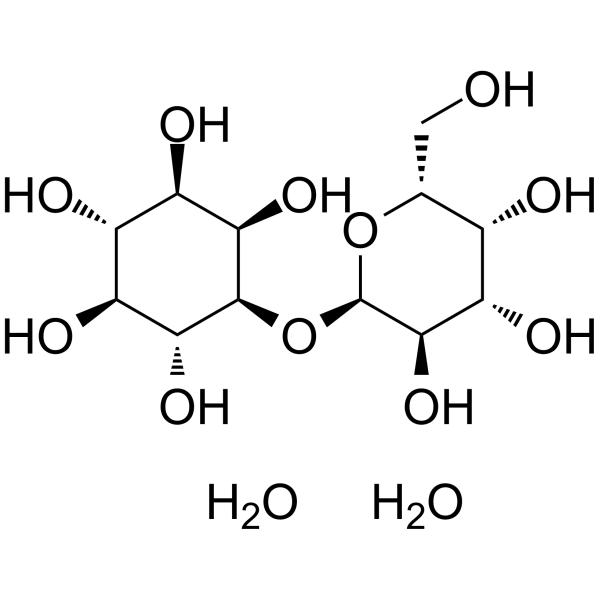
    Galactinol dihydrate is a disaccharide carbohydrate serving as a galactosyl donor, which belongs to the raffinose family oligosaccharide pathway and acts as an important osmoprotectant. Galactinol dihydrate not only induces disease resistance in plants against fungal and bacterial pathogens, but also significantly enhances plant tolerance to abiotic stresses such as drought, high salinity, low temperature and oxidative damage. In addition, Galactinol dihydrate has the ability to scavenge hydroxyl radicals, can act as a signaling component for root colonization-induced systemic resistance, and is positively correlated with seed longevity in various crops, making it a potential biomarker for evaluating seed vigor. Therefore, Galactinol dihydrate can be used in the research of various plant diseases including fungal leaf spot, bacterial angular leaf spot, gray mold and soft rot .
    Galactinol dihydrate
  • HY-125678

    Others Others
    Jasmine lactone, a volatile substance produced by plants under stress, has a strong odor and is known for its unique jasmine-like floral and fruity scent which is very popular in tea, especially in oolong and black tea. The biosynthesis mechanism of Jasmine lactone in tea is regulated by various stresses, including mechanical damage and low temperature stress. Continuous mechanical damage and low temperature and mechanical damage can enhance the accumulation of Jasmine lactone in tea .
    Jasmine lactone
  • HY-N1964R

    Gibberellin A3 (Standard)

    Reference Standards Drug Derivative Metabolic Disease
    Gibberellic acid (Standard) is the analytical standard of Gibberellic acid (GA3) (HY-N1964). This product is intended for research and analytical applications. Gibberellic acidis a natural plant growth regulator with oral bioactivity. Gibberellic acid governs multiple plant developmental events, including seed germination, cell elongation, floral organ formation, and rice spikelet fertility. Gibberellic acid optimizes root morphology and secondary metabolite production in Echinacea purpurea hairy roots, and serves as a bioactive seed priming agent to improve chilling stress tolerance in chickpea. Gibberellic acid mediates modulation of enzyme activity and secondary metabolism in plants and exerts tissue-specific regulatory effects on antioxidant systems and lipid peroxidation in rats. Gibberellic acid can be used in studies of plant growth, metabolism, and abiotic stress responses .
    Gibberellic acid (Standard)
  • HY-125678S

    Isotope-Labeled Compounds Others
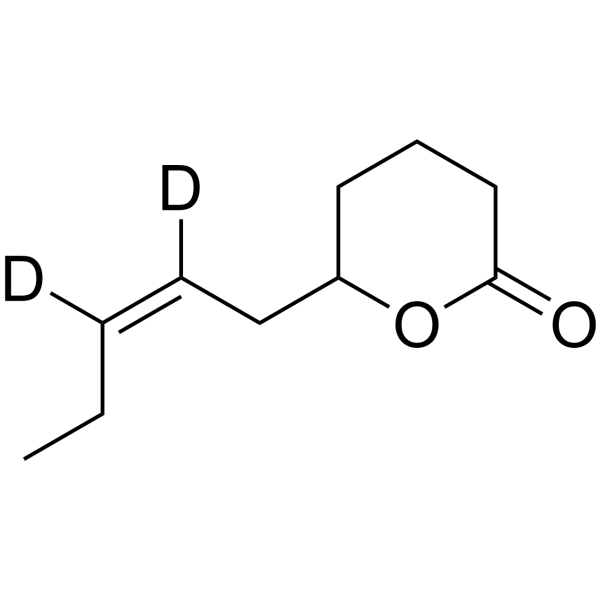
    Jasmine lactone-d2 is deuterated labeled Jasmine lactone (HY-125678). Jasmine lactone, a volatile substance produced by plants under stress, has a strong odor and is known for its unique jasmine-like floral and fruity scent which is very popular in tea, especially in oolong and black tea. The biosynthesis mechanism of Jasmine lactone in tea is regulated by various stresses, including mechanical damage and low temperature stress. Continuous mechanical damage and low temperature and mechanical damage can enhance the accumulation of Jasmine lactone in tea .
    Jasmine lactone-d2

Inquiry Online

Your information is safe with us. * Required Fields.

Salutation


Country or Region *

Applicant Name *


Organization Name *

Department *


Email Address *


Product Name *

Cat. No.


Requested quantity *

Phone Number *


Remarks

Inquiry Online

Inquiry Information

Product Name:
Cat. No.:
Quantity:
MCE Japan Authorized Agent:

