1. Search Result
Search Result
Results for "

microalgae

" in MedChemExpress (MCE) Product Catalog:

18

Inhibitors & Agonists

1

Biochemical Assay Reagents

5

Natural
Products

1

Isotope-Labeled Compounds

1

Oligonucleotides

Cat. No. Product Name Target Research Areas Chemical Structure
  • HY-B2042

    Environmental Pollutants Herbicide Others
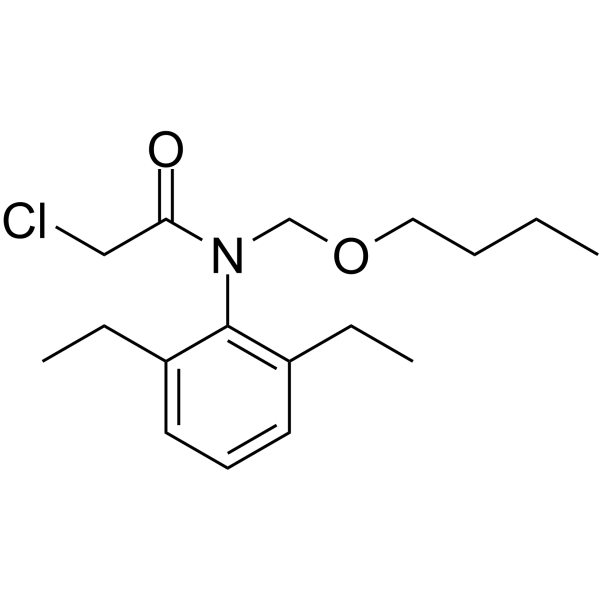
    Butachlor is defined as a commonly used acetanilide herbicide that exhibits varying levels of chronic toxicity to microalgae and acute toxicity to aquatic organisms. Butachlor butachlor adversely affected the normal reproductive success of zebrafish .
    Butachlor
  • HY-W062171

    Pyrrolopiperazine-2,5-dione

    Drug Derivative Neurological Disease
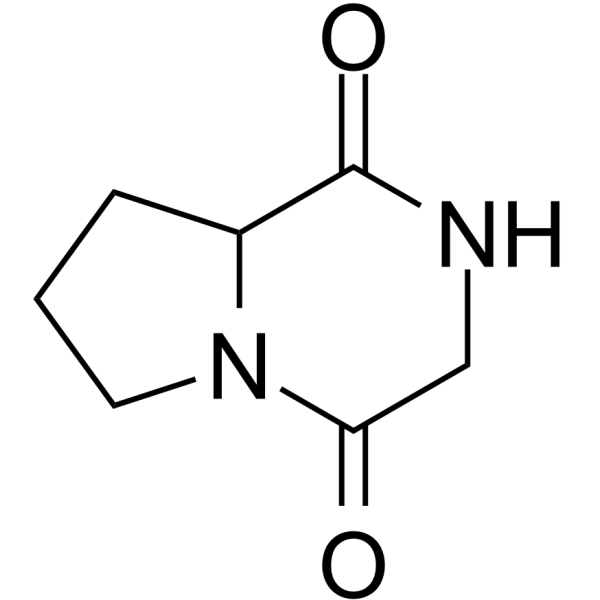
    Cyclo-(Pro-Gly) (Pyrrolopiperazine-2,5-dione), an alkaloid isolated from green algae Ulva prolifera, possesses antialgal activity against the common harmful red tide microalgae . Cyclo-(Pro-Gly) (Pyrrolopiperazine-2,5-dione) possesses antiamnesic effects and neuroprotective actions .
    Cyclo-(Pro-Gly)
  • HY-Y1055A
    Guanine hydrochloride
    3 Publications Verification

    Endogenous Metabolite DNA/RNA Synthesis Infection Neurological Disease Cancer
    Guanine hydrochloride is one of the fundamental components of nucleic acids (DNA and RNA). Guanine hydrochloride is a purine derivative, consisting of a fused pyrimidine-imidazole ring system with conjugated double bonds. Guanine hydrochloride has the potential to serve as a large-capacity N pool. Guanine hydrochloride has cytotoxic, antinociceptive and neuroprotective effects .
    Guanine hydrochloride
  • HY-116872
    MAC13772
    1 Publications Verification

    Bacterial Infection
    MAC13772 is a BioA inhibitor with an IC50 of 0.28 μM against E. coli and an IC50 of 0.269 μM against A. baumannii. MAC13772 inhibits bacterial growth by targeting the biotin biosynthesis pathway. MAC13772 can be used in studies related to bacterial infections .
    MAC13772
  • HY-115703

    N-Heptadecanoyl-D-erythro-sphingosine

    Biochemical Assay Reagents Metabolic Disease
    C17 Ceramide (d18:1/17:0) (N-Heptadecanoyl-D-erythro-sphingosine) is a phospholipid internal standard. C17 Ceramide (d18:1/17:0) is used in studies of medium-chain acyl-CoA dehydrogenase deficiency (MCADD) .
    C17 Ceramide (d18:1/17:0)
  • HY-N12540

    MGDG

    DNA/RNA Synthesis Apoptosis Others
    Monogalactosyldiacylglycerol (MGDG) is a galactolipid with anti-inflammatory and anticancer activities, which is found in photosynthetic organisms. Monogalactosyldiacylglycerol is a potent DNA polymerase inhibitor with pro-apoptotic activity. Monogalactosyldiacylglycerol inhibits the synthesis of LPS (HY-D1056)-induced inflammation-related proteins (Ex-FABP, Avidin, Serum Amyloid A). Monogalactosyldiacylglycerol exerts an anti-proliferative effect on chicken articular chondrocytes . Monogalactosyldiacylglycerol can be used in research related to osteoarthritis, cancer and inflammatory diseases .
    Monogalactosyldiacylglycerol
  • HY-N12762

    Liposome Others
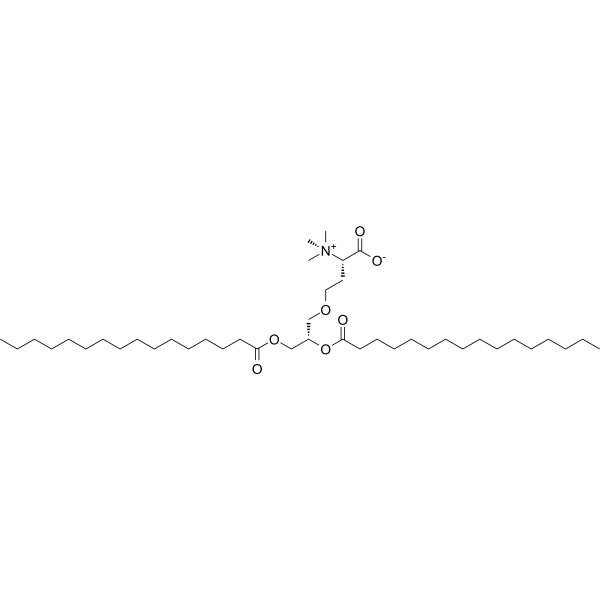
    DGTS, as described, is a structural isomer of DGTA and one of the most common betaine lipids found in microalgae, particularly abundant in Chlorophyceae . DGTS is a helper lipid that is structurally similar to DSPE or DOPE.
    DGTS
  • HY-W053516

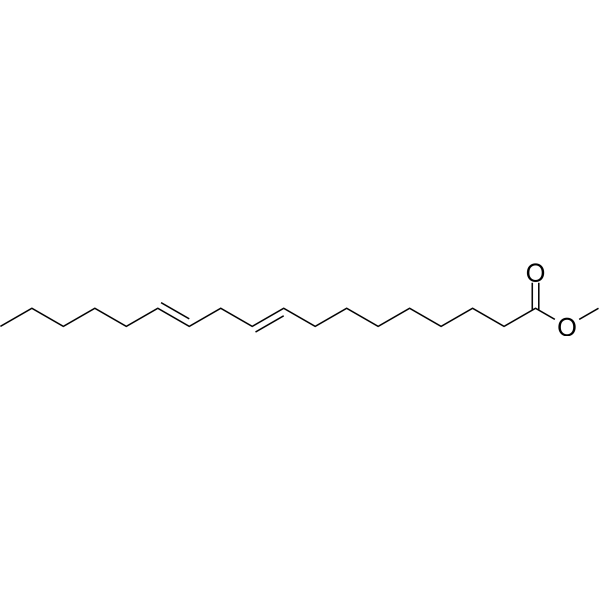
    trans,trans-9,12-Octadecadienoic acid methyl ester

    Biochemical Assay Reagents Others
    (9E,12E)-Methyl octadeca-9,12-dienoate is a methyl ester derivative of linoleic acid. (9E,12E)-Methyl octadeca-9,12-dienoate can be obtained from microalgae lipids and vegetable oils.
    (9E,12E)-Methyl octadeca-9,12-dienoate
  • HY-123307

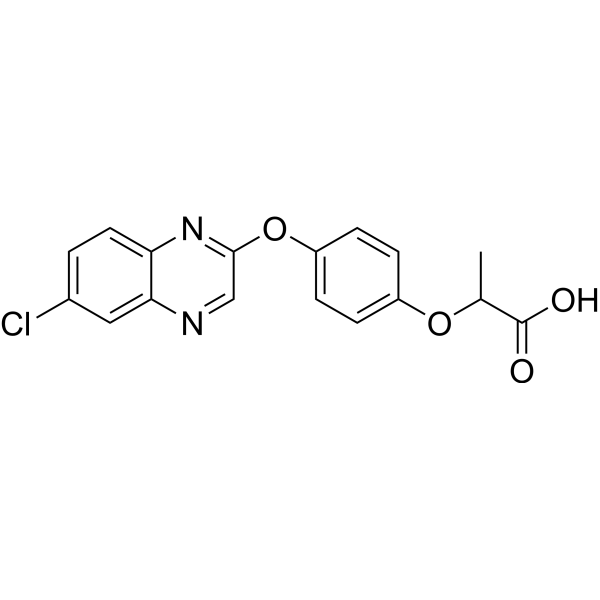
    Xylafop

    Environmental Pollutants Acetyl-CoA Carboxylase Others
    Quizalofop (Xylafop) is a herbicide that inhibits acetyl-CoA carboxylase (ACCase) to reduce the synthesis of fatty acids. Quizalofop can be used to screen EMS (HY-W015854) mutated microalgae for research on improving the performance of microalgae biofuel production .
    Quizalofop
  • HY-W062171R

    Pyrrolopiperazine-2,5-dione (Standard)

    Reference Standards Others Neurological Disease
    Cyclo-(Pro-Gly) (Pyrrolopiperazine-2,5-dione), an alkaloid isolated from green algae Ulva prolifera, possesses antialgal activity against the common harmful red tide microalgae . Cyclo-(Pro-Gly) (Pyrrolopiperazine-2,5-dione) possesses antiamnesic effects and neuroprotective actions .
    Cyclo-(Pro-Gly) (Standard)
  • HY-N2225

    Others Infection
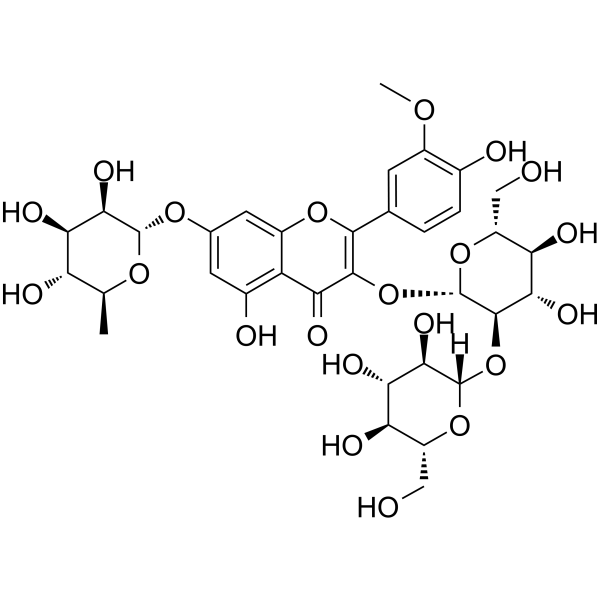
    Isorhamnetin-3-O-sophoroside-7-O-rhamnoside, the major flavonol glycoside, is isolated from sea buckthorn (Hippopha rhamnoides). Isorhamnetin-3-O-sophoroside-7-O-rhamnoside has the algicidal activity against the growth of the harmful microalgae .
    Isorhamnetin-3-O-sophoroside-7-O-rhamnoside
  • HY-165091

    1,2-Octanoin-3-decanoin; TG(8:0/8:0/10:0)

    Endogenous Metabolite Others
    1,2-Dioctanoyl-3-decanoyl-rac-glycerol (1,2-Octanoin-3-decanoin) is a triglyceride identified in microalgae biomass by ion mobility-mass spectrometry. It can be used to characterize microalgae biomass. Different analytical strategies can determine its distribution in different microalgae and its relationship with other compounds, which has application value in biofuel production.
    1,2-Dioctanoyl-3-decanoyl-rac-glycerol
  • HY-136513

    MC-4379

    Environmental Pollutants Reactive Oxygen Species (ROS) Protoporphyrinogen IX oxidase Herbicide Others
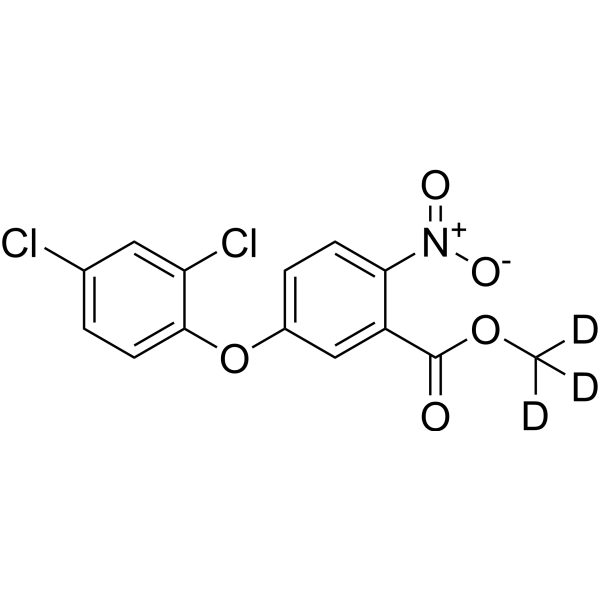
    Bifenox (MC-4379) is a nitrophenyl ether herbicide. Bifenox disrupts cellular membrane, inhibits photosynthesis and inhibits the protoporphyrinogen oxidase. Bifenox increases the ROS production in the microalgae Chlamydomonas reinhardtii .
    Bifenox
  • HY-B2042R

    Herbicide Reference Standards Others
    Butachlor (Standard) is the analytical standard of Butachlor. This product is intended for research and analytical applications. Butachlor is defined as a commonly used acetanilide herbicide that exhibits varying levels of chronic toxicity to microalgae and acute toxicity to aquatic organisms. Butachlor butachlor adversely affected the normal reproductive success of zebrafish.
    Butachlor (Standard)
  • HY-136513S

    MC-4379-d3

    Isotope-Labeled Compounds Herbicide Protoporphyrinogen IX oxidase Reactive Oxygen Species (ROS) Others
    Bifenox-d3 is the deuterium labeled Bifenox. Bifenox (MC-4379) is a nitrophenyl ether herbicide. Bifenox disrupts cellular membrane, inhibits photosynthesis and inhibits the protoporphyrinogen oxidase. Bifenox increases the ROS production in the microalgae Chlamydomonas reinhardtii .
    Bifenox-d3
  • HY-163957

    Bacterial Others
    Tambjamine LY2 is an algicidal compound with significant algaecidal effects. Bacterial membrane vesicles (BMVs) may be involved in bacteria-algae communication, so BMV encapsulation can be effectively delivered to the microalgae Heterosigma akashiwo and Thalassiosira pseudonana through membrane fusion .
    Tambjamine LY2
  • HY-126929

    TXN-B

    DNA Alkylator/Crosslinker Apoptosis Bacterial Parasite Fungal Infection Cancer
    Trioxacarcin B (TXN-B) is a potent cytotoxic agent and DNA-targeted inhibitor. Trioxacarcin B disrupts DNA function and induces apoptosis in cancer cells. Trioxacarcin B not only effectively inhibits the growth of various Gram-positive and Gram-negative bacteria as well as Plasmodium falciparum, but also blocks the colony formation of cancer stem cells, significantly reduces tumor volume and prolongs survival in preclinical in vivo models. The activity of Trioxacarcin B is highly dependent on its intact spiro-epoxide structure; it loses efficacy once this moiety undergoes hydrolysis, and Trioxacarcin B shows no activity against fungi, microalgae and small RNA viruses. Trioxacarcin B can be used for research on bacterial infections, malaria, and various cancers including colon cancer and melanoma .
    Trioxacarcin B
  • HY-W111403

    Environmental Pollutants Biochemical Assay Reagents Others
    Calcium oxide (CaO) acts as a heterogeneous base catalyst. Calcium oxide can be extracted not only from waste materials such as oyster shells, eggshells and crab shells, but also exhibits tolerance to low to moderate oil quality, free fatty acid and water content in raw materials. Calcium oxide can be used in biodiesel production, where it effectively catalyzes the transesterification of vegetable oils or animal fats to produce alkyl esters .
    Calcium oxide

Inquiry Online

Your information is safe with us. * Required Fields.

Salutation


Country or Region *

Applicant Name *


Organization Name *

Department *


Email Address *


Product Name *

Cat. No.


Requested quantity *

Phone Number *


Remarks

Inquiry Online

Inquiry Information

Product Name:
Cat. No.:
Quantity:
MCE Japan Authorized Agent:

