1. Search Result
Search Result
Results for "

murine COX-2

" in MedChemExpress (MCE) Product Catalog:

12

Inhibitors & Agonists

4

Natural
Products

Targets Recommended:
Cat. No. Product Name Target Research Areas Chemical Structure
  • HY-B1114
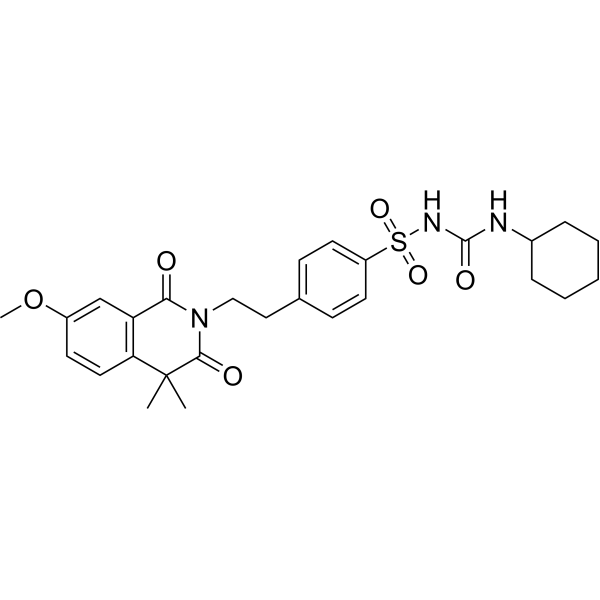
    Gliquidone
    2 Publications Verification

    AR-DF 26

    Potassium Channel ERK STAT NF-κB COX Interleukin Related Reactive Oxygen Species (ROS) Metabolic Disease
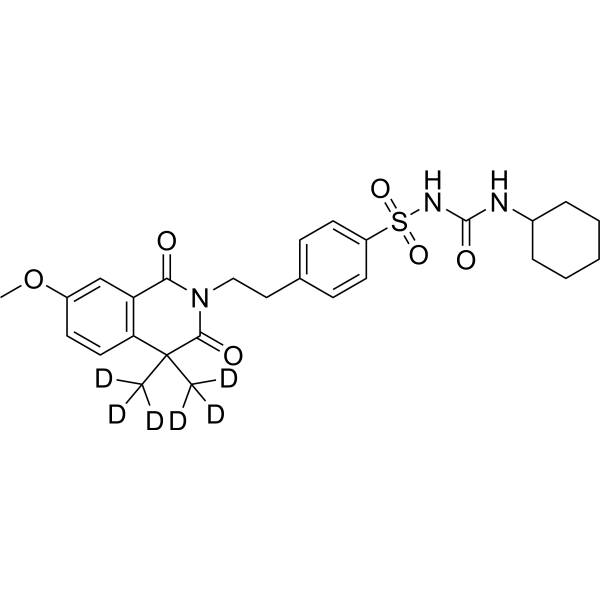
    Gliquidone can bind to the pancreatic β-cells and increases insulin release to regulate blood glucose levels. Gliquidone significantly decreases LPS (HY-D1056)-induced proinflammatory responses and inhibits ERK/STAT3/NF-κB phosphorylation in BV2 microglial cells. Gliquidone can suppress microgliosis, microglial hypertrophy mediated by LPS, and proinflammatory cytokine COX-2 and IL-6 levels in murine model. Gliquidone also exhibits good anticancer activity in lung carcinoma cells. Gliquidone has antioxidant property. Gliquidone can be studied in research for type 2 diabetes and cancers .
    Gliquidone
  • HY-N12586

    ERK Reactive Oxygen Species (ROS) COX PGE synthase STAT HCV HCV Protease Infection Neurological Disease Cancer
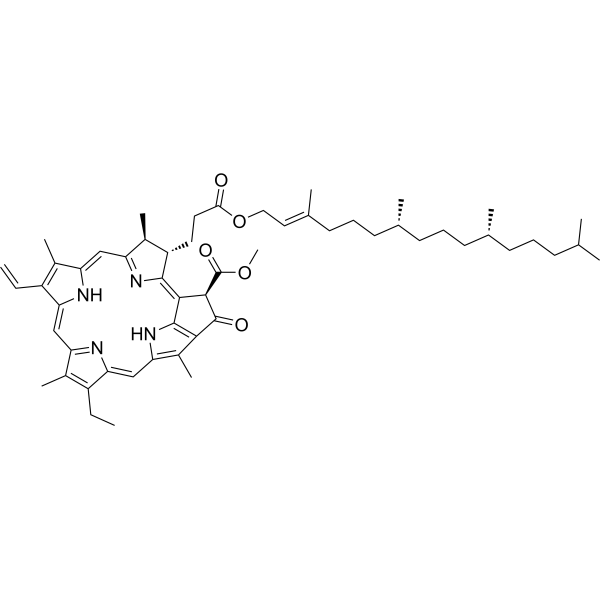
    Pheophytin a is a multi-target inhibitor, anticancer agent, antioxidant and antiviral agent. Pheophytin a directly binds to and inhibits HCV-NS3/4A protease (IC50=0.89 μM) to block viral replication. Pheophytin a also scavenges free radicals, reduces ferric ions, and exhibits cytotoxic activity against breast cancer cells. Pheophytin a effectively inhibits LPS-induced production of nitric oxide, prostaglandin E2, NOS2 and COX-2, as well as various pro-inflammatory cytokines, by downregulating the transcription levels of inflammatory mediators and blocking the ERK1/2 and STAT-1 pathways. In a low nerve growth factor environment, Pheophytin a also enhances ERK1/2 phosphorylation and synergistically promotes neurite outgrowth through MAPK pathway. Pheophytin a can be used to investigate the pathogenic mechanisms of diseases including chronic hepatitis C, sepsis, breast cancer and Alzheimer's disease .
    Pheophytin a
  • HY-N2106
    Dehydroevodiamine
    2 Publications Verification

    NF-κB COX PGE synthase NO Synthase Inflammation/Immunology
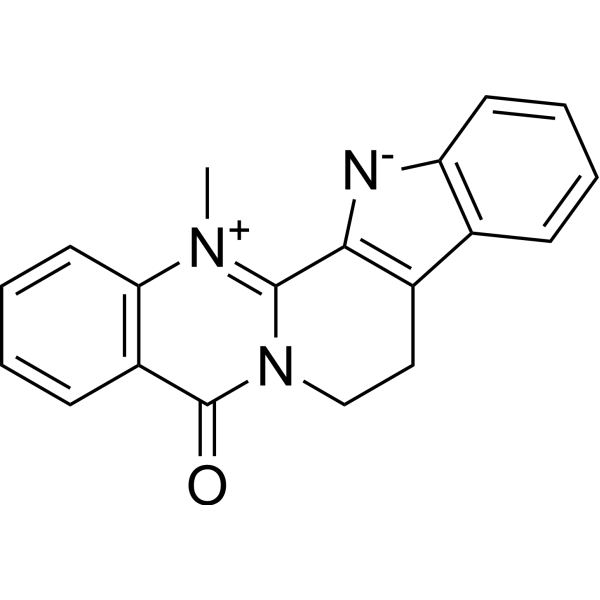
    Dehydroevodiamine is a major bioactive quinazoline alkaloid isolated from Evodiae Fructus, has an antiarrhythmic effect in guinea-pig ventricular myocytes . Dehydroevodiamine inhibits LPS-induced iNOS, COX-2, prostaglandin E2 (PGE2) and nuclear factor-kappa B (NF-κB) expression in murine macrophage cells .
    Dehydroevodiamine
  • HY-W010983
    SC-236
    2 Publications Verification

    COX PPAR Apoptosis Cardiovascular Disease Inflammation/Immunology Cancer
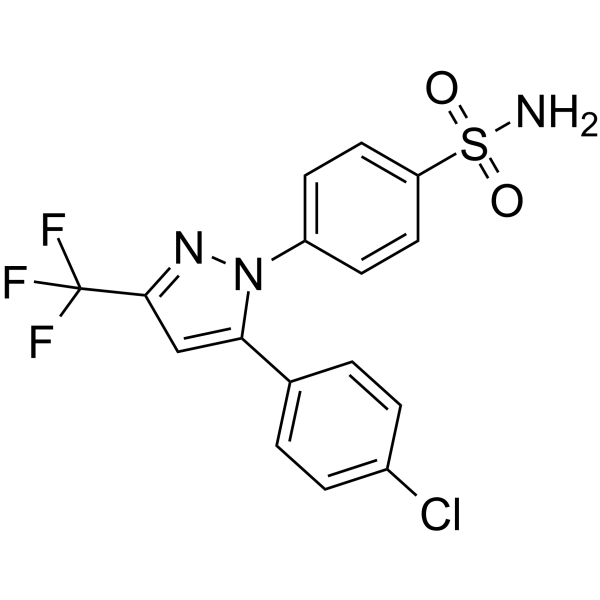
    SC-236 is an orally active COX-2 specific inhibitor (IC50 = 10 nM) and a PPARγ agonist. SC-236 suppresses activator protein-1 (AP-1) through c-Jun NH2-terminal kinase. SC-236 exerts anti-inflammatory effects by suppressing phosphorylation of ERK in a murine model .
    SC-236
  • HY-133159

    (-)-Resolvin E2

    Endogenous Metabolite Leukotriene Receptor Chemerin Receptor COX Lipoxygenase Neurological Disease Inflammation/Immunology
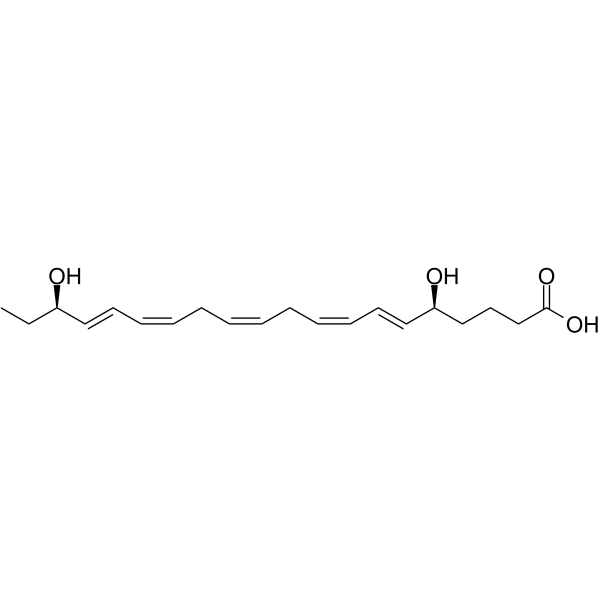
    Resolvin E2 ((-)-Resolvin E2) is an endogenous lipid mediator produced from eicosapentaenoic acid (EPA) under the catalysis of 5-lipoxygenase (5-LOX), and its production increases in hypoxic environments. Resolvin E2 antagonizes BLT1, partially activates ChemR23, and promotes ubiquitin-proteasome-mediated degradation of COX-2. Resolvin E2 reduces the production of prostaglandin E2, blocks polymorphonuclear leukocyte infiltration, and promotes the resolution of airway inflammation. Resolvin E2 ameliorates lipopolysaccharide (LPS) (HY-D1056)-induced depressive-like behaviors . Resolvin E2 can be used in research related to depression, murine peritonitis, neonatal asthma, and other conditions .
    Resolvin E2
  • HY-161612

    Tyrosinase SOD COX NO Synthase Keap1-Nrf2 Inflammation/Immunology
    Mycosporine 2 glycine is an anti-inflammatory agent and TYRP1 inhibitor. Mycosporine 2 glycine inhibits the expression of inflammatory genes and reduces nitric oxide production. Mycosporine 2 glycine binds tightly to the active pocket of TYRP1 and inhibits the activity of melanogenesis-related enzymes. Mycosporine 2 glycine can be used in the research of hyperpigmentation and inflammation-related diseases .
    Mycosporine 2 glycine
  • HY-N8712

    p38 MAPK JNK ERK TNF Receptor Interleukin Related PI3K Akt Inflammation/Immunology
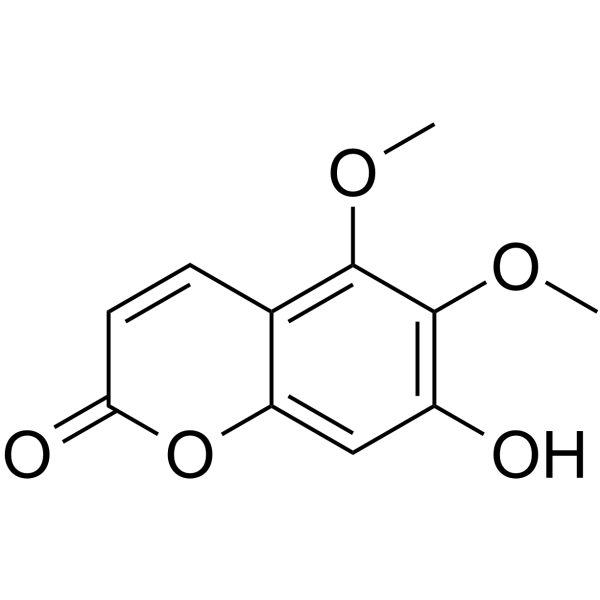
    Umckalin is Coumarin (HY-N0709) derivative that exhibits anti-inflammatory properties. Umckalin reduces phosphorylation of p38 MAPK, JNK, and ERK, lowers TNF-α, IL-6, IL-1β, NO, and PGE2 production. Umckalin can be used for the research of chronic inflammatory diseases .
    Umckalin
  • HY-170585

    COX NF-κB Inflammation/Immunology
    COX-2-IN-51 (E25) is a potent COX-2 inhibitor, with an IC50 of 70.7 nM. COX-2-IN-51 significantly inhibits LPS-induced release of NO and PGE2, expression of COX-2 and iNOS, and activation of NF-κB pathway. COX-2-IN-51 exhibits anti-inflammatory and analgesic effects in diverse murine models through inhibiting NF-κB pathway. COX-2-IN-51 has lower gastrointestinal side effects than Indomethacin (HY-14397) .
    COX-2-IN-51
  • HY-N2106R

    Reference Standards NF-κB COX PGE synthase NO Synthase Inflammation/Immunology
    Dehydroevodiamine is a major bioactive quinazoline alkaloid isolated from Evodiae Fructus, has an antiarrhythmic effect in guinea-pig ventricular myocytes . Dehydroevodiamine inhibits LPS-induced iNOS, COX-2, prostaglandin E2 (PGE2) and nuclear factor-kappa B (NF-κB) expression in murine macrophage cells .
    Dehydroevodiamine (Standard)
  • HY-W010983R

    Reference Standards COX PPAR Apoptosis Cardiovascular Disease Inflammation/Immunology Cancer
    SC-236 is an orally active COX-2 specific inhibitor (IC50 = 10 nM) and a PPARγ agonist. SC-236 suppresses activator protein-1 (AP-1) through c-Jun NH2-terminal kinase. SC-236 exerts anti-inflammatory effects by suppressing phosphorylation of ERK in a murine model .
    SC-236 (Standard)
  • HY-B1114R

    AR-DF 26 (Standard)

    Potassium Channel Reference Standards ERK STAT NF-κB COX Interleukin Related Metabolic Disease
    Gliquidone (Standard) is the analytical standard of Gliquidone. This product is intended for research and analytical applications. Gliquidone can bind to the pancreatic β-cells and increases insulin release to regulate blood glucose levels. Gliquidone significantly decreases LPS (HY-D1056)-induced proinflammatory responses and inhibits ERK/STAT3/NF-κB phosphorylation in BV2 microglial cells. Gliquidone can suppress microgliosis, microglial hypertrophy mediated by LPS, and proinflammatory cytokine COX-2 and IL-6 levels in murine model. Gliquidone also exhibits good anticancer activity in lung carcinoma cells. Gliquidone has antioxidant property. Gliquidone can be studied in research for type 2 diabetes and cancers .
    Gliquidone (Standard)
  • HY-126453

    COX Cancer
    VU0487836 is a selective cyclooxygenase-1 (COX-1) inhibitor with an IC50 of 0.36 μM against ovine-derived COX-1. VU0487836 serves as a prototype for the development of radiological imaging agents targeting COX-1 for ovarian cancer. VU0487836 is applicable to relevant research on ovarian cancer .
    VU0487836

Inquiry Online

Your information is safe with us. * Required Fields.

Salutation


Country or Region *

Applicant Name *


Organization Name *

Department *


Email Address *


Product Name *

Cat. No.


Requested quantity *

Phone Number *


Remarks

Inquiry Online

Inquiry Information

Product Name:
Cat. No.:
Quantity:
MCE Japan Authorized Agent:

