14 Results for "

mutant huntingtin protein

" in MedChemExpress (MCE) Product Catalog:
Products (14)

14 Results for "mutant huntingtin protein" in MCE Product Catalog:

2
2 Cited Publications
Cat. No.: HY-B0248
CAS No.: 638-94-8
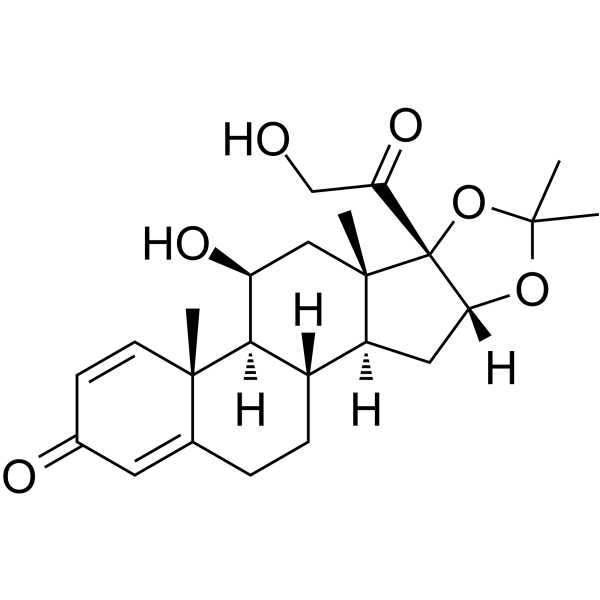
Desonide is a non-fluorinated corticosteroid anti-inflammatory agent that acts on the glucocorticoid receptor. Desonide can also specifically bind to the mutant huntingtin protein (mHTT), reducing the level and toxicity of mHTT. Desonide can be used in the research of Huntington's disease and inflammatory diseases such as atopic dermatitis .
loading...
    loading...
1
1 Cited Publications
Cat. No.: HY-130259
CAS No.: 7758-73-8
Purity:  98.12%
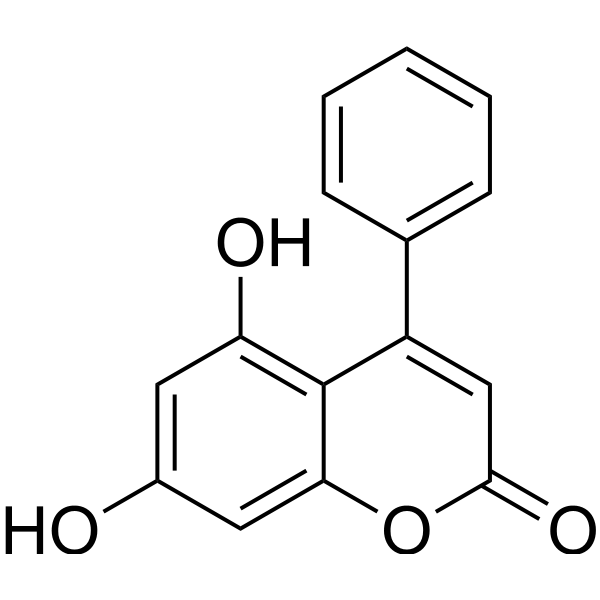
LC3-mHTT-IN-AN2 (Compound AN2) is a mHTT-LC3 linker compound, which interacts with both mutant huntingtin protein (mHTT) and LC3B but not with wtHTT or irrelevant control proteins. LC3-mHTT-IN-AN2 reduces the levels of mHTT in an allele-selective manner in cultured Huntington disease (HD) mouse neurons .
loading...
    loading...
Cat. No.: HY-145468
CAS No.: 1239987-91-7
Purity:  99.80%
Target:  

GPR52

Research Areas:  

Neurological Disease

GPR52 antagonist-1 (Compound 43) is a GPR52 antagonist with an IC50 of 0.63 μM. GPR52 antagonist-1 reduces mHTT (mutant huntingtin protein) levels by targeting GPR52 and promotes survival of mouse primary striatal neurons .
loading...
    loading...
Cat. No.: HY-130258
CAS No.: 486443-73-6
Purity:  98.99%
Target:  

Atg8/LC3 Autophagy

Research Areas:  

Neurological Disease

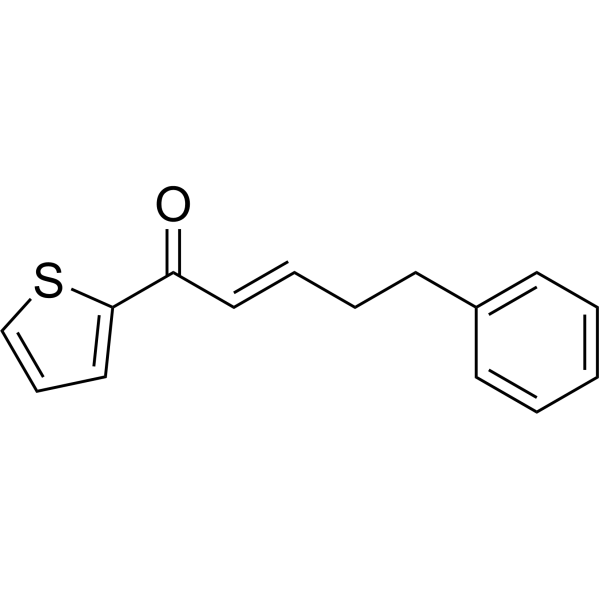
LC3-mHTT-IN-AN1 (Compound AN1) is a mHTT-LC3 linker compound, which interacts with both mutant huntingtin protein (mHTT) and LC3B but not with wtHTT or irrelevant control proteins. LC3-mHTT-IN-AN1 reduces the levels of mHTT in an allele-selective manner in cultured Huntington disease (HD) mouse neurons .
loading...
    loading...
Cat. No.: HY-161746
CAS No.: 2941386-44-1
Target:  

AUTOTACs Autophagy

Research Areas:  

Neurological Disease

Anle138b-F105 is an autophagy-targeting chimera (AUTOTAC) that targets p62/Sequestosome-1/SQSTM1. Anle138b-F105 binds to the ZZ domain of p62, induces conformational activation, self-oligomerization, interaction with LC3, and formation of autophagosomes. Anle138b-F105 induces autophagic flux of ubiquitin-conjugated aggregated proteins, leading to their lysosomal degradation. Anle138b-F105 is applicable for the research of neurodegenerative proteinopathies .
loading...
    loading...
Cat. No.: HY-143792
CAS No.: 2254502-89-9
Research Areas:  

Neurological Disease

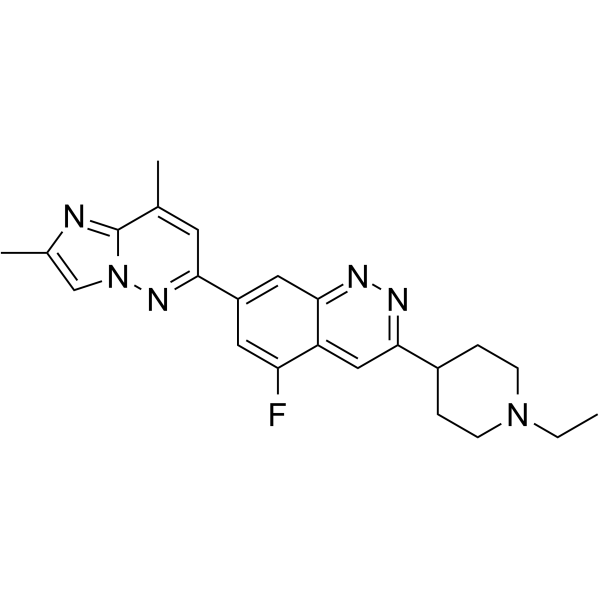
HTT-D3 is an orally active, blood-brain barrier penetrant splicing modulator of huntingtin (HTT). HTT-D3 promotes the inclusion of a pseudo-exon containing a premature termination codon into HTT pre-mRNA, triggers nonsense-mediated mRNA degradation and reduces HTT protein levels. HTT-D3 induces dose-dependent, comparable reductions in mutant HTT protein in both the brain and peripheral tissues of transgenic mouse models. HTT-D3 can be used for the research of Huntington's disease .
loading...
    loading...
Cat. No.: HY-161745
CAS No.: 2941386-60-1
Target:  

AUTOTACs p62 Autophagy

Research Areas:  

Neurological Disease

PBA-1105b is an autophagy-targeting chimera (AUTOTAC) that induces p62 self-oligomerization. PBA-1105b binds to the ZZ domain of p62, inducing conformational activation and self-oligomerization for autophagy targeting. PBA-1105b is used in research on neurodegenerative diseases .
loading...
    loading...
Cat. No.: HY-10542A
CAS No.: 1233748-60-1
Target:  

Atg8/LC3 Raf

Research Areas:  

Neurological Disease

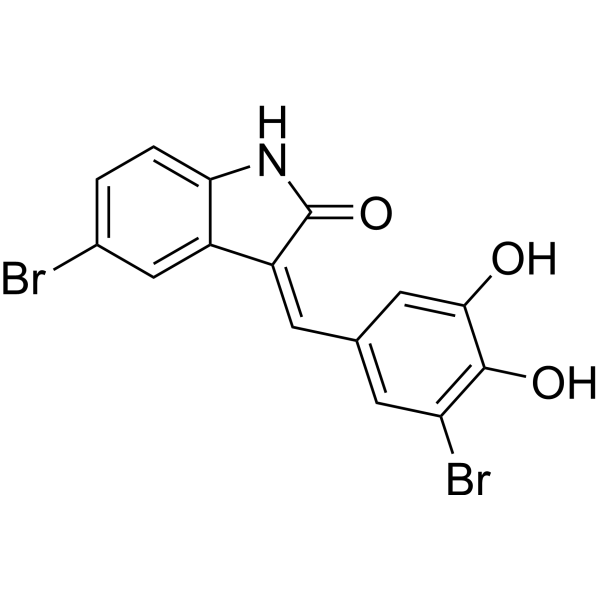
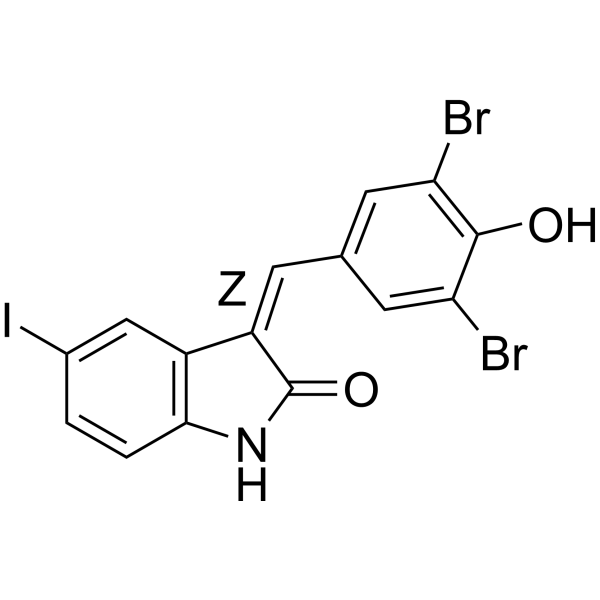
(Z)-GW 5074 is a compound which interacts with both mHTT (mutant huntingtin protein) and LC3, but not but not with the wild-type HTT protein. (Z)-GW 5074 inhibits c-Raf, shows no effect on autophagy, and is effective for neurodegenerative disorder .
loading...
    loading...
Cat. No.: HY-B0248R
CAS No.: 638-94-8
Desonide (Standard) is the analytical standard of Desonide. This product is intended for research and analytical applications. Desonide is a non-fluorinated corticosteroid anti-inflammatory agent that acts on the glucocorticoid receptor. Desonide can also specifically bind to the mutant huntingtin protein (mHTT), reducing the level and toxicity of mHTT. Desonide can be used in the research of Huntington's disease and inflammatory diseases such as atopic dermatitis.
loading...
    loading...
Cat. No.: HY-W653989
Desonide- 13C3 is the 13C labeled isotope of Desonide (HY-B0248). Desonide is a non-fluorinated corticosteroid anti-inflammatory agent that acts on the glucocorticoid receptor. Desonide can also specifically bind to the mutant huntingtin protein (mHTT), reducing the level and toxicity of mHTT. Desonide can be used in the research of Huntington's disease and inflammatory diseases such as atopic dermatitis .
loading...
    loading...
Cat. No.: HY-165539
CAS No.: 221238-83-1
SMER10 is a small-molecule enhancer that can induce autophagy. SMER10 can increase the number of EGFP-LC3 positive autophagosoms in COS-7 and HeLa cells, promoting the conversion of LC3-I to autophagosome-associated LC3-II. SMER10 can efficiently promote the degradation of autophagy substrates, including the mutant huntingtin protein (EGFP-HDQ74) associated with Huntington's disease and the A53T α-synuclein protein associated with Parkinson's disease. SMER10 exerts neuroprotective effect .
loading...
    loading...
Cat. No.: HY-136766
CAS No.: 26278-83-1
Target:  

Huntingtin

Research Areas:  

Neurological Disease

PGL-135 is a blood-brain barrier-permeable Huntingtin aggregation inhibitor. PGL-135 is applicable to research related to Huntington's disease .
loading...
    loading...
Cat. No.: HY-181879
CAS No.: 2919475-43-5
Target:  

PROTACs Huntingtin

Research Areas:  

Neurological Disease

PROTAC mHTT Degrader-1 is a blood-brain barrier-penetrant mutant huntingtin (mHTT) PROTAC degrader. PROTAC mHTT Degrader-1 specifically recognizes pathogenic mHTT aggregates and recruits Cereblon (CRBN), thereby inducing ubiquitination and proteasomal degradation of mHTT. PROTAC mHTT Degrader-1 alleviates mHTT-induced cytotoxicity and neuroinflammation. In the R6/2 Huntington's disease mouse model, PROTAC mHTT Degrader-1 reduces cerebral protein aggregation levels and improves body weight, motor coordination and survival rate of animals. PROTAC mHTT Degrader-1 can be used for research on PROTAC therapies for Huntington's disease and other neurodegenerative diseases .
loading...
    loading...
Cat. No.: HY-184480
CAS No.: 2133321-59-0
Target:  

SNIPERs Huntingtin

Research Areas:  

Neurological Disease

PROTAC HTT Degrader-1 is a cIAP1-recruiting Htt PROTAC degrader. PROTAC HTT Degrader-1 recruits cIAP1 to mHtt or wtHtt and induces their degradation via the ubiquitin-proteasome system. PROTAC HTT Degrader-1 can be used in research related to Huntington's disease .
loading...
    loading...
  • 1

