



Desonide
Based on 2 publication(s) in Google Scholar
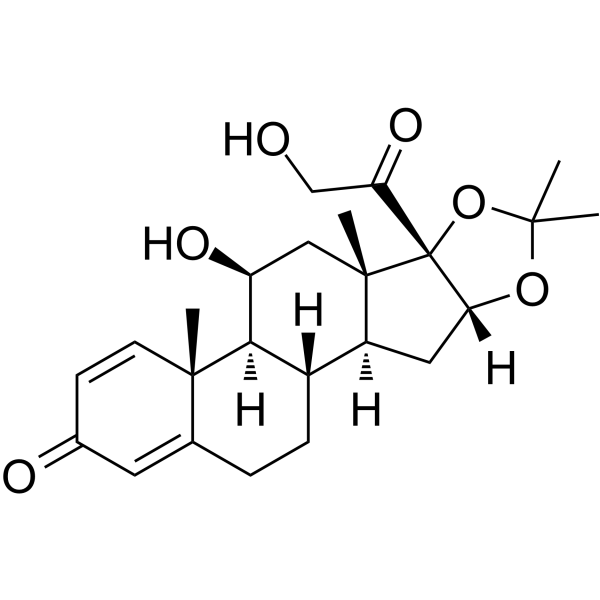
Desonide is a non-fluorinated corticosteroid anti-inflammatory agent that acts on the glucocorticoid receptor. Desonide can also specifically bind to the mutant huntingtin protein (mHTT), reducing the level and toxicity of mHTT. Desonide can be used in the research of Huntington's disease and inflammatory diseases such as atopic dermatitis.
For research use only. We do not sell to patients.
- Purity : 99.23%
- CAS No.: 638-94-8
- Formula: C24H32O6
- Molecular Weight:416.51
-
Storage:Powder -20°C, 3 years , 4°C, 2 years ; In solvent -80°C, 2 years , -20°C, 1 year

To place orders, for customer services and technical support, please contact: MedChemExpress USA
Tel: 609-228-6898 E-mail: [email protected] [email protected]


-
 Biological Activity
-
Chemical Information
-
Solvent & Solubility
- Protocols
- Purity & Documentation
- References
-
 Help & FAQs


-
HY-14648
DexamethasoneGR Agonist -
HY-13580
BudesonideGlucocorticoid Receptor Agonist -
HY-B0154
Fluticasone propionateGlucocorticoid Receptor Agonist -
HY-B0415
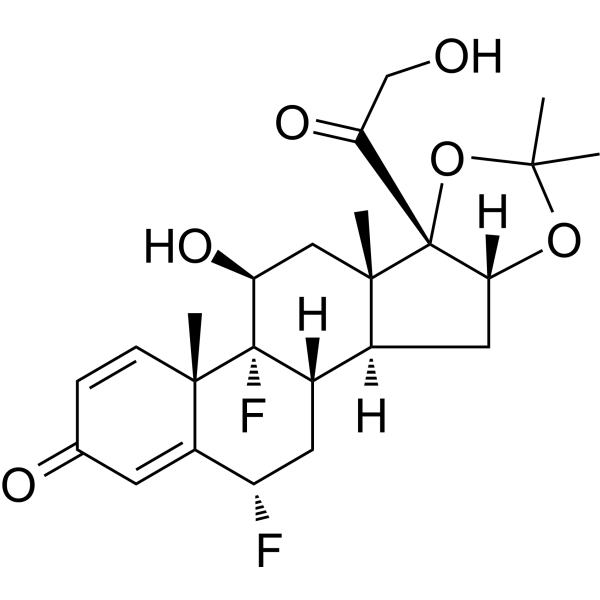
Fluocinolone (Acetonide)Glucocorticoid Receptor Agonist -
HY-13570
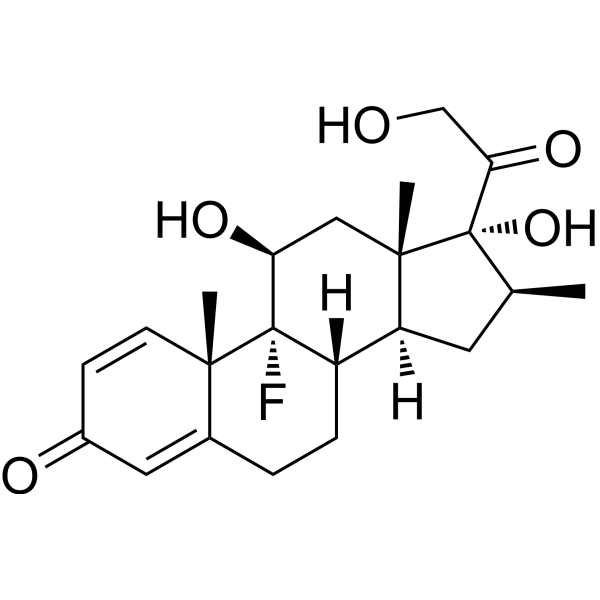
BetamethasoneGlucocorticoid Receptor Agonist -
HY-B0636
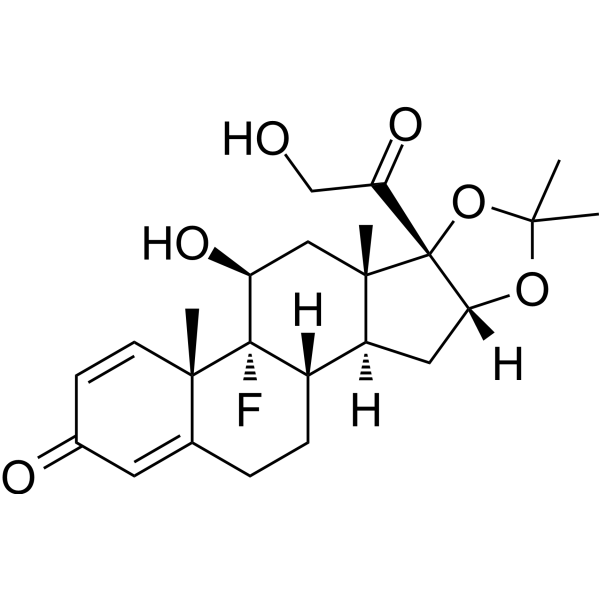
Triamcinolone acetonideAnti-Inflammatory Agent -
HY-B0625
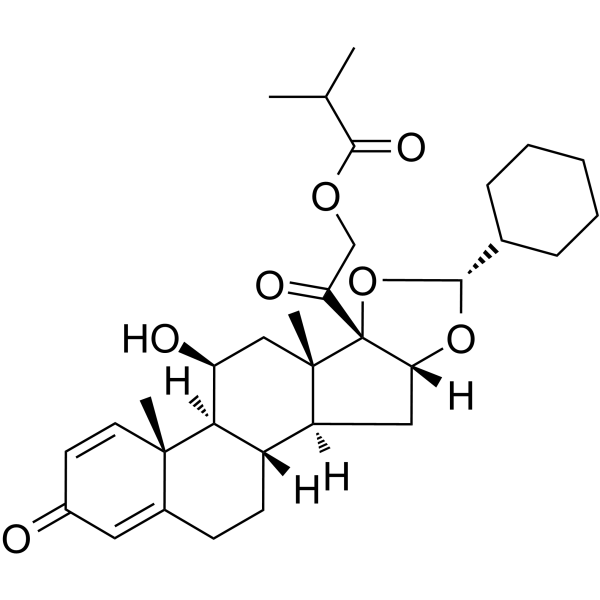
CiclesonideGlucocorticoid -
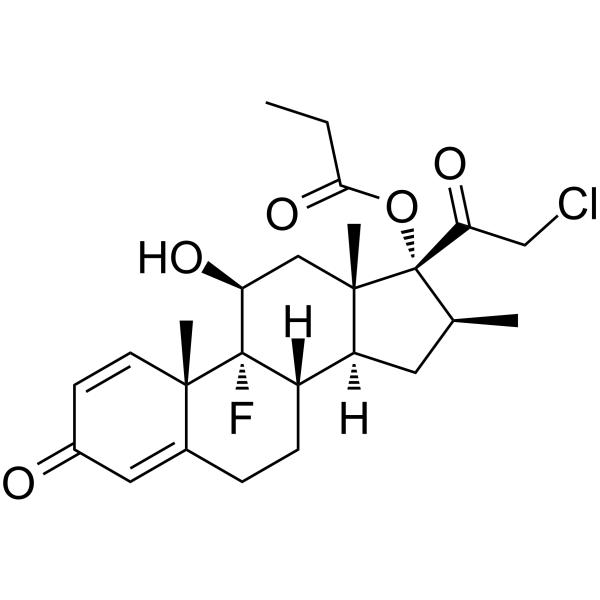
HY-13600
Clobetasol propionateCYP3A5 Inhibitor -
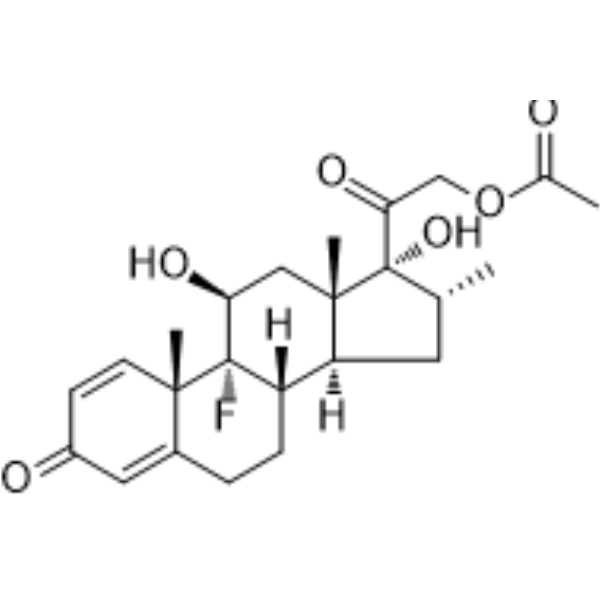
HY-14648A
Dexamethasone acetateCorticosteroid Ester -
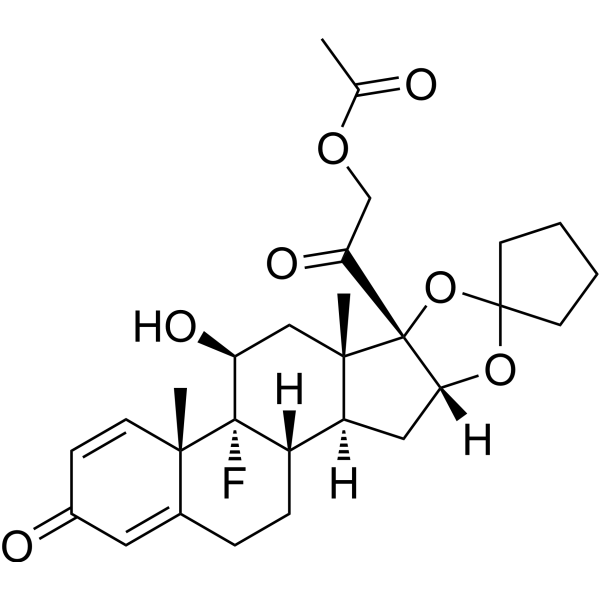
HY-B1197
AmcinonideGlucocorticoid Receptor Agonist -
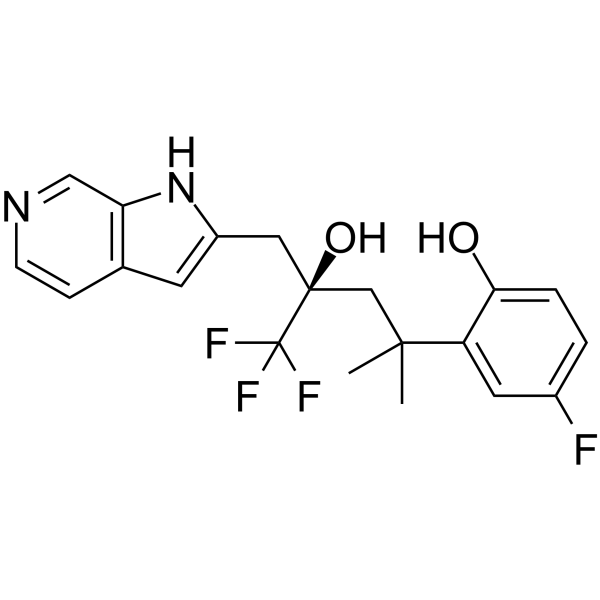
HY-14234
Glucocorticoid receptor agonistGlucocorticoid Receptor Agonist -
HY-B1616
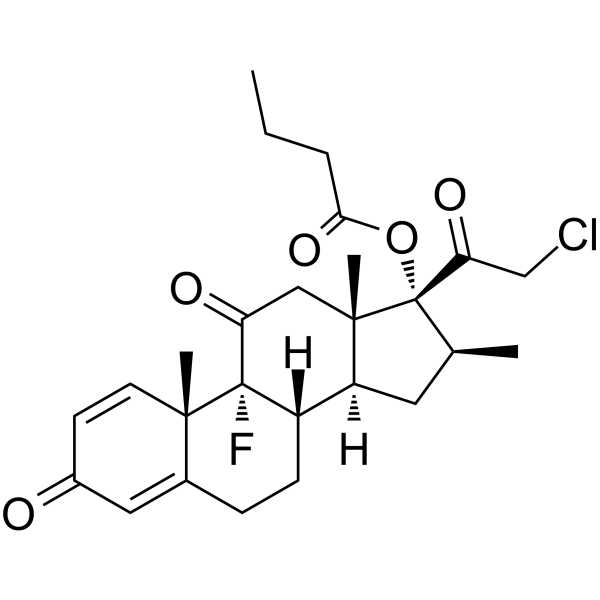
Clobetasone butyrateGlucocorticoid
Publications Citing Use of MedChemExpress (MCE) Desonide
More

Biological Activity
Description
In Vitro
Desonide (0-48 h) can significantly inhibit mHTT-induced cytotoxicity, reduce apoptotic signals, and improve cell survival in striatal cells of HD mice, neurons derived from induced pluripotent stem cells of HD patients, and neurons of Drosophila expressing mHTT[1].
MedChemExpress (MCE) has not independently confirmed the accuracy of these methods. They are for reference only.
In Vivo
Desonide (30-150 mg/kg; subcutaneous injection; single dose) has an LD50 of 93 mg/kg in male Charles River COBS-CD rats[2].
MedChemExpress (MCE) has not independently confirmed the accuracy of these methods. They are for reference only.
-
Animal Model:HdhQ7/Q140 mice aged 10-15 months old[1]
-
Dosage:5 mg/kg
-
Administration:Intraperitoneal injection (i.p.); 4 weeks
-
Result:Rescued all the behavioral deficits tested in the HD mice at 10, 12, and 15 months.
Lowered mHTT aggregates and partially restored the levels of HD molecular biomarkers such as DARPP-32 and neurofilament light chain (NFL).
Clinical Trial
| NCT Number | Sponsor | Condition | Start Date |
Phase

|
|---|---|---|---|---|
| NCT01329991 | Plexxikon| | 2011-05 | PHASE1 |


Chemical Information
-
CAS No. 638-94-8
-
Appearance Solid
-
Molecular Weight 416.51
-
Formula C24H32O6
-
Color White to off-white
-
SMILES
C[C@@]12[C@@]3(C(CO)=O)[C@@](OC(C)(O3)C)([H])C[C@@]1([H])[C@]4([H])CCC5=CC(C=C[C@]5(C)[C@@]4([H])[C@@H](O)C2)=O
-
Shipping
Room temperature in continental US; may vary elsewhere.
-
Storage
Powder -20°C 3 years 4°C 2 years In solvent -80°C 2 years -20°C 1 year


Publications (2)
-
Journal Impact Factor
-
Most Recent
-
Drug Test Anal
High-throughput liquid chromatography tandem mass spectrometry assay as initial testing procedure for analysis of total urinary fraction. [Abstract]2021 Feb;13(2):283-298. PMID: 32852861 -


Solvent & Solubility
In Vitro:
DMSO : ≥ 100 mg/mL (240.09 mM; Hygroscopic DMSO has a significant impact on the solubility of product, please use newly opened DMSO)
* "≥" means soluble, but saturation unknown.
Please refer to the solubility information to select the appropriate solvent. Once prepared, please aliquot and store the solution to prevent product inactivation from repeated freeze-thaw cycles.
Storage method and period of stock solution: -80°C, 2 years; -20°C, 1 year. When stored at -80°C, please use it within 2 years. When stored at -20°C, please use it within 1 year.
Please refer to the solubility information to select the appropriate solvent. Once prepared, please aliquot and store the solution to prevent product inactivation from repeated freeze-thaw cycles.
Storage method and period of stock solution: -80°C, 2 years; -20°C, 1 year. When stored at -80°C, please use it within 2 years. When stored at -20°C, please use it within 1 year.
Concentration (start) × Volume (start) = Concentration (final) × Volume (final)
In Vivo:
Select the appropriate dissolution method based on your experimental animal and administration route.
- For the following dissolution methods, please ensure to first prepare a clear stock solution using an In Vitro approach and then sequentially add co-solvents:
- To ensure reliable experimental results, the clarified stock solution can be appropriately stored based on storage conditions. As for the working solution for In Vivo experiments, it is recommended to prepare freshly and use it on the same day.
- The percentages shown for the solvents indicate their volumetric ratio in the final prepared solution. If precipitation or phase separation occurs during preparation, heat and/or sonication can be used to aid dissolution.
Add each solvent one by one: 10% DMSO 40% PEG300 5% Tween-80 45% Saline
Solubility: ≥ 3.25 mg/mL (7.80 mM); Clear solution
This protocol yields a clear solution of ≥ 3.25 mg/mL (saturation unknown).
Taking 1 mL working solution as an example, add 100 μL DMSO stock solution (32.5 mg/mL) to 400 μL PEG300, and mix evenly; then add 50 μL Tween-80 and mix evenly; then add 450 μL Saline to adjust the volume to 1 mL.
Preparation of Saline: Dissolve 0.9 g sodium chloride in ddH₂O and dilute to 100 mL to obtain a clear Saline solution.
Add each solvent one by one: 10% DMSO 90% (20% SBE-β-CD in Saline)
Solubility: ≥ 3.25 mg/mL (7.80 mM); Clear solution
This protocol yields a clear solution of ≥ 3.25 mg/mL (saturation unknown).
Taking 1 mL working solution as an example, add 100 μL DMSO stock solution (32.5 mg/mL) to 900 μL 20% SBE-β-CD in Saline, and mix evenly.
Preparation of 20% SBE-β-CD in Saline (4°C, storage for one week): 2 g SBE-β-CD powder is dissolved in 10 mL Saline, completely dissolve until clear.
In Vivo Dissolution Calculator
Please enter the basic information of animal experiments:
-
-
-
-
Recommended: Prepare an additional quantity of animals to account for potential losses during experiments.
Please enter your animal formula composition:
-
%DMSO +
Recommended: Keep the proportion of DMSO in working solution below 2% if your animal is weak.
-
%+
-
+%Tween-80 + +
-
%Saline +
The co-solvents required include: DMSO, . All of co-solvents are available by MedChemExpress (MCE). , Tween 80. All of co-solvents are available by MedChemExpress (MCE).
Working solution concentration: 0.22 mg/mL
Method for preparing stock solution: mg drug dissolved in μL DMSO. Stock solution concentration: mg/mL.
1. Take μL DMSO stock solution;
2. Add μL .
μL , mix evenly;
3. Then add μL Tween 80, mix evenly;
4. Then add μL
Please ensure that the stock solution in the first step is dissolved to a clear state, and add co-solvents in sequence. You can use ultrasonic heating (ultrasonic cleaner, recommended frequency 20-40 kHz), vortexing, etc. to assist dissolution.


Purity & Documentation
-
Data Sheet (281 KB)
-
SDS (393 KB)
- English - EN (393 KB)
- Français - FR (393 KB)
- Deutsch - DE (393 KB)
- Norwegian - NO (393 KB)
- Español - ES (393 KB)
- Swedish - SV (393 KB)
- Italian - IT (393 KB)
- Korean - KR (393 KB)
- Portuguese - PT (393 KB)
-
Handling Instructions (2659 KB)
References
[1]. Song H, et al. Suppression of toxicity of the mutant huntingtin protein by its interacting compound, desonide. Proc Natl Acad Sci U S A. 2022 Mar 8;119(10):e2114303119. [Content Brief]
[2]. Phillips BM, et al. The physical, animal and human pharmacologic, and toxicologic properties of desonide, a new, topically active, antiinflammatory steroid. Toxicol Appl Pharmacol. 1971 Dec;20(4):522-37. [Content Brief]
[3]. Kahanek, N., C. Gelbard, and A. Hebert, Desonide: a review of formulations, efficacy and safety. Expert Opin Investig Drugs, 2008. 17(7): p. 1097-104. [Content Brief]
[4]. Castanedo-Cazares, J.P., et al., Topical niacinamide 4% and desonide 0.05% for treatment of axillary hyperpigmentation: a randomized, double-blind, placebo-controlled study. Clin Cosmet Investig Dermatol, 2013. 6: p. 29-36. [Content Brief]


Complete Stock Solution Preparation Table
Please refer to the solubility information to select the appropriate solvent. Once prepared, please aliquot and store the solution to prevent product inactivation from repeated freeze-thaw cycles.
Storage method and period of stock solution: -80°C, 2 years; -20°C, 1 year. When stored at -80°C, please use it within 2 years. When stored at -20°C, please use it within 1 year.
| Optional Solvent | Concentration Solvent Mass | 1 mg | 5 mg | 10 mg | 25 mg |
|---|---|---|---|---|---|
| DMSO | 1 mM | 2.4009 mL | 12.0045 mL | 24.0090 mL | 60.0226 mL |
| 5 mM | 0.4802 mL | 2.4009 mL | 4.8018 mL | 12.0045 mL | |
| 10 mM | 0.2401 mL | 1.2005 mL | 2.4009 mL | 6.0023 mL | |
| 15 mM | 0.1601 mL | 0.8003 mL | 1.6006 mL | 4.0015 mL | |
| 20 mM | 0.1200 mL | 0.6002 mL | 1.2005 mL | 3.0011 mL | |
| 25 mM | 0.0960 mL | 0.4802 mL | 0.9604 mL | 2.4009 mL | |
| 30 mM | 0.0800 mL | 0.4002 mL | 0.8003 mL | 2.0008 mL | |
| 40 mM | 0.0600 mL | 0.3001 mL | 0.6002 mL | 1.5006 mL | |
| 50 mM | 0.0480 mL | 0.2401 mL | 0.4802 mL | 1.2005 mL | |
| 60 mM | 0.0400 mL | 0.2001 mL | 0.4002 mL | 1.0004 mL | |
| 80 mM | 0.0300 mL | 0.1501 mL | 0.3001 mL | 0.7503 mL | |
| 100 mM | 0.0240 mL | 0.1200 mL | 0.2401 mL | 0.6002 mL |


Desonide Related Classifications
HY-B0248 Related Classifications
 Powered by Bioz