20 Results for "

mycelial cell membranes

" in MedChemExpress (MCE) Product Catalog:
Products (20)

20 Results for "mycelial cell membranes" in MCE Product Catalog:

1
1 Cited Publications
Cat. No.: HY-23155
CAS No.: 2257-09-2
Synonyms: 2-PE ITC
Target:  

Fungal

Research Areas:  

Infection

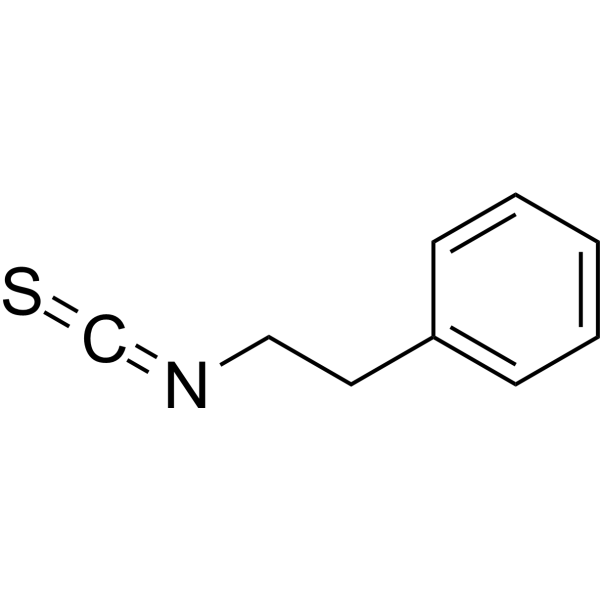
2-Phenylethyl isothiocyanate is a potent antifungal agent. 2-Phenylethyl isothiocyanate significantly inhibited spore germination and mycelial growth of Alternaria alternata, with a MIC (minimum inhibitory concentration) of 1.22 mM. The antifungal effect of 2-Phenylethyl isothiocyanate against Alternaria alternate might be via reduction in toxin content and breakdown of cell membrane integrity .
loading...
    loading...
Cat. No.: HY-23155S
CAS No.: 912627-98-6
Synonyms: 2-PE ITC-d5
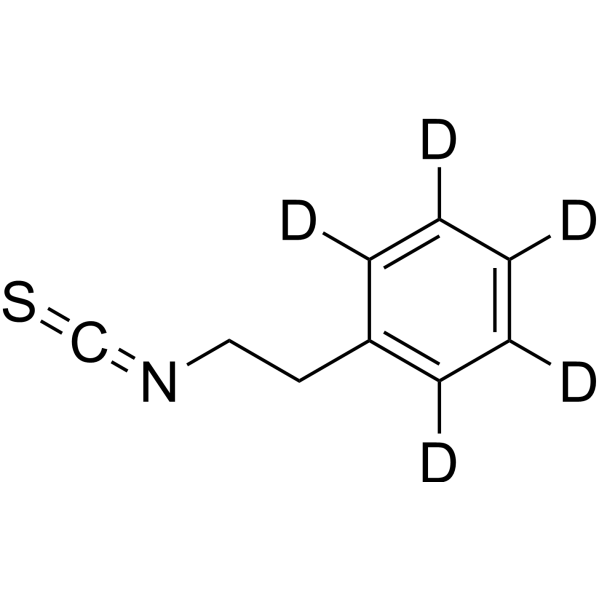
2-Phenylethyl isothiocyanate-d5 isothiocyanate-d5 is the deuterium labeled 2-Phenylethyl isothiocyanate[1]. 2-Phenylethyl isothiocyanate is a potent antifungal agent. 2-Phenylethyl isothiocyanate significantly inhibited spore germination and mycelial growth of Alternaria alternata, with a MIC (minimum inhibitory concentration) of 1.22 mM. The antifungal effect of 2-Phenylethyl isothiocyanate against Alternaria alternata might be via reduction in toxin content and breakdown of cell membrane integrity[2][3].
loading...
    loading...
Cat. No.: HY-N11546
CAS No.: 30994-75-3
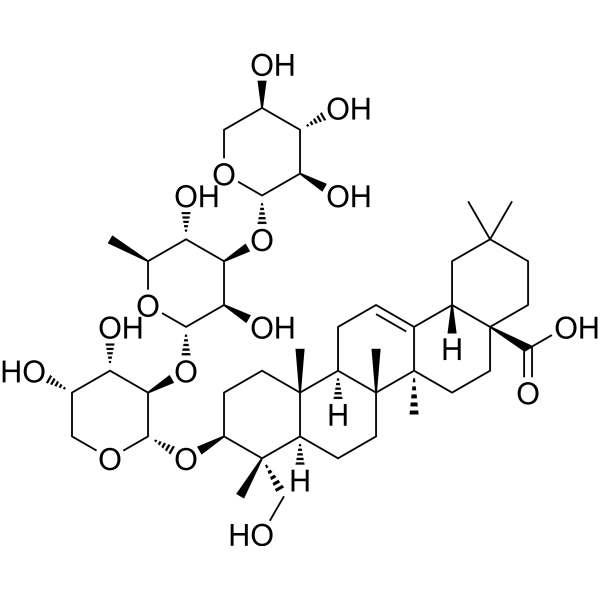
Sapindoside B is a substance with hepatoprotective activity, and also acts as a cytochrome P-450 (cytochrome P-450) inhibitor, antibacterial agent and membrane-disrupting agent. Sapindoside B reversibly inhibits the content of cytochrome P-450 in liver microsomes, suppresses the phenobarbital-induced increase in enzyme content, reduces the production of active metabolites mediated by cytochrome P-450, and alleviates hepatotoxic injury. Sapindoside B binds to Cutibacterium acnes lipase, reduces lipase activity, inhibits biofilm formation, and decreases bacterial adhesion. Sapindoside B exhibits cytotoxicity against human cancer, liver cancer, leukemia and glioblastoma cells. Sapindoside B inhibits mycelial growth of phytopathogenic fungal strains, possesses antibacterial activity against dermatophytes, and also has hemolytic/membrane-lytic activity. Sapindoside B can be used in research related to liver injury, Cutibacterium acnes biofilm-associated infections, gastric cancer, carcinoma, promyelocytic leukemia, glioblastoma, apple scab and grape gray mold .
loading...
    loading...
Cat. No.: HY-W010476
CAS No.: 14667-55-1
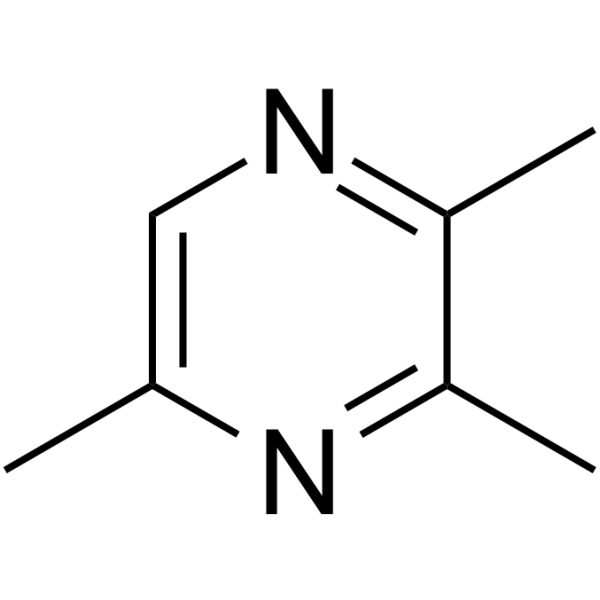
2,3,5-Trimethylpyrazine is an activator of OR5K1 with an EC50 of 65.03 μM in Hana-3A cells. 2,3,5-Trimethylpyrazine inhibits ZEN biosynthetic gene expression, disrupts cell membrane phospholipid composition, and inhibits mycelial growth. 2,3,5-Trimethylpyrazine inhibits DNA synthesis in the chorioallantoic membrane without disrupting vascular pattern formation. 2,3,5-Trimethylpyrazine inhibits ciliary beating frequency, oocyte pickup, and infundibular smooth muscle contraction in hamster oviduct explants. 2,3,5-Trimethylpyrazine is useful for research related to plant fungal infections .
loading...
    loading...
Cat. No.: HY-23155R
CAS No.: 2257-09-2
Synonyms: 2-PE ITC (Standard)
Research Areas:  

Infection

2-Phenylethyl isothiocyanate (Standard) is the analytical standard of 2-Phenylethyl isothiocyanate. This product is intended for research and analytical applications. 2-Phenylethyl isothiocyanate is a potent antifungal agent. 2-Phenylethyl isothiocyanate significantly inhibited spore germination and mycelial growth of Alternaria alternata, with a MIC (minimum inhibitory concentration) of 1.22 mM. The antifungal effect of 2-Phenylethyl isothiocyanate against Alternaria alternate might be via reduction in toxin content and breakdown of cell membrane integrity .
loading...
    loading...
Cat. No.: HY-179287
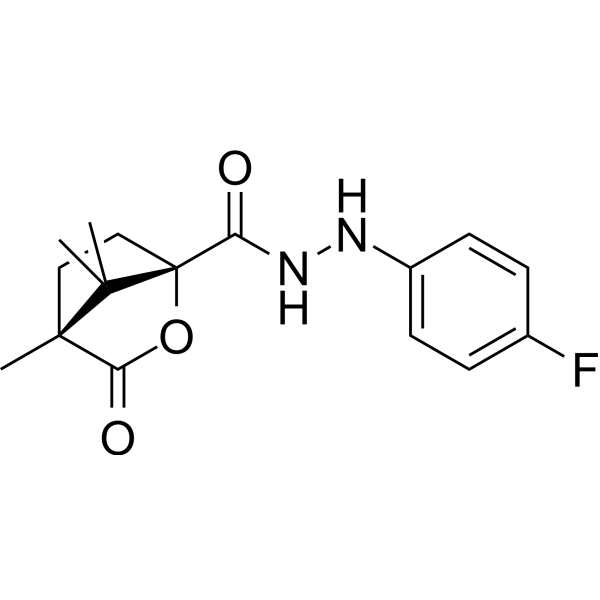
SDH-IN-42 (Compound D28) is a SDH (IC50: 5.38 μg/mL) inhibitor and antifungal agent. SDH-IN-42 exerts antifungal activity against R. solani by disrupting mycelial morphology, increasing cell membrane permeability, inducing the production and accumulation of ROS, and impairing mitochondrial function .
loading...
    loading...
Cat. No.: HY-149614
CAS No.: 2991094-41-6
Laccase-IN-1 (compound 4b) is an orally active inhibitor of laccase, with the IC50 of 11.3 μM. Laccase-IN-1 displays protective and curative effects on apple fruits infected by B. dothidea. Laccase-IN-1 enhances the cell membrane permeability, destroys the mycelial surface morphology and the cell ultrastructure, and reduces the ergosterol and exopolysaccharide contents of B. dothidea .
loading...
    loading...
Cat. No.: HY-176552
Research Areas:  

Infection

Tubulin polymerization-IN-83 (Compound A23) is a flavonol derivative. Tubulin polymerization-IN-83 exhibits antifungal activity against various phytopathogenic fungi, with an EC50 of 0.338 μg/mL against Botrytis cinerea. Tubulin polymerization-IN-83 exerts its effects by targeting β-tubulin, disrupting mycelial morphology, and increasing cell membrane permeability, with relatively low ecological and environmental risks .
loading...
    loading...
Cat. No.: HY-W010476R
CAS No.: 14667-55-1
2,3,5-Trimethylpyrazine (Standard) is the analytical standard of 2,3,5-Trimethylpyrazine (HY-W010476). This product is intended for research and analytical applications. 2,3,5-Trimethylpyrazine is an activator of OR5K1 with an EC50 of 65.03 μM in Hana-3A cells. 2,3,5-Trimethylpyrazine inhibits ZEN biosynthetic gene expression, disrupts cell membrane phospholipid composition, and inhibits mycelial growth. 2,3,5-Trimethylpyrazine inhibits DNA synthesis in the chorioallantoic membrane without disrupting vascular pattern formation. 2,3,5-Trimethylpyrazine inhibits ciliary beating frequency, oocyte pickup, and infundibular smooth muscle contraction in hamster oviduct explants. 2,3,5-Trimethylpyrazine is useful for research related to plant fungal infections .
loading...
    loading...
Cat. No.: HY-W010476S
CAS No.: 85735-49-5
2,3,5-Trimethylpyrazine-d9 is the deuterated-labeled 2,3,5-Trimethylpyrazine (HY-W010476). 2,3,5-Trimethylpyrazine is an activator of OR5K1 with an EC50 of 65.03 μM in Hana-3A cells. 2,3,5-Trimethylpyrazine inhibits ZEN biosynthetic gene expression, disrupts cell membrane phospholipid composition, and inhibits mycelial growth. 2,3,5-Trimethylpyrazine inhibits DNA synthesis in the chorioallantoic membrane without disrupting vascular pattern formation. 2,3,5-Trimethylpyrazine inhibits ciliary beating frequency, oocyte pickup, and infundibular smooth muscle contraction in hamster oviduct explants. 2,3,5-Trimethylpyrazine is useful for research related to plant fungal infections .
loading...
    loading...
Cat. No.: HY-W010476S1
CAS No.: 1082582-30-6
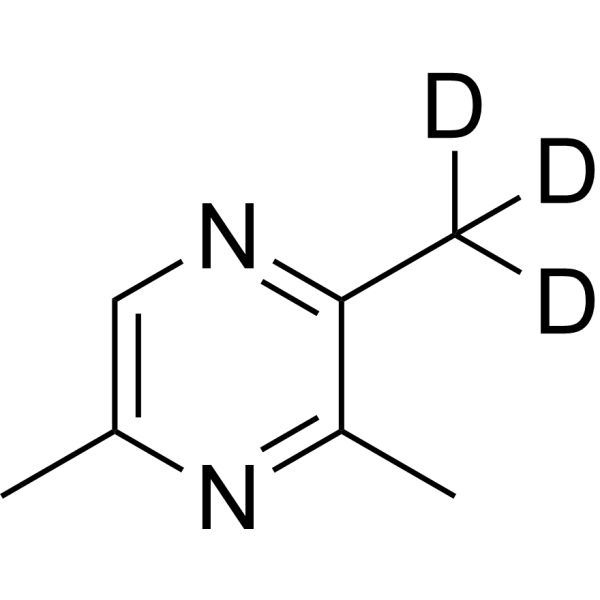
2,3,5-Trimethylpyrazine-d3 is the deuterated-labeled 2,3,5-Trimethylpyrazine (HY-W010476). 2,3,5-Trimethylpyrazine is an activator of OR5K1 with an EC50 of 65.03 μM in Hana-3A cells. 2,3,5-Trimethylpyrazine inhibits ZEN biosynthetic gene expression, disrupts cell membrane phospholipid composition, and inhibits mycelial growth. 2,3,5-Trimethylpyrazine inhibits DNA synthesis in the chorioallantoic membrane without disrupting vascular pattern formation. 2,3,5-Trimethylpyrazine inhibits ciliary beating frequency, oocyte pickup, and infundibular smooth muscle contraction in hamster oviduct explants. 2,3,5-Trimethylpyrazine is useful for research related to plant fungal infections .
loading...
    loading...
Cat. No.: HY-180144
Target:  

Fungal

Research Areas:  

Infection

Antifungal agent 142 (Compound B1) is a broad-spectrum antifungal agent. Antifungal agent 142 can enhance cell membrane permeability and disrupt membrane integrity, hindering normal mycelial growth. Antifungal agent 142 can be used as agricultural fungicide .
loading...
    loading...
Cat. No.: HY-187993
Research Areas:  

Infection

SDH-IN-47 is a succinate dehydrogenase (SDH) inhibitor, with an IC50 value of 1.80 μM against SDH from Botrytis cinerea. SDH-IN-47 binds to the active site of SDH, interferes with fungal growth, disrupts mycelial morphology and cell membrane integrity, and induces depolarization of mitochondrial membrane potential. SDH-IN-47 exhibits in vitro and in vivo antifungal activities against a variety of plant pathogenic fungi, including Botrytis cinerea, Phytophthora capsici, and Valsa mali, and can be used for studies on related fungal infections .
loading...
    loading...
Cat. No.: HY-P11783
CAS No.: 86711-55-9
Target:  

Fungal

Research Areas:  

Infection

Surfactin C2 is a lipopeptide produced by Bacillus subtilis A18 with antifungal activity. Surfactin C2 acts against Heterobasidion annosum and Heterobasidion parviporum. Surfactin C2 exerts its activity mainly through membrane‑active effects to disrupt fungal cell structures and inhibit mycelial growth. Surfactin C2 can be used for the research of butt rot and root rot of conifers .
loading...
    loading...
Cat. No.: HY-W715389
CAS No.: 850881-70-8
Target:  

Fungal

Research Areas:  

Infection

Coumoxystrobin is a methoxyacrylate strobilurin fungicide with anti-fungal activity. Coumoxystrobin exhibits inhibitory activity against mycelial growth of Magnaporthe oryzae, increases cell membrane permeability, and reduces respiration. Coumoxystrobin shows protective activity against Magnaporthe oryzae in detached barley leaves. Coumoxystrobin reduces ATP activity of Chlorella vulgaris, thereby causing algal death. Coumoxystrobin can be used in studies related to rice blast disease .
loading...
    loading...
Cat. No.: HY-170974
Target:  

Fungal

Research Areas:  

Infection

SDH-IN-20 (compound A19) is an antifungal agent. SDH-IN-20 against Verticillium dahlia, R. solani with EC50s of less than 3.0 μg/mL, 2.87 μg/mL. SDH-IN-20 exerts its highly antifungal effects by acting as an effective succinate dehydrogenase (SDH) inhibitor with an IC50 of 29.33 μM. SDH-IN-20 adversely impacts the integrity of cell membranes and mycelial morphologies of R. solani .
loading...
    loading...
Cat. No.: HY-189346
Target:  

Myosin Fungal

Research Areas:  

Infection

Myosin I-IN-1 is an Antifungal agent and Myosin I inhibitor with a Kd of 0.14 μM for FgMyoI. Myosin I-IN-1 inhibits mycelial growth, sporulation, spore germination, and Deoxynivalenol (HY-N6684) biosynthesis. Myosin I-IN-1 disrupts cell wall and cell membrane integrity and induces hyphal morphological changes. Myosin I-IN-1 exhibits broad-spectrum antifungal activity against plant pathogenic fungi. Myosin I-IN-1 shows protective efficacy against Fusarium head blight in wheat and maize. Myosin I-IN-1 can be used for research on Fusarium head blight .
loading...
    loading...
Cat. No.: HY-W724350
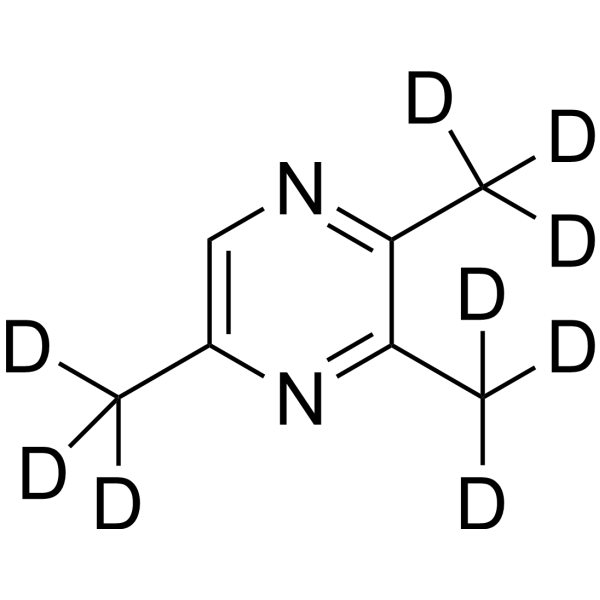
2,3,5-Trimethylpyrazine-d10 is the deuterated-labeled 2,3,5-Trimethylpyrazine (HY-W010476). 2,3,5-Trimethylpyrazine is an activator of OR5K1 with an EC50 of 65.03 μM in Hana-3A cells. 2,3,5-Trimethylpyrazine inhibits ZEN biosynthetic gene expression, disrupts cell membrane phospholipid composition, and inhibits mycelial growth. 2,3,5-Trimethylpyrazine inhibits DNA synthesis in the chorioallantoic membrane without disrupting vascular pattern formation. 2,3,5-Trimethylpyrazine inhibits ciliary beating frequency, oocyte pickup, and infundibular smooth muscle contraction in hamster oviduct explants. 2,3,5-Trimethylpyrazine is useful for research related to plant fungal infections .
loading...
    loading...
Cat. No.: HY-189069
Target:  

Fungal

Research Areas:  

Infection

Antifungal agent 176 is an antifungal agent. Antifungal agent 176 disrupts the cell wall and cell membrane integrity of Phomopsis sp., leading to electrolyte leakage and malondialdehyde accumulation. Antifungal agent 176 induces dissipation of mitochondrial membrane potential in Phomopsis sp., indicating impaired mitochondrial function. Antifungal agent 176 exhibits protective efficacy against kiwifruit soft rot caused by Phomopsis sp. Antifungal agent 176 can be used in studies related to Phomopsis sp. infections such as kiwifruit soft rot .
loading...
    loading...
Cat. No.: HY-184388
Research Areas:  

Infection

Antifungal agent-168 is an antifungal agent with broad-spectrum inhibitory activity against a variety of pathogenic fungi. Antifungal agent-168 interacts with β-glucan in the cell wall of Botrytis cinerea, disrupting the physiological functions of the cell wall. Antifungal agent-168 damages the hyphal cell membrane, causes electrolyte leakage, and promotes ROS release to accelerate fungal death. Antifungal agent-168 can be used in studies related to Botrytis cinerea infection .
loading...
    loading...
  • 1

