6 Results for "

paraventricular nucleus

" in MedChemExpress (MCE) Product Catalog:
Products (6)

6 Results for "paraventricular nucleus" in MCE Product Catalog:

Cat. No.: HY-P1248
CAS No.: 99566-27-5
Synonyms: NPFF
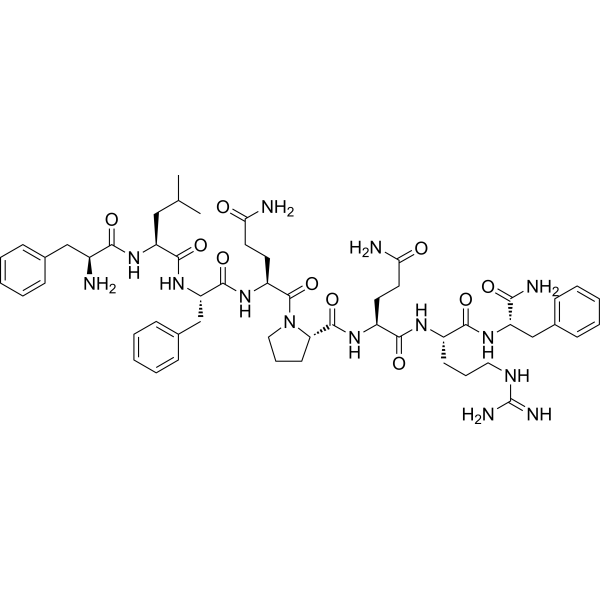
Neuropeptide FF (NPFF), an octapeptide belonging to the RF-amide family of peptides, is a NPFF1 and NPFF2 receptors agonist with Ki values of 2.82 nM and 0.21 nM, respectively. Neuropeptide FF induces abstinence syndrome, exerts antiopioid and analgesic effects, releases via calcium-dependent mechanisms from rat spinal cord, regulates memory, autonomic function, and neuroendocrine function, modulates pain and opioid antinociception, reduces food intake, stimulates water intake, alters cardiovascular parameters, and shows differential activity in hypothalamic paraventricular nucleus neurons. Neuropeptide FF is present in mammalian central nervous system and periphery, with NPFF-immunoreactivity increases in rat cerebrospinal fluid during opiate tolerance, and its NPFF gene and NPFF-R2 gene are up-regulated in rat spinal cord and dorsal root ganglia during peripheral inflammation. Neuropeptide FF can be used for the research of opioid tolerance, morphine-induced analgesia, abstinence syndrome, pain, hypertension, nociception, inflammatory pain, and neuropathic pain .
loading...
    loading...
Cat. No.: HY-N0046
CAS No.: 88105-29-7
Synonyms: Notoginseng triterpenes; Ginsenoside Mb
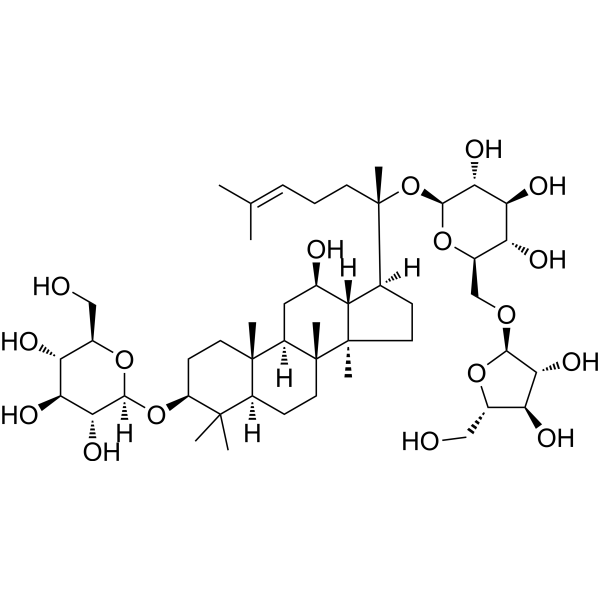
Notoginsenoside Fe (Notoginseng triterpenes; Ginsenoside Mb) is a saponin with anti-obesity and anti-neuroblastoma activities. Notoginsenoside Fe can be isolated from leaves of Panax notoginseng. Notoginsenoside Fe specifically activates paraventricular nucleus neurons in the hypothalamus, effectively reducing body weight, improving fasting blood glucose and protecting liver function by decreasing food intake, increasing resting metabolic rate and enhancing energy expenditure. Notoginsenoside Fe also inhibits the c-Src signaling pathway, blocks the proliferation and viability of human neuroblastoma cells, while improving mitochondrial dysfunction and alleviating apoptosis. Notoginsenoside Fe can be used in studies related to diet-induced obesity and neuroblastoma .
loading...
    loading...
Cat. No.: HY-P2210A
Target:  

GPR171

Research Areas:  

Neurological Disease

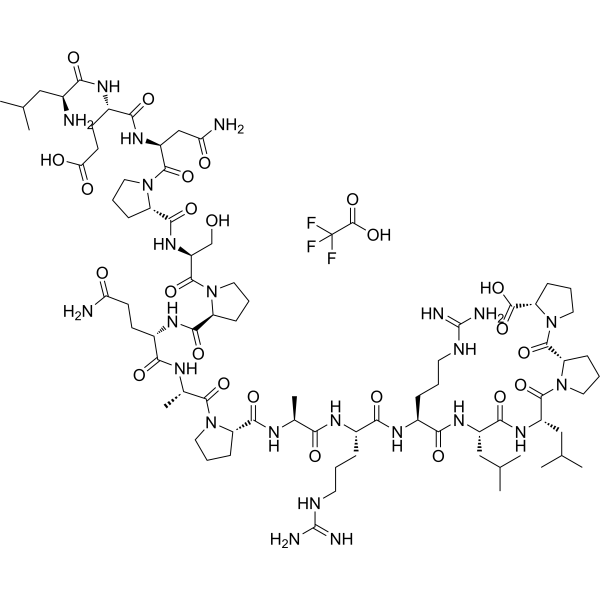
BigLEN(mouse) TFA is a GPR171 agonist. BigLEN(mouse) TFA is a proSAAS-derived neuropeptide. BigLEN(mouse) TFA regulates food intake in mice. BigLEN(mouse) inhibits the release of glutamate onto parvocellular neurons of the paraventricular nucleus in a process dependent upon activation of postsynaptic G proteins.
loading...
    loading...
Cat. No.: HY-W585843
CAS No.: 132685-02-0
1,1′-Ethylidenebis[L-tryptophan] is an orally active amino acid analog. 1,1′-Ethylidenebis[L-tryptophan] promotes the release of adrenocorticotropic hormone and corticosterone in rat plasma, and transiently inhibits CRH mRNA in the paraventricular nucleus of the hypothalamus via glucocorticoid negative feedback. 1,1′-Ethylidenebis[L-tryptophan] induces multi-tissue inflammation and fibrosis in rodents and human cells, increases the number of degranulated mast cells, and activates the IL-5 pathway in lymphocytes. 1,1′-Ethylidenebis[L-tryptophan] is activated by tryptophanyl-tRNA synthetase and replaces L-tryptophan during translation; it also interferes with tryptophan metabolism in mice via the kynurenine pathway and dynamically alters their plasma quinolinic acid levels. 1,1′-Ethylidenebis[L-tryptophan] can be used for studies on metabolism-related mechanisms .
loading...
    loading...
Cat. No.: HY-119203
CAS No.: 757183-18-9
Purity:  99.84%
Target:  

Histamine Receptor

Research Areas:  

Metabolic Disease

NNC 38-1049 is an orally active, potent and competitive histamine H3 receptor antagonist. NNC 38-1049 produced an increase in extracellular levels of histamine in the paraventricular nucleus. NNC 38-1049 decreases food intake and body weight, which is promising for research of obesity .
loading...
    loading...
Cat. No.: HY-P11461
CAS No.: 105883-79-2
Synonyms: Biotin-corticotropin releasing factor
Target:  

Drug Derivative

Research Areas:  

Neurological Disease

Biotin-CRF, human, rat is a biotin-conjugated CRF (human, rat). CRF (human, rat) is a corticotropin-releasing hormone, paraventricular hypothalamic nucleus marker .
loading...
    loading...

