14 Results for "

puncture

" in MedChemExpress (MCE) Product Catalog:
Products (14)

14 Results for "puncture" in MCE Product Catalog:

5
5 Cited Publications
Cat. No.: HY-N2292
CAS No.: 151870-74-5
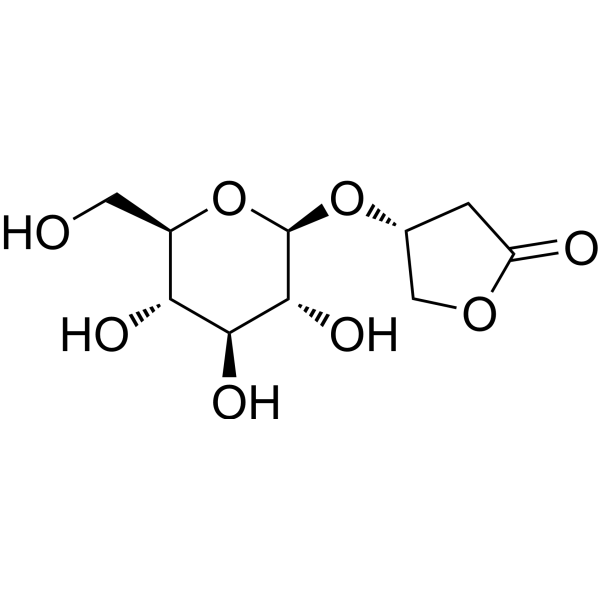
Kinsenoside is the main active ingredient of the genus plant, and has various biological activities. Kinsenoside and Nrf2 depend on the protection of nuclear cells (NPCs), which significantly reduces their ability to survive. Kinsenoside Active NPC Medium AKT-ERK1/2-Nrf2 Signal passage, Prevent physical decline, aging, harmonious physical function impairment. Kinsenoside can improve the puncture guide model for intermediate vertebral wall discharge (IDD).
loading...
    loading...
3
3 Cited Publications
Cat. No.: HY-N1388
CAS No.: 104012-37-5
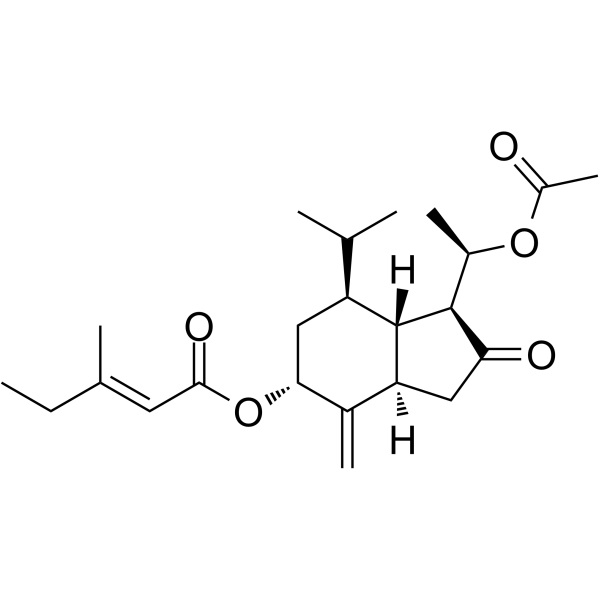
Tussilagone, a major active component in Tussilago farfara, has anti-inflammatory effect. Tussilagone ameliorates inflammatory responses in dextran sulphate sodium-induced murine colitis. Tussilagone inhibits the inflammatory response and improves survival in cecal ligation and puncture (CLP)-induced septic mice .
loading...
    loading...
Cat. No.: HY-178159
CAS No.: 2244341-81-7
Target:  

RNA MTase

Research Areas:  

Inflammation/Immunology

SA91-0178 is a METTL1 inhibitor. SA91-0178 inhibits m 7G methylation of RNA, reduces SARM1 stability, mitigates NAD + depletion and metabolic reprogramming in macrophages. SA91-0178 demonstrates excellent protective efficacy against multiple organ injury in cecal ligation and puncture (CLP)-induced and ischemia/reperfusion (I/R)-induced mice. SA91-0178 can be used for the study of systemic inflammatory diseases .
loading...
    loading...
Cat. No.: HY-W012480
CAS No.: 54-12-6
Synonyms: (±)-Tryptophan
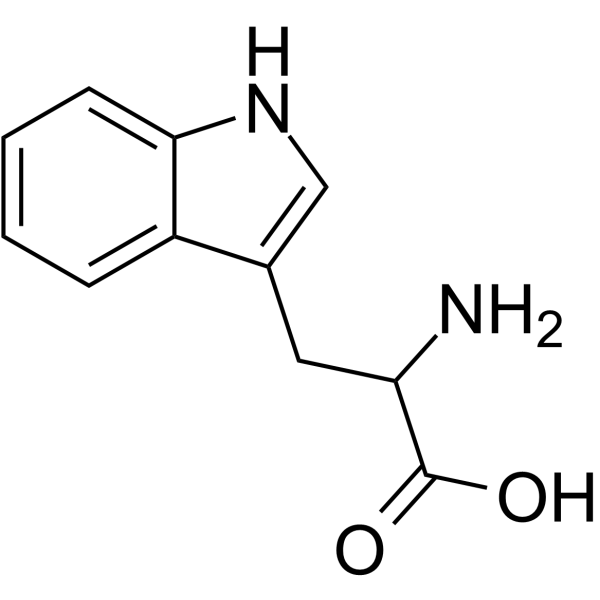
DL-Tryptophan ((±)-Tryptophan) is an orally effective aryl hydrocarbon receptor (AhR) agonist. DL-Tryptophan reduces the expression of pro-inflammatory cytokines IL-6, TNF-α, IL-1β, as well as liver injury markers aspartate aminotransferase and alanine aminotransferase, and alleviates hepatocyte apoptosis (apoptosis) in sepsis induced by cecal ligation and puncture. DL-Tryptophan can be used in the research of sepsis-related acute liver injury .
loading...
    loading...
Cat. No.: HY-17655
TBE56, a molecular glue, is a BACH1 degrader, with an EC50 of 44 nM. TBE56 is a weak NRF2 inducer and the biotinylated TBE31. TBE56 interacts and promotes the degradation of BACH1 via a mechanism involving the E3 ligase FBX022. TBE56 reduces intracellular Fe 2+ accumulation, ROS generation, and malondialdehyde (MDA) content, while increasing GSH/GSSG ratio and upregulating GPX4 in Prominin-2-overexpressed BMSCs. TBE56 significantly ameliorates intervertebral disc degeneration (IVDD) in puncture-induced SD rat IVDD model. TBE56 can be used for the study of intervertebral disc degeneration (IVDD) .
loading...
    loading...
Cat. No.: HY-163409
CAS No.: 2044497-76-7
Target:  

Wnt β-catenin

Research Areas:  

Inflammation/Immunology Cancer

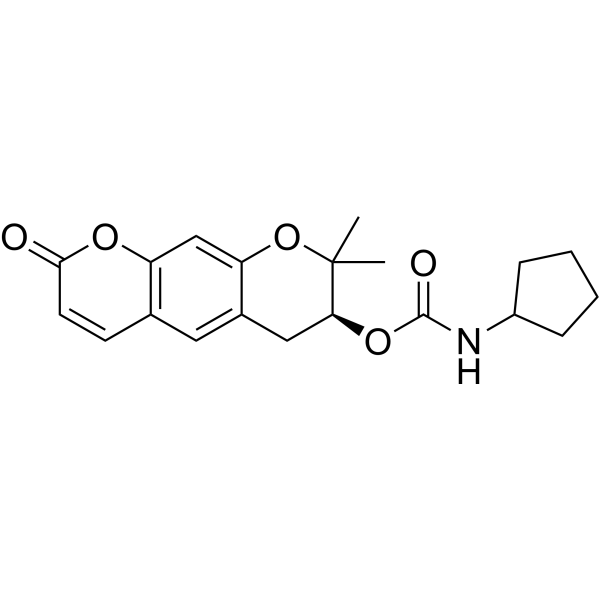
CKG012 is an inhibitor for Wnt/βcatenin signaling pathway. CGK012 inhibits release of HMGB1 and transcription of β-catenin, exhibits attenuating activities against cecal ligation and puncture (CLP)-induced sepsis and multiple myeloma cancer .
loading...
    loading...
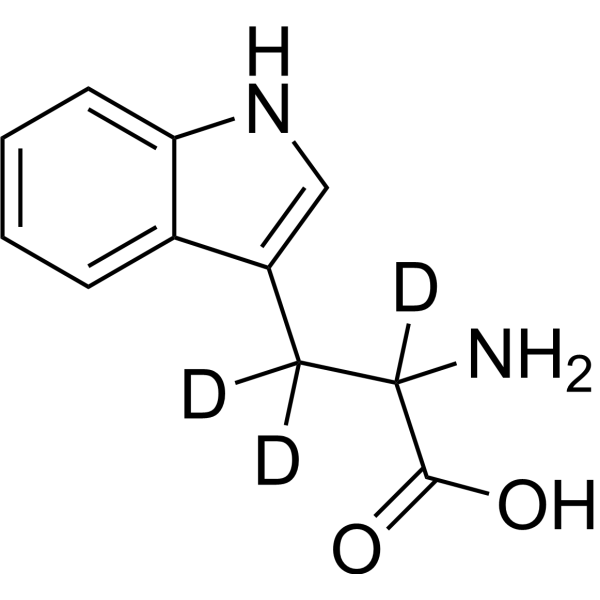
Cat. No.: HY-W012480S
CAS No.: 340257-61-6
Synonyms: (±)-Tryptophan-d3
DL-Tryptophan-d3 is the deuterium labeled DL-Tryptophan. DL-Tryptophan ((±)-Tryptophan) is an orally effective aryl hydrocarbon receptor (AhR) agonist. DL-Tryptophan reduces the expression of pro-inflammatory cytokines IL-6, TNF-α, IL-1β, as well as liver injury markers aspartate aminotransferase and alanine aminotransferase, and alleviates hepatocyte apoptosis (apoptosis) in sepsis induced by cecal ligation and puncture. DL-Tryptophan can be used in the research of sepsis-related acute liver injury .
loading...
    loading...
Cat. No.: HY-178136
MyD88-IN-3 is an orally active, selective MyD88 Inhibitor. MyD88-IN-3 specifically targets the TIR domain of MyD88 (KD = 28.5 μM), thereby preventing MyD88 self-polymerization and interaction with TLRs, which suppresses the activation of MAPK and NF-κB pathways. MyD88-IN-3 demonstrates significant anti-inflammatory efficacy and effectively mitigates Acute Lung Injury (ALI) symptoms in CLP (cecal ligation and puncture) and Lipopolysaccharides (HY-D1056) (LPS)-induced ALI models. MyD88-IN-3 can be used for the study of ALI .
loading...
    loading...
Cat. No.: HY-N1388R
CAS No.: 104012-37-5
Tussilagone (Standard) is the analytical standard of Tussilagone. This product is intended for research and analytical applications. Tussilagone, a major active component in Tussilago farfara, has anti-inflammatory effect. Tussilagone ameliorates inflammatory responses in dextran sulphate sodium-induced murine colitis. Tussilagone inhibits the inflammatory response and improves survival in cecal ligation and puncture (CLP)-induced septic mice .
loading...
    loading...
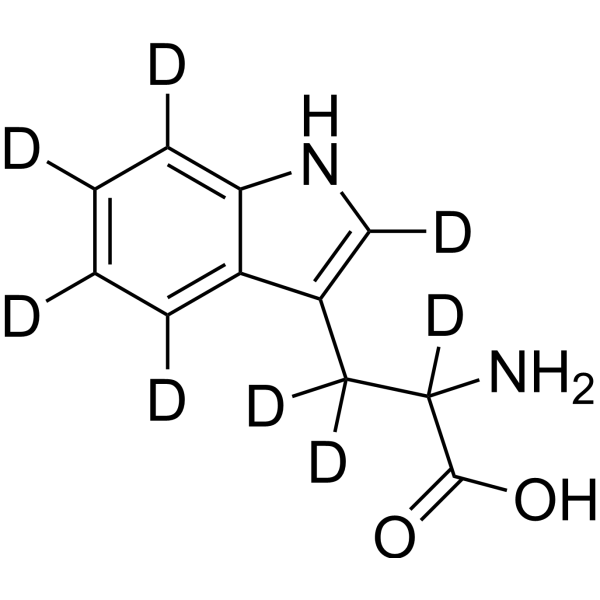
Cat. No.: HY-W012480S1
CAS No.: 1233395-85-1
Synonyms: (±)-Tryptophan-d8
DL-Tryptophan-d8 is the deuterium labeled DL-Tryptophan. DL-Tryptophan ((±)-Tryptophan) is an orally effective aryl hydrocarbon receptor (AhR) agonist. DL-Tryptophan reduces the expression of pro-inflammatory cytokines IL-6, TNF-α, IL-1β, as well as liver injury markers aspartate aminotransferase and alanine aminotransferase, and alleviates hepatocyte apoptosis (apoptosis) in sepsis induced by cecal ligation and puncture. DL-Tryptophan can be used in the research of sepsis-related acute liver injury .
loading...
    loading...
Cat. No.: HY-W012480R
CAS No.: 54-12-6
Synonyms: (±)-Tryptophan (Standard)
DL-Tryptophan (Standard) is an analytical standard of DL-Tryptophan. This product is intended for research and analytical applications. DL-Tryptophan ((±)-Tryptophan) is an orally effective aryl hydrocarbon receptor (AhR) agonist. DL-Tryptophan reduces the expression of pro-inflammatory cytokines IL-6, TNF-α, IL-1β, as well as liver injury markers aspartate aminotransferase and alanine aminotransferase, and alleviates hepatocyte apoptosis (apoptosis) in sepsis induced by cecal ligation and puncture. DL-Tryptophan can be used in the research of sepsis-related acute liver injury .
loading...
    loading...
Cat. No.: HY-169059
Target:  

Ferroptosis

Research Areas:  

Inflammation/Immunology

Ferroptosis-IN-12 (Cpd-A1) is a ferroptosis inhibitor. Ferroptosis-IN-12 exhibits effective ferroptosis inhibition in Erastin (HY-15763)-treated mouse tubular epithelial cells (mTECs) and improves kidney function, alleviates renal tubular damage, and reduces inflammation in a dose-dependent manner in acute kidney injury (AKI) mouse models induced by ischemia/reperfusion (I/R) or cecal ligation and puncture (CLP). Ferroptosis-IN-12 demonstrates good plasma stability and high distribution in kidney tissues in pharmacokinetic studies in mice. Ferroptosis-IN-12 holds promise for research in the field of acute kidney injury (AKI) .
loading...
    loading...
Cat. No.: HY-P11603
Target:  

Pyroptosis

Research Areas:  

Inflammation/Immunology

SK56 is a GSDMD-NT pore inhibitor. SK56 inhibits pyroptosis (Pyroptosis) and the release of pyroptosis-related cytokines in macrophages and human peripheral blood leukocytes. SK56 prevents extensive cell death in human alveolar organoids in an organoid-macrophage co-culture model. SK56 prevents death from infectious shock induced by LPS (HY-D1056) or cecal ligation and puncture in mice. SK56 can be used in studies related to sepsis .
loading...
    loading...
Cat. No.: HY-184684
Target:  

Glycosidase

Research Areas:  

Inflammation/Immunology

HPA-IN-3 (compound 5) is a heparanase (HPA) inhibitor with an IC50 of 11.27 μM against human targets. HPA-IN-3 binds to the active site of HPA, and its structural features enhance binding stability and affinity. HPA-IN-3 reduces the levels of proinflammatory cytokines. HPA-IN-3 maintains organ morphology. HPA-IN-3 improves the survival rate of mice with sepsis induced by cecal ligation and puncture. HPA-IN-3 can be used in studies related to sepsis .
loading...
    loading...
  • 1

