
1. Search Result
Search Result
Results for "

radical cation

" in MedChemExpress (MCE) Product Catalog:

11

Inhibitors & Agonists

7

Natural
Products

Cat. No. Product Name Target Research Areas Chemical Structure
  • HY-N7075
    Inulin
    4 Publications Verification

    Endogenous Metabolite Infection Neurological Disease Metabolic Disease Cancer
    Inulin is an orally active prebiotic targeting the intestinal microbiota, selectively promoting the proliferation and activity of beneficial bacteria such as bifidobacteria and lactic acid bacteria, and playing a role in regulating the intestinal microecology. The functions of Inulin include: Fermentation by probiotics in the colon to produce short-chain fatty acids (such as butyrate and propionate), lowering the intestinal pH and inhibiting the overgrowth of harmful bacteria; Enhancing the intestinal barrier function and reducing endotoxin translocation; Directly scavenging free radicals (such as superoxide free radicals, hydroxyl free radicals) and activating antioxidant enzymes (SOD, CAT) to reduce oxidative stress. Inulin can also be used in the study of intestinal diseases (constipation, IBD), metabolic syndrome (diabetes, obesity) and liver damage by regulating glucose and lipid metabolism (such as reducing triglycerides, improving insulin sensitivity) and immune response (enhancing NK cell activity, inhibiting inflammatory factors)[1][2][3][4].
    Inulin
  • HY-W021358

    Biochemical Assay Reagents Others
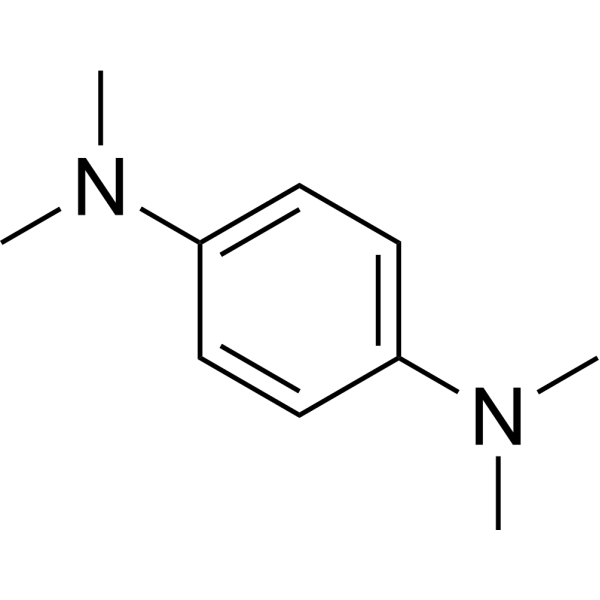
    N,N,N′,N′-Tetramethyl-p-phenylenediamine is an electron-donating aromatic diamine with a low ionization potential. N,N,N′,N′-Tetramethyl-p-phenylenediamine is a classic electron donor model compound for photochemical electron transfer studies .
    N,N,N′,N′-Tetramethyl-p-phenylenediamine
  • HY-132280

    U 74006F free base

    Reactive Oxygen Species (ROS) SARS-CoV Virus Protease Neurological Disease Inflammation/Immunology
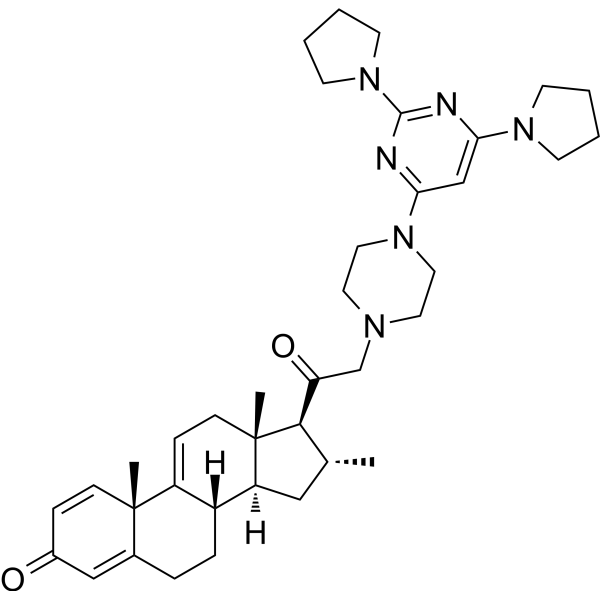
    Tirilazad (U 74006F free base) is a neuroprotective agent. Tirilazad can also bind tightly to the main protease of the COVID-19 virus and exert anti-SARS-CoV-2 activity. Tirilazad scavenges hydroxyl and lipid peroxyl free radicals and maintains the levels of endogenous antioxidants. Tirilazad reduces cerebral infarct volume and improves neurobehavioral scores in animal models of focal ischemia. Tirilazad can be used in research related to ischemic stroke and subarachnoid hemorrhage .
    Tirilazad
  • HY-76632

    Cholinesterase (ChE) SOD Neurological Disease
    4-Hydroxyisophthalic acid activates antioxidant enzymes (such as catalase CAT and superoxide dismutase SOD), scavenges free radicals, and exhibits antioxidant property. 4-Hydroxyisophthalic acid activates AChE and BChE, enhances neuronal function and improves Tau-induced neurobehavioral defects. 4-Hydroxyisophthalic acid improves the cognitive defects, and ameliorates circadian rhythm disorders of fruit flies .
    4-Hydroxyisophthalic acid
  • HY-N8955

    Reactive Oxygen Species (ROS) Inflammation/Immunology
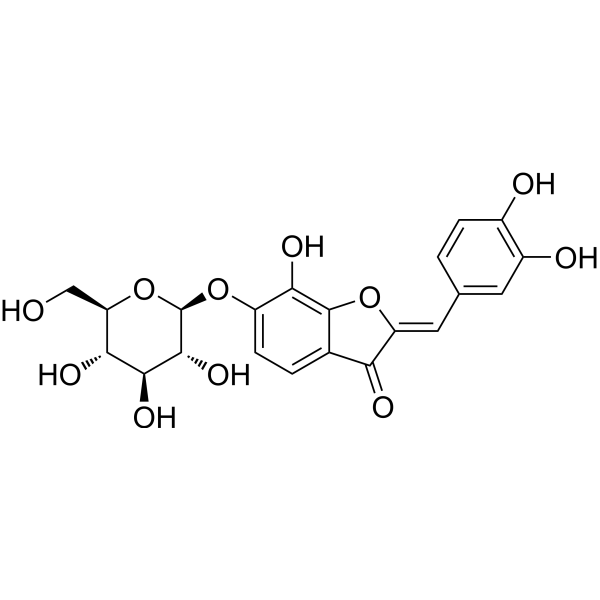
    Maritimein is an aurone glucoside and antioxidant with free radical scavenger activity, found in Coreopsis tinctoria Nutt.Maritimein scavenges ABTS•+ radical cations .
    Maritimein
  • HY-175862

    Aldose Reductase Reactive Oxygen Species (ROS) PI3K Akt SOD p38 MAPK Keap1-Nrf2 Metabolic Disease
    ALR2-IN-9 is a potent ALR2 inhibitor (IC50 = 21.8 nM) with excellent antioxidant activity (EC50 for DPPH radical scavenging = 2.8 μM). ALR2-IN-9 interacts directly with Reactive Oxygen Species (ROS)/Reactive Nitrogen Species (RNS) and interrupts the free radical chain reactions, and as an endogenous enzymatic antioxidant regulator, which regulates enzyme functions of CAT and SOD. ALR2-IN-9 regulates PI3K/Akt/Nrf2 pathway to attenuate hyperglycemia-mediated mitochondrial superoxide overproduction in vitro, and ameliorates CuSO4- and H2O2-induced oxidative stress in vivo. ALR2-IN-9 prolongs lifespan of C. elegans via the regulation of stress response genes such as PMK-1. ALR2-IN-9 is a promising anti-aging drug candidate. ALR2-IN-9 can be used for diabetic complication research .
    ALR2-IN-9
  • HY-116778

    Reactive Oxygen Species (ROS) Cardiovascular Disease Neurological Disease Inflammation/Immunology
    Prostaglandin G2 is a prostaglandin peroxide. Prostaglandin G2 acts as a precursor for thromboxane A2 production, inducing platelet aggregation and serotonin release. Prostaglandin G2 also induces cerebral arteriole injury in anesthetized cats via the generation of reactive oxygen free radicals, triggering persistent vasodilation, reduced reactivity to hypocapnia, and endothelial damage. Prostaglandin G2 can be used in studies related to cerebral arteriole injury .
    Prostaglandin G2
  • HY-N19783

    Drug Derivative Others
    Carambolaside M acts as an ABTS radical cation scavenger. Carambolaside M scavenges ABTS radical cations. Carambolaside M is isolated from the fresh sweet fruits of Averrhoa carambola L., a plant belonging to the genus Averrhoa in the Oxalidaceae family .
    Carambolaside M
  • HY-N17925

    Glycosidase Metabolic Disease
    Falandioside B is an α-glucosidase inhibitor with an IC50 of 107.52 μM. Falandioside B scavenges ABTS radical cations. Falandioside B is applicable to research related to postprandial hyperglycemia .
    Falandioside B
  • HY-N19254

    Reactive Oxygen Species (ROS) Inflammation/Immunology
    Shepherdine, a harmala-type indole and tetrahydro-β-carboline alkaloid, is an antioxidant. Shepherdine scavenges free radicals via single electron transfer from its indole ring, forming an indolyl cation or neutral radical, and may convert to aromatic β-carbolines during this process. Shepherdine can be used for research on antioxidant activity .
    Shepherdine
  • HY-115371

    Endogenous Metabolite Neurological Disease
    Butaperazine dimaleate is an antipsychotic compound with activity for the detection of vanadium (V). Butaperazine dimaleate can react with vanadium (V) in a phosphoric acid medium to form a red radical cation. The absorption spectrum of butaperazine dimaleate reaches a maximum at 513 nm, which conforms to Beer's law and corresponds to a concentration range of 0.25-5.0 μg/ml. Butaperazine dimaleate has a sensitivity value of 6.1 ng/cm2 and is suitable for the analysis of vanadium steel, minerals, biological samples, and soil samples .
    Butaperazine dimaleate

Inquiry Online

Your information is safe with us. * Required Fields.

Salutation


Country or Region *

Applicant Name *


Organization Name *

Department *


Email Address *


Product Name *

Cat. No.


Requested quantity *

Phone Number *


Remarks

Inquiry Online

Inquiry Information

Product Name:
Cat. No.:
Quantity:
MCE Japan Authorized Agent:

