

1. Search Result
Search Result
Pathways Recommended: Stem Cell/Wnt Cell Cycle/DNA Damage
Results for "

rat insulinoma cells

" in MedChemExpress (MCE) Product Catalog:

11

Inhibitors & Agonists

3

Peptides

2

Natural
Products

Cat. No. Product Name Target Research Areas Chemical Structure
  • HY-B0470
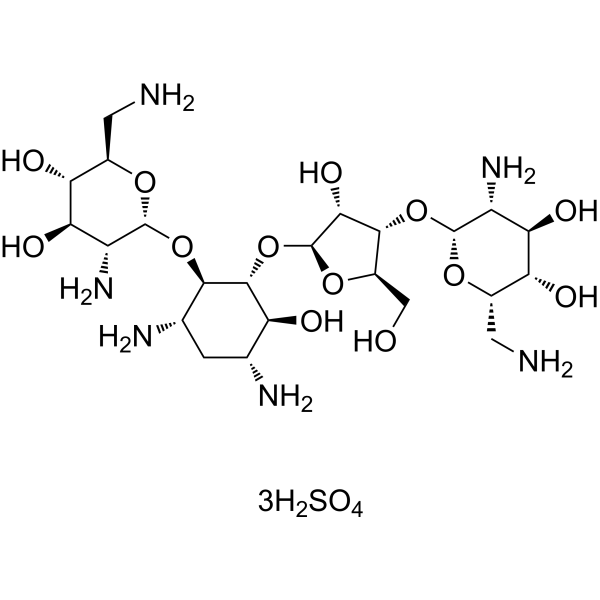
    Neomycin sulfate
    65+ Cited Publications

    Environmental Pollutants Antibiotic Phospholipase Bacterial Infection Metabolic Disease Cancer
    Neomycin sulfate, an aminoglycoside antibiotic, exerts antibacterial activity through irreversible binding of the nuclear 30S ribosomal subunit, thereby blocking bacterial protein synthesis. Neomycin sulfate is a known phospholipase C (PLC) inhibitor. Neomycin sulfate potently inhibits both the nuclear translocation of angiogenin and angiogenin-induced cell proliferation and angiogenesis. Neomycin sulfate inhibits IP3-mediated Ca 2+ release, MgATP-dependent Ca 2+ uptake, and electrical excitation-evoked skeletal muscle Ca 2+ transients. Neomycin sulfate depletes gut microbiota in specific mouse models, causes hearing impairment, and kidney damage with prolonged exposure. Neomycin sulfate can be used for the research of cancer .
    Neomycin sulfate
  • HY-150520

    Antibiotic Phospholipase Infection Cancer
    Neomycin, an aminoglycoside antibiotic, exerts antibacterial activity through irreversible binding of the nuclear 30S ribosomal subunit, thereby blocking bacterial protein synthesis. Neomycin is a known phospholipase C (PLC) inhibitor. Neomycin potently inhibits both the nuclear translocation of angiogenin and angiogenin-induced cell proliferation and angiogenesis. Neomycin inhibits IP3-mediated Ca 2+ release, MgATP-dependent Ca 2+ uptake, and electrical excitation-evoked skeletal muscle Ca 2+ transients. Neomycin depletes gut microbiota in specific mouse models, causes hearing impairment, and kidney damage with prolonged exposure. Neomycin can be used for the research of cancer .
    Neomycin
  • HY-13529
    Globalagliatin
    1 Publications Verification

    LY2608204; SY-004

    Glucokinase Metabolic Disease
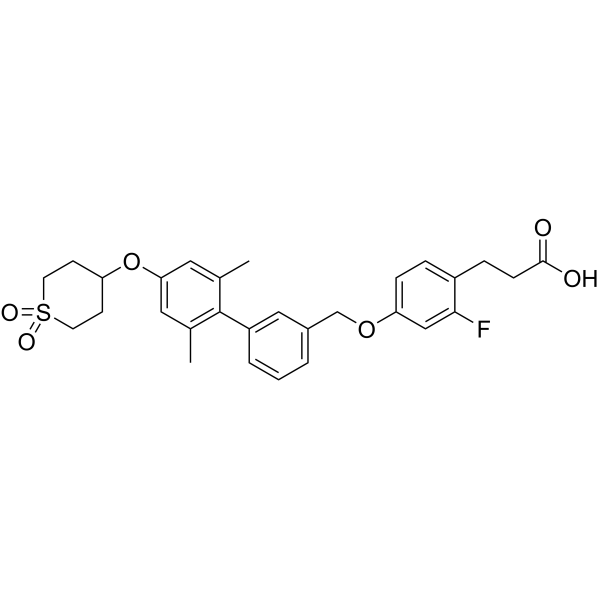
    Globalagliatin (LY2608204) is an orally active glucokinase (GK) activator with an EC50 of 42 nM. Globalagliatin also stimulates glucose metabolism in rat insulinoma INS1-E cells with an EC50 of 579 nM. Globalagliatin targets both pancreatic β-cells and hepatocytes. Globalagliatin is promising for research of type 2 diabetes .
    Globalagliatin
  • HY-P10927A

    BRINP2-related peptide TFA

    PKA AP-1 Metabolic Disease
    BRP (BRINP2-related peptide) TFA is a 12-peptide derived from BRINP2 that can cross the blood-brain barrier. BRP TFA induces the central activation of FOS in neuronal cells via the cAMP-PKA-CREB signaling pathway. BRP TFA exerts anorectic and anti-obesity effects without triggering nausea or aversive responses. The action of BRP TFA is independent of the leptin, GLP-1 receptor and melanocortin 4 receptor pathways. BRP TFA is applicable to obesity-related research .
    BRP TFA
  • HY-P10927

    BRINP2-related peptide

    AP-1 PKA Metabolic Disease
    BRP is a 12-peptide derived from BRINP2 that can cross the blood-brain barrier. BRP induces the central activation of FOS in neuronal cells via the cAMP-PKA-CREB signaling pathway. BRP exerts anorectic and anti-obesity effects without triggering nausea or aversive responses. The action of BRP is independent of the leptin, GLP-1 receptor and melanocortin 4 receptor pathways. BRP is applicable to obesity-related research .
    BRP
  • HY-N6005

    Bacterial Fungal Apoptosis Bcl-2 Family Infection Metabolic Disease Cancer
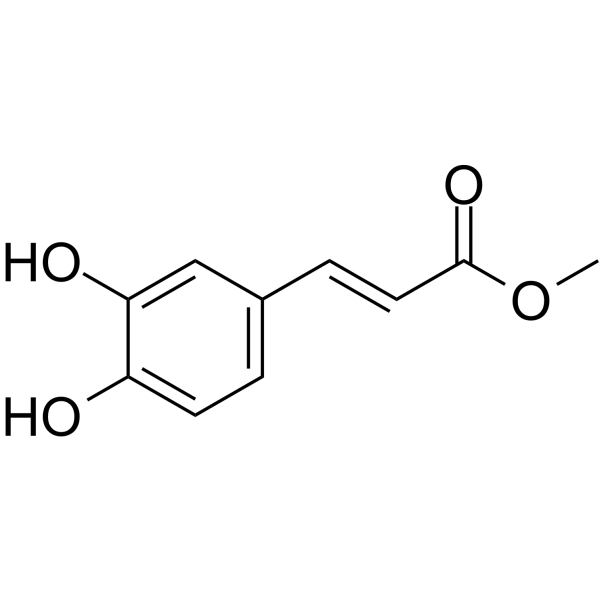
    Methyl caffeate is a phenylpropanoid, antibacterial agent, and Apoptosis-inducing agent. Methyl caffeate can be isolated from the flowers of peach Prunus persica (L.). Methyl caffeate upregulates the expression of pro-apoptotic proteins Bid, Bax and p53, and downregulates the expression of anti-apoptotic protein BCL-2. Methyl caffeate downregulates SASP factors. Methyl caffeate enhances glucose-stimulated insulin secretion. Methyl caffeate inhibits the growth of Gram-positive bacteria, Gram-negative bacteria, fungi, and Mycobacterium tuberculosis strains. Methyl caffeate can be used in studies related to breast cancer, type 2 diabetes, and tuberculosis .
    Methyl caffeate
  • HY-176040

    IRE1 Amyloid-β Neurological Disease Metabolic Disease
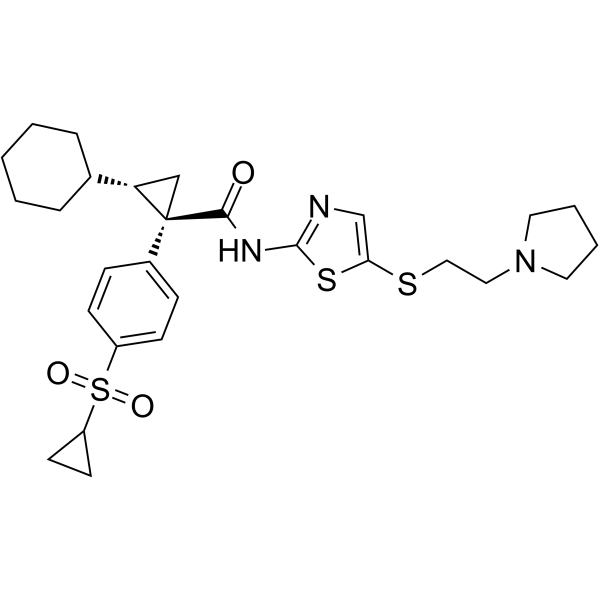
    IXA62 is an orally active and selective IRE1/XBP1s activator (EC50 = 0.31 μM) that reduces Aβ secretion. IXA62 enhances glucose-stimulated insulin secretion from rat insulinoma cells .
    IXA62
  • HY-121872

    MMP Cytochrome P450 Calcium Channel Neurological Disease
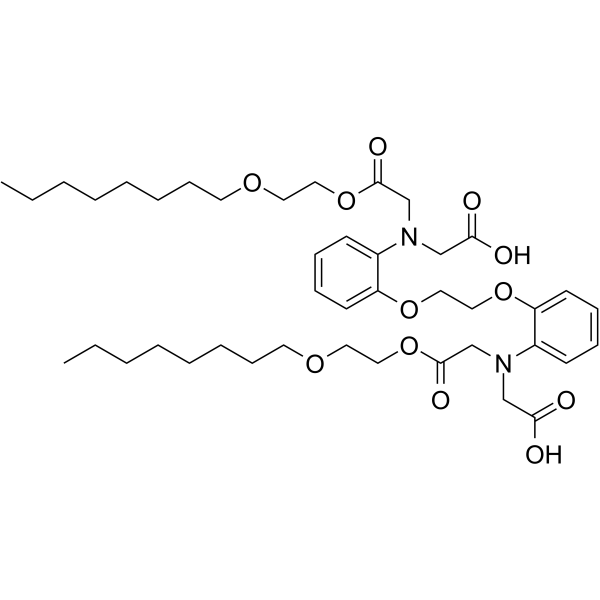
    DP-b99 is a blood-brain barrier-permeable inhibitor of CYP2C9 and MMP-9, with a Ki value of 4.655 μM against CYP2C9. DP-b99 inhibits CYP2C9 via apparent non-competitive inhibition, mainly chelates pathological Zn 2+ in the membrane environment, attenuates the elevation of intracellular Zn 2+ and Ca 2+ levels, delays seizure onset and reduces seizure severity, and also prevents MMP-9-dependent dendritic spine remodeling, β-dystroglycan cleavage and gelatinase activity. DP-b99 can be used in the research of acute ischemic stroke, epileptogenesis and stroke .
    DP-b99
  • HY-148235

    Free Fatty Acid Receptor Metabolic Disease
    TP-051, a chemical probe, is a potent FFAR1 agonist with an Ki value of 16 nM for human FFAR1. TP-051 can increase insulin secretion in rat insulinoma cells. TP-051 can be used to research type 2 diabetes .
    TP-051
  • HY-P1544

    Endogenous Metabolite Adenylate Cyclase PKA Calcium Channel Neurological Disease Metabolic Disease
    Cerebellin is a neuromodulatory hexadecapeptide that serves as a marker for Purkinje cell maturation. Cerebellin stimulates norepinephrine release via the adenylate cyclase/PKA-dependent signaling pathway. Cerebellin reduces insulin secretion from pancreatic islets under high-glucose conditions. Cerebellin also regulates synaptic structure formation and controls catecholamine secretion in peripheral tissues. Cerebellin can be used in neurological research .
    Cerebellin
  • HY-183955

    DYRK GSK-3 Metabolic Disease Inflammation/Immunology
    GNF7156 is a DYRK1A/GSK3B inhibitor, IC50 values of 100 nM for DYRK1A and 40 nM for GSK3B. GNF7156 inhibits DYRK1A and GSK3B kinase activity and induces NFAT nuclear retention. GNF7156 stimulates beta-cell cycle entry and division and maintains insulin secretory capacity. GNF7156 can be used for the research of type 1 diabetes, and type 2 diabetes .
    GNF7156

Inquiry Online

Your information is safe with us. * Required Fields.

Salutation


Country or Region *

Applicant Name *


Organization Name *

Department *


Email Address *


Product Name *

Cat. No.


Requested quantity *

Phone Number *


Remarks

Inquiry Online

Inquiry Information

Product Name:
Cat. No.:
Quantity:
MCE Japan Authorized Agent:

