10 Results for "

rat peritoneal macrophages

" in MedChemExpress (MCE) Product Catalog:
Products (10)

10 Results for "rat peritoneal macrophages" in MCE Product Catalog:

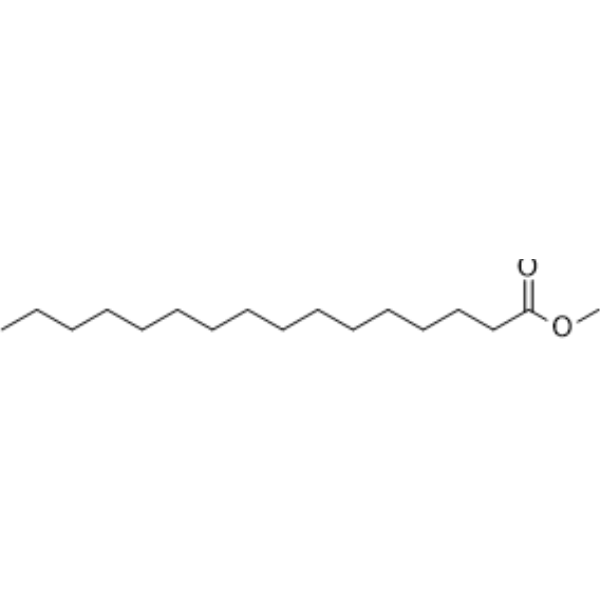
Cat. No.: HY-N1482
CAS No.: 112-39-0
Methyl palmitate is a naturally occurring fatty acid ester. Methyl palmitate is a potent inhibitor of ΙκB phosphorylation. Methyl palmitate modulates macrophage activity and down-regulates pro-inflammatory mediators such as TNF-α and nitric oxide (NO). Methyl palmitate possesses anti-inflammatory and antifibrotic effects. Methyl palmitate can inhibit LPS (HY-D1056)-induced Kupffer cells and rat peritoneal macrophages. Methyl palmitate is able to inhibit the phagocytic function of RAW cells. Methyl palmitate is antagonistic to muscarinic receptors. Methyl palmitate exerts cardioprotective effects against ischemia/reperfusion injury in vivo. Methyl palmitate is highly toxic against adult T. cinnabarinus .
loading...
    loading...
Cat. No.: HY-NP070
Synonyms: LTL
Lotus tetragonolobus lectin (LTL) is a plant lectin that specifically recognizes and binds to α-L-fucopyranosyl residues, a sugar structure serving as the key terminal glycosyl group of human blood type O antigen (H antigen). Lotus tetragonolobus lectin exerts macrophage migration inhibitory activity in monomeric form. Lotus tetragonolobus lectin labels and identifies renal proximal tubular epithelial cells to evaluate histopathological changes of sepsis-induced acute kidney injury. Lotus tetragonolobus lectin is applicable to studies in glycobiology, immunology and renal pathology .
loading...
    loading...
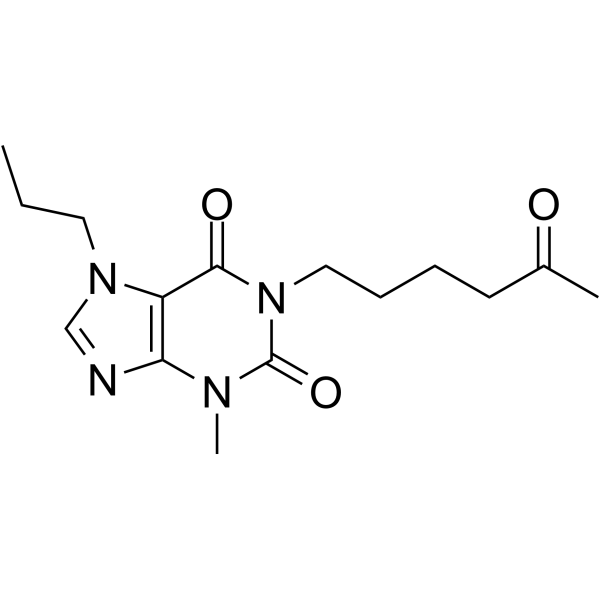
Cat. No.: HY-107203
CAS No.: 55242-55-2
Purity:  99.88%
Synonyms: HWA 285
Propentofylline (HWA 285) is an orally active and brain-penetrant phosphodiesterase inhibitor. Propentofylline blocks adenosine reuptake and prevents cyclic nucleotide degradation. Propentofylline can be used for the research of primary degenerative (Alzheimer's) dementia, vascular dementia, cerebral ischemia, acute stroke, and learning and memory disorders .
loading...
    loading...
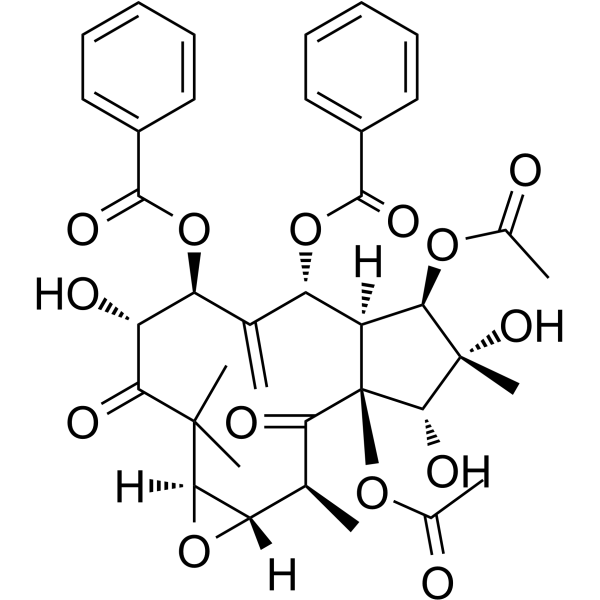
Cat. No.: HY-126420
CAS No.: 57685-46-8
Purity:  ≥99.0%
Kansuinine B is a natural diterpenoid compound with anti-inflammatory, anti-cancer and anti-viral activities, which can be isolated from the roots of Euphorbia kansui. Kansuinine B induces sustained ERK1/2 activation, inhibits IL-6-induced Stat3 activation and tyrosine phosphorylation, and enhances serine phosphorylation of Stat3. Kansuinine B negatively regulates the IL-6 signaling pathway by upregulating the expression of SOCS-3. Kansuinine B promotes the proliferation of mouse splenic lymphocytes in vitro and stimulates rat peritoneal macrophages to produce NO. Kansuinine B can be used in studies related to liver cancer and COVID-19 .
loading...
    loading...
Cat. No.: HY-167715
CAS No.: 58712-69-9
Traxanox is an orally available diuretic that enhances phagocytosis of yeast granules by mouse peritoneal macrophages and rat peritoneal polymorphonuclear leukocytes in vitro. Traxanox inhibits IgE-mediated histamine release and cyclic AMP phosphodiesterase activity.Traxanox exhibits anti-inflammatory activity, as it inhibits the anaphylactoid reaction and reduces pleural fluid accumulation in experimental models of inflammation. Traxanox also demonstrates a synergistic effect when combined with hydrocortisone or indomethacin in suppressing adjuvant arthritis in rats.
loading...
    loading...
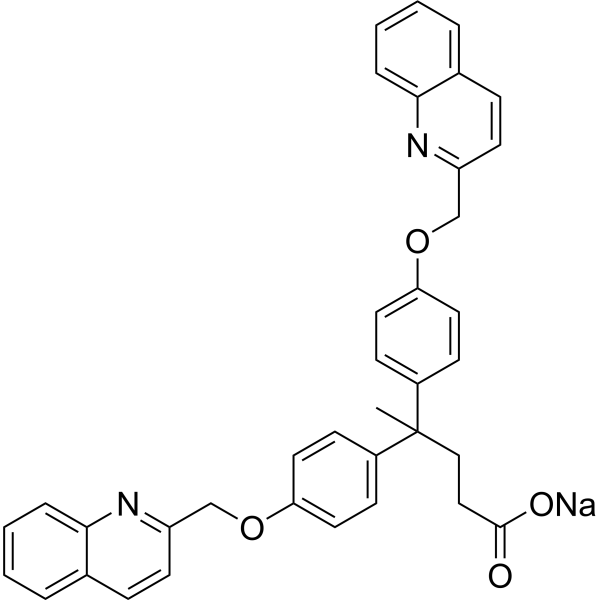
Cat. No.: HY-113628
CAS No.: 189498-57-5
Synonyms: VML-530
Target:  

FLAP

Research Areas:  

Inflammation/Immunology

ABT-080 is an orally active inhibitor of leukotriene biosynthesis that targets 5-lipoxygenase-activating protein (FLAP). ABT-080 inhibits leukotriene production in intact human neutrophils, mouse peritoneal macrophages and human whole blood, with IC50 values of 20 nM, 0.16 nM and 13 μM, respectively. ABT-080 blocks the leukotriene pathway leading to the synthesis of LTB4 and LTC4, but does not block PGH2 biosynthesis. ABT-080 inhibits leukotriene biosynthesis and bronchoconstriction in mouse models. ABT-080 is used in research related to asthma, pleurisy and allergy .
loading...
    loading...
Cat. No.: HY-107203S
CAS No.: 1216516-37-8
Synonyms: HWA 285-d6
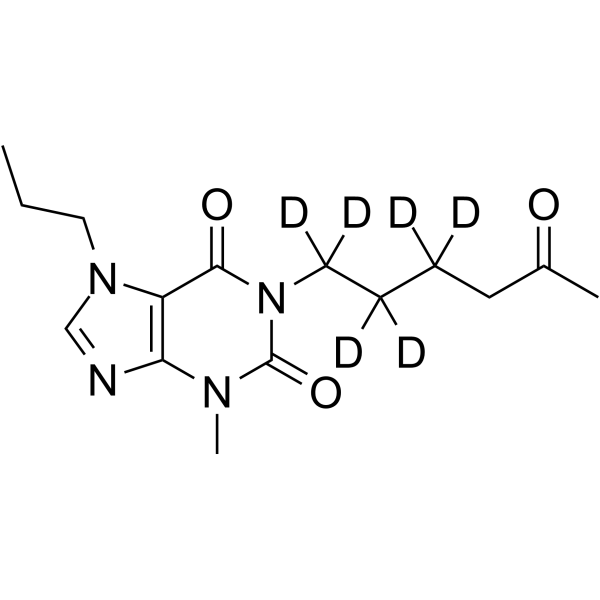
Propentofylline-d6 (HWA 285-d6) is the deuterium labeled Propentofylline. Propentofylline is an orally active and brain-penetrant phosphodiesterase inhibitor. Propentofylline blocks adenosine reuptake and prevents cyclic nucleotide degradation. Propentofylline can be used for the research of primary degenerative (Alzheimer's) dementia, vascular dementia, cerebral ischemia, acute stroke, and learning and memory disorders .
loading...
    loading...
Cat. No.: HY-N17448
CAS No.: 942304-06-5
Fraxinuacidoside functions as a norditerpene glucopyranoside with a unique carbon skeleton. Fraxinuacidoside can be found in the stem bark of Fraxinus sieboldiana .
loading...
    loading...
Cat. No.: HY-113628A
CAS No.: 189498-56-4
Synonyms: VML-530 free base
Target:  

FLAP

Research Areas:  

Inflammation/Immunology

ABT-080 free base is an orally active inhibitor of leukotriene biosynthesis that targets 5-lipoxygenase-activating protein (FLAP). ABT-080 free base inhibits leukotriene production in intact human neutrophils, mouse peritoneal macrophages and human whole blood, with IC50 values of 20 nM, 0.16 nM and 13 μM, respectively. ABT-080 free base blocks the leukotriene pathway leading to the synthesis of LTB4 and LTC4, but does not block PGH2 biosynthesis. ABT-080 free base inhibits leukotriene biosynthesis and bronchoconstriction in mouse models. ABT-080 is used in research related to asthma, pleurisy and allergy .
loading...
    loading...
Cat. No.: HY-18542
CAS No.: 1402612-58-1
KT195 is a serine hydrolase inhibitor that targets ABHD6 (IC50 = 10 nM) and ABHD2, with no significant activity against DAGLβ. KT195 inhibits endoplasmic reticulum calcium release and mitochondrial calcium uptake by targeting ABHD2, thereby blocking A23187 (HY-N6687) and H2O2-induced necrotic cell death and apoptosis. By inhibiting ABHD6 activity, KT195 significantly induces 2-AG accumulation in Neuro2A cells and reduces IL-1β secretion in lipopolysaccharide-treated macrophages. KT195 has been used as a negative control probe for DAGLβ and can be applied in studies of ABHD6 and ABHD2 in calcium signaling, lipid metabolism, neuronal function, and inflammatory .
loading...
    loading...

