17 Results for "

salivary receptor

" in MedChemExpress (MCE) Product Catalog:
Products (17)

17 Results for "salivary receptor" in MCE Product Catalog:

2
2 Cited Publications
Cat. No.: HY-70020B
CAS No.: 107220-28-0
Synonyms: AF102B hydrochloride
Target:  

mAChR

Research Areas:  

Neurological Disease Cancer

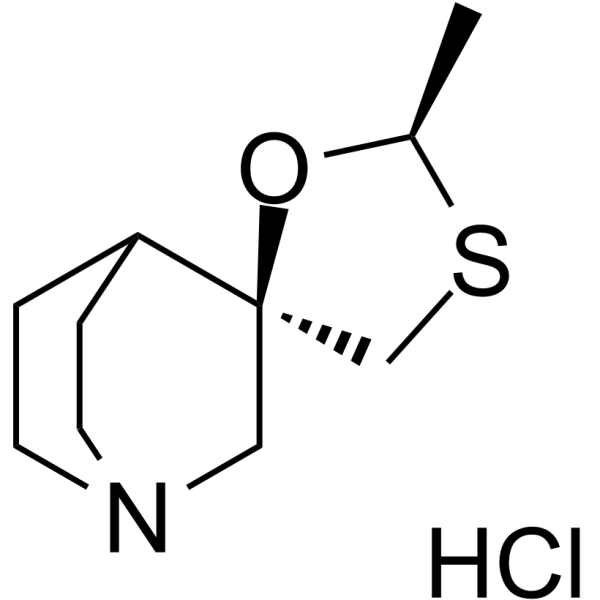
Cevimeline hydrochloride (AF102B hydrochloride) is a quinuclidine derivative of acetylcholine and a selective and orally active muscarinic M1 and M3 receptor agonist. Cevimeline hydrochloride stimulates secretion by the salivary glands and can be used as a sialogogue for xerostomia . Cevimeline hydrochloride can cross the blood-brain barrier (BBB) .
loading...
    loading...
2
2 Cited Publications
Cat. No.: HY-76772
CAS No.: 153504-70-2
Synonyms: SNI-2011; AF102B hydrochloride hemihydrate
Target:  

mAChR

Research Areas:  

Neurological Disease Cancer

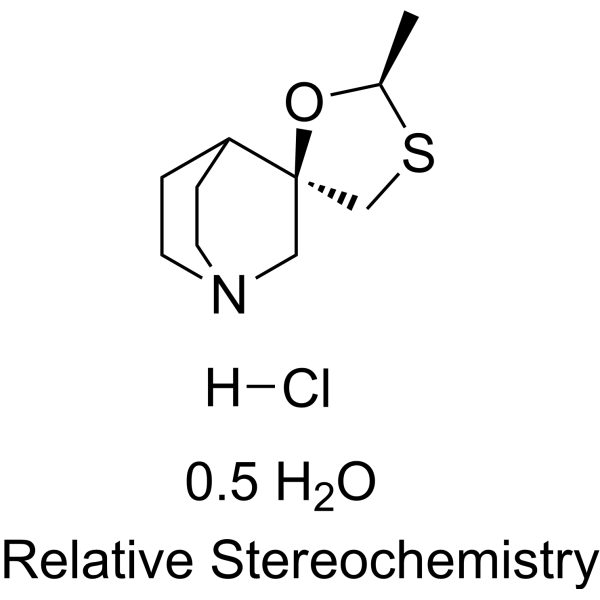
Cevimeline hydrochloride hemihydrate (SNI-2011) is a quinuclidine derivative of acetylcholine and a selective and orally active muscarinic M1 and M3 receptor agonist. Cevimeline hydrochloride hemihydrate stimulates secretion by the salivary glands and can be used as a sialogogue for xerostomia . Cevimeline hydrochloride hemihydrate can cross the blood-brain barrier (BBB) .
loading...
    loading...
2
2 Cited Publications
Cat. No.: HY-70020
CAS No.: 107233-08-9
Synonyms: AF102B
Target:  

mAChR

Research Areas:  

Neurological Disease Cancer

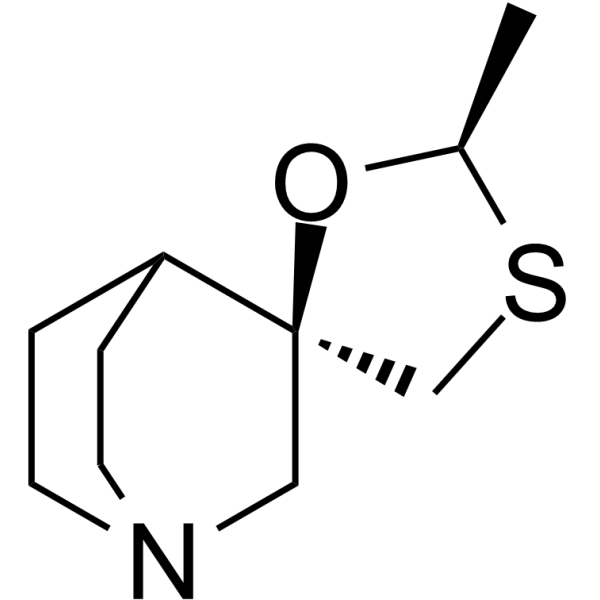
Cevimeline (AF-102B) is a quinuclidine derivative of acetylcholine and a selective and orally active muscarinic M1 and M3 receptor agonist. Cevimeline stimulates secretion by the salivary glands and can be used as a sialogogue for xerostomia . Cevimeline can cross the blood-brain barrier (BBB) .
loading...
    loading...
Cat. No.: HY-90010
CAS No.: 124937-52-6
Synonyms: Kabi-2234; PNU-200583E
Target:  

mAChR Cytochrome P450

Research Areas:  

Neurological Disease Cancer

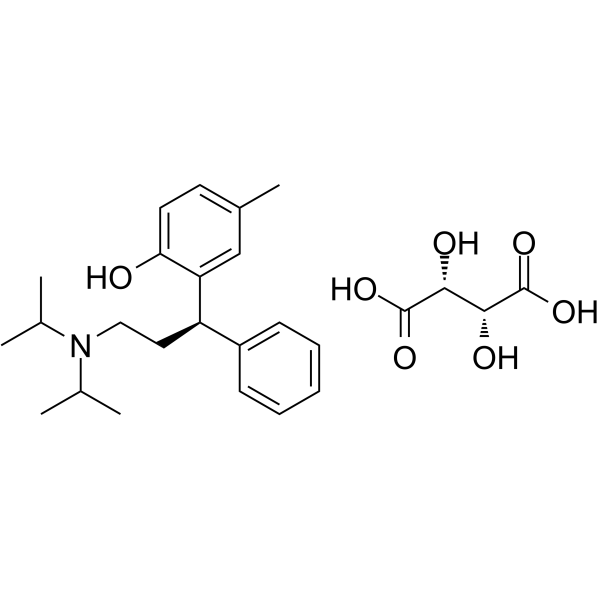
Tolterodine tartrate (Kabi-2234) is a mAChR inhibitor and substrate for cytochrome P450 enzymes. Tolterodine tartrate competitively binds acetylcholine, reduces sympathetic excitation, and inhibits involuntary bladder muscle contraction. Tolterodine tartrate restores the Nrf2/NF-κB signaling pathway, mediates protection against inflammatory response and ferroptosis. Tolterodine tartrate ameliorates LPS (HY-D1056)-induced reactive oxygen species production and lipid oxidation. Tolterodine tartrate can be used for the research of urinary tract infections and overactive bladder .
loading...
    loading...
Cat. No.: HY-U00050
CAS No.: 47132-16-1
Synonyms: E-10-OH-NT
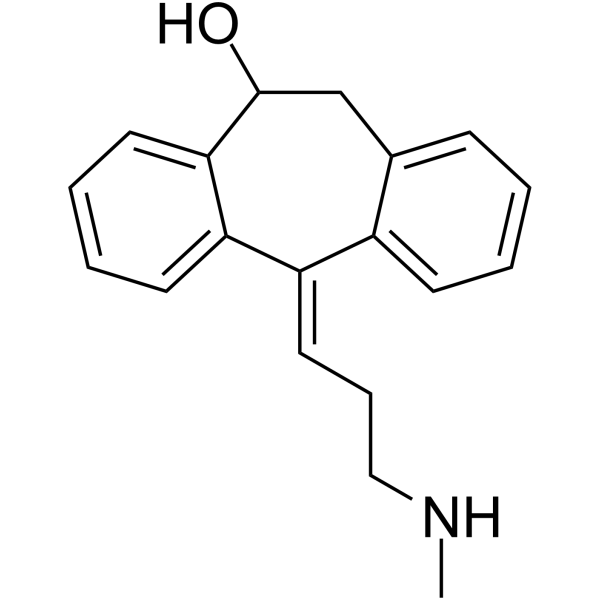
(E)-10-Hydroxynortriptyline (E-10-OH-NT) is a blood-brain barrier-permeable norepinephrine uptake inhibitor. (E)-10-Hydroxynortriptyline effectively promotes central norepinephrine neuronal transmission, with little interindividual variation in in vivo potency. (E)-10-Hydroxynortriptyline has low affinity for muscarinic receptors, exhibits only extremely weak anticholinergic activity, and does not inhibit salivary secretion. (E)-10-Hydroxynortriptyline can be used in studies related to depression .
loading...
    loading...
Cat. No.: HY-B0662
CAS No.: 170105-16-5
Synonyms: KRP-197; ONO-8025
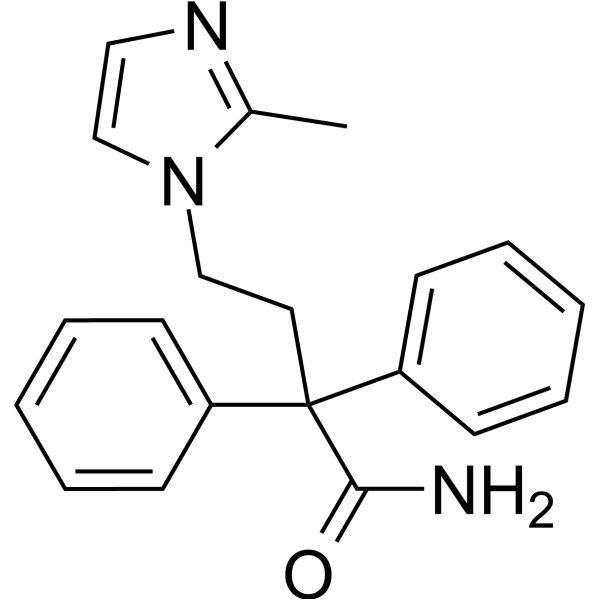
Imidafenacin (KRP-197; ONO-8025) is an orally active inhibitor of muscarinic (mAChR) M1 and M3 receptors. Imidafenacin potently inhibits bladder contraction in vivo and exerts an antidiuretic effect by enhancing the signaling pathway of vasopressin (antidiuretic hormone). Imidafenacin can be used in research related to overactive bladder .
loading...
    loading...
Cat. No.: HY-P1130
CAS No.: 908844-75-7
Synonyms: Galanin-(2-13)-Glu-His-(Pro)3-(Ala-Leu)2-Ala-amide
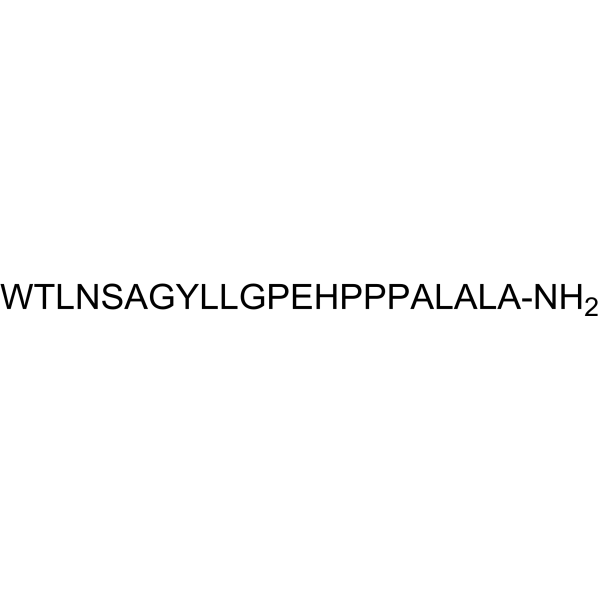
M871 (Galanin-(2-13)-Glu-His-(Pro)3-(Ala-Leu)2-Ala-amide) is an orally active and selective galanin receptor type 2 (GalR2) antagonist. M871 exhibits Ki values of 13.1 nM, 420 nM and >10 μM for GalR2, GalR1 and GalR3 respectively. M871 relieves the mice allergic rhinitis by reducing IgE production, as well as the number of B cells in tissues. M871 can inhibit the nerve invasion of salivary adenoid cystic carcinoma (SACC) and alleviate myocardial ischemia-reperfusion injury. M871 can be used for research on GalR2-related diseases (such as epilepsy, pain) .
loading...
    loading...
Cat. No.: HY-14825A
CAS No.: 1159101-48-0
Purity:  99.86%
Synonyms: SVT-40776 D-tartrate
Target:  

mAChR

Research Areas:  

Inflammation/Immunology

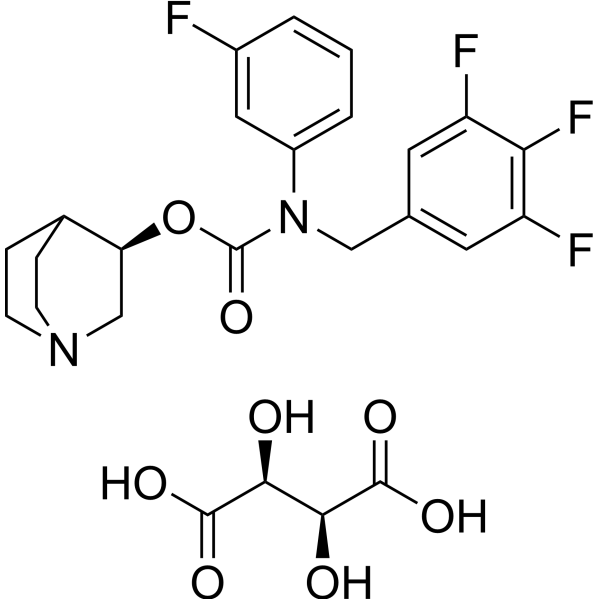
Tarafenacin (SVT-40776) D-tartrate is an orally active, selective M3 muscarinic receptor (M3 muscarinic receptor) antagonist with 203-fold selectivity over the M2 muscarinic receptor. Tarafenacin D-tartrate does not affect atrial contraction, arterial blood pressure or arterial pressure at high doses. Tarafenacin D-tartrate can be used in the research of overactive bladder .
loading...
    loading...
Cat. No.: HY-P3483
CAS No.: 135374-80-0
Maxadilan is a specific irreversible PAC1 receptor agonist and a potent vasodilator peptide present in the salivary glands of sand flies. Maxadilan exhibits anti-apoptotic activity in hADSCs. Maxadilan inhibits pro-inflammatory cytokines (TNF-α) and enhances anti-inflammatory mediators (IL-10). Maxadilan can activate leukocytes and inhibit vascular permeability through PAC1 receptors. Maxadilan promotes neural differentiation of human adipose-derived stem cells. Maxadilan can be used to study endotoxin shock, atherosclerosis, and neurodegenerative diseases [1] [2] [3] [4] [5].
loading...
    loading...
Cat. No.: HY-P3913
CAS No.: 320350-56-9
Target:  

Bacterial

Research Areas:  

Infection

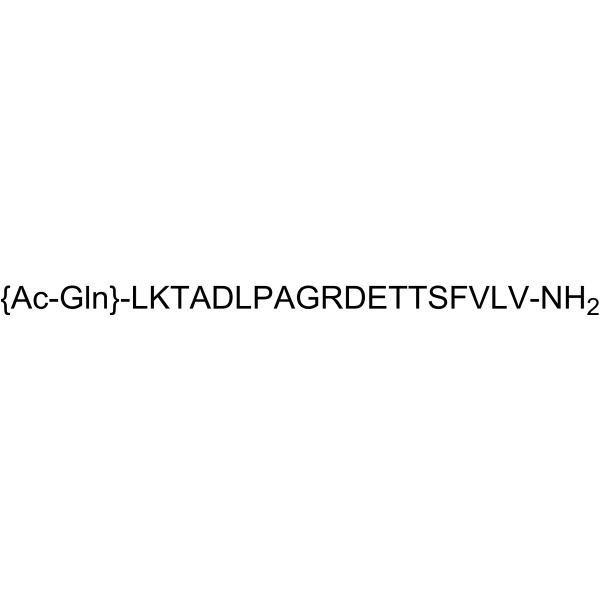
Acetyl-Adhesin (1025-1044) amide is a 20-peptide fragment of Streptococcus pyogenes cell surface adhesin that acts as an antimicrobial peptide to specifically inhibit the binding of adhesin to salivary receptors and prevent recolonization of Streptococcus pyogenes .
loading...
    loading...
Cat. No.: HY-70020BR
CAS No.: 107220-28-0
Synonyms: AF102B hydrochloride (Standard)
Research Areas:  

Neurological Disease Cancer

Cevimeline (hydrochloride) (Standard) is the analytical standard of Cevimeline (hydrochloride). This product is intended for research and analytical applications. Cevimeline hydrochloride (AF102B hydrochloride) is a quinuclidine derivative of acetylcholine and a selective and orally active muscarinic M1 and M3 receptor agonist. Cevimeline hydrochloride stimulates secretion by the salivary glands and can be used as a sialogogue for xerostomia . Cevimeline hydrochloride can cross the blood-brain barrier (BBB) .
loading...
    loading...
Cat. No.: HY-U00050S
Synonyms: E-10-OH-NT-d3
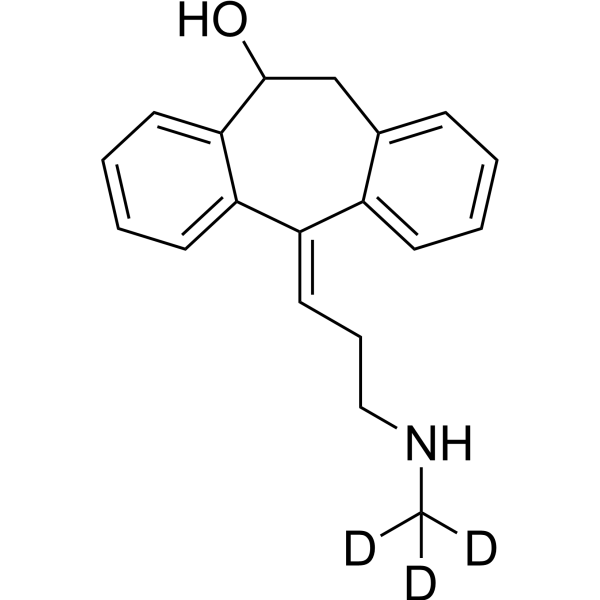
(E)-10-Hydroxynortriptyline-d3 (E-10-OH-NT-d3) is the deuterated-labeled (E)-10-Hydroxynortriptyline (HY-U00050). (E)-10-Hydroxynortriptyline (E-10-OH-NT) is a blood-brain barrier-permeable norepinephrine uptake inhibitor. (E)-10-Hydroxynortriptyline effectively promotes central norepinephrine neuronal transmission, with little interindividual variation in in vivo potency. (E)-10-Hydroxynortriptyline has low affinity for muscarinic receptors, exhibits only extremely weak anticholinergic activity, and does not inhibit salivary secretion. (E)-10-Hydroxynortriptyline can be used in studies related to depression .
loading...
    loading...
Cat. No.: HY-14825
CAS No.: 385367-47-5
Synonyms: SVT-40776
Target:  

mAChR

Research Areas:  

Inflammation/Immunology

Tarafenacin (SVT-40776) is an orally active, selective M3 muscarinic receptor (M3 muscarinic receptor) antagonist with 203-fold selectivity over the M2 muscarinic receptor. Tarafenacin does not affect atrial contraction, arterial blood pressure or arterial pressure at high doses. Tarafenacin can be used in the research of overactive bladder .
loading...
    loading...
Cat. No.: HY-183932
CAS No.: 146561-59-3
Target:  

mAChR

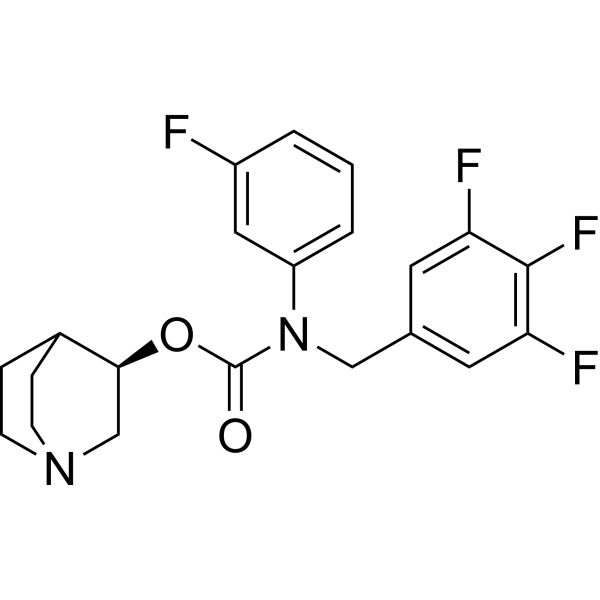
NPC-14695 is a competitive and selective M3 muscarinic receptor antagonist, with a Kd value of 15 nM for guinea pig M3, 60 nM for guinea pig M2, and 25 nM for rabbit M1. NPC-14695 exhibits higher activity towards M3 receptors in bronchial smooth muscle than towards those regulating salivary secretion. NPC-14695 inhibits Carbachol (HY-B1208)-induced contraction of isolated rabbit iris smooth muscle .
loading...
    loading...
Cat. No.: HY-76772R
CAS No.: 153504-70-2
Synonyms: SNI-2011 (Standard); AF102B hydrochloride hemihydrate (Standard)
Research Areas:  

Neurological Disease Cancer

Cevimeline (hydrochloride hemihydrate) (Standard) is the analytical standard of Cevimeline (hydrochloride hemihydrate). This product is intended for research and analytical applications. Cevimeline hydrochloride hemihydrate (SNI-2011) is a quinuclidine derivative of acetylcholine and a selective and orally active muscarinic M1 and M3 receptor agonist. Cevimeline hydrochloride hemihydrate stimulates secretion by the salivary glands and can be used as a sialogogue for xerostomia . Cevimeline hydrochloride hemihydrate can cross the blood-brain barrier (BBB) .
loading...
    loading...
Cat. No.: HY-P3483A
Maxadilan TFA is a specific irreversible PAC1 receptor agonist and a potent vasodilator peptide present in the salivary glands of sand flies. Maxadilan TFA exhibits anti-apoptotic activity in hADSCs. Maxadilan TFA inhibits pro-inflammatory cytokines (TNF-α) and enhances anti-inflammatory mediators (IL-10). Maxadilan TFA can activate leukocytes and inhibit vascular permeability through PAC1 receptors. Maxadilan TFA promotes neural differentiation of human adipose-derived stem cells. Maxadilan TFA can be used to study endotoxin shock, atherosclerosis, and neurodegenerative diseases [1] [2] [3] [4] [5].
loading...
    loading...
Cat. No.: HY-P75710
Purity:  ≥ 95%, as determined by reducing SDS-PAGE.
Synonyms: DMBT1; Surfactant Pulmonary-Associated D-Binding Protein; Deleted In Malignant Brain Tumors 1; Deleted In Malignant Brain Tumors 1 Protein; Hensin; salivary Scavenger And Agglutinin; GP340; Glycoprotein 340; Scavenger receptor Cysteine-Rich Domain-Contain
Species:  
Human
Source:  
HEK293
loading...
    loading...
  • 1

