
1. Search Result
Search Result
Results for "

spontaneous locomotor activity

" in MedChemExpress (MCE) Product Catalog:

18

Inhibitors & Agonists

2

Peptides

4

Natural
Products

1

Isotope-Labeled Compounds

Cat. No. Product Name Target Research Areas Chemical Structure
  • HY-W011689
    6PPD
    1 Publications Verification

    Reactive Oxygen Species (ROS) Others
    6PPD is a rubber antioxidant that scavenges ozone and forms nitro radicals. Exposure to 6PPD reduces the hatching rate, impairs spontaneous locomotor activity, shortens body length and causes malformations in zebrafish embryos. 6PPD also induces oxidative stress in zebrafish embryos .
    6PPD
  • HY-113357

    Endogenous Metabolite Neurological Disease Metabolic Disease Inflammation/Immunology
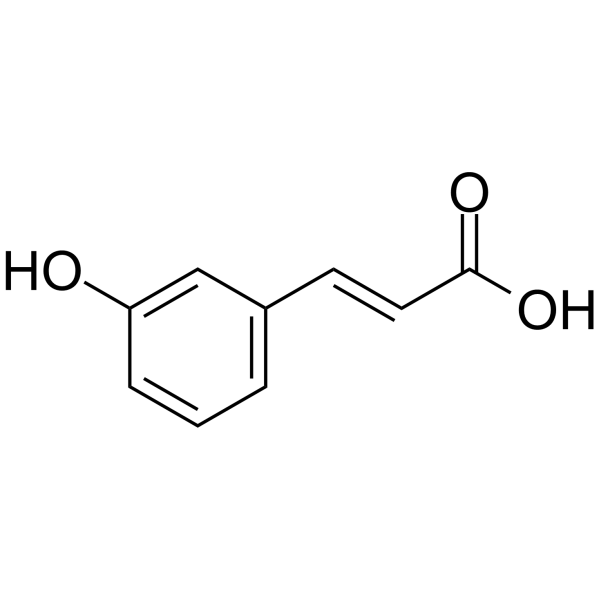
    m-Coumaric acid is a polyphenol metabolite from caffeic acid, formed by the gut microflora and the amount in human biofluids is diet-dependant. m-Coumaric acid is a BBB-penetrant metabolite of chlorogenic acid. m-Coumaric acid stimulates the cerebral nerves in vitro. m-Coumaric acid can evoke neurite outgrowth in hippocampal neuronal cells. m-Coumaric acid can promote neuronal differentiation. m-Coumaric acid increases spontaneous locomotor activity in mice by acting on the central nervous system. m-Coumaric acid inhibits the oxidation of L-dopa by epidermis tyrosinase. m-Coumaric acid attenuates non-catalytic protein glycosylation in retinas of diabetic rats .
    m-Coumaric acid
  • HY-168773

    EAAT Neurological Disease
    (R)-AS-1 is a selective positive allosteric modulator of the excitatory amino acid transporter 2 (EAAT2), with an EC50 of 11 nM. (R)-AS-1 (at doses of 60 and 90 mg/kg) increases spontaneous locomotor activity in mice. Additionally, it demonstrates anticonvulsant activity in mouse models of seizures induced by maximal electroshock (MES), pentylenetetrazole (PTZ), or electrical stimuli (32 or 44 mA), with ED50s of 66.3, 36.3, 15.6, and 41.6 mg/kg, respectively. (R)-AS-1 can be used in neurological disease research .
    (R)-AS-1
  • HY-W015616

    4-Penylbutan-2-one

    Environmental Pollutants Tyrosinase Infection Metabolic Disease
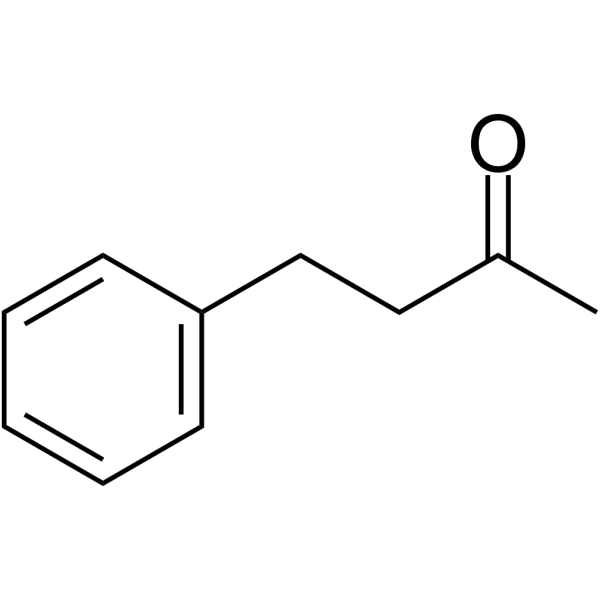
    Benzylacetone (4-Penylbutan-2-one) is an aromatic compound. Benzylacetone is a mushroom tyrosinase inhibitor with an IC50 of 2.8 mM, a Ki of 1.25 mM for monophenolase and an IC50 of 0.6 mM, a Ki of 0.39 mM for diphenolase. Benzylacetone inhibits free mushroom tyrosinase and enzyme-substrate complex. Benzylacetone acts as an appetite enhancer via olfactory stimulation, reduces spontaneous locomotor activity, induces weight gain. Benzylacetone exhibits repellent, fumigant, and contact toxicity against Tribolium castaneum adults .
    Benzylacetone
  • HY-113357R

    Reference Standards Endogenous Metabolite Neurological Disease Inflammation/Immunology
    m-Coumaric acid (Standard) is the analytical standard of m-Coumaric acid. This product is intended for research and analytical applications. m-Coumaric acid is a polyphenol metabolite from caffeic acid, formed by the gut microflora and the amount in human biofluids is diet-dependant. m-Coumaric acid is a BBB-penetrant metabolite of chlorogenic acid. m-Coumaric acid stimulates the cerebral nerves in vitro. m-Coumaric acid can evoke neurite outgrowth in hippocampal neuronal cells. m-Coumaric acid can promote neuronal differentiation. m-Coumaric acid increases spontaneous locomotor activity in mice by acting on the central nervous system. m-Coumaric acid inhibits the oxidation of L-dopa by epidermis tyrosinase. m-Coumaric acid attenuates non-catalytic protein glycosylation in retinas of diabetic rats .
    m-Coumaric acid (Standard)
  • HY-121775

    Dopamine Receptor Neurological Disease
    F-00217830 is an agonist ofDopamine D2 receptor. PF-00217830 inhibits of spontaneous locomotor activity and 2,5-dimethoxy-4-iodoamphetamine-induced head twitches in rats .
    PF-00217830
  • HY-A0139

    NSC 108165; Navan; Navane

    Sigma Receptor mAChR Histamine Receptor Dopamine Receptor Adrenergic Receptor Others
    Thiothixene is a typical antipsychotic. It selectively binds to dopamine D2 over D1, D3, and D4 receptors (Kis=0.417, 338, 186.2, and 363.1 nM, respectively). Thiothixene also binds to various serotonin (5-HT), histamine H1, α1- and α2-adrenergic, muscarinic acetylcholine, and sigma receptors (Kis=15-5,754 nM) as well as the dopamine, norepinephrine, and serotonin transporters (Kis=3.16-30 μM). In vivo, thiothixene reduces spontaneous and amphetamine-induced locomotor activity in rats. It enhances latent inhibition, as measured by a decreased lick latency in response to light and foot shock stimuli, which is a measure of selective attention in rats.3 Thiothixene also increases competitive behavior in submissive mice, indicating antidepressant-like behavior.
    Thiothixene
  • HY-118402

    Dopamine Receptor Neurological Disease
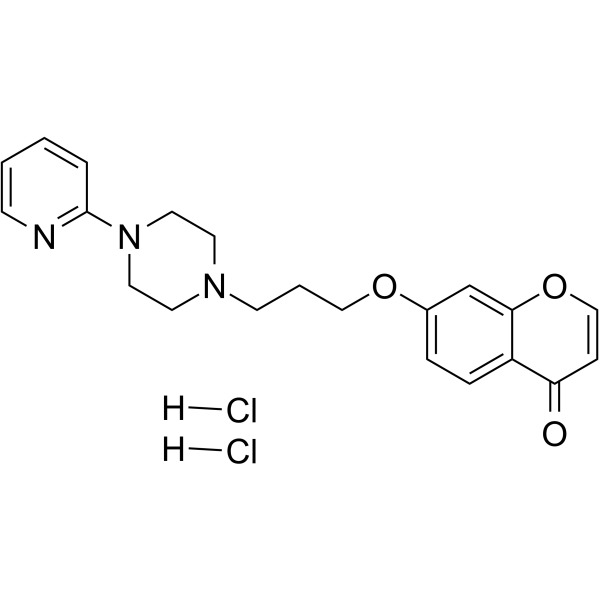
    PD 119819 is a highly selective benzopyran-4-one brain dopamine autoreceptor agonist. PD 119819, a heterocyclic piperazine, inhibits spontaneous locomotor activity and brain dopamine synthesis .
    PD 119819
  • HY-118461

    Dopamine Receptor Neurological Disease
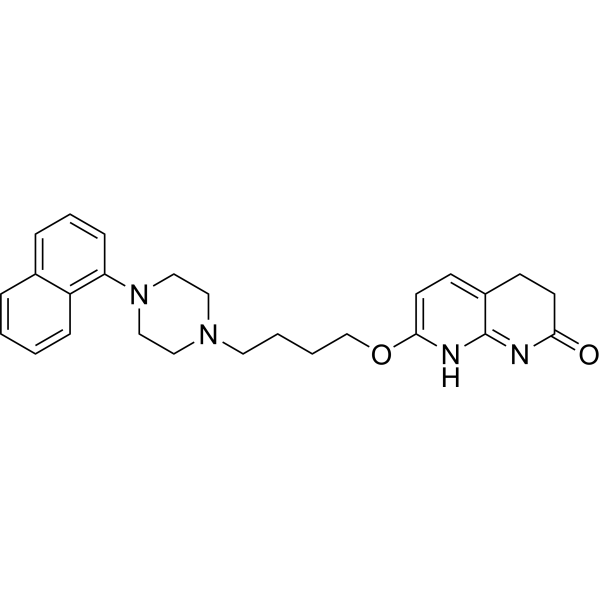
    PD 120697 is an orally active dopamine (DA) agonist. PD 120697 inhibits striatal DA synthesis, DA neuronal firing, spontaneous locomotor activity, and reverses Reserpine (HY-N0480)-induced depression .
    PD 120697
  • HY-P1318

    Opioid Receptor Neurological Disease
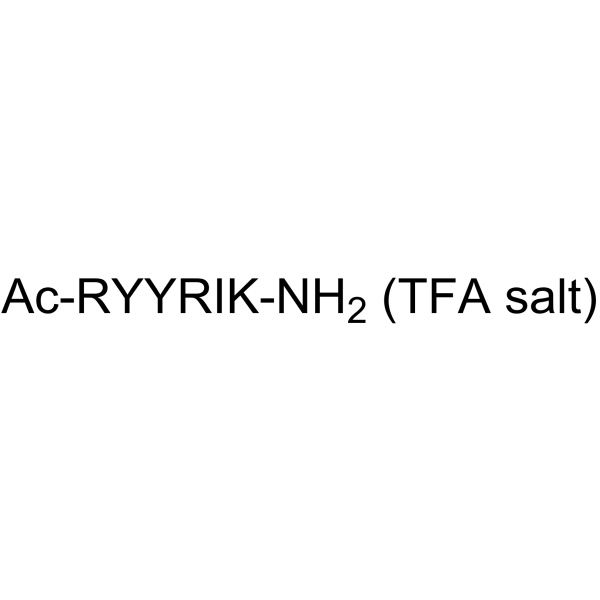
    Ac-RYYRIK-NH2 is a potent and partial agonist on ORL1 transfected in CHO cells (Kd=1.5 nM) and behaves as a endogenous ligand of ORL1. Ac-RYYRIK-NH2 is a specific antagonist for the activation of G protein and competitively antagonizes the stimulation of [ 35S]-GTPgS binding to G proteins by nociceptin/orphanin FQ (noc/OFQ) in membranes and sections of rat brain .
    Ac-RYYRIK-NH2
  • HY-149247

    5-HT Receptor Dopamine Receptor Neurological Disease
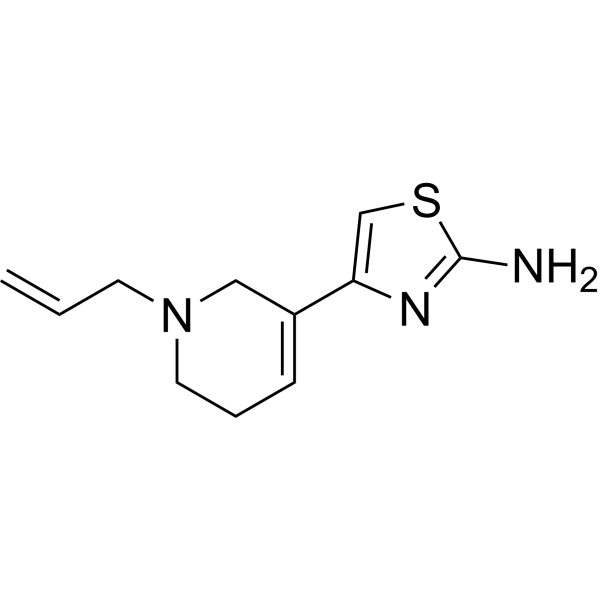
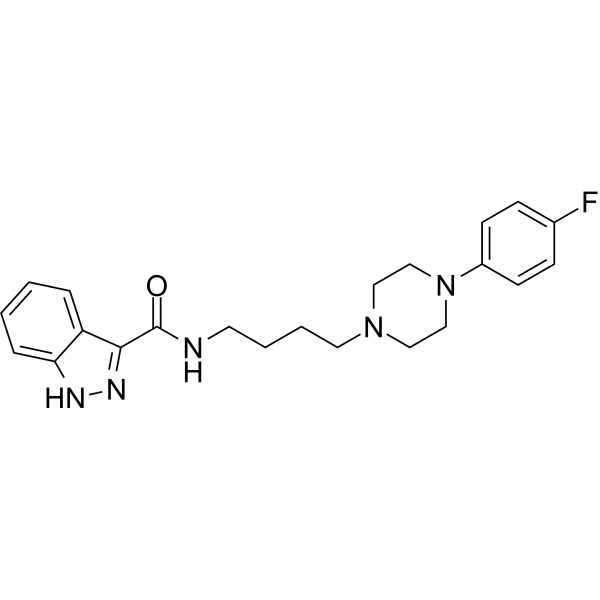
    Antipsychotic agent-2 (Compound 11) is a potent antipsychotic agent. Antipsychotic agent-2 shows affinities for 5-HT1A, 5-HT2A, 5-HT2C, D2 and H1 receptors with Kis of 56.6, 66.7, 552, 596 and 1140 nM, respectively. Antipsychotic agent-2 has BBB permeability .
    Antipsychotic agent-2
  • HY-P1318A

    Opioid Receptor Neurological Disease
    Ac-RYYRIK-NH2 TFA is a potent and partial agonist on ORL1 transfected in CHO cells (Kd=1.5 nM) and behaves as a endogenous ligand of ORL1. Ac-RYYRIK-NH2 is a specific antagonist for the activation of G protein and competitively antagonizes the stimulation of [ 35S]-GTPgS binding to G proteins by nociceptin/orphanin FQ (noc/OFQ) in membranes and sections of rat brain .
    Ac-RYYRIK-NH2 TFA
  • HY-W748758

    NSC 108165-d8; Navan-d8; Navane-d8

    Isotope-Labeled Compounds Dopamine Receptor Histamine Receptor mAChR Adrenergic Receptor Sigma Receptor Others
    (Z)-Thiothixene-d8 (NSC 108165-d8; Navan-d8; Navane-d8) is the deuterium labeled Thiothixene (HY-A0139). Thiothixene is a typical antipsychotic. It selectively binds to dopamine D2 over D1, D3, and D4 receptors (Kis=0.417, 338, 186.2, and 363.1 nM, respectively). Thiothixene also binds to various serotonin (5-HT), histamine H1, α1- and α2-adrenergic, muscarinic acetylcholine, and sigma receptors (Kis=15-5,754 nM) as well as the dopamine, norepinephrine, and serotonin transporters (Kis=3.16-30 μM). In vivo, thiothixene reduces spontaneous and amphetamine-induced locomotor activity in rats. It enhances latent inhibition, as measured by a decreased lick latency in response to light and foot shock stimuli, which is a measure of selective attention in rats.3 Thiothixene also increases competitive behavior in submissive mice, indicating antidepressant-like behavior.
    (Z)-Thiothixene-d8
  • HY-183428

    Trace Amine-associated Receptor (TAAR) Neurological Disease
    LK00764 is a TAAR1 agonist with an EC50 of 4 nM. LK00764 alleviates Dizocilpine (HY-15084B)-induced hyperlocomotion, reduces vertical locomotor activity, attenuates spontaneous hyperlocomotion in dopamine transporter knockout rats, and inhibits stress-induced hyperthermia in rats. LK00764 can be used for the research of schizophrenia .
    LK00764
  • HY-142110

    DCMB

    Amine N-methyltransferase Adrenergic Receptor Neurological Disease
    LY 78335 (DCMB) is a brain-penetrant phenylethanolamine-N-methyltransferase (PNMT) inhibitor with a Ki of 0.09 μM. LY 78335 acts as an α₂-adrenoceptor inhibitor with an IC50 of 10 μM. LY 78335 increases spontaneous locomotor activity in rats. LY 78335 increases extracellular concentration of 3-methoxy-4-hydroxyphenylglycol (MHPG) in rat hypothalamus. LY 78335 prevents growth hormone (GH) secretion in rats. LY 78335 can be used for the research of depression .
    LY 78335
  • HY-W015616R

    4-Penylbutan-2-one (Standard)

    Tyrosinase Reference Standards Infection Metabolic Disease
    Benzylacetone (4-Penylbutan-2-one) (Standard) is the analytical standard of Benzylacetone (HY-W015616). This product is intended for research and analytical applications. Benzylacetone is an aromatic compound. Benzylacetone is a mushroom tyrosinase inhibitor with an IC50 of 2.8 mM, a Ki of 1.25 mM for monophenolase and an IC50 of 0.6 mM, a Ki of 0.39 mM for diphenolase. Benzylacetone inhibits free mushroom tyrosinase and enzyme-substrate complex. Benzylacetone acts as an appetite enhancer via olfactory stimulation, reduces spontaneous locomotor activity, induces weight gain. Benzylacetone exhibits repellent, fumigant, and contact toxicity against Tribolium castaneum adults .
    Benzylacetone (Standard)
  • HY-15080

    LY 293606

    iGluR Cardiovascular Disease Neurological Disease
    GYKI 53405 is a non-competitive, orally active AMPA receptor antagonist. GYKI 53405 shows no significant binding affinity for GABAA, GABAB or benzodiazepine receptors. GYKI 53405 increases self-grooming behavior, induces wet dog-like shakes, reduces spontaneous activity, produces anxiolytic-like behavior, reverses the anxiogenic effect induced by mCPP, inhibits locomotor activity, suppresses sound-induced and maximal electroshock-induced seizures, prolongs survival in global cerebral ischemia models, and exhibits sustained anticonvulsant effects at doses below the sedation threshold. GYKI 53405 can be used in research related to absence epilepsy, anxiety disorders and global cerebral ischemia .
    GYKI 53405
  • HY-182677

    5-HT Receptor Dopamine Receptor Neurological Disease
    EF-7412 is a dual antagonist of the 5-HT1A receptor and dopamine D2 receptor, with Ki values of 27 nM and 22 nM, respectively. EF-7412 acts as an antagonist at both pre- and postsynaptic 5-HT1A receptor sites, blocking 8-OH-DPAT (HY-112061)-induced hypothermia, behavioral syndrome, and corticosterone elevation in vivo. EF-7412 increases hypothalamic 5-HIAA/5-HT and DOPAC/DA ratios, alters 5-HT and DA neuronal activity, and slightly decreases spontaneous motor activity. EF-7412 can be used for research on 5-HT1A/D2 receptor regulation and related neural pathways .
    EF-7412

Inquiry Online

Your information is safe with us. * Required Fields.

Salutation


Country or Region *

Applicant Name *


Organization Name *

Department *


Email Address *


Product Name *

Cat. No.


Requested quantity *

Phone Number *


Remarks

Inquiry Online

Inquiry Information

Product Name:
Cat. No.:
Quantity:
MCE Japan Authorized Agent:

