1. Search Result
Search Result
Results for "

synergistic agonist

" in MedChemExpress (MCE) Product Catalog:

18

Inhibitors & Agonists

2

Inhibitory Antibodies

1

Natural
Products

Cat. No. Product Name Target Research Areas Chemical Structure
  • HY-12762
    QS11
    2 Publications Verification

    β-catenin Wnt Arf Family GTPase Cancer
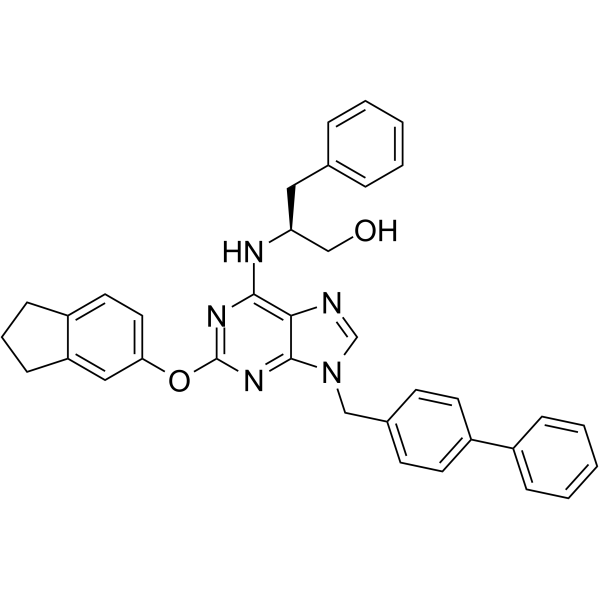
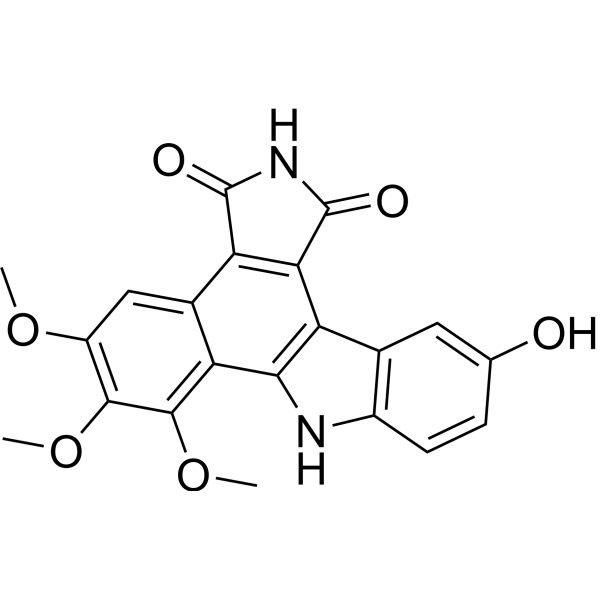
    QS11 is an inhibitor of ARFGAP1 (ADP-ribosylation factor GTPase-activating protein 1), with an EC50 of 1.5 μM. QS11 activates Wnt/β-catenin signaling through an effect on protein trafficking. QS11 inhibits migration of ARFGAP overexpressing breast cancer cells .
    QS11
  • HY-128481

    STING Inflammation/Immunology Cancer
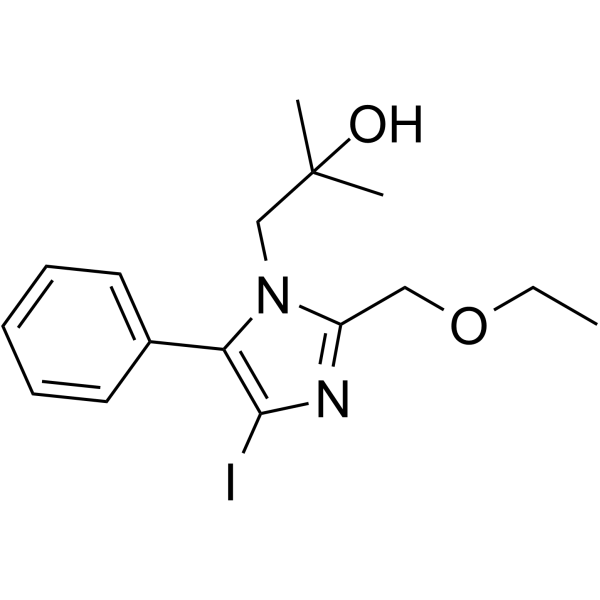
    SB24011 is a STING modulator and a TRIM29-STING protein-protein interaction inhibitor. SB24011 blocks TRIM29-induced K48-linked specific ubiquitination by binding to STING, thereby upregulating intracellular STING protein levels. SB24011 enhances inflammatory cytokine expression and STING-mediated immune responses, and exhibits abscopal antitumor activity that promotes tumor regression and activates T cell infiltration. When combined with STING agonists or anti-PD1 antibodies, SB24011 synergistically enhances antitumor responses. SB24011 is suitable for research related to colon cancer and melanoma .
    SB24011
  • HY-P990951

    REGN-5381

    Natriuretic Peptide Receptor (NPR) Cardiovascular Disease
    Vixticibart (REGN-5381) is a fully human IgG4 monoclonal antibody and NPR1 agonist that targets NPR1. Vixticibart stabilizes the receptor in an activated conformation by binding to the N-terminal domain of NPR1, and enhances the activity of endogenous ligands ANP and BNP without blocking ligand binding when these ligands are present. Vixticibart exerts vasodilatory and hypotensive effects by inducing cGMP production, preferentially dilating venous vessels to reduce systolic and venous pressure, but does not induce diuresis and may trigger a compensatory increase in heart rate. Vixticibart produces a synergistic hypotensive effect when combined with angiotensin-converting enzyme inhibitors or angiotensin receptor blockers, and is currently mainly used in research related to heart failure and hypertension .
    Vixticibart
  • HY-155811

    iGluR Neurological Disease
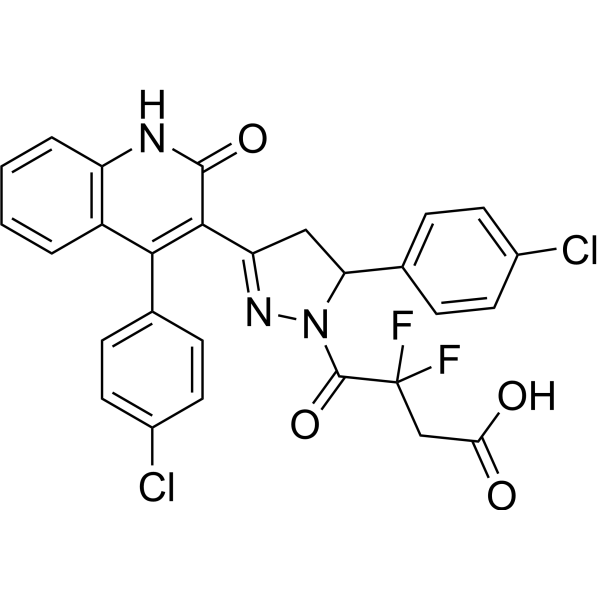
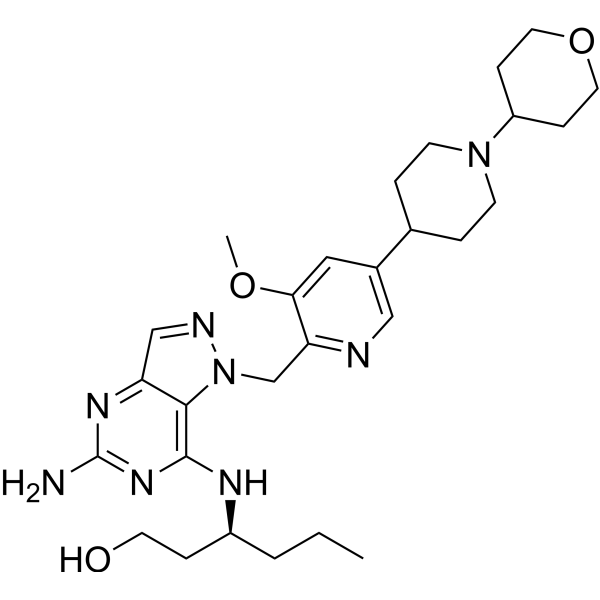
    DQP-997-74 (compound 2i) is a selective negative allosteric modulator of N-methyl-d-aspartate receptor (NMDAR), specifically targeting GluN2C/D (IC50: 0.069 μM and 0.035 μM), with blood-brain barrier penetrability. Where DQP refers to dihydroquinoline-pyrazoline. DQP-997-74 acts synergistically with the agonist glutamate to exhibit time-dependent enhanced potency in inhibiting hypersynchronous activity driven by high-frequency excitatory synaptic transmission. DQP-997-74 reduces the number of epileptogenesis in a murine model of tuberous sclerosis complex (TSC)-induced epilepsy. DQP-997-74 can be used for research on NMDAR-related neurological diseases .
    DQP-997-74
  • HY-N2452

    GLP Receptor Cardiovascular Disease Infection Metabolic Disease
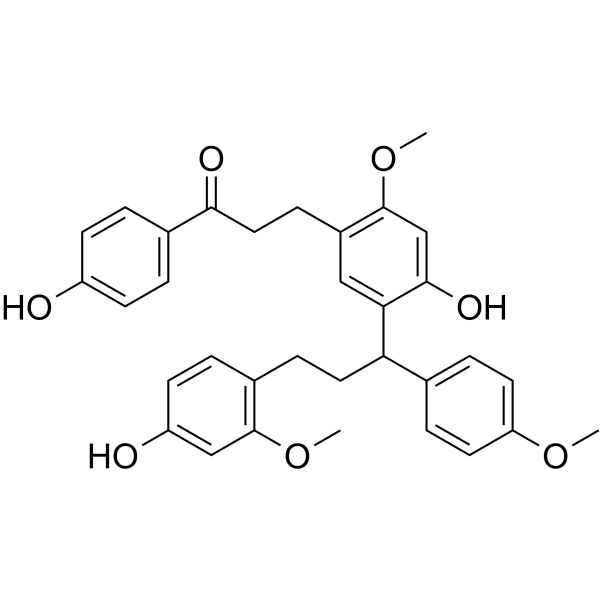
    Cochinchinenin C is a GLP-1R agonist that binds to the extracellular domain of the receptor via hydrophobic interactions and hydrogen bonds, and promotes glucose-dependent insulin secretion from pancreatic β-cells. Cochinchinenin C also increases intracellular cAMP and ATP levels. At low concentrations, Cochinchinenin C binds to human serum albumin, alters its microenvironment, and induces dominant static fluorescence quenching. Cochinchinenin C shows almost no cytotoxicity to pancreatic β-cells, and exerts a synergistic effect with Loureirin A (HY-N1505) when binding to human serum albumin. Cochinchinenin C has been widely used in studies of type 2 diabetes, Helicobacter pylori infection, thrombotic diseases, and other conditions .
    Cochinchinenin C
  • HY-147310

    Toll-like Receptor (TLR) Infection
    CU-CPD107 is a potent, selective toll-like receptor 8 (TLR 8) agonist. CU-CPD107 inhibits TLR8 signaling. CU-CPD107 converts to synergistic agonist activities in the presence of ssRNA and induces TLR8 signaling. CU-CPD107 inhibits proinflammatory factor expression and avoids immune responses in the presence of ssRNA .
    CU-CPD107
  • HY-155705

    TGF-β Receptor GSK-3 β-catenin Others
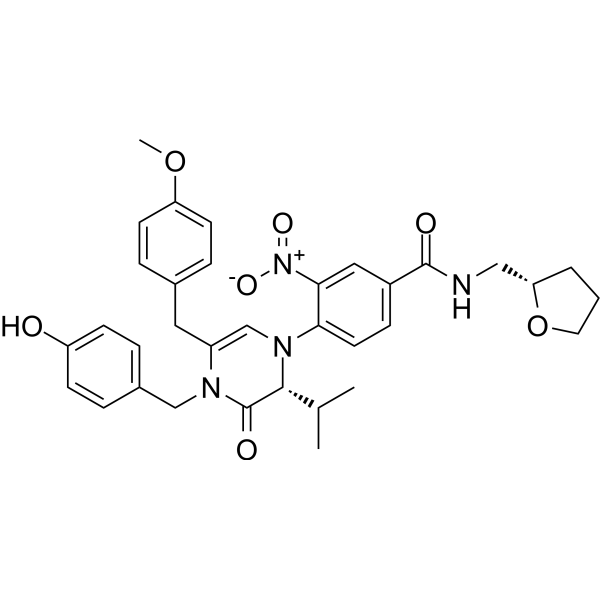
    BMP agonist 1 (compound 2 b) is a small-molecule agonist of bone morphogenic protein (BMP). BMP induces C2C12 cell differentiation with BMP and highly depends on active BMP signaling. BMP agonist 1 inhibits GSK3β, increases β-catenin signaling and synergistically regulates Id2and Id3 expression. BMP agonist 1 is used in diseases and defects of the skeleton research .
    BMP agonist 1
  • HY-179047

    Toll-like Receptor (TLR) MyD88 IKK p38 MAPK ERK TNF Receptor Interleukin Related Inflammation/Immunology Cancer
    SMU-L11-R is a selective TLR7 agonist with an EC50 of 0.012 μM for human TLR7. SMU-L11-R specifically activates TLR7, recruits  MyD88, and triggers MAPK/NF-κB pathways, leading to TNF-α/IL-1β/IL-6 secretion in both mouse and human peripheral blood mononuclear cells. SMU-L11-R promotes M1-like macrophage polarization. SMU-L11-R exhibits excellent synergistic anti-tumor effects with PD-L1 inhibitors by upregulating CD8 +T cells. SMU-L11-R shows potential in colorectal cancer studies .
    SMU-L11-R
  • HY-175422

    GPR119 Metabolic Disease
    K-833 is a GPR119 agonist with EC50 values of 39.8 nM (human), 100nM (mouse), 75.4 nM (rat) and 12.6 nM (dog). K-833 demonstrates a modest increase in GLP-1 secretion and leads to a synergistic increase in GLP-1 levels when combined with AM-5262 (HY-16619) in acute gut peptide secretion assays in mice. K-833 can be used in studies on weight loss .
    K-833
  • HY-P991510

    TNF Receptor Cancer
    CDX-1140 is a human IgG2 CD40 agonist antibody. CDX-1140 activates dendritic cells (DCs) and B cells and drives NF-kB stimulation in a CD40-expressing reporter cell line. CDX-1140 is independent of FcR binding and synergistic with native CD40L signaling. CDX-1140 has both direct and immune-mediated anti-tumor activity. CDX-1140 can be used for the study of lymphoma cancer and solid tumors .
    CDX-1140
  • HY-169066

    Insulin Receptor Metabolic Disease
    INSR agonist 1 is an insulin receptor (INSR) agonist. INSR agonist 1 can increase INSR pY1355/1361 levels and works synergistically with insulin .
    INSR agonist 1
  • HY-162163

    Toll-like Receptor (TLR) Cancer
    TLR7 agonist 19 (Compound 14) is a Toll-like receptor 7 (TLR7) agonist with excellent pharmacokinetic properties and synergistic antitumor activity.
    TLR7 agonist 19
  • HY-117443

    Guanylate Cyclase Cardiovascular Disease
    IWP-051 is an agonist for soluble guanylate cyclase with an EC50 of 290 nM. IWP-051 stimulates the generation of cGMP, and exhibits the synergistic effect with NO. IWP-051 exhibits good pharmacokinetic characteristics in rats .
    IWP-051
  • HY-18201

    Protease Activated Receptor (PAR) Cardiovascular Disease
    SCH-602539 is a selective PAR-1 antagonist. SCH-602539 inhibits platelet aggregation in response to PAR-1-selective high-affinity thrombin receptor agonist peptide. SCH-602539 exhibits synergistic antithrombotic effects when used in combination with Cangrelor (HY-19638) .
    SCH-602539
  • HY-139855

    HIF/HIF Prolyl-Hydroxylase Metabolic Disease
    ZG-2033 (Compound 26) is an orally active HIF-2α agonist that demonstrates nanomolar activity in luciferase reporter gene assays (EC50 = 490 nM). ZG-2033 has the effect of alleviating anemia and exhibits synergistic action with AKB-6548 (HY-101277) in anemia, and can be used in the study of renal anemia .
    ZG-2033
  • HY-183139

    RAR/RXR AP-1 Cancer
    CD666 is a selective retinoic acid receptor-γ (RAR-γ) agonist with a Kd of 68 nM. CD666 inhibits proliferation of cancer cells and shows synergistical effects and anti-AP-1 activity with IFN-γ. CD666 can be used for the research of breast cancer .
    CD666
  • HY-182723

    GPR84 Cancer
    PSB-16671 is an allosteric agonist of GPR84. PSB-16671 recruits β-arrestins and couples to Gi, enhances the Gi activation potency of orthosteric agonists, and exerts a synergistic effect with orthosteric agonists. PSB-16671 promotes G protein activation and partial chemotaxis independent of GPR84 in mouse neutrophils, maintains the phagocytic function of macrophages against cancer cells without inducing receptor desensitization. PSB-16671 can be used in cancer-related research .
    PSB-16671
  • HY-181916

    Toll-like Receptor (TLR) PD-1/PD-L1 Inflammation/Immunology Cancer
    BXY-14 is a TLR2 agonist and vaccine adjuvant. BXY-14 significantly downregulates the expression of intratumoral PD-L1 in mouse models. BXY-14 acts as a vaccine adjuvant to induce antibody responses. BXY-14 exhibits synergistic efficacy when combined with the anti-PD-L1 monoclonal antibody Atezolizumab (HY-P9904) in mouse models of melanoma, and prolongs overall survival. BXY-14 is applicable to research related to melanoma .
    BXY-14

Inquiry Online

Your information is safe with us. * Required Fields.

Salutation


Country or Region *

Applicant Name *


Organization Name *

Department *


Email Address *


Product Name *

Cat. No.


Requested quantity *

Phone Number *


Remarks

Inquiry Online

Inquiry Information

Product Name:
Cat. No.:
Quantity:
MCE Japan Authorized Agent:

